Category: Telecom

Retail News Asia is committed to providing both local and global retailers with the latest Telecom & Telco news throughout the Asian market. This on a daily base.

  • SmarTone, Ericsson trial FDD massive MIMO in Hong Kong

    SmarTone, Ericsson trial FDD massive MIMO in Hong Kong

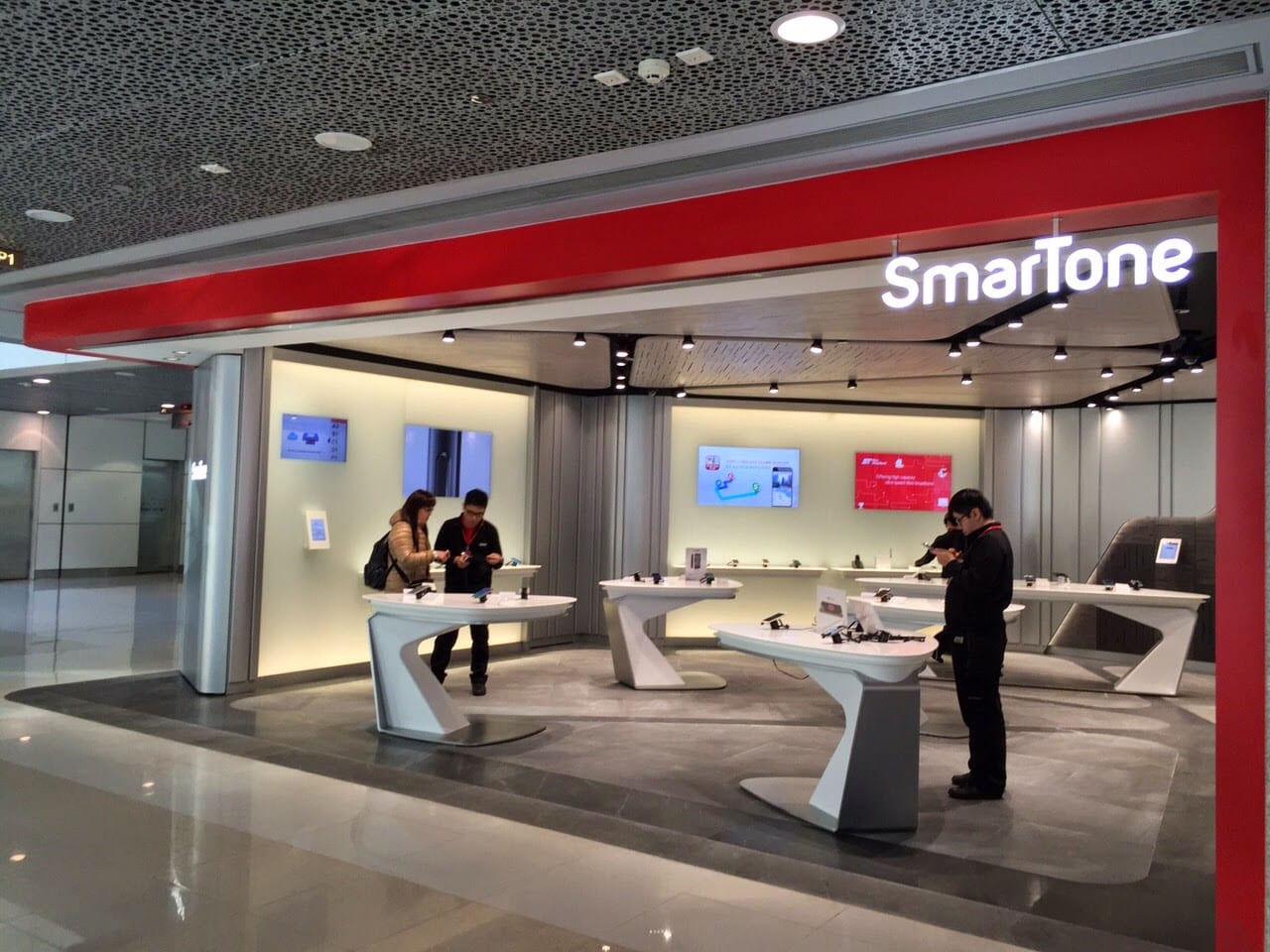
    Ericsson and Hong Kong mobile network operator SmarTone have begun to trial FDD (Frequency Division Duplex) massive MIMO (Multiple Input, Multiple Output) technology as part of the operator’s network evolution plan towards 5G, said the companies in a press event in Hong Kong Monday.

    The trial, involving FDD massive MIMO on 1800 MHz, represents the first of its kind for operators in Hong Kong. The trial comes ahead of 2018’s planned deployment of AIR 3246, Ericsson’s new radio that can support massive MIMO over 4G/LTE with Ericsson’s 5G massive MIMO plug-in, said the companies.

    “Our extension of the strategic partnership with Ericsson in October last year includes a five-year network evolution plan towards 5G,” said Stephen Chau, CTO, SmarTone. “Ericsson’s FDD massive MIMO solution will play an instrumental part in providing our customers in dense urban environments with [the] enhanced user experiences they have come to expect from SmarTone.”

    “We are working closely with SmarTone to develop, trial, and deploy key 5G technologies that will further enhance the user experience,” said Nishant Batra, head of product area network infrastructure, Ericsson. The recent LAA field trial, and now the trial of FDD massive MIMO, enable us to jointly shape the next-generation network technology.”

    Ericsson recently launched its first radio, AIR 3246, supporting FDD massive MIMO for both 4G and 5G. The technology is designed to enable operators—especially in metropolitan areas—to bring 5G to subscribers using today’s mid-band spectrum and boost capacity in their LTE networks.

  • Optus Wholesale launches home wireless broadband

    Optus Wholesale launches home wireless broadband

    Australia’s Optus Wholesale has added home wireless broadband to its product suite for MVNOs utilizing the Optus 4G network.

    The Optus subsidiary is providing the service to give wholesale customers the ability to provide home wireless broadband as an alternative to fixed broadband, particularly in areas where the national broadband network (NBN) has not yet been deployed.

    The company will provide a home wireless broadband kit with a Huawei wireless modem and SIM card included.

    Optus Wholesale customer Exetel will be the first company to roll out the new product.

    The company says the service will deliver speeds of 12Mbps down and 1Mbps up in metropolitan areas where there is 2300-MHz coverage, or 5Mbps down 1Mbps up where this coverage is not available.

    Speeds will be capped to 256Mbps once the maximum data allowance included in the plan is reached.

    “We work closely with our partners to deliver a service that will improve customer experience, and we’ve developed this following market demand for a more flexible solution,” Optus Wholesale VP of marketing John Castro said.

    “Home Wireless Broadband is an alternative to fixed broadband, so our wholesale partners are now able to offer a solution for people living in areas where NBN has not yet been rolled out or for people that like a plug and play option for their home internet service.”

    Optus Wholesale already provides fixed broadband services for wholesale customers. Parent company Optus is Australia’s second largest mobile operator, and is itself a wholly-owned Singtel subsidiary.

  • Microsoft tops forecasts with 16 percent profit growth

    Microsoft tops forecasts with 16 percent profit growth

    The tech giant saw growth in its ‘productivity and business process’ and ‘intelligent cloud’ units.

    Microsoft on Thursday delivered stronger-than-expected earnings for the past quarter, lifted by gains in cloud computing and other business services.

    For its first fiscal quarter to September 30, the tech giant said profit was up 16 percent from a year ago to $6.6 billion.

    Revenue meanwhile rose 12 percent to $24.5 billion for the one-time tech sector leader which has shifted its focus away from consumer software to a range of enterprise services.

    Shares in Microsoft jumped 3.2 percent to $81.35 for in after-hours trade following the release.

    Microsoft chief executive Satya Nadella said: “Our results reflect accelerating innovation and increased usage and engagement across our businesses as customers continue to choose Microsoft to help them transform.”

    Microsoft’s “more personal computing” division which produces the ubiquitous Windows operating system, saw revenues virtually unchanged from a year ago at $9.4 billion.

    But it showed sharp growth of 28 percent from its “productivity and business process” unit, which brought in revenues of $8.2 billion.

    The “intelligent cloud” unit that delivers artificial intelligence to a wide range of products saw its revenues grow 14 percent to $6.9 billion in the quarter.

    LinkedIn, the professional social network acquired by Microsoft last year, contributed revenue of $1.1 billion during the quarter.

    Microsoft said its “cloud technologies” operations now accounts for some $20 billion annualized and is a key to the company’s future.

    “Across major industries — from finance and energy sector to retail and professional sports — organizations are betting on Microsoft to help them transform their customers’ experiences, employee productivity, operations and products,” said executive vice president Judson Althoff.

    “In fact, 96 percent of Fortune 500 companies have at least one of our cloud offerings, and 90 percent have at least two.”

  • SmarTone names winners of 24-hour hackathon

    SmarTone names winners of 24-hour hackathon

    An international team of students has won Hong Kong mobile operator SmarTone’s first smart Hackathon with a predictive maintenance solution for utilities.

    The team of of four university students and programmers from India, Poland, the Philippines and the US developed Prodict during the 24-hour hackathon, which had the theme of smart properties.

    Prodict analyzes data collected from various sensors and uses machine learning technology to predict the imminent failure of utilities services before they happen.

    The runner up was Pop UP, a virtual guidebook for office equipment that uses augmented reality technology, while third place went to Softhard.io, a property management solution that leverages internet of things (IoT), low-power wide area networking (LPWAN) and machine learning technology.

    The three winning teams shared in cash prizes of HK$50,000, HK$30,000 and HK$20,000 respectively, as well as new devices from sponsor Samsung.

    In addition, the winners will also be given the chance to join the Microsoft BizSpark Program and be entitled to a fast-track interview for the Cyberport Creative Micro Fund (CCMF) or Cyberport Incubation Program.

    “Hong Kong’s future depends on maximizing the potential of the next-generation and SmarTone Hackathon is the ideal platform to identify and nurture the brightest and best from Hong Kong’s budding technology talent pool,” SmarTone CEO Anna Yip said.

    “It is essential we foster the creativity and enthusiasm of the younger generation and events like the hackathon can serve to ignite their innovative thinking to fulfill Hong Kong’s smart city ambition.”

    The event was announced in August, and co-sponsored by Sun Hung Kai Properties and SUNeVision as well as Microsoft and Samsung. The hackathon attracted 120 participants.

  • LG U+ and Huawei trial UHD IPTV

    LG U+ and Huawei trial UHD IPTV

    South Korea’s LG U+ and Huawei have completed a trial involving ultra-high definition IPTV streaming over 5G fixed wireless access with chipset based 5G millimeter wave customer premise equipment.

    The world-first trial demonstrated UHD (3840 x 2160) resolution IPTV over 5G, achieving up to a 2Gbps capacity over an end-to-end 5G network operating in the 28-GHz band.

    It used Huawei’s end-to-end 5G portfolio including 5G gNodeB, NG Core and 5G CPE offerings. Huawei said its new 5G CPE is the world’s first chipset based CPE ready for commercial engineering, including both outdoor and indoor equipment

    “This world’s first end-to-end FWA test shows that, following LG U+ and Huawei’s successful cooperation in the LTE era, the investment of the two sides in 5G research has had breakthrough results,” LG U+ 5G network strategy VP Kim Dae Hee said.

    “We will work with Huawei to maintain in-depth cooperation, and prepare for the coming 5G commercial launch.”

  • NBN Co to deploy G.fast from 2018

    NBN Co to deploy G.fast from 2018

    Australia’s NBN Co, the state-owned company building the national broadband network, has revealed it will deploy the G.fast copper acceleration technology on its network from 2018.

    The company will adopt G.fast for the fibre-to-the-building and fibre-to-the-curb components of its networks to provide an upgrade path for these users to ultra-fast speeds.

    G.fast and the more advanced XG FAST can accelerate the speeds of VDSL lines to fibre-like speeds. XG FAST can deliver speeds of up to 1Gbps depending on the condition and length of the copper last mile.

    NBN Co said its trials of the technology in 2015 achieved speeds of 600Mbps over a 20 year old stretch of 100 meter coper cabling. But the average age of a copper connection in Australia is 35 years.

    “Adding G.fast to the toolkit for the FTTC and FTTB networks will allow us to deliver ultra-fast services faster and more cost effectively than if we had to deliver them on a full FTTP connection,” NBN Co chief strategy officer JB Rousselot said.

    The NBN project as envisioned by the previous labor government would have delivered FTTP connections to 93% of Australian premises, with fixed wireless and satellite technologies reaching the remaining 7%. But this plan was controversially scrapped by the current government in favor of a multi-technology mix of FTTP, FTTN, FTTC, HFC, fixed wireless and satellite.

    “Our FTTP and HFC end-users already have the technology to support Gigabit services and adding G.fast over FTTC provides the upgrade path for our FTTN end users to ultimately receive Gigabit speeds too,” Rousselot continued.

  • Singapore named most robust data center market

    Singapore named most robust data center market

    Despite a large amount of supply coming through 2015–2016, the data center market in Singapore continues to lead some of its large neighbors in the Asia-Pacific (APAC) region in a race to the top of data center location rankings.

    According to Cushman & Wakefield’s Data Center Risk Index, Singapore is the most robust market out of 10 Asian countries in terms of business operations for data centers. Out of 10 Asian countries included in the index, Singapore scored 84.50 out of 100, ahead of Korea (83.23), Hong Kong (78.73) and Japan (76.48).

    The Data Center Risk Index identifies the top risks likely to affect data center business operations. It considers such criteria as energy, internet bandwidth, ease of doing business, political stability, natural disaster and energy stability.

    Singapore ranks strongly for network infrastructure, diverse connectivity to major APAC markets, its pro-business environment and political stability.

    Singapore has seen an influx of new data center capacity in the last two years, with an additional 130 MW on top of the existing capacity of 240 MW at the beginning of 2015.

    There has been some price and vacancy pressure, particularly among smaller data center players.

    However, over the medium to long term, Singapore should be able to expand its capacity by another 100 MW on the back of the Smart Nation initiative, as the government pushes for a national digital transformation program.

    Local data center providers such as Singtel, Keppel Data Centres and ST Telemedia stand to be the primary beneficiaries of this, while the international data center providers will continue to focus on winning international deals from medium to large enterprises coming into Singapore.

  • M1 launches 10Gbps symmetrical PON

    M1 launches 10Gbps symmetrical PON

    Singapore’s M1 has upgraded and expanded its suite of services for corporate customers, including through the introduction of the world’s first 10Gbps symmetrical passive optical network.

    The new symmetric PON service will allow M1 to provide low-latency 10Gbps symmetrical speeds with guaranteed bitrates across Singapore, for applications including SDN, cloud computing and 4K or 8K video transfers.

    In addition, M1 has introduced a new unified operations monitoring centre to provide real-time information on both network service and public or private cloud IT infrastructure to enterprise customers.

    This will include early warning of impending equipment failure to allow companies to conduct proactive maintenance to rectify potential faults before they occur.

    Finally, M1 has expanded its fiber network to the famous Shenton Way and Orchard Road major streets and the Buona Vista housing estate in Singapore.

    This will allow the operator to offer high-speed corporate connectivity services to more than 55 shopping malls, offices and commercial buildings in those areas.

    “The corporate segment is a key growth sector for M1, and we have accelerated our investments in technology, infrastructure and expertise to better serve our customers,” M1 chief corporate sales and solutions officer Willis Sim said.
    “With the successful launch of our symmetrical PON solution, next-generation unified operations monitoring centre and fibre to the building infrastructure, M1 can offer advance customised high bandwidth connectivity to meet the growing requirements of Internet of Things, smart nation, cloud and big data solutions from our customers.”

  • Telekom Malaysia signs backhaul deal with edotco

    Telekom Malaysia signs backhaul deal with edotco

    Telekom Malaysia has entered an agreement with regional infrastructure services company edotco aimed at providing backhaul services for Malaysian mobile operators’ LTE deployments.

    Under the partnership, Telekom Malayia will provide its next-generation backhaul (NGBH) services for connectivity between operators’ cell sites and their core network at edotco’s ground-based tower sites in selected areas.

    The two companies will also explore opportunities to provide common infrastructure via smart centralized radio access network (smart CRAN) services to allow operators to expand their coverage footprints.

    Malaysia-based edotco provides end-to-end tower services ranging from tower leasing, co-location, build-to-suit, energy, transmission and operation and maintenance. The company operates in Malaysia, Sri Lanka, Bangladesh, Cambodia, Pakistan and Myanmar, and has a portfolio of over 26,000 towers across these markets.

    “Telekom Malaysia is proud to be given the opportunity to fulfill our role as the strategic partner in the country’s economic development. This partnership allows us to share and converge our capabilities towards accelerating Malaysia to be digitally connected,” Telekom Malasia group CEO Dato’ Sri Mohammed Shazalli Ramly said.

    “Telekom Malaysia is also committed to support the Government’s aspiration in providing better broadband access to Malaysians nationwide and further embrace smart solutions by offering next generation services.”

    The collaboration is subject to the signing of a definitive agreement that is expected to be finalized within the next six months.

  • Nokia launches 5G-ready Smart Plan Suite

    Nokia launches 5G-ready Smart Plan Suite

    Nokia has launched a new real-time charging, policy control and customer engagement suite specifically designed for advanced digital experiences.

    The cloud-native, 5G-ready Nokia Smart Plan Suite uses continuous delivery principles and DevOps automation to stay constantly updated with the latest capabilities.

    The suite is designed to allow service providers to deliver personalized and contextualized offers to enhance subscribers’ digital experiences, and can integrate with webscale offerings including Google’s Mobile Data Plan Sharing API.

    It forms part of a wider monetization portfolio covering mediation, digital sales, real-time decision making and machine learning powered analytics software. Nokiaasserts that the portfolio can help operators increase subscriber campaign take-up rates by more than 400%.

    Nokia president of applications and analytics Bhaskar Gorti said the portfolio is designed to allow operators to engage with their customers in ‘digital time’.

    “This means delivering the right service through the right channel the moment they need it. We do this by providing ‘connected intelligence’ — we connect insights, people, processes and technologies to help service providers monetize their services, push the limits of automation and delight their customers,” he said.

    “Service providers need a new approach if they are to deliver the personalized, contextualized and immediate experiences consumers have become accustomed to from leading webscale companies. Most revenue management systems in use within telcos today are monolithic in nature and weren’t designed to support such modern experiences,” Analysys Mason senior analyst John Abraham commented.

    “The industry needs to adopt a different approach, and solutions based on a cloud-native architecture such as Nokia’s Smart Plan Suite are key to helping CSPs cross the chasm in enabling a new class of innovative and engaging customer experiences.”

  • Telcos must transform service delivery: MyRepublic CIO

    Telcos must transform service delivery: MyRepublic CIO

    Founded in 2011, MyRepublic is best known for being the first ISP in Singapore to launch 1Gbps broadband plans at mass-market pricing. Seen somewhat as a disruptor, the Singaporean brand is now active in 4 markets in the region. Within the next two years, the company has plans for an IPO and already has teams actively looking for partnership opportunities for four further expansions. Potential sites include Cambodia, Myanmar, Malaysia, Philippines and Thailand.

    Eugene Yeo, Group CIO at MyRepublic, has been a part of the company since its earliest days, and started coding when he was in his early teens, he told Enterprise Innovation in an exclusive interview. But “rather than go to university and get a degree in IT, which I felt was not going to value add, I felt that I wanted to foray into something different,” he revealed. Yeo attended SMU to study business administration, which allowed him to learn about managing business, running an organization, and growing a team.

    Early adopters of cloud

    “We are firm believers of using IT as a strategic tool to make sure our company remains innovative and a disruptor, staying ahead of everyone,” said Yeo. “As we grew the company over the last 5 years, we realized that there was a huge potential. The way we do things is very different from the incumbents,” said Yeo. “Embracing open source, embracing technologies out there to help us become more agile and efficient …we realized that there’s huge value in them and that there’s potential to grow the business into something much bigger.”

    As a firm believer of utilizing IT to stay ahead of the competition, MyRepublic adopted cloud technology even before the idea of cloud infrastructure gained wide traction. This significantly differed from other telcos that had invested heavily in legacy infrastructure, according to Yeo.

    They also developed their own business support systems (BSS) and operations support systems (OSS), believing this to be a move critical to their agility as a company. MyRepublic originally adopted public cloud for their BSS and OSS stack, but placed network-critical applications on traditional VMs in their data centers.

    Eventually, their infrastructure evolved to be cloud native. Yeo highlighted: “We really wanted to move to a hybrid cloud infrastructure across the organization and leverage an on-premise private cloud to supplement our public cloud strategy.”

    MyRepublic started their first on premise cloud in Australia, and have now brought it across to their centers in Singapore and Indonesia, moving all core network applications onto the on-premise cloud. Setting their foundations in cloud allowed MyRepublic to scale flexibly and expand rapidly into new markets – taking fewer than 60 days for their Australia and New Zealand markets.

    “Because we already had our foundation set with cloud, for us to be able to scale from 300 thousand [cutomers] to a million to 5 million isn’t really a big challenge”, said Yeo. “Even though we are a fairly young company, we believe in continuous improvement, and we’re actually embarking on our own transformation program internally. We’re embarking on what we call a customer experience transformation within the entire organization – to make sure that customer-centric culture is right at the root of MyRepublic.”

    Emphasis on open source

    Apart from being a firm believer in the cloud, Yeo is also a staunch supporter of open source, and partnered with RedHat to deploy OpenStack earlier this year.

    MyRepublic’s open source journey started when they introduced their engineers to the open source community to kick-start their understanding on how the technology worked, what potential challenges might be faced, and the general sentiment of the community through feedback. MyRepublic started with three engineers – but now with a team of 70 – 80 engineers, Yeo believes the time has come to contribute heavily back to the community.

    “We would have never got to the first version of our software without open source – from open source databases, to open source libraries, workflow engines etc. These actually helped us get to the next level faster,” said Yeo.

    With internet giants likes Facebook and Google being very active in the open source community, there has been massive ratcheting up of input into the open source space over the past few years. To this, Damien Wong, Vice President and General Manager, ASEAN, Red Hat, added: “Innovation is still happening in the proprietary space. I don’t think open source is the only way of innovation, but I think that it has gained such momentum that it cannot be ignored by any organization.”

    The evolving telco industry

    Arguably, the telco industry is traditionally one of the most conservative industries when it comes to innovation, disruption and transformation, Yeo believes. With disruptive technologies such as cloud, open source, 5G, machine learning, and IoT looming on the horizon, the telco industry is transforming to keep up with the times.

    Traditional means of texting and calling are a thing of the past, replaced by alternative platforms – such as WhatsApp, Telegram, and Facebook Messenger – powered by mobile data. The rise of smartphones and the power to consume applications also changes the needs and requirements of customers. In the telco space, it is apparent that telcos are trying to move from being communication service providers to becoming digital service providers.

    “You want services provided by the service provider to be intelligent, relevant, affordable, and accessible – all those attributes have to be there. With all the technologies that have evolved and been created… I think it is quite clear that telcos are moving from hardware-based infrastructure to software-based infrastructure for reasons of agility,” said Wong. “Moving forward, we are going into 5G, and people who can capitalize on that 5G infrastructure are going to be extremely successful.”

    In the shorter term – over the next 3 years or so – telcos need to become very efficient in the way that they deliver their services, according to Yeo. Connectivity is going to become a utility like water or electricity. “It’s not about optic fiber, mobile SIM, etc – people don’t care. In the end, they just want to be connected. That’s really the value proposition and the demand from the consumers. They just want connectivity in the fastest and most affordable way, and don’t care how you deliver it to them. Telcos need to understand that and know how to create the efficiency in that space,” he said.

    “We are moving to the data world, and data is money,” said Yeo. “There will come a day where you don’t need to pay for a SIM card, because your data will already pay for that connectivity. Telcos’ business models have to evolve – I see that telcos are going to start moving towards monetizing the data that they get, figure out how best to innovate using that data, and then use that data to fund the growth of the business.”

  • Telstra adds SD-WAN to Programmable Network

    Telstra adds SD-WAN to Programmable Network

    Australian operator Telstra has expanded the capability of its Telstra Programmable Network service with the introduction of a software-defined WAN (SD-WAN) and virtual branch.

    In partnership with VeloCloud, an SD-WAN provider based in the US, Telstra has introduced the ability for businesses to shift their branch network to the cloud. Telstra announced an investment in VeloCloud through its Telstra Ventures subsidiary in March.

    Business customers can achieve the migration by deploying a  single Juniper Networks Universal CPE device on site and using a marketplace of virtual network functions to self-provision bandwidth and required services.

    “Cloud adoption continues to grow and new WAN architectures such as Hybrid and SD-WAN are rapidly evolving. We are unlocking this technology for our customers who depend on having the fastest and most highly available digital experiences possible,” Telstra Global Products executive director Michelle Bendschneider said.

    “Businesses need to constantly adjust in a rapidly evolving technical world, so we really looked at this release from a customer’s perspective with flexibility front of mind. The addition of SD-WAN provides a more intelligent layer to that flexibility, enabling customers to do more with their network as they digitally transform their business and scale and deploy additional applications when and where they need to.”

    She said Telstra plans to offer both VeloCloud SD-WAN as a virtual network function and SD-WAN as a more traditional physical solution in recognition of the fact that there is no one sized fixed all approach to business networks.

    The Telstra Programmable Network is available in over 30 countries in Asia, EMEA and North America.

  • New IoT botnet discovered in the wild

    New IoT botnet discovered in the wild

    Check Point researchers have discovered a brand new botnet – dubbed ‘IoTroop’ – that is evolving and recruiting IoT devices at a far greater pace and with more potential damage than the Mirai botnet of 2016.

    IoT botnets are internet connected smart devices which have been infected by the same malware and are controlled by a threat actor from a remote location. They have been behind some of the most damaging cyberattacks against organizations worldwide, including hospitals, national transport links, communication companies and political movements.

    While some technical aspects lead Check Point to suspect a possible connection to Mirai, this is an entirely new and far more sophisticated campaign that is rapidly spreading worldwide.

    It is too early to guess the intentions of the threat actors behind it, but with previous Botnet DDoS attacks essentially taking down the internet, it is vital that organizations make proper preparations and defense mechanisms are put in place before an attack strikes, the company said.

    Ominous signs were first picked up via Check Point’s Intrusion Prevention System (IPS) in the last few days of September. An escalating number of attempts were being made by hackers to exploit a combination of vulnerabilities found in various IoT devices.

    With each passing day the malware was evolving to exploit a growing number of vulnerabilities in Wireless IP Camera devices such as GoAhead, D-Link, TP-Link, AVTECH, NETGEAR, MikroTik, Linksys, Synology and others. It soon became apparent that the attempted attacks were coming from a variety of different sourcesand IoT devices, meaning the attack was being spread by the IoT devices themselves.

    “So far we estimate over a million organizations have already been affected worldwide, including the US, Australia and everywhere in between, and the number is only increasing. Our research suggests we are now experiencing the calm before an even more powerful storm. The next cyber hurricane is about to come,” Check Point said.

  • Idea taps ZTE for 100G WDM backbone

    Idea taps ZTE for 100G WDM backbone

    India’s Idea Cellular has contracted ZTE and other vendors to deploy a 100G WDM backbone and metro area network (MAN) for the operator.

    ZTE announced it has secured a 95% market share in the MAN project, and will deploy an OTN device with ultra-large cross-connect capacity.

    Idea Cellular is upgrading its existing transport network from a 10G system to a 10G-100G hybrid transport system to ensure it is able to meet the exponential growth in demand for traffic for its mobile services.

    The solution ZTE will deliver will cover all scenarios from the edge aggregation layer to the core backbone layer to meet Idea Cellulars’ requirements for transparent transmission, flexible scheduling, aggregation processing of mass data services and service management monitoring.

    Idea Cellular is India’s third largest mobile operator with around 189 million subscribers. The company provides GSM, UMTS and FDD-LTE services India-wide.

  • Singtel unveils managed SDN solution for enterprises

    Singtel unveils managed SDN solution for enterprises

    Singaporean incumbent carrier Singtel has launched a new network solution to support enterprises’ evolving networking needs across the globe.

    The new solution, touted as Singtel Managed Software-Defined Branch (Singtel SD Branch), is delivered through a “white box” or generic hardware that enables enterprises to manage multiple and virtualized network functions at their existing sites or when they expand into new branch offices, Singtel said in a statement released Monday.

    Goh Boon Huat, vice president of global products at Singtel Group Enterprise said the new managed SDN solution is designed to help enterprises to tackle challenges of complex hybrid WAN architecture encompassing private and public Internet networks.

    “Singtel SD Branch provides a way to spin up and take down services seamlessly, offers full service visibility and manageability up to the application layer. This simplifies their WAN infrastructure, enabling agile managed network solutions to keep pace with growing business needs in different geographical regions,” Goh said.

    With Singtel SD Branch, enterprises are assured of enhanced security and optimal performance of their networks and applications.

    They can better monitor network usage, issues real-time as well as add new functions, such as unified threat management, to the same hardware without incurring additional installation charges. These will in turn reduce their capital and operating expenditures, Singtel said.

    Singtel SD Branch is available globally and integrated with Singtel’s underlay assets of submarine cables, IP VPN network of 428 Points of Presence, and its Global Internet service in more than 200 countries.

    Developed based on the network functions virtualization (NFV) concept, Singtel SD Branch is the latest addition to Singtel’s suite of next generation SD network solutions following the launch of its SD-WAN in 2015 and cloud-based NFV service last year.