Category: Telecom

Retail News Asia is committed to providing both local and global retailers with the latest Telecom & Telco news throughout the Asian market. This on a daily base.

  • ZTE profit grew 36.6% in 9M17

    ZTE profit grew 36.6% in 9M17

    ZTE has revealed it expects to report a solid 36.6% growth in net profit for the first nine months of 2017, with its results bolstered by growth in its carrier networks and consumer businesses.

    The Chinese vendor has published preliminary results [PDF] estimating a net profit for the nine month period of 3.9 billion yuan ($589.1 million).

    Operating revenue grew an estimated 7% over the same period to 76.58 billion yuan, while operating profit surged 455.1% to 5.28 billion yuan. Gross profit margins are expected to have been stable at 31.64%.

    The bottom line was also aided by pre-tax investment income of around 426 million yuan related to the sale of 10.1% of mobile phone subsidiary Nubia Technology, as well as 1.75 billion yuan in investment income from its remaining 49.9% stake in the venture.

    For the full year, ZTE is anticipating a net profit of between 4.3 billion and 4.8 billion. This would be a significant turnaround from the 23.57 billion yuan loss recorded in 2016, which was the result of a $892.3 million settlement agreement  with the US government.

    ZTE paid the penalty to settle an investigation over allegations that the company shipped telecoms equipment containing US components to Iran, in contravention of US trade sanctions on the nation.

  • Telkomsel wins 2.3-GHz spectrum auction

    Telkomsel wins 2.3-GHz spectrum auction

    Indonesian state-owned mobile operator Telkomsel has emerged as the winner of an auction for 30 MHz of 2.3-GHz spectrum with a bid of 1 trillion rupiah ($73.9 million).

    The company beat out four other operators, including XL Axiata and Indosat, to secure the spectrum.

    Telkomsel will need to pay an upfront fee of double its bidding price – 2 trillion rupiah – within 10 days as well as an annual license fee.

    With the acquisition of the additional spectrum Telkomsel is expected to be in a position to expand its network capacity by 30%, the report states.

    Telkomsel is Indonesia’s dominant mobile operator with 178 million subscribers and 150,000 base stations across the nation. It is the mobile subsidiary of state-owned operator PT Telkom.

    Under government regulations Telkomsel will now be unable to bid during the next spectrum auction, scheduled to commence next week.  Indosat, XL Axiata and Hutchison 3 Indonesia are expected to participate in the auction for two blocks of 2.1-GHz spectrum.

  • Star Telecom expands retail to underserved markets

    Star Telecom expands retail to underserved markets

    Filipino tech company Star Telecom Alliance Resources, the group behind Starmobile, is expanding its retail distribution to include sari-sari stores and loading stations.

    For its initial phase, just launched, Starmobile feature phones have been made available in more than 20 sari-sari stores and loading stations in Metro Manila, Cagayan De Oro and Zamboanga. This business strategy extends the company’s sales touchpoints beyond branded stores and kiosks, multi-brand vendors, its own online shop, partner e-commerce websites, and even convenience stores.

    With more than a million sari-sari stores in neighborhoods all over the Philippines, the move will enable the company to penetrate underserved markets, especially in the provinces. It also aligns with Starmobile’s objective of democratizing technology, says sales and marketing head Gerardo Balderrama.

    Prizes are being offered for customers as part of the company’s STAR-Tagal campaign.

  • Interoute evaluating selling up

    Interoute evaluating selling up

    Late last week, an infrastructure M&A rumor managed to slip past my nets. The pan-European network and cloud infrastructure operator Interoute was revealed have brought in Credit Suisse and Evercore to help evaluate a sale of the company.

    Interoute is majority (70%) owned by the Sandoz family with Aleph Capital and Crestview Partners holding the remainder. The company’s network was built off of assets from the dot-com crash via a combination of organic and inorganic growth, with the most recent inorganic moves being the acquisitions of Vtesse in 2014 and EasyNet in 2015.

    In the first half of 2017, Interoute posted €354 million ($416.9 million) in revenue and €79.6 million in adjusted ebitda while spending €36.1 million in capex. As the EasyNet integration winds down, the company’s ebitda margins have risen up toward the 22% mark. The rumors indicate they’d be looking for a multiple of somewhere in the 7-10x ebitda range, which puts the value of any potential deal at somewhere in the $1.5 billion to $2 billion range.

    So the question is, who might step up to the plate to buy Interoute? There are possible strategic buyers from both the US and Europe as well as some interesting private equity possibilities. Here are thoughts on a few candidates in no particular order:

    • Level 3 – A few years ago, Level 3 would have been the first answer to come to mind. The synergies to be derived are obvious, and the scale would help the company’s enterprise business on the continent a great deal. But the timing isn’t perfect given the impending tasks of the CenturyLink integration, so this possibility seems a bit less likely than it might have in the past. It’s still quite possible though.
    • Zayo – They could be a very strong candidate. After entering the Euro market a few years ago with the acquisitions of Geo, Neo, and Viatel, Zayo has a pretty good starter set in western Europe. They’ve been uncharacteristically quiet since then, but pan-European fiber and data centre assets like Interoute don’t grow on trees. Zayo won’t sit out the chance to bid and they won’t be shy.
    • Teliasonera – the Scandinavian-based giant has been growing its international network footprint steadily and almost entirely organically over the years. But this opportunity to add pan-European enterprise and wholesale depth may not be something they can pass up.
    • Colt – For a decade I saw Colt as a likely target of consolidation, but ever since Fidelity took them private they’ve been looking like they might be ready to sit on the other side of the table. A combination with Interoute would have significant synergies and few downsides when it comes to pure numbers.
    • euNetworks – While the company probably isn’t large enough to do it on its own, its private equity owners are completely capable of making a bigger move if the opportunity is sufficiently attractive. euNetworks metro depth in the UK and Germany would help raise margins on Interoute’s revenue.
    • Telxius – This is a bit of a longshot, but when Telefonica split off its infrastructure division and sold off a piece of it to KKR, they were doing so to help with the company’s debt issues. But as with Windstream’s spinoff of what is now Uniti Group, the resulting company could become a consolidator in its own right with private equity sitting in the driver’s seat.
    • EQT Infrastructure – These guys are perhaps the most aggressive private equity guys in the market over in Europe, and I can easily see them taking the opportunity to take Interoute off of the the Sandoz family’s hands.
    • Other private equity – The list of names is quite long
    • The billionaires – One can never count out personalities like Carlos Slim, Patrick Drahi, John Malone or even Naguib Sawiris, although none seem to jump out at me in this case.
  • MPT has Myanmar’s fastest mobile speeds

    MPT has Myanmar’s fastest mobile speeds

    Myanmar’s MPT has the fastest internet speeds among the nation’s major mobile operators, according to a new report from Ookla’s Speedtest service.

    An analysis of the results of user-initiated tests over the Speedtest Android and iOS mobile apps indicates that MPT had an overall speed score of 11.45 during the first half of the year.

    The speed score is calculated by factoring in both a user’s download and upload speeds, with the former contributing to 90% of the final score and the latter constituting the remaining 10%.

    MPT had average download speeds of 12.41Mbps for the period covered in the report, and average upload speeds of 7.47Mbps.

    MPT is expanding its mobile network in collaboration with Japanese partners KDDI and Sumitomo.

    The operator’s closest rival, Telenor Myanmar, achieved a speed score of 10.51, based on download speeds of 10.97Mbps and upload speeds of 6.46Mbps. Ooredoo achieved a score of 6.23 with download speeds of 6.61Mbps and upload speeds of 2.87Mbps.

    Over the six month period, Myanmar’s average mobile download speeds reached 12.03Mbps and upload speeds reached 7.4Mbps after a sharp jump in both averages between April to June.

  • More APAC enterprises benefiting from IaaS

    More APAC enterprises benefiting from IaaS

    The proportion of businesses in Asia Pacific reaping the benefits cloud infrastructure services has increased significantly in the last quarter, according to a global survey from Oracle.

    Nearly three quarters of respondents (74%) believe Infrastructure as a Service (IaaS) makes it easier for businesses to innovate, a 9% increase over last quarter. The research also found that 65% of businesses believe IaaS delivers exceptional operational performance in terms of speed and availability, an 18% quarter-over-quarter increase.

    Over half of respondents (61%) found their organization experienced improved productivity from their migration to cloud, while just over half (53%) found their IT teams have greater scope to work on other value-adding projects.

    The study also revealed that two thirds of businesses (67%) believe that companies not investing in IaaS will struggle to keep up with those that are using it. The index also highlighted that moving to IaaS has significantly cut time to deployment of new applications and services and slashed maintenance costs for over two thirds of respondents (70%).

    “The responses clearly show that companies are getting increasing levels of benefit from using cloud infrastructure and it is being felt beyond the domain of the IT department,” commented Chris Chelliah, Oracle’s APAC group VP and chief architect for technology and cloud.

    “These investments are driving significant improvements in productivity and giving organizations the ability to shift resource to projects that make valuable contributions from those that are just keeping the lights on.”

  • Cisco launches IoT lab in Hong Kong

    Cisco launches IoT lab in Hong Kong

    Cisco has launched its first smart city pilot program in Hong Kong, the Digital Living Lab.

    The Digital Living Lab is supported by Cisco’s new IoT operations platform Cisco Kinetic, which is designed to help extract, compute and move data from connected things to IoT applications to deliver better outcomes and services.

    Cisco and its partners have established a low-power RAN gateway (LoRaWAN) at Hong Kong Science Park to kick start the IoT program. The gateway will be used to provide demonstrations of IoT-enabled applications that are new to Hong Kong and helpful to the wider community.

    The company is also providing 80 IoT explorer kits to schools, startups and other organizations in Hong Kong to support their teaching and learning in IoT based technologies and facilitate data analytics and R&D development for IoT applications.

    “The ‘Smart Region’ initiative led by HKSTP and The Chinese University of Hong Kong (CUHK) is to make Hong Kong Science Park a testbed and wondrous showcase of the Smart City vision. We are glad that Cisco, as a worldwide leader in smart city technology, is launching ‘Digital Living Lab’ that aligns with our agenda in developing into a smart city,” HKSTP CTO George Lee commented.

    As well as HKSTP, Cisco’s partners in the program include Avnet, Pixel Networks, the Smart City Consortium (SCC) and the Technology Incubation Network (TIN).

  • Android ransomware abuses accessibility services

    Android ransomware abuses accessibility services

    ESET researchers have discovered DoubleLocker, an innovative Android malware that combines a cunning infection mechanism with two powerful tools for extorting money from its victims.

    “DoubleLocker misuses Android accessibility services, which is a popular trick among cybercriminals,” commented Lukáš Štefanko, the ESET malware researcher who discovered DoubleLocker.

    “Its payload can change the device’s PIN, preventing the victim from accessing their device and encrypts the victim’s data. Such a combination hasn’t been seen yet in the Android ecosystem.”

    On top of being ransomware, DoubleLocker is based on the foundations of a particular, already documented banking Trojan. According to Štefanko, the functionality for harvesting users’ banking credentials and wiping out their accounts can be added easily.

    “The additional functionality will turn this malware into what can be called ransom-banker,” warns Lukáš Štefanko, who claims he spotted a test version of such a ransom-banker in the wild in May 2017.

  • SoftBank goes live with eSIM management platform

    SoftBank goes live with eSIM management platform

    Japan’s SoftBank has gone live with Gemalto’s On Demand Subscription (ODC) remote subscription management platform to allow customers to directly connect their eSIM-enabled secondary devices to the operator’s mobile network.

    SoftBank users will be able to take advantage of direct internet connectivity for eSIM-enabled smart watches, wearables and other secondary devices without the need to tether them to a smartphone.

    SoftBank arranged in April to adopt the Gemalto platform for both consumer and industrial IoT devices.

    Gemalto said it expects eSIM to become the default identification module for all cellular IoT devices. The vendor has to date delivered more than 50 eSIM subscription management servers for both consumer and M2M applications to mobile operators in Asia, Europe and North America.

    In the consumer space, the company has partnerships with OEMs including Samsung, Limmex, Microsoft and Lenovo. The vendor is currently the only fully GSMA security accreditation scheme-subscription management (SAS-SM) certified supplier.

  • Airtel-Tata Teleservices merger good for the industry

    Airtel-Tata Teleservices merger good for the industry

    The planned merger between Bharti Airtel and Tata Teleservices’ consumer mobile business is a positive for both the deal participants and the industry as a whole, according to Fitch Ratings.

    Airtel announced last week that it plans to absorb Tata Teleservices’ consumer mobile business as well as its spectrum assets in the 850-MHz, 1800-MHz and 2100-MHz bands.

    Because the merger is being conducted on a cash and debt free basis, with Airtel only required to take on certain additional spectrum expenses, the deal is expected to slightly improve Airtel’s credit profile, Fitch Ratings said.

    It is also expected to help arrest the decline in Airtel’s ebitda and bolster its 4G network position.

    “Bharti will gain about 178.5 MHz of spectrum in the 850-MHz, 1800-MHz and 2100-MHz bands in 17 Indian telecom coverage areas, the right to use Tata Telecom’s extensive fiber network and 42 million subscribers that will add to its existing Indian subscriber base of 281 million,” Fitch Ratings said in a research note.

    “We estimate the consumer mobile business of Tata Telecom generated revenue of around $1.1 billion to $1.2 billion and a small [positive] ebitda in FY17, compared with Bharti’s revenue of $14.7 billion and ebitda of $5.4 billion. Bharti’s revenue market share will increase by 4-5 percentage points to around 37%-38%.”

    Tata Group will meanwhile be able to exit the consumer mobile segment, avoiding potential future losses. The group’s consumer mobile business been a drain on the company’s profit for some time. The company plans to retain Tata Teleservices’ enterprise fixed line and broadband business.

    Finally, the deal marks another move towards industry consolidation in India’s formerly overcrowded mobile market, Fitch noted.

    “[This consolidation] has been accelerated by the entry of aggressive new operator Reliance Jio. Since Jio’s launch in September 2016, the industry has consolidated into three large operators from over 10 participants,” the company said.

    “Weaker telcos have had to exit the market by selling their operations to the stronger telcos, which have had to rethink their long-term plans.”

  • China Telecom, Huawei complete 400GE tests

    China Telecom, Huawei complete 400GE tests

    China Telecom Guangzhou’s Research Institute and Huawei have completed the first 400 Gigabit Ethernet (400GE) test, confirming that the technology possesses the qualities required for commercial deployment.

    The tests over China Telecom Guangzhou’s network and terminal key laboratory verified 400GE port functions including line-speed forwarding, multi-service stacking, and fault reporting.

    China Telecom Guangzhou Research Institute was responsible for determining network requirements and test case design and overseeing the test. Huawei supplied backbone routers supporting 400GE port forwarding.

    Huawei said that under real-world network traffic conditions at full bandwidth 400GE ports experienced zero packet loss in line-speed forwarding.

    Multi-service stack tests also indicated that bundled 400GE and 100GE ports could implement precise load balancing, that the transmission distance was as far as 10 km and that protocol-based forwarding, loopback and fault reporting functions were all normal.

    The trial was conducted as part of the two companies’ 400GE R&D partnership, which they announced in 2016. This partnership is aimed at developing live-network service requirements, application scenarios, standards formulation, and technology R&D.

    “In the final release of the 400GE technology standard, China Telecom Guangzhou Research Institute and Huawei performed the world’s first 400GE port tests based on requirements of the live network, realizing a combination of network requirements and technical R&D,” China Telecom Guangzhou Research Institute IP technology research owner Zhu Yongqing said.

    “The test results reached expectations. In the future, we will cooperate with Huawei and other partners to promote development of the 400GE industry and maturation of the supply chain, ultimately driving the development of China Telecom’s network and the national broadband infrastructure.”

    The standardization process for 400GE is expected to be complete by the end of the year.

  • Cambodia aims to launch its first satellite in 3 years

    Cambodia aims to launch its first satellite in 3 years

    The Cambodian government plans to launch its first communications satellite by as early as 2021, and will conduct a feasibility study within a year.

    The satellite project is projected to cost around $150 million and the satellite will have a lifespan of seven years, the Bangkok Post reported, citing comments from an official at the Telecom Regulator of Cambodia (TRC).

    TRC and the Ministry of Post and Telecom have partnered with Royal Blue Skies and Beijing-based China Great Wall Industry Corporation, and these partnerships are expected to allow Cambodia to launch a satellite within three years, compared to the standard of seven, the official said.

    China Great Wall Industry Corporation already has experience launching a satellite in Laos and will be able to take this experience to the Cambodian project.

    The feasibility study will be used to gauge the potential demand for satellite services and determine how much the government should invest in the project.

    In March, a new subsea cable was launched connecting Cambodia with Malaysia and Thailand. The 1,300km Malaysia-Cambodia-Thailand (MCT) cable system was built by a joint venture between Cambodia’s EZECOM, Telekom Malaysia and Symphony Communication of Thailand.

  • HP develops POS solution for retailers

    HP develops POS solution for retailers

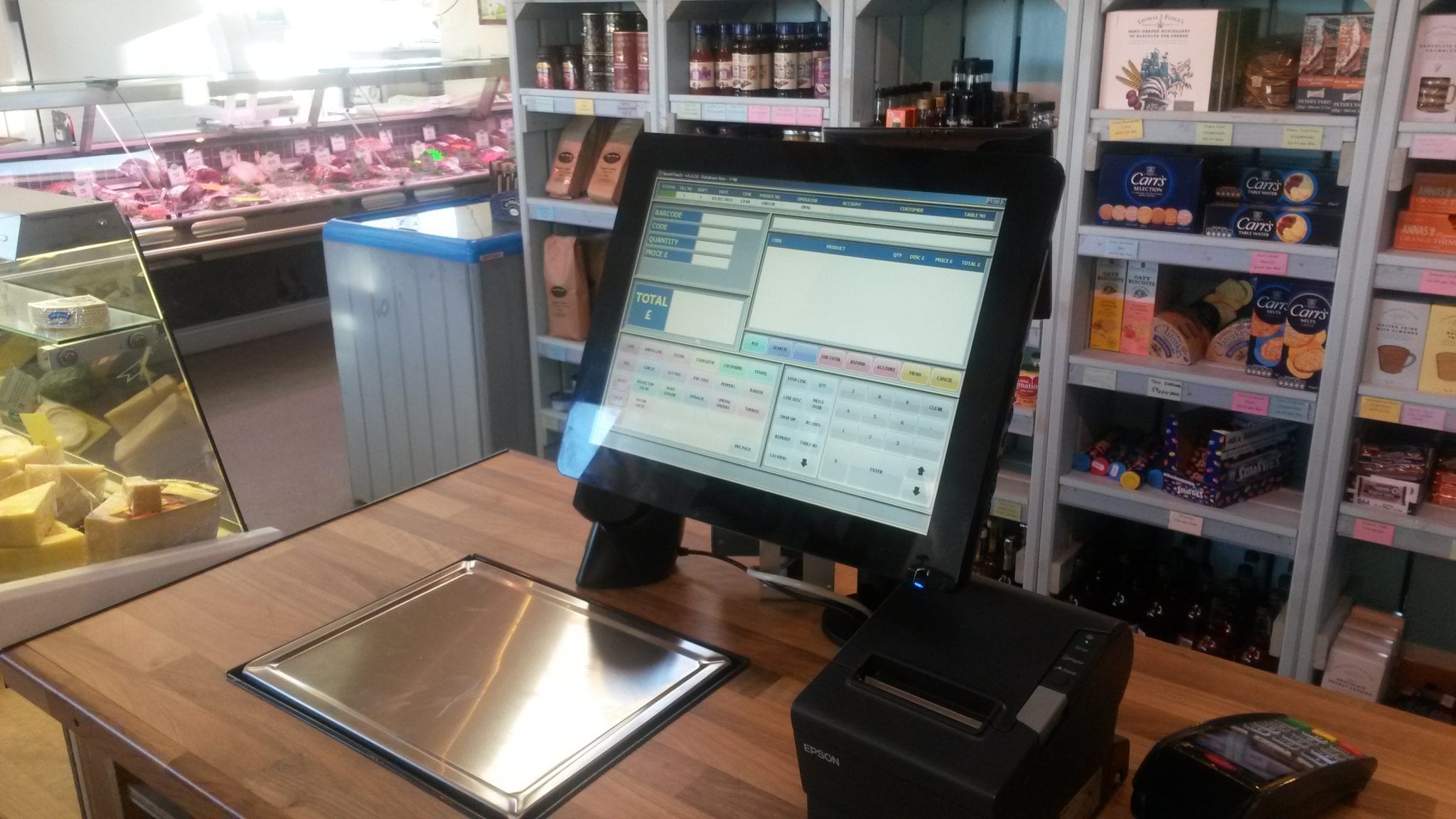
    HP has developed a point of sales solution aiming to reimagine how technology can transform the in-store experience for customers.

    HP ElitePOS supports several use cases including interactive signage, employee attendance, and self-service applications like a customer check-in and access to additional product offerings in the “endless aisle”.

    For retailers who want a clean and clutter-free counter space, or who need greater versatility in the placement of their point-of-sale terminal, the display can be separated from the input/output (I/O) base for maximum placement versatility.

    With point-of-sale devices increasingly targeted by hackers, security continues to be top of mind for the retail industry. According to Verizon’s 2016 Verizon Data Breach Investigations Report, 64% of breaches in the retail industry that contained data loss were caused by point-of-sale intrusions.

    “As the retail and hospitality industries undergo a revolutionary shift, the point-of-service device will be a critical hub in delivering the in-store experience for customers,” IDC VP of retail insights Leslie Hand said.

    “But with this rapid transformation in digital business also comes increased threats, in the form of targeted attacks and malware. Retail POS systems, including the new HP ElitePOS, must be able to balance the growing needs of the customer and the brand while also acting as a guardian of the  sensitive information that passes through the device on a daily basis.”

  • Huawei unveils APAC enterprise cloud strategy

    Huawei unveils APAC enterprise cloud strategy

    Huawei has announced its newest enterprise service strategy designed to support companies undergoing cloud transformation in Asia Pacific.

    The enterprise cloud strategy will focus on four key areas including cloud innovation, creating a digital platform, supporting smart operations and enabling businesses.

    As enterprises embrace digital transformation, they will face a new set of challenges across strategy, planning, requirement analysis, business integration, application system evaluation, technology selection, roadmap design, deployment, operations & maintenance (O&M) management, and information security.

    Cementing the company’s commitment to becoming an industry cloud enabler and strategic partner to enterprises in Asia Pacific, Huawei is investing $500 million globally in the development of cloud-based professional services, a cloud platform and cloud ecosystem. This will provide customers with end-to-end cloud transformation service solutions enabling them to build, use, and manage their cloud platforms effectively.

    To drive this strategy forward, Huawei will continue to increase its investment in the development of service solutions and Global Service Centers (GSC), as well as tools, platforms and verification labs for professional services. In the next five years, Huawei will also focus on research and development of industry clouds, increasing their annual investment by more than 50%.

    Additionally, to meet enterprise demand for ICT talent in the cloud era, Huawei will provide a new certification scheme to train ICT architects, ICT developers and industry-specific ICT experts. By 2021, it is estimated that more than 150,000 cloud and industry-specific ICT professionals will have been certified by Huawei.

    Huawei has made strategic investments and works with partners to build a cloud network that has global coverage, providing complete solutions that help Chinese companies go global, as well as help companies outside China enter the Chinese market.

    One of these partners is Orange Business Services (OBS), who has launched a global public cloud offering together with Huawei, that includes consulting, auditing and managed services for cloud infrastructure and applications.

    Named Flexible Engine, the new IaaS/PaaS platform is offered in combination with specialist support (‘Cloud Expert Services’) to assist enterprises in their migration to the cloud, featuring optional managed services to run applications. The suite of services will equip enterprises with the technology to digitally transform their business operations and support businesses in their expansion plans across China, Southeast Asia and Europe.

    The services run on the strength of OpenStack technology, an open-source software platform for cloud computing. Open standards and interoperability are key to meeting the demands for large, scalable public cloud solutions by delivering economies of scale and avoiding the danger of propriety lock-in.


  • Optus Satellite to provide NBN satellite services

    Optus Satellite to provide NBN satellite services

    Optus satellite, a subsidiary of major Australian operator Optus, has announced its first foray into providing satellite services over the National Broadband Network (NBN), via a partnership with Southern Phone.

    The partners are now providing Sky Muster satellite broadband services to customers in regional and rural areas.

    NBN plans to use satellite broadband services for the roughly 3% of the of the population – mostly in rural and remote areas – that won’t be covered by fixed line or fixed wireless NBN services.

    Southern Phone is a regional telecommunications service provider based in New South Wales. The company’s managing director David Joss noted that only 80,000 of the expected 240,000 Sky Muster satellite broadband services have been connected to date, leaving a significant potential market.

    “We see this service as a viable and effective alternative to a traditional NBN connection. For some consumers, this will be the first time they’ve been able to connect to a broadband service,” Optus Satellite VP Paul Sheridan added.

    “This new partnership will help us connect with even more regional customers and importantly, make sure that those customers are able to have the same level of support that a customer in a metro area would.”