Category: Telecom

Retail News Asia is committed to providing both local and global retailers with the latest Telecom & Telco news throughout the Asian market. This on a daily base.

  • China said to ban use of VPNs

    China said to ban use of VPNs

    China has reportedly instructed the nation’s operators to bar their customers from accessing the internet via VPNs by February in the latest move to tighten controls over internet access.

    State-run operators China Mobile, China Telecom and China Unicom have been ordered to bar their customers from using VPNs to skirt censorship restrictions, citing unnamed people familiar with the matter.

    The government is reportedly moving to remove loopholes enabling internet users to circumvent the so-called Great Firewall of China, the system that blocks access to a range of information sources including foreign social media and news websites.

    Many businesses also use VPNs to view restricted websites, and it is unclear how the new directive will affect multinationals operating within the country.

    If the clampdown is extended to businesses it could potentially discourage businesses from operating in China or even convince them to move their local operations, the report states. But the restrictions seem to be aimed mainly at individual consumers.

    If the restrictions are extended to businesses, it will add to the new regulatory burdens due to be introduced with China’s new Cybersecurity Law, which imposes strict restrictions on the transfer of data overseas for businesses operating in China.

  • WorldLink to build Nepal’s first 100G OTN

    WorldLink to build Nepal’s first 100G OTN

    Nepal’s WorldLink has engaged Nokia to deploy the nation’s first 100G optical network.

    WorldLink, Nepal’s largest fixed broadband operator, is upgrading its 650km backbone network with Nokia’s PSS DWDM technology.

    The backbone network spans from capital Kathmandu to the cities of Bhairahawa and Birgunj, and provides international connectivity between Nepal and countries including India.

    WorldLink has an estimated 120,000 residential broadband subscribers and 5,000 enterprise broadband circuits. The operator is currently connecting 10,000 residential FTTH subscribers per month, and is conducting the upgrade to help meet the fast-growing demand for network capacity.

    “WorldLink has a commitment to Nepal to transform the communications landscape so that our people and enterprises thrive,” the operator’s CTO Samit Jana said.

    “This is our largest project to date and it will allow us to provide ultra-fast broadband services for our mobile and fixed network subscribers in cities as well as rural areas across the country.”

    Nokia head of India Sanjay Malik added that the company is “proud to be part of WorldLink’s vision to transform Nepal’s communications architecture by providing the first 100G transport network. Nokia’s highly scalable optical platform will ensure low latency and high resiliency, and allow WorldLink to cost-effectively increase network capacity as needed.”

  • StarHub to pursue analytics to offset mobile squeeze

    StarHub to pursue analytics to offset mobile squeeze

    Singapore’s StarHub plans to lean on providing data analytics based on its customers’ consumption habits to compensate for the increased competition set to be caused by the introduction of a fourth player to the mobile market.

    The operator is already facing intense competition in the mobile sector, and this will intensify with the entry of Australia-based TPG Telecom, the recent winner of Singapore’s fourth mobile license.

    StarHub is preparing for a worst-case scenario involving TPG offering unlimited mobile data services, and bundling its offer with broadband, leading to competition for StarHub on two fronts.

    In an interview with Bloomberg, StarHub CEO Tan Tong Hai said the company is pursuing generating revenue by providing analytics based on consumers’ use of mobile phones, broadband and TV services to corporate clients.

    The enterprise segment is already generating increasing proportions of StarHub’s revenue – earnings from StarHub’s corporate customers now account for around 42% of StartHub’s annual revenue, up by more than double from eight years ago.

    But StarHub is facing competition in the analytics segment from incumbent Singtel. The report also cites an OCBC analyst as expressing skepticism that the extra revenue generated from analytics will be enough to offset the impact of TPG’s entry into the market on StarHub’s bottom line.

  • Bharti Airtel eyes Tata’s assets

    Bharti Airtel eyes Tata’s assets

    India may see a mega merger this year, if reports out of the region are correct. Tata Group has long been seeking a way to reconfigure its capital structure and relieve the pressure of its debt, and they may have found a way to do it with the help of the rival Bharti Enterprises group.

    The two companies are talking about some sort of merger of Bharti Airtel with Tata Teleservices, Tata Communications, and Tata Sky. Now, this would obviously have huge repercussions in the Indian market itself, and the prospect of Tata Communications and its global network infrastructure, top 6 internet backbone, and wholesale/enterprise customer base changing hands is another matter.

    Tata Communications has been a player global consolidation of telecommunications assets on both sides of the table over the years. They have been fixture in the submarine cable business ever since buying the Tyco Global Network and Teleglobe back in 2005. They also bought BitGravity to enter the CDN space back in 2011.

    More recently, the company has been monetizing assets to help with that debt load. Tata sold its South African unit Neotel to Liquid Telecom after a similar deal to sell to Vodacom collapsed. And they sold a majority stake in the company’s data center business to ST Telemedia last year.

    Should a deal happen and these assets land in the hands of Bharti Airtel, it might be that the winds of consolidation shift further. But in which direction is not that clear.

    That being said, it’s still just talk right now and in all likelihood will never be anything else. Until it is, of course.

  • Xiaomi, Nokia sign alliance and patent de

    Xiaomi, Nokia sign alliance and patent de

    Xiaomi and Nokia have signed new a multi-year business collaboration and a patent cross-licensing agreement covering each vendor’s cellular standard-essential patents.

    As part of the transaction, fast-growing Chinese handset vendor Xiaomi has also purchased patent assets from Nokia.

    Under the business cooperation component, Nokia will meanwhile provide network infrastructure equipment designed to meet the high capacity, low power requirements of large web providers and data center operators.

    The two companies will also work together on optical transport solutions for data center interconnections, IP routing based on Nokia’s new FP4 network processor and a joint data center fabric solution.

    Xiaomi and Nokia will likewise explore opportunities for further collaboration in areas including the internet of things (IoT), augmented and virtual reality as well as artificial intelligence.

    Xiaomi now has a presence in over 30 markets, and is a leading IoT player as well as smartphone vendor.

    “As a company seeking to deliver more exciting technological innovations to the world, we are excited at the opportunity to work more closely with Nokia in future.”Xiaomi is committed to building sustainable, long-term partnerships with global technology leaders,” Xiaomi CEO Lei Jun said.

    “Our collaboration with Nokia will enable us to tap on its leadership in building large, high performance networks and formidable strength in software and services, as we seek to create even more remarkable products and services that deliver the best user experience to our Mi fans worldwide.”

  • MyRepublic planning IPO by end-201

    MyRepublic planning IPO by end-201

    Singapore-based MyRepublic is gearing up to conduct an IPO by the end of next year, and use the funds to expand its operations to cover at least 10 countries in the next five years.

    In a media briefing, MyRepublic said it is currently exploring listing on the Singapore, Hong Kong and/or Australian stock exchanges.

    MyRepublic is meanwhile planning an entry into the Singapore mobile market in the fourth quarter and expects to subsequently expand its mobile operations to other parts of the region by next year onwards.

    The company is likewise planning to launch TV services in the region, bcoming a quad-play provider.

    MyRepublic currently operates in Singapore, Indonesia, Australia and New Zealand, and is evaluating expanding to Myanmar, Sri Lanka, Vietnam, Myanmar, the Philippines, Thailand, Cambodia and Malaysia. By June, the company reached 200,000 broadband subscribers across the region.

    The company leverages NBN rollouts in the markets with strategic deployment of passive infrastructure to remain infrastructure agnostic and enable rapid expansion at a low cost of market entry.

    MyRepublic said it can enter a new market in 60 days and launch new products in three months. The company has entered a new market every year since 2014 and turns ebitda-positive within two years of entering each new market.

    At the briefing MyRepublic also denied reports that the company is pursuing an acquisition of Singapore’s M1. While the operator has put in a bid, it is not pursuing the acquisition, the company said, noting that while M1 is a traditional telco, MyRepublic is an “internet platform company.”

  • PLDT expands FTTH services to east Manila

    PLDT expands FTTH services to east Manila

    The Philippines’ PLDT has expanded the reach of its FTTH services to east Metro Manila in the latest phase of its nationwide fiber expansion program.

    The operator has added over 70,000 fiber lines in the area following deployments in south Metro Manila as well as Cebu, General Santos and Naga City.

    With the expansion, PLDT’s fiber networks now passes 3.3 million homes across five cities and three towns. The operator’s fiber rollout drive has seen it add around 500,000 homes passed within around six months, and PLDT has a target of passing 4.4 million homes by the end of the year.

    PLDT is also deploying hybrid fiber technologies including Huawei’s G.fast, which can boost data speeds of current subscribers up to 600-700 Mbps over copper lines.

    In a statement, the operator said it has invested 300 billion pesos ($5.9 billion) over the past 10 years on its fixed and wireless network deployments.

    “PLDT Home continues its efforts to create Fibr-powered PLDT Smart Cities nationwide to enrich the lives of more Filipinos through our innovative digital services and connectivity solutions,” PLDT EVP and home business head Enrico Reyes Jr said.

    “The network rollout in East Metro Manila will provide powerful connections and top-of-the-line services that will benefit both its residents and businesses.”

  • China Telecom joins HomeGrid Forum

    China Telecom joins HomeGrid Forum

    China Telecom’s main research arm the China Telecom Shanghai Research Institute has joined the HomeGrid Forum to support the deployment of G.hn technology in Asia.

    The Institute has been working on G.hn related products for more than three years, with China Telecom selecting G.hn as its home networking technology of choice.

    China Telecom Shanghai announced its first public tender request for G.hn devices earlier this year, marking the start of commercial deployments of the technology in China.

    In addition, the Institute has expressed an interest in establishing a HomeGrid Forum Certification facility at its Shanghai labs, adding a third point of call for silicon and system vendors to certify their products in the region after Shenzhen and Taipei.

    “Welcoming China Telecom Shanghai Research Institute as our newest member is fantastic. We look forward to gaining its invaluable insight and perspective into the Chinese and Asian markets as we continue to expand our presence in the region,” HomeGrid Forum president Donna Yasay said.

    “We’ve been championing G.hn technology for many years and support from an organization of this caliber validates our efforts. When combined with other technologies, such as wireless, home mesh networking and Ethernet, G.hn creates an unrivalled hybrid that can extend connectivity further than other products on the market. G.hn is the vital backbone for the kind of seamless connectivity that is now in demand around the world.”

    Chian Telecom will join operators including Chunghwa Telecom and KT as promoting members of the Forum.

    G.hn is the gigagbit home networking technology designed to utilize multiple existing last mile connections including coaxial, copper pairs, powerline and plastic optical fiber.

  • NEC Introduces Smart Communications System SL2100 to Asian Market

    NEC Introduces Smart Communications System SL2100 to Asian Market

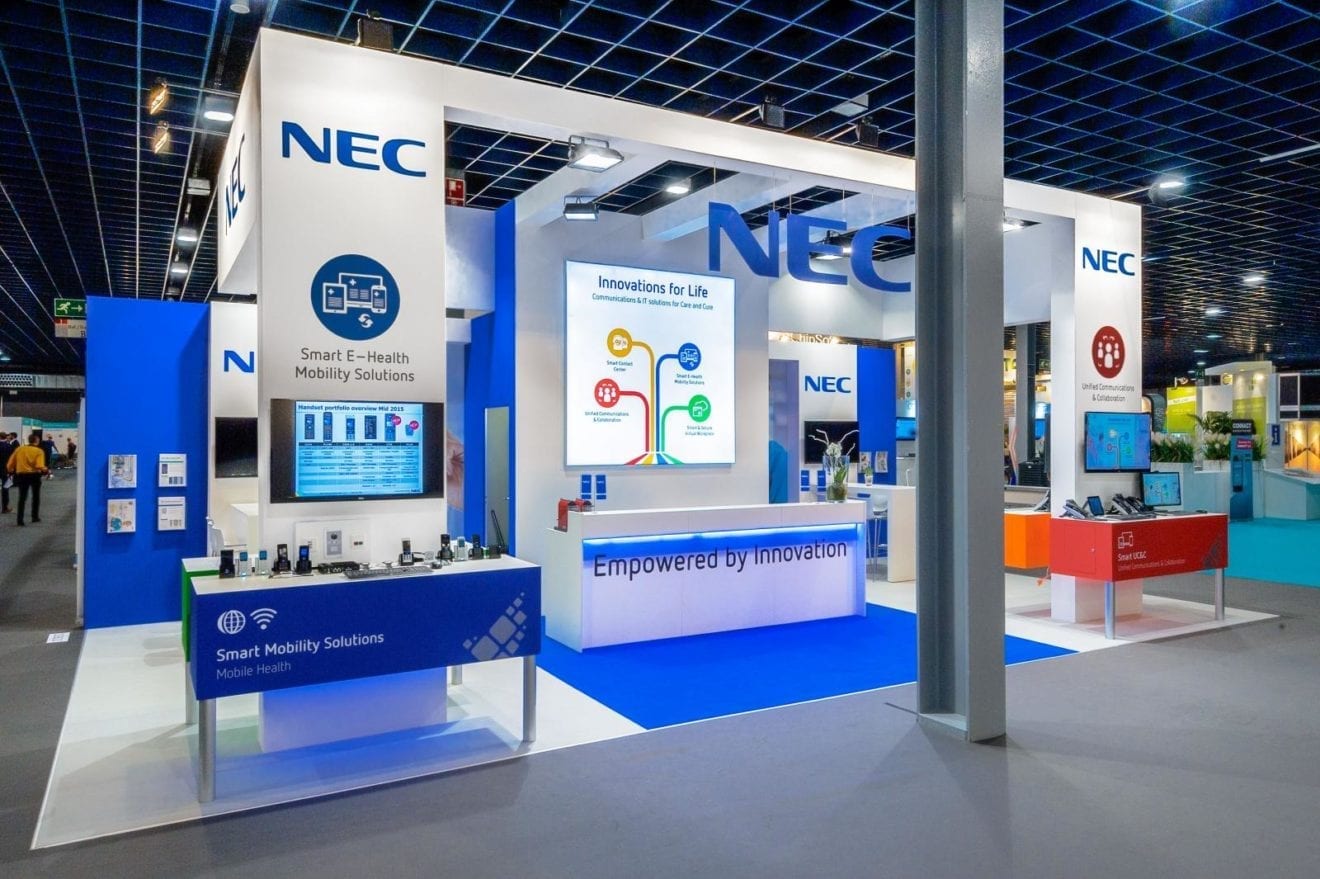
    NEC Asia Pacific today announced the launch of the Smart Communications System SL2100 for small- and mid-sized businesses in the Asian market.

    With wide-ranging, enterprise-grade voice over IP (VoIP), mobility and Unified Communications and Collaboration (UC&C) features, the SL2100 also offers industry specific features for retail, healthcare, food service and entertainment, as well as hospitality features for small hotels and motels.

    “The way the business world communicates is rapidly changing, especially in consumer-facing industries, where excellent customer experience is a must,” said Shigeru Matsuura, General Manager, Global Platform Division, NEC Corporation. “NEC’s SL2100 offers a new design for Hardware and Endpoints. Combined with the value-added features, such as Smartphone Integration and web-based Video Conferencing & Collaboration, the SL2100 is an ideal fit for service oriented small- and mid-sized businesses.”

    SL2100’s key features include:

    • Built-in VoIP technologies (Standard 8ch. Expandable to 128 ch)
    • Web-based UC Client
    • Web-based Video Conferencing & Collaboration
    • Voice Response System/Voicemail
    • Outbound & Inbound audio conference
    • Geographical Multi-site operation over IP Network
    • ACD (Automatic Call Distribution) for small Contact Center
    • Hotel Features with PMS API

    The SL2100 also offers an array of add-on Smart Mobility options, such as Remote/Home Office Support, Smartphone SIP App and Mobile Extension.

    The SL2100 will be released to Asian countries sequentially starting from July 2017.

  • Ericsson chairman to step down

    Ericsson chairman to step down

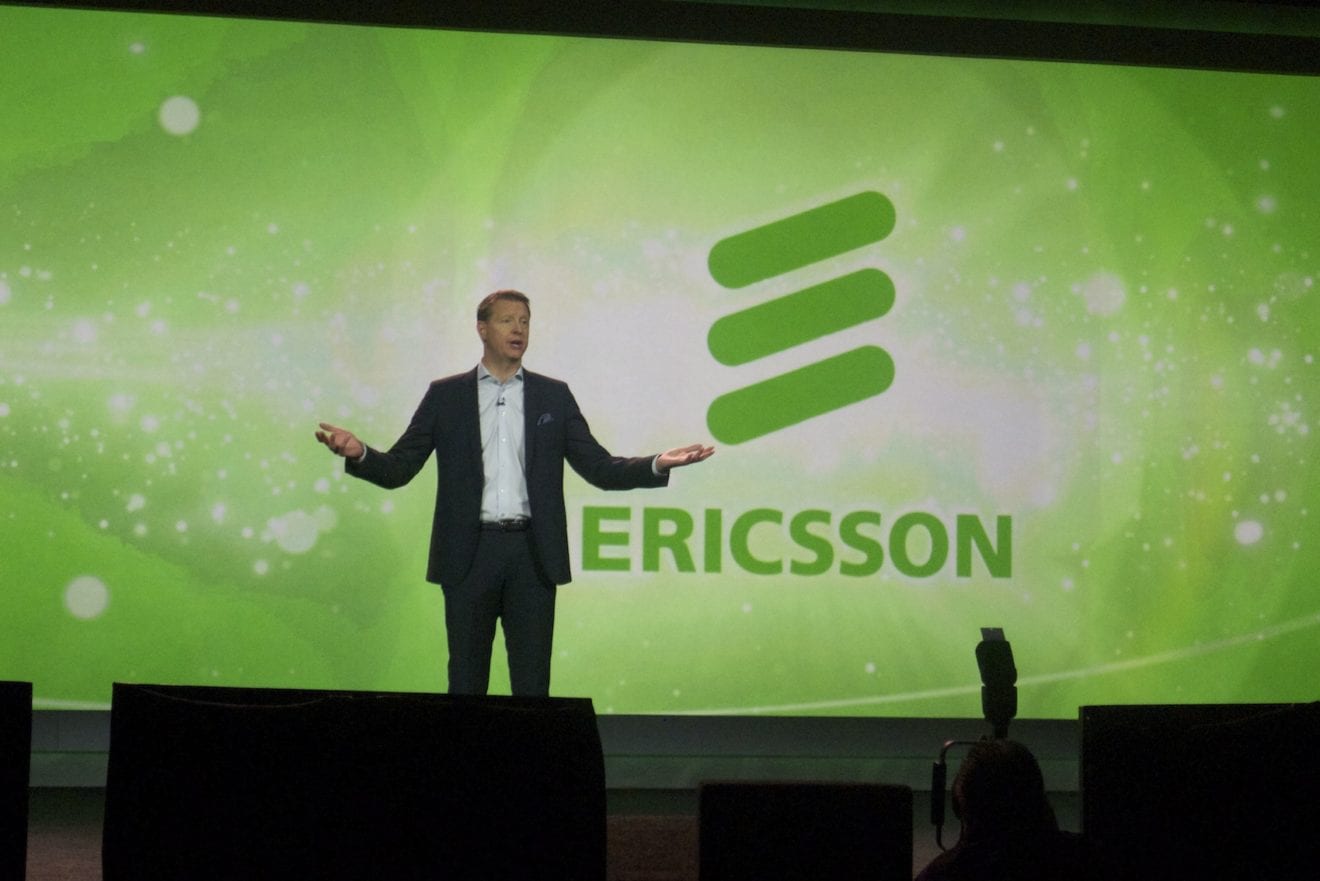
    Ericsson chairman Leif Johansson (pictured) will step down from his position as the struggling Swedish telecoms equipment vendor enters a new phase.

    Johansson, who has been serving as chairman of the company since 2011, has informed the company that he will not make himself available for re-election at the shareholder’s AGM in 2018, according to a company statement released on July 5.

    Ericsson, facing increasing competition from Huawei and Nokia, has been struggling to return to profitability.

    Johansson didn’t explain explicitly why he had chosen to step down, saying only the company has a new strategy and there had been changes in ownership

    But according to FT, the move was prompted by corporate activist investor Cevian Capital, led by Christer Gardell, which recently acquired 5.6% stake in Ericsson and has been pushing for further change.

    Commenting on his decision, Johansson said, “Börje Ekholm assumed the position as CEO in the beginning of the year and during the first quarter the company presented a new, more focused, business strategy. This strategy, which is supported by the board and the major owners, creates a solid foundation for realizing Ericsson’s full potential”.

    “The company now enters a new phase, with focus on execution, and we also have a new ownership constellation. It is natural to let the owners jointly propose a chairman and well ahead of this I want to announce that I will not be available for a next term,” he added.

    The company said its nomination committee has initiated a search for a replacement.

    Nokia appoints Gregory Lee to head technology arm

    Nokia has appointed Gregory Lee (pictured) as president of Nokia Technologies and a member of the company’s Group Leadership team, with immediate effect.

    Lee joins Nokia after a 13-year career at Samsung Electronics, where he most recently served as president and CEO of Samsung Electronics North America. In this capacity, Lee led all of Samsung’s businesses for North America, managing a portfolio of products including mobile phones and consumer electronics, as well as those in new market segments such as digital health, virtual reality devices and digital content.

    Rajeev Suri, president and chief executive officer of Nokia, said the company has chosen “the right leader to take Nokia Technologies forward at a time of renewed excitement about the Nokia brand around the world.”

    “Gregory’s passion for innovation and operational excellence, along with his proven ability to build and lead global consumer technology businesses, make him well suited to advance Nokia’s efforts in virtual reality, digital health and beyond.”

    Lee will be based in California, reporting to Suri.

    Wendy Johnstone joins Microsoft APAC team
    Microsoft has appointed Wendy Johnstone as marketing and operations lead for Asia Pacific, effective from July 3. Based in Singapore, Johnstone is in charge of all marketing activities and operations for Microsoft in the region.

    Johnstone joins Microsoft from Salesforce, where she was most recently vice president of marketing for Asia Pacific.

    She brings to the table over 20 years of experience and had held numerous senior marketing leadership positions at Salesforce, EMC and IBM.


  • Unicom, Ericsson, Qualcomm demo VoLTE over Cat-M1

    Unicom, Ericsson, Qualcomm demo VoLTE over Cat-M1

    China Unicom, Ericsson and Qualcomm have completed the first demonstration of LTE Cat-M1 Voice over LTE use cases.

    The demonstrations at last week’s Mobile World Congress Shanghai involved providing connectivity for a fire alarm trigger panel and a GPS emergency tracking device.

    The demos were conducted using Unicom’s spectrum, Ericsson’s IoT and VoLTE capable network infrastructure and IoT devices equipped with Qualcomm multimode IoT modems.

    Adding VoLTE support to Cat-M1 allows IoT devices based on the cellular IoT technology to make voice calls as well as sending data.

    The demonstrated showed that emergency communications devices can be designed or retrofitted to  support wireless connectivity, supporting voice communication between the devices and emergency centers.

    In the case of the fire alarm trigger panels, people triggering an alarm were able to describe the situation to first responders and get immediate guidance.

    The GPS emergency tracking device demonstration meanwhile showcased the ability of such devices to send GPS location data while enabling VoLTE calls for coordinated emergency response.

    “China Unicom aims to drive the development of the IoT and accelerate cellular network development and large-scale business implementation by constructing the leading 4G FDD network,” Unicom executive director and senior vice president Guanglu Shao said.

    “We launched NB-IoT on a pre-commercial basis on May 12 in Shanghai. This cooperation on eMTC with Ericsson and Qualcomm is a new venture intended to boost social intelligence and the Internet of Everything through wide cooperation and the construction of leading networks.”

  • Nutanix launches OS for hybrid cloud environments

    Nutanix launches OS for hybrid cloud environments

    Nutanix has revealed that that the Nutanix Enterprise Cloud OS will be delivered as a full software stack with new multi-cloud capabilities in Nutanix Calm and a new cloud service called Nutanix Xi Cloud Services.

    The new offerings, announced at its .NEXT Conference 2017, are designed to allow customers to use Nutanix Enterprise Cloud Software throughout their multi-cloud deployments, including on-premises with platforms from IBM, Dell EMC, Lenovo, Cisco and HPE, in the cloud via AWS, Google Cloud Platform and Azure, or natively.

    Delivered as software, the Nutanix Enterprise Cloud OS supports a variety of hardware platforms, form factors and third-party vendors, ensuring that a single software fabric with unified management can run across all enterprise environments.

    The Nutanix Enterprise Cloud OS extends beyond Nutanix-branded appliances, OEM offerings from Dell EMC and Lenovo and systems from partner IBM to flexible subscriptions and enterprise license agreements (ELAs) on Cisco and HPE platforms.

    For consumption as a service, IT leaders will be able to leverage Nutanix software as a native cloud-delivered solution via Xi Cloud Services.

    Xi Cloud Services will allow customers to provision and consume Nutanix infrastructure on demand as a native extension of the enterprise data center.

    The first available Xi Cloud Service will enable Nutanix customers to set up, manage and test a complete cloud-based DR service in just minutes. Using the same Prism management interface, Nutanix customers can instantly protect their applications and data inline with existing workflows as part of their routine IT operations.

    Nutanix will partner with strategic cloud providers to deliver Xi Cloud Services globally, and to meet the data provenance requirements governing multiple industries and use cases.

    Building and operating a multi-cloud architecture requires that applications can be easily defined, instantiated and scaled independent of the cloud environment. Nutanix Calm abstracts application environments from the underlying infrastructure and recommends the right cloud for the right workload while harmonizing cloud operations.

    Nutanix Calm will allow applications to be defined via easy-to-use blueprints, which can be provisioned, managed and scaled into different cloud environments. The solution includes a powerful, integrated marketplace so that application designs can be shared across the organization to speed the time to production for new business initiatives.

    The Nutanix Enterprise Cloud OS is now available as a software-only offering for popular platforms from Cisco and HPE. Nutanix Calm is planned to be available for sale by calendar Q4 2017. Nutanix Xi Cloud Services for disaster recovery are planned to be offered for early access by calendar Q1 2018.

  • India’s big data market set to hit $16b by 2025

    India’s big data market set to hit $16b by 2025

    India’s big data analytics sector is set to record impressive growth in the coming years, WNS Global Services has predicted.

    The sector is expected to witness eight-fold growth to reach $16 billion by 2025 from the current $2 billion, according to industry experts. The sector is also looking at registering compound annual growth rate (CAGR) of 26% over next five years.

    India is currently among top 10 big data analytics markets in the world.

    “The government, industry and academia can collaborate to build an ecosystem to generate sustainable solutions by harnessing the power of big data and digital innovation,” said WNS Global Services Group CEO Keshav Murugesh.

    “The combined power of harnessing big data and digital solutions can drive tremendous results in improving the citizen experience, implementation efficiency and boosting the nation’s economy.”

    Murugesh was speaking at the Emerging Worlds Conference workshop organised by Indian School of Design and Innovation (ISDI) in collaboration with MIT Media Labs. “India is a diversified country with a wide array of challenges, and it is pertinent that we as citizens of this country, innovate to find effective solutions that can make a difference to the billion lives that live here,” he said.

    “If big data can be put to cutting-edge use for our corporations and clients, it can very well be a catalyst for the economy and the country.”

    The workshop brought together industry leaders, technical experts, data scientists, innovators, academic institutions, implementation collaborators and progressive corporate collaborators to source national challenges and potential solutions.

  • Pakistan’s Jazz secures 4G license

    Pakistan’s Jazz secures 4G license

    Pakistani mobile operator Jazz has formally secured its 4G license after submitting the sole bid for a 10 MHz block of 1800-MHz spectrum in May.

    The license was officially awarded to the company during a ceremony on Friday.

    Jazz has become Pakisan’s third operator to be granted a 4G license, after China Mobile’s Zong and Warid Telecom.

    Jazz submitted the minimum bid of $295 million for the block of spectrum just before the auction deadline. The company chose to pay the whole price upfront rather than taking the option of paying in six instalments with interest applied.

    While Ufone had been expected to participate in the auction as the only remaining operator without the capacity to launch 4G services, the company declined to take part citing the high cost of 4G services and handsets in the market that it claims are out of reach for the average Pakistani consumer.

    Zong also sat out of the auction after stating that the operator will not does not require additional bandwidth in the near future.

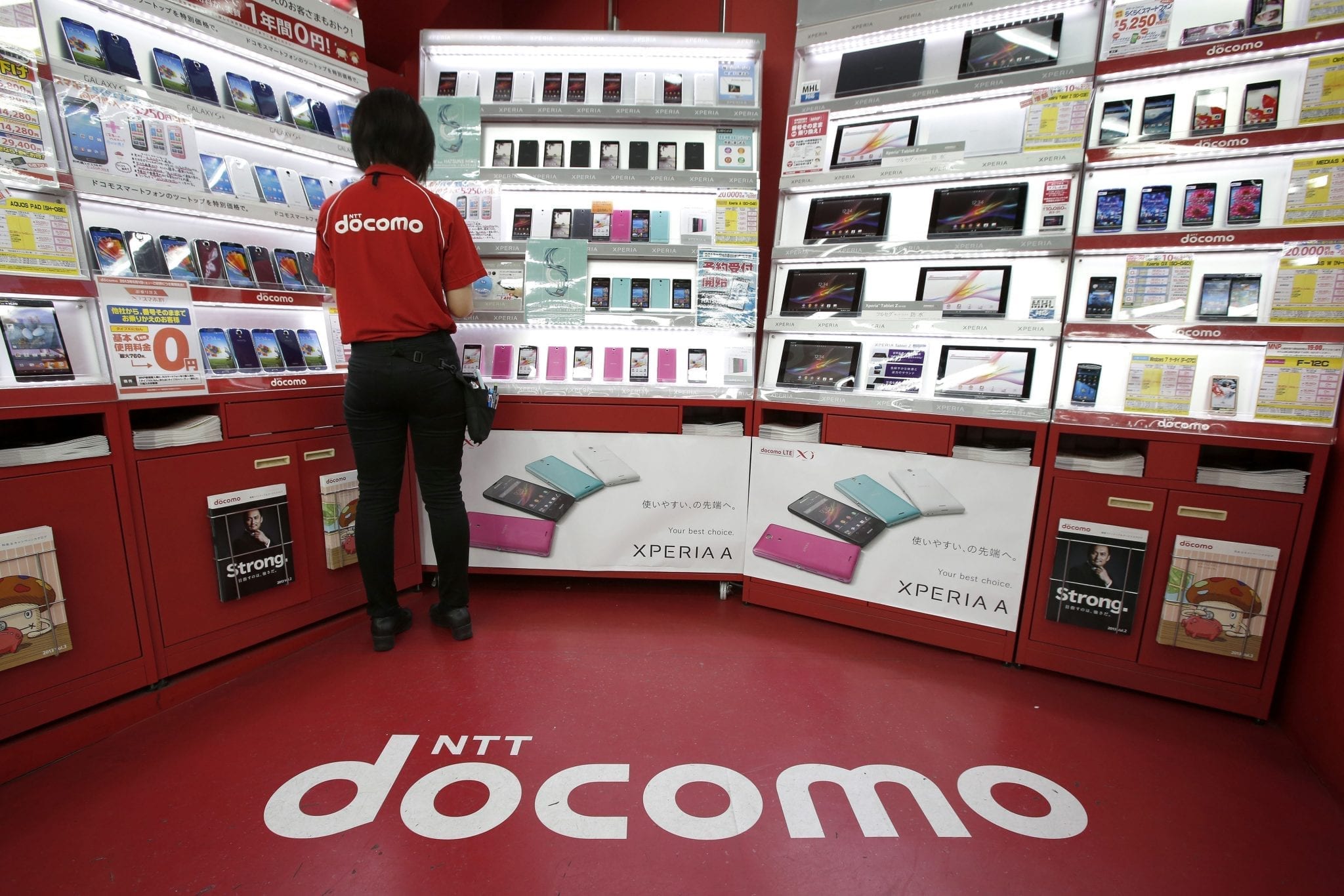
  • DoCoMo to deploy Ericsson’s UDN

    DoCoMo to deploy Ericsson’s UDN

    Japan’s NTT DoCoMo has contracted Ericsson to provide the vendor’s Unified Delivery Network (UDN) global content delivery network solution for the DoCoMo mobile network.

    The contract marks Ericsson’s first deployment of its UDN in Japan. DoCoMo will initially use the platform to roll out content distribution services, and will follow this up by introducing future value added services including toll-free data for certain content.

    Ericsson’s UDN is designed to connect content providers worldwide with the last mile reach network operators can offer.

    It is designed to aggregate network capabilities to allow services to be optimized and monetized in new ways, while offering operators the ability to efficiently scale the delivery of OTT services and high-quality video content.

    “For future services, NTT DoCoMo foresees that consumption of 4K video, virtual reality and augmented reality content will increase and believes a platform like a UDN adds value in the high-speed 5G era,” the operator’s GM of service design Takaaki Sato said.

    Ericsson head of UDN service provider partnerships Cillilan Maher said its UDN ecosystem now encompasses 55 content providers and 40 operators worldwide.

    “As part of [this ecosystem], DoCoMo will be able to significantly advance the traditional content delivery network model,” he said.

    “As a service provider partner, they will be able to garner incremental revenue and can participate as a content provider, driving traffic through both their own network and the UDN ecosystem.”