Category: Telecom

Retail News Asia is committed to providing both local and global retailers with the latest Telecom & Telco news throughout the Asian market. This on a daily base.

  • Chunghwa taps Ericsson for trial NB-IoT system

    Chunghwa taps Ericsson for trial NB-IoT system

    Taiwan’s Chunghwa Telecom has contracted Ericsson to deliver a trial narrowband IoT (NB-IoT) system, and plans to use the system to test a range of IoT devices and applications at its laboratory.

    Ericsson will provide an end-to-end NB-IoT solution comprising a radio system, massive IoT RAN software, virtual EPC, virtual subscriber data management and an IoT smart device and application service.

    The two companies have also agreed to continue to work together to identify 5G use cases and applications for the digital transformation of industry verticals such as transportation and utilities. Ericsson and Chunghwa Telecom signed a 5G collaboration memorandum of understanding at Mobile World Congress 2017 in February.

    NB-IoT, a 3GPP standards-based low power wide area (LPWA) technology promises significant improvements in areas including indoor penetration, power consumption and system capacity that will be needed to support future IoT applications.

    “Ericsson has long been our leading network provider and has demonstrated the strong device life-cycle management and integration capabilities that are required for a system of this type,” Chugnhwa Telecom EVP and president of Telecommunication Laboratories Chen Shyang-Yih said.

    “NB-IoT technology is one of our primary focuses in 2017, and we are keen to explore more opportunities based on the new technology.”

    Chunghwa also recently announced plans to introduce four-carrier aggregation (CA) this month using the 1,800-MHz spectrum refarmed following the nation’s 2G switch-off.


  • Chunghwa Telecom to deploy 4CC CA this month

    Chunghwa Telecom to deploy 4CC CA this month

    Taiwan’s Chunghwa Telecom plans to introduce four-carrier aggregation (CA) by the end of the month to take advantage of its refarmed 1,800-MHz spectrum following the nation’s 2G switch-off. The operator also plans to increase its number of 4G base stations by 40% this year, mostly in urban areas.

    With the upgrade to four-carrier aggregation, Chunghwa Telecom expects to boost peak speeds to up to 500Mbps, up from 300Mbps over three-carrier aggregation.

    The upgrade will first commence in urban and commercial areas of Greater Taipei as well as some northern Taiwan High Speed Rail Corp stations. By the end of the year, the upgrade is to be extended to all metropolitan areas as well as 12 train stations.

    In remote areas, Chunghwa plans to deploy UMTS 900 base stations to allow subscribers to continue making calls over 4G after the 2G switch-off.

    The operator has a capex budget for the year of NT$30.3 billion ($993.7 million), to be spent primarily on 4G and fiber deployments.

    Chunghwa Telecom had 7.12 million 4G users by the end of March, around two thirds of its total subscriber base. The company also had the largest number of 2G hold-outs at the time of the 2G switch-off at the start of the month – around 60,000.

  • Siemens launches Digitalization Hub in Singapore

    Siemens launches Digitalization Hub in Singapore

    Siemens has launched its first fully integrated Digitalization Hub in Singapore in a bid to bring its expertise and innovations in the IoT to the Southeast Asian market.

    The company will be co-creating future digital applications with customers and partners to build a digital ecosystem.

    Supported by the Singapore Economic Development Board (EDB), the Hub brings together data scientists, solution architects, software engineers, system experts and domain specialists from the urban infrastructure, industrial and healthcare sectors. These professionals will experiment, learn, develop and test-bed innovations and future-ready digital solutions that help businesses become more efficient and sustainable.

    An integral part of the Digitalization Hub concept is MindSphere, an open, cloud-based IoT operating system that offers data analytics, connectivity capabilities and tools for developers, applications and services. This platform helps evaluate and process data to gain insights and optimize asset performance for maximized productivity.

    “Singapore is the ideal location for this Hub because of its distinctively advanced industrial and urban infrastructure development, combined with the government’s Smart Nation thrust to enable a digital economy,” Siemens CEO Joe Kaeser said.

    Sixty specialists from a variety of disciplines will work at the Hub at the outset. The number of digitalization experts is expected to reach 300 by the year 2022. The key target areas for the Hub are urban infrastructure, advanced manufacturing and healthcare.

    To mark the launch of the Siemens Digitalization Hub, three collaboration agreements were signed with Singapore partners. Nanyang Technological University, Singapore (NTU Singapore) will partner with Siemens to create and showcase data-driven innovations for urban infrastructure.

    SP Group will collaborate with Siemens to build a next-generation energy management software platform for SP’s 24/7 control centers, to enable more robust planning, surveillance and predictive maintenance of Singapore’s electricity network.

    The electronics arm of Singapore Technologies Engineering, Singapore Technologies Electronics, and Siemens also signed a partnership agreement to co-create and proactively market innovative digital use cases in the field of transportation (roads, harbors, airports and mass transit).

  • Telkomsel trials FDD-LTE Massive MIMO

    Telkomsel trials FDD-LTE Massive MIMO

    Indonesia’s Telkomsel has completed Indonesia’s first FDD-LTE massive multiple input multiple output (Massive MIMO) field trial in collaboration with ZTE.

    The achieved a nearly four-fold increase in data throughput compared to existing 2×2 MIMO FDD-LTE networks to 468Mbps.

    It was conducted at one of the largest and most densely populated cities in eastern Indonesia – Makassar. The trial used ZTE’s FD-LTE Massive MIMO solution n existing commercially available handsets and MiFi units in a simultaneous 4 handsets / MiFi configuration.

    ZTE and Telkomsel have now agreed to continue with the next phase of FDD-LTE Massive MIMO field trials before a potential wider rollout to the Telkomsel LTE network.

    “We are constantly improving our technology and readiness of our next-generation networks to cope with the growing global trend,” Telkomsel VP of technology and system Indra Mardiatna said.

    “This is in line with our vision of digital transformation to always be at the forefront of implementing the latest mobile cellular technologies that will provide substantial benefits to the people of Indonesia in the future.”

    ZTE is currently collaborating with over 20 major operators worldwide on Pre5G development, trials and deployments, and has been conducting Pre5G Massive MIMO pilot projects since 2015.

  • Australia’s Vocus gets two takeover bids

    Australia’s Vocus gets two takeover bids

    Australian fiber network operator Vocus Communications has revealed it has secured two competing non-binding takeover bids valuing the company at A$2.2 billion ($1.69 billion).

    Affinity Equity Partners has submitted a preliminary offer to acquire 100% of Vocus for A$3.50 in cash per share, subject to due diligence and other conditions. Vocus announced.

    The bid comes days after fellow private equity company KKR submitted a preliminary offer at the same A$3.50 per share price.

    Both private equity companies have been granted the chance to conduct due diligence on the potential takeover. The prospect of a bidding war has pushed Vocus shares on the Australian stock exchange up to A$3.595 as of around midday local time on Thursday.

    The price tag represents around a 16% premium on Vocus’ projected earnings for the current financial year, but the offer price may increase as negotiations progress.

    Vocus operates a range of telecoms brands serving enterprises, small businesses, government and residential customers, including Commander, iPrimus and Dodo.

    The value of the company has shrunk significantly lately due to concerns its profitability will be substantially reduced as customers migrate to the state-led national broadband network (NBN). A year ago the company has a valuation of around $5.5 billion.

  • Smart taps Redknee to keep up with demand

    Smart taps Redknee to keep up with demand

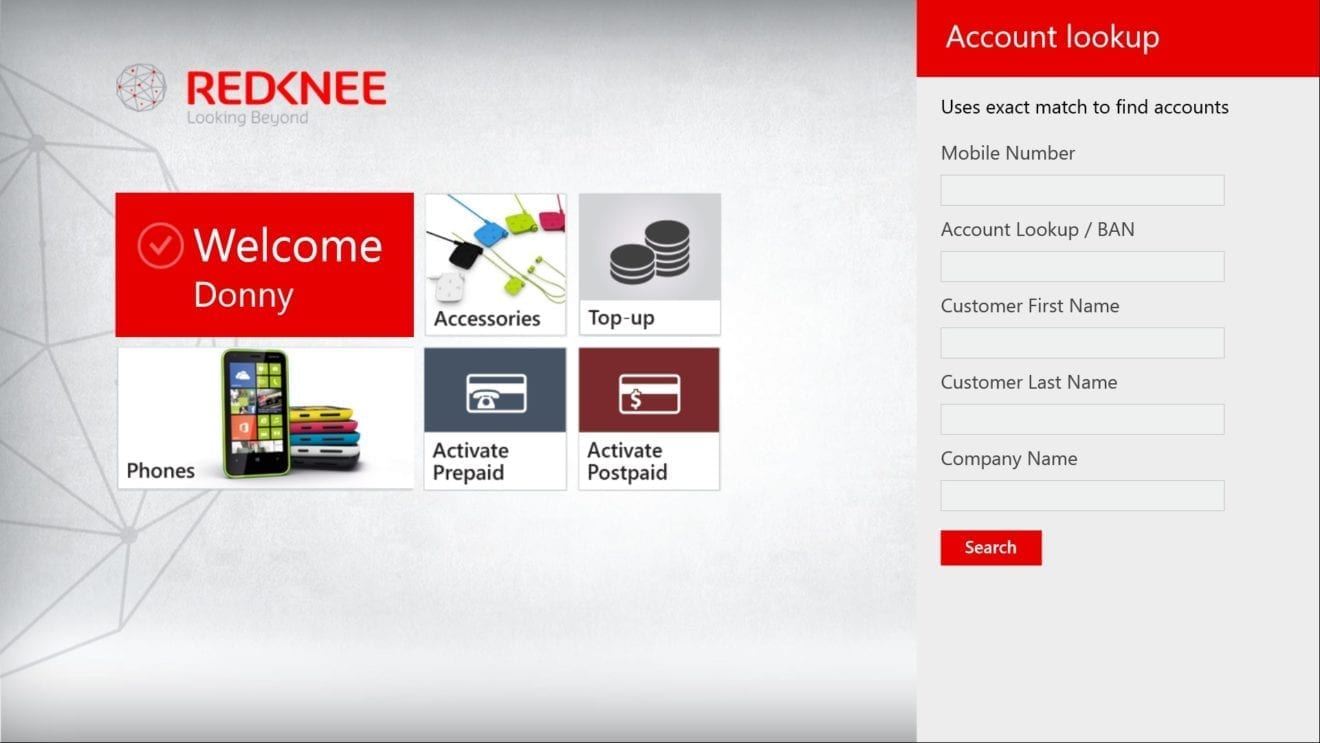
    Smart Communications, based in the Philippines, has awarded Redknee a services and support contract for an agile, flexible, and scalable converged billing, charging, and customer care platform.

    Redknee Unified promises service providers to enhance their competitiveness and maximize value by quickly launching new revenue streams and service offerings with multi-channel customer support.

    The solution provides a capable adaptive quota solution allowing customers to access data services on multiple devices at the same time, delivering an optimal user experience and an efficient use of resources.

    With Redknee Unified, Smart can benefit from improved time to market, by adding tool-based testing for product configuration and real-time configuration changes. Redknee’s multi-campus solution is deployed with geo-redundancy, enabling Smart to support its rapidly growing subscriber base with high quality and resilient backend, the vendor said.

    “We are excited to launch Redknee Unified in the fast paced Asia Pacific region,” said Danielle Royston, Redknee’s CEO. “Redknee’s strong client relationship with Smart allowed us to quickly transform the business support systems to deliver leading real-time monetization solutions to its major cellular brands.”

  • Airtel to launch VoLTE later this year

    Airtel to launch VoLTE later this year

    India’s Bharti Airtel has announced plans to launch VoLTE services later this year to counter new market entrant Reliance Jio Infocomm.

    Airtel is trialing VoLTE in five cities and plans to become the second operator in the nation after Reliance Jio to launch the technology.

    The launch could potentially allow Airtel to better compete against Reliance Jio’s strategy of offering free voice calls and only charging for data. The entry of Jio into the market has triggered a price war and compelled the nation’s operators to pursue consolidation in response.

    Airtel CEO Gopal Vittal detailed the company’s VoLTE plans at an event announcing the launch of Project Next, its latest initiative aimed at improving the customer experience.

    As part of the new project, Airtel has introduced a data rollover program enabling customers to carry over up to 200GB of data left unused in the previous month.

    The new initiative will also include improvements to the operator’s app, website and in-store experience, including the Family Promise program designed to allow postpaid customers to develop multiple customized plans for each family member over the MyAirtel app, enabling savings of up to 20%.

    Airtel revealed plans to invest up to 20 billion rupees ($309.8 million) on Project Next, and through the program aims to transform into a truly digital service provider.

  • Huawei joins CTO as ICT Sector member

    Huawei joins CTO as ICT Sector member

    Huawei has joined the Commonwealth Telecommunications Organisation (CTO) as an ICT Sector member, the membership category open to the private sector.

    The Commonwealth Telecommunications Organisation (CTO) is the oldest and largest Commonwealth intergovernmental organisation in the ICT field, representing 36 of the member states of the Commonwealth.

    “It gives me great pleasure to welcome Huawei Technologies as one of our members. Members of the CTO greatly benefit from knowledge and experience sharing,” CTO sectretary general Shola Taylor said.

    “Huawei’s membership will help strengthen our organization and its contribution to the use of ICTs for development across the Commonwealth.”

    Huawei president of global government affairs Victor Zhang added that the CTO “is a highly respected international body and it provides a strong platform for both the public and private sectors to exchange best practices related to the promotion and use of ICT innovation in the world today.”

    Full member countries of the CTO include Malaysia, India, Pakistan, Sri Lanka and the UK. ICT sector members include the GSMA, Intelsat, BSNL, Vodafone and Facebook.

  • Nokia wraps up Comptel acquisition

    Nokia wraps up Comptel acquisition

    Nokia said it has completed its acquisition of Comptel, a Finland-based telecommunications software company.

    Announced last February, the acquisition advances Nokia’s strategy to build a standalone software business at scale by expanding and strengthening its software portfolio and go-to-market capabilities.

    Comptel bolsters Nokia’s software portfolio by adding capabilities that help digital service providers bring new communications services to market faster, master the orchestration of services and order flows, capture data-in-motion and refine decision-making.

    When combined with Nokia’s OSS, BSS, analytics, security and cloud technology, Nokia will be able to offer the software intelligence and real-time network information to deliver better digital experiences and operations in a cloud environment.

  • Colt picks NEC, Netcracker for virtualization

    Colt picks NEC, Netcracker for virtualization

    Colt has selected NEC and Netcracker Technology to enable and support its large-scale OSS transformation and for support in the deployment of the next-generation of its infrastructure, including virtualization.

    Colt will leverage Netcracker’s future-proof, next-generation OSS and Service Orchestration solution, which is a part of NEC/Netcracker’s Agile Virtualization Platform and Practice (AVP).

    Colt is a global high-bandwidth connectivity provider that delivers services to metropolitan small, medium and large enterprises as well as wholesale carriers in nearly 30 countries, through its intelligent, purpose-built, cloud-integrated network known as the Colt IQ Network.

    Netcracker’s OSS and Service Orchestration solution, a component of NEC/Netcracker’s AVP’s Hybrid Operations Management solution, will enable Colt to optimize its physical network and quickly monetize new investments.

    Also, Netcracker’s solutions will also prepare Colt’s infrastructure for the use of both physical and virtualized environments.

    NEC/Netcracker’s Service Orchestration solution will give Colt the ability to enable new levels of provisioning automation. This will shorten the time it takes to deliver new services to customers, eliminate the risk of provisioning errors brought about by manual processes and give Colt more accurate views into the network in order to provide enhanced support.

    “Our customers continue to expect new services to be delivered to them faster, which requires us to optimize our intelligent network and pave the way for fast-growing bandwidth requirements,” said Rajiv Datta, CTO at Colt.

  • VNPT upgrades charging and BSS with Ericsson

    VNPT upgrades charging and BSS with Ericsson

    Vietnamese telecoms operator VNPT has contracted Ericsson to upgrade its charging and business support system.

    Under the deal, Ericsson will provide a new online charging system to support VNPT’s 40 million prepaid and postpaid subscribers. Financial terms of the contract were not disclosed.

    The Ericsson Charging System is replacing VNPT’s legacy infrastructure, and the contract also includes a backend IT peripheral system, which will simplify integration of existing IT applications. The backend system will take full advantage of the new charging features and provides a flexible platform for VNPT to deploy new and innovative services, Ericsson said in a statement.

    The new online system will be put in service by VNPT during the fourth quarter, allowing VNPT to launch 4G services on this new platform. It also marks an important step in the company’s digital transformation, the Sweden vendor added.

    “Ericsson’s modernization of our charging system gives us the agility needed to meet the changing needs of our subscribers who expect greater control, personalization and flexibility,” said Nguyen Nam Long, general manager at VNPT Network. “It also helps us prepare for the introduction of 4G and makes it easier to further develop our service offering.”

    With the new system in service, VNPT’s subscribers will be able to request and update account information in real-time and automatically get notifications on costs, balances, and bonuses. The system will also give VNPT a better understanding of subscriber behavior and make it possible to rapidly create personalized offers, for example charging individual subscribers for bandwidth or specific services.

    Denis Brunetti, head of Ericsson Vietnam and Myanmar, said the Ericsson Charging System will help VNPT reduce the overall service management and service delivery costs. It will also enable VNPT to increase subscriber satisfaction and to capitalize on new business opportunities.

    The Ericsson Charging System has been deployed by over 200 customers supporting around 2.1 billion subscribers worldwide, Brunetti noted.

  • CellMining launches Network NPS to drive subscriber retention

    CellMining launches Network NPS to drive subscriber retention

    CellMining in Israel launched Virtual Network NPS, touted as the first technology able to predict network detractors across the entire mobile subscriber base without the need for an NPS survey.

    By correlating the responses of surveyed subscribers with key quality indicators (KQI) observed and analyzed by CellMining’s Subscriber Network Analytics – such as low-quality VoLTE calls, slow video streaming, or frequent dropped connections when traveling – CellMining’s embedded machine learning model can actively predict the detractors from the entire subscriber base for which it has analyzed KQIs.

    CellMining said this breakthrough gives the marketing team the power to identify both detractors for retention campaigns and promoters who can be nurtured. It also directly provides the network team with insights for automating network configuration changes, performance optimization, and enhanced prioritization for network tasks, based on subscriber data including NPS metrics.

    “The impact of network quality on the brand NPS score is a major concern for network operators today, and a technology to predict detractors will be a game changer for them,” said Greg (Giora) Snipper, CEO of CellMining.

    “CellMining’s Virtual Network NPS gives operators the power both to automate network performance optimization and to prioritize future investment based on NPS metrics, as well as the ability to use this insight to inform marketing campaigns and business decisions,” said Snipper.

    Virtual Network NPS integrates with CellMining’s Network CEM Solution, which provides marketing and customer experience teams with market-wide customer satisfaction metrics that correlate subscriber experience data with parameters that include device type, cells, technology, service, and quality.

  • Equinix links to Oracle Cloud in Sydney

    Equinix links to Oracle Cloud in Sydney

    Equinix has announced the launched dedicated, private access to Oracle Cloud in its Sydney, Australia International Business Exchange (IBX) data center.

    Available via Oracle Cloud Network Service – FastConnect and the Equinix Cloud Exchange, access will be available for Oracle Infrastructure as a Service (IaaS) as well as Platform as a Service (PaaS).

    This direct access enables enterprise customers in this growing region to migrate compute, applications and data to Oracle Cloud in a high-performance, low-latency manner for an optimal user experience.

    This builds on previous announcements between Equinix and Oracle to offer direct connection to several Oracle PaaS and IaaS services, including database, Java, integration, analytics, compute and storage – in multiple regions around the globe. The addition of Sydney brings the total number of markets that Equinix is offering private access to Oracle Cloud to five globally.

    Cloud deployments in Asia Pacific, and specifically Australia, are on the rise. According to a recent report by IDC, 67% of all Australian organizations surveyed are embracing cloud, using public or private cloud for more than one or two applications or workloads. Yet, factors such as security and privacy concerns still inhibit public cloud adoption.

    Through the Equinix Cloud Exchange integration with Oracle FastConnect, customers in Australia can establish direct connectivity between their private IT infrastructure and Oracle Cloud. This enables them to fully realize the benefits of hybrid cloud – moving application, middleware and database workloads seamlessly between private IT infrastructure and Oracle Cloud on a private, dedicated connection.

    The Equinix data centers in Sydney are the most interconnected in Australia. Enterprise customers in Sydney are able to establish direct links to both of the continent’s largest peering points, as well as key submarine cable systems, and gain direct access to multiple network and cloud providers such as Oracle via the Equinix Cloud Exchange.

    Oracle Cloud delivers nearly 1,000 SaaS applications and 50 enterprise-class PaaS and IaaS services to customers in more than 195 countries around the world, and supports 55 billion transactions each day. Oracle Cloud Infrastructure is also part of the fast growing sector of cloud computing. According to a recent Gartner report the highest cloud growth is expected to come from IaaS, with a growth of 38.4% in 2016.

    The Equinix Cloud Exchange is currently available in 21 markets globally – Amsterdam, Atlanta, Chicago, Dallas, Frankfurt, Hong Kong, London, Los Angeles, Melbourne, New York, Osaka, Paris, Sao Paulo, Seattle, Silicon Valley, Singapore, Sydney, Tokyo, Toronto, Washington DC and Zurich.

  • Linux Foundation launches Open Security Controller Project

    Linux Foundation launches Open Security Controller Project

    The Linux Foundation has launched a new open source project focused on centralizing security services orchestration for multi-cloud environments.

    The Open Security Controller Project technology will automate the deployment of virtualized network security functions, such as next-generation firewall, intrusion prevention systems and application data controllers, to protect east-west traffic inside the data center, said the foundation in a statement.

    The project orchestrates the deployment of virtual network security policies, applies the correct policy to the appropriate workload, and it brokers services among cloud management platforms—resulting in seamless integration of multi-vendor virtual security controls.

    “Software-defined networks are becoming a standard for businesses, and open source networking projects are a key element in helping the transition, and pushing for a more automated network” said Arpit Joshipura, general manager of networking and orchestration at The Linux Foundation. “Equally important to automation in the open source community is ensuring security. The Open Security Controller Project touches both of these areas. We are excited to have this project join The Linux Foundation, and look forward to the collaboration this project will engender regarding network security now and in the future.”

    Founding members of the project include Huawei, Intel, McAfee, Nuage Networksfrom Nokia, and Palo Alto Networks.

    Open Security Controller Project technology is licensed under Apache 2.

  • Smart targets 70% LTE coverage by year end

    Smart targets 70% LTE coverage by year end

    The Philippines’ Smart Communications aims to make LTE services available in 70% of the population by the end of the year.

    A recent study from JP Morgan estimates that Smart’s nationwide LTE coverage reached 51.5% by the end of May, Smart VP of network planning and engineering Mario Tamayo said in a statement.

    Smart, the wireless division of PLDT, said the findings show that Smart is on track to meet the targets the company stipulated in the three-year network rollout plan the operator to the National Telecommunications Commission in July last year.

    The plan stated that the operator is targeting making LTE available to 95% of the company’s cities and municipalities by the end of 2018.

    The report also estimated Smart’s average broadband speeds at 11.1Mbps on a nationwide basis, ahead of rival Globe Telecom.

    Smart said it is currently re-equipping its cell sites to use low-frequency bands such as 700 MHz and 850 MHz to provide better indoor coverage, while simultaneously deploying high-frequency bands like 1800 MHz and 2100 MHz to increase the cell sites’ capacity.

    “We are asking for people’s patience and understanding as we are upgrading our network facilities. We assure you that we are taking steps to minimize the impact of these activities on our subscribers,” Tamayo said.

    “In the end, our commitment to all our subscribers is that they will enjoy progressively better mobile data services in the next few months, particularly for those using LTE devices.”

    To promote adoption of its LTE network the company has launched a new data package offer, Video Prime 99, that comes with 2GB of data and a subscription to the iflix and iWant TV streaming services. The offer is valid for seven days.