Category: Telecom

Retail News Asia is committed to providing both local and global retailers with the latest Telecom & Telco news throughout the Asian market. This on a daily base.

  • XOX inks MoU to deploy Voopee in Indonesia

    XOX inks MoU to deploy Voopee in Indonesia

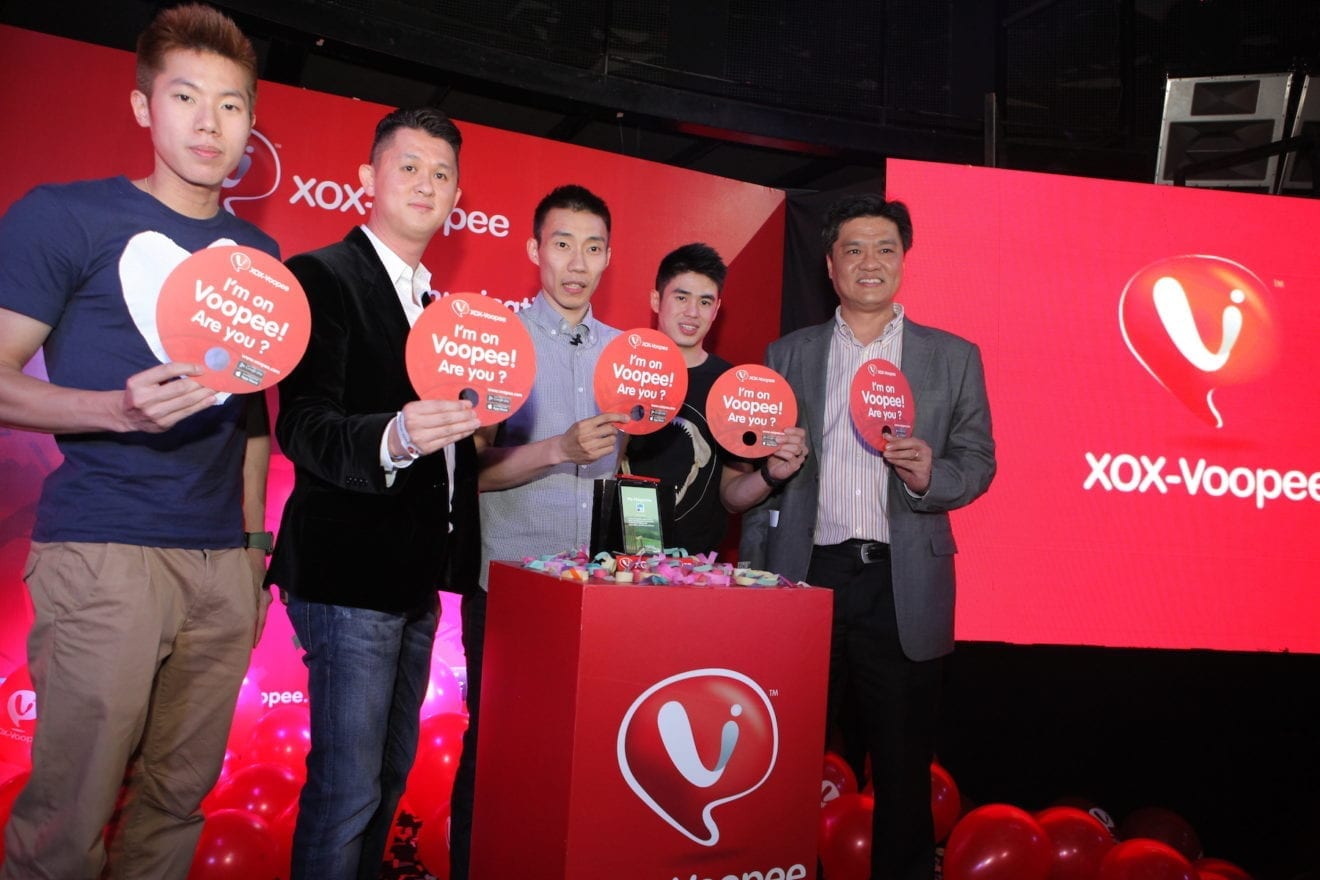
    XOX Bhd has inked a MoU with an Indonesian telco and an Islamic organisation to develop and deploy its Voopee solution – which is a SIM-free application for smartphoneswhich allows the user to call and text non-Voopee phone numbers.

    XOX said on Friday it unit XOX Media Sdn Bhd had signed an MoU with PT. Inovasi Telematika Nusantara and Pengurus Besar Nahdlatul Ulama (PBNU).

    “The plan is to conduct a study and the planning for the development and deployment of the Voopee solution under the Nahdlatul Ulama branding with all other accompanying solutions targeting to be adopted by PBNU members,” it said.

    XOX said PT Inovasi provides telecommunication services. As for PBNU, it  is the largest independent Islamic organisation in the world and also a charitable body funding schools and hospitals as well as organising communities to help alleviate poverty.

    The MoU will be for six month or until a commercial agreement is entered between the parties.

    XOX said the MoU is expected to have positive contribution to the earnings per share and net assets per share of the Group should the MoU be subsequently commercialised.

    What Voopee is about: Voopee, unlike other apps, allows the user to call and text non-Voopee phone numbers. It works like any normal mobile service.

    Voopee uses the power of the Internet via mobile data connection or WiFi to provide you with mobile services.

  • SK Telecom more than doubles Q2 profit

    SK Telecom more than doubles Q2 profit

    SK Telecom more than doubled its net profit during the second quarter due to factors including a record performance at chipmaker SK Hynix.

    The operator reported a net income of 620.5 billion won ($555.06 million), up 113.2% year-on-year. Revenue meanwhile grew 1.8% to 4.35 trillion won and operating income increased 3.9% to 423.3 billion won.

    But it was a challenging quarter for the operator’s core telecommunications business, with operting income on a non-consolidated basis falling 3.3% year-on-year to 462.3 billion won due to increased marketing expenses and depreciation costs from the 2.6-GHz spectrum acquired last year.

    Despite this non-consolidated revenue edged up slightly to 3.11 trillion won, due to increased mobile data usage and increased sales in new business areas including IoT solutions.

    Revenue from the SK Broadband division meanwhile increased 1.9% year-on-year to 730.1 billion won and the unit reported a record-high quarterly operating income of 31.6 billion won.

    Internet commerce arm SK Planet meanwhile posted a 5.4% increase in sales to 275 billion won, but still recorded an operating loss of 35.1 billion won.

    “Despite the challenges in the mobile telecommunications market, SK Telecom posted improved results due to the strengthened performance of its main subsidiaries,” SK Telecom CFO Ryu Young-sang commented.

    “SK Telecom will become a global leading ICT company by achieving meaningful growth in media and IoT, while maintaining leadership in the mobile network operations business.”

    The company is also planning to connect its AI platform to other services, including mobile services, media, commerce and its T Map mobile navigation service to generate differentiated big data it can use to provide customized products and services.

  • CityCell wins back spectrum through court order

    CityCell wins back spectrum through court order

    Bangladesh’s CityCell has won a reprieve from the recent cancellation of its mobile license and revocation of its spectrum.

    The Bangladesh Telecommunication Regulatory Commission had decided late on Monday to cancel CityCell’s license due to non-payment of fees.

    But after petitioning the Supreme Court, CityCell has managed to receive a court order temporarily suspending the license cancellation while a dispute over the outstanding fees is before the courts.

    CityCell’s service was suspended on non-payment grounds in October. The block was later lifted although the operator was not able to resume operations.

    At the time of the block the company had around 125,000 customers. The government was meanwhile demanding 4.77 billion taka ($58.6 million) in unpaid fees.

    The report cites an unnamed senior CityCell executive as stating that management is seeking to sell off the company to a foreign buyer, and believes that restoration of its spectrum rights will aid negotiations.

    As of 2015, CityCell was 44.5% owned by Singtel, 37.9% owned by Pacific Motors and 17.5% owned by Far East Telecom.

  • Telkom enters IoT alliance with Fujitsu

    Telkom enters IoT alliance with Fujitsu

    Indonesia’s PT Telkom has entered a two-year strategic partnership with Japan’s Fujitsu to pursue the co-creation of businesses utilizing the IoT and other digital technologies and leveraging Telkom’s network infrastructure.

    Under the collaboration, the companies will seek to apply IoT and other advanced technologies to sectors including smart cities, healthcare, manufacturing and logistics.

    The companies will initially conduct market research and verification of technical specifications, systems and service performance, before moving on to concept verification and then service co-creation.

    The collaboration is aimed at Indonesia’s large population of over 250 million and catering to the rapid expansion in internet usage in recent years. The companies said they aim to develop a digital society in Indonesia, and support Telkom’s goal of building a digital economy in the nation.

    Telkom operates a 106,000km broadband backbone across the country as well as a satellite system capable of serving Indonesia’s islands. The company is Indonesia’s largest operator, and is majority-owned by the government.

  • Singtel adds virtual Visa account to Dash app

    Singtel adds virtual Visa account to Dash app

    Singtel has introduced a new virtual Visa account on its all-in-one mobile payments app Dash.

    New and existing Dash customers now receive a Dash Visa Virtual Account that can be used for mobile payments at over 50,000 merchant points across the island.

    To start paying on their mobile, customers can sign in on the Dash app and top-up their Dash Visa accounts and start using them at Dash merchants and on local e-commerce sites such as Qoo10, Zalora and HungryGoWhere.

    Customers with compatible NFC-enabled Android smartphones will also be able to pay using their Dash Visa accounts wherever Visa payWave is accepted.

    Singtel also announced future plans for Dash to be included in global wallets such as Apple Pay, and enable QR code payments to expand into hawker centres. In addition to Nanyang Polytechnic, Ngee Ann Polytechnic and Singapore Polytechnic, Dash is also working towards adding more educational institutions to its merchant list to widen its reach in the youth segment.

    But Forrester predicts that the future of mobile wallets will go far beyond mobile payments. Chinese digital juggernauts Alipay and WeChat have morphed their mobile wallets into rich customer engagement platforms. But even then, these functionalities will by no means guarantee their success in markets outside China.

    In a new report, Forrester senior analyst Xiaofeng Wang said market-entry obstacles like different business cultures, consumer behaviors, and regulations make it unlikely that Alipay and WeChat will operate directly in other markets beyond targeting Chinese travelers.

    However, the successful marketing use cases developed on Alipay and WeChat Wallet will inspire third-party players like Apple and PayPal to morph their mobile wallets into more powerful customer engagement platforms.

    Wang lists three trends that will shape the mobile wallet market in the future. Emerging mobile wallets will develop features similar to Alipay and WeChat. “We expect mobile wallet innovations to happen more quickly in emerging markets with less legacy and competition. Paytm in India is a good example,” she elaborated.

    Mainstream mobile wallets will add customer engagement features. For example, to help its mobile wallet attract more traffic to offline stores, PayPal added features like “stores nearby” and “order ahead.”

    Space will open up for third-party providers. The West’s different ecosystem creates added competition for its mobile wallet players, and gives third-party providers opportunities to add customer engagement features and offerings to Western mobile wallets and uncover the potential of marketing.

  • 3 reasons why telco giant Viettel’s global expansion is booming

    3 reasons why telco giant Viettel’s global expansion is booming

    Strong international markets, favorable exchange rates and new services have led to record revenues. Vietnam’s military-run telecoms group Viettel said its pre-tax profit from the nine overseas market it currently has a foothold in rose 156 percent on-year to $41 million in the first half of 2017.

    The huge jump is due to encouraging business climates, new services and strategic projects and favorable exchange rates, according to Viettel Global.

    Overseas performances

    Other than established overseas markets such as Laos, Cambodia and East Timor, which all turned a healthy profit, new markets in Peru, Burundi and Haiti were the top contributors to the company’s success.

    During the first six months, total sales in Peru and Burundi increased by 82 percent and 38 percent respectively, exceeding the 29 percent on-year growth recorded in East Timor. Viettel Haiti also bounced back from the strong typhoon in 2016 with 15 percent sales growth in H1.

    Peru and East Timor were the two most promising markets for Viettel during H1. Pre-tax profit in Peru reached VND405 billion ($18 million), up 132 percent on-year.

    Meanwhile, the number of subscribers to Telemor, Viettel’s carrier in East Timor, jumped 42 percent more than targeted with total sales reached $15 million.

    Favorable exchange rates

    Unlike 2016, favorable exchange rates have contributed to a good start to this year.

    Stronger currencies in Mozambique and Cameroon, together with strict financial controls imposed by their governments, have helped Viettel bag huge profits from these countries.

    Profits from Peru and Haiti also are expected to gain 3-6 percent thanks to similar conditions.

    If the rates continue to be favorable this year, Viettel can earn huge profits from oversea markets, especially in Mozambique and Cameroon, where the figure is expected to reach $60-70 million, said Le Dang Dung, General Director of Viettel Global (VTG).

    New services and strategic projects

    Viettel has developed specific strategies and targets for each of its overseas markets, based on their demographics, economies and political situations, according to Dung. These plans focus on specific goals, but they all aimed at the main target of bagging $250 million in profit from Viettel’s nine international markets in 2017.

    Viettel has expanded its services to please customers of all ages. In Cambodia, the telecoms group, after long periods of being known as “the network of the elderly”, has taken steps to attract younger customers who are willing to spend more.

    By changing the color of the logo, hosting more events, and improving customer care strategies, Metfone, Viettel’s Cambodia company, has successfully attracted seven million subscribers during H1.

    Viettel’s Laos unit Unitel has quickly reached 4 million subscribers, and is the top provider there, while in East Timor, the group is using new frequencies to generate millions of dollars in profit and promote its new 4G data service.

    Peru is another market benefiting from the new 4G data service. Bitel, Viettel’s brand in Peru, has become the largest 4G network in the country with 5,000 residential centers through 3,000 stations. In the first six months of the year, the number of Bitel subscribers rose five times to over 2 million.

    According to Viettel Global, in order to maintain its leading position in most international markets while creating momentum for the future, the telco is now focusing on new business models such as IT solutions, electronic wallets, population management systems and tax solutions.

    During the first half, Viettel signed eight big contracts worth more than $17 million. The firm’s actual revenue reached nearly $12 million, four times higher than the total profit recorded for the whole of 2016.

    Viettel has set a target of reaching 50 million international subscribers in 2017, up 35 percent from last year. The military-run telecoms also plans to make $1.4 billion in total revenue from international investments this year, a 29 percent increase.  
  • Airtel Q1 profit shrinks 75% on strict competition

    Airtel Q1 profit shrinks 75% on strict competition

    India’s Bharti Airtel has reported a steep 75% decline in first quarter profit as a result of the intense competition triggered by the entry into the market of Reliance Jio Infocomm.

    Net profit fell to 3.67 billion rupees ($56.9 million), marking the Indian incumbents third straight quarter of declining income.

    Revenue meanwhile fell 2.6% to 255.46 billion rupees, with India revenue down 10% to 172.44 billion rupees, driven by a 14.1% decline in mobile revenues to 129.15 billion rupees.

    By contrast, African revenues grew 1.5% year-on-year in constant currency terms. But African mobile revenues fell to 48.53 billion from 62.49 billion a year earlier.

    The steep decline was felt despite the operator increasing its total customer base by 6.2% to 379.9 million across 17 countries. In India, the operator also reported a record 5.2 million customer increase in data subscriber base during the quarter.

    “The pricing disruption in the Indian telecom market caused by the entry of a new operator [Jio] continued with industry revenues declining over 15% YoY, creating further stress on

    sector profitability, cash flows and leverage,” Airtel CEO for India and South Asia Gopal Vittal commented.

    “Consequently, our [Indian] revenues declined 10% and EBITDA margin eroded by 5.3% YoY. We remain committed to providing the best value & experience to our customers and continue to invest towards it. As a result, our network witnessed data and voice traffic growth of 200% and 34% YoY respectively.”

  • CCI clears Vodafone-Idea merger

    CCI clears Vodafone-Idea merger

    The Competition Commission of India has approved the proposed merger between Indian operators Vodafone India and Idea Cellular, which would create the market’s largest mobile operator by subscribers.

    The regulator has cleared a proposal that would see Vodafone initially holding a 50% stake in the combined company, Idea’s major shareholder the Aditya Birla Group holding 21.1% and public shareholders owning 28.9%, the Economic Timesreported.

    Under the plan, Vodafone would then sell a 4.9% stake in the combined operator to the Aditya Birla Group for 39 billion rupees ($605.8 million) in cash upon completion of the merger.

    But both companies still require approval from the Securities and Exchange Board of India, which is investigating whether the deal would trigger an open offer under India’s takeover regulations.

    These rules require entities acquiring at least 25% of a listed company to make an open offer for an additional 26% from public shareholders.

    The proposed $23 billion merger between Vodafone and Idea Cellular was first announced in March. The combined company will have nearly 400 million subscribers and a revenue market share of around 40%, dethroning Bharti Airtel as the current market leader.

    High debts accumulated from spectrum purchases and the entry of Reliance Jio Infocomm into the market with its deep pockets and disruptive pricing have triggered a wave of consolidation in India’s telecoms sector. Reliance Communications and Aircel are also pursuing a merger, while Bharti Airtel  last month secured required approvals to acquire Telenor India.

  • China Unicom’s mixed ownership pilot approved

    China Unicom’s mixed ownership pilot approved

    China’s National Development and Reform Commission (NDRC) has given approval for a pilot program involving opening investment in China Unicom to the private sector, to evaluate transitioning to a mixed ownership model for the market’s state-owned operators.

    In an announcement, Unicom confirmed that the NDRC has given in-principle approval for the pilot program.

    But the details of the pilot – such as the identities of the private investors, pricing terms and percentage of shareholding to be allocated – will still require approval from various ministries.

    While media outlets are reporting that Alibaba and Tencent are expected to lead the private investment in China Unicom, the operator stressed that the company has not entered any legally binding agreement with any potential investors. But the company did not explicitly deny that negotiations with the internet giants are underway.

    “[Unicom’s controlling shareholder] is not aware of the source of  information in those media reports and has not entered into any legally binding documents, including framework agreement or subscription agreement, with any potential investor,” the company said.

    The Chinese government is conducting the pilot as part of plans to evaluate opening China’s telecoms sector up to private investment to reform the ownership structure and competitiveness of Unicom as well as rivals China Mobile and China Telecom.

    Unicom was selected for the pilot because it is the least profitable of China’s big three operators.

  • NTT Com launches MVNO eSIM pilot in Japan

    NTT Com launches MVNO eSIM pilot in Japan

    Japan’s NTT Communications has launched the nation’s first pilot of embedded SIMs (eSIMs) for connection and remote provisioning for MVNOs.

    The operator said it has built an environment for remote SIM provisioning on its MVNO platform in Hong Kong supporting both M2M and consumer devices.

    NTT Com will now launch verification tests in Japan in light of the GSMA’s efforts to promote the standardization of eSIMs for M2M and consumer models.

    Embedded SIMs can be remotely rewritten or changed for specific purposes without needing to replace the card. This can support providing customers with access to preferred mobile networks while traveling overseas and reduce the influence of overseas communication restrictions such as permanent roaming prohibitions.

    Updates or overwrites can be sent over the air through an operator’s subscription manager server (the M2M model), or can be set up to download a profile on receiving a request from the consumer, such as after selecting a mobile service and plan (the consumer model).

    The trial will involve verification of both methods of remote provisioning, as well as the evaluation of embedded technologies that could be combined with eSIMs to enable functionalities including secure communications, NTT Com said.

  • China Telecom expanding data center reach

    China Telecom expanding data center reach

    China Telecom is expanding its data center capacity in Hong Kong as part of the collaboration agreement with Global Switch signed in April.

    The company has added a new floor with its Shatin data center to increase server capacity, and has also arranged to build and operate the colocation areas for two of the new buildings from the in-construction Global Switch Tseung Kwan O (TKO) data center.

    The agreement with Global Switch is designed to allow China Telecom to tap into its partner’s extensive data center capacity outside of mainland China.

    The 45,000 square meter TKO data center will offer a power capacity of up to 70 mega-volt amps.

    It is expected to boast Tier 3 status and also provide access to local and international Tier 1 and Tier 2 carriers, and to boast connectivity to three subsea cables – the Asia-Pacific Gateway, the Asia-Submarine cable Express and the East Asia Crossing – due to its proximity to the TKO landing station.

    The facility is targeting LEED Gold and BEAM PLUS Gold energy efficiency ratings.

    China Telecom subsidiary China Telecom Americas has meanwhile expanded its network coverage in North America with three new PoPs, in Oregon and Illinois in the US and Quebec in Canada.

    The network expansion is aimed at bolstering the operator’s trans-Pacific proposition and helping the company stay ahead of growth in demand for bandwidth.

    “China Telecom is proud to be enhancing its Hong Kong data center portfolio with the expansion of its best-in-class Shatin facility and the addition of a new site at Tseung Kwan O in partnership with Global Switch,” China Telecom Americas President Joe Han said.

    “China Telecom’s latest investment in Hong Kong data centers and North America points of presence means our customers can expect reliable, low-latency, worldwide connectivity. This will enable them to deploy applications fast and flexibly.”

  • SK Telecom making quantum random number generator

    SK Telecom making quantum random number generator

    SK Telecom has developed a prototype of an ultra-compact quantum random number generator (QRNG) chip configured with entropy source and a deterministic random bit generator (DRBG).

    A QRNG generates true random numbers without any kind of pattern, meaning that it is ideal for use in cryptography.

    However, so far, the cost and size of QRNGs currently on market have prevented widespread adoption.

    With the successful development of an ultra-small QRNG chip measuring 5mm by 5mm, SK Telecom expects that it will soon be able to embed QRNG to a wide variety of IoT products, including autonomous vehicles, drones and smart devices, to dramatically enhance the level of security for IoT services.

    Although the price of each QRNG chip has not been set yet, the company said that it will be the lowest price ever for a QRNG.

    Meanwhile, SK Telecom is also developing a QRNG in the form of USB and PCIe. While the QRNG chip has to be embedded from the beginning of the product development, QRNG in the form of USB or PCIe can be simply connected to any product already on market to provide genuine randomness.

    “Understanding the importance of data and data security, SK Telecom has focused on developing quantum cryptography technologies to guarantee secure transmission of data in areas including artificial intelligence (AI), IoT and autonomous driving,” said Park Jin-hyo, SVP and head of Network R&D Center of SK Telecom.

    “We will continue to work with partners, both home and abroad, to accelerate the popularization of quantum cryptography and strengthen our presence in the global market,” said Park.

  • ZTE, Intel developing vEPC application

    ZTE, Intel developing vEPC application

    ZTE and Intel have released a white paper covering an NFV reference design for a containerized vEPC application as part of the two companies’ joint research into virtualization of telecoms networks.

    The two companies are jointly researching cloud native and NFV technologies. Intel is helping ZTE develop virtual evolved packet core applications based on cloud native architecture.

    The white paper highlights that such vEPC applications are compatible with and open to cloud platforms based on open source container technology. The vEPC application uses s microservice design to achieve network function atomization to speed delivery of new services.

    Each microservice is also run, upgraded and deployed separately to improve flexibility, the companies said.

    A vEPC microservice adopts a stateless design to achieve 99.999% carrier-grade reliability in commercial off the shelf hardware.

    The vEPC solution is expected to be fully compatible with 5G, with guaranteed upper layer service continuity for future wireless network evolution and upgrades.

  • Australians prefer biometrics to PINs for payments

    Australians prefer biometrics to PINs for payments

    More than half of Australians prefer fingerprints, voice or retina scans in place of PINs when authorizing, according to research commissioned by Visa.

    The research also indicates that 29% of Australians are ready to use an internet-connected device, like a smart home virtual assistant or connected fridge to make payments on their behalf.

    “Australian shoppers are at the forefront of the global evolution of commerce, providing a big opportunity to merchants and financial services providers to similarly lead their international counterparts in innovation,” Visa group country manager for  Australia, New Zealand and the South Pacific Stephen Karpin said.

    “As the Internet of Things and biometric capabilities become integrated into our everyday experiences, we’ll experience a significant shift in how payments are made. In our lifetime, we will see infinitely more choice in how Australians pay, from watches, fridges and mobile phones, to eyes and fingers. And we’ll experience personalization that we never thought possible, powered by artificial intelligence.”

    Visa estimates over three billion of its cards are circulating globally with about 44 million merchants accepting the Visa card as payment. The card company predicts that with the introduction of connected devices and the continued growth of digital commerce, those numbers will expand 30 billion different ways of paying and 400 million physical and digital acceptance points.

    According to Futurist Anders Sorman-Nilsson, ease of use will drive consumers to adopt new patment and commerce experiences. “Connected, AI enabled devices ready to pay will only be pervasive if the experience is easy, seamless and secure,” he added.

    Many of the new payment methods currently using smartphones rely on biometrics for authentication. More than half of respondents surveyed by YouGov (56%) said they are comfortable using their thumbprint, voice or retina for payment. According to the research, the appeal of biometrics is that it is more secure (45%) and the need to not have to remember a pin/password (40%) is driving consumer adoption and readiness.

    But while consumers are keen to embrace biometric authentication, less than half (39%) of respondents were willing to share their personal information in exchange for convenience in payments.

    Karpin attributes this hesitation to prevailing privacy concerns.

  • Philippines may lift foreign ownership caps on telcos

    Philippines may lift foreign ownership caps on telcos

    The Philippines government is considering lifting foreign ownership restrictions on local telecoms companies and other utilities to help stimulate the industry.

    The government has proposed to raise the current cap limiting foreign direct ownership to 40% of a utility company up to 70%. While the economic planning ministry believes the change could be implemented with the passing of a new law, the 40% cap is enshrined in the constitution and some analysts believe lifting the cap would require a constitutional amendment, which would be very difficult to pass.

    The Philippines’ duopoly of telecoms operators are both part owned by foreign investors. PLDT is around 25% owned by Hong Kong based First Pacific and Globe Telecom is 20% owned by Singtel and operated as a joint venture with Ayala Group.

    Philippines president Rodrigo Duterte has been firmly calling or the telecoms industry to improve services for Filipinos, and has threatened to bring in new competition to improve competition and quality. He has also asserted that foreign investment is needed to improve the Philippines’ telecoms sector.

    Duterte is scheduled to deliver his second State of the Nation Address today.