Category: Telecom

Retail News Asia is committed to providing both local and global retailers with the latest Telecom & Telco news throughout the Asian market. This on a daily base.

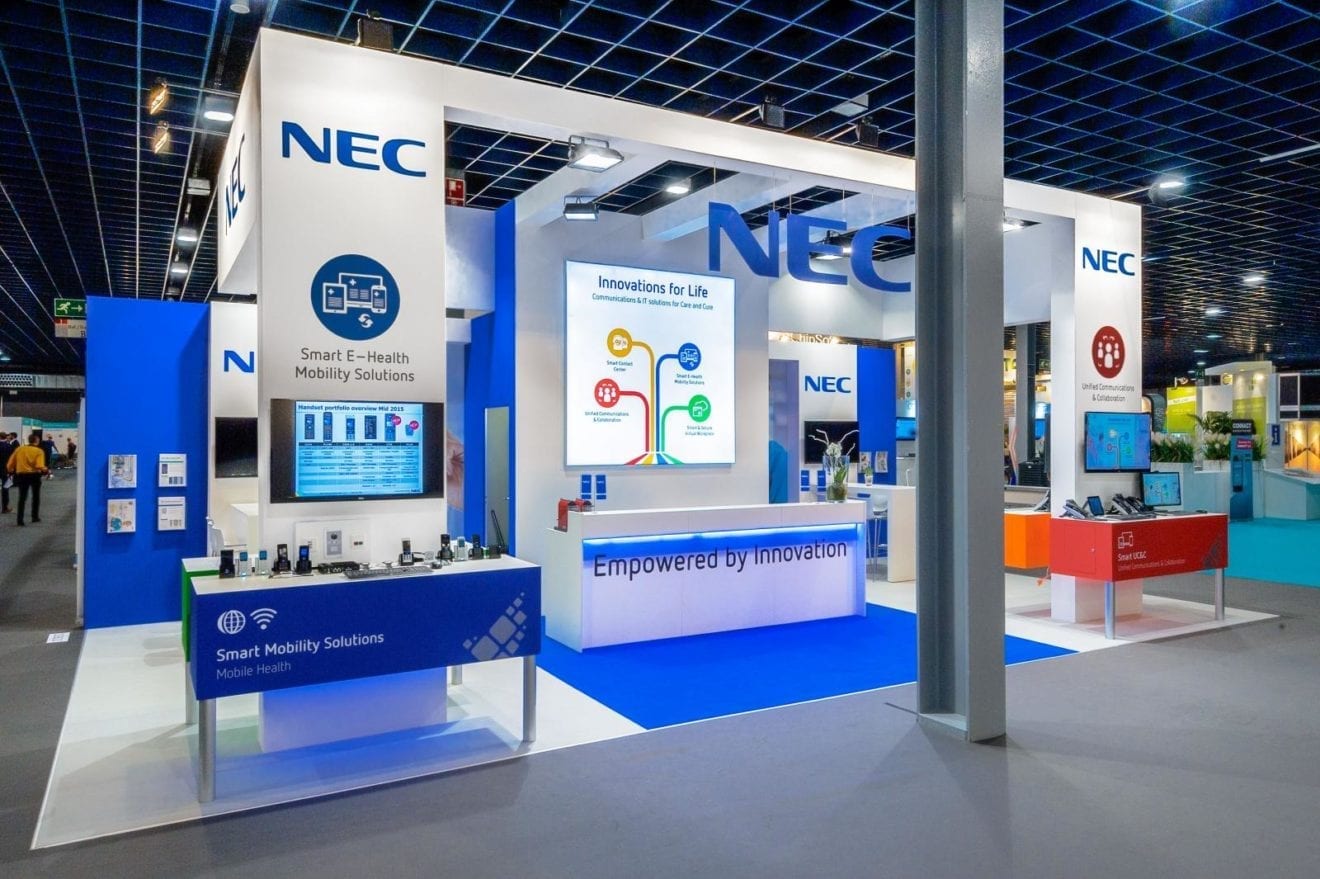
  • NEC launches 5G SDN/NFV platform in Malaysia

    NEC launches 5G SDN/NFV platform in Malaysia

    NEC Corporation of Malaysia and Netcracker have teamed up with red Hat, Juniper Networks and Dell EMC to launch a multi-vendor 5G-ready virtualization platform for operators and enterprises in Malaysia.

    The companies will launch a full SD/NFV solution capable of using IT virtualization technologies to virtualize entire classes of network node functions into building blocks that can be chained together to create communication services.

    The platform combined Netcracker’s hybrid operations management offering and business enablement applications with NEC and Netcracker’s virtualization deployment operations center and multilayer SDN controller.

    It also comprises Red Hat’s OpenStack platform, Juniper’s NFV networking services platform and Dell EMC’s PowerEdge NFV solution.

    Research from Netcracker indicates that the virtualization platform can reduce the time to market for new enterprise services by up to 70%.

    “To stay competitive in a global economy, service providers and enterprises in Malaysia will eventually have the need to adapt to 5G technologies,” NEC Malaysia Chong Kai Wooi said.

    “With our SDN/NFV 5G-ready solution, companies will be able to speed up the time-to-market for their potential communications services and/or any applications that run on 5G technology, improve cost efficiency and have the ability to offer new, revenue generating-services.”

    “As the industry moves quickly towards 5G technology, getting the management and orchestration environment right is critical to enable new IoT use cases requiring dynamic network slicing,” added  Netcracker CTO of SDN/NFV Aloke Tusnial.

    “This is a key focus for us at Netcracker and we are delighted to be part of this strong collaboration to bring 5G virtualization to market faster.”

  • Wi-Fi.HK extends service venues

    Wi-Fi.HK extends service venues

    The Office of the Government CIO (OGCIO) yesterday announced extending the number of government venues to provide free public Wi-Fi services through the Wi-Fi.HK Public-Private Collaboration (PPC) project.

    Initial venues equipped with free Wi-Fi include the Hong Kong Cultural Centre, Queen Elizabeth Stadium, Dr Sun Yat-sen Museum, Shatin Town Hall, Man Kam To Control Point, the Hong Kong Cultural Centre Piazza, the Tsim Sha Tsui Promenade and the Hong Kong Coliseum.

    HKBNcslHGC and SmarTone will provide services to the public, and plan to extend the service to other government venues in the coming months, including public parks, public transport interchanges and markets.

    “We shall open up more suitable government venues through public-private collaboration for private service providers to install equipment and provide Wi-Fi service with free usage time at their own cost,” undersecretary for innovation and technology David Chung said.

    “Private service providers are allowed to offer value-added services at these venues without any financing from the government while the public and tourists can enjoy free Wi-Fi service. This arrangement is favorable to all.”

    Chung said transforming Hong Kong into a Wi-Fi connected city will also help stimulate the development of more innovative, efficient and convenient digital services, and will help transform Hong Kong into a smart city.

    Wi-Fi.HK has been available since 2014 at various locations, with over 19,800 Wi-Fi hotspots being provided by around 50 participating organizations, including university campuses, tourist attractions, shopping centers and restaurants. The government is also providing free Wi-Fi services to students at youth service centers and study rooms under a subsidy scheme launched in March.

    The Wi-Fi.HK project has been co-organized by the Hong Kong Wireless Technology Industry Association (WTIA).

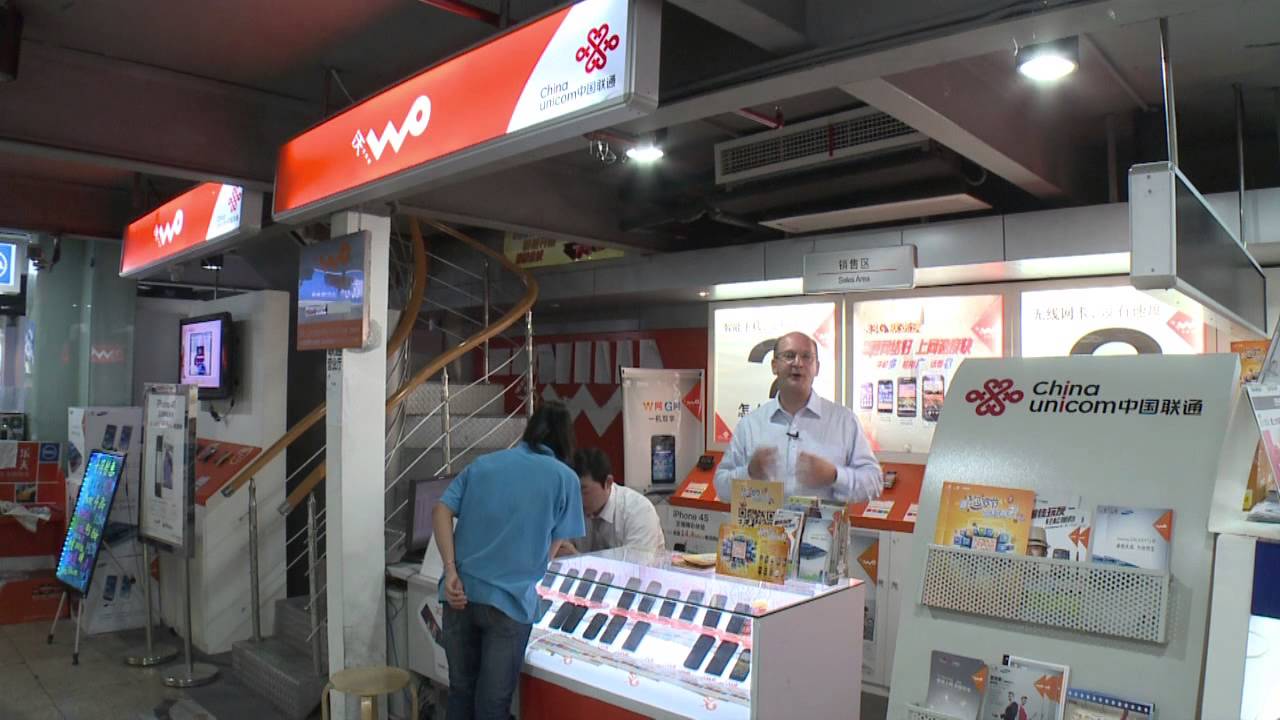
  • Unicom to get $11.65b funding injection

    Unicom to get $11.65b funding injection

    Chinese state-owned operator China Unicom will raise around 78 billion yuan ($11.65 billion) through investments from private companies including Baidu, Alibaba and Tencent.

    The operator announced it has secured approval from the National Development and Reform Commission (NDRC) for its plan to open up to private investment under the government’s mixed ownership reform pilot program.

    The company will bring in 14 new strategic investors including large internet companies, industrial groups and industry vertical companies and financial enterprises.

    Unicom has already signed framework agreements with internet and e-commerce giants Baidu, Alibaba, Tencent and Jingdong (owner of the JD.com brand).

    Other investors include retailer Suning Holdings, technology conglomerate Kuang-Chi Group, Didi Chuxing (China’s Uber) and data center services provider Wangsu Science and Technology.

    As part of the ownership reform, Unicom also intends to issue around 850 million shares to employees as incentive bonuses, representing around 2.7% of the company.

    Under the new structure, Unicom Group’s stake in the operator would be reduced to 36.7% from the current 62.7%. The new investors will pick up a combined 35.2% stake. Public shareholders in Unicom’s Hong Kong listed investment vehicle would meanwhile see their ownership reduced to 25.4% from the current 37.3%.

    Unicom plans to use the funds raised from the investment to enhance its 4G capacity and coverage, conduct 5G trials and build pre-commercial trial networks and invest in innovative new businesses.

    The development came as China Unicom reported a strong 68.9% growth in net profit for the first half of 2017 as the operator made progress with its turnaround efforts.

    Net profit reached 2.41 billion yuan, despite a 1.5% decrease in operating revenue to 138.16 billion yuan. But service revenue improved 3.2% to 124.11 billion yuan.

  • MobiFone to be privatized next year

    MobiFone to be privatized next year

    Vietnamese state-owned operator MobiFone has been instructed to complete a privatization and restructuring process known as equitization in 2018, while former parent VNPT has been instructed to equitize in 2019.

    The Ministry of Information and Communications plans to assess and approve the restructuring plans of MobiFone as well as Vietnam Television Corporation and VNPost by the end of the month.

    VNPT will meanwhile submit its own restructuring plan during the same period in advance of an equitization in 2019.

    The government has revealed plans to concentrate on improving the strength of the companies rather than maximizing revenue from the privatization processes, and will decide whether to sell stakes to a few strategic investors or to many individual shareholders on a case-by-case basis.

    MobiFone was separated from VNPT is 2014 as part of the latter’s restructuring plan, which also involved dividing VNPT’s operations into three subsidiaries concentrating on infrastructure, services and sales respectively.

    After its separation, MobiFone commenced its equitization plan and appointed appraisers for an IPO. The company has drawn interest from a number of potential international investors, including Singtel, Telenor, Australia’s Telstra and Sweden’s Comvik.

    To complete the process MobiFone will need to be reappraised – its last valuation in 2015 has expired. Previous valuations have suggested that the company could be worth over $4 billion.

  • Google adds voice search for 8 Indian languages

    Google adds voice search for 8 Indian languages

    Google has added voice search functionality for eight additional Indian languages including Bengali, Malayalam and Tamil.

    At the moment, the voice search feature is available in English and Hindi in India. The other languages being added are Gujarati, Kannada, Marathi, Telugu and Urdu.

    “Speakers of these languages will be able to use their voice to dictate queries — both in Gboard on Android as well as in Search through the Google App,” Google Technical Program Manager Daan van Esch explained through a video conference.

    Esch explained that in order to perform a voice-based search, users will need to set their language in the voice settings menu in the Google app.

    “Globally, we now support voice search for 119 languages. We are introducing support for 30 new languages today, of which eight are Indian languages,” he said.

    The update will require the user to just tap the microphone icon (usually on the home screen of Android smartphones) to start voice search.

    Google has been increasing support for Indian languages across its various products like Maps and Search as a large number of the new users coming online are Indic language users.

    Esch explained that Google has worked with native speakers to collect speech samples. Machine learning models were trained to understand the various sounds and words, thus translating words from sound to text in the process.

    “Voice input for each of these languages is expected to get better over time, as more and more native speakers use the product,” he added.

    According to an earlier report by Google-KPMG, an estimated 536 million Indians are expected to use regional languages while online by 2021 as compared to about 199 million users who are expected to access the web in English. This growth is driven by increasing affordability of devices and data charges as well as availability of more local content, the report had said.

    The report had also pointed out that apart from Hindi, Marathi and Bengali users are expected to drive volume growth, while Tamil, Kannada and Telugu users are expected to be among the most digitally engaged through 2016 to 2021.

    Voice search in these new languages will be available in Google Search on iOS as well. These will soon be extended to other Google apps and products, including the Translate app.

  • SK Telecom develops 5G repeater

    SK Telecom develops 5G repeater

    SK Telecom has developed and trialed a new 5G repeater as part of its preparations towards launching a commercial 5G network.

    The repeater has been applied to the operator’s 5G trial network near Gangnam Station in Seoul to provide denser coverage.

    It has been built with SK Telecom’s independently developed 5G relay technology to solve the issue of 5G coverage limitations caused by the narrow propagation characteristics of high-frequency radio signals in the above 6-GHz range.

    Park Jin-hyo, head of SK Telecom’s network technology R&D center, said the populous Gangnam area is one of the most difficult places to plan and build a network due to the presence of a large number of radio wave obstacles and high-density data traffic.

    “SK Telecom is moving closer to launching a commercial 5G network by applying key 5G technologies to our 5G trial network in Gangnam, an area with the highest data traffic,” he said.

    Using the 5G repeater, SK Telecom will now be able to more easily build 5G networks in other high-density areas, he added.

  • Singtel profit falls 6% in June quarter

    Singtel profit falls 6% in June quarter

    Singtel has reported a 6% decline in net profit for the June quarter as a result of lower contributions from the company’s minority-owned regional associates and workforce restructuring charges at wholly-owned Australian subsidiary Optus.

    Profit for Singtel’s fiscal first quarter fell 6% to S$892 million ($654 million), despite an 8% increase in operating revenue to S$4.23 billion.

    Singapore consumer revenue increased 2% due to growth in data usage, home services and equipment sales offsetting declines in voice and roaming services. Consumer revenue from Australia meanwhile increased 6% across mobile and fixed services.

    Group enterprise revenue meanwhile increased a slim 1% as growth in ICT services partially offset a decline in traditional carriage services. Digital services unit Group Digital Life’s revenue surged 91%, driven by digital advertising subsidiary Amobee’s strong performance across both social and media advertising.

    But Singtel’s share of pre-tax earnings from regional associates fell 3.8% – or 6.6% in constant currency – to S$673 million, as a result of the shrinking profit at India’s Bharti Airtel, which is facing intense competition due to the entry into the market of disruptive new entrant Reliance Jio Infocomm.

    Excluding the impact of Airtel’s 42% lower pre-tax profit contribution, Singtel’s underlying net profit would have increased 3%.

    By contrast, Indonesia’s Telkomsel increased its pre-tax profit contribution by 18% due to strong growth in data and digital services.

    “We’ve had a good start to the year with a more challenging business environment. This speaks to the resilience of our core consumer business and the investments we’ve made in the digital space in our efforts to grow new businesses,” Singtel group CEO Chua Sock Koong said.

    “We are encouraged by their performance as they scale up to capture the opportunities in the new economy.”

  • Unicom expects 69% profit growth for 1H17

    Unicom expects 69% profit growth for 1H17

    China Unicom has announced it expects to report a 68.9% increase in profit for the first six months of the year, partly as a result of improved cost efficiencies.

    The company estimates it earned a profit of 2.4 billion yuan ($359.9 million) for the six month period, despite a 1.5% decrease in overall revenue to 138.2 billion.

    Service revenue is expected to be up 3.2% year-on-year to 124.1 billion yuan, with mobile service revenue up 5.2% year on year.

    But due to intense competition in the fixed broadband market, China Unicom expects flat fixed line service revenue of 46.6 billion yuan. Combined with a decline in revenue from sales of telecoms products, total revenue is expected to have declined.

    But sales and marketing expenses, handset subsidies and other expenses were both lower year-on-year, leading to a projected 5.5% increase in ebitda to 43.6 billion yuan, representing around 35.1% of service revenue.

    Looking ahead to the second half of the year, Unicom cautioned that the mandated abolition of domestic long distance and roaming fees on September 1 and cyclical increases in competition will place increasing pressure on the company’s financial performance.

    Unicom will meanwhile act as the test subject for China’s planned mixed ownership model pilot program for the nation’s state-owned operators, bringing in private investors.

  • Singtel deploying Massive MIMO

    Singtel deploying Massive MIMO

    Singtel is deploying Massive MIMO (multiple-input multiple-output) technology commercially on its LTE-Advanced mobile network to improve the mobile data experience during special events.

    A precursor to 5G technology, Massive MIMO is an advanced solution used to boost network capacity in highly dense environments. The company plans to use the technology to improve mobile data speeds by up to 200% during busy periods.

    Singtel teamed up with Ericsson, Huawei and ZTE for the deployment of Massive MIMO technology at the Marina Bay area. Singtel rolled out the network boost at yesterday’s National Day celebrations, with other deployments planned for the Singapore F1 Night Race and the New Year countdown event.

    “On the joyous occasion of our National Day celebrations, Singtel is pleased to be pairing our newly-acquired 2.5-GHz spectrum with Massive MIMO technology to expand our network capacity and offer our customers an enhanced mobile experience at this and other special events,” Singtel group CTO Mark Chong said.

    Globally, large crowds gathered at events, such as concerts and festivals, use high volumes of data to share their experiences via real-time videos on social media.

    This extraordinary behaviour generates a dramatic spike in network traffic, presenting a challenge for operators to provide fast and consistent data speeds.

    Singtel has identified Massive MIMO as one of the solutions to the problem. Singtel will use Massive MIMO base stations featuring a large array of 64 antennas that improve spectral efficiency and cell capacity using innovations in radio technologies.

    The innovative antenna system channels signals to users’ specific locations instead of broadcasting across a geographical area. This multiplies the number of data paths from the cellular base stations, thus increasing network capacity and improving user experience.

  • Belize’s Smart goes live with FTS’ convergent billing

    Belize’s Smart goes live with FTS’ convergent billing

    Smart based in Belize has implemented FTS’ real-time billing and charging solution to support its expansion into 4G LTE as it offers innovative services to its customers.

    Supporting Smart’s LTE, 3G and 2G networks on a single platform, FTS’ Leap Billing solution includes convergent charging, billing, invoicing, customer management and partner management. In addition, FTS has provided Smart with a mobile solution, including prepaid IN gateway, voicemail and IVR systems.

    “Throughout the project FTS demonstrated its experience in implementing complex, multi-network solutions,” said Ernesto Torres, Smart’s CEO. “FTS’ billing solution enables us to provide new services while achieving an enhanced customer experience.

    As our growth continues, we look forward to FTS’ continued support.”

    Using FTS’ billing system, Smart can now configure and deploy real-time promotions, new pricing plans and loyalty programs. This enables the rapid delivery of innovative services such as shared data plans, social media packages and more.

    “This project demonstrates FTS’ ability to deploy complex, end-to-end, BSS and VAS systems,” said Avi Kachlon, FTS’ CEO.

    “This successful project marks another important milestone for FTS as we further expand our presence in the Caribbean and Latin American markets,” said Kachlon. “We are working closely with our customers to support their operations, and are looking forward to a long-term partnership with Smart.”

  • IDC names Smart City APAC Award winners

    IDC names Smart City APAC Award winners

    Hong Kong has been recognized in IDC’s third annual Smart City Asia Pacific Awards, scoring awards in two of the 14 categories.

    Hong Kong won in the transportation category for its Next Generation Intelligent Transport System, and in the smart building category for its Zero Carbon Building project.

    China meanwhile won in the smart meter category for its Shenzhen Smart Water project, and in the education category for its Hubei Public Services Platform of Education Resources.

    But the biggest winner was New Zealand, which picked up four awards in the smart grid, tourism/arts/culture, connected health and public works categories, followed by Singapore, which secured three awards in the administration, economic development and social services category.

    In total 18 smart city projects were represented across the 14 categories, due to ties in four categories – administration, education, land use/environmental management and smart buildings.

    “Asia-Pacific smart city projects in the past year have exhibited strong national development focus with an increasing citizen-centric personalization combined with ‘low investment-high impact’ agendas – all in hopes of attracting the right mix of manpower talents and lucrative foreign-direct investments,” commented Gerald Wang, head of IDC Government and Education Insights Asia Pacific.

    “This socioeconomic shift towards creating more localized and quality smart city ecosystems are notably influenced by new international and regional trade dynamics. The failure of the Trans-Pacific Partnership agreement and China’s increased efforts to boost its global leadership with endeavors such as the Belt and Road Initiative will continue to shape commerce and innovation drive in the region.”

    According to IDC, the key trends shaping the future of smart city programs in APAC include efforts to improve city economics and risk management, cybersecurity and compliance, socioeconomic growth and infrastructure as well as foreign investment and manpower development.

  • Wireless VR headsets to strain data networks

    Wireless VR headsets to strain data networks

    Wireless VR headsets will further strain telecoms networks, with data consumption from the devices set to grow by over 650% over the next four years to over 21,000 petabytes by 2021, Juniper Research predicts.

    When combined with traffic generated by VR headsets connected to PCs and consoles, this consumption will reach over 28,000 petaytes, the research firm said in a new report.

    VR requires fast data speeds to stream content effectively, ensuring that by 2021 data demand for each VR device is expected to exceed that of 4G, Juniper Research said. Growth in traffic will be driven by the need for higher image quality and framerates as VR becomes more mainstream.

    The report recommends that operators be brought into the VR standards conversation now to prepare for the growth in consumption and help make VR more accessible.

    Technologies designed to reduce the amount of data processing required, such as foveated rendering, will also need to be universally adopted.

    Meanwhile, although the first wave of the new generation of VR headsets has concentrated on single-user experiences, the report predicts that social VR will play a more important role in the future of the technology.

    Companies such as Facebook and WeChat are developing VR platforms and several popular VR games are incorporating social elements.

    “VR is currently seen as very isolating,” research author James Moar said. “The promise of having new worlds to explore is much more compelling when other people can share the experience, which needs social games and social interfaces, as well as the development of cross-platform standards.”

  • Nokia expands development, deployment of 5G First

    Nokia expands development, deployment of 5G First

    Nokia has announced plans to implement early 5G specifications, enhancing its ‘5G First’ portfolio with the 3GPP 5G Phase I protocol, to meet growing interest for 5G mobility applications emerging from operators, notably in markets like US, China, Japan and South Korea.

    In a statement, Nokia said the vendor will push for accelerated 3GPP industry standardization while building on early customer experiences with its Nokia 5G First end-to-end solution, launched last February.

    This 5G NR (New Radio) air interface standard, which is due in early 2018, is designed to support a wide variety of 5G devices and services.

    Nokia said it is building on extensive field experience already gained with Nokia 5G First, which has generated valuable insights into areas such as the use of radio propagation in higher frequencies, massive MIMO and beamforming, integration with existing networks versus standalone implementations, the use of small cells in 5G deployments, and the importance of cloud native core and cloud RAN technologies.

    ”Through 5G First, Nokia is evolving its 5G strategy to drive the industry rapidly towards the adoption of standards-based commercial applications as early as 2019,” said Marc Rouanne, president of mobile networks at Nokia.

    “Doing so will require broad cross-industry support, and we call upon regulators and governments to free up and enable the use of spectrum at low-, mid- and high-frequency bands for trials,” said Rouanne.

  • 3 HK upgrading 4G capacity on MTR

    3 HK upgrading 4G capacity on MTR

    3 Hong Kong has completed the first phase of a project to enhance its 4G network capacity at 18-high traffic MTR stations.

    The company has upgraded its equipment at the concourses of the Tsim Sha Tsui, Prince Edward, North Point, Quarry Bay, Yau Tong, Jordan, Mong Kok and Yau Ma Tei stations.

    The whole project is expected to be complete by July 2019, and will involve upgrades throughout stations and tunnels to increase its 4G network capacity at the 18 MTR stations manyfold.

    “Using mobile service at MTR stations has become an integral part of our daily lives. 3 Hong Kong is therefore working on 4G enhancement at 18 high-traffic MTR stations to boost capacity manyfold and strengthen the network,” 3 Hong Kong CTO of Mobile Daniel Chung said.

    “The project is gradually being extended to other stations. We are constantly monitoring 3 Hong Kong’s network performance to ensure that customers enjoy an advanced mobile network featuring comprehensive coverage, high capacity, high speed and high reliability, outside and inside of MTR stations.”

  • M1 launches nationwide NB-IoT network

    M1 launches nationwide NB-IoT network

    Singapore’s M1 has announced the launch of Southeast Asia’s first commercial nationwide narrowband IoT network.

    M1 and its partners are using the network to make available IoT solutions in fields including smart energy management for buildings, environmental monitoring, asset tracking and fleet management.

    The operator is today hosting industry partners and businesse to showcase the possibilities of IoT technology, including smart metering, smart NB-IoT GPS trackers, smart GPS locks, smart waste management through bins with alters to cleaners when they are full and even smart toilets that can detect when they need cleaning.

    “The launch of Southeast Asia’s first commercial nationwide NB-IoT network will accelerate our journey into a digital society,” M1 CEO Karen Kooi said.

    “The Internet of Things will open up an incredible array of fresh opportunities and innovation. We look forward to working closely with government agencies, technology partners, and customers to enable smart solutions for everything and everyone.”

    Rival Singtel has meanwhile announced plans to roll out a nationwide cellular IoT network supporting both CAT-1 and NB-IoT by end September.

    Singtel will use its cybersecurity operations to support businesses in deploying secure IoT solutions, and plans to invite business and technology partners to develop and test IoT solutions at its joint IoT Innovation Lab operated with Ericsson.

    “The launch of our network provides an ideal platform for the proliferation of IoT devices and applications,” Singtel CEO Bill Chang said.

    “With more businesses embracing the digital future, it paves the way for IoT adoption as Singapore advances towards becoming a Smart Nation. We welcome businesses to be part of the growing IoT ecosystem by leveraging on our robust infrastructure and network.”