Category: Telecom

Retail News Asia is committed to providing both local and global retailers with the latest Telecom & Telco news throughout the Asian market. This on a daily base.

  • Satellites key for 5G

    Satellites key for 5G

    Without next generation satellites, 5G networks will take longer to deploy, lack the necessary coverage and will be more expensive to build, a satellite industry executive told a keynote audience at CommunicAsia2017.

    Dr Ashok Rao, VP of product development at O3b Networks, said that the current generation of GEO, MEO and LEO satellites has a critical role to play in making 5G a reality, and that new networks will be transformative for the satellite business, during his presentation: “The Future of the Global Network.”

    The satellite business, he said, “is not a dinosaur industry for rural and remote communities any more.”

    There had been a “lot of innovation” in the satellite industry, and terrestrial infrastructure alone will not be able to deliver networks which can truly be rated as 5G.

    “A major characteristic of 5G is 99.9% coverage, and that’s where satellite comes in,” said Rao.

    “Traditionally satellite has been used in places which are remote and not well connected, but new use cases in 5G such as autonomous cars require the almost universal coverage which satellite can support.”

    Data hungry users are driving a big uptake in the use of mobile video, and satellites also has a role in delivering this capacity.

    Rao quoted UK research which claims that to deliver 5G in the UK requires an additional 400,000 masts, each about 25 meters high.

    “Britain is not a large geography, so imagine what would be required in larger countries,” he said.

    “But this is not going to happen in the UK, because of the zoning and community issues which would require negotiation.”

    Rao said next generation GEO satellites are significantly more powerful than those launched only ten years ago.

    Satellites launched in 2007 had a capacity of 8Gbps and download speeds of 2 Mbps, while those launched in 2020 will offer 800Gbps and 100 Mbps, respectively.

    “Satellites will enable low cost access to 5G, and reduce the capex burden on operators,” he said.

  • Ericsson, Microsoft to push IoT globally

    Ericsson, Microsoft to push IoT globally

    Ericsson will further strengthen the global Internet of Things (IoT) ecosystem with Microsoft by enabling enterprises to speed up the time it takes to launch mobile network-based IoT services.

    Their collaboration will help simplifying the launch of mobile network-based IoT services for enterprises.

    Ericsson IoT Accelerator allows enterprises to deploy their IoT solutions using Azure, which connects them directly to the ecosystem of mobile operators using the connectivity management service delivered by the Ericsson Device Connection Platform (DCPEricsson will further strengthen the global Internet of Things (IoT) ecosystem with Microsoft by enabling enterprises to speed up the time it takes to launch mobile network-based IoT services.

    Their collaboration will help simplifying the launch of mobile network-based IoT services for enterprises.

    Ericsson IoT Accelerator allows enterprises to deploy their IoT solutions using Azure, which connects them directly to the ecosystem of mobile operators using the connectivity management service delivered by the Ericsson Device Connection Platform (DCP), which is part of the Ericsson IoT Accelerator.

    Ericsson IoT Accelerator, a cloud-based, horizontal cross-industry offering comprising platform services and near-product services for telecom operators and selected industries, provides a continuous incremental set of functionality offered as a service to enable agile creation and deployment of solutions for IoT.

    The connectivity management service of the Ericsson IoT Accelerator allows telecom operators to design, launch and evolve managed IoT connectivity offerings towards enterprises requiring cellular connectivity.

    By cooperating with the continuously growing number of other telecom operators connected to Ericsson DCP, telecom operators can address the needs of global enterprises without making one-off investments alone. The platform gives the enterprise a unified service expEricsson will further strengthen the global Internet of Things (IoT) ecosystem with Microsoft by enabling enterprises to speed up the time it takes to launch mobile network-based IoT services.

    Their collaboration will help simplifying the launch of mobile network-based IoT services for enterprises.

    Ericsson IoT Accelerator allows enterprises to deploy their IoT solutions using Azure, which connects them directly to the ecosystem of mobile operators using the connectivity management service delivered by the Ericsson Device Connection Platform (DCP), which is part of the Ericsson IoT Accelerator.

    Ericsson IoT Accelerator, a cloud-based, horizontal cross-industry offering comprising platform services and near-product services for telecom operators and selected industries, provides a continuous incremental set of functionality offered as a service to enable agile creation and deployment of solutions for IoT.

    The connectivity management service of the Ericsson IoT Accelerator allows telecom operators to design, launch and evolve managed IoT connectivity offerings towards enterprises requiring cellular connectivity.

    By cooperating with the continuously growing number of other telecom operators connected to Ericsson DCP, telecom operators can address the needs of global enterprises without making one-off investments alone. The platform gives the enterprise a unified service experience for their entire device fleet.

    Also, Landmark chose Ericsson to build communications infrastructure for its intelligent micro grid ecosystem across North America.

    The program includes Ericsson’s Zero Site communications platform, cloud, core and IoT software solutions. Ericsson will provide micro grid management, integrating communications for the industrial IoT with battery storage applications and grid-control software.

    Also, Landmark chose Ericsson to build communications infrastructure for its intelligent micro grid ecosystem across North America.

    The program includes Ericsson’s Zero Site communications platform, cloud, core and IoT software solutions. Ericsson will provide micro grid management, integrating communications for the industrial IoT with battery storage applications and grid-control software.), which is part of the Ericsson IoT Accelerator.

    Ericsson IoT Accelerator, a cloud-based, horizontal cross-industry offering comprising platform services and near-product services for telecom operators and selected industries, provides a continuous incremental set of functionality offered as a service to enable agile creation and deployment of solutions for IoT.

    The connectivity management service of the Ericsson IoT Accelerator allows telecom operators to design, launch and evolve managed IoT connectivity offerings towards enterprises requiring cellular connectivity.

    By cooperating with the continuously growing number of other telecom operators connected to Ericsson DCP, telecom operators can address the needs of global enterprises without making one-off investments alone. The platform gives the enterprise a unified service experience for their entire device fleet.

    Also, Landmark chose Ericsson to build communications infrastructure for its intelligent micro grid ecosystem across North America.

    The program includes Ericsson’s Zero Site communications platform, cloud, core and IoT software solutions. Ericsson will provide micro grid management, integrating communications for the industrial IoT with battery storage applications and grid-control software.

  • Samsung, VMware team up for simpler IoT

    Samsung, VMware team up for simpler IoT

    Samsung Electronics and VMware announced a new collaboration to help simplify Internet of Things (IoT) for both information technology (IT) and operational technology (OT) teams by expanding end-to-end IoT solutions for industrial and enterprise customers.

    The companies will showcase the combination of the Samsung Artik Smart IoT platform with VMware Pulse IoT Center, offering a secure, enterprise-grade, end-to-end IoT infrastructure solution that allows IT and OT teams to have complete control of their IoT use cases, from the edge to the cloud.

    In addition, the companies will showcase the integration of the Samsung Artik 530 with Liota (Little IoT Agent), a vendor-neutral open source software development kit developed by VMware, to help enterprise customers with the management, monitoring and securing of their IoT implementation.

    While Samsung Artik Smart IoT platform provides customers with all the upfront IoT hardware and software they need to kick start their IoT developments, VMware will help manage IoT infrastructure from the edge all the way to the cloud.

    The combination will provide an end-to-end solution, including the hardware and software components, security, cloud connectivity, building services, and ability to monitor and manage the products over the product’s lifecycle.

    “Being able to monitor and manage these (IoT) solutions across devices at enterprise scale both on premise and in the cloud is critical for successful rollouts,” said Curtis Sasaki, VP of ecosystems at Samsung Strategy and Innovation Center.

  • Nokia, Apple bury hatchet in patent dispute

    Nokia, Apple bury hatchet in patent dispute

    It’s an upgrade in the relationship between two companies. Nokia and Apple said Tuesday they were burying the hatchet in a bitter patent dispute with a cooperation agreement and an undisclosed cash payment by the U.S. tech giant to the Finnish group.

    By settling their ongoing intellectual property dispute, the two companies would “move the relationship… from being adversaries in court to business partners,” Nokia’s chief legal officer Maria Varsellona said.

    Following years of clashes, Nokia and Apple originally signed a licensing agreement in 2011.

    But last December, the Finnish group, once the world’s top mobile phone maker, complained that Apple was using Nokia technology in many products without paying for it.

    And it filed lawsuits in Germany and in the United States.

    Concretely, the dispute concerned 32 patents for innovations related to displays, user interface, software, antennae, chipsets and video coding.

    The deal reached on Tuesday would put the two companies’ relationship back on an even keel, with Nokia providing “certain network infrastructure products and services to Apple,” the statement said.

    Apple would “resume carrying Nokia digital health products (formerly under the Withings brand) in Apple retail and online stores, and Apple and Nokia are exploring future collaboration in digital health initiatives,” it continued.

    “Regular summits between top Nokia and Apple executives will ensure that the relationship works effectively and to the benefit of both parties and their customers.”

    Apple’s chief operating officer Jeff Williams said the U.S. giant was “pleased with this resolution of our dispute and we look forward to expanding our business relationship with Nokia.”

    The two sides did not disclose the financial details of the deal.

    But Nokia would receive “additional revenues during the term of the agreement,” the Finnish group said.

    The up-front cash payment would allow Nokia to “provide a comprehensive update of its capital structure optimisation programme,” a restructuring plan launched in late 2015, which may now be lighter thanks to the payment by Apple.

    Nokia’s shares were showing a gain of more than seven percent stake on the Helsinki Stock Exchange at around 10:00 GMT, while the overall market was up by just 0.8 percent.

  • Bonus plan a win-win for customer and operator

    Bonus plan a win-win for customer and operator

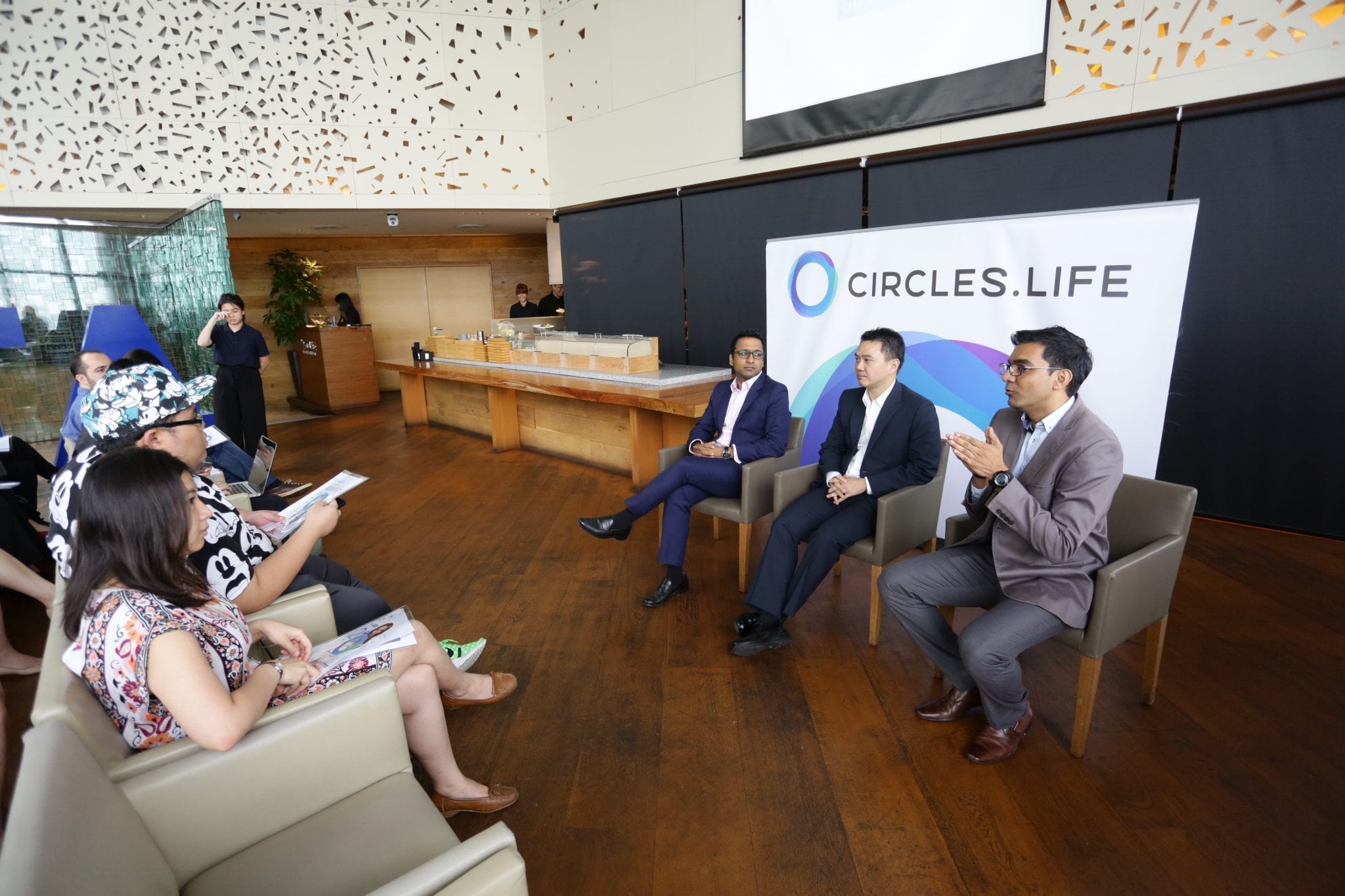
    n unnamed customer of new Singapore mobile operator Circles.Life likes the service so much that he has referred over 600 new customers, thus earning himself 100 GB of free data, said Donald Chan the firm’s international director.

    Chan outlined his company’s business model and strategy in a keynote on Day One of CommunicAsia2017 and included details of their data bonus plan-their cornerstone of customer retention.

    He described Circles.Life as Asia’s “first fully digital telco”–from customer acquisition to service delivery. Customers communicate with the company through their iOS-or-Android app, and 95% of queries are resolved via this channel.

    The only aspect of the experience which is not digital is SIM card delivery (via courier) to the customer two days after ordering.

    To drive retention, Circles has a bonus plan where customers who recruit new customers earn 200MB of data. The company maintains a leader board, and the current top rank is held by a customer who has recruited 600 others.

    Circles has no contracts-customers for the post-paid service engage on a month-to-month basis.

    The pricing plan, said Donald Chan, is like “buying a pizza” and deciding on the toppings later.

    The base plan is S$28 per month with 4GB of data, with up to 20GB of extra data for S$20 per month.

    Customers can go into the Circles app and determine settings on voice and data use, alerts and caps.

    Chan said Circles, which uses the M1 network in Singapore, was a “niche player” designed to appeal to “tech-savvy younger consumers who want control and flexibility.”

    He said the company was looking to expand to “three-to-five” other regional markets in the next five years.

    Circle’s proprietary operating system, which is “plug-and-play,” is easy to connect to any other MNO, limiting the cost of starting up in new markets.

  • ST Electronics launches WISX IoT platform for smart cities

    ST Electronics launches WISX IoT platform for smart cities

    Singapore Technologies Electronics Limited (ST Electronics) announced the launch of its World of IoT – Sense & eXchange (WISX IoT) platform on Day One of CommunicAsia2017.

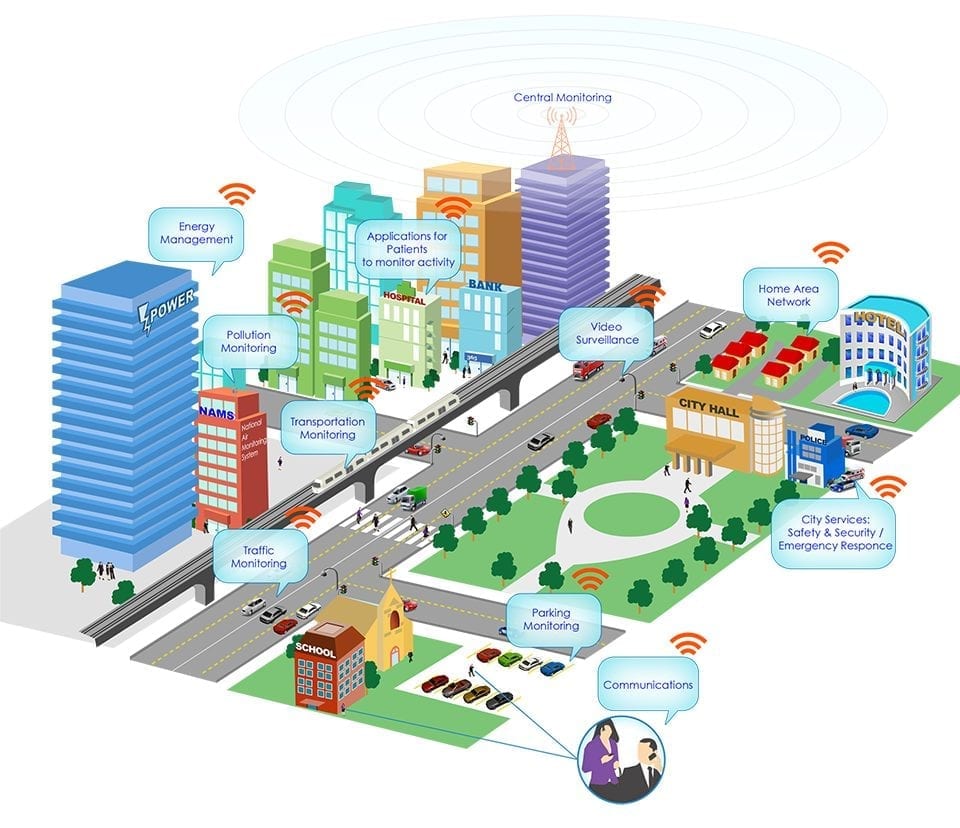
    The WISX IoT platform is designed to integrate multiple IoT solutions into a common platform that facilitates data exchange and analysis. Developed to support IoT solutions for smart city initiatives worldwide, the platform aims to enhance city services and improve the quality of life for residents. The platform can be used for applications such as integrated estate management.

    The WISX IoT platform leverages ST Electronics’ knowledge in deploying and operating wireless communications networks for automated utility meters and infrastructure, lighting, public safety and environmental solutions and sensors in Singapore as well as global cities. The goal is to provide a multi-domain platform with advanced communications and cross-domain data analytics to benefit residents. The platform optimizes the management of cities by generating actionable insights from the data collected from individual IoT solutions and enables city planners to better understand what matters most to people.

    “Our successful track record in deploying more than 15 million wireless communications nodes worldwide has given us the expertise to develop a platform that seamlessly integrates IoT solutions across different domains,” Ravinder Singh, president, ST Electronics. “The WISX IoT platform will better equip city planners with valuable insights so that they can make informed decisions and improve the operational efficiency of city services.”

    The WISX IoT platform is showcased at the CommunicAsia2017, from 23 to 25 May at Marina Bay Sands, where its capabilities will be demonstrated through an Integrated Smart Estate Management case study. A suite of ST Electronics’ smart solutions comprising indoor and outdoor lighting, automated water and electrical meters, lift monitoring solution, environmental sensors, car parks and security systems is integrated in the platform as part of an overall Smart Estate showcase.

  • AIS projecting 5% revenue growth for 2017

    AIS projecting 5% revenue growth for 2017

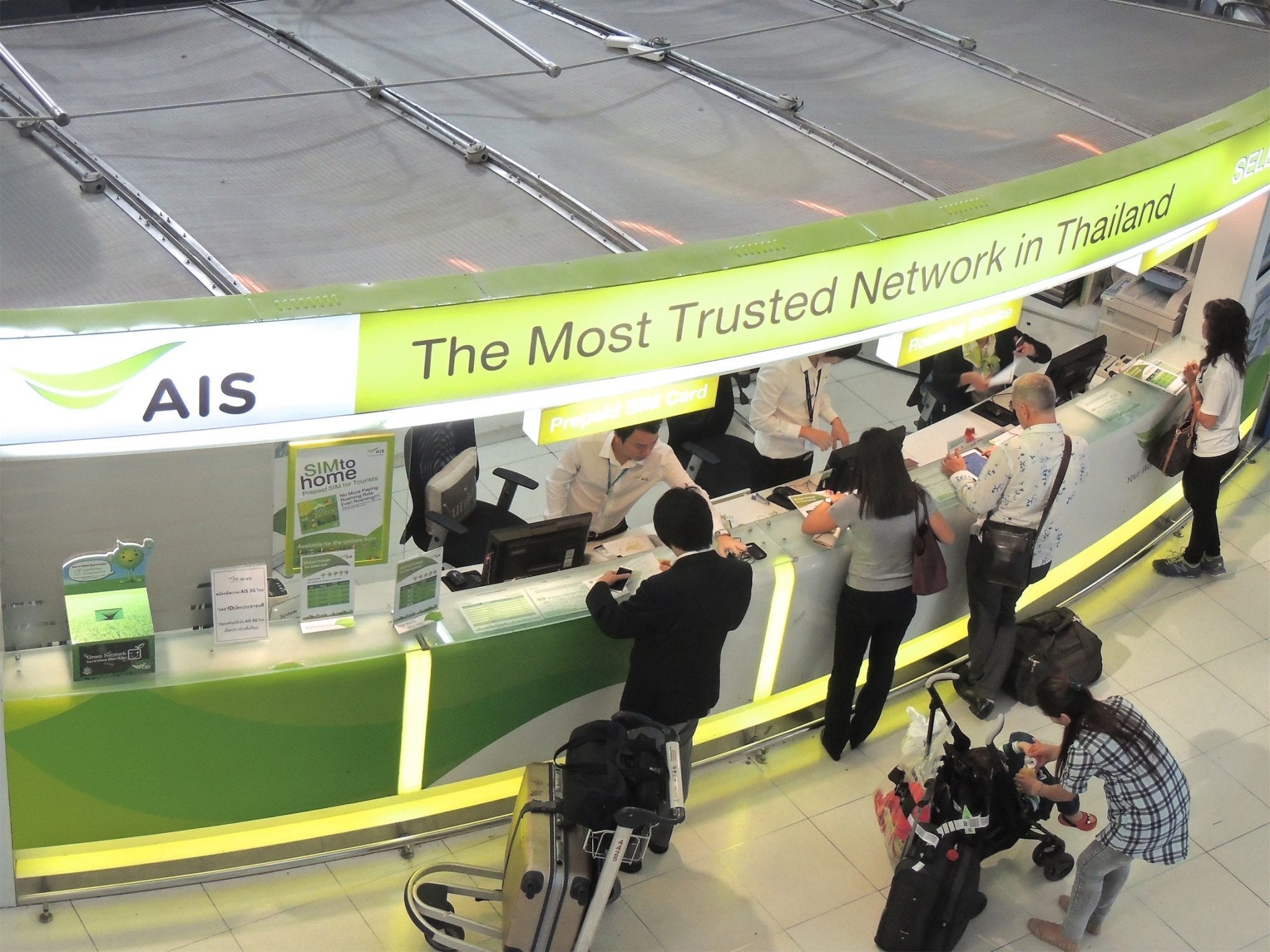
    Thailand’s AIS is projecting a 5% increase in revenue and a 44% growth in ebitda this year as a result of strong growth in 4G customers.

    AIS VP of investor relations Nattiya Poapongsakorn as stating that the operator is expecting service revenue for the year of 129 billion baht ($3.75 billion), with the majority expected to come from data services.

    AIS’ total 4G customer base roughly doubled in the past 12 months to reach 12 million by the end of March, which compares to a 3G customer base of 24.6 million and a 2G subscriber base of 4 million.

    AIS aims to increase its revenue market share to 50% this year, up from 48% as of March. She said the operator’s 4G users have an ARPU of 400 baht, compared to just 250 baht overall.

    For the first quarter, AIS reported service revenue of 31.4 billion baht, with data services accounting for 57% of this.

    The operator meanwhile plans to spend around 45 billion baht to expand its networks in 2017, with 40 billion to be spent on mobile networks and the remainder on fiber infrastructure. But the company plans to reduce its handset subsidy budget after incurring subsidy costs of 10 billion baht last financial year.

  • Minister Ibrahim opens CommunicAsia2017

    Minister Ibrahim opens CommunicAsia2017

    “They say ‘change is the only constant’, but change has never come at a faster rate,” said Ibrahim. “Convergence and disruption are transforming the way we operate. Every so often, we see another Airbnb or Uber come along, up-ending the way our economies function.”

    Global upheaval

    “Across the world, we see greater calls for protectionism,” he said. “I am sure we recognize this reality in our countries. But how do we deal with such upheaval?”

    “We can, of course, try to protect our economies and close them off-take the easier path. But history has shown that those who resist change eventually fall behind and end up playing catch-up.”

    Digital strategies

    “As ministers and policy-makers, we have been looking at the policies to prepare our country, so that we are digitally ready to thrive in the future economy,” said Ibrahim. “The TechSkills Accelerator, or TeSA, we launched last year aims to deepen skills and capabilities. Over 10,000 ICT professionals have gained from TeSA so far.”

    “We will be training another 10,000 public servants in data science to improve capabilities in the public service. We are also reaching out to the small medium enterprises. With the SMEs Go Digital program, we want to help our small businesses scale up and boost productivity through technology.”

    Culture of experimentation

    “We want to encourage a culture of collaborating, sharing and experimenting,” said the Minister. “One way we are doing this is to provide dedicated spaces and tools for people to tinker around with innovative projects, and exchange ideas with others in the community.”

    “The PIXEL Lab at the Jurong Regional Library is one such space. Tools and equipment like 3D printers and micro-controllers are available for anyone who wants to play around with them.”

    Regulation without stifling innovation

    “How do we regulate without stifling innovation? Last year, the Monetary Authority of Singapore, or MAS, launched a regulatory sandbox for financial institutions and FinTech players. The idea is to provide a conducive space where certain regulatory requirements are relaxed for a period of time, to encourage firms to test their solutions. If the experiment fails-and there will be some that do, it does so within a confined space, without major impact on our financial system.”

    “Digital is the future, but the future is not only digital,” said Ibrahim. “I believe analogue will remain for some time in many of our countries. We must look into harnessing the benefits of digital to transform older, analogue processes and sectors. This is one way to ensure a more inclusive and equitable distribution of benefits we gain from technology.”

  • Viu debuts in Thailand

    Viu debuts in Thailand

    Viu has officially launched in Thailand, offering premium Asian content with Thai subtitles, comprising the latest dramas and variety shows from Korea and Japan.

    This brings the service to 15 markets including Hong Kong, Singapore, Malaysia, India, Indonesia, the Philippines and the Middle East namely Bahrain, Egypt, Jordan, Kuwait, Oman, Qatar, Saudi Arabia and United Arab Emirates.

    “The Hallyu which is sweeping across Asia is notable in Thailand and we are pleased to see that Viu has already recorded over 820,000 fans on Viu Thailand Facebook page even months before our launch,” said Janice Lee, managing director of PCCW Media Group.

    “Leading K-communities and die-hard Korean fans in Thailand all eagerly await Viu’s service launch to access our vast library of premium Korean and other Asian content,” said Lee.

    She said Viu research shows that 93% of online population in Thailand have watched videos on the web.

    “We are fully leveraging this surging trend with a two-pronged approach of our services: ad-supported free viewing of their favorite shows and subscription services with express content access and premium features such as unlimited downloads, 1080p HD video quality and ad-free video viewing,” said Lee.

    “As Thailand is one of the most highly Internet penetrated markets with Millennials who are very receptive to online video viewing and digital advertisements, we expect Viu Thailand to mirror the success we have in other Asian markets with healthy growth in subscription and advertising revenue in due course,” she added.

  • Viacom launches global product development group

    Viacom launches global product development group

    Viacom has launched the global product development group, a new, streamlined team dedicated to creating multiplatform products for audiences around the world, with a focus on video content.

    The group has been charged with establishing a unified strategy for developing digital applications and websites for Viacom’s teen- and adult-oriented brands, including BET, Comedy Central, MTV, Paramount Network, VH1, TV Land, CMT and Logo.

    The group will work closely with Viacom’s brands and technology, ad sales and content distribution functions to ensure these products both enhance how audiences engage with Viacom’s content and support the Pay TV ecosystem, such as through the use of authenticated video.

    Among the group’s initial priorities is expanding Play Plex, Viacom International Media Networks’ (VIMN) suite of mobile apps, to the US and other key markets to create a seamless video-on-demand solution for global audiences.

    It is currently in the process of transitioning Viacom’s worldwide websites to a single web framework, which will ultimately help to deliver tailored content to audiences based on their geographic location.

    Led by Dan Reich, who has been appointed SVP, the Global Product Development Group brings together product teams from across Viacom’s adult brand portfolio, VIMN and corporate.

    In this expanded role, Reich will oversee the integration of these teams, fostering greater collaboration and helping to prioritize and scale resources.

  • YTL uses 4G to “leapfrog” region

    YTL uses 4G to “leapfrog” region

    Malaysian mobile operator YTL plans to speed up the pace of digital innovation as it challenges incumbents in its home market, says the company’s CEO Wing K Lee.

    Lee is set to address the CommunicAsia2017 Summit today on the subject of “A Nationwide 4G Leapfrog.” He says YTL’s six-year journey from Wimax start-up to operator of Malaysia’s first 4G LTE service in June last year has “lifted the standard of competitiveness” on mobile internet.

    Although granted a Wimax license at the same time as other new competitors, YTL took longer to go to market with its product and spent more time building its geographical coverage.

    It followed up its original 2010 launch with its LTE network, built by network partner Samsung Electronics, which also offers VoLTE. The network covers around 85% of Malaysia with data speeds as high as 100 Mbps.

    YTL’s “digital roadmap” and experience serves as a regional case study on “leapfrogging”: using new technology in a greenfield environment to create better infrastructure than more advanced areas which developed their tech infrastructure earlier on legacy frameworks.

    “As a completely greenfield player, we had the good fortune to start from a clean slate, free of legacy processing and thinking,” says Lee. “So we created a digital-first experience-from automation to care-for both our customers and our dealers.”

    Skill-sets of the century

    Another game-changer came four years ago, when YTL won an open tender from Malaysia’s Ministry of Education to provide 4G broadband in all public schools.

    The operator has partnered with Google to deploy 4G Chromebooks to schools throughout Malaysia, integrating Google Apps for Education into its cloud-based learning platform which supports 10 million students, teachers, and parents.

    Cloud cover over Malaysia

    Given the national footprint, YTL uses a cloud-based approach to enable “anywhere, anytime learning” and instill a “21st century skill-set” in young Malaysians.

    Lee says the way forward for YTL was to continue to invest in the cloud to create a new platform to deliver value.

    The education project, he says, was a good example of how the company wants to use connectivity in a transformative way to create new services and products, often in collaborative partnerships.

    “We won’t play the same game as legacy players,” he says. “We’re just getting warmed up and will continue to speed up the pace and diversity of innovation.”

  • Nokia, Mitsubishi develop ultra-fast BTS amplifier

    Nokia, Mitsubishi develop ultra-fast BTS amplifier

    Nokia Bell Labs, Mitsubishi Electric and the Center for Wireless Communications at University of California San Diego in the US have jointly developed a new envelope-tracking power amplifier with the potential to significantly enhance the energy efficiency of next-generation base stations.

    The gallium-nitride power amplifier supports modulation bandwidth up to 80MHz, four times wider than the signals used in other envelope-tracking power amplifiers.

    This translates to a gain efficiency of 41.6% in wide-bandwidth operation, Nokia said, making it a promising candidate for 5G base stations.

    Next-generation wireless systems are using complex modulated signals with large peak-to-average power ratio and extra-wide modulation bandwidth, which will require power amplifiers to operate most of the time at backed-off power levels that are well below their saturation levels.

    But the efficiency of power amplifiers is generally significantly degraded at backed off levels. While envelope-tracking power amplifiers are considered a promising solution to this problem, so far the supply-modulator circuit has been the bottleneck limiting modulation bandwidth.

    The new prototype uses Mitsubishi Electric’s high-frequency GaN transistor technology and Nokia Bell Labs’ real-time digital pre-distortion system to help remove this bottleneck and achieve wider modulation bandwidth, the companies said.

    Technical details of the system will be presented during next month’s IEEE MTT International Microwave Symposium in Hawaii.

  • Hawaiki Cable manufacturing nearing completion

    Hawaiki Cable manufacturing nearing completion

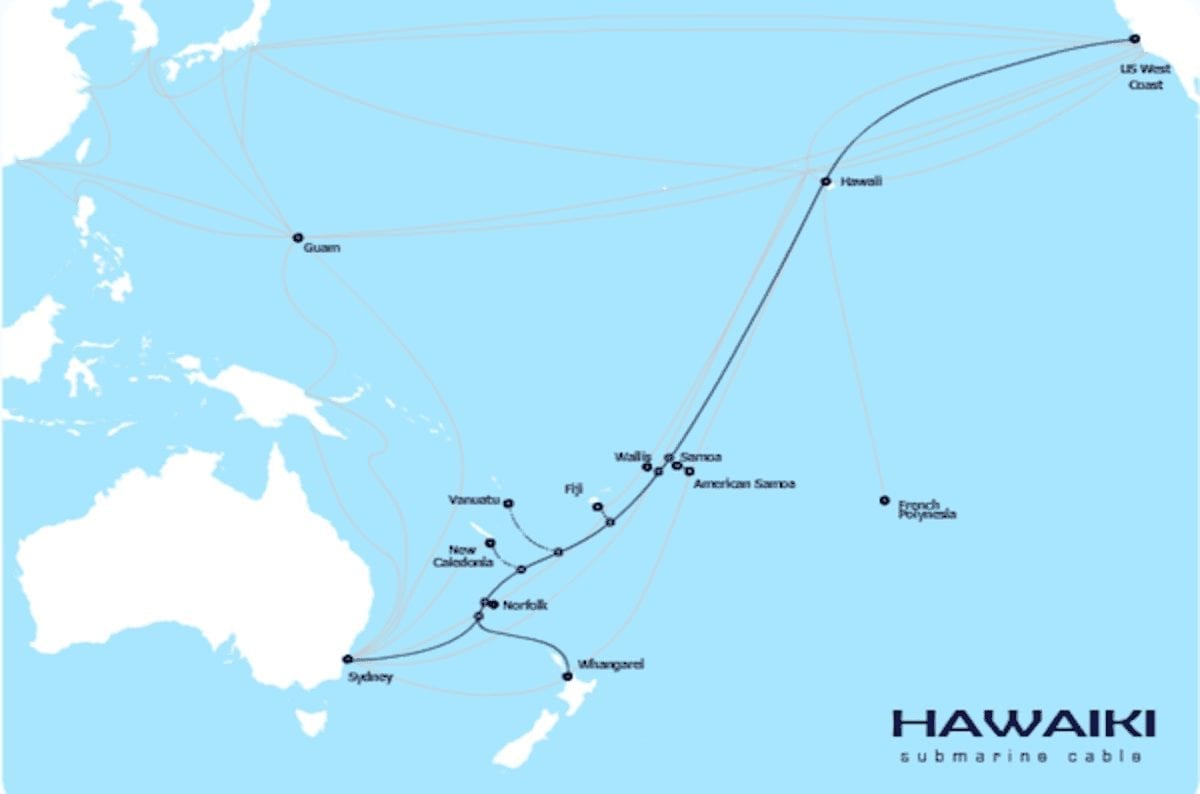
    The first cable load for the Hawaiki Cable – the subsea cable that will link Australia and New Zealand to the continental US, Hawaii and America Samoa – will commence next month.

    Hawaiki Submarine Cable and TE SubCom announced that construction of the cable remains on schedule, with more than 13,000km of the 14,000km transpacific cable now manufactured. The initial cable load will include 7,000km of this cable.

    Installation permits for Australia, New Zealand and Oregon in the US have also been procured, and horizontal directional drilling for the cable landing of Pacific City in Oregon have commenced.

    In Sydney, more than half of the conduits for the land duct route have meanwhile been installed, and drilling operations will start early next month.

    Once complete in mid-2018, Hawaiki is expected to be the highest cross-sectional capacity link between the US and Australia and New Zealand. The carrier-neutral cable system will have options to expand to several South Pacific islands, including Tonga, Fiji and New Caledonia.

    “We’re very close to completing the manufacturing stage of Hawaiki and are preparing to launch installation in just a matter of months,” Hawaiki CEO Remi Galasso said.

    “Once live, this cable system will help eliminate the distance between all Pacific communities and provide an economic boost to a region consistently starved for broadband access.”

  • Telstra lays out plans for Programmable Network

    Telstra lays out plans for Programmable Network

    Australian operator Telstra has outlined its plans to offer SDN and NFV, cloud platform and data centers as well as global and Australian networks in one integrated and intelligent platform.

    At the ITW Conference in Chicago, Telstra outlined its planned network-as-a-service called the Telstra Programmable Network.

    This new network will be programmable at its core and enable the automation and provisioning of services. It will be designed to help businesses quickly add new capabilities to deliver better experiences without significant infrastructure upgrades. It will also allow simple and secure access to multiple cloud services via a simple user interface.

    “The Telstra Programmable Network is designed to help our customers meet the rapidly growing global demand for data and the proliferation of applications, as well as embrace cloud computing by offering flexible and dynamic access to our high bandwidth, low latency and secure networks,” said Jim Fagan, Director Global Platforms.

    “Our vision for the Telstra Programmable Network is to help businesses optimize their IT by offering automated, on-demand and near real-time provisioning, consumption-based pricing and new data insights on network usage,” said Fagan.

    “The Telstra Programmable Network brings together all of our SDN technologies such as PEN, Telstra’s first globally connected on-demand networking platform, and continues their development under one vision, architecture and investment program.”

    International IP-VPN customers will also be able to access the Telstra Programmable Network’s capabilities from any of Telstra’s 2,000 points of presence worldwide after launch. This includes extending their network via Telstra’s portal or API to access the internet and a range of public cloud services including Amazon Web Services and IBM SoftLayer.

    To complement the rollout, Telstra will implement a significant capability upgrade of its core international IP network in the coming months.

    This will introduce increased bandwidth and flexibility, which the new service will demand. In addition, these enhancements are expected to increase Telstra’s peering capacity by up to 70% and provide enhanced security with traffic segregation capability to mitigate DDoS traffic.

    “These initial investments will establish the groundwork for the Telstra Programmable Network with future enhancements, such as orchestrated real-time SD-WAN and security, to be announced in the coming months,” said Fagan.

  • Huawei signs MoU with Infosys to explore joint BSS solution

    Huawei signs MoU with Infosys to explore joint BSS solution

    Huawei has signed an Alliance Memorandum of Understanding with Infosys to explore joint solutions in the Business Support Systems (BSS) domain.

    The company has also announced to expand its Telco OS Partner Program to stimulate joint go-to-market approaches and solutions with Service (SI) partners.

    The Huawei Telco OS Partner Program is a communications industry-specific partner program designed to establish partner relationships which accelerate the digital transformation of communication service providers (CSPs) across their BSS, Operations Support System (OSS) and big data functional domains.

    The program was initially focused on Delivery Service Vendors (DSV) to augment project delivery, and Solution (ISV) partners to augment the productized solutions being delivered.

    To date over 1,000 engineers have been certified under the program, working across 57 different projects, in 39 countries around the world, leveraging over 30 ISV products.

    As part of the agreement, the parties will explore joint solution innovation and labs, and promote joint solutions to customers and business partners.