Category: Telecom

Retail News Asia is committed to providing both local and global retailers with the latest Telecom & Telco news throughout the Asian market. This on a daily base.

  • Big data spend on pace to $57b in 2017

    Big data spend on pace to $57b in 2017

    Global spending on big data technology is expected to surpass $57 billion by the end of 2017, according to a new report from SNS Research.

    Despite challenges relating to privacy concerns and organizational resistance, big data investments continue to gain momentum throughout the globe, the report said.

    SNS Research estimates that big data investments will account for over $57 billion in 2017 alone. These investments are further expected to grow at a CAGR of approximately 10% over the next three years.

    Originally used as a term to describe datasets whose size is beyond the ability of traditional databases, the scope of big data has significantly expanded over the years.

    Big data not only refers to the data itself but also a set of technologies that capture, store, manage and analyze large and variable collections of data, to solve complex problems.

    Amid the proliferation of real-time data from sources such as mobile devices, web, social media, sensors, log files and transactional applications, big data has found a host of vertical market applications, ranging from fraud detection to scientific R&D.

  • Dialog Axiata consolidates billing with Netcracker platform

    Dialog Axiata consolidates billing with Netcracker platform

    Dialog Axiata has expanded its partnership with Netcracker by using Netcracker’s Customer Billing Management solution to consolidate billing across all lines of business into a single platform.

    This expansion will bring Dialog’s retail and enterprise fixed-line subscribers onto Netcracker’s BSS, which already bills for Dialog’s GSM, digital TV and Wi-Fi lines of business.

    The consolidation of all billing processes onto Netcracker’s solution will enable Dialog to open new revenue opportunities by offering converged services that span across several lines of business.

    The solution will also help Dialog deliver a better customer experience, bring new services to market faster and reduce opex due to the need to manage fewer systems.

    “Consistency across all lines of business and minimizing the number of systems required enables us to offer new digital services faster and provide innovative bundles that our customers expect,” said Anthony Rodrigo, group CIO at Dialog.

    Loh John Wu, SVP and GM of APAC at Netcracker, said the expanding market for digital services is encouraging service providers around the world to consolidate and streamline processes, systems and applications that may have been traditionally separated.

    “Our expansion with Dialog underscores this trend and validates our ability to enable the operational transformation required when becoming a digital service provider,” said Loh.

  • Jazz places sole bid in Pakistan 1800-MHz auction

    Jazz places sole bid in Pakistan 1800-MHz auction

    Pakistan’s Jazz has emerged as the sole bidder for a 10 MHz block of paired 1800-MHz spectrum conducted by regulator the Pakistan Telecommunication Authority. Jazz submitting the minimum bid of $295 million just before the deadline.

    The next generation mobile services auction drew limited interest from operators which mostly sat out of the auction, including Ufone – the only operator in the market without the capability to provide 4G services, which was expected to bid to rectify this.

    PTA now plans to evaluate Jazz’s bid, and if it is found to meet the required conditions the operator will be given two options for payment. Jazz will either be allowed to pay the whole price upfront, or pay a 50% first installment and five equal annual installment payments with interest.

    Jazz will also be required to pay a 10% tax on the auction. A PTA official stating that high reserve price – $85 million more than the equivalent asking price for the same spectrum in 2014 – and level of taxation may be to blame for the lack of interest in the auction.

    The report also cites an official at China Mobile’s Pakistani subsidiary Zong stating that the company has no need for additional bandwidth.

  • Smart city development now a global phenomenon

    Smart city development now a global phenomenon

    There are more than 250 smart city projects underway across 178 cities around the world, according to a new report from market research firm Navigant Research.

    The report, Smart City Tracker 1Q17, finds that of the 252 smart city projects tracked, the majority of projects are smart government-led (40%), with smart energy coming a relatively close second (27%), while smart transportation (18%), smart buildings (11%), and smart water (4%) projects made up the rest.

    Geographically, the majority of projects tracked were in Europe, with Asia Pacific in second and North America third.

    “The development of smart cities is now a truly global phenomenon, with considerable activity and notable projects across all regions,” Navigant Research says.

    “Working in partnership with technology and service suppliers, city leaders and central governments are realizing the benefits smart city projects can provide to increase and improve economic opportunity, sustainability, and quality of life.”

    Thanks to the widespread interest in smart city programs, the global market for smart city solutions and services is expected to grow from $40.1 billion in 2017 to $97.9 billion in 2026, representing a compound annual growth rate (CAGR) of 10.4%.

    This includes investments in areas such as open data platforms, smart grids, networked LED street lights, urban mobility, energy-efficient buildings, water management, and government service applications.

    In addition, as sensor technology improves and costs decrease, smart city technologies are becoming more efficient, higher performing, and cheaper than ever before, the report adds.

  • Equinix acquires 29 data centers from Verizon

    Equinix acquires 29 data centers from Verizon

    Equinix has completed its acquisition of 29 data centers in North and Latin America from Verizon Communications.

    The US $3.6 billion all cash deal includes over 1,000 customers, of which over 600 are net new, and approximately three million gross square feet of data center space.

    Equinix said the deal will accelerate its ability to help companies extend their IT operations to the digital edge, strengthens interconnection density on the Equinix global platform, accelerates business relationships in the government and energy sectors and supports its enterprise offering.

    Additionally, it adds three new markets (Bogotá, Culpeper and Houston) and provides additional capacity and the opportunity for expansion in markets where Equinix currently has a presence, including Atlanta, Denver, Miami, New York, São Paulo, Seattle and Silicon Valley.

    Spread across 15 cities in North and Latin America, the new assets bring Equinix’s total global footprint to over 175 International Business Exchange (IBX) data centers across 44 markets and approximately 17 million gross square feet.

    “As the technological shift to digital is transforming large sections of society and the global economy, companies are re-architecting their IT infrastructure to thrive in this new environment,”Equinix CEO Steve Smith said.

    “They are moving from traditional centralized infrastructure to a distributed model that keeps data closer to the customers, partners and employees using it. With this significant expansion of Equinix’s globally consistent footprint, our platform is even more valuable to companies that are leveraging this new model of interconnection at the digital edge.

  • Inmarsat launches fourth Global Xpress satellite

    Inmarsat launches fourth Global Xpress satellite

    Inmarsat has launched the fourth high speed broadband satellite in its Global Xpress constellation, the Inmarsat-5 F4 (I-5 F4).

    The new satellite was launched by SpaceX on the Falcon 9 Rocket from NASA’s Kennedy Space Center in Florida in the US. It was manufactured by Boeing Network & Space Systems.

    Inmarsat’s Global Xpress worldwide broadband connectivity service has been operational since December 2015. The fourth satellite will allow the company to add further capacity to the network as well as in-orbit redundancy.

    “For Inmarsat, reliability and resilience are paramount. Delivering global commercial services over the GX network, which we achieved at the end of 2015, was only the start of our Global Xpress project,” Inmarsat CEO Rupert Pearce said.

    “I-5 F4 augments the capabilities of GX and, alongside our existing L-band constellations, enables Inmarsat to provide guaranteed global connectivity to industries and governments worldwide.”

    He said the Global Xpress service has established a strong footprint in established very small aperture terminal (VSAT) markets such as maritime and government, and is gaining ground in new market areas such as the in-flight broadband connectivity sector.

  • Vodafone Group swings to $6.7b loss on India

    Vodafone Group swings to $6.7b loss on India

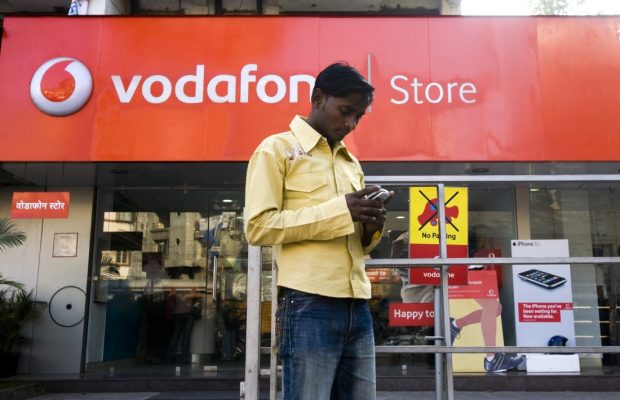
    Vodafone Group has swung to a €6.1 billion ($6.76 billion) full-year loss as a result of a €3.7 billion writedown on its Indian operations.

    Vodafone India recorded an impairment of loss of €4.51 billion for the financial year as a result of the anticipated impact of the entry of Reliance Jio Infocomm into the market and the resulting intense price competition.

    The Indian unit reported an operating loss for the financial year of €4.17 billion, compared to a 423 million operating profit a year earlier. Service revenue also fell 4.9%, or 0.7% on an organic basis, to €5.85 billion.

    But after Vodafone India reached its agreement to merge with Idea Cellular to create India’s largest mobile operator, the impairment charge was reduced to €3.7 billion. Idea Cellular recently also posted a net loss for the financial year.

    Vodafone India’s total net debt meanwhile grew to €8.7 billion by the end of the financial year, up from €8.1 billion at end-2016. Some €7 billion of this was spectrum-related debt

    The impending merger has now led Vodafone to classify Vodafone India as part of its discontinued operations for reporting services.

    The Vodafone Group’s total revenue meanwhile fell 4.4% to €47.63 billion, but operating profit grew 182.2% to €3.72 billion.

  • Singtel, AXA launch safe driving smart car service

    Singtel, AXA launch safe driving smart car service

    Singtel has collaborated with AXA Insurance to launch a joint smart car solution aimed at promoting better and safer driving habits.

    The joint solution comprises a Modus smart car device synchronized with a cloud-based smart car application over Singtel’s mobile networks. It analyzes driving patterns through a vehicle’s On-Board Diagnostic (OBD) port.

    Features include driver analysis covering areas such as breaking, acceleration and speed, real-time location monitoring to make it easier for users to find their car and trip history, and provide driving scores based on analysis of this data.

    The solution can also monitor engine health information and provide scheduled maintenance reminders, and provide alerts for speed and mileage limits and geo-fence boundaries.

    To promote the new solution, Singtel and AXA are offering a year worth of free AXA car insurance to the safest driver in Singapore using the solution. Drivers will need to travel at least 3,000km during the contest period.

    “The smart car solution is yet another innovative service that we are bringing to our customers, following the successful launch of Singtel SmartHome,” Singtel CEO consumer Singapore Yuen Kuan Moon said.

    “Now, our customers can enjoy an integrated connected lifestyle both in and out of the home. The solution will allow car lovers to track their driving habits and empower them to have a smarter drive.”

  • Ericsson unveils Dynamic Orchestration solution

    Ericsson unveils Dynamic Orchestration solution

    Ericsson has launched its Dynamic Orchestration solution to facilitate the rapid introduction and closed-loop automation of services across physical and virtual networks.

    The company said this signifies a strategic move forward in the company’s ambition to lead IT transformation services for its customers.

    Ericsson Dynamic Orchestration provides a flexible and modular solution for the management of existing technologies while virtualization capabilities are integrated and controlled.

    With support for zero-touch automation, rapid provisioning and policy-driven service assurance, Ericson Dynamic Orchestration helps operators achieve faster time to market and superior delivery of new and differentiated services.

    “The opportunities offered by virtualization are significant, but due to the complexity, many operators are taking an incremental step-by-step approach to get there,” Ulf Ewaldsson, head of business area digital services at Ericsson.

    “Ericsson Dynamic Orchestration enables our customers to excel at traditional services delivery while simultaneously incorporating virtualization capabilities to embrace emerging market and business opportunities driven by 5G and IoT,” said Ewaldsson.

    Ericsson Dynamic Orchestration is an end-to-end, automated service orchestration solution that provides rapid validation of Virtual Network Functions (VNFs), design and onboarding of new services, inventory, resource and capacity management, service configuration management and service assurance.

    The use of policy and real-time analytics across the lifecycle affords zero-touch operations and is the foundation for SLA compliance.

  • Idea swings to first net loss since 2007

    Idea swings to first net loss since 2007

    India’s third largest mobile operator Idea Cellular has swung to its first annual loss since its IPO in 2007, as the company felt the pressure being inflicted on the mobile industry by the entry of disruptive newcomer Reliance Jio Infocomm.

    The company reported a net loss of 4.07 billion rupees ($63.5 million) for the full-year ending in March. This compares to a 23.78 billion rupee profit for the previous year.

    Total revenue fell 1% to 355.75 billion rupees, marking the first revenue decline since the IPO. Revenue from established service areas fell 1.8% to 329.58 billion rupees but revenue from new service areas up 9.5% to 26.17 billion rupees.

    India’s mobile industry has been struggling since Jio burst onto the scene in September with an aggressive strategy of offering services for completely free for a six-month promotional period.

    “The October to April 2017 interval can be best described as ‘Period of Telecom Discontinuity’, permanently changing mobility business parameters. Consequently, the revenue KPIs & financial parameters for all mobile operators have sharply declined in [2H17],” Idea said in a statement announcing its results.

    “For the first time in its history, the flourishing Indian mobility industry is trending towards an annual revenue decline of ~2% in FY17. With the new entrant starting to charge for its services, albeit very slowly, the sector is expected to return to growth in the next financial year.”

    During the March quarter, revenue fell 6.2% sequentially to 81.26 billion rupees, even as the company added 6.2 million new customers to 198.3 million.

    The operator also strengthened its revenue market share for calendar year 2016 by 0.4% to 19% and maintained a subscriber market share of 19.4%.

    Idea Cellular meanwhile announced that it is making progress with its planned merger with Vodafone India, a deal expected to create the market’s largest telecoms operator.

    The two companies have initiated the steps required to gain regulatory approvals for the merger, including filing a joint notification with the Competition Commission of India.

  • DoCoMo plans major leadership shake-up

    DoCoMo plans major leadership shake-up

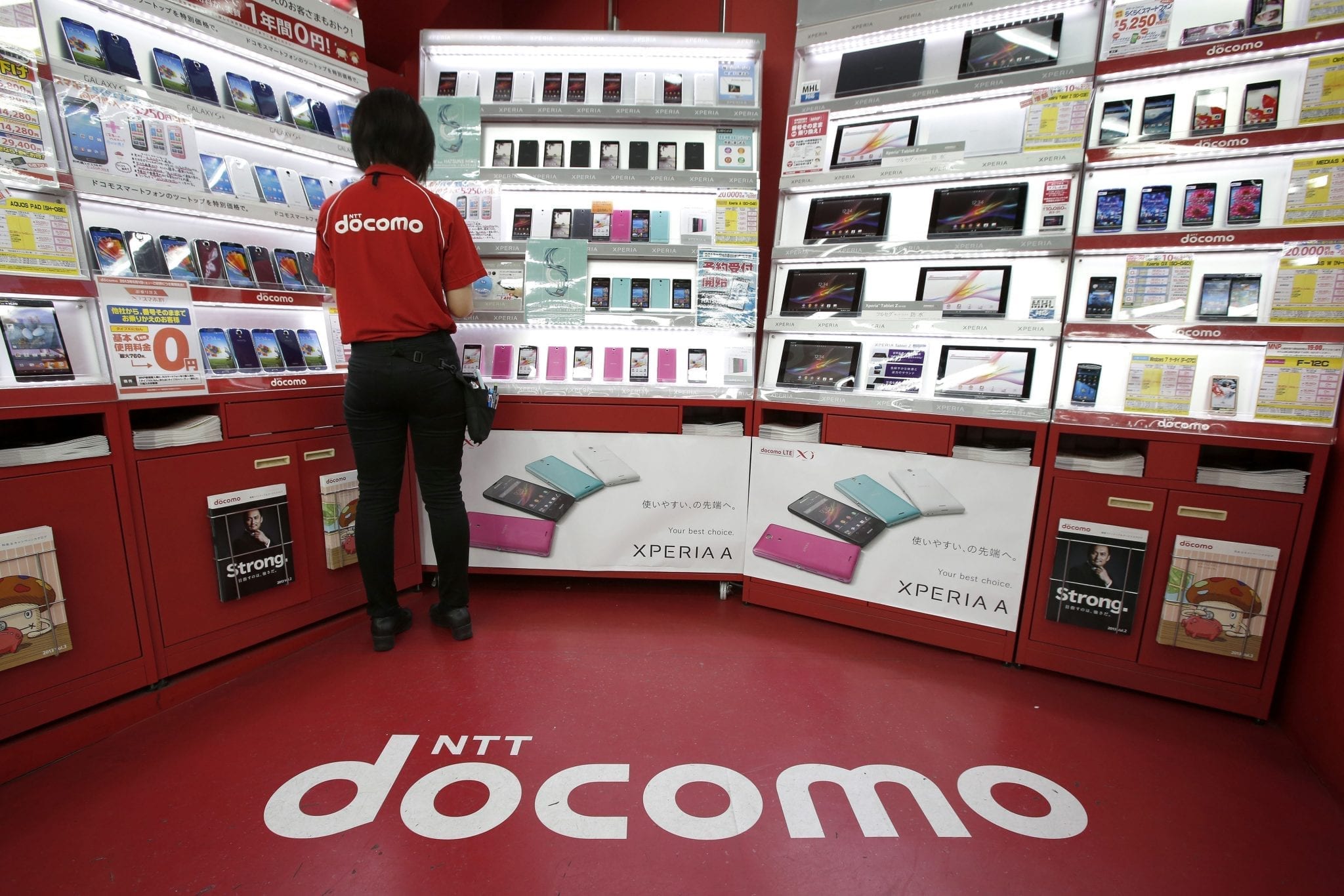
    Japan’s NTT DoCoMo has announced significant proposed changes to its management team as part of efforts to “further grow and develop the company.”

    The operator revealed that one executive director, one director, two audit and supervisory board members and four senior vice presidents are planning to resign, mostly to take up new positions at DoCoMo subsidiaries or affiliate companies.

    In their places there are two new candidates for the board of directors, two new candidates for the audit and supervisory board and seven new senior vice president candidates.

    The changes to the executive positions will be put up for approval at the shareholders meeting, the board of directors meeting and the audit & supervisory board meeting scheduled on June 20, 2017.

    If the changes are approved, DoCoMo’s new board will include executive vice presidents Hirotaka Sato, Kiyohiro Omatsuzawa, Hiroshi Tsujigami, Kouji Furukawa and Kyoji Murakami, as well as senior vice presidents Hiroshi Nakamura and Hozumi Tamura.

    The top leadership team will consist of president, CEO and board member Kazuhiro Yoshizawa, senior executive vice president, CIO, CISO, chief privacy officer and board member Hiroyasu Asami, and senior executive vice president for global business, corporate and CSR and board member Toshiki Nakayama.

  • Cellcos to spend $21b on 5G NR by 2025

    Cellcos to spend $21b on 5G NR by 2025

    Mobile operators will spend more than $21 billion on standardized 5G NR (New Radio) infrastructure by the end of 2025, according to SNS Research.

    Despite the lack of sufficient LTE coverage in parts of the world, mobile operators and vendors have already embarked on R&D initiatives to develop 5G.

    According to the GSA (Global mobile Suppliers Association), in the first quarter alone at least 25 operators from 15 countries have demonstrated 5G technologies, or announced 5G tests or trials.

    Last week, South Korea’s KT said it is in the final stages of testing for the 5G trial network that will support next year’s Winter Olympic Games in PyeongChang, while Japanese counterparts KDDI and China Mobile also announced trials on pre-5G technologies.

    With pre-standard 5G network deployments well underway, the research firm in March released an estimate, predicting mobile operators worldwide will spend more than $250 million on pre-standard 5G network rollouts by the end of 2017.

    Although 2020 has conventionally been regarded as the headline date for 5G commercialization, the very first standardized deployments of the technology are expected to be commercialized as early as 2019 with the 3GPP’s initial 5G specifications set to be implementation-ready by March 2018.

    Between 2019 and 2025, SNS Research expects the standardized 5G NR infrastructure market to aggressively grow at a CAGR of approximately 70%, eventually accounting for over $21 billion in annual spending by the end of 2025.

    The market will be complemented by additional investments of over $7 billion on NextGen (Next Generation) core and transport (fronthaul/backhaul) networking infrastructure, the research firm estimates.

    SNS Research notes that 5G is expected to provide a single network environment to deliver not only existing mobile broadband and internet of things services, but also new innovations such as self-driving cars, cloud robotics, 3D holographic telepresence and remote surgery with haptic feedback.

    The 3GPP agreed in March to accelerate some elements in the 5G NR timeline to allow operators to speed up deployment of 5G services.

    The standard body set a December 2017 deadline to complete the non-standalone 5G NR specification process and finalize the spec by March next year. The move means non-standalone 5G NR products could be launched as early as 2019.

    Non-standalone 5G NR mode will be designed to anchor a connection in LTE, using 5G NR carriers to improve data rates and reduce latency.


  • India’s game-changing rocket to launch next month

    India’s game-changing rocket to launch next month

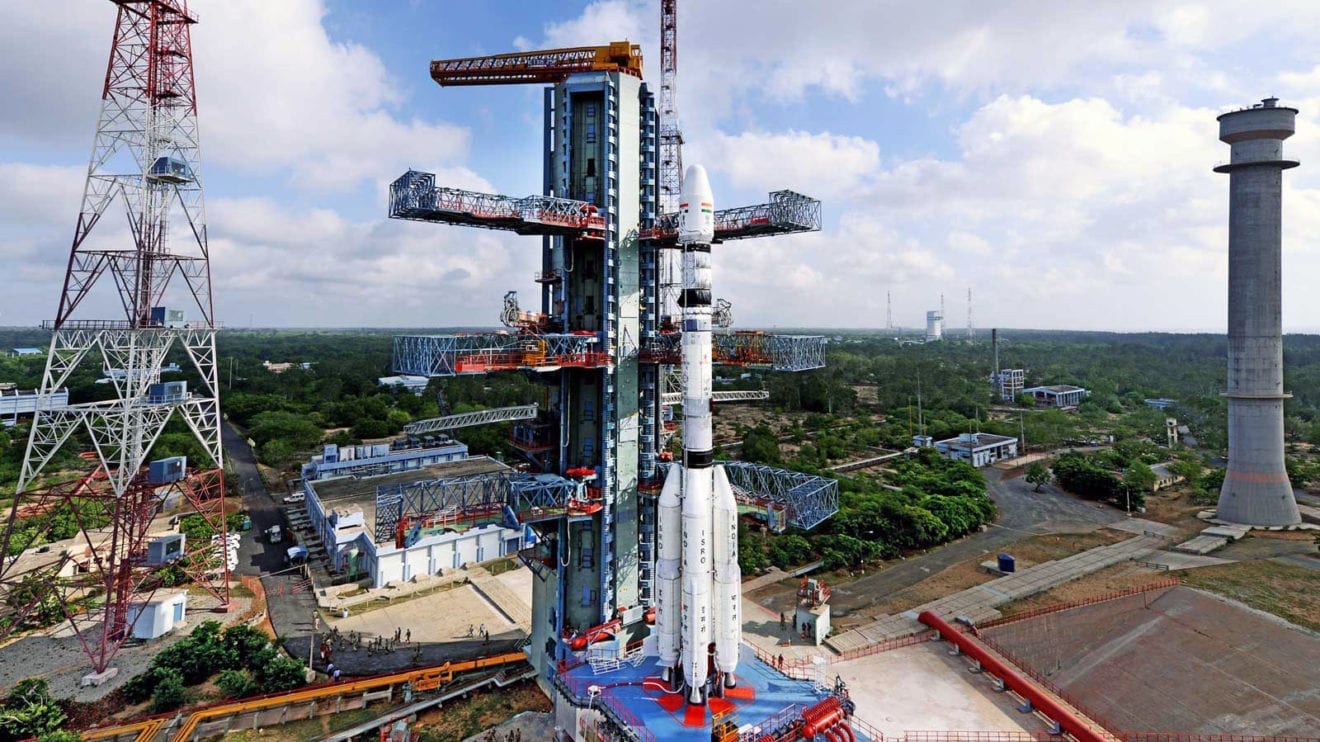
    India is planning to launch Geosynchronous Satellite Launch Vehicle (GSLV) Mark-III, the country’s most powerful rocket, in June.

    The rocket is capable of transporting a heavier 4 ton (3,628.7 kg) communications satellite and described as a game-changer in the first-of-its-kind space mission.

    With this rocket, the Indian Space Research Organisation (Isro) is aiming for a greater share of the multi-billion dollar global space market and to reduce dependency on international launching vehicles.

    A successful launch of this rocket will be another major step towards being self-reliant in the country’s space program.

    The Isro currently has the capability to launch payloads of up to 2.2 tonnes into the intended orbit and for anything above that it had to tap foreign launch facilities.

    “GSLV Mark-III is our next launch. We are getting ready. All the systems are in Sriharikota. The integration is currently going on,” Isro chairman A S Kiran Kumar said.

    GSLV Mark-III will be India’s most powerful launch vehicle built to lift the heaviest Indian communications satellites to space. Its 4 ton capacity is double the weight that the current GSLV-Mark-II can lift.

    It will also enable Isro to launch from India heavier communications spacecraft to geostationary orbits of 36,000 km. Because of the absence of a powerful launcher, Isro currently launches satellites above 2 tons on European rockets for a big fee.

    Noting that communications satellites built beyond the capacity of 2.2 tons have to be launched from foreign soil, Kiran Kumar said efforts are on to launch satellites up to four tonnes and even beyond in India itself.

    The GSLV Mark-III is intended to launch satellites into geostationary orbit and as a launcher for an Indian crew vehicle. It features an Indian cryogenic third stage and a higher payload capacity than the current GSLV.

  • Nokia drives T-Mobile’s 5G plans

    Nokia drives T-Mobile’s 5G plans

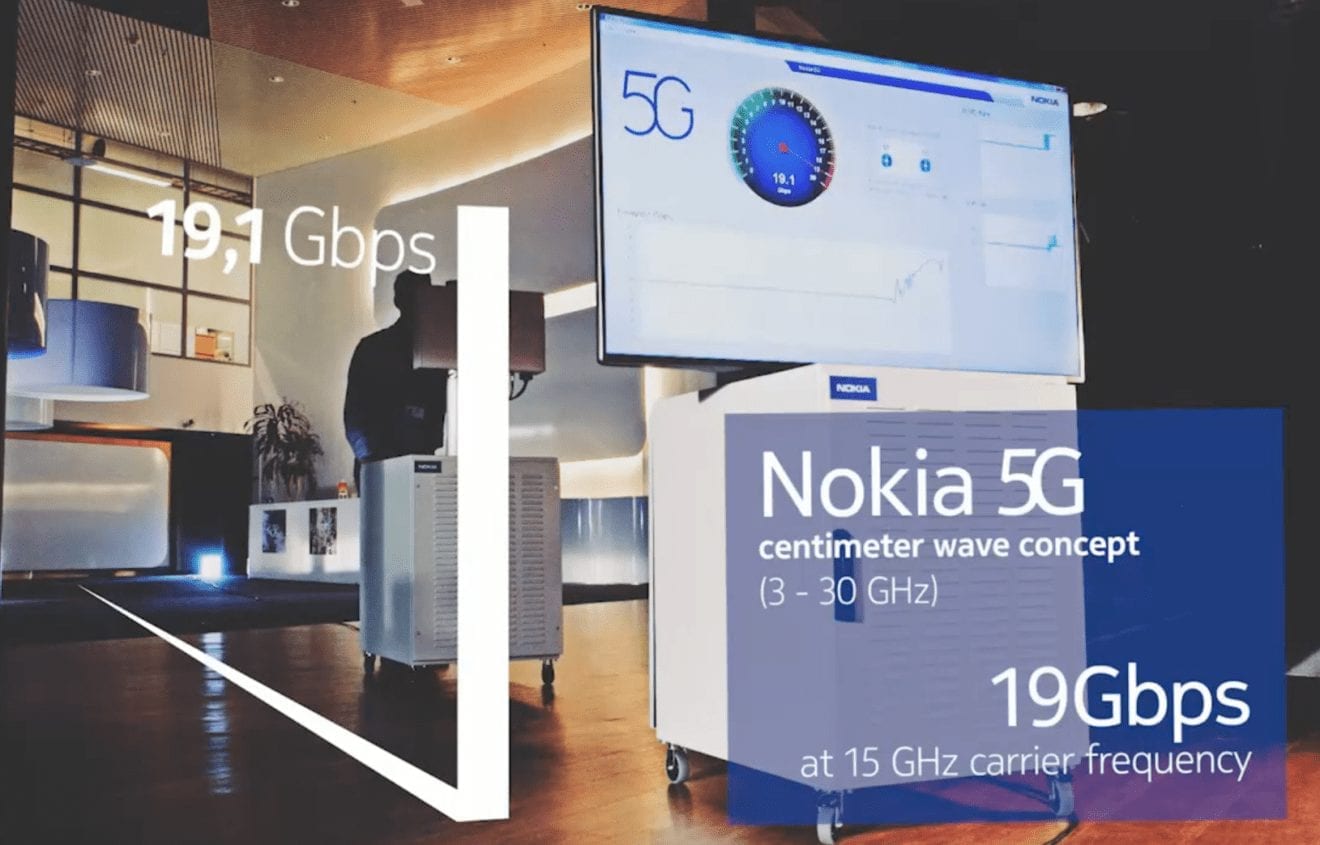
    Nokia said it was playing an integral role in T-Mobile’s plans to launch nationwide 5G coverage in the United States by 2020.

    Forthcoming 5G networks will bring many benefits to service providers and consumers, with exponential increases in bandwidth and massive throughput, along with advancements in vertical industries and new entrants — just a few of the myriad possibilities of these next-generation networks.

    T-Mobile’s announced plans to use all of its spectrum resources align strongly with Nokia’s strategy of multi-radio platforms and advanced antenna technologies.

    Specifically, this will bring 5G radio air interface improvements — particularly spectral efficiency — to low bands such as 600MHz, thus allowing for enhanced coverage benefits. Additionally, Nokia will look to enable the 5G network capabilities where 600MHz spectrum is the preferred coverage layer.

    One of the key benefits of 5G is enhanced mobile broadband that will allow users to consume content when and where they desire. Nokia, along with T-Mobile, will provide a multi-layer, cross-spectrum blueprint for how the networks of the future will come into existence.

    “Nokia and T-Mobile share a vision of innovating in mobile networks to deliver real benefits to consumers,” said Marc Rouanne, president of mobile networks business group for Nokia.

    “This collaboration to maximize spectrum is a very exciting development, and is a strong example of Nokia’s commitment to supporting its customers’ ambitions to create new capabilities to make 5G a reality, connecting everything to everything,” said Rouanne.

  • Samsung, Cisco, Verizon to pioneer multi-vendor 5G Trials

    Samsung, Cisco, Verizon to pioneer multi-vendor 5G Trials

    Samsung Electronics America and Cisco are working with Verizon in what they described as the successful deployment of the first multi-vendor end-to-end 5G field trial, which took place in Detroit, Michigan.

    Earlier this year, Verizon announced plans for customer trials of 5G technology for home broadband service (Fixed Wireless Access). Five US cities are scheduled to begin trials in the second quarter of 2017, with pilot trials in a total of 11 markets expected by midyear.

    Each location offers a unique set of test parameters, including vendors, geographies, population densities and demographics, and the Ann Arbor location in Detroit was the first to tackle a multi-vendor deployment of 5G.

    The solution includes a 5G virtualized packet core as part of the Cisco Ultra Services Platform with Cisco Advanced Services and Samsung virtual RAN solutions (vRAN), paired with Samsung’s 5G Radio base stations and 5G home routers that will deliver broadband services to Verizon’s trial customers.

    Based on Verizon’s 5G Technical Forum specification, the three companies followed a series of comprehensive network vendor interoperability tests (NVIOT) that demonstrated seamless interworking between core network, radio edge and user devices that showcased a core principle of next-generation network virtualization via multi-vendor support.

    This trial demonstrates that service providers can deploy 5G networks specialized to their unique market needs by selecting individual network infrastructure components from a selection of multiple vendors.