Category: Telecom

Retail News Asia is committed to providing both local and global retailers with the latest Telecom & Telco news throughout the Asian market. This on a daily base.

  • Cobham debuts 5G network test solution

    Cobham debuts 5G network test solution

    Cobham Wireless has made available of its new network test solution dubbed TM500 which can validate 5G network performance.

    Touted as an industry first, the TM500 provides operators and network equipment manufacturers with a scalable system to test network performance as experienced by end users.

    The TM500 5G test solution simulates multiple devices connecting to a 5G network, modelling real world conditions. When used in combination with Cobham Wireless’ application emulation and security performance solution, the company is providing a complete, end-to-end 5G test solution to the market.

    “Cobham Wireless’ 5G test solution directly addresses the immediate KPIs for 5G, helping the industry accelerate the development and deployment of next generation mobile and broadband services,” said Ian Langley, SVP and GM at Cobham Wireless.

    “Developing and validating their 5G networks using the TM500 will give our customers the confidence to deploy the infrastructure needed to support next generation technologies, such as mobile edge computing,” said Langley. “This will offer reduced latency and faster processing for new services, expediting the commercial roll-out of IoT applications such as connected cars, smart healthcare devices, and advanced AR and VR.”

    Easily incorporated into a user’s existing workflow, the TM500 solution facilitates the transition from legacy to future standards, in line with the industry’s progression to 5G.

    With flexible deployment options, it allows the user to upgrade or adapt functionality and test parameters, tailoring the solution to specific scenarios and requirements.


  • A 100ms website delay can turn away customers

    A 100ms website delay can turn away customers

    Website performance is critical to maintaining customer attention and completing online transactions, research from Akamai indicates.

    The company’s latest State of Online Retail Performance report finds that a mere 100-millisecond delay in website load time can hurt conversion rates by 7%.

    The data, gathered by SOASTA (now part of Akamai), represents one month’s worth of anonymous user data from top online retailers, equating to approximately 10 billion user visits. The team applied data analytics to generate insights into the intersection of IT, business, and user experience metrics.

    Half of consumers browse for products and services on their smartphones, while only one in five complete purchases using those phones. The study showed that a two-second delay in web page load time increases bounce rates by 103%. More than half (53%) of mobile site visitors will leave a page that takes longer than three seconds to load. Bounce rates were highest for mobile phone shoppers, while tablet shoppers had the lowest bounce rate.

    “Since my days as Executive Director at Shop.org I have seen how e-commerce businesses are impacted by performance challenges, yet struggle to identify and treat the root cause,” said Scott Silverman, co-founder of GrowCommerce and the Global e-Commerce Leaders Forum. “This research clearly shows the link and provides a methodology for retailers to systematically assess and address those issues.”

    The report identifies ways that high-performance web pages are different from poorly performing pages, looks at third-party scripts and other outside factors that can impact performance, and provides the reader with practical, actionable guidance on how they can compete in an ever-changing e-commerce landscape.

  • Hitachi deploying IoT solution for Curtin Univeristy

    Hitachi deploying IoT solution for Curtin Univeristy

    Australia’s Curtin University has selected Hitachi to deploy an IoT solution to advance its vision of a smart campus that enhances the student experience, improves classroom learning and ultimately attracts more industry to collaborate on data-driven research.

    Curtin will partner with Hitachi to co-create solutions that harness IoT data through advanced analytics to provide insight into the daily running and utilization of the campus.

    Curtin University has more than 60,000 students and 4,000 staff. It is Western Australia’s largest and most culturally diverse university, and has one of Australia’s largest international student populations.

    Ian Callahan, chief operating officer of Curtin University said: “Understanding our campus operations and building utilization has become a major factor in Curtin’s smart campus initiative. With the Hitachi IoT solution, we can collect data using a variety of sensors to gather information on building trends, study patterns, and course attendance that can ultimately be used to improve student experience and enhance learning.”

    Ultimately, these data insights allow Curtin University to generate contextual information about the lifecycle of the student, the day to day reality of a staff member, the activity pattern of a lecture theater, and the dynamics and environmental health of a library.

    Callahan added: “We are effectively creating a living laboratory that is an open invitation to our own researchers and scientists from other universities to use our campus to discover and innovate with data-driven research. Hitachi demonstrated not only technology leadership but approached us with a very open mind, to participate in that living environment and collaborate with others.”

    With the Hitachi solution, the university will be able to combine video data with operational data across its campus facilities to provide analytics that support a smart campus. This is achieved through the integration of Hitachi Visualization Suite, Hitachi Video Analytics, Pentaho, Live Face Matching and Hitachi Data Systems Infrastructure and Compute. The single analytics dashboard provides the real-time knowledge the university needs to make informed decisions about their classes, operations and future requirements.

    “Curtin University is a prime example of forward-thinking organizations that have challenged Hitachi to develop its video analytics solutions to go beyond surveillance and public safety. They are effectively pioneers of digital transformation,” said Mark Jules, vice president of public safety and smart city solutions at Hitachi Insight Group.

    “We’re excited to be co-creating a comprehensive IoT-enabled solution with them and we look forward to working with Curtin University and their research partners to accelerate future innovation through our ongoing collaboration.”

  • Globe signs deal to link Palau to SEA-US cable

    Globe signs deal to link Palau to SEA-US cable

    The Philippines’ Globe Telecom and Indonesia’s Telin have signed agreements to  interconnect the Republic of Palau in Micronesia with the SEA-US cable.

    Globe and the Belau Submarine Cable Corporation (BSCC) have signed an agreement to interconnect a fiber spur under construction from Palau will be interconnected wit the SEA-US for onward transport to Guam.

    A similar agreement has been signed between representatives of Telin and the Federated States of Micronesia during a signing ceremony witnessed by Palau president Tommy Remengesau Jr.

    “We are excited about the commissioning of the SEA-US Cable because of its immense benefits to the Philippines. Additionally, we are proud to be able to provide the Republic of Palau with first world internet connectivity through this interconnection agreement,” Globe CEO Ernest Cu said.

    The interconnection agreements provide for five 100Gbps wavelengths between Palau and Guam, more than 1,000 times the current available capacity.

    “The submarine fiber network will be critical to so many aspects of our life in Palau, from healthcare to education, from social networking to business. With the BSCC network expected to be in service before the end of the year, Palau is on the move,” president Remengesau said.

    The $250 million SEA-US cable system will span 14,000km between California, Hawaii, Guam, the Philippines and Indoesia. Construction commenced on the cable in March 2015 and the system appears to be nearing completion.

  • ZTE completes 3D-MIMO test in Jiaxing

    ZTE completes 3D-MIMO test in Jiaxing

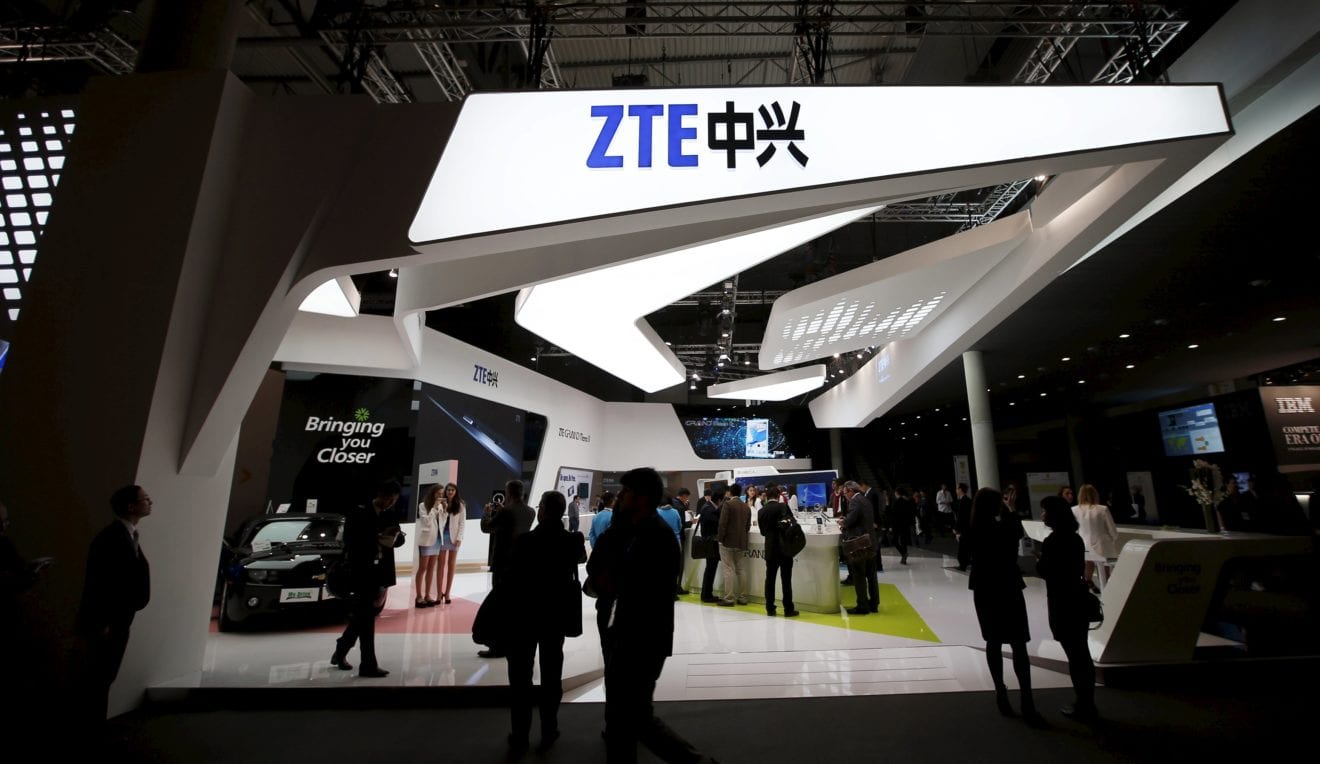
    China Mobile and ZTE announced they have completed the deployment and pre-test verification of Pre5G Massive MIMO technology 3D-MIMO in Jiaxing, a prefectural city in northern Zhejiang province in China.

    The testing, conducted in collaboration with China Mobile Zhejiang and the China Mobile Jiaxing Branch, included verification tests in scenarios including large-traffic scenarios in universities or 3D  in-depth coverage in high-rise residential buildings.

    It builds on the completion of the world’s first 3D-MIMO field verification conducted by the two companies in 2015.

    The 3D-MIMO technology increases downlink capacity by 3-5 times and uplink capacity by 4-6 times over traditional 4G networks, helping to address issues caused by the exponential growth in demand for traffic and growing 4G user base in dense areas such as universities.

    Using three carriers on a 3D-MIMO site downlink rates reached 1Gbps while uplink rates reached a peak of 237Mbps.

    Testing showed that 3D-MIMO increased uplink and downlink spectrum efficiency of small-packet services by 2-3 times on average compared to co-frequency eight-transmit macro base stations. The test involved up to 800 concurrent commercial users.

    The 3D beamforming technology also helped to suppress interference, enhance connections on cell edges and increases user traffic in the coverage area.

    Last year, China Mobile and ZTE completed 3D-MIMO pre-commercial verification in 29 provinces and 50 cities as part of their collaboration on the technology.

  • TOT ready to take over True’s fixed operations

    TOT ready to take over True’s fixed operations

    Thai state-owned operator TOT is ready to take over concessionaire True Corporation’s fixed line operations upon the expiry of the concession agreement in October.

    TOT has spent months preparing the operational procedures that will be needed to take over the provision of services to around 1.2 million customers.

    As part of Thailand’s transition to a licensing regime, the 25-year build-operate transfer concession agreement will be allowed to expire on October 26. True had been paying 18% of its total revenue to TOT under this concession.

    Once the concession expires True will transfer its fixed line network assets and customers to TOT.

    The operator will lose fixed line service revenue of around 2 billion baht ($57.7 million) per year, while TOT expects to be able to realise revenues of 2.8 billion baht per year from the assets.

    TOT plans to start writing to True customers in July informing them of the scheduled takeover of the fixed line operations. The state operator already has its own fixed line business, with around 3.4 million subscribers nationwide.

    According to the report, TOT meanwhile plans to spend around 400 million baht this year on fixed line maintenance and repair.

  • NEC sets long-haul subsea cable record

    NEC sets long-haul subsea cable record

    Japan’s NEC has announced it has become the first vendor to achieve a transmission capacity of over 50Tbps over a distance greater than 10,000km using a single optical fiber.

    The new development could pave the way for significantly faster subsea cables spanning trans-Pacific distances, helping the industry meet surging traffic demands in the APAC region.

    NEC has demonstrated a speed of 50.9Tbps over a more than 11,000km span of cable using new C+L band erbium-doped fiber amplifier (EDFA) technology. The company said the performance translated to a record-breaking capacity of 570 petabits per second per kilometer.

    To push the capacity of the cable to close to the Shannon Limit – the spectral efficiency limit of optical communications, NEC researchers developed a new multilevel, linear and nonlinear constellation optimization algorithm.

    With this algorithm, NEC has achieved an optimized 32 quadrature amplitude modulation (32QAM) constellation with a higher nonlinear capacity limit and an unprecedented spectral efficiency over a trans-Pacific distance.

    In addition, NEC researchers developed a new bi-directional amplifier design to help maximize the capacity per fiber pair by reducing effective noise and device complexity.

  • Chorus commences stage two of UFB rollout

    Chorus commences stage two of UFB rollout

    New Zealand wholesale operator Chorus has commenced the second phase of the Ultra-Fast Broadband (UFB) initiative, which will involve the rollout of the national fiber network to 169 new areas including 18 towns.

    The build has commenced in the coastal town of Kokitika on the West Coast, and will be extended to other towns in the region including Westport, Reefton and Runanga.

    The state-led UFB program will deliver fiber broadband to around 1.3 million premises including households, businesses and schools, representing around 85% of the population – up from the initial target of 75%.

    Up to NZ$410 million ($280 million) in funding has been allocated for the second stage of the project. Chorus was selected as the main private partner for the rollout after agreeing to separate from what is now Spark as part of the break up of the former Telecom New Zealand’s wholesale and retail operations.

    The remaining areas of the country are receiving enhanced broadband under the concurrent Rural Broadband Initiative.

    “Today we’ve taken the first step toward bringing world-class connectivity to Hokitika,” Chorus general manager of infrastructure Ed Beattie said.

    “Fiber provides the broadband equivalent of an autobahn right to the door of homes and businesses, and it will future-proof Hokitika for the anticipated continued growth in data consumption for generations to come.”

  • Softbank Q4 profit surges on Sprint turnaround

    Softbank Q4 profit surges on Sprint turnaround

    Japan’s Softbank has reported a twelvefold increase in net profit for the March quarter as a result of a recovery at US mobile unit Sprint.

    Profit increased to 580.5 billion yen ($5.08 billion), on the back of a nearly 2% increase in revenue to 2.32 trillion yen.

    For the full year, profit grew to a record 1.4 trillion yen, up from 474 billion in the prior financial year, as the result of the divestment of part of the operator’s stake in Alibaba and cost reductions at Sprint.

    Total revenue increased from 8.88 trillion yen to 8.9 trillion yen over the same period, partly due to the addition of revenue from recent acquisition ARM.

    Sprint’s operating income increased to $1.8 billion for the year, from just $300 million in the prior year, while total costs were reduced to $15.9 billion, representing a $3.4 billion reduction over the past two years.

    Revenue from domestic telco operations meanwhile grew to 3.19 trillion yen from 3.14 trillion yen a year earlier. The company added 360,000 mobile subs during the year to take its total to 32.4 million, with FTTH subscribers roughly doubling to 3.59 million.

    SoftBank separately announced plans to collaborate with Qualcomm and Sprint to jointly develop technologies for 5G in the 2.5-GHz band, including developing the 3GPP new radio standard for the band.

    The companies plan to provide commercial services and devices based on the development activities in late 2019.

  • Airtel to invest $2.5b in India this year

    Airtel to invest $2.5b in India this year

    Bharti Airtel has revealed plans to invest $2.5 billion in India during the current financial year as the company seeks to build out its 4G network to improve its dominant market position.

    During an earnings call for the company’s recent financial results, Airtel revealed it doesn’t plan to let its 71.7% decline in Q4 profit hamper its growth ambitions.

    Airtel plans to continue to focus on acquiring market share despite the impact on ARPU in the short term, Airtel’s CEO for India and South Asia Gopal Vittal said.

    The company’s ARPU shrank to 158 rupees ($2.45) during the fourth quarter from 194 rupees a year earlier, largely as a result of the price war triggered by the entry of Reliance Jio Infocomm to the market.

    Airtel has been strongly opposed to what it called Jio’s “predatory pricing” practices of offering free services as promotions to rapidly attract new users.

    Goppal said India’s smartphone penetration is expected to double in the next three years to up to 700 million, which is set to significantly impact data growth and validate the operator’s decision to focus on market share in the near term.

    Airtel also plans to invest around $500 million this financial year to develop its African operations, the report adds.

  • ZTE’s TECS passes OpenStack Interop Challenge

    ZTE’s TECS passes OpenStack Interop Challenge

    ZTE has announced that its OpenStack-based cloud management platform has passed the Interop Challenge at the OpenStack Summit 2017.

    The Tulip Elastic Cloud System (TECS) platform successfully passed the challenge by deploying a standard Kubernetes workload, indicating that it meets the OpenStack interoperability requirements for commercial releases.

    Kubernetes is an open-source system for automating deployment, scaling, and management of containerized applications.

    The TECS platform has previously been involved in three Interop Challenge pre-test scenarios, covering the LAMP model of web service stacks and the Dockerswarm software container engine configuration as well as Kubernetes.

    The Interop Challenge was started in the OpenStack community in July last year to act as a set of common workload standards to be executed across the cloud environments of multiple vendors. The aim is to demonstrate that vendors’ OpenStack-powered releases are consistent and interoperable.

    ZTE is actively involved in the challenge project as part of its involvement as a key member of the OpenStack community.

    The vendor announced it plans to further promote contributions of NFV interoperability application scenarios in the OpenStack community, and to continue to participate in the Interop Challenge.

  • Airtel Q4 profit slumps 71.7%

    Airtel Q4 profit slumps 71.7%

    India’s Bharti Airtel has reported a steep 71.7% decline in net profit for its fiscal fourth quarter to 3.73 billion rupees ($57.6 million), as the company felt the effect of competition from newcomer Reliance Jio Infocomm.

    Revenue for the quarter declined 12.1% to 219.35 billion rupees, with revenue from India down 7.1% year-on-year to 170.3 billion rupees.

    Domestic revenue was impacted by a 11.4% year-on-year decline in mobile revenue as a result of intensified competition amid the free offering from Reliance Jio.

    “The sustained predatory pricing by the new operator has led to a decline in revenue growth for the second quarter in a row. The telecom industry as a whole also witnessed a revenue decline for the first time ever on a full year basis,” Airtel CEO for India and South Asia Gopal Vittal said.

    “The deteriorating health of the industry was compounded by the tsunami of incoming voice traffic from the new operator as a result of which significant investments had to be made just to carry the incoming traffic on our network.”

    While Airtel’s Indian mobile broadband customers increased by 20.5% to 42.7 million, mobile data’s contribution to total revenue declined to 21.5% from 23.3% in the same quarter last year. Airtel’s total mobile customer base in India grew 2.9% to 273.6 million.

    Revenue from Africa grew 2.6% in constant currency terms, with data revenue up 14.5% year-on-year to 157 million, representing 17.7% of total revenue from the continent.

    The company’s Airtel Mobey mobile money service meanwhile increased its customer base to 9 million, increasing the total transaction value over the platform by 35.1% to $4 billion. Airtel’s total Africa subscriber base declined by 0.4% to 80.06 million.

    For the full year, net income declined by 37.5% to 60.77 billion rupees, with revenue down 1.1% to 954.68 billion rupees.

  • KT, Ericsson moving forward with 5G trial network

    KT, Ericsson moving forward with 5G trial network

    South Korea’s KT is in the final stages of testing for the 5G trial network that will support next year’s Winter Olympic Games in PyeongChang.

    Technology partner Ericsson announced that the companies have recently agreed on the details of the planned deployment and optimization of a trial 5G network in the nation this year.

    The 28-GHz trial network will include a virtualized radio access network and core system.

    Ericsson and KT have also jointly been testing components of the planned trial network along the new high speed rail line linking Seoul with the Incheon International Airport. The tests included a handover between 5G base stations along the railway, and achieved a peak throughput of 4Gpbs.

    The companies now plan to jointly develop beam forming and tracking technology for 5G and 5G-LTE interoperability technology to help operators optimize capacity and coverage.

    “Stability and interoperability among multiple services, systems and device manufacturers needs to be verified well in in advance of the trial network. We are raising the bar through our collaboration with partners such as Ericsson who are leading 5G technology and standardization,” KT head of networks Seong-Mok Oh said.

    Ericsson head of networks Fredrik Jejdling added that the companies have been working closely on 5G development since signing the 5G collaboration agreement in 2015.

  • Nepal Telecom Authority clears Ncell to launch 4G services

    Nepal Telecom Authority clears Ncell to launch 4G services

    The Nepal Telecommunications Authority (NTA) has cleared operator Ncell to launch 4G services over its existing 900-MHz and 1800-MHz spectrum holdings, paving the way for the operator to compete with Nepal Telecom.

    The telecoms regulator has informed Ncell it is clear to launch 4G services using its spectrum holdings from June 1.

    But the move goes against the decision of Nepalese parliament’s Public Accounts Committee (PAC) not to allow Ncell to launch 4G services until it pays a capital gains tax the government has been demanding from the operator.

    According to the report, the committee had approached the regulator asking why Ncell had been permitted to roll out 4G services despite the tax dispute. The NTA responded that it had given the directive in the spirit of the technology neutrality spectrum policy.

    Nepal’s Development Committee had also directed NTA to allow a launch on the grounds that consumers have been negatively affected by the decision to delay providing approval, undermining the committee’s authority.

    In light of the PAC’s concerns, the regulator noted that while Nepal Telecom has been granted new spectrum to support its 4G foray, Ncell so far has not.

    The tax dispute centers on Ncell’s former shareholder TeliaSonera’s decision to exit the Nepalese market. The Sweden-headquartered operator sold its indirect majority stake in Ncell to Malaysia’s Axiata Group for $1.36 billion during a deal announced in April last year.

    The Nepalese government has demanded that capital gains tax be paid on the transaction, but because TeliaSonera had already exited the market and had disputed the assertion that the transaction is taxable, it has been leaning on Ncell to resolve the issue and potentially pay the tax on TeliaSonera’s behalf. But Ncell has resisted this pressure.

  • Mobitel to be split from SLT and publicly listed

    Mobitel to be split from SLT and publicly listed

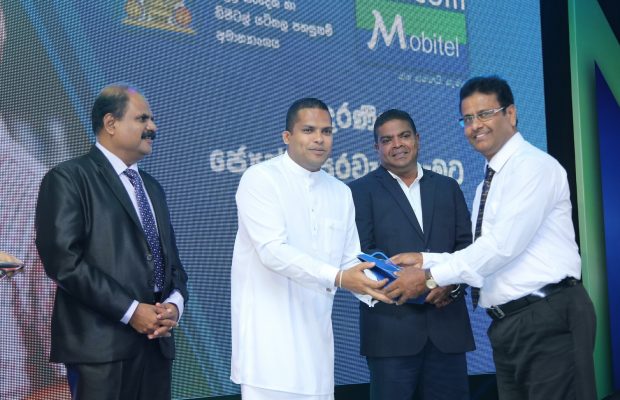
    Sri Lanka’s Mobitel plans to separate from parent company Sri Lanka Telecom (SLT) and list on the Colombo Stock Exchange.

    The operator is gearing up for a public listing this year with the goal of diversifying its ownership beyond SLT, citing official sources.

    The government of Sri Lanka, which owns a 49.5% stake in SLT, plans to exit partially or fully from Mobitel as part of a broader sell-off of its investments in state-owned enterprises.

    The government is seeking to raise at least $1 billion to settle what it says is uneconomical debt it inherited from its predecessor.

    Minister of telecommunications and digital infrastructure Harin Fernando meanwhile told that the separation is also aimed at helping tackle overcrowding in the nation’s telecoms industry and improving the competitiveness of Mobitel.

    Mobitel commenced operations in 1993 and became a fully-owned subsidiary of SLT in 2002. The company currently accounts for around 45% of SLT’s annual revenues, the highest contribution among the group’s eight subsidiaries.