Category: Telecom

Retail News Asia is committed to providing both local and global retailers with the latest Telecom & Telco news throughout the Asian market. This on a daily base.

  • 9 in 10 operators look to real-time assurance for revenue protection

    9 in 10 operators look to real-time assurance for revenue protection

    Among global operators, 91% view real-time assurance as the most important priority for revenue protection, according to a research from telecom.com and Openet.

    The study shows that, without a transformed approach to revenue and service assurance, over half of respondents admit that they will risk losing more than 3% of the revenues expected to come from digital services (i.e. TV services, etc) in 2017 alone.

    The forecast leakage represents a significant level of risk as over 60% anticipating that revenues from digital services will account for 10% of total revenues, and 30% seeing this revenue figure at over 20% of total revenues.

    Also, over three quarters (77%) of those surveyed believe that existing revenue assurance systems would struggle to collect relevant data in real-time from virtualized networks for new services.

    The majority (87%) agreed that most existing revenue assurance systems were designed for traditional telecoms networks. With the advent of virtualization across operators’ infrastructure promising increased efficiency in the long-term, at a network level, it significantly increases complexity in the short term.

    With this in mind, 83% of operators believe the complexity of network virtualization is adding greater need to solve the challenge of dynamic data collection for assurance in this sense.

    “As the industry moves to roll out digital services enabled by new real-time systems and virtualized networks, revenue assurance needs a serious rethink,” said Jon Ross, GVP product and solutions management at Openet.

    “Many service providers are anticipating more than 20% of their service revenue coming from digital services in 2017, therefore it’s important that any potential for revenue leakage is addressed now,” said Ross.
  • HKT, Huawei co-found C-V2X consortium

    HKT, Huawei co-found C-V2X consortium

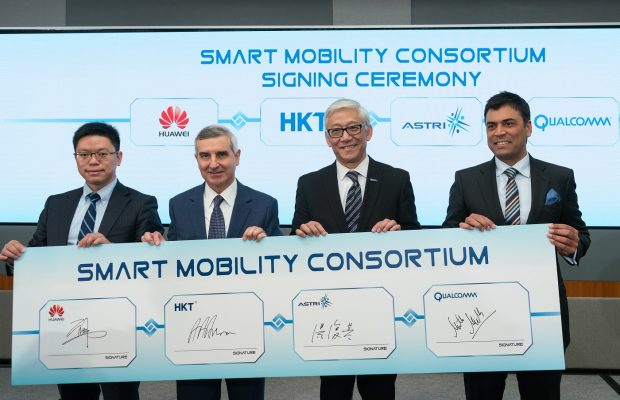
    The Hong Kong Applied Science and Technology Research Institute (ASTRI), operator HKT and vendors Huawei and Qualcomm have formed a consortium aiming to build a smart mobility system for Hong Kong using cellular vehicle-to-everything (C-V2X) technologies.

    The consortium aims to revolutionize Hong Kong’s transportation sector using C-V2X, a standard covering both network-based and direct communications for vehicles.

    A C-V2X powered smart mobility system will therefore enable vehicles to connect to both the cloud and each other, as well as to pedestrians and to traffic infrastructure.

    Vehicles can use the “co-operative awareness” this enables to improve mobility safety as well as autonomous driving, and can help law enforcement and traffic and urban planners to plan and monitor the safety and efficiency of traffic movements.

    The consortium aims to use C-V2X to introduce intelligent transport services including a warning mechanism for collision and control, assistance for cruise control and parking, and alert systems for speed and lane violations.

    It plans to work with government, the automobile industry and other stakeholders to realize this vision. The project is also expected to generate opportunities for other sectors including shipment, ridesharing, home-delivery, insurance, infotainment and mobile healthcare.

    “Hong Kong is a well-connected city with good infrastructure. If we complement these strengths with the latest innovation in science and technology, Hong Kong can become one of the most sophisticated and advanced smart cities in the world,” ASTRI chairman Wong Min-yam commented.

    “This Smart Mobility Consortium is a giant step in that leap. ASTRI is developing state-of-the-art applications, platforms and prototypes which can benefit not just Hong Kong, but potentially other cities in this region too. We, as the SAR’s largest technological R&D institution, are partnering with three eminent organisations to bring revolutionary changes to the way we manage our city’s traffic.”

    The consortium plans to carry out C-V2X pilot in the second quarter of this year. “Our trial sites will likely be at Hong Kong Science Park and the Chinese University of Hong Kong. We hope to extend the pilot to East Kowloon at a later stage,” said Peter Lam, managing director for engineering at HKT.

    “For C-V2X implementation, dedicated spectrum in 5.9GHz is needed. We will try to seek a spectrum testing license from the government to do the pilot,” he added.

  • Cloud-based online charging system debuts through Netcracker

    Cloud-based online charging system debuts through Netcracker

    Netcracker Technology has unveiled its Cloud-Based Online Charging System (OCS), a next-generation offering that has been optimized to meet the requirements of the digital world.

    As the industry’s first always-active OCS platform, Netcracker’s Cloud-Based OCS addresses all of the key pain points associated with legacy, hardware-based charging systems.

    The platform enables always-on availability at a lower cost as well as cloud elasticity and scalability in order to keep up with the demands of digitalization.

    The platform also enables converged revenue management scenarios; support for VoLTE, virtualized, 5G and IoT services; deployment flexibility across any physical and virtual environment; and embedded analytics.

    “Netcracker’s Cloud-Based OCS underscores the right approach for service providers that are looking to monetize cloud and virtualized services in today’s digital world,” said Karl Whitelock, global director of operations, orchestration, data analytics and monetization (ODAM) at Stratecast.

    “As a software-centric solution that relies on configurable parameters and not complex customized code, Netcracker’s scalable OCS can help to address any level of transaction processing need, which is essential for delivering future-proof operations in the journey to becoming true digital services providers,” said Whitelock.

    Sanjay Mewada, chief strategy officer at Netcracker, said traditional revenue management platforms have not been able to keep pace with the needs of communications service providers as they transform into digital service providers.

    “Netcracker has evolved its OCS to address these precise needs,” said Mewada. “Our Cloud OCS, with its unparalleled elasticity, always-on availability and embedded analytics, removes the barriers to digitalization and allows our customers to rapidly monetize digital offerings, such as VoLTE, 5G, virtualized and IoT services.”

  • Tecnotree launches two customer experience solutions

    Tecnotree launches two customer experience solutions

    Tecnotree has launched two new solutions to enable service providers to transform customer experience, boost revenues and simplify processes, while also supporting business decisions.

    Through its Business Analytics and Insight (BAI) dashboard, service providers around the world can now use highly relevant, pre-integrated and pre-defined KPIs to get the critical information they need to run their business.

    BAI presents a simplistic visual summary of key trends, comparisons and current states of key data points vital to a business, both on large screens and mobile devices.

    All this is gathered in one single screen to help users make more informed decisions, with metrics grouped into four key areas: revenue, products, customers and service usage.

    Following a successful pilot, Tecnotree also introduced the Social Media Engagement (SME) tool. With SME, customer service agents can engage all social media channels in one single place, increasing efficiency.

    SME provides notifications when relevant messages are posted and includes a thorough positive/negative sentiment analysis, which enables agents to quickly and accurately prioritize tasks. SME also helps to measure a service provider’s brand sentiment, allowing them to enhance and improve customer interactions.

    In addition, Tecnotree has launched the My Life Dashboard product, which provides a self-care solution to give customers of service providers real-time, easy access and control of their services whenever and wherever they choose. It also allows people to recharge, top up, pay bills and use loyalty points to purchase new services.

  • Swan Mobile picks Subex for fraud management

    Swan Mobile picks Subex for fraud management

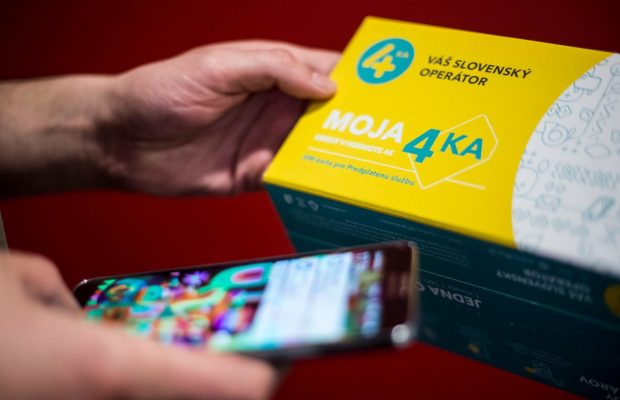
    Swan Mobile, a Slovak telecommunications service provider, has selected Subex to provide its ROC Fraud Management Solution.

    As part of the implementation, Subex’s ROC Fraud Management will cover Voice, SMS and mobile data services for pre-paid and post-paid subscribers of Swan Mobile.

    “Being a progressive organization, we understand the significant impact fraud can have on telecom operators, from both a financial and operational perspective,” said Swan Mobile CTO Patrik Kollaroc.

    “This fact, coupled with the rapid growth we have been seeing, led to us to proactively look for an industry leading fraud management solution and we believe Subex’s Fraud Management solution will enable us to safeguard our business from the implications of fraud effectively,” said Kollaroc.

    Vinod Kumar, COO of Subex, said  the deployment of ROC Fraud Management will help Swan Mobile protect their business revenues and safeguard them against the threat of fraud.

    Subex’s ROC Fraud Management solution promises to ensure a rapid return on investment (ROI) by offering the strongest fraud management capabilities, increasing compliance, reducing risk, and providing economies of scope.

    Subex’s detailed business benefit modelling tools allow customers to determine ROI, build reliable business cases, and explicitly see the value that our solution can bring to their business.

  • Airtel to maintain controlling stake in tower arm

    Airtel to maintain controlling stake in tower arm

    India’s Bharti Airtel has called off plans to sell a controlling stake in its infrastructure division Bharti Infratel, but still plans to sell or transfer a minority stake in the company.

    The company’s board decided  in a meeting held this week not to sell a controlling stake in the division for now.

    Instead the company plans to sell or transfer up to 400 million shares in Infratel to either wholly-owned subsidiary Nettle Infrastructure Investments, any other potential investors or both.

    After the transfer Airtel will hold a 50.33% stake in Infratel while Nettle or the new investors will hold 21.63%.

    Bharti Infratel’s portfolio covers around 90,250 towers, the report states. These include the company’s own towers and its share of the assets of independent tower company Indus Towers, which was jointly established in 2007 by Infratel and other Bharti Group members, as well as Vodafone India and Idea Cellular.

    The division reported a 25% increase in net profit to 6.2 billion rupees ($94.5 million) for the December quarter, which compares to a 50% decline in profit for Bharti Airtel.

  • Prysmian group claims record for densest subsea cable

    Prysmian group claims record for densest subsea cable

    Cable manufacturer Prysmian Group has supplied what it says is the densest and highest fiber count subsea cable ever made.

    The company has delivered a FlexTube cable containing 1,728 optical fibers for Australia’s Superloop for the TKO Express project.

    TKO Express is a project to provide broadband connectivity between the aras of SiuSai Wan on Hong Kong Island and the Tseung Kwan O Industrial Estate data center hub on the mainland.

    The company’s and industry’s previous record was a subsea FlexTube cable with just 720 fibers from 2014.

    Prysmian Australia CEO Frererick Persson said the construction was a major logistics and engineering challenge.

    The base cable was manufactured in France, then airlifted in Australia to apply moisture barriers and aluminum tape as well as double armoring layers of wrapped steel wires to ensure the cable could withstand being buried up to five meters into Hong Kong’s sea bed.

    “It was a logistics challenge indeed. Airfreighting a drum weighing 15 tons was something that we have never done before. But we mastered it and the drum was successfully delivered to the TKO Port three days before the promised date. It has been definitely great success for both companies,” he said.

  • India,Indonesia to enhance ties in cyber security,intelligence

    India,Indonesia to enhance ties in cyber security,intelligence

    India and Indonesia today decided to enhance cooperation in cyber security and intelligence sharing.

    This was decided at a meeting between Minister of State for Home Kiren Rijiju and visiting Indonesian Minister for Security Gen Wiranto here.

    “The bilateral meeting with Indonesian Minister for Security and Coordination was very fruitful. The meeting focused on cyber security and intelligence sharing,” Rijiju said.

    The delegation level meeting was attended by senior officials of Ministry of Home Affairs and Indonesian Ministry of Security and Coordination.

  • Nokia providing IP/MPLS for Malaysia’s first MRT line

    Nokia providing IP/MPLS for Malaysia’s first MRT line

    Nokia has announced it has provided a mission-critical communications network for Malaysia’s first Mass Rapid Transit line.

    The company has supplied the network to systems integrator LG CNS as part of the project to provide railway operational support on the new SBK (Sungaii Buloh-Kajang) line.

    Nokia is providing an IP/MPLS network capable of providing scalable Layer-2 and Layer-3 VPN services for various railway sub-systems. The company is also providing its Network Services Platform for end-to-end network and services management.

    The northern section of the SBK line launched in December, and the southern and underground sections are due to be operational by the end of July.

    Once complete, the line will cover 51km and serve the 1.2 million residents in and around Malaysian capital Kuala Lumpur.

    “Nokia’s IP/MPLS solution for railways is designed to address railway operators’ demanding requirements in terms of performance, reliability and, most importantly, safety,” Nokia head of global enterprise and public sector for APAC Stuart Hendry said.

    “We are pleased to play such an important role in helping ensure safe, on-time and connected journeys for Kuala Lumpur’s residents.”

  • Huawei to take 16.83% stake in Bakrie Telecom

    Huawei to take 16.83% stake in Bakrie Telecom

    Huawei has arranged to acquire a 16.83% stake in Indonesian operator Bakrie Telecom by converting some of the operator’s debt into shares.

    Debt-laden Bakrie Telecom issued a 7.6 trillion rupiah ($568.1 million) mandatory convertible bond in 2016 as part of a debt restructuring. Huawei has now decided to convert its holdings of the bond into shares.

    With the move, 1.23 trillion rupiah worth of Bakrie Telecom’s debt has been converted into shares.

    Bakrie Telecom president commissioner Anindya Novyan Bakrie told that the conversion will help improve the company’s financial situation for this reason, and therefore the company welcomes Huawei’s move.

    But under Indonesian trading rules, the shares to be converted will not be available for trading for one year.

    While Huawei’s Indonesian subsidiary PT Huawei Tech Investment will also have the right to elect representatives on Bakrie Telecom’s board, Anindya said no decision on this has yet been made.

    The possibility of a debt conversion was first floated last year but at the time it was suggested that Huawei would be taking just a 9% stake, with fellow creditors Protelindo and SUPR receiving shares of 7% and 6.8% respectively.

  • APAC governments ramping up IoT investments

    APAC governments ramping up IoT investments

    Asia-Pacific governments are investing more in IoT technologies. A poll conducted by IDC indicates that 40% of government organizations in the region will be implementing IoT solutions in the next 12 months. Another 50% will be rolling out solutions in the next 12-24 months.

    “Improving productivity, improving time to market for products/services and improving energy efficiency reducing costs are the top benefits of an IoT solution,” said Shreyashi Pal, Market Analyst, IDC Asia-Pacific Government and Education Insights.

    “IoT enables access to new and granular data sources, empowered by swift connectivity and quick data gathering capability giving access to a wider range of information that enhances the quality of government services at a scale, which previously has been thought to be unattainable.”

    IDC’s 2016 Global IoT Decision Maker Survey, which was conducted in July and August 2016 and includes over 4,500 respondents from more than 25 countries, also reveals that Asia is expected to have 21 out of 37 safe megacities of the world. As a result 50% of government organizations plan to deploy security systems in the region while 48% plan to deploy people tracking devices.

    About 62% of the APAC companies are also considering IoT to create a strategic impact to their organizations while 25% considers IoT to create a transformational impact in their organizations. About 28% of the organizations consider security concern as the major hindrance to deploying IoT solution.

    Gerald Wang, Head, IDC Asia-Pacific Government and Education Insights, said that 2016 has seen a significant change in terms of vendors leading the IoT market.

    “The prominent IT vendors prevalent in hardware, software and network solutions equipped with an integrated cloud and analytics solution are most likely to lead the Internet of Things market. IT hardware vendors as the top players,” he said.

    “We also note that for many enterprises in the region, networking equipment vendors and systems integrators feature prominently as potential leaders while traditional IT hardware vendors are becoming the leading network equipment vendors in the IoT market.”

  • Colt Asia Cloud PBX Service to launch in April

    Colt Asia Cloud PBX Service to launch in April

    Colt Technology Services has announced it will launch its Colt Asia Cloud PBX Service for enterprises in the region starting in April.

    The company will offer an all-in-one solution combining PBX functionality, IP phones and remote access connectivity to the office.

    The service is aimed at alleviating customers from the need of purchasing their own PBX. Instead customers will use the PBX system installed within Colt’s data centers in exchange for a a small upfront cost and monthly fee.

    Calls made using the service within the same organization will be treated as internal extension numbers and be placeable for free.

    Numbers provided by the company will be able to use the full set of PBX features including call transfer, hold and conference calling.

    “Cloud computing is already a standard in today’s IT environment. This reality also applies to voice communications, including telephony, that are indispensable to corporate business,” Colt CCO for Asia Kenji Hioki said.

    “With this service, Colt is dramatically reducing the cost of acquiring PBX and corporate telephony, in turn reducing the associated maintenance and overhead expenses that come with a communications network spanning multiple sites.”

  • Singtel announces tie-up with polytechnics to help F&B businesses go digital

    Singtel announces tie-up with polytechnics to help F&B businesses go digital

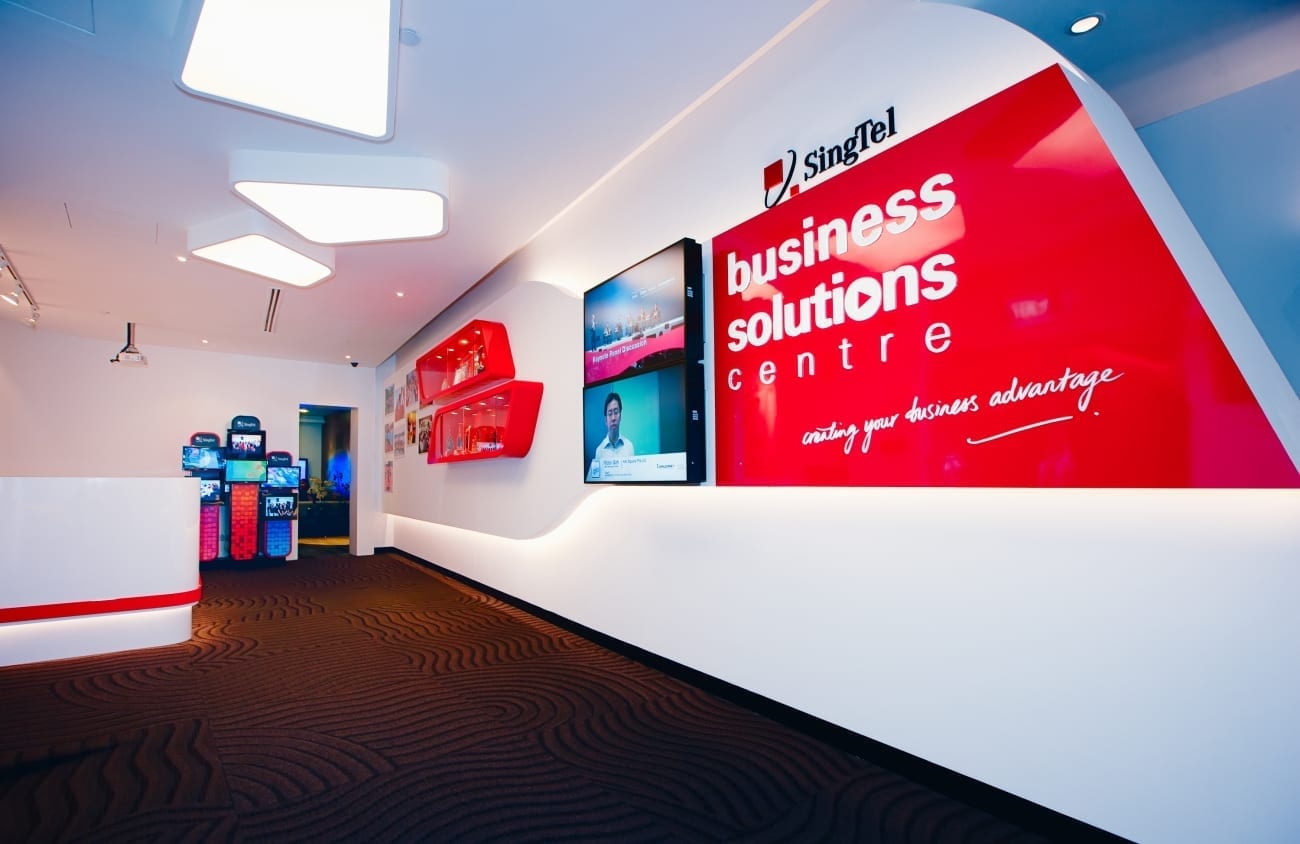
    Singtel has announced a new initiative with the two Singapore-based polytechnics — Nanyang Polytechnic (NYP) and Singapore Polytechnic (SP) — in Singapore to help F&B and retail businesses go digital.

    First, it will collaborate with the NYP – Singapore Institute of Retail Studies (SIRS) to help these SMEs hire digital professionals who will offer their expertise in e-commerce, retail analytics and digital marketing solutions such as SEO and Search Engine Marketing.

    These digital professionals will comprise of professionals, managers, executives and technicians (PMETs) who have been re-skilled.

    SMEs which sign up for this scheme will be able to claim up to 90 per cent in government subsidies.

    In addition, they can also seek additional support on social media marketing, online merchandising and analysis of online consumers from students and lecturers at the NYP’s Customer Experience and Analytics Centre.

    Next, Singtel will work with an integrated team of business, IT and communication students from SP to help F&B owners showcase their offerings on the 99% SME website — a portal set up by DBS and Singtel in 2015 which provides digital tools and resources to SMEs to boost productivity.

    Additionally, the SP students will help these businesses adopt Singtel’s Connected Restaurant solution. This solution offers an online reservation and pick up service.

    SP students will also offer recommendations and develop a suite of solutions to boost businesses’ products and digital and marketing capabilities.

    “Through the 99% SME movement, our collaboration with Nanyang Polytechnic and the Singapore Institute of Retail Studies are three-fold. First, it helps SMEs improve productivity, reduce costs, gain new revenue and scale their businesses,” said Andrew Lim, Managing Director, Business Group, Group Enterprise at Singtel, in an official press statement.

    “Second, PMETs are being re-skilled and re-employed while using their skills to help SMEs in their digital journey. Third, the students will acquire deep skills and develop entrepreneurial spirit, which prime them for their career development in the digital field.”

    Last week, Singtel and Lazada announced the launch of 99% SME e-marketplace – a dedicated portal hosted on Lazada Singapore’s website for SMEs to advertise their offerings and tap on a wider online customer base.

  • New Zealand’s Chorus extends managed services deal with Nokia

    New Zealand’s Chorus extends managed services deal with Nokia

    New Zealand infrastructure provided Chorus has extended its managed services agreement with Nokia for another three years.

    With the contract extension, Nokia will remain the operator’s sole managed services partner.

    The contract is based on Nokia providing fully managed end-to-end operations services aimed at improving the customer experience, operational efficiency and the quality of Chorus’ nationwide fixed line network.

    The initial managed services contract was signed in 2014. Under the agreement, Nokia is providing real-time end-to-end operations and network management from its Global Delivery Center in India.

    “Our decision to extend the existing agreement reflects our satisfaction with Nokia operations and support services,” Chorus CTO Ewen Powell said.

    “We need a partner that understands our business and can deliver simplicity over complexity, helping us launch innovative offerings to our partners and their customers while improving the overall reliability of our networks. Nokia has proven its capabilities to do that, so the extension was very straight forward.”

    Chorus was spun out of the infrastructure arm of former state-owned operator Telecom New Zealand as part of the demerger agreement that was a condition of its participation in New Zealand’s Ultrafast Broadband (UFB) state broadband project. The retail division was spun out into what is now called Spark.

    Chorus owns the majority of telephone lines and exchange equipment in New Zealand and is responsible for building around 70% of the UFB.

  • Equinix to raise $2.8b ahead of Verizon asset purchase

    Equinix to raise $2.8b ahead of Verizon asset purchase

    Equinix revealed plans yesterday to raise at least $2.875 billion in public offerings over the next few weeks. The data center giant is lining up the necessary funds to make their previously announced purchase of a selection of US operator Verizon’s data center footprint.

    The assets include the former Terremark business and consist of 29 data centers spanning 2.4 million square feet across 24 sites and 12 metro areas.

    The footprint is mostly North American plus Sao Paolo down in Brazil. Nine of those metro areas already have Equinix facilities, while Houston, Culpeper, and Bogota will be some new turf for them.

    Equinix will be selling $1.75 billion of common stock, with underwriters having the usual 30-day option on another 15%, or $262.5 million.

    At the same time they will be selling $1.125B in senior notes due 2027. And they’ll be using $1.053 billion from their existing term loan B borrowings to make up the remaining piece, covering the $3.6B purchase price plus other fees and such.