Category: Telecom

Retail News Asia is committed to providing both local and global retailers with the latest Telecom & Telco news throughout the Asian market. This on a daily base.

  • PT Telkom’s profit grows 24.9% in FY16

    PT Telkom’s profit grows 24.9% in FY16

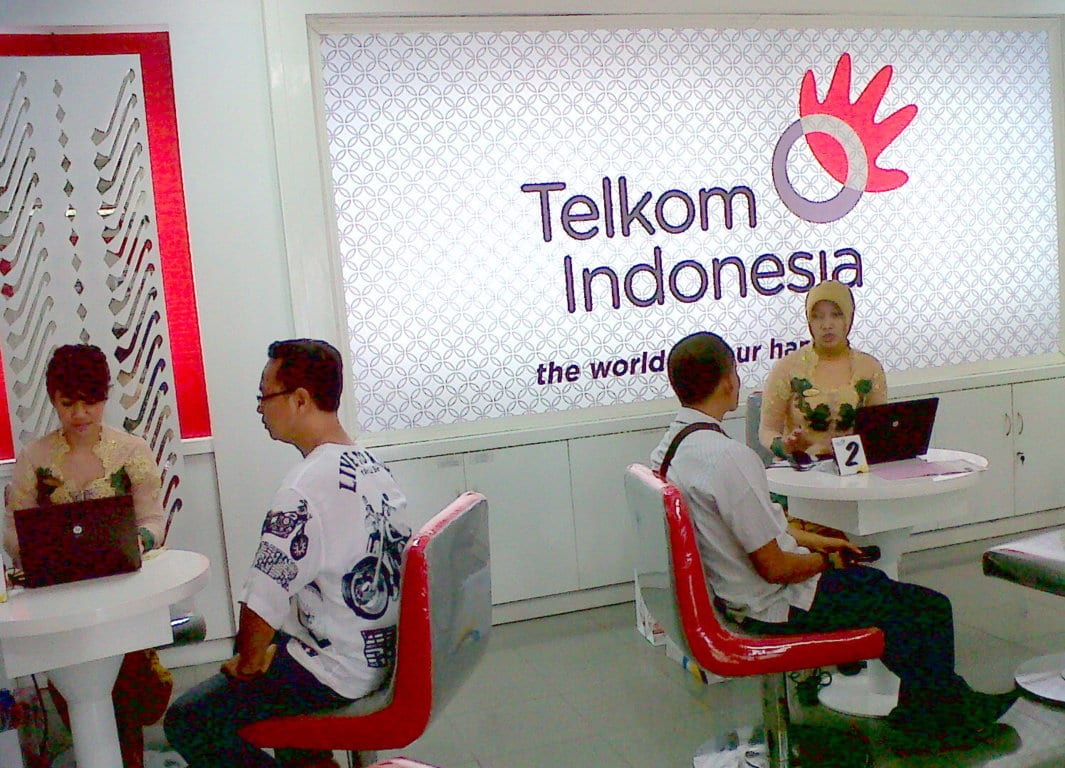
    Indonesia’s PT Telkom has reported a 24.9% increase in net profit for FY16 to 19.35 trillion rupees ($1.45 billion), on the back of a strong performance in the company’s data and internet businesses.

    Total revenue grew 13.5% to 116.33 trillion rupees, with revenue from the company’s data, internet and IP business growing 31.5% from 2015 to account for 37% of total revenues.

    Fixed broadband subscribers grew 8.8% to 4.3 million, which includes 1.6 million subscribers to its IndiHome fiber broadband services.

    Wireless subsidiary Telkomsel, in which Telkom owns a 35% stake, reported a net income of 9.79 trillion rupiah, up from 7.818 trillion in 2015. Total users grew 13.9% year-on-year to 173.92 million, with mobile broadband users up 37.1% to 60 million.

    Telkom’s capex grew 10.6% year-on-year as the company spent heavily on fixed and mobile network expansion, mainly focused on access and backhaul infrastructure.

    The company said it had deployed nearly 25,000km of terrestrial and subsea fiber during the year, including with its participation in the recently-completed SEA-ME-WE 5 subsea cable project, which links 16 nations in Southeast Asia, the Middle East and Africa.


  • ‘Super 7’ accelerate cloud, says TBR

    ‘Super 7’ accelerate cloud, says TBR

    A report identified the seven largest (“Super 7”) technology firms which are best positioned to provide access to cloud services for global firms.

    Alphabet, Amazon, Facebook, Microsoft, Alibaba, Baidu and Tencent also view their cloud businesses as critical to their growth over at least the next five years, a report from Technology Business Research (TBR) said.

    Chris Antlitz, a telecom senior analyst at TBR, said “All of the Super 7 companies are aggressively building data center footprints globally and are baking in significantly more capacity than they currently need in anticipation of future data traffic growth.”

    “However, despite the addition of extra capacity upfront, capex growth will remain robust through the next five years as workloads increasingly move to the cloud and as the digital ecosystem flourishes worldwide,” the analyst said.

    Of the $16.9 billion in capex spent by the “Super 7” on ICT in 2016, TBR estimates around 75% was for data center infrastructure, with the balance of ICT capex spent primarily on optical transport, routers, switches, software and broadband access initiatives.

    The report said the Super 7 are investing heavily on not only data centers to support the internal operations of their core businesses, but also for their external cloud services businesses, which are growing much faster than their core digital businesses.

    Some vendors are gaining traction with webscale companies, with revenues increasing and the scope of engagements widening. Generally speaking, vendors that align their portfolios and innovation road maps with webscale requirements stand to win the most business from webscale companies.

    TBR’s Webscale ICT Market Landscape tracks the ICT-related initiatives of the seven largest webscale companies in the world. The report provides a market assessment, deep dives into company strategies and analyzes capex trends, particularly as they pertain to ICT. Vendors are also covered from the perspective of relative opportunities with webscale companies as customers.

  • CenturyLink launches ‘multi-cloud’ management strategy

    CenturyLink launches ‘multi-cloud’ management strategy

    CenturyLink has launched CenturyLink Cloud Application Manager, a new orchestration platform designed to simplify deployment of enterprise workloads, managed services, and third-party cloud resources.

    The tech firm said this cloud-agnostic management platform enables companies to better manage applications and workloads across hybrid hosting environments – in customer private clouds, colocation centers and public cloud environments.

    In a business climate where companies need to simplify management and governance of applications across multiple cloud infrastructures without sacrificing control or visibility, Cloud Application Manager delivers flexibility that enterprises need to quickly provision, deploy and migrate workloads to the environment that best matches business requirements, the company said.

    “Many of our customers and partners struggle with the business challenge of determining the best execution venue for their business applications. We designed Cloud Application Manager to give our customers a wide variety of infrastructure options across diverse public and private cloud environments,” David Shacochis, VP of hybrid IT product management at CenturyLink said.

    “Cloud Application Manager helps companies avoid vendor lock-in, automate application deployments, scale workloads across disparate hosting environments, and optimize their costs over time. These benefits are available in a self-service model, or one that is actively managed by CenturyLink team members,” the executive said.

    Users can consume Cloud Application Manager via the cloud version (SaaS) or the data center version (a virtual appliance that runs on-premises in their data center). This usage-based platform allows customers to consume the value-added services they need with a consolidated bill and a simplified, yet powerful, interface, the company further said.

  • 21b IoT devices to ship with embedded RTOS by 2022

    21b IoT devices to ship with embedded RTOS by 2022

    IoT faces new computing challenges, notably with deployment and scaling, and its future will rely in part on using embedded real-time operating systems (RTOS), according to ABI Research.

    The research firm has forecast that 21 billion IoT devices will ship with embedded RTOS by 2022.

    RTOS support many IoT application features, such as small size, constrained processing resources, low power consumption, limited maintenance, and real-time computing.

    “The tremendous expansion of the IoT revived the embedded RTOS market, with open source platforms springing up rapidly to jostle long-established proprietary players,” ABI Research research director Michela Menting said.

    “While industrial demand for RTOS has a decade-long history, the development of new IoT applications in other segments – such as consumer, digital home, connected car, and smart cities – jolted demand for embedded RTOS.”

    Supported by greater MCU capabilities and lowering price points, the embedded RTOS market is expanding rapidly.

    Some of the most high-profile and innovative RTOS on the market include µC/OS, FreeRTOS, Integrity RTOS, mbed OS, MEOS, MQX RTOS, Nucleus RTOS, PikeOS, QNX, RIOT OS, ThreadX, VxWorks, and Zephyr.

    Many open source operating systems popular with the IoT are increasingly adding real-time capabilities to compete in this lucrative market. Currently, the embedded RTOS market is highly fragmented, with hundreds of different platforms available.

    “RTOS shows immense promise in terms of flexibility and application for all kinds of new IoT markets,” concludes Menting. “Although, developers will need to tackle issues of interoperability and standardization to realize its full potential.”

  • China Unicom Global expands CUniq MVNO to US

    China Unicom Global expands CUniq MVNO to US

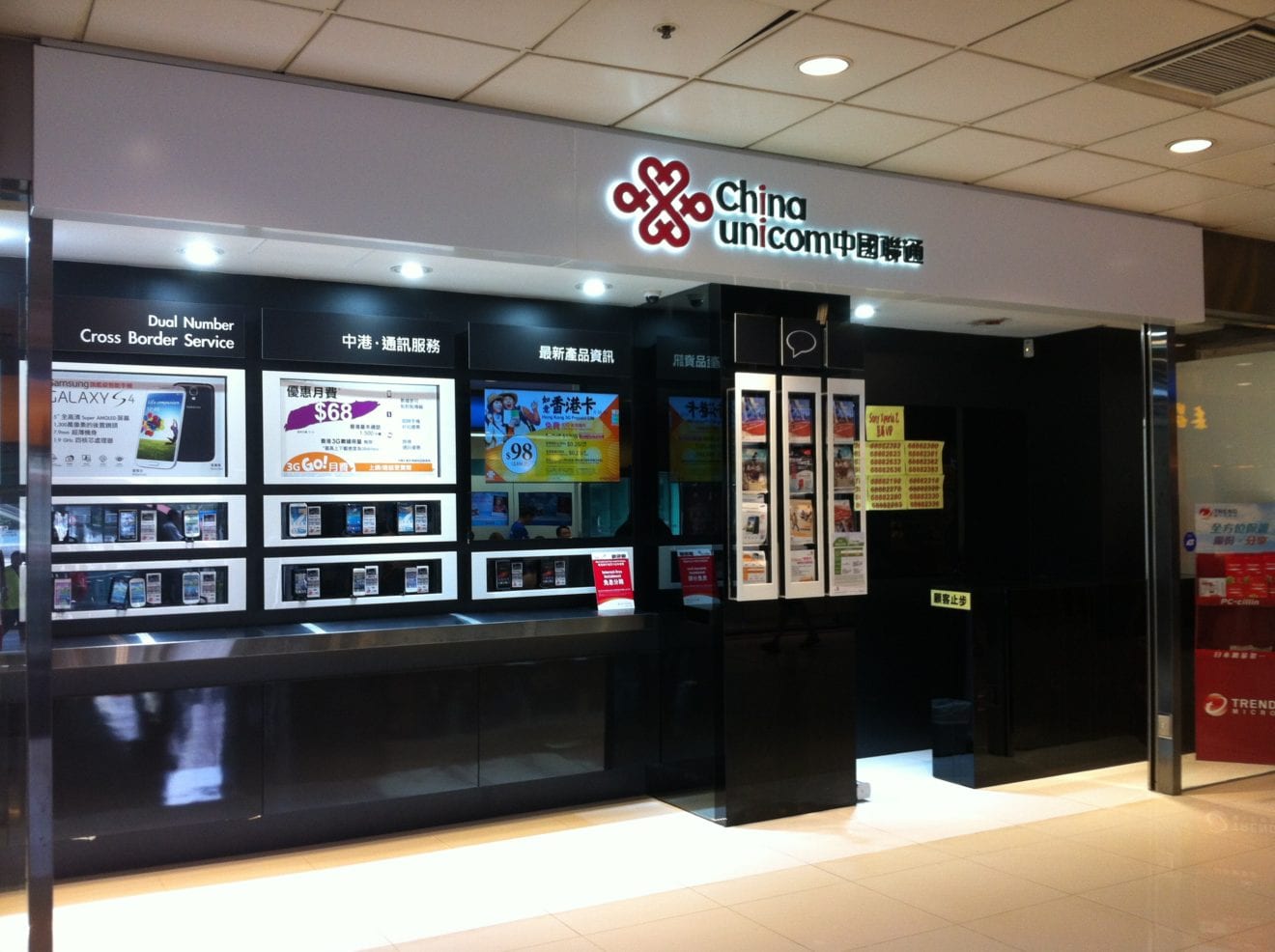
    China Unicom Global has extended its MVNO venture into the US, which will allow customers to keep Hong Kong, mainland China and US mobile numbers on a single account.

    The operator’s CUniq MVNO business has expanded to America after launching in Europe late last year. CUniq now allows data sharing across 47 countries and regions including Hong Kong, Europe and the US.

    Customers will be able to use data, voice and SMS services in the 47 countries. The service is supported by a 24/7 customer support service in Chinese, English and Cantonese.

    In the US, CUniq will have three plans, tailored to global businesspeople, American local users and tourists respectively. It will support electronic payment including WeChat Pay, Alipay, Visa, MasterCard and UnionPay.

    China Unicom Global president Shusen Meng said the company plans to continue expanding its CUniq business into more countries and regions in the future.

    CUniq is being developed in collaboration with multi-country cloud-based MVNE Plintron.

  • SK Telecom, Nokia team on quantum cryptography

    SK Telecom, Nokia team on quantum cryptography

    SK Telecom and Nokia have teamed up to conduct joint research and development in the field of quantum cryptography for network transport.

    The operators are collaborating to achieve interworking between SK Telecom’s Quantum Key Distribution System (QKD) and Nokia’s next-generation optical transport system by the second half of 2017.

    The first prototype from the collaboration – the Quantum Transport System – was shown off at Nokia’s booth at Mobile World Congress 2017 last week.

    SK Telecom said quantum cryptography is expected to replace existing security mechanisms in all areas at risk of data hacking, including national defense, finance, autonomous vehicles and the IoT.

    In line with this projection, SK Telecom and Nokia have also agreed to cooperate in the area of quantum random number generation, which will be required to apply quantum cryptography to IoT devices.

    SK Telecom has developed a quantum random number generator within the world’s smallest CMOS Image Sensor (CIS) based silicon, measuring just 5x5mm. The company expects to tape out engineering samples of the chip in the second quarter and commercially launch it by the end of the year.

    “Since opening Quantum Tech Lab in 2011, SK Telecom has been making constant efforts to develop quantum cryptography technologies,” SK Telecom CEO Park Jung-ho said.

    “Based on the cooperation with Nokia, SK Telecom will create a new paradigm and ecosystem in the field of ICT.”

  • Indian telcos to start their 5G journeys this year

    Indian telcos to start their 5G journeys this year

    India’s plan of utilizing 5G technology to keep up with the rest of the world may soon become a reality.

    Indian operators will start the process of upgrading to 5G technology from this year. According to Huawei India CEO Jay Chen, 5G technology in present form can deliver up to 1Gbps download speed.

    “I can tell you Massive MIMO (Multiple Input Multiple Output) technology (part of 5G technology) will go to India this year. We have had discussions with leading telecoms operators who are interested and right now it is only available with Huawei for commercial deployment,” Chen said in an interview. Wide-scale commercial deployment of 5G is expected to start in India in the next three years.

    Bharti Airtel Chairman Sunil Bharti Mittal had earlier said that the MIMO technology available with Huawei and ZTE can increase current capability of spectrum by up to 8 times at an additional cost of only about 20%.

    Chen said that 5G standards are expected to be firmed up next year when wide scale commercial deployment of 5G will begin.

    “We have already deployed 4.5G networks in 13 circles across India which with minor upgrades can be transformed to 5G. With 4G subscriber base in India increasing, the download speed will reduce for which operators will need to begin start 4.5G services,” said Chen.

    5G will bring advanced technology which will change the way network coverage is provided to subscribers.

    “At present, subscribers runs to connect with the network. We are ready with pilots for multi MIMO technology that will follow subscribers. Dedicated spectrum frequency (beam forming) will connect with device of the subscribers and follow them wherever they go,” explained Chen.

    He added that the Indian industry is improving significantly with consolidation in the sector and end of spectrum shortage which provides good opportunity for telecoms equipment companies.

    “Earlier their was spectrum scarcity in India. There were 13 operators who were involved in tariff war. Since last year we have not seen operators complaining about spectrum scarcity. Availability of spectrum gives them opportunity to deploy latest technologies like 5G. With Huawei we see this a very positive move. Our growth has also improved in India in last two years,” Chen said.

    He said that Indian operators are now moving in the direction where they can catch up with rest of the world.

  • Telstra forms SDN alliance with VeloCloud

    Telstra forms SDN alliance with VeloCloud

    Australian operator Telstra has entered a strategic partnership with US-based Cloud-Delivered SD-WAN company VeloCloud to help accelerate the adoption of SDN in enterprise networking.

    The partnership, which includes an investment from Telstra Ventures into VeloCloud, will enhance Telstra’s SDN and NFV capabilities in the APAC region.

    As part of the agreement, Telstra’s Chinese joint venture Telstra PBS will add VeloCloud SD-WAN solutions to its product suite.

    Telstra Ventures managing director Mark Sherman said the investment is consistent with Telstra’s overall network strategy, which reflects the increasing role SDN and NFV are playing in enterprise networking.

    “We expect SDN will continue to transform enterprise networking around the world and VeloCloud SD-WAN can help companies achieve more agile and responsive networks as well as reduce costs,” he said.

    “We are excited about the opportunity to work with VeloCloud on solutions for our enterprise customers, particularly in the Asia-Pacific region where their technology can help businesses manage their networks in dynamic environments across multiple locations. Our first step will be to offer VeloCloud technology to customers in mainland China.”

  • China to end domestic roaming fees by October

    China to end domestic roaming fees by October

    China’s big three mobile operators have revealed plans to stop charging domestic roaming fees by October.

    China Mobile, China Telecom and China Unicom have announced they will end the practice of charging inter-province roaming voice and data fees.

    The operators are also planning to introduce discount pricing for small and midsize businesses in a bid to encourage corporate customers to adopt more network technologies such as cloud computing.

    The operators are responding to pressure from the government to reduce the price of telecoms services to spur consumer spending and encourage greater adoption of network technologies.

    China has also been seeking to encourage price competition in the mobile sector, and opened up the market to MVNOs in 2013.

    These efforts were also extended to the fixed broadband market in 2014.  According to the Reuters report, the government recently announced it has approved applications from 198 private enterprises seeking to provide broadband services under a pilot project.

    China’s move to abolish domestic roaming will take the industry one step closer to meeting current GSMA chairman and Bharti Airtel founder Sunil Bharti Mittal’s recent call and doing away with roaming altogether – including international roaming.

  • Orange taps Huawei for public cloud services for MNCs

    Orange taps Huawei for public cloud services for MNCs

    Orange Business Services, the B2B arm under Orange Group, has contracted Huawei to support the delivery of a new global public cloud offering to multinational corporations.

    Under the agreement, Huawei will provide a turnkey solution, including the hardware, develop the technology platform and OpenStack operating system, as well as level-three support. Orange will provide the data center facilities, network and security infrastructure, customers’ infrastructure and applications management, and professional services to support cloud migrations.

    Announcing the partnership at Mobile World Congress in Barcelona this week, Philippe Laplane, director of Orange Cloud for Business at Orange Business Services, said initially the company will target three major verticals – healthcare, public transportation and smart cities – for the new offering.

    With the new offering, Orange is extending its international cloud strategy with a portfolio of advice, integration and managed services for cloud infrastructure and applications.

    The new offering is aimed at helping multinational corporations migrate their legacy enterprise application to the cloud. It is designed to complement the company’s existing private cloud portfolio, Laplane added.

    Orange plans to roll out new services across Western Europe and Southeast Asia in April, followed by the US in October. The Middle East and Africa are scheduled for next year.

    Laplane said the French operator will host two sites in Western Europe and an additional one in Singapore for MNCs with a presence in Asia.

    “Our customers have a genuine need for an international public cloud offering that will allow them to adapt to the uses imposed by new technologies and meet the challenges of transforming their IT services on a global scale,” the executive said.

    “To continue to support them, it is essential for us to have the best technology, combined with the highest levels of security and services, that can meet the challenges of both digital transformation and international development.”

  • Ooredoo launches 10Gbps FTTH services

    Ooredoo launches 10Gbps FTTH services

    Ooredoo has used Mobile World Congress 2017 to announce it is launching a new 10Gbps FTTH service.

    The company has been offering 10Gbps fiber speeds to select VIP customers in Doha in Qatar, ahead of a planned wider nationwide commercial rollout later this year.

    Ooredoo has been trialing the service since December. In Doha, itt currently costs 7,500 rial ($2,059) per month, bundled with the Ooredoo tv service.

    Ooredoo Qatar CEO Waleed Al Sayed said the ongoing 10Gbps upgrade will also support Ooredoo’s broader strategy involving introducing 5G services, offering 8K TV streaming and positioning Qatar as the world’s best-connected country.

    “We’re delighted to be officially launching our 10Gpbs Fibre service for Qatar at Mobile World Congress,” he said.

    “This week is all about demonstrating Ooredoo’s data experience leadership, and we continue to set new milestones by expanding and enhancing the Ooredoo Supernet for mobile and fiber customers.”

  • Mobile commerce in Singapore to pass $850m in 2017

    Mobile commerce in Singapore to pass $850m in 2017

    Despite a slower economic outlook, more than a third (38%) of online adults in Singapore interviewed in a 2016 study by PayPal say they will be spending more online this year, largely due to the convenience it brings.

    Notably, another 78% who predicated an increase in their online spend also cited convenience as the reason.

    Specifically, survey results showed that Singaporeans are turning their attention to spending on day-to-day items, with predicted growth for household goods (21%), groceries, food and beverage, and alcohol (15%), and baby and children’s supplies (12%) topping the list.

    Results indicate an increasing growth in mobile spend as Singaporeans spend more time on their mobile devices, with mobile shopping spend predicted to increase by 42% this year over 2016. This amounts to more than S$1.2 billion ($848 million), almost a third of the forested total online spend of S$3.5 billion in the country.

    The numbers explain the mobile first attitudes of firms in the region, and makes sense when one considers that the Asia Pacific is the leading region in terms of mobile connection penetration.

    In addition, two thirds (68%) of all cross-border shoppers interviewed in the region have made a cross-border purchase on a smartphone in the past 12 months, which is the highest net incidence out of all regions surveyed.

    “2017 looks to be a year of growth and opportunities for savvy businesses that are equipped to take their sales online, on mobile and in-app. This in turn provides endless choices and possibilities for the mobile-savvy generation as they live their lives on the go,” said Rahul Shinghal, general manager for PayPal Southeast Asia.

    PayPal’s study dovetails with another study late last year which concluded that the Asia Pacific region leads the world in mobile payment. Conducted by Kantar TNS, the study of over 70,000 consumers found that over half of connected users use their smartphones to pay for goods or services at point of sales via apps.

  • Optus, Huawei complete Massive MIMO field test

    Optus, Huawei complete Massive MIMO field test

    Australia’s Optus and Huawei have announced they have completed a successful infield test of Massive MIMO as part of the operator’s upgrade path to 5G.

    The trial used 128 transmit 128 receive Massive MIMO technology, achieving aggregate cell throughput of 665Mbps over a single 20 MHz carrier on the 2300-MHz frequency band, shared by 16 devices.

    Optus managing director for networks Dennis Wong said the trial demonstrated an aggregated speed improvement of up to eight times the capacity of existing 4G cell sites.

    “We’re seeing a 75% year on year increase in data consumption. Massive MIMO is an important step along the journey to 5G as it allows us to immediately increase cell site capacity and spectrum efficiency,” he said.

    “For customers, this means that their experience will be of consistently high standard even in high usage situations – regardless of whether your neighbour is downloading movies, or the person across the hall streaming 4K videos off YouTube.”

    He said the testing also indicates that the beamforming capabilities of Massive MIMO can deliver significant improvements in areas with high density populations, such as high-rises.

    In January, Huawei also completed field verification of the first FDD-based Massive MIMO technology, in collaboration with China Unicom. Major vendors showcased Massive MIMO technologies at Mobile World Congress 2017 this week.

  • Ooredoo launches 10Gbps FTTH service

    Ooredoo launches 10Gbps FTTH service

    Ooredoo has used Mobile World Congress 2017 to announce it is launching a new 10Gbps FTTH service.

    The company has been offering 10Gbps fiber speeds to select VIP customers in Doha in Qatar, ahead of a planned wider nationwide commercial rollout later this year.

    Ooredoo has been trialing the service since December. In Doha, itt currently costs 7,500 rial ($2,059) per month, bundled with the Ooredoo tv service.

    Ooredoo Qatar CEO Waleed Al Sayed said the ongoing 10Gbps upgrade will also support Ooredoo’s broader strategy involving introducing 5G services, offering 8K TV streaming and positioning Qatar as the world’s best-connected country.

    “We’re delighted to be officially launching our 10Gpbs Fibre service for Qatar at Mobile World Congress,” he said.

    “This week is all about demonstrating Ooredoo’s data experience leadership, and we continue to set new milestones by expanding and enhancing the Ooredoo Supernet for mobile and fiber customers.”

  • Amdocs launches aia to enable the “self-driving telco”

    Amdocs launches aia to enable the “self-driving telco”

    Amdocs has used Mobile World Congress 2017 to introduce aia, a new digital intelligence platform for the telecoms and media industry designed to enable the “self-driving telco”.

    The platform combines AI and machine learning capabilities – including cognitive computing services from IBM’s Watson – to deliver real-time intelligence into customer needs.

    Real-time data will be used by aia to make predictions, automate decisions and directly manage conversations with customers. Self-learning capabilities will be used to adapt to changing dynamics.

    The platform has the ability to manage around 50 operational business processes covered by the Amdocs OSS portfolio.

    “Imagine a world where your business intuitively understands your customers’ needs and automatically adapts to address them, where service providers embrace cognitive learning within their operational strategies, boosting customer experience, dynamically managing the product catalog and optimizing increasingly complex networks,” Amdocs CMO Gary Miles said. “aia will make that world a reality.”

    aia uses a data model compliant with the SID information framework component of TM Forum’s Frameworx digital transformation blueprint.

    Cloudera CEO Tom Reilly commented that Amdocs is “uniquely positioned to integrate intelligent data into a service provider’s Hadoop-based ecosystem.

    “The relevance of AI for service providers is very real and they get it; the question is how quickly they can act on it. By injecting intelligence into our portfolio, aia gives them a pragmatic and straightforward way to embrace AI into their business.”