Category: Telecom

Retail News Asia is committed to providing both local and global retailers with the latest Telecom & Telco news throughout the Asian market. This on a daily base.

  • India’s Jio introduces its first price plans

    India’s Jio introduces its first price plans

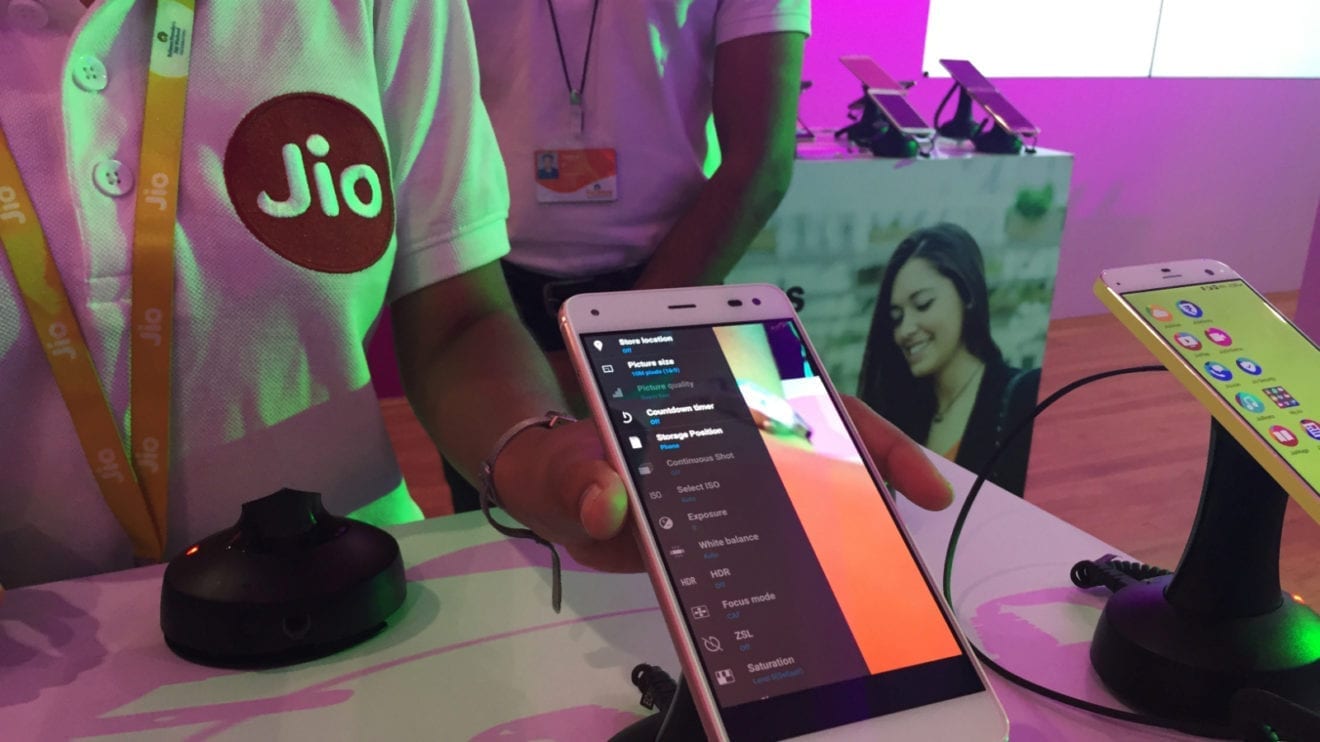
    Disruptive new Indian 4G operator Reliance Jio’s free services offer will soon be coming to an end, but the operator has announced an aggressive new pricing strategy in a bid to retain as many of its new customers as possible.

    Jio launched nationwide services in September last year, but made all services available for free as a promotional offer. The company subsequently extended this promotion until March 31.

    The aggressive marketing strategy has helped Jio sign up new customers at a record rate – the operator recently revealed it is nearing 100 million customers. But a number of these are expected to port out once the free services period comes to an and, due in part to the current patchy nature of Jio services.

    In an attempt to limit churn, Jio has introduced a new Prime offer that will take effect from April 1. Under this offer, customers will be able to pay a one-time 99 rupee ($1.48) fee for prime membership, and another 303 rupees a month for unlimited voice calls and 30GB of allocated data.

    Jio’s rivals, which have already been feeling the impact of the operator’s entry into the market and been pushed into making their offers more competitive, may find themselves needing to further cut prices or increase allocations in response.

    This could put even more pressure on a hotly-competitive telecoms market and accelerate the consolidation trend.

  • 25 operators are already testing 5G

    25 operators are already testing 5G

    Despite 5G standardization not being expected until 2020, 25 mobile operators have already commenced lab testing 5G technologies, according to industry data from network testing company Viavi.

    Of the 25 operators testing 5G, 12 have progressed to field testing, the company said. An additional four operators have announced plans for 5G trials but have not yet commenced them.

    Five operators have achieved data speeds of at least 35 Gbps in 5G trials, including Optus, M1 and StarHub.

    To date, Etisalat has the speed record at 36Gbps, Viavi said, with Ooredoo close behind at 35.46Gbps. All operators conducting 5G trials have reported data transmission speeds of at least 2Gbps.

    Viavi’s data also show that operators are testing 5G across a wide range of bands, ranging from sub 3-GHz up to 86-GHz.

    The most commonly trialed bandwidth among operators that have disclosed their test spectrum is currently 28-GHz – with eight operators using it – followed by 15-GHz, which is being used by seven operators.

    Among equipment suppliers, five major vendors have announced an involvement in 5G trials – Ericsson, Huawei, Nokia, Samsung and ZTE. Many operators are working with multiple vendors on their trials, with KT including all five equipment providers.

    “The pace of 5G development is already beyond the expectations of many observers,” Viavi CTO Sameh Yamany commented.

    “Now, as the technical delivery of data is starting to coalesce, it is time to think ahead to how future 5G networks can manage the disparate requirements of high data rates, very low latency applications and large-scale IoT services while maintaining QoS.”

    He said network slicing, involving the automation and programming of multiple cloud-based functions within a virtualized network, will be important to achieving these goals.

    “Service providers and their partners will require solutions that are virtualized from one end of the network to the other and have automated and correlated intelligence across each network slice for monitoring, optimization and service assurance.”

  • Huawei passes 5G NR field performance tests

    Huawei passes 5G NR field performance tests

    Huawei first to pass China’s 5G NR field performance tests

    Huawei has announced it was first to pass the recent field performance tests of 5G new radio (NR) technology in the 3.5-GHz band as part of the second phase of China’s 5G trials. The field tests commenced late last year within a 5G trial zone established by the IMT-2020 Promotion Group. Huawei demonstrated its 5G NR solution, proving it capable of meeting the ITU’s performance specifications for 5G, including 10Gbps throughput for for over one million simultaneous with an air interface latency of under 1ms.

    Singtel trialing Massive MIMO and Cloud RAN

    Singtel and Ericsson have teamed up to pilot Massive MIMO and Cloud RAN in Singapore on Singtel’s LTE network. Singtel aims to use the technologies to provide Gigabit-level LTE speeds and prepare its network for a smooth eveolution to 5G. The operator plans to use Massive MIMO and Cloud RAN to be able to offer faster speeds over its network by the end of the year. Singtel CEO consumer Singapore Yuen Kuan Moon said the company is investing to ensure its network can meet the exponential growth in demand for data traffic triggered by the rise of services including 4K video streaming, VR, AR and augmented reality.

    Nokia to launch “anyhaul” mobile transport portfolio

    Nokia has introduced a new “anyhaul” end-to-end mobile transport portfolio, combining technology across microwave, IP, optical, mobile and fixed access. The portfolio of solutions are designed and optimized to meet the requirements of the 5G era, employing a carrier SDN configuration for improved programmability and service assurance. The company plans to launch its new portfolio at Mobile World Congress 2017 next week. The portfolio has been optimized for 10Gbps cell site connections with enhanced capabilities including timing, synchronization and OAM.

  • Philippines to crack down on spectrum hoarding

    Philippines to crack down on spectrum hoarding

    The Philippines’ Department of Information and Communications Technology (DICT) plans to crack down on spectrum hoarders, threatening to recall unused frequencies and potentially auction them to a third or even fourth local player.

    A recent audit of the National Telecommunications Commission (NTC) shows that a number of companies are not using the spectrum that has been assigned to them, and many of these have unpaid spectrum usage fees owing.

    In response, the government plans to ask these companies to explain their lack of use or their non payment of spectrum fees. In cases where it is deemed warranted, the government plans to initiate recall procedures for the spectrum. The report cites DICT undersecretary Jorge Sarmiento as stating that there is enough unused spectrum in the Philippines’ airspace to allocate to a third or even fourth player.

    The NTC is preparing to hold a new entrant spectrum auction by the middle of the year, as part of efforts to attract new competition to break up the Globe-PLDT duopoly.

    The ministry is also under pressure to resolve consumer complaints about the quality of internet services in the Philippines, and recently announced it will hold a “no-holds-barred” summit to address these concerns.

    The audit shows that spectrum has been allocated but is not in use in the 400-MHz, 700-MHz, 800-MHz, 2500-MHz, 3.4-GHz and 10-GHz bands.

  • Fujitsu enables biometric authentication for IoT

    Fujitsu enables biometric authentication for IoT

    Fujitsu Laboratories says it has developed a technology that enables safe and easy use of cloud services through IoT devices by leveraging the biometric authentication functionality and near-field wireless functionality of modern smartphones.

    In the era of IoT, various devices are connected to cloud services. When using these services such as parcel delivery lockers in apartments or public facilities, or when using car sharing services, user authentication will need to take place each time a service is used.

    With existing ID and password systems, users have to manage multiple IDs and passwords which make the authentication process cumbersome.

    Fujitsu Laboratories has developed technology that enables biometric authentication of a cloud service’s user without extracting biometric information from that user’s smartphone.

    The technology establishes a secure network between a cloud service, an IoT device and a smartphone, and then simultaneously verifies the identity of the user and that the user is in front of the IoT device.

    With the new technology, users can safely and conveniently access cloud services through a variety of IoT devices without inputting an ID and password, using just their smartphone’s biometric authentication.

    In addition, Fujitsu said this technology enables the provision of a strong personal authentication service using biometrics without requiring service providers to manage an individual’s biometric information for each device or service.

  • Juniper Networks forms new SDSN alliances

    Juniper Networks forms new SDSN alliances

    Juniper Networks has announced technology alliance partnerships with several security providers, covering areas including endpoint security, cloud access security and network access control.

    The companies joining Juniper’s existing alliances include Carbon Black, Netskope, CipherCloud, ForeScout and HPE’s Aruba.

    These partners will integrate their technologies with Juniper’s software-defined secure networks (SDSN) platform, allowing customers to create cohesive security infrastructures with easily managed and deployed best-in-class products for advanced threat intelligence sharing and prevention.

    Through the addition of these partners, Juniper aims to expand the platform’s protection against cyber threats on-premises as well as off-premises. This includes defense in the network, at the endpoint and in the cloud.

    By enabling the network to be the center of a modern security infrastructure, Juniper said it will bring simplicity to a complex network of disparate security products and ensure customers have the flexibility to use best-of-breed solutions to protect mission-critical IT and business assets.

    These partners will leverage Juniper’s APIs to integrate their security capabilities into the SDSN framework and deliver comprehensive protection across the cyber crime lifecycle.

  • Vodafone India, Idea may announce a merger soon

    Vodafone India, Idea may announce a merger soon

    Vodafone India and Idea Cellular are reportedly on the verge of finalizing the terms of a major merger that would create India’s largest operator by subscribers.

    The operators are expected to finalize the agreement within a month and could be ready to announce a deal by the end of the week.

    Vodafone Group has brought in former India head Martin Pieters to work on the proposed merger, according to the report.

    But the proposed merger could be complicated by the fact that Indian regulations prohibit an operator from holding more than 25% of the total spectrum allocated in a single circle, 50% of the spectrum from a single band within a circle and 50% revenue or subscriber market share.

    The operators may therefore need to agree to divest certain spectrum and other assets to secure regulatory approval.

    A merger between the two operators would create an entity with a revenue market share of around 40% and a subscriber base of over 380 million, propelling the combined company ahead of current market leader Bharti Airtel.

    India’s crowded mobile industry is going through a consolidation phase, triggered by intensifying competition as a result of the entry into the market of disruptive and deep-pocketed newcomer Reliance Jio Infocomm.

    Aircel and Reliance Communications are reportedly also negotiating a merger, and Telenor India is said to be attempting to get in on the deal to make it a three-way merger. The combined company would be the second largest operator in the market behind Airtel, or the third largest in the event of a Vodafone-Idea merger

  • Huawei launches GigaHome smart home platform

    Huawei launches GigaHome smart home platform

    Huawei launched its new GigaHome solution at the FTTH Conference 2017 in Marseilles, France last week, to help operators build smart and high-performance home networks for customers.

    The GigaHome platform is designed to support multiple digital home applications to deliver smart home services that are efficient, secure and accessible.

    The E2E solution focuses on home gateways and supports flexible Wi-Fi extension through media including CAT5 lines, power lines and wireless repeaters.

    Huawei said the solution can provide smart home coverage with a Wi-Fi speed rate of up to 300Mbps. Under the solution, home gateways adopt dual cores and enable gigabit Wi-Fi access by using technologies including Wi-Fi hardware forwarding, dual-band, 802.11ac and 4×4 MIMO.

    Ultimately the solution is designed to help operators shift focus from providing traditional home broadband to smart home services capable of generating a higher ARPU.

    Huawei Access Network president Jeff Wang said the vendor plans to continue to focus on helping operators accelerate their digital transformation by supporting them in offering video and smart home services.

    “Focus on customer demand is the driving force for Huawei’s continued development and continuous innovation,” he said.

    “Huawei’s home network solution provides a full Wi-Fi coverage, and a good performance home network infrastructure, operable and manageable cloud-based management platform and open ecological system to enhance the home network experience, operational efficiency and bring new value-added services to operators.”

  • Nokia showcases LTE drones for public safety

    Nokia showcases LTE drones for public safety

    Nokia has conducted a demonstration showcasing the use of LTE-enabled drones to facilitate efficient rescue operations in disaster areas.

    The demonstration involved the creation of an instant LTE network using its Ultra Compact Network portable base stations to establish connectivity between camera-mounted drones and a control center.

    Nokia conducted the demonstration at the UAE Drones for Good Award event in Dubai. The company said the drones can be used to stream video and other sensor data in real time from the disaster site to a control center.

    At this control center, data is analyzed using Nokia’s video analytics technology to help emergency responders make informed decisions to ensure efficient and safe rescue operations.

    “Nokia always strives to expand the human possibilities of technologies for the benefit of mankind. We are committed to corporate social responsibility, and with ‘Nokia Saves Lives’ we want to use our technologies with drones to show efficient rescue operations in collaboration with NGOs and network operators,” Nokia head of Middle East Bernard Najm said.

    “The selection of this initiative by the UAE Drones for Good Award for a public demonstration in Dubai clearly shows usefulness of this innovative initiative for smart disaster recovery.”

  • PLDT, Smart seal 5G partnership with Huawei

    PLDT, Smart seal 5G partnership with Huawei

    PLDT, together with its mobile arm Smart Communications, has signed a MoU with Huawei Technologies to jointly conduct research and development into 5G mobile technology.

    The goal of the partnership is to commercially launch 5G networks in in the Philippines by 2020, PLDT said in a statement released this week.

    Under the MoU, PLDT and Smart will work with Huawei to shape the strategic and commercial development of a 5G ecosystem in the country.

    The companies will identify and develop areas of technical innovation to deliver 5G. Plans include setting up a 5G innovation lab and the creation of a showcase network.

    Late last year, Smart and Huawei combined five frequencies through Carrier Aggregation (CA) to achieve data speeds of 1.4 Gbps. Smart also used CA in April 2016 to roll out a LTE-A service. Initially deployed in Boracay and soon in major urban areas such as Metro Davao, Metro Cebu, and Metro Manila, Smart’s LTE-A service delivers peak speeds of more than 100 Mbps to users with LTE-A capable devices.

    “Smart is focused on LTE, as it provides us the best platform to bring high-speed mobile internet throughout the country. LTE facilities, with strengthened transport links, can be quickly upgraded to LTE-Advanced (LTE-A), and will be an integral part of our future 5G network,” said Joachim Horn, chief technology and information advisor for PLDT and Smart.

    At present Smart is in the middle of a multi-year, multi-million dollar nationwide network expansion program to improve both coverage and quality of its 4G LTE service. A major leg of this network expansion was recently completed in Metro Davao, where Smart users are already reporting much improved mobile data experience, the operator said.

    The rollout is currently underway in Metro Manila and in Metro Cebu, and is expected to significantly boost Smart’s voice, SMS, and mobile data services – especially its indoor LTE coverage – in these urban centers. An upgrade of PLDT’s fixed access networks, part of the company’s transformation toward 5G-readiness, is also underway.

    “We are focused on ensuring that our current investments in network facilities will enable us to be ready with the necessary infrastructure foundation for 5G when it arrives sometime in 2020,” Horn noted.

  • Ericsson launches its 5G platform

    Ericsson launches its 5G platform

    Ericsson has announced it has become first to market with its new 5G platform, comprising combined 5G core, radio and transport portfolios, as well as digital support systems, transformation services and security.

    The 5G portfolio supports federated network slicing for 5G roaming, network slice management, 5G policy and user data, distributed cloud architecture and 5G transformation services.

    “With this launch, we introduce our 5G platform to support the beginning of a huge change in network capabilities, allowing our customers to offer more advanced use cases and new business models to their customers. It is an important milestone enabling operators to continue their evolution journey to 5G,”

    SK Telecom and Ericsson separately revealed that they completed the first end-to-end demonstration of a 5G trial system at Ericsson’s lab in Kista, Sweden late last year.

    The live demonstration was based on joint development with SK Telecom. It used Ericsson’s Cloud Core, virtual RAN and over-the-air new radio/LTE interworking technologies.

    Nokia separately announced it has successfully conducted the first connection based on the pre-standard 5GTF interface.

    The trial at Oulo in Finland used commercially available 5G-ready Nokia AirScale radio access and AirFrame data center platforms. It used an Intel 5G mobile trial platform designed to support both sub 6-GHz and mmWave 5G bands.

    “This first 5G connection is a true landmark for the telecommunications industry, and yet another mark of Nokia’s capabilities in 5G,” Nokia head of 5G Harold Graham said.

  • Digi.Com plans to raise $1.12b through Islamic bonds

    Digi.Com plans to raise $1.12b through Islamic bonds

    Malaysia’s Digi.Com has secured approval to raise 5 billion ringgit ($1.12 billion) through via sukuk (Islamic bond) programs.

    The company’s unit Digi Telecommunications will issue the bonds, and the proceeds will be used to finance the company’s capex, working capital and other funding requirements.

    In a statement to the local stock exchange, Digi said the company plans to use the funds to invest in data and digital growth opportunities, as well as expanding its LTE-Advanced network, the digitization of the core business as well as investments in spectrum and other strategic assets.

    The operator said the sukuk program will allow it to tap into opportunities in the debt capital market with a wider and more diverse base of investors.

    Malaysian bond market credit rating service provider RAM Holdings has assigned the sukuk programs a AAA/Stable rating.

    Digi.Com is 49% owned by Telenor Asia. The operator reported a net profit of 1.63 billion ringgit in 2016, down 5.2% from the previous year, and its total debt increased by 988 million ringgit to 2.3 billion ringgit, due largely to upfront spectrum costs.

  • SmarTone 1H profit falls 2%

    SmarTone 1H profit falls 2%

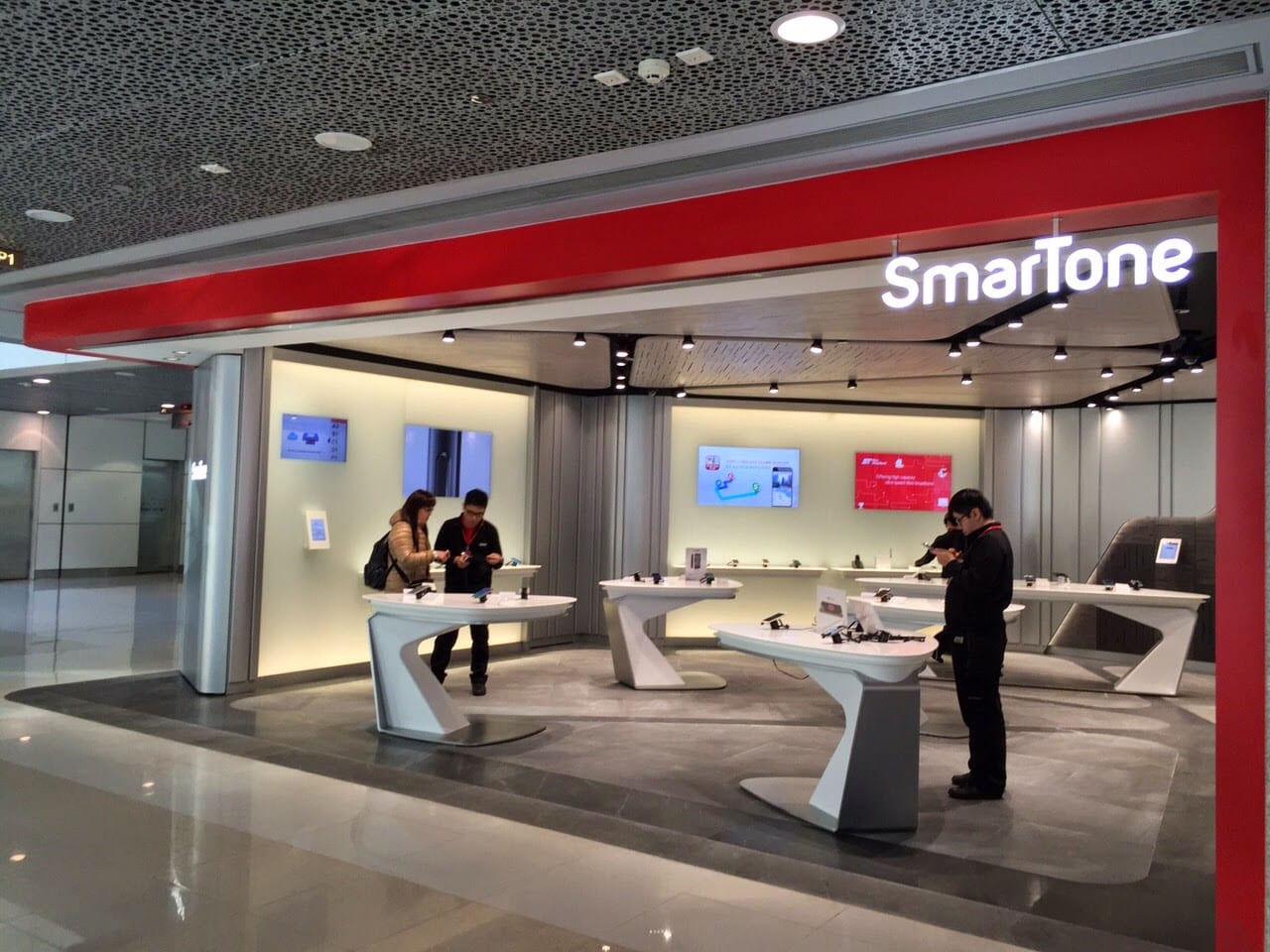
    Hong Kong’s SmarTone has reported a 2% year-on-year decline in net profit for the six months ending in December to HK$393 million ($50.6 million).

    Group service revenue fell 4% over the same period to HK$2.67 billion. SmarTone blamed the decline in part on on customers continuing to migrate to SIM only plans. This led to a 64% decline in handset and accessory sales to HK$7.45 billion.

    Other factors contributing to the decline included well as weakness in the prepaid segment of the mobile market, as well as ongoing OTT substitution impacting voice roaming revenues.

    SmarTone’s Hong Kong customer base grew to 2 million, with mobile postpaid ARPU stable at HK$299.

    Announcing its results, the operator said a strong focus on efficiency during the period helped the operator control costs – operating costs grew just 1% year-on-year despite substantial growth in customers’ data consumption.

    Looking ahead, SmarTone said it expects the pressures on profitability – including rising specrtum costs – to continue in the second half of the financial year.

    The company also joined PCCW’s HKT in urging the government to accelerate the release of more spectrum to the industry and provide a clear spectrum supply roadmap.

    HKT has expressed concern over the fact that no new spectrum is expected to be allocated for mobile use for the next three years, and has urged the government to start preparing now for the arrival of 5G.

  • SKT, DT, Ericsson demo 5G federated network slicing

    SKT, DT, Ericsson demo 5G federated network slicing

    SK Telecom, Ericsson and Deutsche Telekom have successfully built and demonstrated the world’s first intercontinental 5G trial network.

    The companies used federated network slicing for 5G roaming between trial networks in South Korea and Germany.

    The demonstration was hosted at SK Telecom’s 5G Testbed at the BMW driving center at Yeoungjong-do, as well as Deutsche Telekom’s corporate R&D center in Bonn, Germany.

    With 5G technology, network slicing will allow operators to configure end-to-end networks that provide the desired functionality and service parameters. Federated network slicing will extend this functionality to visited networks for roaming services.

    Implementing this will require enhanced cooperation between international operators, because it will require them to open their networks to host partner services.

    This will require pre-existing agreements covering aspects including network slice availability at the access layer, availability in the core network and connections to customer application services. The network slicing will be managed by edge cloud resources.

    “5G is not just a faster network. 5G will provide extreme user experience anywhere and anytime, even when the user roams across different operators globally,” SK Telecom CTO Alex Jinsung Choi  said.

    “Federated network slicing will enable seamless platform sharing among operators at a global scale for continuous and guaranteed user experience.”

    SK Telecom plans to show off federated network slicing functionality at Mobile World Congress 2017 in Barcelona later this month.

  • 47% of mobile users still only call and text

    47% of mobile users still only call and text

    Despite the great strides being made to bring mobility services to the global population, recent research indicates that nearly half of mobile users worldwide still only use their devices to make calls and send SMS.

    The consumer research from GSMA Intelligence, covering 56 markets collectively representing 80% of the world’s population, found that 47% of adult mobile phone owners only make calls and send texts.

    But this segment is expected to shrink to 29% by 2030 as users across the developing world benefit from advances in mobile innovation, affordability and availability.

    The report ranked countries covered in terms of their citizens’ mobile engagement, or the frequency and diversity of use of mobile devices. South Korea and Qatar ranked equal first in terms of  engagement. The only other APAC nation to make it into the top 10 was Australia in seventh place.

    “In an era of mobile being near ubiquitous around the world and at the centre of people’s lifestyles, there is a growing need to measure mobile user engagement levels to identify future industry growth opportunities,” GSMA chief strategy officer Hyunmi Yang said.

    “Consumer behaviours are continuing to change as mobile devices get smarter, services grow richer and societies become more connected. The Global Mobile Engagement Index is a unique industry tool to help understand these shifting trends.”

    The research found that in some markets – such as Myanmar – smartphone ownership is relatively high but engagement remains low due to digital illiteracy and a lack of relevant local content.