Category: Telecom

Retail News Asia is committed to providing both local and global retailers with the latest Telecom & Telco news throughout the Asian market. This on a daily base.

  • Telstra 1H profit falls 14.4% to $1.38b

    Telstra 1H profit falls 14.4% to $1.38b

    Australia’s largest operator Telstra has reported a 14.4% decline in net profit for the first half of its financial year to A$1.79 billion ($1.38 billion), as the company dealt with an increasingly competitive market.

    Revenue for the six months ended in December fell 6.4% to A$12.8 billion, with fixed line revenue down 4.7% to A$3.3 billion and mobile revenue falling 8.7% to A$5 billion.

    Telstra added 200,000 new mobile subscribers, including 79,000 postpaid customers. Postpaid ARPU declined 2.6% but is showing signs of stabilizing, the operator said.

    On the fixed line side, Telstra acts as one of numerous retail resellers of services over the national broadband network (NBN). Telstra’s NBN customers grew by 292,000 to 792,000 giving the company a market share – excluding the small number of customers serviced by the NBN’s satellite service – of around 51%.

    Network applications and services revenue meanwhile grew 18% to A$1.5 billion due to higher revenue from cloud services as well as services provided to industry, including Telstra’s share of revenue from NBN commercial works.

    Telstra CEO Andrew Penn said the results indicate that the company performed relatively well in a tightly competitive environment.

    “It is significant that we were able to increase subscriber numbers in mobiles and retail fixed plans despite the increased competition,” he said.

    “We have a clear strategy to differentiate our products through the speed, coverage and reliability of our networks, innovative product design and new customer experiences, including access to media content. We are committed to improve the experience we provide our customers and as announced last year, we are investing up to $3 billion incremental capital expenditure in networks for the future and digitisation of the business.”

  • Alibaba Cloud boosts capacity of Hong Kong data center

    Alibaba Cloud boosts capacity of Hong Kong data center

    Alibaba Cloud has more than doubled the capacity of its data center in Hong Kong to help the company meet glowing demand for cloud services in Asia-Pacific.

    The expanded Hong Kong data center will be used to meet enterprises’ demand for high availability and data recovery and provide greater access to services such as data storage and analytics, enterprise-level middleware and cloud security services.

    The expansion forms part of Alibaba Cloud’s efforts to expand its global network coverage, and follows recent data center openings in Australia, Japan, Germany and the UAE.

    Alibaba Cloud said Hong Kong was selected due to its status as the gateway to China’s economy for international businesses and its region-leading role in terms of cloud adoption – the city scored the highest in the Asia Cloud Computing Association’s Cloud Readiness Index 2016.

    “Since our entry into Hong Kong in 2014, Alibaba Cloud has become one of the largest public cloud providers in the market in less than two years. More companies have come to realize the importance of changing their traditional IT mind-set to embrace the new data technology,” Alibaba Cloud Global general manager Ethan Yu said.

    “We are confident that the expanded data center facility, together with our scalable and secure cloud offering, will better meet the needs of the digital transformation in key local sectors such as hospitality and financial services.”

    Alibaba Cloud’s Hong Kong operations has customers in sectors including financial services, retail, hospitality and media. The company also recently launched anti-DDoS security products together with PCCW Global.

  • Nokia adds 10Gbps PON to mobile transport solution

    Nokia adds 10Gbps PON to mobile transport solution

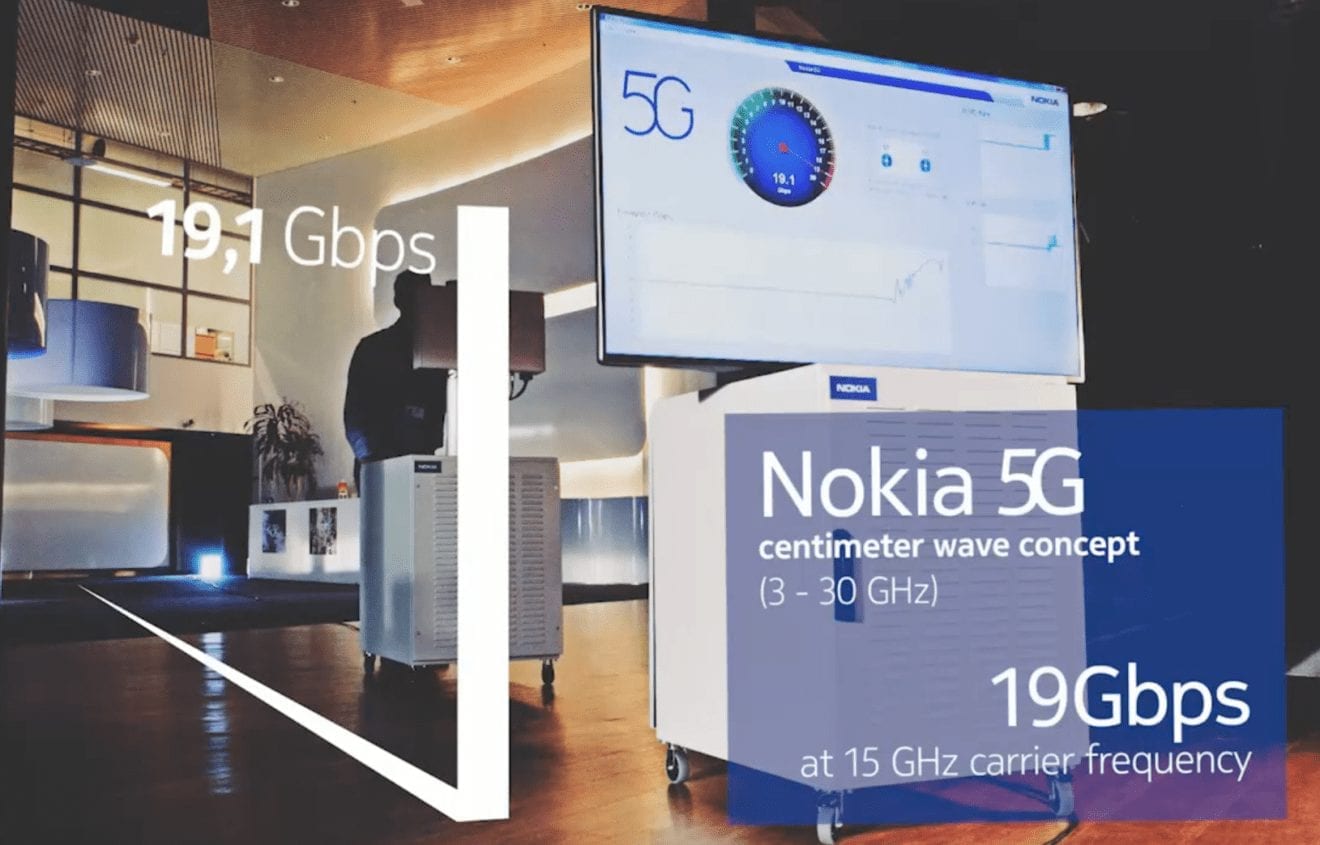
    Nokia has added 10Gbps PON and point-to-point fiber to its access portfolio to help meet demand for high-capacity mobile transport in the 5G era.

    The mobile transport solution is designed to allow operators to use existing PONs used in FTTH deployments to gain the capacity and coverage 5G requires.

    The portfolio is also being used as part of a Bell Labs proof-of-concept to demonstrate the flexibility of 10G symmetrical PON networks for low latency applications such as mobile fronthaul.

    By adding gateway functionality, Nokia is able to convert mobile fronthaul CPRI signals to Ethernet, the company said.

    “The biggest opportunity on the horizon for fixed networks is the arrival of 5G. It’s clear that 5G will require very high capacity and low delay, but what is less certain is just how much capacity will be required for backhaul and what latency will be sufficient,” Nokia president of fixed networks Federico Guillen said.

    “We take the guesswork out of the equation. Our solution allows operators to access existing PON networks that have virtually unlimited capacity to meet their needs today, with the added flexibility to add 10G PON evolutions gradually as demand for more bandwidth and services increases. The massive throughput and cell densification strategy of 5G make it a perfect match for existing FTTH deployments.”

    Meanwhile Calix announced it has worked with New Zealand’s Northpower Fibre to complete the first demonstration of 10Gbps NG-PON2 technology in a live network.

    Northpower Fibre plans to deploy NG-PON2 technology based on Calix’s AXOS software-defined access architecture to help differentiate in New Zealand’s growing Ultra-Fast Broadband (UFB) marketplace stimulated by the government’s second phase of the UFB program.

    “New Zealand is undergoing a major broadband vitalization effort, and we see the emergence of NG-PON2 technology as a major enabler going forward,” Northpower Fibre CEO Darren Mason said.

    “As attention in the second phase of UFB shifts from the cities to bring fiber broadband to more rural areas, Northpower Fibre will be leading the way having committed to connect 12 new towns to fiber within the next four years.”

  • Dialog Axiata lifts FY16 profit by 74%

    Dialog Axiata lifts FY16 profit by 74%

    Sri Lanka’s Dialog Axiata boosted its net profit for FY16 by 74% year-on-year to 9 billion rupees ($59.4 million), recording strong growth across all its business segments.

    The operator reported total revenue of 86.7 billion rupees, up 17% year-on-year, with revenue from its core business increasing 16% to 73 billion. Mobile customers increased to 11.8 million.

    Dialog Broadband Networks revenue grew 28% to 9.3 billion rupees, but the division’s net loss more than doubled to 385 million rupees due to higher depreciation and finance costs.

    Dialog Television revenue meanwhile grew 5% to 6.1 billion rupees, but its net loss also more than doubled to 644 million rupees.

    The group’s total capex for the year reached 23.2 billion rupees, representing a capex to revenue ratio of 27%. The bulk of spending went towards investments in high speed broadband infrastructure aimed at strengthening Dialog’s position in Sri Lanka’s broadband sector.

    For the fourth quarter, Dialog reported a 5% increase in revenue growth to 7.4 billion rupees. The company attributed the slower growth to the reintroduction of Sri Lanka’s value added tax at the start of November.

    Net profit for the quarter meanwhile declined 56% quarter-on-quarter to 1.3 billion rupees, due to lower pre-tax earnings, increased depreciation and higher non-cash forex losses.

  • IBM extends Smarter Cities grant program

    IBM extends Smarter Cities grant program

    IBM is extending its annual Smarter Cities Challenge, a worldwide grant program that provides pro bono consulting to assist cities in improving the critical services they provide to citizens.

    For this next round, the company is seeking proposals from city leaders that could benefit greatly from IBM’s technology such as data analytics, cloud computing, cognitive computing, and comprehensive weather data.

    Leaders of cities or regional governments must submit brief statements of interest to IBM by February 24. Ten grant recipients for pro bono consulting engagements will be announced in late spring.

    Smarter Cities Challenge grant recipients receive a team of five or six IBM employees who are deployed to the country for three weeks to work closely with local government and community leaders.

    They analyze the data they gathered and use its insights to offer support that can take the form of strategic recommendations, data-driven tools, implementation roadmaps and workshops, and staff training.

    IBM’s Smarter Cities Challenge has deployed 800 of IBM’s top employee talent to more than 130 cities worldwide in the past six years to improve inequities and disparities.

    “Cities around the world are under enormous, daily pressure to tackle growing challenges with ever more limited resources,” said Jennifer Crozier, IBM’s vice president of Global Citizenship Initiatives.

    “Often, they lack access to the most innovative technology solutions and insights that could be applied to solve those problems and improve services. We look forward to sharing IBM’s data and analytics and cognitive computing expertise to help make meaningful and lasting improvements.”

  • Thailand’s first 5G demo achieved 5.7Gbps speeds

    Thailand’s first 5G demo achieved 5.7Gbps speeds

    The first live 5G end-to-end demonstration in Thailand using Ericsson’s 5G test bed and 5G-ready core achieved 5.7Gbps throughput and 3 milliseconds latency.

    The three-day showcase was held in late January, and Ericsson said the demonstration marks a step towards realizing the Thai government’s vision of a Digital Thailand.

    “We expect to have broadband connectivity everywhere in Thailand, both big cities and over 75,000 villages nationwide by 2018,” commented Takorn Tantasith, secretary general of regulator NBTC.

    “Along with the fixed internet deployment, we plan to release more spectrum bandwidth of 380 MHz by 2020, which will add to the existing 420 MHz already allocated to the telecommunications industry.”

    Nadine Allen, Head of Ericsson Thailand, disclosed that according to Ericsson’s Digital Thailand report, Thai consumers are ahead of, or on par with, global peers when it comes to embracing ICT and they are ready for the Internet of Things.

    She said the multi-gigabit speeds afforded by 5G will ensure that the technology is a viable and cost-effective alternative to residential fiber connections.

    Other technology innovations presented in the showcase include advancements in Radio Network Evolution, Industrialized Cloud, Connected Industries, and Digital Business Solutions.

  • Indonesia launches Telkom 3S satellite successfully

    Indonesia launches Telkom 3S satellite successfully

    The Indonesia’s biggest telecommunication company Telekomunikasi Indonesia (Telkom) has successfully launched its Telkom 3S satellite from Arianespace’s spaceport in Kourou, French Guiana, at 6.39 p.m. on February 14 local time or Wednesday at 4.39 am Jakarta time.

    The US$215 million worth satellite carries 24 C-band, eight extended C-band, and 10 Ku-band transponders, which intends to provide high-definition television services, faster mobile communications and Internet applications across the sprawling archipelago of over than 17,000 islands.

    “With Telkom 3S, Telkom will have a total of three satellites. The launching intends to increase the coverage since Telkom 1 and Telkom 2 has the same coverage with Telkom 3S. The reason is that our capacity is not enough; we still rent [transponders] from other countries,” Telkom’s president director Alex J. Sinaga said.

    Telkom 3S will first travel to 135.5 degrees east for testing purposes; then it will reach the final orbital position at 118 degrees east. The US$215 billion worth satellite is fitted with 24 C-band, eight extended C-band and 10 Ku-band transponders.

    Alex said that it would take ten days from the satellite launched until it could reach 135.5 degrees orbital position for testing purposes. After that, the spacecraft would be moved one degree a day to reach its fixed orbital position at 118 degrees east, he added.

    Top executives from PT Telekomunikasi Indonesia including president director Alex J. Sinaga (center), chief technology officer Abdus Somad Arief (second from right) and satellite project head Tonda Priyanto (right) pose after the successful launch of Telkom 3S on Tuesday. The satellite was launched according to plan at 6.39 p.m. from Kourou, French Guiana.(JP/Winny Tang)

    Arianespace has successfully orbited two satellites: Telkom 3s for Telkom Indonesia, together with SKY Brasil-1 for the operator AT&T/ DirectTV.

    “Arianespace is delighted to announce that SKY Brasil-1 and Telkom 3s have been separated as planned on the targeted geostationary orbit,” Stéphane Israël is the Chairman and CEO of Arianespace said in the satellite viewing site named Jupiter control room on Tuesday night local time.

    Replacing the position of Telkom 2, the Telkom 3S, which has a lifespan of 15 years, will cover Indonesia and a part of neighboring Malaysia.

    Apart from Indonesia, other countries, such as Brazil, Mexico and other South American countries, have also launched their satellites from the country.

  • Singapore CIOs taking action against BYOD threats

    Singapore CIOs taking action against BYOD threats

    CIOs in Singapore are stepping up their fight against the security risks posed by the widespread adoption of BYOD practices.

    More than one in three (36%) CIOs say a lack of employee knowledge and skills around data security is the most significant security risk their organisation will face in the next five years, according to a report from Robert Half.

    While traditionally, the response to IT security has been to find the optimum way to protect a business’ assets from external security attacks, a growing risk now faces organisations in the form of potential internal security threats.

    This threat is made evident by the fact that almost three in four (74%) CIOs allow their employees to access corporate data on their personal devices.

    Matthieu Imbert-Bouchard, managing director of Robert Half Singapore said that BYOD practices offer many advantages such as increased employee satisfaction, productivity and cost savings, so companies must take steps to balance both their employees’ needs and their security concerns.

    To combat the ongoing threat posed by BYOD, nearly all (97%) of CIOs are taking action to protect their company from potential data breaches.

    The most common response (58%) is to train personnel on cyber-security policies and corporate practices when using their personal devices. Signing an acceptable use policy also seems to be standard practice for more than half (57%) of the Singaporean companies.

    Technical applications are being implemented as 53% say they are deploying mobile device management technology and 52% are using authentication software.

    There is an increased demand for IT security specialists with the niche skills needed to protect companies against data security risks, including risks related to BYOD. But finding the right skillset is a challenge, with all of Singaporean CIOs saying it is difficult to source skilled technology professionals, with one in three (29%) saying professionals with mobile security skills are the most in demand.

  • China Mobile HK migrates to cloud core network

    China Mobile HK migrates to cloud core network

    China Mobile Hong Kong has migrated its services to an NFV-based cloud core network provided by Huawei.

    The operator has migrated its legacy networks to cloud networks based on the 3GPP system. Working closely with Huawei, the migration took only around six months, according to CMHK CEO Sean Lee.

    “The synergy between CMHK and Huawei is expected to ensure our entire cloud networks will be smoothly put into commercial use, bringing better service to our customers,” he said.

    CMHK’s new cloud core network provides services for more than 20 network systems including IMS, evolved packet core, mobile number portability, HSS/HLR and mobile switching center server.

    Lee said the migration will pave the way for CMHK’s eventual migration to 5G based on the Network 2020 vision.

    “On CMHK’s cloud network, network elements in [the] IMS, packet switched and circuit switched domains are co-deployed. VoLTE, VoWiFi and mobile data services are co-operated,” Huawei VP of cloud core networks Wang Yonge said.

    “Compared to legacy core networks, cloud core networks are more elastic and robust. CMHK and Huawei are jointly developing new technologies, such as network slicing and edge computing to lead the transformation to cloud networks.”

    News of the completion of the project comes shortly after CK Hutchison’s Three UK announced plans to deploy a fully integrated cloud native core network in collaboration with Nokia.

  • SmarTone developing AI-powered mobile security

    SmarTone developing AI-powered mobile security

    SmarTone plans to soon launch its innovative anti-cyberattack software, ST Protect, to enterprises in Hong Kong in anticipation of growing security threats targeted at smartphones.

    “One of the interesting trends last year is that we started to see ransomware going through mobile,” said Zuk Avraham, founder and chairman of Zimperium, which specializes in providing mobile security solutions.

    The US-based company has invented the world’s first on-device artificial intelligence (AI) and machine learning behavioral engine, which enables ST Protect to detect in real time known and unknown attacks on smartphones.

    SmarTone is rolling out the enterprise version of ST Protect eight months after it introduced the service, which is delivered via an app, to its subscribers’ iOS and Android device.

    Using AI for mobile security

    Based on data collected over the last six months since the launch of ST Protect, the AI and machine-learning engine has been successful in detecting 100% of known and unknown mobile threats, according to SmarTone CTO Stephen Chau.

    “The AI engine learns very quickly. By understanding the behavior of the OS platform, they have the knowledge to predict and understand when there is something is going on here that it shouldn’t. The beauty of ST Protect with the solution from Zimperium is that it is able to detect zero-day attacks. And while it is good that we can detect the known problems, it is even more important to actually detect that something bad will happen and we are still able to protect ourselves,” Chau said.

    In order to use AI to secure the mobile platform, Zimperium had to invent a new approach.

    “We had to because the traditional approach used with the PC does work on mobile. In the PC, you can see that attack and you can see the traffic. We cannot do that on mobile because the app sandboxing is very strong and there are permission separations,” Avraham said.

    He explained: “Let us say, I am drinking water and I am raising my glass. The traditional approach is that you use your eyes to see that I am raising my glass. On mobile, we cannot see because we do not have the permission to sniff packets, etc. So what we are doing is instead of looking at the glass, we measure the vibes of the table, and then we can tell you this table as moved and the temperature has changed because it is hot water. Then we can tell based on these behavioral data what happens here.

  • Nokia to launch its 4.9G technologies this year

    Nokia to launch its 4.9G technologies this year

    Nokia has announced plans to launch what it is calling its 4.9G technologies by the end of 2017, and to demonstrate its new Cloud Single RAN at Mobile World Congress 2017 later this month.

    The vendor said it will introduce new technologies including the 4.9G AirScale Massive MIMO adaptive antenna system by year-end to help operators meet rapidly rising infrastructure demands on the path to 5G.

    At Mobile World Congress 2017, Nokia plans to work with US operator Sprint to demonstrate the new technology using 3D beamforming software.

    The technology promises throughput gains of up to eight times uplink and five times downlink, with Nokia projecting peak data rates of 3Gbps using commercial TD-LTE devices..

    Also at the event, Nokia will demonstrate its Cloud Single RAN running virtualized 2G, 3G, 4G and 5G radios and 2G and 3G network controllers over commercial Nokia platforms.

    This year Nokia also plans to introduce a new component of its 4.5G Pro portfolio –  a micro remote radio head designed to allow operators to take advantage of unlicensed spectrum to enable gigabit speeds.

    “Nokia introduced 4.5G Pro and 4.9G last year to allow operators to implement network capacity increases where and when it made sense for them, Nokia head of mobile network products Frank Weyerich said.

    “Now we are delivering features that will maximize their resources, speed up deployment times and cut power and costs especially in the most densely populated locations. We are making 4.5G Pro a commercial reality now and working with customers to innovate with solutions to their network densification and evolution challenges in 4.9G and beyond.”

  • Telkom’s $250m satellite to better connect Indonesia’s islands

    Telkom’s $250m satellite to better connect Indonesia’s islands

    Close to the equator, French Guiana, a scarcely populated country with only 158,000 inhabitants, is regarded as an ideal place to launch satellites. Mostly covered by equatorial forest, the South American country provides a stable climate, as well as invulnerability to earthquakes and hurricanes. Lying just over 500 km north of the equator, Kourou provides an advantage for satellite launches, because the earth’s spinning boosts the propulsion of the rocket taking the satellite into space.

    In this part of Guiana, where a joint French and European spaceport has been built, Indonesia’s biggest telecommunication company Telekomunikasi Indonesia (Telkom) is set to release its latest satellite into space early in the morning of Feb. 15, Jakarta time. Called the Telkom 3S, the firm’s third satellite, which costs up to Rp 3.33 trillion (US$250 million), will provide high-definition television services, faster mobile communications and internet applications across the sprawling Indonesian archipelago of more than 17,000 islands, reaching primarily to the most remote areas.

    This will be enabled by new technology, high-frequency Kuband transponders, which will cut installation time and allow faster connections.

    “Unlike Telkom 1 and Telkom 2 Telkom 3S has Ku-band. The benefit is that the dishes needed to receive signals are smaller,” Telkom satellite project head Tonda Priyanto said on Sunday in Kourou.

    Indonesia has long struggled with poor information and communication technology infrastructure despite the fact that many of its citizens are already highly tech-savvy.

    The current administration kicked off late last year its ambitious Palapa Ring project in a bid to connect all areas nationwide through its fiber-optic network.

    However, only around one third of Indonesia’s area can be covered by terrestrial communications systems, leaving the rest to be linked through satellite systems.

    A McKinsey report released last September revealed that Indonesia could realize growth of an estimated 10 percent in the gross domestic product (GDP), equivalent to $150 billion, by 2025.

    “The need for satellite technology is absolute in Indonesia. Meanwhile, the supply is still low,” Telkom chief technology officer Abdus Somad Arief recently said.

    Overall, the Telkom 3S satellite will carry 49 transponders, adding to the 140 transponders that Telkom currently operates through its two orbiting satellites.

    Satellite builder Thales Alenia Space has handled the design, testing and in-orbit delivery of the satellite, while the satellite launch company Arianespace will be in charge of releasing the satellite into space.

    During the planned launch, Telkom 3S will be positioned at 118 degrees east, to replace Telkom 2. Telkom 2, which still has a life span of about four years, will be moved to another orbital position.

    In response to the satellite launch, Communications and Information Minister Rudiantara said the Telkom 3S satellite would definitely help meet the demand for better network quality in Indonesia.

    “I think that even if the government begins launching its own satellites, we will still be at a deficit even up to the year 2023,” he said. “What the government can do in the meantime is to give satellite lending rights to local companies to avoid dependence on foreign ones.”

  • Ericsson launches telco security automation tool

    Ericsson launches telco security automation tool

    Ericsson has launched a new telecoms security product designed to enable automated security orchestration across multiple ICT domains.

    The Ericsson Security Manager supports out-of-the-box security for telco cloud operations, physical and virtual networks and digital support solutions, as well as enterprise networking applications.

    It is designed to provide real-time, contextual security management using a customizable, adaptive policy engine.

    The new product will comprise part of the Ericsson Digital Support System, and will enable customers to set and enforce security policies to protect important assets. It supports continuous monitoring of threats, vulnerabilities and compliance with the capability for automated remediation

    “In today’s ICT landscape, security is of the utmost importance for organizations across all domains,” Ericsson head of IT and cloud products Anders Lindblad said.

    “Ericsson Security Manager leverages our leadership and expertise across a wide array of ICT domains to bring to the market an innovative, adaptive and contextual security automation solution for telecom networks as well as cloud, IoT and enterprises.”

    Ericsson plans to showcase the new suite at Mobile World Congress 2017 in Barcelona later this month.

  • Hong Kong should be preparing for 5G now

    Hong Kong should be preparing for 5G now

    HKT has called on the HKSAR government to take action to prepare for the arrival of 5G, stating that the government has done nothing to advance 5G development in the city.

    In a discussion paper, HKT once again the government and criticized telecoms regulator OFCA for what it says is a failure to allocate enough spectrum to support an advanced mobile industry, expressing concern over the fact that no new spectrum allocation is planned for the next three years.

    HKT said the government’s “short-sighted policies on mobile spectrum… are set to negatively impact mobile users and the Hong Kong economy for the many years to come.” The paper notes that no new spectrum has been made available since 2013.

    In this regard, Hong Kong fares poorly compared to other markets such as Japan, Korea and China, which have been taking action to facilitate 5G trials and development, the operator said.

    “OFCA should be preparing the ground today for the emergence of true 5G services which will be available when we step into the next decade – disappointingly it is not doing so; and, worse, it is on the record as not wanting to do anything because it says ‘zero’ new spectrum will be available.”

    HKT separately noted that UK regulator Ofcom has released a new discussion paper echoing the company’s view that regulators and lawmakers should be taking immediate action to enable the development of 5G technology.

    The UK regulator already has plans in place to make the 700-MHz band available for services including 5G, and is undertaking work with an eye to potentially doing the same for the 3.6-GHz and 3.8-GHz bands.

  • Nokia plans to buy Comptel to boost software portfolio

    Nokia plans to buy Comptel to boost software portfolio

    Nokia has revealed an interesting M&A move over in Europe this morning. The vendor has announced an intention to acquire Finland-based Comptel, launching a recommended cash tender offer for the company’s shares.

    The deal would bring Comptel’s service orchestration, data processing, customer engagement, and agile service monetization solutions under Nokia’s roof.

    There they would be combined with Nokia’s own software capabilities, which include Cloudband and Nuage. Those of course derive from the Alcatel-Lucent acquisition.

    The result would be the ability to offer end-to-end orchestration of complex NFV and SDN deployments, and thus make a more complete case to the carrier market going forward. One might see this deal as having a similar plan in mind as we saw in the Ciena/Cyan deal a year and a half ago.

    The price tag for Nokia is approximately €347 million, which derives in part from an offer price per share of €3.04 ($3.24), a 28.8% premium above the closing price yesterday. That price has been unanimously recommended by Comptel’s board of directors.