Category: Telecom

Retail News Asia is committed to providing both local and global retailers with the latest Telecom & Telco news throughout the Asian market. This on a daily base.

  • Indonesian govt to embrace IoT

    Indonesian govt to embrace IoT

    By 2019, 20% of local and regional governments in Indonesia will use IoT devices to turn infrastructure like roads, street lights, and traffic signals into assets instead of liabilities, IDC predicts.

    This year, however, it said 90% of Indonesian cities will fail to take full advantage of smart city data and digital assets due to a lack of process, project management, and change management skills.

    “In Indonesia, digital transformation is still not adequately represented within the enterprise, and this disparity in leadership will lead towards a delayed response towards market changes that will adversely impact business,” IDC Indonesia country manager Sudev Bangah said.

    Timing is critical, and archaic thinking of riding out trying economic times is no longer relevant and should be addressed with process-led innovation.”

    These insights are among the top technology predictions announced recently by IDC Indonesia at the IDC FutureScape Media Briefing.

    The research firm highlighted that digital transformation will attain macroeconomic scale over the next two to three years in the country, changing the way enterprises operate and reshaping the global economy. IDC calls this as the dawn of the “DX Economy.”

    “As digital transformation reaches macroeconomic levels, a DX economy will emerge and will become the core of what industry leaders do and operate,” IDC Indonesia research manager for consulting Mevira Munindra said.

    “Essentially, to succeed, Indonesian enterprises must begin to think of the relevancy of their business in 10 years, and how they should react in the face of disruptive forces.”

    In the enterprise sector, IDC’s predictions are as follows:

    1. By 2019, 50% of IT organizations will create new customer-facing and ecosystem-facing services to meet the business DX needs.
    2. By 2018, lack of vision, credibility, or ability to influence will keep 80% of IT executives from attaining leadership roles in enterprise DX.
    3. By 2020, Indonesian firms will use open innovation to allocate expertise to 15% of new projects, aiming to increase their new product introduction success rates by over 50%.
    4. By 2020, nearly 20 percent of operational processes will be self-healing and self-learning — minimizing the need for human intervention or adjustments.
    5. By 2018, online brand ambassadors and social media influencers will have more marketing power than traditional digital advertising, yet this will subside through 2019 and beyond.
    6. By 2019, digital transformation investments will double, drawing funds away from store capital and profoundly changing the retail industry.
    7. By 2019, only 30% of manufacturers investing in digital transformation will be able to maximize the outcome; the rest will be held back by outdated business models and technology.
    8. By 2019, cloud adoption will reduce infrastructure spend by 25% among top-tier banks.
  • Nokia launches a digital assistant for telcos

    Nokia launches a digital assistant for telcos

    Nokia has announced the launch of MIKA, the first digital assistant customized for the telecommunications industry.

    MIKA (multi-purpose intuitive knowledge assistant) is designed to provide voice-activated access to information for telecoms engineers, to reduce the time needed to find essential information needed to maintain complex multi-technology network environments.

    MIKA is powered by the Nokia AVA cognitive services platform, and provides access to the AVA knowledge library of best practice gathered from Nokia’s network projecs around the world.

    The platform combines augmented intelligence with automated machine learning based on Bell Labs learning algorithms.

    “Finding the right information is a daily challenge for telco engineers tasked with boosting network quality,” Nokia head of global services Igor Leprince said.

    “MIKA taps into the power of the Nokia AVA platform to provide quick and accurate answers, avoiding time wasted on fruitless searches. MIKA is customized to support the specific needs of telecoms, and can deliver recommendations based on experience from networks around the world.”

    Nokia also introduced a new predictive repair service, which will enable operators to reduce costs by predicting hardware failures and recommending replacements up to 14 days in advance. The vendor said the service can achieve up to 95% accuracy.

    Predictive repair will be available to operators using Nokia’s 3G and 4G equipment.

  • Vietnam’s notorious internet cable AAG finally back up to full speed

    Vietnam’s notorious internet cable AAG finally back up to full speed

    Out of the three undersea internet cables that crashed in January, one still remains adrift. The repair work on the notorious Asia America Gateway (AAG) undersea cable system was completed on Thursday, quoting service provider CMC Telecom.

    The same day, another service provider VNPT Telecom confirmed that the rupture-prone AAG is back up to 100 percent of its capacity, just in time before the Lunar New Year holiday.

    In early January, the AAG and two other internet cables, the Intra Asia (IA) and the newly launched Asia Pacific Gateway (APG), all experienced problems and were subsequently shut down.

    The APG was fully recovered on January 23 while the other is expected to be fixed by February 5.

    The AAG is well known to internet users in Vietnam for its frequent ruptures, which even inspired internet memes blaming the issues on “sharks.”

    In 2016 alone, it ruptured three times – in March, June and August – heavily affecting outbound traffic.

    Vietnam has five submarine cable systems. The AAG was connected in November 2009 with a length of over 20,000 kilometers and a design capacity of 2 terabit/second, directly connecting Southeast Asia with America.

    The latest addition is the recently broken and now fixed APG Submarine Cable. It began operations in late December and was officially launched on January 3. The cable cost $450 million and has a design capacity of more than 54 Tbps.

    In addition to submarine cable systems, Vietnam has a land-based system with a capacity of 120 gigabit/second that goes through China, and there are plans to build another one.

  • Telkom Ready to Face Google Balloons in Indonesia

    Telkom Ready to Face Google Balloons in Indonesia

    PT Telekomunikasi Indonesia Persero (TLKM) or Telkom signals it is ready to block the expansion of Google’s hot air balloon as part of Google’s Project Loon across Indonesia, by increasing the number and capacity of its satellite.

    “We continue to add satellites to expand internet services that reach remote rural areas. So, do not let the balloon (Google Loon) over Indonesia,” said Director of Network and IT Solution Abdus Somad Arief.

    Abdus said in addition to continuing to build fiber-optic network infrastructure, Telkom also utilizes satellite technology to equalize communication access across the country. Moreover, he added, Indonesia with 17,000 islands, is unlikely to be completely reachable with optical cable network, Telkom’s satellite then should continue to be developed.

    Still cited by Antara, it is known around mid-2015, Google actively expanded in a number of countries, including Indonesia, bringing Internet networks in remote locations which are difficult to access with optical cable infrastructure, with balloons that acts like a satellite.

    The balloons used in the project fly with solar power, the company plans to expand its worldwide internet network coverage by creating Wi-Fi networks in the air using the balloons.

    Telkom’s efforts to block the Google Loon are reflected from the company’s planned launch of Telkom 3S Satellite scheduled on February 15, 2017, at around 4:39 AM, with launch site at the Guiana Space Center of Kourou, Guyana, France.

    Telkom 3S satellite will occupy an orbital slot of 118 degrees of east longitude which is above Kalimantan and currently is occupied by Telkom-2 satellite.

    With satellite’s active period about 15 years since its launch, Telkom 3S has a capacity of 49 transponders, consisting of 24 C-band transponders (24 TPE), 8 extended C-Band transponders (12 TPE), and 10 Ku-band transponders (13 TPE).

    “If Telkom 3S satellite [is launched], Telkom has three active satellites orbiting, i.e., Telkom 1, Telkom 2, and Telkom 3S Satellites,” he said.

    Abdus added Telkom has experienced in satellite management for 40 years; it is the time to make satellite with its self-produced technology. For Telkom 3S Satellite, in terms of local content, Telkom is no longer user, but it is capable of build its own.

    Telkom since 1976 has been managing satellite, Telkom through a center of excellence, especially in satellite field is ready to take part to build the nation.

  • Service providers failing to meet enterprise expectations

    Service providers failing to meet enterprise expectations

    Solutions that network service providers offer don’t always meet the expectations of enterprises, a global study commissioned by Tata Communications reveals.

    Conducted by IDC amongst enterprises and service providers across 32 countries in Africa, Americas, APAC, Europe and MENA, the research also shows that enterprise customers rank security (52%), cloud (43%) and mobility (32%) as their top technology priorities.

    Enterprises see partnerships as key in their decision-making process, indicating that by finding the right partners, service providers could win more business from this market segment.

    The global study shows that enterprises consider service providers best equipped to increasing their network capacity or reach (73%), or delivering hybrid networking (66%) services, while around half (48%) of enterprises feel that their network service provider is best suited to address their cloud needs.

    Approximately a third (31%) of enterprises feel that having access to cloud services developed by their service provider would help support them better on their cloud journey.

    “Through the right partnerships, service providers are able to open up new revenue streams in growth areas such as cloud and unified communication and collaboration (UCC), without having to invest in developing their own solutions from scratch,” said James Parker, president of global sales at Tata Communications.

    “By joining forces with like-minded organizations, service providers are best-placed to address their customers’ increasingly complex IT requirements and facilitate their digital transformation.”

    Around three-quarters (76%) of service providers think that supporting employee mobility is key for enterprises’ UCC strategy, yet only a quarter (26%) of enterprises rank this as a top priority.

    While more than a quarter (27%) of enterprises cite lack of employee readiness as a barrier for UCC adoption, the service providers surveyed don’t see this as an issue for their customers.

    The research suggests that close to a half (41%) of service providers don’t have a definite stance on partnering. In contrast, more than half (57%) of enterprises say that when choosing a service provider, it is important that they find the right partners to fill gaps in their offering or extend their reach.

    Additionally, service providers overestimate the importance of reputation in enterprise decision making by a third (30%).

  • China Mobile, Ericsson, Mobike trial IoT in Shanghai

    China Mobile, Ericsson, Mobike trial IoT in Shanghai

    China Mobile Shanghai  has teamed up with Ericsson and bike-sharing service startup Mobike to conduct a cellular IoT trial on the Chinese operator’s live network in Shanghai.

    During the trial, Ericsson’s latest cellular IoT technologies were used to more accurately locate the IoT-enabled bikes of Mobike, providing a more convenient and enhanced bike-sharing experience to Mobike’s users.

    Coverage areas were also extended to places that traditional mobile coverage can hardly reach, such as underground parking lots. The new technologies will also significantly reduce the time to unlock the bikes and users will enjoy “open upon scanning” without waiting.

    Mobike vice president Yang Zhongjie said latest cellular IoT technologies like CAT-M1 and NB-IoT will greatly enhance the user experience in the future and solve existing challenges encountered by Mobike such as coverage in difficult locations.

    “We also expect Chinese operators to complete the nationwide deployment of cellular IoT as early as possible,” Yang added.

    New cellular IoT technologies provide better coverage and faster response time with narrower bandwidth and fewer resources than mobile technology. They also bring energy-saving and deep-coverage features which enable five-to-seven-fold coverage improvements for operators in the same site environment. The battery life also extends to more than 10 years.

    The successful trial marks an important step forward in the large-scale commercial deployment of cellular IoT in China, Ericsson said in a statement.

    China Mobile and Ericsson recently signed an IoT agreement as part of China Mobile’s Big Connectivity strategy.

  • Telcos turn to machine learning as they drown in data

    Telcos turn to machine learning as they drown in data

    Machine learning in 2017 will become a mainstream tool for communications providers struggling to transform data overload into actionable analytics, according to Argyle Data.

    “The telecommunications industry is drowning in data,” said Padraig Stapleton, VP of engineering at Argyle Data. “Functions like support, billing, customer care and marketing, throwing off large amounts of data as a by-product of their activities, the exhaust fumes of data.”

    Stapleton said fraud and financial analysts alike are overwhelmed by the struggle to control and harness this fire-hose of information into actionable analytics. There is just too much IP traffic going across mobile networks for humans to review, detect and respond to fraud in the traditional ways such as discovering fraud and writing preventative rules.

    Machine learning does all the grunt work for analysts, sifting through data in real time and providing output instantly in understandable, accessible formats,” said Stapleton.

    Based on customer feedback, Argyle Data said the following rank among the top communications service provider (CSP) concerns for 2017 — subscription fraud and dealer fraud; fraud using mobile data services and IP applications; call bypass; mobile voice is going extinct; identifying, analyzing and monetizing IP-based traffic; and the explosion of IoT devices across communications networks.

    “These issues can only be addressed if CSPs have better insight into voice and data traffic passing through their networks,” added Stapleton. “New machine learning algorithms give them the ability to respond rapidly to new trends, anomalies or threats.”

  • Private cloud can cut IT costs by 25%

    Private cloud can cut IT costs by 25%

    Most large enterprises can save at least 25% on their IT costs over five years by migrating to a private cloud from a legacy IT environment, according to financial analysis from by Nokia.

    The analysis, known as the Nokia Enterprise Private Cloud TCO Model, also demonstrates that enterprises can expect to break even on their private cloud investment in less than three years.

    Advocates of enterprises moving to private cloud have typically focused on the operational and business benefits that this approach can offer, in terms of flexibility, agility and the ability to scale quickly.

    The analysis underlying the Enterprise Private Cloud TCO Model is among the first available in the market that exclusively explores the question that is most critical to IT managers – what are the cost benefits of this move?

    The model shows that the common assumption that private cloud is too difficult or costly to adopt is wrong, and that large enterprises should make the move directly to private or public-private hybrid cloud because it utilizes off-the-shelf components and is less expensive.

    The analysis began with an existing budget for a representative legacy IT environment, and contrasted that with the requirements of a shift to a private cloud model and associated costs.

    More specifically, the analysis takes the overall operational budget of the enterprise data center (eliminating costs that will be largely the same in either scenario such as facilities costs – power, rent, air conditioning/heating), and then provides a high-level breakout by the software or operational tasks performed. The breakout was then used to calculate potential cost impacts – both increases and decreases – for a cloud environment.

    Nokia’s financial model is based on a private cloud, or private-public hybrid cloud architecture that can be built at any large enterprise today, incorporating commercial components from a variety of vendors as well as open source components including OpenStack cloud management software.

    The model also assumes that the cloud architecture is one that does not require ‘forklift’ replacement of the IT environment, but instead sits on top of the existing IT infrastructure as an overlay. As a result, it also assumes a deployment strategy that would minimize changes to day-to-day IT operations.

    Leading industry analyst firm IDC validated the model overall, including the ranges of potential increased and decreased costs by category.

    The cost savings identified by the model were calculated using the most conservative assumptions available, based on the needs of highly regulated industries such as finance and healthcare. Further, increased costs, such as the costs of migrating legacy applications to the cloud, were calculated at the upper end of a possible range of values. Therefore the overall 25% cost savings can be considered a minimum baseline – actual savings in practice would likely be considerably higher.

  • How new network technology helps Singapore’s traditional retailers to cut expenditure

    How new network technology helps Singapore’s traditional retailers to cut expenditure

    While Internet-based competition has created serious issues for traditional retailers, the Internet is now benefiting established retailers by becoming a conduit for substantially reducing their computer network costs while offering increased flexibility, reliability and new options for servicing customers.

    Lower communications costs are helping traditional retailers to shrink the advantage gained by digital retailers whose go-to-market strategies have significantly lower operational expenses. These on-line traders have eliminated costs such as store rental, store staffing and store connectivity from headquarters.

    In response, conventional retailers are developing strategies that leverage their store and staffing investments to provide ‘value added’ in-store experiences that digital retailers are unable to match. Their tactics include introducing upgraded customer loyalty schemes and customer knowledge programs, better demonstration facilities, improved customer tracking, and increased investment in online customer service and sales training.

    Compounding the issues of raising the capital expenditure to invest in these strategies, established retailers are finding that their new IT-based solutions are increasing the volumes of data being sent to and from each of their stores, inevitably resulting in higher monthly costs.

    The answer lies in new technology – the software-defined wide area network, or SD-WAN.  This allows organizations to replace or augment their present networks, which run on a technology called multiprotocol label-switching (MPLS), with the far less expensive commodity Internet links. The cost advantages can be as high as 60 percent.

    SD-WAN is the latest iteration of data communications, which began with dedicated bandwidth via copper cable through telephone exchanges. In the early 2000s, these ‘pipes’ were replaced by frame relay technology which delivered greater flexibility and more bandwidth and lower costs. In turn, frame relay was replaced by MPLS, further reducing cost.

    Now SD-WAN is becoming the next stage of the evolutionary process, offering retailers a spectrum of technical and monetary benefits. It can help with most of the initiatives that traditional retailers are introducing to combat Internet-based retailers.

    The traditional retailers are working to create a compelling in-store experience, a key area where Internet sales organizations are unable to compete. Free Wi-Fi and the tracking of customers as they move through the store are projects that can benefit from inexpensive and flexible Internet-based networks, rather than MPLS networks. Using the Internet via SD-WAN, a store that wishes to demonstrate 4K television to a customer can simply download the demo from head office without delay or incur prohibitive costs.

    A marked trend among conventional Singapore retailers is to retain a brick-and-mortar presence while conducting business around an online e-store. Omni-channel retailing entails the maintenance of a seamless experience and connectivity across channels from physical stores, the mobile app and the website to drive sales.  Retailers must be prepared to handle the increase in customer data and improve their store-to-store communications.

    Loyalty plans are a trend at present, as stores reward good customers. Contactless payments such as e-wallet services like Apple Pay which was introduced last year in Singapore as well as mobile payments are changing the way traditional retailers collect payment.

    As these initiatives became globalized we expect a trend to their becoming cloud-based solutions, with data on customers stored in remote data centers. At present, most traditional retailers are using expensive MPLS bandwidth to reach their data centers.
    Many lack the network capacity to minimize computer equipment in each of their stores and do not have the option of administering their networks centrally.

    By switching to SD-WAN these retailers can gain low-cost Internet communications to all their branches, enabling them to run their software-as-a-service (SaaS) solutions more efficiently and cost-effectively.

    Another issue that SD-WAN can help resolve arises among retailers that need to backhaul all their network traffic, including cloud applications, to the data center then out to the Internet and back. This infrastructure is a source of network bottlenecks and poor application performance. SD-WAN is able to make this an all-broadband route, savings substantial costs, and increasing traffic speed.

    The rise of SD-WAN

    So how are Singaporean retailers and other organizations responding to the emergence of SD-WAN technology? We saw 2016 as the year of proof-of-concept. Organizations are looking to add branch or store locations incrementally by taking advantage of a localized SD-WAN solution initially and slowly, over time, migrating toward full SD-WAN coverage.

    Most have long-term contracts in place with telecoms providers for their communications links, so we are unlikely to see full savings of the new technology for two or three years as contracts come up for renewal. Singapore’s retailers can use the intervening time to proof SD-WAN and make sure it works optimally. When the time comes to retire their MPLS links, they will have a deep knowledge of the new technology and be well versed to appreciate the differences in cost and flexibility. They can switch over safely knowing it delivers the goods.

    Initially, we expect to see smaller retailers going 100 percent with SD-WAN, while larger organizations with more applications in their data centers will use a hybrid MPLS/SD-WAN setup. In this architecture, they would use MPLS only to exchange secure information between a store and the in-house applications at head office.

    Some are already leveraging SD-WAN to bring their idle Internet links to life, adding broadband Internet as part of a hybrid MPLS-Internet network, or even ditching MPLS and implementing dual broadband connections to the branch.

    The proven SD-WAN capabilities, including dynamic path control, zero-touch provisioning and path conditioning, which delivers forward error correction and real-time packet order correction, make Internet connectivity simple to deploy and manage and deliver retailers a more cost-effective means of achieving 99.99 percent service availability.

    Offerings from leading vendors such as Silver Peak are already linking users securely to their applications via the most cost-effective source of connectivity available. The flexibility of SD-WAN allows retailers to augment or replace MPLS with any combination of transport connectivity, including broadband, DSL, LTE and more. Its visibility and control allow network administrators to see and control all applications, and encrypt all WAN overlay traffic with AES-256 for maximum security.

    An SD-WAN-enabled architecture resolves the issues of high cost and complex MPLS; shows clearly what cloud applications are consuming a network; and puts an end to users complaining about poor application performance over distance.

  • Airtel profit slumps 54% due to Jio effect

    Airtel profit slumps 54% due to Jio effect

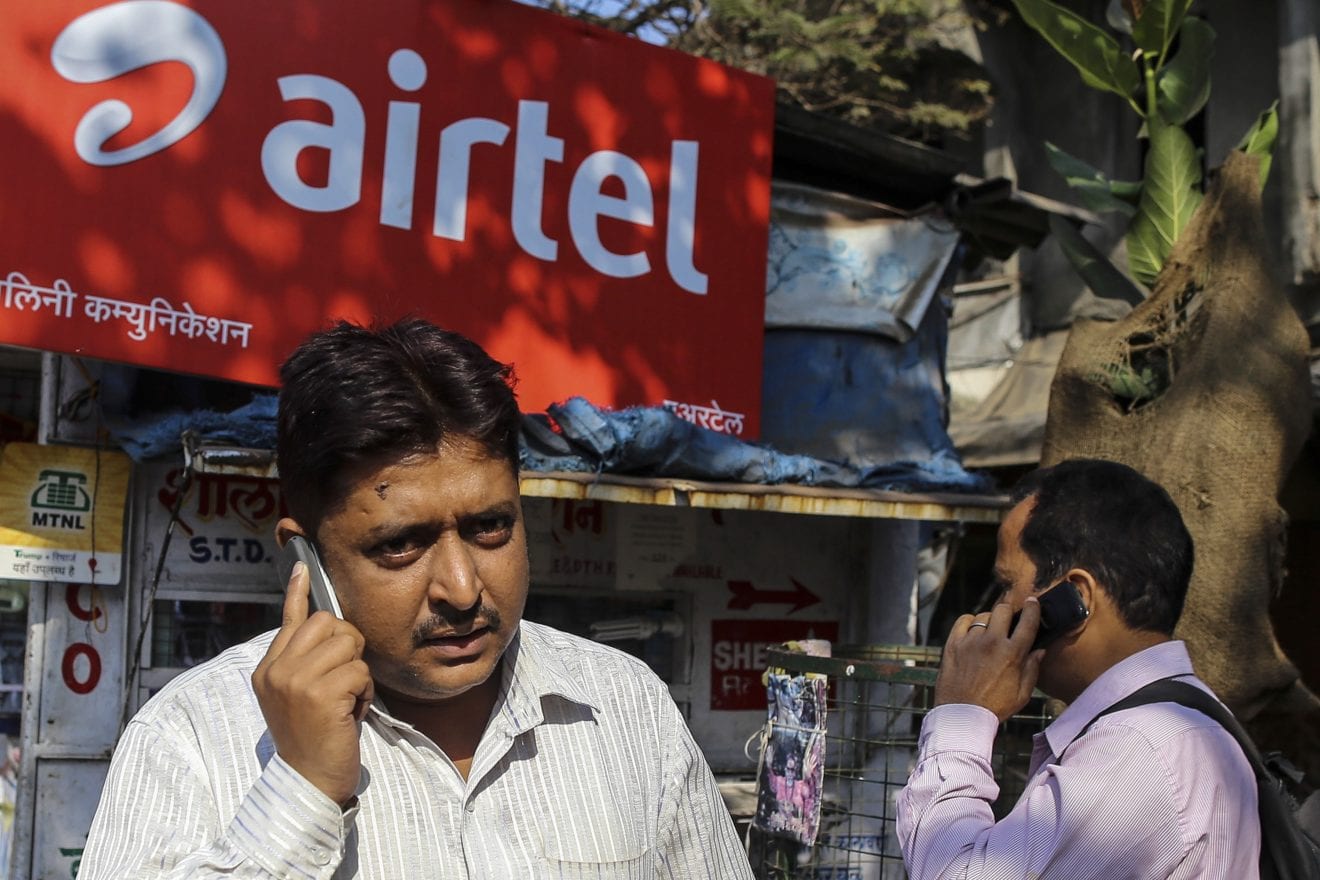
    India’s Bharti Airtel has reported a steep 54% decline in net income for its fiscal third quarter, as the operator grappled with competitive pressure from disruptive new market entrant Reliance Jio Infocomm.

    Profit for the quarter ending in December fell to 5.04 billion rupees ($74.1 million), with revenue staying flat at 233.36 billion rupees.

    Revenues from India grew 1.8% year-on-year, despite a slowdown in mobile revenue growth due to the competition posed by Reliance Jio, which has been offering free voice and data services as a promotional exercise since launching LTE services nationwide in September.

    Mobile data revenues also declined 3% year-on-year to 30.37 billion rupees, despite a 22% increase in mobile broadband customers to 37.7 million.

    “The quarter has seen turbulence due to the continued predatory pricing by a new operator,” Airtel CEO for India and South Asia Gopal Vittal commented.

    “The present termination costs at 14 paise which are well below cost has resulted in a tsunami of minutes terminating into our network. This has led to an unprecedented year on year revenue decline for the [Indian telecoms] industry, pressure on margins and a serious impact on the financial health of the sector.”

    But he noted that despite the competitive pressures, Airtel’s revenue market share in India grew to a record-high 33%. The company’s Indian mobile base also grew 2.3% quarter-on-quarter to 265.85 million.

    Airtel’s other Indian businesses, including digital TV, business services and home broadband, also recorded healthy year-on-year growth.

    African revenues meanwhile grew 6% year-on-year in constant currency terms – the highest in the past nine quarters. Data revenues grew 24% to $153 million, with data customers growing 21.3% and traffic up 91%.

    Airtel CEO for Africa Raghunath Mandava said Africa is now generating positive free cash and is profit before tax positive in constant currency.

  • Higher attrition rate seen among digital consumers

    Higher attrition rate seen among digital consumers

    Customer retention dropped by 7% in 2016 compared to one year previously, a study from Verint Systems shows.

    This research was commissioned by Verint from June 23 to July 20, 2016 in association with Opinium Research. Interviews were conducted among 24,001 consumers in Australia, Brazil, India, France, Germany, Japan, Mexico, Netherlands, New Zealand, South Africa, United Kingdom and United States.

    Results show that consumers who prefer to do business through digital channels are more likely to swap providers than those that engage with businesses through human touch interactions, such as those that take place by phone via the contact center or in-store.

    Across all sectors, 57% of consumers have been with their service providers for more than three years. Banks led in terms of customer retention, with 73% of consumers reporting they have been with their provider for more than three years, whereas only 8% said they have been with their bank for less than a year.

    Mobile operators ranked second best, with 63% of consumers remaining with their provider for more than three years.

    Japanese companies had the highest retention rates of all countries surveyed—an average of 64% of consumers have been with their providers for more than three years.

    French and American companies also fared well, with 60% of French consumers and 55% of American consumers  staying with their providers for more than three years.

    The study also shows a clear link between communication channel preferences and retention. Consumers who prefer to engage with organizations digitally are more prone to switching providers.

  • OnePlus taps CyberSource for payment management

    OnePlus taps CyberSource for payment management

    Smartphone startup OnePlus is tapping CyberSource’s suite of payment management solutions to securely accept digital payment methods through both web and mobile channels.

    OnePlus will deploy CyberSource’s full suite of payment, fraud management and tokenization services. Through the CyberSource global payment gateway, OnePlus will be able to process a wide range of international online and mobile payments from multiple credit card issuers, as well as certain alternative payment methods.

    Since its founding in 2013, OnePlus has grown rapidly in a short time and operates in more than 30 countries today. As the company continued to expand overseas, OnePlus wanted to offer preferred payment options and currencies in local markets to expand customer reach, without increasing payment security or fraud risk for customers in Europe and North America.

    “OnePlus needs to continue building trust among our customers for sustainable growth,” said Steven Gao, head of global eCommerce at OnePlus.

    “This relationship with CyberSource is important to that strategy as we are now able to accept a greater variety of payment modes and streamline payment acceptance, thus improving the entire customer experience.”

    Additionally, OnePlus will use CyberSource Decision Manager, which features a fraud detection Radar. With insights from over 68 billion transactions processed annually by Visa and CyberSource, supplemented by over 260 real-time global validation tests, OnePlus will be able to automatically screen more inbound orders faster, with increased accuracy and less manual interventions.

    This will significantly enable OnePlus to better mitigate its online fraud rate with the ability to accept more genuine orders with confidence, while minimizing the rejection of valid ones.

  • Cambodia’s Cellcard to expand and modernize networks

    Cambodia’s Cellcard to expand and modernize networks

    Cambodia’s Cellcard has engaged Nokia to expand and modernize the operator’s 3G and LTE networks to help meet surging mobile broadband demand.

    As part of the agreement, Nokia will deploy around 1,500 new cell sites to expand the operator’s mobile broadband reach. Cellcard first launched LTE in Phnom Penh in 2015 and has since been expanding the network to other areas.

    Nokia will also provide its global services and Single RAN technology to allow Cellcard to host simultaneous 2G, 3G and 4G operations on a single platform, as well as IP edge routers to modernize the network in preparation for the arrival of 5G and the IoT.

    Cellcard will also use a Nokia microwave packet radio platform to help transform its legacy microwave transport network to keep up with Cambodia’s booming data consumption. The operator will meanwhile migrate its billing platform to Nokia’s convergent charging and billing solution SurePay.

    “We are proud to work with Nokia in our initiative to offer the best LTE coverage and services to our subscribers,” Cellcard CEO Ian Watson said.

    “The expansion of our state-of-the-art mobile broadband network will play a critical role in helping the government enable Cambodians to take advantage of mobile broadband. Nokia’s proven expertise will enable us to provide better coverage and quality of services to our subscribers.”

  • Telecom giants must develop equitisation plans

    Telecom giants must develop equitisation plans

    The three telecommunication groups under direct management of the Information and Communications Ministry (MIC) will have to develop their equitisation plans in 2017, according to the Minister of Information and Communications, Trương Minh Tuấn.

    The three groups are the Việt Nam Post and Telecommunications Group (VNPT), Việt Nam Multimedia Corporation (VTC) and MobiFone Telecommunications Corporation (MobiFone).

    The equitisation of the three telecom giants has to be speeded up in accordance with a December 2016 decision by the Prime Minister on criteria to differentiate State-owned enterprises (SOEs) and State-invested companies, he added, speaking at a meeting on January 23.

    Along with the decision, the PM also published the list of 240 SOEs that have to be equitised by 2020. On the list of 240 SOEs to be equitised, VNPT and MobiFone are the two among 27 firms in which the Government will hold 50-65 per cent ownership. VTC is among 106 SOEs in which the State’s stake will be reduced to below 50 per cent.

    Among the rest of the 240 SOEs, the State’s ownership will remain 100 per cent in 103 SOEs while its stake will stay over 65 per cent in four others.

    VNPT in 2016 recorded revenues of VNĐ135 trillion (US$6.09 billion), up 7 per cent from 2015, whereas income rose by 20 per cent to VNĐ4.16 trillion.

    MobiFone reported revenues of VNĐ38.4 trillion, up 14.5 per cent from 2015 with 19 million subscriptions. VTC surpassed their goal for 2016, with total revenues reaching VNĐ5.2 trillion, up 39 per cent compared to 2015.

    The Government has enhanced divestment from SOEs, ranging from breweries to dairy producers. Those deals have attracted intense attention from foreign investors given that Việt Nam is one of the fastest growing economies due to its young population and rapidly increasing export turnover, the Wall Street Journal reported last week.

    In the past 15 years the number of SOEs has fallen from around 6,000 to over 700. Between 2011 and 2015 almost 600 SOEs were equitised, 96 per cent of the targeted number.
    Read more at https://vietnamnews.vn/economy/350276/telecom-giants-must-develop-equitisation-plans-mic.html#0TOutqLCIzMYb4Ew.99

  • M1 profit falls 16.1% in 2016

    M1 profit falls 16.1% in 2016

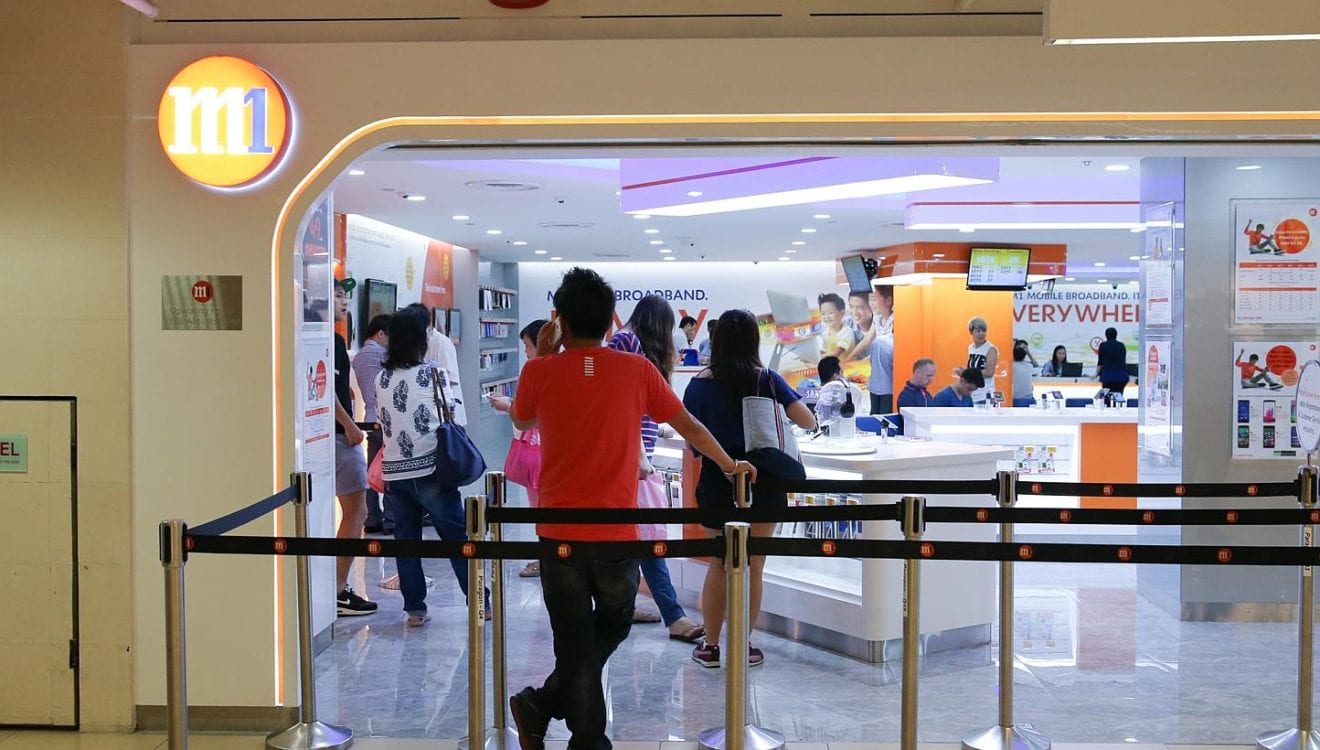
    Singapore’s M1 has reported a 16.1% slump in net profit for 2016 to S$149.7 million ($105.3 million), blaming lower international call and roaming revenues as well as rising expenses.

    The operator’s service revenue for the year fell 2% to S$805.5 million, due to the ongoing impact of OTT substitution. But fixed-line revenue grew a strong 21.4% to S$104.2 million, growing to account for 12.9% of service revenue.

    Besides the decrease in revenue, M1 said depreciation and amortisation expenses grew due to an increasing 4G network fixed asset base, and additional spectrum acquisition costs also contributed to the profit decline.

    M1 added 52,000 postpaid customers and 39,000 prepaid customers during the year, bringing its total mobile customer base up to 2.02 million. Mobile churn meanwhile stayed flat at 1%.

    During the year, mobile data consumption grew to account to more than half of M1’s total service revenue, increasing 7.7 percentage points year-on-year during the fourth quarter to 54%.

    M1 meanwhile added 32,000 fiber customers during the year, taking its total to 160,000 and contributing to the growth in fixed service revenue.

    Capex for the year grew to S$140.5 million, up from $133.5 million a year earlier,

    “We continue to invest and innovate to enhance our service offerings to better serve our customers, as well as capitalize on new opportunities in the digital economy such as solutions for smart nation and  IoT services,” M1 CEO Karen Kooi said.

    “These initiatives, together with the foundation that we have laid over the years, will enable us to create and deliver long-term value to our stakeholders.”