Category: Telecom

Retail News Asia is committed to providing both local and global retailers with the latest Telecom & Telco news throughout the Asian market. This on a daily base.

  • NTU Singapore launches seventh satellite

    NTU Singapore launches seventh satellite

    Nanyang Technological University, Singapore (NTU Singapore) has launched its seventh satellite, the AOBA VELOX-III, into space from the International Space Station (ISS) on 16 January.

    It is the first Singapore satellite to be launched from the ISS, the 110-meter habitable human-made satellite that orbits the Earth. Unlike the conventional way of launching a satellite directly into space from a rocket, the two-kilogram VELOX-III was shot into orbit around the earth using a special launcher by a Japanese astronaut at the ISS.

    The AOBA VELOX-III is a joint project between NTU and Japan’s Kyushu Institute of Technology (Kyutech), one of Japan’s leading universities for satellite research and engineering. It is now orbiting 400 kilometers above Earth and will be conducting several tests, including the made-in-NTU micro-propulsion system, a new wireless communication system developed by Kyutech and experiments to evaluate the durability of commercial off-the-shelf microprocessors in space.

    “The successful deployment of the AOBA VELOX-III is a testament to the strong satellite engineering expertise at NTU. Building up the local satellite talent pool and developing disruptive technologies like the micro-thruster in the AOBA VELOX-III is important for Singapore’s budding space industry,” said Lim Wee Seng, director of the NTU Satellite Research Center.

    He said the NTU will now be developing its second joint satellite with Kyutech, which could lead to small and maneuverable satellites being used as space probes in future.

    Professor Mengu Cho, Director of Kyutech’s Laboratory of Spacecraft Environment Interaction Engineering, said the launch of AOBA VELOX-III is the tangible result of research collaboration between Kyutech and NTU for the past three years. AOBA VELOX-III is an important milestone in the Japan-Singapore inter-university space exploration.

    “We are looking forward to another joint satellite that is under development and scheduled to be launched in 2018. The long-term goal of the Kyutech-NTU joint space program is to do a lunar mission using the technologies demonstrated by these two satellites.”

    Professor Yoon Soon Fatt, Chair of NTU’s School of Electrical and Electronic Engineering, said conducting real satellite missions are key to training local talents for Singapore’s future satellite industry.

    “Satellite technology is a field that requires strong expertise across several disciplines, from power systems and batteries to integrated circuits and wireless communications,” he said.

    “The actual designing, building and operating real satellites in space gives a huge boost to the learning journey of our students and is an unparalleled experience for those seeking careers in the space industry.“

    Lim added that these space experiments by AOBA VELOX-III will enhance the university’s satellite building capabilities, paving the way for the next generation of nanosatellites that are more advanced and reliable.

  • CUG signs IPX peering deal with 3 APAC telcos

    CUG signs IPX peering deal with 3 APAC telcos

    China Unicom Global (CUG) has signed an IPX direct interconnection bilateral agreement with regional peers PCCW Global, Hutchison Global Communications (HGC) and Chunghwa Telecom.

    The direct IPX peering agreement will allow CUG to expand its mobile roaming coverage areas.

    In a statement, CUG said the agreement will also help provide mobile customers within the region reached by its new partners with high quality mobile voice and data roaming services as well as advanced IP services including VoLTE and HD video calling.

    CUG executive vice president Yuerui Ma said CUG IPX will become a critical platform for the operator’s international roaming data exchange.

    He said CUG aims to jointly promote direct-connection among mobile networks in Asia-Pacific by using IPX direct-connection. This would allow operators in the region to provide faster, stabler and more secure international roaming services for mobile customers.

    CUG, China Unicom’s wholly-owned international subsidiary, has a presence in 28 branches worldwide. Its main businesses include leased line, internet, system integration, cloud computing, data center, video conferencing and MVNE services.

  • Mobile operators should embrace LTE Broadcast now

    Mobile operators should embrace LTE Broadcast now

    Mobile operators, especially those with multi-screen assets and ambitions of providing superior mobile video and data experiences to customers, should adopt eMBMS, or LTE Broadcast, more aggressively, says a new report by Strategy Analytics.

    Accessing mobile TV services, particularly live events, over the mobile network will only increase in future as competition drives larger data bundles to 4G users, the research firm predicts.

    To meet growing mobile video demand while maintaining performance for all users mobile operators must embrace LTE Broadcast to drive support from smartphone vendors such as Apple.

    The LTE Broadcast market has changed from optimism to caution in the last two years. No other mobile operators have launched commercial LTE Broadcast service since Verizon Wireless did so in 2015.

    Strategy Analytics believes two main impediments are holding momentum for LTE Broadcast back — the lack of a reliable monetization model and weak mobile device support.

    “Although LTE Broadcast is the best tool to deliver the same content simultaneously to multiple users using the broadcast channels, therefore ideal for covering live events, for example, sports or concerts, live video alone is not enough to make a paid for service,” says Wei Shi, analyst of wireless media strategies at Strategy Analytics .

    “However, the cost saved from offloading the traffic data, largely generated by mobile video consumption, from unicast to multicast will justify operators’ limited investment to upgrade the network,” adds Wei. “In addition to packaging LTE Broadcast as part of operators’ service portfolios, there are other non-live video opportunities for the technology, for example, batch software updates, public information dissemination, and supplementing terrestrial broadcasting.”

    Out of the 26,000 models tracked by Strategy Analytics’ SpecTRAX, more than 1,000 are using eMBMS capable chipsets, though very few devices are shipped with the feature enabled. None of the iPhone models, which account for a combined 15% of smartphone installed base, supports eMBMS.

    The launching and expanding of LTE Broadcast Alliance in 2016 is a positive sign that the industry, led by a group of leading operators and technology companies, is actively addressing the device support issue.

    “Leading mobile device makers have not rushed to equip a large number of their phones and tablets with the LTE Broadcast feature, the most obvious absence being Apple’s iPhones and iPads,” adds Nitesh Patel, the firm’s director of Wireless Media Strategies.

    “One of the main objectives of the Alliance is to shore up the mobile device support for LTE Broadcast. More important than the publicity, operators should take the lead to break the ‘no business therefore no device, no device therefore no business’ cycle,” notes Patel.

    “By embracing LTE Broadcast more seriously, operators will send a clear signal to the device makers, including Apple, that it is time they should bring the feature to a broader portfolio of their products.”

  • Indosat Ooredoo enters alliance with Thuraya

    Indosat Ooredoo enters alliance with Thuraya

    Indonesia’s Indosat Ooredoo has entered an alliance to provide a range of enterprise services combining its products with satellite connectivity from Thuraya.

    Under the agreement, new services will be developed using Indosat SIMs roaming on the Thuraya network, as well as satellite services bundled with Indosat Ooredoo digital applications.

    In the near future, the partners said they plan to expand this alliance to cover new services for the fast-growing IoT market.

    Indosat will target the bundled products at market segments that benefit from remote connectivity extending beyond the reach of terrestrial networks and in a range of extreme environmental conditions. Examples include oil and gas, mining, military and police as well as boating and fishing.

    “We look forward to working with Thuraya to offer communication services beyond terrestrial reach,” Indosat Ooredoo director and chief of wholesale and enterprise Herfini Haryono said.

    “The cooperation will expand the reach of our digital services such as unified communications, and provide a truly seamless experience. By adding satellite connectivity from Thuraya to the Indosat Ooredoo Business portfolio we continue to deliver on our strategy to lead in digital transformation.”

    Thuraya chief commercial officer Bilal Hamouri added that the agreement is an important step towards a long-term collaboration between the two companies.

  • Mobile phone market recovers

    Mobile phone market recovers

    Mobile phone sales, which did not see the usual spike during last month’s festive season, seem set to surge in the run-up to Lunar New Year.

    “During Christmas and Western New Year, sales remained the same as in previous months, but the situation has improved and we expect sales to double from now through Lunar New Year,” Đoàn Văn Hiểu Em, mobile phone director of Thế Giới Di Động, was quoted as saying in the Thời báo Kinh tế Việt Nam (Việt Nam Economic Times) newspaper.

    Mai Triều Nguyên of Mai Nguyên in HCM City said December was for long the best month for mobile phone sales.

    “This year December sales were not high because the market did not have any striking product.

    “Besides, this year the western and Lunar New Year are so close to each other, and people were preoccupied with wrapping up their work that sales of everything, including mobile phones, were at a standstill.”

    According to FPT Shop, Iphone 7 and Iphone 7 Plus are the two top selling products followed by Galaxy J5 Prime.

    Iphones are also the bestsellers in smaller stores.

    At Thế Giới Di Động, the country’s largest telephone retailer, used Iphones top sales in terms of numbers though in terms of turnover Galaxy J7 Prime and Oppo F1s account for 60 per cent.

    At Di Động Việt, Iphones, Galaxy J7 Prime and Oppo F1s top sales while other brands are not in great demand.

    Refurbished and second-hand Iphones at good prices are in demand this season. A used Iphone 6 Plus 64 GB is offered at VNĐ8.8 million (around US$400), a price at which customers cannot get a luxury phone.

    Nguyên warned: “Customers should be careful when buying secondhand products. They should choose prestigious shops and check the product carefully before buying.”

  • Youku picks Nokia for 3D 360 VR content

    Youku picks Nokia for 3D 360 VR content

    Youku in China has chosen the Nokia OZO VR ecosystem of technologies “to bring the most immersive” VR content to the more than 500 million monthly active users engaged in its online video platform which has daily views of more than 1.1 billion.

    Youku users and content creators are promised the ability to experience and share the highest quality VR content including natively captured spatial audio.

    “China is one of the most progressive VR markets in the world with an appetite for high-quality virtual reality experiences that is enormous and growing,” said Paul Melin, VP of digital media at Nokia Technologies.

    Youku will use the entire OZO VR solution, which includes the OZO Camera, OZO Software Suite, OZO Live and OZO Player SDK in the creation and distribution of content ranging from film and television to news and documentary, as well as professional user-generated content featuring Youku’s top talent.

    Youku will be the first Chinese content producer and distributor to have fully integrated the Nokia OZO ecosystem of technologies.

    Also, Youku will integrate Nokia’s OZO Player SDK and OZO Audio solutions, which are designed “to deliver a superior consumer experience,” into all its platforms, mobile apps and consumer offerings, enabling its enormous audience to enjoy 3D 360 degree VR.

    The OZO Player SDK allows VR professionals to create amazing VR app experiences on most major platforms with a single, unified development interface. Full-featured reference players are also included in the SDK for all supported platforms.

    The multi-platform OZO Player SDK is now available in a free version as well as a Pro tier with more features and larger deployment options.

  • Globe sets 2017 capex budget at $750m

    Globe sets 2017 capex budget at $750m

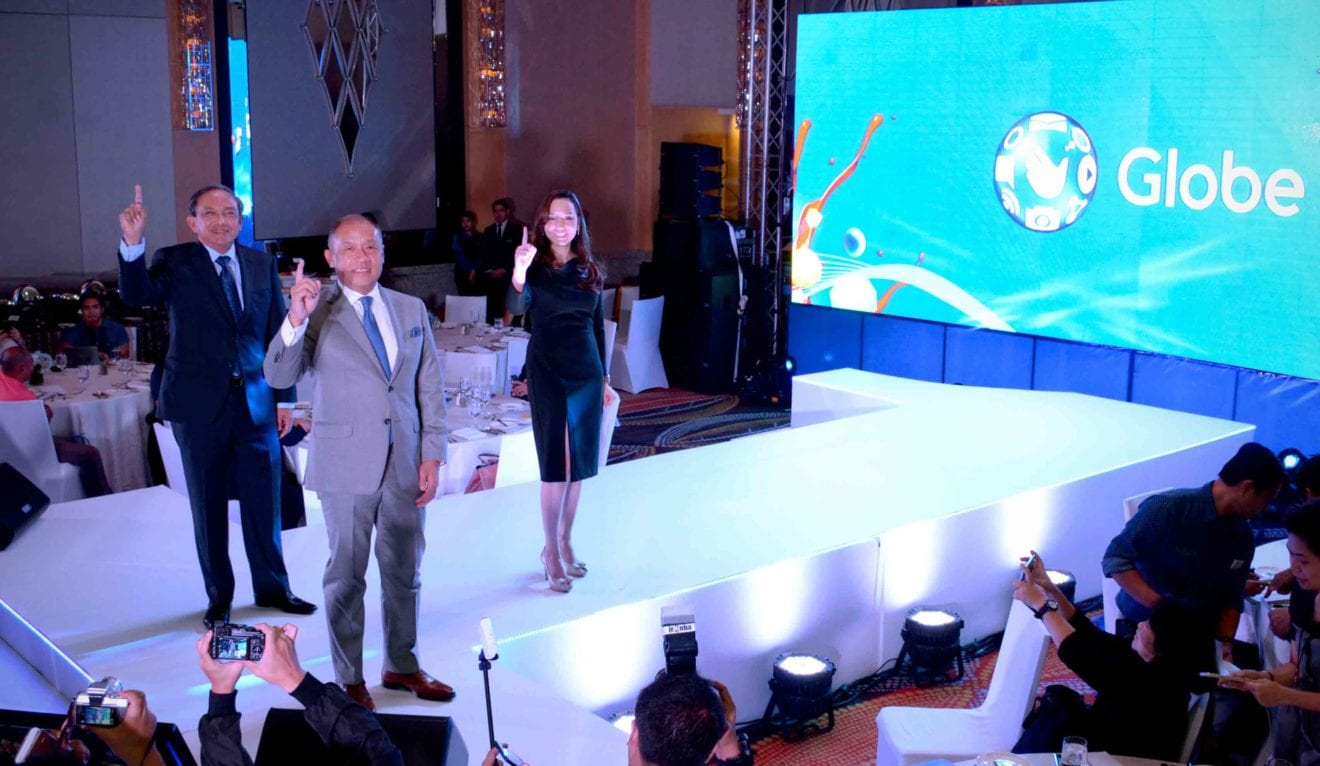
    The Philippines’ Globe Telecom has allocated a capex budget for 2017 of around $750 million as the operator invests to expand its data network.

    The operator will spend the majority of its capex budget for the year on data network expansion, including investing towards its target of providing ultra-fast fiber broadband to 2 million homes by 2020.

    Globe also plans to take advantage of the spectrum it acquired from the joint purchase of San Miguel Corporation’s telecoms assets last year by investing heavily in LTE.

    But the $750 million figure marks a significant planned reduction from the operator’s roughly $1 billion in capital expenditures last year.

    The report cites Globe CEO Ernest Cu as stating that the reduction marks a rebalancing from 2016, when the company needed to borrow money to fund its network spending.

    Cu told BusinessWorld Online that the operator’s priority with its capital investments will be revenue generation, which the company plans to achieve by focusing on high-value customers in order to improve ARPU.

    This will be important in light of the agreement Globe and rival PLDT signed with the government late last year to reduce their fixed and mobile voice interconnection rates.

  • Nepal Telecom to launch prepaid 4G on Feb 4

    Nepal Telecom to launch prepaid 4G on Feb 4

    Nepal Telecom signed up around 40,000 LTE customers in the first 15 days since launching Nepal’s first commercial 4G network.

    The state-owned operator launched LTE services in the Kathmandu and Pokhara areas on January 1, and has seen a growing trickle of 4G subscribers, MyRepublica reported, citing comments from managing director Kamini Rajbhandari to Nepal’s parliament.

    According to the report, 4G services will be enabled for iPhones shortly, and for prepaid customers from February 4. The operator is also targeting nationwide 4G services within a year.

    But the parliamentary committee pressured the operator to address commonly-cited problems including weak network quality and credit recharge problems within a month.

    The committee also instructed Nepal Telecom to provide internet services in rural areas through the Rural Telecommunication Development Fund.

    Nepal Telecom, the Ministry of Information and Communications and regulator the Nepal Telecommunication Authority (NTA) have also been instructed to amend the nation’s 20 year old Telecommunications Act, as well as the 2003 Telecommunications Policy.

  • M1, Huawei complete 5G mmWave demo

    M1, Huawei complete 5G mmWave demo

    M1 and Huawei have completed a 5G demonstration over 73-GHz E-band spectrum, achieving Singapore’s highest 5G transmission speeds of 35Gbps.

    The demonstration at M1’s main operating center in Jurong has validated the performance of 5G using millimeter wave high frequency bands, the companies announced.

    M1 CTO Denis Seek said 5G will support the massive number of low-latency connections critical to driving the next wave of technological development in areas including virtual and augmented reality, the connected car and autonomous vehicles as well as IoT applications.

    “Singapore’s mobile networks are widely acknowledged as amongst the most advanced worldwide, and M1 is committed to staying at the forefront of 5G technology to ensure our consumers enjoy the best experience and latest smart applications,” he said.

    In Hong Kong, SmarTone and Ericsson recently conducted the city’s first 5G demonstration using millimeter wave spectrum.

  • China Mobile taps Brocade software for SDN cloud rollout

    China Mobile taps Brocade software for SDN cloud rollout

    China Mobile will deploy NFV software from Brocade at several of its key data centers as part of its first SDN-based commercial public cloud rollout.

    The operator is deploying virtual traffic management technology from the networking vendor, initially at its Southern Base and Northern Base data centers.

    The deployment will be conducted in conjunction with China Mobile’s strategic SDN and NFV supplier Nokia. Brocade’s software will run within the Nuage Networks virtual service platform, which is being implemented by Nokia as part of a project announced last week.

    China Mobile is playing a major role in the Chinese government’s Internet Plus initiative to support the development of new business models enabled by ICT, such as fixed and mobile internet connectivity, cloud, big data and the IoT.

    As part of this effort, China Mobile has taken on the role of a large-scale cloud service provider for major enterprise and government customers, and is deploying SDN-based cloud services to support these operations.

    “The promise of network functions virtualization is the ability to scale services on demand. When it comes to service providers, they don’t come much bigger than China Mobile in terms of potential scale,” Brocade China country manager Henry Zhu said.

    “We’re naturally delighted that Brocade’s advanced NFV appliance technology has been selected by China Mobile. This is a groundbreaking project within China’s service provider landscape and we are fully committed to ensuring it results in complete success.”

  • Videocon to complete mobile market exit on Feb 15

    Videocon to complete mobile market exit on Feb 15

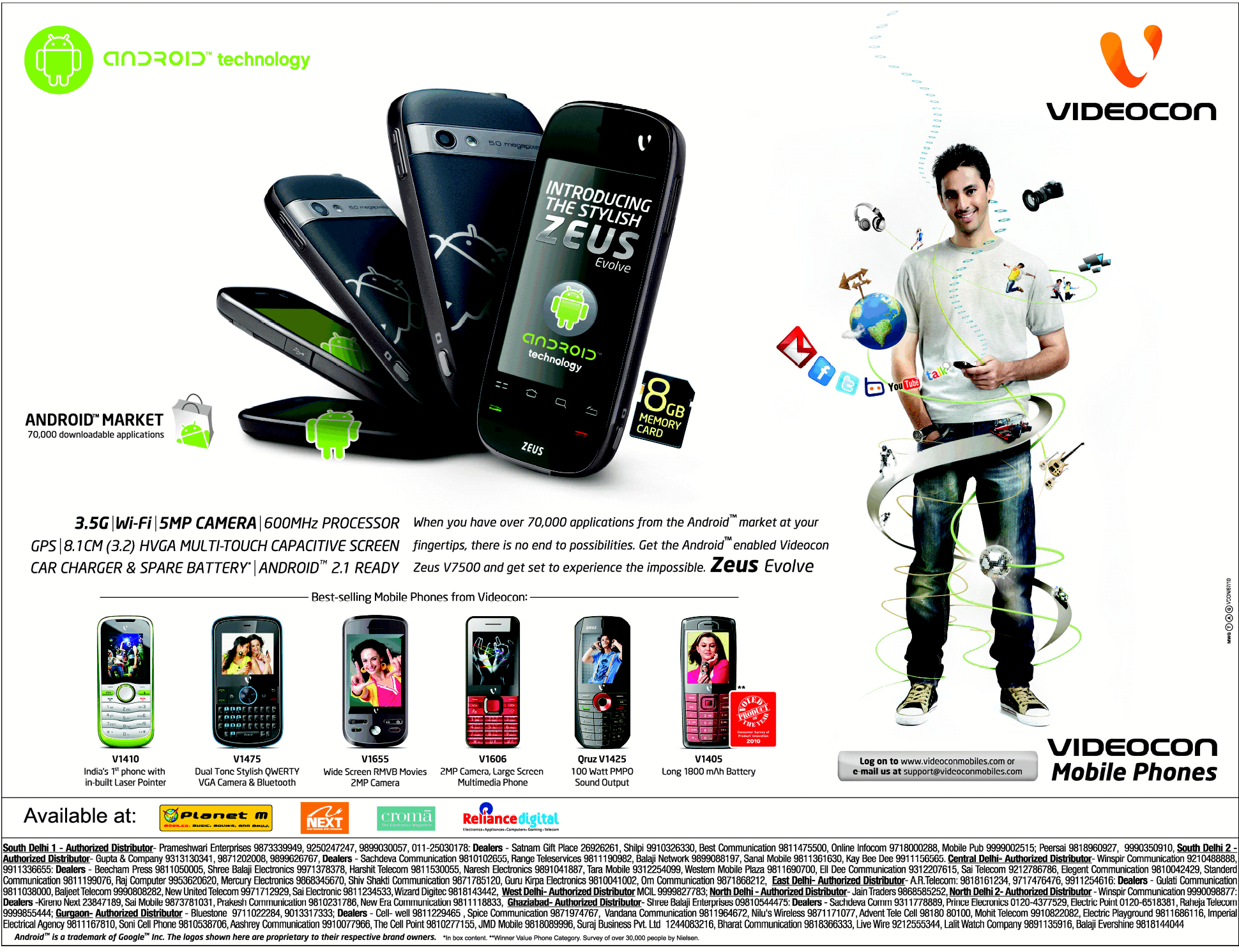
    India’s Videocon will complete its withdrawal from the mobile market next month, shutting down its network in its one remaining telecoms circle on February 15.

    Videocon’s 3 million remaining customers in the Punjab area have been asked to switch to a new provider to avoid losing connectivity.

    The operator’s licenses and spectrum in 17 circles were revoked following the 2G spectrum scandal in 2012, which involved a former telecoms minister allegedly granting favorable treatment to preferred operators during the allocation. A court revoked 122 telecoms licenses in the wake of the scandal.

    Videocon subsequently bid for and won back spectrum in six circles, but last year the company sold these spectrum assets to Bharti Airtel and pulled out of the mobile market in these areas, leaving Punjab as its last remaining mobile operation.

    But Videocon’s mobile license in Punjab is due to expire shortly, after the company was denied permission to have the license validity extended until 2027.

    According to the report, Videocon has decided to exit the mobile sector due to the high cost of mobile spectrum in light of its recent experiences.

    The company is concentrating on businesses including broadband, surveillance and security as well as enterprise services.

  • NEC pushes interoperability of smart city tech

    NEC pushes interoperability of smart city tech

    NEC Laboratories Europe has teamed up with four other ETSI members to initiate a new ETSI Industry Specification Group on Context Information Management (ISG CIM), together with the Open & Agile Smart Cities (OASC) organization.

    The ISG CIM will specify open standards for the context information management layer, running “on top” of IoT platforms, enabling implementation of context-aware behavior in smart applications.

    This context information management layer accesses and updates information coming from different sources (IoT networks and information systems) that comprise the semantics of information, including data source, time of validity, ownership and many more.

    This will extend the interoperability of applications, helping smart cities to integrate their existing services and enable new third-party services.

    Cities are striving to use digital services to advance the quality of life of their residents, the efficiency of their operations, the growth of their economies and to increase their sustainability.

    At the moment, telecommunication systems, city infrastructure databases, car traffic management systems, and new Internet of Things (IoT) solutions all have their own specifications, and smart cities are held back by lack of interoperability for exchange of information between these platforms — which the new ISG CIM aims to overcome.

    A focus of the group will be collaboration with other standardization activities in related areas, including ETSI TC SmartM2M and ETSI PP oneM2M. Groups such as EIP-SCC, W3C or ITU-T, and open source IoT software platforms such as FIWARE and OM2M will be closely consulted.

    The goal is to interoperate and to re-use existing work as much as possible. The ISG CIM work is intended to align with the EU’s standardization policies for the Digital Single Market.

    The five ETSI members of the new ISG CIM are Easy Global Market, imec, NEC, Orange and Telefonica. Beyond the initial focus of smart cities, the approach will be transferable to other applications, such as smart agriculture and smart industry.

    Organizations from all areas are welcome to join the ISG CIM initiative — non-ETSI as well as ETSI members, including research organizations, software houses and system integrators, SMEs, industrial partners, city groups and other stakeholders.

  • Axiata to sell 34.1% of tower unit for $600m

    Axiata to sell 34.1% of tower unit for $600m

    Malaysia’s Axiata Group has arranged to sell a 34.1% stake in its wholly-owned telecommunications infrastructure services division edotco Group for $600 million.

    The operator will place $400 million worth of primary shares with Innovation Network Corporation of Japan, and $200 million in secondary shares with Khazana Nasional Berhad.

    The placement is expected to close by the end of January. It values edotco at close to $1.5 billion, with an enterprise value to FY16 ebitda multiple of 12.5x – roughly comparable to the company’s regional peers.

    The valuation takes into account the potential future injection of tower assets from Axiata’s Cambodian and Sri Lankan operations, which would further increase Axiata’s shareholding in edotco.

    “Our lead investors and new shareholders, INCJ and Khazanah, are both long-term investors who will provide strategic value-add to edotco’s growth strategy, open doors to further strategic collaborations, as well as enhance and diversify our shareholder base,” edotco CEO Suresh Sidhu said.

    Axiata CEO Jamaludin Ibrahim added that edotco achieved a comparatively strong valuation during the placement due to its robust recent business growth.

    “We are determined to make edotco a world-class business and one of the world’s largest independent tower companies by 2020. The successful placement exercise is yet another step – financially and symbolically – towards facilitating this aspiration.”

  • IMDA to hold 5G consultation this year

    IMDA to hold 5G consultation this year

    Singapore’s Infocomm and Media Development Authority (IMDA) plans to hold a public consultation covering 5G mobile networks later this year.

    The regulator will hold the consultation as part of its efforts to facilitate the commercialization of 5G services in Singapore.

    The IMDA is strongly urging the mobile industry to participate in the consultation to help the regulator better understand the industry’s needs, as well as the optimal spectrum roadmap and regulatory framework that will allow innovation to flourish.

    Other initiatives the IMDA will take during the transition to 5G will include the promotion of real-world trials to better understand how 5G will fit into Singapore’s business environment, as well as optimal deployment scenarios for operators.

    Singapore’s mobile operators are meanwhile themselves conducting preparatory work for the introduction of 5G – Singtel, for example, recently upgraded its LTE network nationwide to support the pre-5G technology 256 quadrature amplitude modulation (256 QAM), giving the network a peak speed of 450Mbps.

  • Indosat Ooredoo ready to launch 4.5G technology

    Indosat Ooredoo ready to launch 4.5G technology

    PT Indosat Ooredoo is ready to launch its 4.5G technology in 2017 that is two times faster than its 4G predecessor, said a company spokesman.

    “We have been developing the 4.5G technology since 2012 and we are ready to launch this year, starting with the introduction of new technological infrastructures such as modernized BTS (Base Transceiver Station) in several regions,” according to its Group Head of Network Strategy and Solution, Yune Marketatmo, on Wednesday.

    Singapore and Malaysia are already ahead of Indonesia in launching the 4.5G technology, along with some European and Middle Eastern countries.

    Marketatmo also noted that in order to prepare for its introduction, the company has been working to place 4.5G data centers in several areas around Java since 2016, while the headquarters will be in Jakarta.

    “The data centers will be built in strategic locations close to customers so they can communicate easily and take advantage of this new technology,” he added.

    Marketatmo further explained that existing customers who are currently using 4G would be automatically upgraded to 4.5G. This will also apply to mobile devices that are compatible with the 4.5G technology.

    Indosat Ooredoo currently has 81.6 million customers and the company saw an increase of their data usage by 114.2 percent compared to previous years.