Category: Telecom

Retail News Asia is committed to providing both local and global retailers with the latest Telecom & Telco news throughout the Asian market. This on a daily base.

  • SmarTone enters IoT alliance with Cisco Jasper

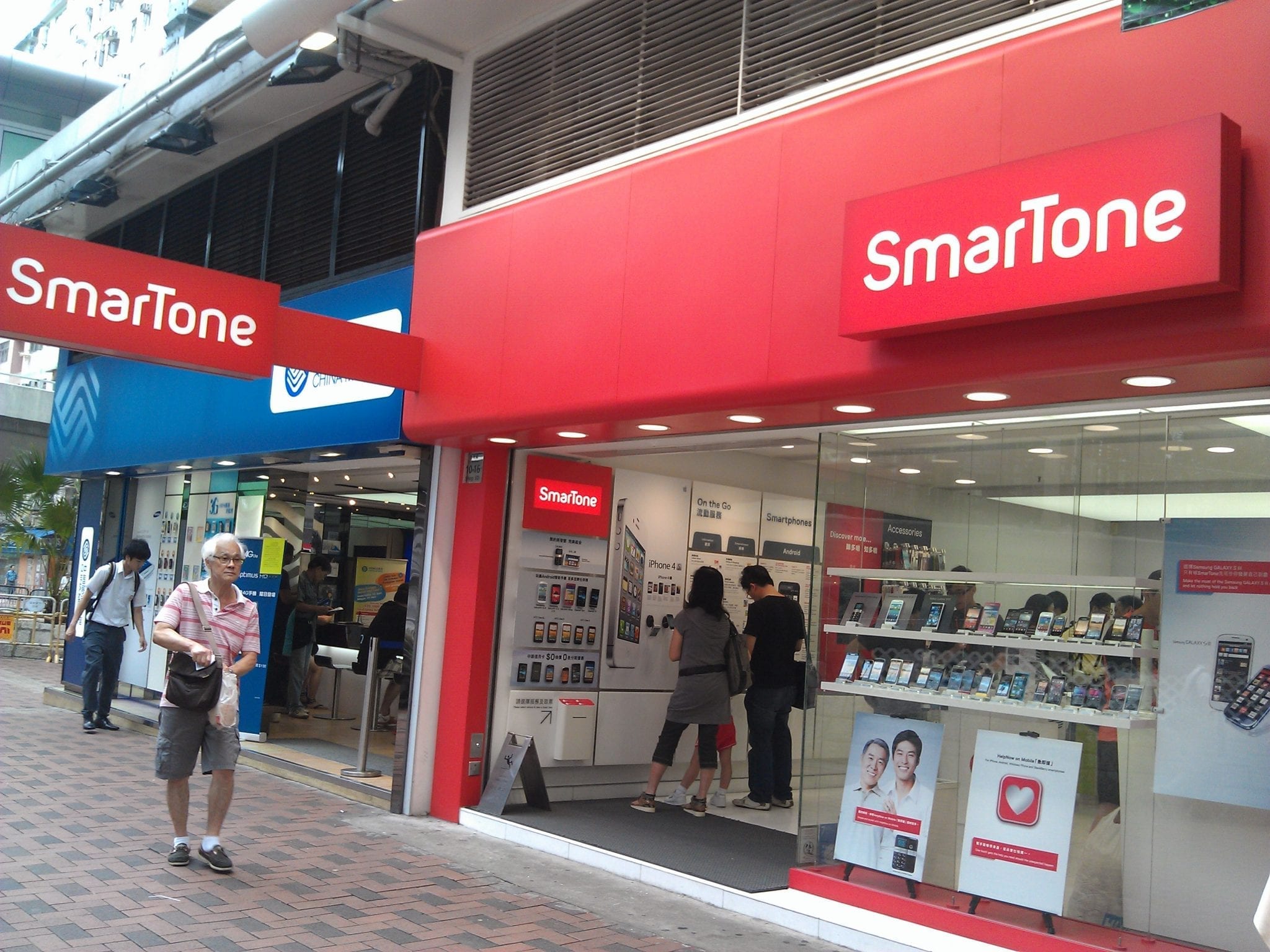
    SmarTone enters IoT alliance with Cisco Jasper

    Hong Kong’s SmarTone has teamed up with Cisco Jasper, Cisco’s IoT division, to launch IoT services in the market.

    The companies will offer Hong Kong businesses the opportunity to leverage SmarTone’s mobile network and Cisco Jasper’s Control Center managed connectivity platform for their IoT-based services.

    Announcing the deal, Cisco Jasper managing director for China and APJ Hong Lu said the company sees SmarTone as an ideal partner for the Hong Kong market due to its status as a total service provider, including cloud, mobile, fixed line, ICT and IoT services.

    “For more than 10 years we have been helping businesses across every industry automate the delivery of IoT services that have a direct impact on their bottom line,” Lu said.

    “Today, more than 6,500 companies in over 100 countries use Cisco Jasper Control Center to automate the connectivity management of their IoT devices around the world.”

    Customers include 23 of the world’s major auto makers leveraging the platform for their connected car initiatives. Cisco Jasper is also particularly targeting smart cities, as well as the industrial manufacturing, retail, security and smart home sectors.

  • Airtel launches India’s first payments bank

    Airtel launches India’s first payments bank

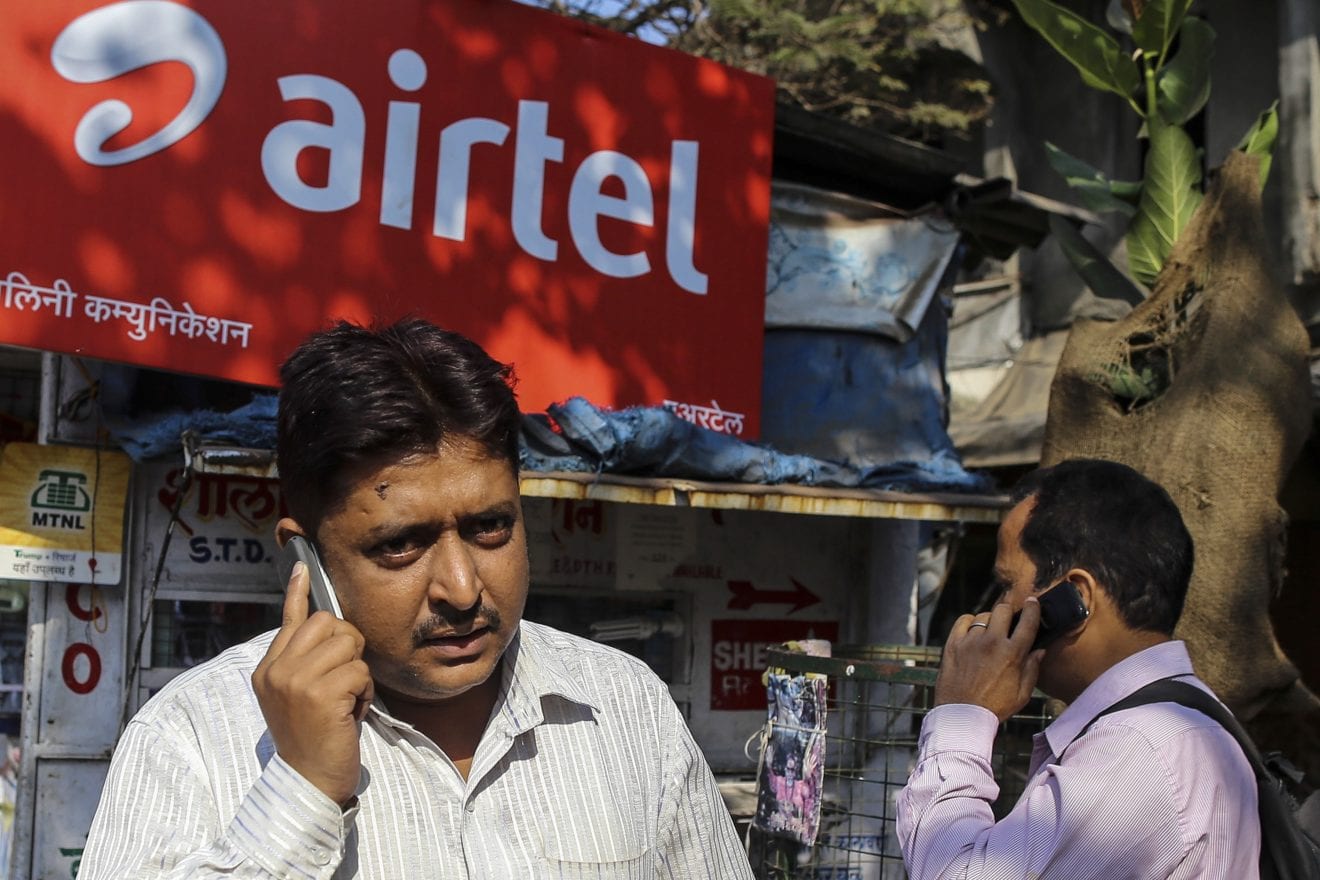
    India’s largest mobile operator Bharti Airtel has launched the nation’s first payments bank in all 29 states, using its extensive network of retail stores as banking points.

    The operator will invest an initial 30 billion rupees ($440.3 million) to develop a pan-India banking network and payments ecosystem for its mobile customers. Customers’ mobile number will serve as their banking numbers.

    At launch, the Airtel Payments Bank will use Airtel’s retail network of around 250,000 stores in all 29 states of India as banking points. This is more than the total number of ATMs currently operating in the country.

    Airtel plans to develop a nationwide digital payments ecosystem consisting of over 5 million merchants. The operator said 1 million are already on board.

    The bank offers an interest rate of 7.25% per annum on deposits in saving accounts, and Airtel mobile customers will receive equivalent talk time for every rupee they deposit at the time of opening a savings account.

    Airtel also rolled out its payments bank app for Android and iOS, accessible via the MyAirtel app.

    “Just like mobile telephony leapfrogged traditional telecom networks to take affordable telecom services deep into the country, Airtel Payments Bank aims to take digital banking services to the unbanked over their mobile phones in a quick and efficient manner. Millions of Indians in rural areas will get their first formal banking experience with Airtel Payments Bank,” Bharti Enterprises chairman Sunil Bharti Mittal said.

    “We are fully committed to… Prime Minister Shri Narendra Modi’s call to build a Digital India and lay a strong foundation for India’s transition to a cashless economy. Airtel Payments Bank will invest towards building a vast digital payments ecosystem with millions of merchants, and allow customers to make convenient cashless payments for good and services with their mobile phones.”

  • Singtel launches 450Mbps LTE-A nationwide

    Singtel launches 450Mbps LTE-A nationwide

    Singtel has announced the nationwide deployment of its 450Mbps LTE-Advanced service as part of the operator’s journey to 5G.

    The company has upgraded its LTE network in Singapore to support the pre-5G technology 256 quadrature amplitude modulation (256 QAM).

    The technology is designed to increase the number of unique waveform shapes to allow the carriage of up to a third more data, as well as increased spectral efficiency.

    Singtel will make the 450Mbps service available to all its 4G customers with compatible devices at no extra cost.

    Customers with Galaxy S7 and S7 Edge smartphones can take advantage of the faster speeds already, and Samsung plans to release a software update to also support the LG V20. More compatible smartphone models are expected to reach the market early this year.

    “Singtel is investing ahead to deliver faster speeds and wider connections with the steady deployment of innovative technologies on our live network,” Singtel CEO consumer Singapore Yuen Kuan Moon said.

    “With more customers consuming and sharing mobile videos, 450Mbps speeds will enable them to download movies in a flash and give them a better entertainment experience while on the go.”

    Singtel also announced it teamed up with Ericsson to demonstrate download speeds of 1Gbps in a live 4G network pilot at two sites. The speed was achieved by combining 256 QAM with 4×4 MIMO and tri-carrier aggregation technologies.

    The operator plans to roll out 4×4 MIMO technology on its network from next year. The first compatible devices are expected to be ready for launch by the end of 2017.

  • International MVNE to launch on ASX tomorrow

    International MVNE to launch on ASX tomorrow

    Australia-based international MVNE United Networks will list on the Australian securities exchange (ASX) tomorrow after completing an A$7.1 million IPO.

    United’s main product is a white label global roaming service operating over cellular, Wi-Fi and GPS networks worldwide, targeted at corporate customers including insurers, airlines, banks and travel agents. The company also offers data and value added services.

    This month, United launched a white label Wi-Fi application connecting users to unlimited data in over 57 million hotspots across 120 countries.

    The company also offers a location based services platform that has recently been used to provide location and alert services for major events such as natural disasters and terrorist attacks.

    United plans to use the proceeds from its IPO to expand the strength and coverage of the United network to help broaden its customer base and product range.

    “The success of United’s white labelling has come from it being an attractive low cost customer acquisition program for corporates, as well as offering them a chance to convert this cost into a revenue earner,” United CEO Nicholas Ghattas said.

    “With the launch of the Wi-Fi app we have streamlined the use of the global roaming product and we expect it to be the basis for its growing appeal among new and existing corporate customers.”

  • OTT substitution to cost operators $104b this year

    OTT substitution to cost operators $104b this year

    Operator voice and text revenues will continue to be eroded by competition from OTT messaging services and social media, with the consumer migration to these services costing network operators nearly $104 billion this year, according to Juniper Research.

    The impact of OTT substitution will be the equivalent to 12% of operators’ service revenues, the research firm said.

    In a new report, Juniper Research said the major success of several platforms have substantially impacted operator margins, noting that WhatsApp alone now generates nearly three times as much daily traffic as SMS.

    While the threat to operator revenues posed by OTT substitution is nothing new, the report also notes that OTT messaging platforms are now trialing or incorporating multiple new communications options, such as group voice and video chat. This is likely to ensure continued erosion of traditional telecoms traffic levels in the future.

    But Juniper Research said there are a number of measures operators can introduce to stem the decline in core revenues and develop new sources of income.

    These include implementing big data and analytics packages for consumer and IoT devices, introducing carrier billing payment options or mobile money services, and developing mobile identity services for consumers.

    With operators increasingly deploying mobile as part of a quad-play offering for subscribers, report author Dr Windsor Holden added that it is essential for operators to provide consumers with attractive, original content to differentiate themselves from the competition.

    With mobile devices now regularly used for primary consumption of video content as well as snacking, operators providing popular film, drama and exclusive sports events over multiple channels are at a distinct advantage,” he said.

  • AI to fuel smartphone sales rebound in 2017

    AI to fuel smartphone sales rebound in 2017

    Consumer purchases of smartphones dropped to a three-year low in 2016, but Accenture believes sales will rebound this year, fueled by demand for new capabilities including AI-driven digital assistants.

    A new global Accenture survey finds that the expected resurgence will be also fueled by the introduction of better security, new functions, improved performance and device refresh schedules.

    Accenture polled 26,000 consumers in 26 countries. Results show that more than half (54%) of consumers surveyed said they plan to buy a smartphone in the next year, up from 48% in last year’s survey.

    Chinese consumers are the main drivers of this upturn, with three-quarters (74%) of respondents in China saying they intend to purchase a smartphone in the coming 12 months, up from less than two-thirds (61%) in last year’s survey.

    The number of respondents in India and the United States who said they plan to buy a smartphone in the coming 12 months also increased by double digits over last year, to 79% in India (from 68% last year) and 52% in the United States (from 38% last year).

    Among all consumers surveyed, the leading driver of purchase intent is the ability to access the newest and most innovative features and functions, cited by 51% of respondents in this year’s survey, compared with only 41% last year.

    Another reason consumers are opting to buy new smartphones is the inadequate performance of their existing devices, cited by 45% of customers this year – up from 33% last year.

    “Improved features and falling prices are key reasons consumers around the world are signaling a desire to buy new smartphones,” said David Sovie, global managing director for Accenture’s Electronics and High-Tech business.

    “Growing acceptance of services powered by artificial intelligence, such as voice assistants, is also fueling this market upswing. 2017 will be the year when artificial intelligence goes mainstream in consumer devices.”

    For the first time, the annual survey polled consumers about their intentions to buy digital voice-enabled assistants such as Amazon Echo and Google Home. Powered by artificial intelligence, the products recognize a human’s voice commands, such as ‘Turn on the light’ and ‘Play music’ and answer questions such as ‘What time is it?’ and ‘What is the temperature outside?’

    While only 4% of the respondents said they own such a device today, two-thirds (65%) of these said they use their device on a regular basis, showing strong acceptance of this new technology.

    Voice assistants on smartphones are also becoming increasingly popular as the AI technology powering these services has improved dramatically. Younger consumers are leading the adoption, with more than four in five (84%) of 14-to-17-year-olds saying they either use this technology today or are interested in doing so.

    Consumers are also willing to embrace a wide array of potential AI-powered, personalized services, with a majority of respondents saying they are interested in personal health assistants (cited by 60%), smart trip assistants (59%) and entertainment advisors (51%).
  • Tata Sky offers 600 channels and services

    Tata Sky offers 600 channels and services

    Tata Sky in India has unveiled its offerings #MaxJingalala of 600 channels and services, which is said to be the highest ever in the DTH sector.

    Tata Sky today is a market leader in HD channels along with maximum number of Tamil, Telugu, Kannada, Malayalam, Marathi, Bengali, Oriya, Punjabi and Assamese channels on offer.

    As of December 2016, Tata Sky is offering an unprecedented 76 HD (highest in the industry) and 483 SD channels. The bouquet of 31 value added services, 15 SD & HD movie platforms specials, 9 exclusive +1 channel feeds, have been a clear differentiator and a key focus area for the brand.

    “Consumers in India consider the number of channels provided by an entertainment platform to be among the second-biggest reason to make their purchase decisions,” said Malay Dikshit, Chief Communications Officer of Tata Sky. “Tata Sky is leaving no stone unturned to offer the maximum number of channels and services to its subscribers. Hence offering Sabse Zyada Manoranjan catering to every member of the family is key to the Tata Sky offering.”

    Throughout 2016, Tata Sky has pioneered in the Pay TV sector with offerings ranging from enabling internet browser application on the Set Top Box, introducing Kids Showcase, Bengali & Punjabi movies MAMI films, m-Visa payment option to first of its kind interactive services such as Comedy, Devotion, Music + and Gurus.

    The year also saw popular campaigns from Tata Sky such as Pyaar Jingalala (13 series ad films), Das Saal Jingalala and Family Jingalala (starring Amitabh Bachchan).

    Some of the other first-ever in the sector that Tata Sky has under its hat are the launch of 4k Set Top Box in India, Karaoke service on STB, unique interactive services Classroom and Smart manager and the world’s first Daily Recharge option.

  • Vietnam telecom giant to scrap roaming fees with Laos, Cambodia from 2017

    Vietnam telecom giant to scrap roaming fees with Laos, Cambodia from 2017

    The company expects to lose $1 million a month but hopes to boost connections in Indochina. Vietnam’s biggest telecom firm Viettel has announced it will abolish roaming charges between Vietnam and neighboring Cambodia and Laos, where it has also developed strong networks.

    Nguyen Manh Hung, general director of the company, said that starting from next year its subscribers in the three countries will be able to phone each other at domestic call rates, local media reported. Viettel has developed the Metfone network in Cambodia and Unitel in Laos.

    Hung said the initiative is to facilitate cultural and trade connections in Indochina, but the company will lose around $1 million a month.

    In October last year, members of the European parliament also voted to scrap mobile roaming charges from mid-2017 to save holidaymakers among member countries from racking up massive phone bills.

    ASEAN ministers of communications raised the idea of abolishing roaming fees thoughout the bloc back in 2013, but no agreement was finalized.

    Besides Vietnam, Viettel operates mobile networks in ten countries in Southeast Asia, South America and Africa.

    Its brand value has been estimated at $973 million by UK-based intangible asset valuation consultancy organization Brand Finance. It is ranked seventh in Southeast Asia and 93rd globally.

  • Vodafone said to consider merger for Indian unit

    Vodafone said to consider merger for Indian unit

    Vodafone is reportedly considering pursuing a merger of its Indian mobile business with a rival operator to help better compete in the intensively competitive market and survive the price war triggered by the entry of Reliance Jio Infocomm.

    The operator is looking into a potential merger with either Jio or major rival Idea Cellular, sources told.

    Vodafone has also put on hold plans to float Vodafone India on the Bombay Stock Exchange until the price war triggered by Jio’s entry is over, the sources said.

    Reliance Jio launched a pan-India 4G network on September 5 last year, offering effectively unlimited data, voice and SMS services as an initial promotion. The operator recently extended this free services promotion until March 31.

    This aggressive pricing strategy has helped the operator sign up over 58 million customers since launch – including 19.6 million in October, its first full month of operation – data from regulator Trai indicates.

    Besides incentivizing major operators such as Vodafone to pursue consolidation, smaller operators including Telenor India and Tata DoCoMo have been offering themselves for sale to the incumbents in response to the destructive price war, the report adds.

  • Thai telcos bracing for a challenging 2017

    Thai telcos bracing for a challenging 2017

    After a rough 2016 there is no respite in sight for Thailand’s telecoms sector, with operators still dealing with heavy costs accrued from recent 4G auctions, strict competition and OTT challengers.

    AIS CEO Somchai Lertsuthivong as stating that he has never seen as challenging a year for the mobile sector as 2016, after nearly three decades of experience.

    AIS and DTAC, which together have a revenue market share of around 80%, have both cut their financial forecasts for 2016 as a result of these challenges.

    AIS expects to report an eibtda margin decline of between 37% and 38% in 2016 from 45.6% in 2015 due to the rising costs as well as one-off expenses related to the shutdown of its 2G network. Dtac expects its ebitda margin to decline to 27% to 30% compared to 31.8% in 2015.

    Operators expect 2017 to be just as challenging. As well as high spectrum costs, operators have had to grapple with a surge in operating costs as they offered heavy subsidies including free 4G handsets to lure customers.

    The sector will also have to deal with surging data consumption as 4G take-up increases. According to the report, Dtac plans to transition away from competing on price with heavy subsidies, and instead compete by offering a superior customer experience.

    AIS is meanwhile responding to the OTT threat by pursuing more digital partnerships with local content providers and businesses. Operators are also exploring partnering with cable providers to offer triple-play services bundling internet, telephone and TV.

  • Ericsson, Cisco to launch joint Wi-Fi solutions

    Ericsson, Cisco to launch joint Wi-Fi solutions

    Ericsson and Cisco have announced an expanded partnership covering the delivery of a new Wi-Fi solution for mobile, cable and other industries’ customers.

    The new Evolved Wi-Fi Networks (EWN) offering combines Ericsson’s 3GPP access and core network technologies with Cisco’s Wi-Fi portfolio.

    The offering will cover pre-integrated solutions including indoor small cells and operator Wi-Fi over Ericsson outdoor access networks and Ciso WLAN.

    Integrating Cisco WLAN with Ericsson macro or indoor access networks will also allow operators to steer users between mobile and Wi-Fi access networks to ensure a superior end-user experience.

    In addition, core network integration will allow operators to offer all their core network services over Wi-Fi for multi-mode devices.

    Design and deployment of new products based on the offering will be handled by Ericsson’s services organization, and the solutions will be bundled with Ericsson managed services as well as customer support, design and deployment services.

    “Our strategic partnership brings together the capabilities of two leading players in networking, mobility and cloud, creating the best end-to-end solutions and opportunities for our customers,”

    Ericsson Head of Region North America Rima Qureshi said.

    “By adding Wi-Fi solutions into the partnership, we will enable our customers to offer best-in-class Wi-Fi in their networks, complemented by our leading 3GPP portfolio and services organization.”

  • Idea may offer unlimited free 4G data

    Idea may offer unlimited free 4G data

    India’s Idea Cellular is reportedly considering launching its own unlimited free 4G data offer to compete against disruptive new market entrant Reliance Jio Infocomm.

    Idea is considering offering unlimited data in certain plans with a validity of 1 to 1.5 years, potentially only for 4G customers, citing sources.

    According to the report, Idea may also introduce free incoming calls for international roaming and new loyalty plans for existing customers.

    The entry of pan-Indian 4G operator Reliance Jio has shaken up India’s telecoms market, due in part to the operator’s decision to offer free services for customers for its first six months of operation, ending in March 31.

    Rival operators have been pressed to respond with their own offers to attract and retain customers. Bharti Airtel recently introduced an offer for 3GB of extra data per month until December this year.

    In line with this development, Vodafone India has introduced a new prepaid plan offering unlimited 3G or 4G data roaming for an hour for just 16 rupees ($0.235). The company will also offer unlimited in-network local voice calls for an hour for 7 rupees. Vodafone’s 2G customers will be able to buy an hour of unlimited data for 5 rupees.

  • Vodafone India hands Nokia managed services deal

    Vodafone India hands Nokia managed services deal

    Vodafone India has reportedly handed Nokia a multi-year contract extension worth €200 million ($210.5 million) covering the delivery of managed services in multiple telecoms circles.

    The scope of the contract has been expanded to cover managed services for 14 of India’s 22 telecoms circles, and field operations in the remaining eight, citing a person familiar with the matter.

    The source also said the contract has been expanded to cover the core as well as radio network.

    As part of the contract, Nokia will provide managed services, maintenance, system integration and other services. It represents a significant win for Nokia’s Indian operations, which cover the management of around 200,000 base stations across the country.

    Vodafone also recently awarded Huawei a three-year managed services contract worth between $180 million and $220 million covering three circles, as well as network operations in two circles, the report adds. In February, the operator contracted Ericsson to manage its fiber assets in 10 circles.

  • Alcatel-Lucent Enterprise restructures for growth

    Alcatel-Lucent Enterprise restructures for growth

    Alcatel-Lucent Enterprise is forming four regional sales organizations to better serve its partners, customers and their markets.

    Each of the four regions will have its own dedicated sales staff supporting its defined industry-specific sales strategy, cloud sales strategy and channel strategy, with a complementary sales enablement and services delivery.

    With the restructuring the vendor aims to place a focus on specific market segments for growth and accelerate the shift to new business models.

    Expanded teams will focus on cloud-based services and offers to deliver innovative technology and business models that simplify IT and enable new digital business environments.

    Regional strategy better serves customers and channel partners with focus on local trends, according to the company.

    Matthieu Destot will head up the APAC region until a new leader is announced. He will be leading the formation of the new go-to-market strategy for APAC (including the former APAC and Greater China regions).

    Amit Raj Bathla will continue to lead the combined APAC Marketing team. He will report to James Taylor, Global Head of Marketing.

    These appointments are effective January 1, 2017.

  • Indian telcos square off over interconnection rates

    Indian telcos square off over interconnection rates

    Indian operators Bharti Airtel and Vodafone are squaring off with Reliance Jio Infocomm and Tata Teleservices in court over regulator Trai’s recent decision to fix interconnection rates.

    Trai recently set interconnection rates at zero for landline to wireless calls and 14 paise ($0.002) per minute for wireless to wireless calls. Airtel and Vodafone subsequently filed a court challenge to this decision.

    Now Reliance Jio and Tata Teleservices have filed court briefs opposing this legal challenge, The Telegraph India reported.

    Incumbent operators Airtel and Vodafone are opposing the order on the grounds that it unfairly penalises larger players. In Vodafone’s court filing in November, the operator said the regulations are illegal, arbitrary and beyond the functions of Trai to implement.

    The operators have also argued that the order is unfair because they should be compensated for rival operators using their infrastructure. Airtel is meanwhile calling on Trai to fix termination rates on a cost-based and work-done basis.

    Reliance Jio is a disruptive newcomer to the market, currently offering services for free as a promotional offer to lure customers from rival networks, while Tata Teleservices is one of the market’s smaller operators.