Category: Telecom

Retail News Asia is committed to providing both local and global retailers with the latest Telecom & Telco news throughout the Asian market. This on a daily base.

  • Telstra, Ericsson demo 10G intercontinental encryption

    Telstra, Ericsson demo 10G intercontinental encryption

    Australia’s Telstra and Ericsson have separately demonstrated secure end-to-end encryption over  10Gbps intercontinental link.

    The companies encrypted data in transit at 10Gbps between Los Angeles and Melbourne, Australia using Ciena’s ultra-low latency 10G wire-speed encryption technology.

    The companies said the trial demonstrates that data can be encrypted in transit – beyond the walls of a data center – at high speeds without any impact to performance.

    “The outcome of this test shows that data can now be encrypted while in transit across a long distance, while maintaining the speed and reliability our customers have come to expect from our international network,” Telstra executive director of international operations and services Darrin Webb said.

    “We will continue to work with Ericsson and Ciena to take this trial to the next level with a 100Gbps encryption test.”

    “This time last year Telstra and Ericsson achieved an encryption trial between Melbourne and Sydney. We have now extended the distance from Melbourne to Los Angeles with data in transit encryption at 10Gbps, which is the typical speed used today over these distances without encryption,” Ericsson head of customer unit Australia and New Zealand Emilio Romeo added.

    Ericsson and Telstra next plan to demonstrate 100Gbps encryption over the same intercontinental route in the first half of the year.

  • Myanmar’s fourth cellco to use the brand name Mytel

    Myanmar’s fourth cellco to use the brand name Mytel

    Myanmar’s newly-licensed fourth mobile operator will use the brand name Mytel, and will aim to differentiate by targeting rural areas and competing on price.

    The joint venture between Vietnam’s Viettel, the consortium of local ICT companies that make up Myanmar National Telecom Holding Public and Star High Public Company was awarded a telecoms license last week.

    The new company’s external relations officer as stating that Mytel will make use of the telecoms assets used by Star High Public Company’s state-owned parent company Myanmar Economic Corporation (MEC). MEC owns MECtel, a state operator with access to extensive tower and fiber assets.

    Mytel also plans to utilize capacity on the Asia-Africa-Europe 1 (AAE-1) subsea cable, which lands in Myanmar. According to the report, state operator MPT acts as a co-landing party for the connection but does not participate directly in the project.

    The operator plans to offer 2G, 3G and 4G services with a focus on extending coverage in rural areas, and offering services at a lower price than rivals Telenor Myanmar, Uninor Myanmar and the joint venture between MPT and KDDI.

  • 5G value chain to generate up to $3.5tr in 2035

    5G value chain to generate up to $3.5tr in 2035

    A new study commissioned by Qualcomm projects that 5G technology has the potential to create 22 million jobs worldwide and produce up to $12.3 trillion worth of goods and services by 2035.

    The landmark study into the potential economic and social impact of 5G worldwide projects that by this time, 5G’s full economic benefit should be realized across the globe.

    The 5G Economy study was jointly conducted by research firms IHS Markit, PSB and UC California economist Professor Dr David Teece.

    According to the study, the 5G value chain itself is anticipated to generate up to $3.5 trillion in revenue in 2035.

    Over time, 5G will boost real global GDP growth by $3 trillion dollars cumulatively from 2020 to 2035, which would be the quivalent in today’s dollars of adding a new economy the size of India to the world.

    “I’ve spent many years studying the impact of general purposes technologies, and it’s clear that 5G will propel mobile into that category, assuring the technology’s long-term impact on society and continued growth for decades,” Teece said.

    Polling research conducted in tandem with the economic study also suggests that  business decision makers and opinion leaders around the globe overwhelmingly agree than 5G will enable new products, services and use cases that have not been conceived yet.

  • Vodafone Australia names new CBU director

    Vodafone Australia names new CBU director

    Vodafone Australia has promoted its director of sales, Ben McIntosh, to the newly created position of consumer business unit (CBU) director.

    Chief executive officer Iñaki Berroeta said the new position merges the existing sales director and marketing director roles, following a decision by chief marketing officer Loo Fun Chee to return to Malaysia for family.

    “This new unit will see sales and marketing activities come under one leader and one team, creating a streamlined structure and simple and seamless end-to-end processes” said Berroeta.

    “The consumer business unit will drive our ambition to deliver the very best product, service and experience for our customers. Ben will bring great energy, experience and market knowledge to the role.”

    He said Vodafone’s brand had seen improvements in its awareness since Chee took on the leadership role two years ago.

    “Amongst the successes under her leadership are the launch of innovative market leading products such as MyMix. We’ve also seen the Vodafone brand strengthen in the Australian market and a dramatic improvement in Net Promoter Score which shows our customers are increasingly happy with their Vodafone experience,” the executive commented.

    McIntosh joined Vodafone Australia in 2014 as director of sales after a 17-year career at consumer products retailer Harvey Norman as general manager for technology and entertainment retail.

    McIntosh will officially start in his new role as CBU director on January 30.

    Former Microsoft executive and AI expert joins Baidu

    Chinese search giant Baidu has hired former Microsoft executive Dr Qi Lu as its group president and chief operating officer, effective immediately.

    In this new role, Lu will be responsible for Baidu’s products, technology, sales, marketing and operations.

    Lu joins Baidu from Microsoft, where he served most recently as global executive vice president responsible for its Office business.  He joined Microsoft in 2009 as president of its online services group and was promoted to global EVP in 2013.

    Lu holds a PhD in computer science from Carnegie Mellon University and has over 40 US patents in his name.

    “Dr. Lu possesses a wealth of leadership and management experience, and is a leading authority in the area of artificial intelligence. I am confident that Dr. Lu will make major contributions to the overall strength of our management and technology,” Robin Li, Baidu’s chairman and group CEO, said in a statement.

    “To achieve our goals, especially in artificial intelligence, which is a key strategic focus for the next decade, we will need to continue attracting the best global talent. With Dr. Lu on board, we are confident that our strategy will be executed smoothly and Baidu will become a world-class technology company and global leader in AI,” Li added.

  • Telstra debuts assured availability on two APAC links

    Telstra debuts assured availability on two APAC links

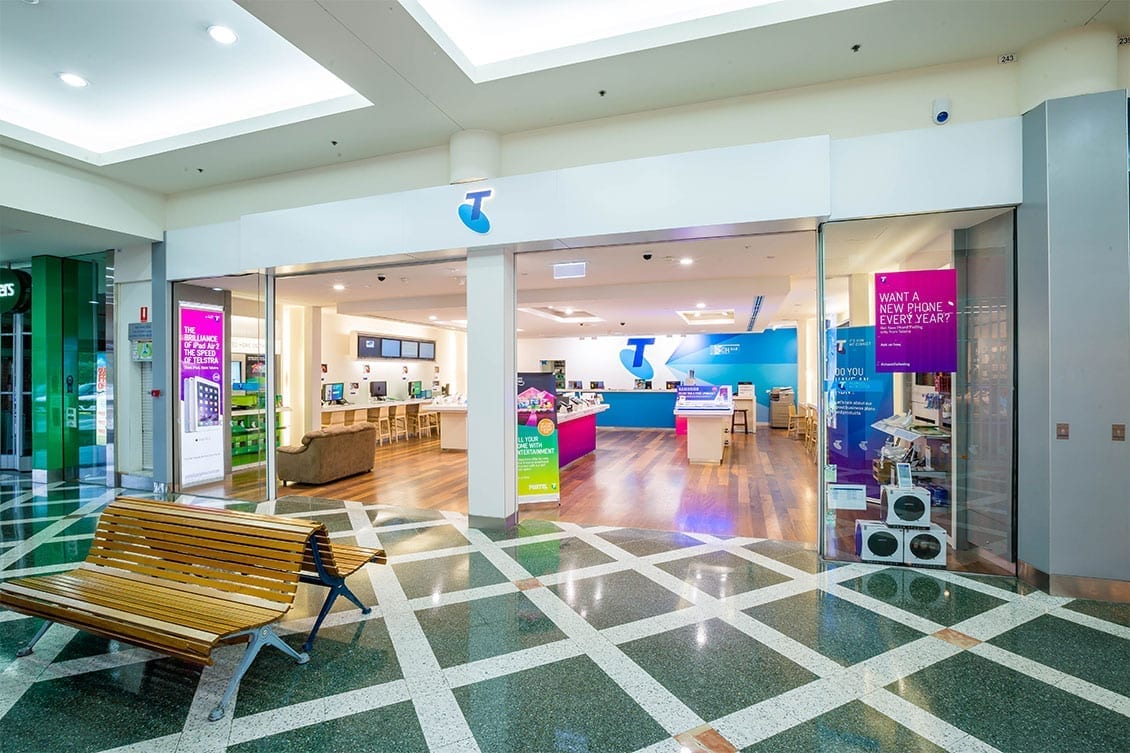
    Australia’s Telstra will introduce assured availability on two of Asia-Pacific’s busiest subsea cable routes,  Hong Kong to Singapore and Japan to Hong Kong.

    The company announced its new Always On service guarantee at the Pacific Telecommunications Council (PTC) conference in Hawaii on Monday.

    Telstra will use its significant APAC cable network to guarantee connectivity in the event of a cable cut or damage due to natural disasters. Telstra’s subsea cable network accounts for up to 30% of active intra-regional capacity in Asia-Pacific.

    Customers will be guaranteed connectivity for their subscribed bandwidth over one primary path and two protection paths through different cable systems along the same routes.

    Telstra’s executive director of global sales Ellie Sweeney said subsea cable damage can take weeks – or in extreme cases months – to fix.

    “With Telstra’s Always On service guarantee, customers will be rerouted to a protection path within a matter of hours initially and with automation we expect to bring this down to a few minutes in the future,” she said.

    “Connectivity is vital to the modern economy, with many consumers and businesses now relying on being able to connect anywhere at any time. Meeting customers’ expectations can be difficult when it comes to international connectivity, with cables at risk of service disruptions due to cable cuts caused by boats, earthquakes and typhoons.”

  • Huawei, Unicom complete FDD Massive MIMO field trial

    Huawei, Unicom complete FDD Massive MIMO field trial

    Huawei and China Unicom have completed field verification of what they are billing as the industry’s first FDD-based Massive MIMO technology.

    The field test used the existing two-antenna receiving terminal on the 20MHz spectrum and an FDD LTE commercial terminal to achieve a peak network rate of 697.3Mbps, nearly five times that of traditional FDD LTE.

    Huawei said the joint test demonstrated that the average mobile phone rate grows up to 87Mbps, enough for the smooth streaming of 4K HD video.

    Massive MIMO architecture requires large-scale antenna array elements and RF transceiver channels. Huawei’s solution uses it AAU technology, which integrates RF and antenna elements. The technology also uses 3D user-level beamforming to improve coverage and reduce interference.

    Huawei president of FDD products Cao Ming said when end-user devices supporting the 3GPP Release 10, 13 and 16 protocols – which define eight, 16 and 32 port multi-antenna technology respectively – become available, the spectral efficiency of Massive MIMO will improve further.

    He said Huawei will continue to drive the development of the FDD LTE Massive MIMO industry chain.

    “Our goal is to bring considerable commercial value to operators through innovative technology,” he said.

    “This successful field verification between Huawei and China Unicom, once again demonstrated the innovative capability of Huawei’s 4.5G Evolution technology. Huawei’s Massive MIMO product has the ability to evolve to 5G to protect the operator’s investment in the coming 5G era.”

  • Ericsson, Cisco to virtualize VHA’s core, IP network

    Ericsson, Cisco to virtualize VHA’s core, IP network

    Vodafone Hutchison Australia (VHA), operator of the Vodafone Australia brand, has engaged Ericsson and Cisco to evolve and virtualize the operator’s core and IP network.

    Ericsson has won a contract to lead the transformation program, building the infrastructure as well as delivering an end-to-end operational system.

    The vendors will deliver a joint architecture solution comprising an Ericsson hyperscale data center system and software components, as well as Cisco’s WAN automation engine, network service orchestrator, IP network VNFs and security gateway.

    Through the project, VHA plans to simplify its network and infrastructure to enable the operator to become more agile and proactive in the way it brings services to market. The transformation also promises to reduce opex and capex and ultimately improve the customer experience.

    The deal marks the first major collaboration between Ericsson and Cisco on telecoms cloud infrastructure, and comes as part of the global business and technology partnership the two vendors formed in November 2015.

    “Ericsson and Cisco are our existing providers of core and routing functions making

    them good partners to move into a virtualized environment,” VHA CTO Kevin Millroy said.

    “This transformation allows us to introduce new applications to drive innovation and improve customer services and user experience. The new infrastructure opens the door to new business models and markets – such as IoT for Vodafone. We are excited about the future prospects this partnership offers.”

  • Hawaiki completes route survey for subsea cable

    Hawaiki completes route survey for subsea cable

    Hawaki Submarine Cable and TE SubCom have completed the route survey for the 14,000km Hawaiki transpacific cable system linking Australia and New Zealand with mainland US.

    With the successful completion of the survey, the companies remain on track to complete the deployment of the cable in mid-2018.

    Once complete, the carrier-neutral cable system will be the highest cross-sectional capacity link between the US and Australia/New Zealand. It will also link to Hawaii and American Samoa, with options to expand to several other South Pacific islands including New Caledonia, Fiji and Tonga.

    TE SubCom meanwhile continues to manufacture the cable, with more than 4,500km of cable and over 25 repeaters completed.

    “The start of 2017 finds the Hawaiki cable system closer and closer to ready for service,” Hakaiki CEO and co-founder Remi Galasso said.

    “The information garnered from the recently completed deep water route survey will be instrumental in ensuring the long-term viability of the cable system, and we are thrilled with the progress on the cable and repeater manufacturing efforts. Installation will begin later in 2017 and a fully lit system that should positively impact the entire region is soon to follow.”

  • China Mobile to cooperate with Ericsson on IoT

    China Mobile to cooperate with Ericsson on IoT

    China Mobile and Ericsson have signed an agreement to cooperate on the Internet of Things as part of China Mobile’s Big Connectivity strategy.

    The companies signed a strategic collaboration agreement at the China Mobile Global Partner Conference in Guangzhou, China last month, and announced the development last week.

    As part of the agreement, China Mobile will use the Ericsson Device Connectivity Platform to streamline the provisioning process for IoT services and deploy services to capitalize on potential new business opportunities.

    The operator plans to use the platform to integrate resources from roaming partners and offer enterprise customers worldwide reliable connectivity based on service level agreements.

    “China Mobile expects to have 200 million IoT connections by 2017. We stick to the strategy of open cooperation with our partners for win-win results,” China Mobile EVP Yuejia Sha commented.

    “China Mobile strengthens the collaboration with global leading enterprises of advanced platform, application and intelligent hardware to drive the rapid development of our industry, and provides superior applications and services to our customers.”

    Ericsson said the Device Connectivity Platform has been adopted by more than two dozen operators since it launched in 2008, supporting 1,700 industry customers.

  • M1, StarHub may share more mobile infrastructure

    M1, StarHub may share more mobile infrastructure

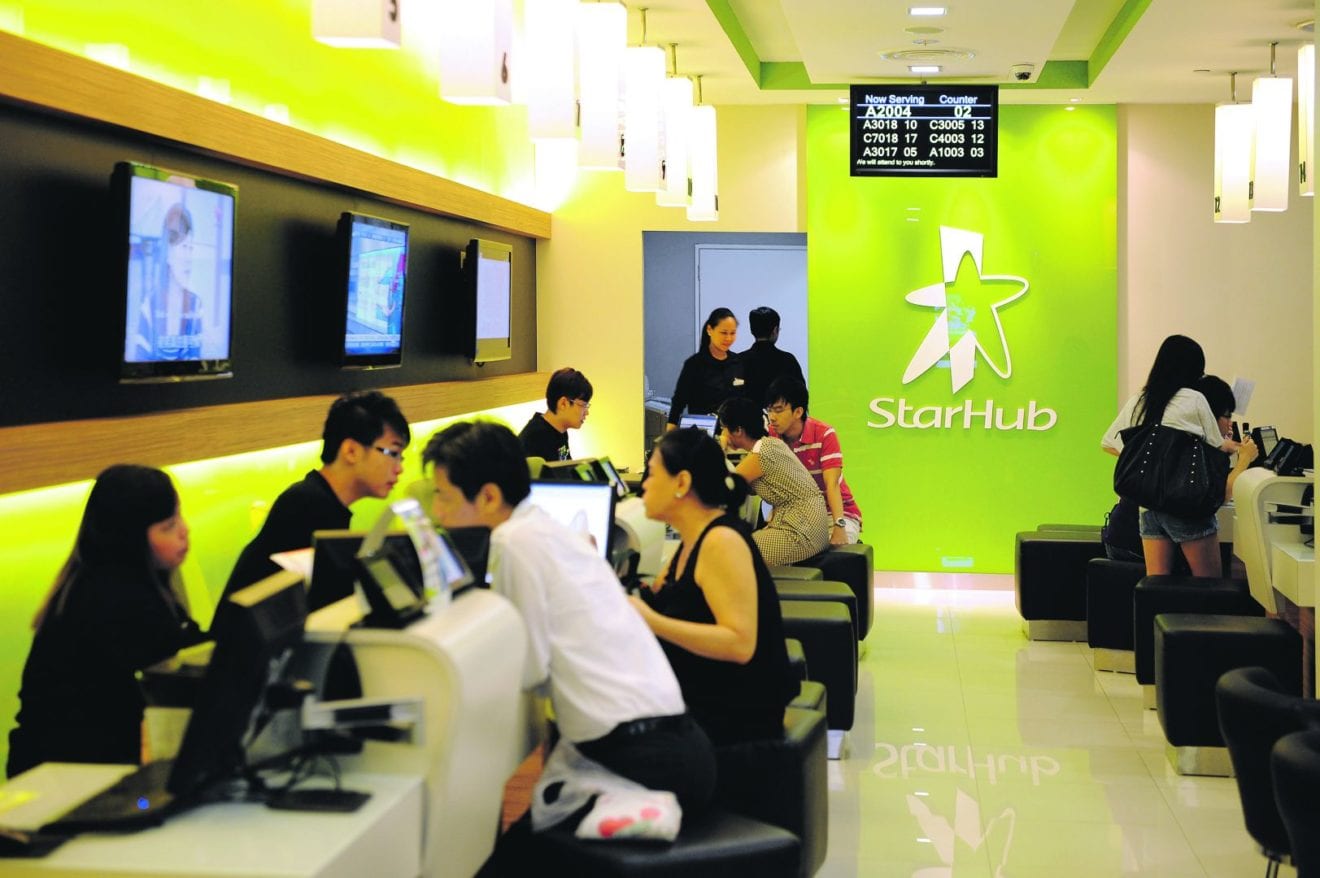
    Singapore’s M1 and StarHub are considering expanding their mobile infrastructure sharing arrangements to gain a greater competitive edge against new market entrant TPG Telecom.

    The companies announced they have signed a memorandum of understanding covering the evaluation of potential further collaboration in network infrastructure sharing.

    M1 and StarHub have been sharing infrastructure including combined antenna systems, in-building fiber and tunnel cables for many years.

    Now the operators are exploring a deeper collaboration focused on sharing radio access network, backhaul and access assets.

    The collaboration is aimed at enabling both operators to optimize the use of a number of network elements while improving coverage and capacity for customers. The companies plan to continue to manage network traffic independently.

    StarHub CEO Tan Tong Hai said pooling network resources will allow both operators to roll out more cost effective next-generation networks to manage the exponential growth in demand for mobile data.

    “We are cooperating to bring the Singapore infocomm industry to the next level, to compete not on pure infrastructure ownership, but at a higher level of customer service and innovative value creation,” he said.

    “Sharing mobile network radio elements with M1, but keeping our individual mobile core networks, will allow StarHub to provide better mobile service (in particular, mobile coverage) and still be able to differentiate ourselves.”

    M1 CEO Karen Kooi added that the agreement could lower both operators’ operational and capital expenditures, allowing them to invest in the future technologies needed to keep Singapore at the forefront of the ICT industry.

    Singapore recently granted a fourth mobile license to TPG Telecom, after the Australian fixed line operator won a new entrant spectrum auction with a bid of S$105 million ($72.8 million).

    The terms of the allocation call for TPG to provide nationwide street level 4G coverage within 18 months of the license coming into effect, meaning the company will soon be a competitive threat for StarHub, M1 and incumbent Singtel.

  • Viettel-led consortium gets Myanmar telecoms license

    Viettel-led consortium gets Myanmar telecoms license

    Myanmar has formally awarded its fourth and final nationwide telecoms license to a joint venture consisting of Vietnamese military-run operator Viettel and local ICT companies.

    The consortium has been awarded a 15-year license to offer nationwide services in a move sure to heat up competition in the burgeoning market.

    The joint venture will be named Myanmar National Tele & Communications, and will compete against existing operators Telenor Myanmar, Ooredoo Myanmar and the joint venture between Myanmar Post and Telecom and Japan’s KDDI.

    Viettel was selected as the foreign partner for the new telecoms consortium in March last year, but the license has only now been allocated.

    Under the terms of the consortium agreement, Viettel will hold a 49% stake, while local companies Myanmar National Telecom Holding Public and Star High Public Company will own 23% and 28% respectively. Viettel has committing to investing around $1.5 billion in Myanmar’s telecoms sector.

    The report cites Myanmar’s Minister for Transport and Communications Thant Sin Maung as stating that the new operator “will help advance telecommunication in townships, rural mountain towns and will contribute to improving transportation, healthcare and education necessary for the people living in rural areas.”

  • LG U+ deploys Korea’s first NFV routing system

    LG U+ deploys Korea’s first NFV routing system

    South Korea’s LG U+ has deployed the nation’s first carrier-grade virtual routing system using technology from Juniper Networks, as part of efforts to prepare its network for the 5G evolution.

    LG U+ is deploying Juniper Networks’ Ethernet switches and its vMX virtual router for the upgrade project.

    The operator selected Juniper due to its prior experience with the vendor’s routing equipment, as well as the vendor’s support for OpenStack-based NFV orchestration and expertise in the NFV segment.

    Juniper was also able to meet the operator’s resiliency requirements with its virtual routing solution’s  auto recovery and auto healing functions.

    Juniper worked closely with LG U+ on the integration of the system with existing infrastructure and devices. The operator also enabled IPv6 routing, anti-hacking and anti-DDoS attack services in LG U+’s NFV infrastructure, and additional features may be aadded in the future.

    “We are very excited about Korea’s first commercial launch of a carrier-grade NFV-based router,” LG U+ GM for transport platform development Jae-ho Choi said.

    “I believe this will enable us to not only drastically improve our routing performance, but provide greater stability and a more diverse range of services for our customers. As a leader of the 5G era, LG U+ plans to expand the adoption of NFV equipment in close, continued cooperation alongside Juniper Networks.”

  • Thai NBTC to relax per-second 4G billing condition

    Thai NBTC to relax per-second 4G billing condition

    Thailand’s telecoms regulator has relaxed an earlier directive requiring per-second billing for 4G services to only require operators to bill half of a service on a per-second basis.

    The National Broadcasting and Telecommunications Commission’s (NBTC) telecoms committee has decided to change the directive to no longer require operators to charge entirely on a per-second basis.

    Although the initial per-second requirement was introduced May last year, the NBTC has yet to enforce it because it has proven unpopular with affected operators.

    Operators have been resisting the move to per-second billing on the grounds that it would unfairly penalize customers that have signed up to fixed allocation or unlimited call or data plans, stating that charging per second would cost heavy usage customers more than the bucket plans.

    The NBTC requirements would cap 4G tariff rates at 1.13 satang ($0.0003) per second. The requirements were a condition of the 4G mobile broadband licenses issued to AIS and TrueMove last year. Second-ranked Dtac is not required to comply.

    AIS has reportedly warned that the company would have to abolish their existing tariff plans if the directive is enforced, while True Move is appealing the directive in court.

  • Internet in Việt Nam expected to be slow until Tết

    Internet in Việt Nam expected to be slow until Tết

    Internet connectivity in Việt Nam will remain slow for the next two weeks. The Asia-America Gateway (AAG) submarine cable broke once again on Sunday, causing bandwidth loss from Việt Nam to Hong Kong, Singapore and the US.

    The line that snapped on Sunday was 98 kilometres off the coast of southern Bà Rịa-Vũng Tàu Province.

    The repair ship will not be able to access the waters where the damaged cable is located till January 23, VietnamPlus reports.

    Welding is expected to start on January 25 and last until January 28.

    The cable will be buried and the connection will recover by January 29. However, the repairs may last longer if the weather is bad.

    In 2016, the 20,000km-long AAG cable was disrupted four times and maintenance work had to be undertaken in March, June, August and September.

    The AAG, one of the four intercontinental internet cable systems of Việt Nam and the largest, is used by major local providers, namely, FPT Telecom, VNPT, Viettel and SPT.

    The AAG cable came into use in November 2009, directly connecting Southeast Asia and the United States. It also links Southeast Asia with Europe, Australia and Africa.

    Previously, the Intra Asia cable system snapped and the damage was spotted near Hong Kong on Tuesday. However, the issue was resolved the same day.

    However, the system faced trouble again on Wednesday causing discontinuation in connection from Việt Nam to Hong Kong, Singapore and the US, affecting Internet speed in Việt Nam.

    Network providers will expand transmission channels to ensure connectivity this year. The Asia-Pacific Gateway undersea cable system is expected to help double the country’s internet traffic to other countries.

    The Asia Africa Euro 1, connecting Asian countries to Europe and Africa, is also under construction and is expected to become operational this year.


  • 1-Net, Burst plan Singapore-Myanmar DC corridor

    1-Net, Burst plan Singapore-Myanmar DC corridor

    1-Net and Burst Networks are collaborating to develop network connectivity between 1-Net’s data center in Singapore and Burst’s data center in Myanmar.

    The two data centers will be connected by a network operated by Campana Group consisting of two subsea and terrestrial routes.

    “This high-speed data center corridor is unprecedented and will support many value-added services on this platform. With this seamless connection and one network model both Burst and 1-Net are able to achieve the lowest latency and highest quality link for their customers,” Campana Group CEO Dr Myo Ohn said.

    Burst will also serve as Myanmar’s first Internet Exchange, connecting international networks to local operators and ISPs.  This exchange known as “Burst Connectivity Hub” will also support a Transmission Facility designed to host satellite and cable termination facilities and fully redundant systems as well as C-Band and Ka-Band satellite facilities.

    The projects form part of a wider agreement for 1-Net to provide operational support for Burst Networks’ Uptime Institute certified Tier IV data center at Thilawa Special Economic Zone (SEZ) on the outskirts of Yangon, the largest city in Myanmar.

    The aim is to support Burst Networks by providing the highest level of data center security, network best practices and reliability when they deliver their services to their clients’ mission-critical operations.

    “We are glad to work with Burst Networks to support their data center operations in Myanmar. It is 1-Net’s inaugural collaboration in Myanmar and we see the immense potential for data center business in this emerging market,” 1-Net Singapore managing director Wong Ka Vin said.