Category: Telecom

Retail News Asia is committed to providing both local and global retailers with the latest Telecom & Telco news throughout the Asian market. This on a daily base.

  • Philippines Senate plans major telco sector reform

    Philippines Senate plans major telco sector reform

    A Philippines Senate committee plans next year to draw up legislation that would reform the nation’s telecommunications industry.

    The Senate committee on economic affairs is considering reforms including granting more powers to regulator the National Telecommunications Commission (NTC), Rappler reported.

    Another proposed change involves removing the 40% owner restriction on overseas investments in telecommunications ventures to allow foreign players to more freely operate in the market.

    The committee is critical of the NTC’s recent decision to quickly review the planned sale of San Miguel Corporation’s telecoms assets, including its highly-prized allocation of 700-MHz spectrum, to the incumbent duopoly of Globe and PLDT.

    The committee aims to strengthen the NTC’s powers to protect consumers and promote healthy competition, while ensuring the regulator is independent.

    In terms of foreign investments, operators are currently classed as public utilities, limiting foreign investment to 40% and restraining the establishment of prospective joint ventures and the entry of new players.

    The committee is proposing to exclude telecommunications from the definition of a public utility, which would circumvent the need for a constitutional change to allow the liberalization of the nation’s telecoms sector.

    Even incumbents PLDT and Globe are supporting the proposal to open up telecoms to foreign players on the grounds that it would benefit both consumers and the industry.


  • Australia may revamp telecoms USO

    Australia may revamp telecoms USO

    Australia’s Productivity Commission has called for the current telecommunications universal service obligation (TUSO) scheme to be scrapped and replaced with a more future-proof regime.

    Currently the government has a deal to provide former state-owned operator and fixed line market leader Telstra $300 million per year to ensure fixed voice and payphone services are available to every Australian.

    Nearly $3 billion of the 20-year TUSO contract is provided by tax payers, with the remaining $3 billion provided by Telstra and rival operators. But these rivals have often complained about issues including a lack of transparency from Telstra over how it is spending the money.

    As with all other markets, fixed voice services have also been declining in popularity as mobile adoption reaches a saturation point.

    In a new report, recommended that the current TUSO scheme be replaced with a version that seeks to ensure all Australians have access to a baseline broadband connection including a voice service.

    The responsibility for meeting TUSO obligations would also shift from Telstra to the state-owned national broadband network (NBN), which is expected to be fully rolled out by 2020.

    “In a digital age, the current obligation — requiring Telstra to provide all Australians with access to basic fixed line telephones and payphones — is anachronistic and needs to change,” commissioner Paul Lindwall said.

    “Once rolled out to all Australians, the NBN will be the foundation on which a future broadband based telecommunications universal service policy should be built. A completed NBN, which provides broadband and voice services to all Australians, will make the current TUSO obsolete.”

    But the commission has acknowledged that there could be difficulties ensuring a basic broadband service is provided in areas only due to be served by the wireless and satellite component of the NBN.

  • Ooredoo Myanmar expands SIM registration channels

    Ooredoo Myanmar expands SIM registration channels

    Ooredoo Myanmar has added new channels for its subscribers to use to self-register, in line with a government directive that all SIMs in use in the nation be registered by next year.

    Customers now have four options for self-registering their SIMs.

    The four options involve dialing a dedicated hotline, downloading an application, using a call center with interactive voice response functionality or registering online via the Ooredoo website.

    Subscribers will also be able to visit an Ooredoo store and complete a registration with the assistance of a sales agent. They will need an NRC card, student ID or drivers’ license.

    Under a new mandate from the Ministry of Transport and Communications, all mobile SIM cards will need to be registered by the end of March. Any remaining unregistered SIMs will need to be deactivated after this date.

    The order brings Myanmar in line with a number of its peers in the Asian region also introducing mandatory SIM registration schemes, including Cambodia, Thailand and Pakistan.

    Thailand’s National Broadcasting and Telecommunications Commission is also calling for the introduction of a common regional SIM registration platform covering prepaid services in Thailand, Cambodia, Laos and Myanmar as a counter-crime measure.

  • CTG, Nepal Telecom to offer IP services in Nepal

    CTG, Nepal Telecom to offer IP services in Nepal

    China Telecom Global has teamed up with Nepal’s largest operator Nepal Telecom to jointly offer IP services to the Nepalese market.

    The companies will use the newly-launched Jilong-Rasuwa Gateway terrestrial cable linking China and Nepal to provide services to Nepal as well as transit services from India.

    The new China-Nepal route offers a new direct alternative route for traffic generated from Nepal and can provide low-latency connectivity for end-users in the market. In addition, the system could help improve Nepal’s internet connection speeds away from the capital Kathmandu.

    “China Telecom is dedicated to expanding our footprint by connecting with neighbouring countries,” China Telecom Global EVP Ou Yan said.

    “China Telecom has put tremendous effort into building the route through the Himalayas. We are committed to delivering a state of the art route for Nepal Telecom.”

    Nepal Telecom and China Telecom Global completed a project to lay fiber to the Nepal-China border in the first half of the year, setting the stage for an interconnection to China Telecom’s network.

    China Telecom Global has been aggressively pursuing international expansion this year. The operator also recently selected a data center to serve as a new hub in East Africa, connecting to its subsea cable network including the SEA-ME-WE 5.

  • Huawei forges 5G research partnership with BT

    Huawei forges 5G research partnership with BT

    Huawei has announced a partnership with UK-based operator BT to conduct joint research into potential new 5G applications.

    The companies will work at the BT Labs in Ipswich and other locations in the UK to explore aspects of 5G including future network architecture, a new air interface between devices and base stations, network slicing to proportion resources for specific services, 5G IoT applications and security technologies.

    The partners said they hope that the research will drive the development and industry-wide standardization of 5G technologies.

    “[Working with BT] we can explore the potential of 5G networks and analyze how this vital technology can best be delivered,” Huawei rotating CEO Ken Hu said.

    “The partnership also demonstrates Huawei’s continued commitment to partnering with world-leading business and academic organizations in the UK to further research and development. We have operated in the UK for 15 years and we look forward to continuing to help build a better connected UK in partnership with BT.”

    Huawei and BT have been collaborating on telecommunications R&D for 11 years. Most recently, the companies announced breakthroughs including a 3Tbps data transfer over BT’s core network, as well as research into 40Gbps speeds on the Openreach access network.

  • Telstra names Robyn Denholm COO

    Telstra names Robyn Denholm COO

    Telstra has named Robyn Denholm as its new chief operations officer, replacing Kate McKenzie, who retired in July after working with the Australian incumbent for 12 years.

    Denholm will assume her new role in early 2017, and will be based in Sydney. Acting COO Brendon Riley will return as group executive global enterprise and services while acting GES group executive David Burns will return as group MD network applications and services, Telstra said in filing Monday.

    “Robyn has been a senior executive and director in a range of complex technology environments which make her ideally qualified for the role, leading a highly capable team within Telstra,” Telstra CEO Andrew Penn said. “She also brings strong understanding of the Australian market and Telstra as the leading network provider, as Juniper has been a valued partner of Telstra.”

    Australian-born Denholm was most recently EVP, CFO and COO of Juniper Networks. She is a board member of renewable energy and electric vehicle company Tesla Motors and the Swiss robotics, power and automation technology company ABB.

    Denholm served at Juniper Networks from 2007 to mid-2016.  She joined Juniper after 11 years with Sun Microsystems most recently as senior vice president of corporate strategic planning.

    Hutchison Telecom HK appoints Cliff Woo as CEO, replacing Peter Wong

    Hutchison Telecommunications Hong Kong Holdings Limited (HTHKH) has appointed Cliff Woo Chiu-man (pictured) as new chief executive and executive director, with effect from January 1, 2017.

    Woo, 62, will succeed Peter Wong King-fai, who will retire from his position on the same day, after working for the company for over 20 years.

    A 30-year telecoms veteran, Woo is currently serving as chief technology officer of Hutchison Asia Telecom Limited and director of Hutchison Telecommunications (Australia) Limited.

  • Airtel investing in cable to Myanmar

    Airtel investing in cable to Myanmar

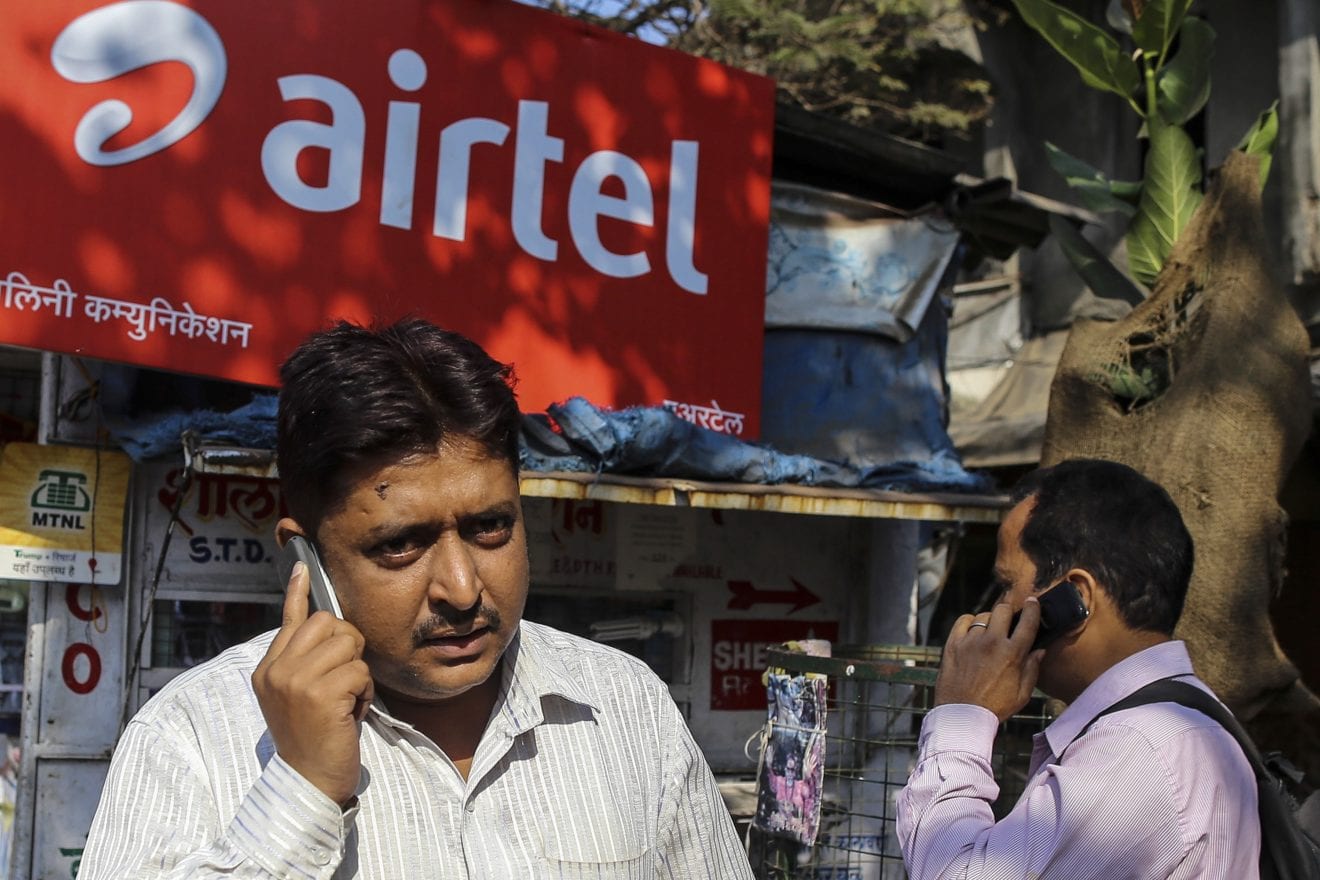
    India’s largest mobile operator Bharti Airtel has announced it is investing in a new fiber cable between India and Myanmar.

    The operator plans to use the new fiber asset to offer end-to-end connectivity solutions in the Myanmar market.

    The 6,500km terrestrial cable will connect to Airtel’s landing stations in Chennai on the east coast and Mumbai on the west.

    Bharti Airtel CEO for global voice and data Ajay Chitkara told the publication that Myanmar is experiencing strong uptake of digital services as one of the last major growth frontiers in Asia, and the company aims to take advantage of that growth by introducing new connectivity services.

    Myanmar liberalized its telecoms sector in 2011, resulting in a rush of foreign entrants into the market and strong subscriber growth and development.

    But Telenor Myanmar, which launched services in September 2014 after securing one of two mobile licenses allocated through a tender process following the opening up of the sector, believes that the market’s hyper growth era has now ended.

    News of the terrestrial cable project came as China Telecom Global and Nepal Telecom announced they have linked China and Nepal through the Himalayas and plan to use the new terrestrial cable to offer IP services to the Nepalese market.

  • Nokia intros open templating system for virtual networks

    Nokia intros open templating system for virtual networks

    Nokia has published the industry’s first complete templating system for VNF lifecycle management, designed to streamline and automate VNF onboarding, integration and lifecycle management processes.

    The company said  today’s methods for managing VNF lifecycles – instantiating, monitoring, repairing, scaling, updating and backing-up – are costly, cumbersome and time-consuming.

    To address this, Nokia said it has developed an open templating system, aligned with the latest industry standards and open-source tools, to streamline these processes.

    The template specifications allow service providers and VNF suppliers to take advantage of the automated lifecycle management capabilities of the Nokia CloudBand Application Manager, enabling them to integrate more VNFs faster while reducing the cost and time required to manage VNFs in the cloud.

    Nokia’s open templating system builds upon the ETSI NFV specifications (IFA011 and IFA014), Topology and Orchestration Specification for Cloud Applications (TOSCA) specifications and OpenStack tools. It provides key functionality to service providers, including VNF definitions for better integration and added support of complex structures, and eliminates the need for customization when providing VNF information to a generic VNF Manager and NFV Orchestrator.

    By supporting both Nokia and third-party VNFs, the system gives service providers a much wider selection of virtualized network services they can offer subscribers.

    Nokia is currently collaborating with fellow members of ETSI and TOSCA to complete development of VNF templating standards to benefit the entire industry.

    Ron Haberman, head of Nokia’s CloudBand product unit, said, ”One of the goals of NFV has been to foster an open ecosystem of VNF suppliers to give service providers maximum choice in the capabilities they integrate, and to offer subscribers the best available services.”

  • Spark deploys 200G OTN technology

    Spark deploys 200G OTN technology

    New Zealand’s largest operator Spark has deployed the market’s first 200G per wavelength production fiber link using equipment from Nokia.

    The operator’s new 200Gbps network link connects its core network with the global gateway, and will co-exist with Spark’s existing 10G and 100G channels.

    Spark general manager of networks Colin Brown said the upgrade is aimed at meeting massive growth in demand for bandwidth in an increasingly digital world.

    “Nokia has helped Spark NZ reach a new milestone with our world-class optical transport network, achieving our vision of a data-driven future for New Zealand and underpinning an integrated network including fiber, 3G, 4G, 4.5G, wireless broadband and Wi-Fi,” he said.

    Spark is using Nokia’s optical transport network technology. The vendor said it has now shipped its 200G solution to more than 88 customers worldwide, and demand is growing rapidly as operators see the benefits of 200G 8x quadrature amplitude modulation (8QAM).

    “Like many operators, Spark has faced relentless growth in bandwidth demand, largely driven by an increase in video streaming by business and consumer users,” Nokia head of Oceania Ray Owen said.

    “By taking a flexible approach to this challenge with New Zealand’s first 200Gbps fiber link, together with Nokia, Spark is well placed to meet continued demand growth while meeting existing user expectations.”

  • Optus secures $30m Suretek contract

    Optus secures $30m Suretek contract

    Australia’s Optus announce it has secured an A$40 million ($29.7 million) contract extension to continue to provide networking services for specialist security provider Suretek.

    Under the agreement, Suretek’s 1345 Surecall services will be delivered via the Optus network through to the end of 2020.

    Optus, Singtel’s wholly-owned Australian subsidiary, will provide Suretek with inbound voice as well as fixed and wireless data services.

    Suretek provides security services including wireless alarm communications, remote video monitoring and redundancy assurance services.

    “We are delighted to extend our relationship with Suretek as they continue to deliver innovative services to the security industry,” Optus managing director John Paitaridis said. “We look forward to collaborating with Suretek on developing ways to deliver innovative security services.”

  • BT partners with DCI on Indonesia cloud venture

    BT partners with DCI on Indonesia cloud venture

    BT, DCI Indonesia, and Equinix, a DCI partner, announced that they are working together to provide private cloud infrastructure in Indonesia.

    The companies said by using BT’s private cloud solutions as part of the BT Compute portfolio, enterprises active in Indonesia will now be able to reap the full benefits of the cloud to realise their digital transformation, launch new services more rapidly, mitigate risks, reduce costs and focus on business growth.

    The combination of BT and DCI data center capabilities also enables international businesses expanding into Indonesia to accelerate market entry, as they no longer need to invest time and resources to set up their own data center infrastructure and deploy business critical applications.

    Ron Totton, Southeast Asia managing director, BT, said, “Indonesia is a promising market for BT, where demand for private cloud and data center services is growing fast, especially in sectors such as finance, energy, and the telecom industry.”

    “This collaboration with DCI builds on our Cloud of Clouds portfolio strategy and is aligned to our ambition to be the world’s leading cloud services integrator. This will help give BT customers a competitive advantage in Indonesia and beyond,” Totton said.

    Through this collaboration, BT becomes the first global networked IT services provider to offer private cloud infrastructure in Indonesia. BT will be hosting its Point of Presence in DCI’s data center. By using the BT Private Compute platform, businesses can run a full range of applications, from network and storage to computing and security without having to invest into their own cloud infrastructure.

    DCI Indonesia is the only tier-IV data center service provider in Indonesia providing the most stringent service level agreement of 99.999% uptime through dual configuration infrastructure that ensures redundancy.

    Marina Budiman, president director of DCI, said “DCI is well-positioned to support the BT Private Compute platform.”

    “With DCI’s fault-tolerant infrastructure, strong financial ecosystem and global interconnection through Equinix’s Cloud Exchange, we believe our collaboration will provide BT’s customers with the best-in-class service in Indonesia,” Budiman said .

    Last year, BT was awarded the Siskomdat license, enabling it to offer its portfolio of networked IT services and applications directly to customers in Indonesia.

    DCI Indonesia has zero history of downtime since the first time it serves the market. This exceptional performance comes from solid experience from industry players with more than 20 years of experience in information technology, data center services and infrastructure management.

  • Japan tech firms start Lao PDR data center project

    Japan tech firms start Lao PDR data center project

    Toyota Tsusho, Internet Initiative Japan, and Mitsubishi UFJ Morgan Stanley Securities announced the start of a joint demonstration project in the Lao PDR.

    The firms said the project is aimed at evaluating the effectiveness of greenhouse gas emission reduction effect and energy efficiency using advanced container-type data center technology.

    Lao PDR’s first government-operated eco data center was completed in Vientiane on November.

    With integrated cloud infrastructure and security solutions, the new data center will serve as a cornerstone of Lao PDR’s IT foundation and contribute to the development of e-government applications for their people.

    Additionally, the data center will be utilized for training future generations of IT engineers, industrial development and for a broad range of other initiatives. By operating the data center, the Lao PDR government also aims to strengthen its IT governance.

    This data center is also expected to serve as a springboard for the maturation of the local IT industry, encouraging Japanese-related companies to expand their IT business in the country.

    The highly energy efficient data center leverages IIJ’s IT/cooling all-in-one packaged design “co-IZmo/I.”

    This design approach made it possible to complete the data center in just 7 months after construction began in May 2016 (about one-third the time typically required for conventional building-type data centers).

    This project is conducted on the basis of the commission by the New Energy and Industrial Technology Development Organization (NEDO), as part of its Global Warming Mitigation Technology Promotion Project selected in July 2015.

    The governments of Japan and Lao PDR have signed the bilateral document concerning the Joint Crediting Mechanism.

  • Ericsson, 20th Century Fox ink feature film deal

    Ericsson, 20th Century Fox ink feature film deal

    Ericsson has entered int o an exclusive, multi-year feature film deal with leading international content distributor 20th Century Fox Television Distribution for its subscription video on demand (VOD) service, Nuvu.

    The output deal includes 20th Century Fox-produced titles along with an extensive selection of global film franchises for territories across sub-Saharan Africa in multiple language.

    Titles include The Maze Runner, The Devil Wears Prada, Rio 2, Dawn of the Planet of the Apes, The Fault in Our Stars, The Monuments Men, and Kingsman: The Secret Service, as well as film franchises such as Die Hard and X-Men.

    “Through this partnership, Nuvu subscribers will have access to some of Hollywood’s hottest films as part of their package, localized on a market-by-market basis,” said Thorsten Sauer, head of broadcast and media services at Ericsson.

    The built-in ability to distribute content to consumers during off-peak periods is a core feature of the service. This minimizes data costs for both operator and consumer, addressing the key cost challenge that has so far been an obstacle for VOD uptake in Africa.

    Further, Ericsson has signed an exclusive media delivery services contract with Australian public service broadcaster, Special Broadcasting Service (SBS).

    The contract sees Ericsson aggregate, prepare and deliver content from multiple international content owners and distributors through its broadcast and media services hub in London and deliver media assets directly into SBS’s headquarters in Sydney in a format ready for transmission.

  • Singapore Slingers seals three-year broadcast deal with StarHub

    Singapore Slingers seals three-year broadcast deal with StarHub

    Slingers and StarHub have entered into a partnership that will see the pay TV operator become the official broadcast partner of the Singapore Slingers for three years starting with the upcoming ASEAN Basketball League (ABL) season.

    All of the Slingers’ matches in the ABL will be shown “live” on StarHub’s free sports channel, Hub Sports Arena (StarHub TV Channel 112/205). Non-StarHub TV customers can also watch the channel by connecting their TV sets to a cable point and turning to 76.25MHz.

    In addition, the games will be accessible on smart devices through StarHub’s online streaming service, StarHub Go.

    “This broadcast agreement with StarHub is poised to give the team a massive boost as our games can now reach a wider audience,” said Michael Johnson, general manager of the Singapore Slingers. “After coming so close to winning the league last season, we believe we are poised to go on another championship run, and our fans will be able to follow us more closely with this partnership.”

    Lee Soo Hui, head of content and TV at StarHub, said that being a homegrown brand, they are proud to back the Slingers.

    “The team is fueled by the support of the fans which is why we are making it as convenient as possible for them to follow the Slingers,” said Lee. “With this partnership, Slingers fans can now catch the team’s ABL matches ‘live’ on multiple platforms across TV, tablets and smartphones, so they can cheer the team on wherever they are.”

    She said StarHub will also be looking to engage fans by running contests where viewers can stand to win premiums and tickets to Slingers matches.

    Now into its seventh season, the six-team ABL welcomes three new teams to the league – Alab Pilipinas (Philippines), Hong Kong Eastern Long Lions (Hong Kong) and Kaohsiung Truth (Taiwan). They will be joined by the defending champions Westports Malaysia Dragons (Malaysia), Singapore Slingers (Singapore) and Saigon Heat (Vietnam).

    Each of the six teams will face each other four times during the three-month elimination round. The top four squads with the best record will then enter the playoffs.

    Meanwhile, StarHub TV in partnership with Astro Malaysia, is launching Go Shop (StarHub TV Channel 110), a 24-hour, Mandarin shopping channel that will also be made available on StarHub Go, StarHub’s video streaming service, by early next year.

    To entice consumers, Go Shop will introduce special offers on TV through innovative bundling that cannot be found anywhere else. It aims to offer value by combining the main product with other product lines to complement the core offering.

  • IMDA investigating Singtel broadband outage

    IMDA investigating Singtel broadband outage

    Singapore’s Infocomm and Media Development Authority (IMDA) is investigating Singtel over a recent nearly 24-hour broadband outage islandwide.

    Singtel announced the outage commenced at around 8:45am on Saturday and services were fully restored at 8:25am on Sunday, although some customers were still reporting connection problems.

    The operator said on social media that its engineers are still tracing the cause of the outage, which was associated with servers being unable to assign IP addresses to customers’ modems. TV, fixed phone and mobile services remained unaffected.

    Engineers have so far ruled out a DDoS attack, indicating that the company did not face a Mirai-linked attack of the kind that left a significant portion of customers of Germany’s Deutsche Telekom without services late last month.

    Singtel announced it will provide affected broadband customers with a 10% discount on their month’s bill, and the company will waive mobile data charges accrued over the weekend for its joint broadband and mobile subscribers.

    In a statement, the IMDA said the regulator takes service outages seriously and will be investigating both the cause of the incident and the service recovery measures taken by Singtel.