Category: Telecom

Retail News Asia is committed to providing both local and global retailers with the latest Telecom & Telco news throughout the Asian market. This on a daily base.

  • India grants demonetization exemption for prepaid credit

    India grants demonetization exemption for prepaid credit

    The Indian government has made a special exception to temporarily allow demonetized 500 rupee notes for the purchase of prepaid top ups in response to a sharp decline in purchases.

    The government enacted legislation earlier this month to declare the use of 500 rupee and 1000 rupee banknotes invalid as part of a crackdown on counterfeiting and black market money.

    New 500 rupee and 2000 rupee banknotes have been issued to exchange the old currency, but the policy led to a cash shortage in the country.

    In response to lobbying from GSM industry body the Cellular Operators’ Association of India (COAI), the government has added prepaid top-ups up to the list of essential services allowed to accept the old banknotes.

    Consumers will be able to pay for top-ups up to a maximum of 500 rupees using the old notes until December 15.

    The mobile industry had been seeking for the exemption to apply to both prepaid and postpaid services, and for the old 1000 and 500 rupee notes, but the government has approved the exemption only for prepaid purchases and 500 rupee notes, the report adds.

  • PLDT, Globe agree to cut interconnection rates

    PLDT, Globe agree to cut interconnection rates

    The Philippines’ two major telecom operators – PLDT and Globe Telecom – have agreed to reduce their voice interconnection rates to bring down the price of domestic mobile and fixed line calls in the country.

    Department of Information and Communications Technology (DICT) Secretary Rodolfo Salalima and National Telecommunications Commissioner (NTC) Gamaliel Cordoba witnessed the signing of the memorandum of agreement.

    The NTC said the decision to lower interconnection rates is in line with efforts to reduce communications costs, maintain and foster fair competition in the telecommunications industry as well as to make mobile voice service more affordable to the public.

    Under the agreement, the two companies committed to taking steps to lower retail rates for voice and to maintain a grade of service (GOS) in interconnection. This means ensuring that there is sufficient telecommunications circuits or routes for efficient transmission of calls.

    “We are confident that a reduction in the cost of interconnection for voice calls will eventually redound to a more robust economy, providing our customers with an affordable and easily accessible way of communication,” Globe chief technology and information officer Gil Genio said.

    The reduction of interconnection rates, however, will not affect international calls.

    The NTC has earlier issued a memorandum circular mandating a 38% reduction in the interconnection rate between the two networks, which should take effect not later than January 1.

    “We are supporting government’s efforts to bring down the cost of telecom services in the country. This agreement will translate in different ways to more affordable voice call rates for our subscribers,” PLDT director and head of regulatory affairs and policy office Ray C. Espinosa said.

    The interconnection rate for voice calls between the telco firms will be reduced to 2.5 pesos ($0.12) per minute across-the-board starting January 1, 2017. At present, mobile to mobile and landline to mobile voice calls cost 4 pesos per minute while mobile to landline voice calls cost 3 pesos per minute.

    PLDT Chief Revenue Officer Eric Alberto added that improving voice services will provide customers more options to connect with their family and friends, at home or on the go.

    The memorandum of understanding will serve as a guide to amending previous interconnection agreements.

    Earlier, the two telecommunication companies called on the government to streamline government policies and regulations to speed up the deployment of broadband infrastructure in the country.

    “We are calling for a national consensus to harmonize policies and regulations in support of building digital data infrastructure. We also hope to deepen understanding of our people, at the community level, how vital telecoms infrastructure are to our lives. When these facilities are damaged or stolen, this harms our welfare as surely as when roads and bridges are washed away,” said PLDT and Smart Communications Senior Vice President for Network Services Mario G. Tamayo in a speech at a summit hosted by the DICT.

    In anticipation of the continued growth of data traffic and digital services in the country, PLDT said it plans to increase the capacity of its data infrastructure by ten times come 2020.

    For 2016 alone, PLDT has allocated 48 billion pesos ($963.5 million) capital expenditure to fortify and expand its fixed and wireless networks, including the utilization of its recently acquired 700-MHz spectrum.

    Meanwhile, Globe Telecom emphasized the need for more cell sites in the country taking into account dramatic rise in mobile data demand. Genio pointed out the company’s quarterly data traffic increased exponentially to 98 petabytes in the third quarter of the year from only 9 petabytes in the first quarter of 2013 amid growing customer propensity for multi-media content.

  • Smart Axiata deploys SMS spam filtering suite

    Smart Axiata deploys SMS spam filtering suite

    Cambodia’s Smart Axiata announced it has deployed an SMS spam filtering and A2P SMS monetization platform from 365squared for its more than 8 million customers.

    The operator is using the 365secure service to continuously monitor and filer SMS traffic from any source on a round-the-clock basis. The service is designed to detect and block fraudulent SMS messages delivered through gray routes.

    Smart will also be able to use the service’s proprietary 365analytics software to conduct detailed traffic analysis and reporting. The implementation was conducted by 365squared last month.

    “Spam messages are disliked by everyone. The partnership with 365squared stands on our desire to strengthen customer relationships based on trust,” Smart Axiata CEO Thomas Hundt said.

    “By filtering intrusive and uninvited messages we provide to our customers peace of mind and therewith step up our customer experience efforts further.”

    Smart Axiata launched LTE services in January 2014, and has now expanded the network to cover 25 key provincial capitals as well as other key cities. The company’s combined 2G, 2.5G, 3G, 3.75G and 4G mobile network covers more than 98% of the Cambodian population.

  • Hong Kong consumers oppose spectrum fee hike

    Hong Kong consumers oppose spectrum fee hike

    PCCW’s HKT is opposing a proposal by the SAR government to raise the spectrum utilization fee for all mobile operators, publishing research indicating that a wide majority of consumers oppose the suggestion.

    Research commissioned by HKT and conducted by Policy 21 suggests that 72.8% of consumers believe a fee increase that the operator said would be likely in the event the government raises spectrum prices would be unacceptable.

    Hong Kong mobile users currently pay a fee of HK$18 per month covering contributions towards mobile license, administration and MTR and tunnels expansion costs, and operators are likely to raise this fee if their spectrum costs increase.

    Of the remaining 17.4% of respondents who consider a fee increase acceptable, 84.7% would only accept an increase of HK$10 or less per month.

    The government’s proposed fee increase would be implemented on the expiry of existing 900-MHz and 1800-MHz licenses, and would affect 40% of the total amount of spectrum currently assigned to mobile operators.

    HKT presented the findings yesterday at an industry forum organized by the Hong Kong General Chamber of Commerce. Consultancy firm Network Strategies also used the event to unveil a study into the optimal price of spectrum in Hong Kong.

    “In comparison with international benchmarks, the reference prices are very high. Use of these reference prices for setting reserve or fixed prices may lead to artificially high SUFs which may have a distortionary effect on the market,” Network Strategies director and founder Dr Suella Hansen said at the forum.

    “With efficient spectrum pricing and sufficient spectrum allocation, incumbent operators may minimize costs to produce retail services efficiently, continue to invest and develop innovative services and products, all of which promote social efficiency. However, consumer welfare will not be promoted if the price of spectrum does not reflect its true market value.”

  • Huawei demos 5G-LTE dual connectivity for 4K VOD

    Huawei demos 5G-LTE dual connectivity for 4K VOD

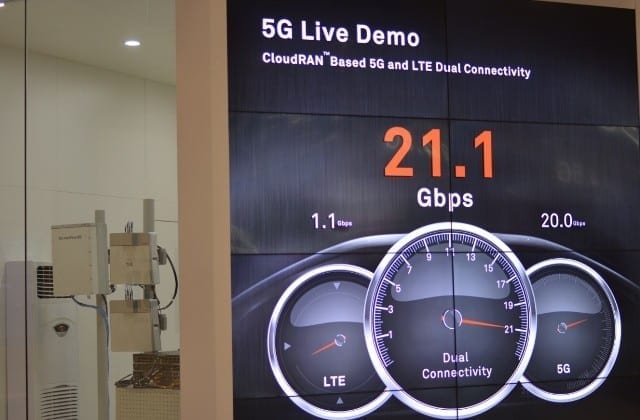
    Huawei has conducted a live demonstration involving 5G and LTE dual connectivity for a 4K video-on-demand service, achieving single user peak throughput of 21.1Gbps.

    At last week’s Global Mobile Broadband Forum, Huawei conducted a demonstration based on its CloudRAN architecture.

    With the development of new high-bandwidth services such as AR/VR and 4K video streaming and cloud-based services, Huawei said 5G new radio technologies will need to be deployed in central hotspots first to deliver the required capacity.

    LTE networks are meanwhile continuing to evolve with the introduction of new technologies including 3D Massive MIMO.

    Combining 5G and 4G networks has the potential to help operators protect their existing investments while improving network capacity, spectrum efficiency and coverage in urban areas.

    “It is of vital importance to guarantee end users with a ubiquitous high data rate experience in densely populated urban city areas with high buildings and complex roadways,” Huawei CMO of wireless network products Dr Yuefeng Zhou said.

    “Recently, 3GPP standardization has made significant progress in 5G and LTE dual connectivity. We expect to strengthen our cooperation with industry partners on 5G innovations based on these real application scenarios.”

  • Polycom extends use of Skype for Business UI

    Polycom extends use of Skype for Business UI

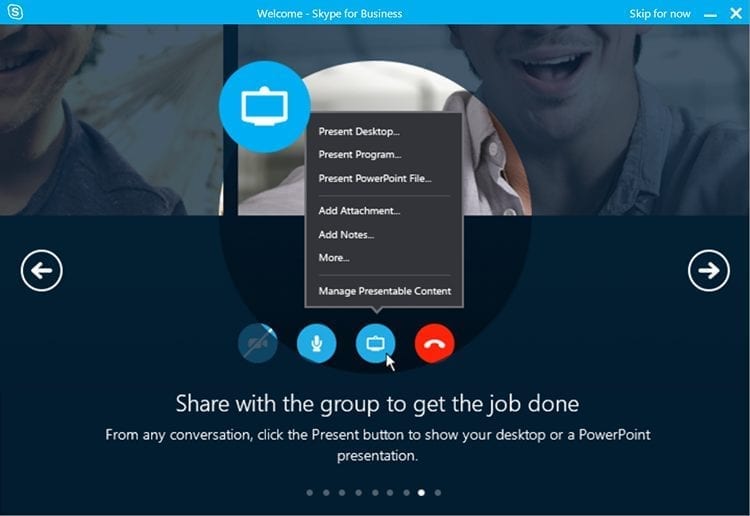
    Polycom has announced that the Polycom Group Series video endpoints and several of its voice solutions will include the Skype for Business UI.

    Many organizations are wanting to move to one interface for collaboration tools to make it easy for users to join calls from any endpoint or software application. Consistency of scheduling, joining and managing a collaboration session is critical to driving user adoption.

    In response to this demand, Polycom extending the Skype for Business experience beyond the desktop and mobile applications to voice and video solutions used in conference rooms and offices of all sizes.

    Customers can now schedule, dial and join a Skype for Business call from a greater number of endpoints, providing one extended Skype for Business experience.

    “Many organizations across the globe are moving toward consolidating their UC environments into a single interface to drive a consistent user experience and ease of use,” says Irwin Lazar, Vice President and Service Director, Nemertes Research.

    “The desire to enable a consistent method of scheduling collaboration sessions and a single-click to join meetings from any application and any location is a top priority.”

    In addition, Polycom has officially become a Skype Operations Framework partner and will assist customers with all facets of the Skype for Business lifecycle, including planning, deployment, adoption, and operations.

  • Vodafone India introduces cash out for M-Pesa

    Vodafone India introduces cash out for M-Pesa

    Vodafone India has introduced the ability for users of its M-Pesa digital wallet service to withdraw cash at any of over 120,000 Vodafone M-Pesa outlets nationwide.

    The company said its network of M-Pesa outlets is roughly equivalent to the number of bank branches in India. Over half (56%) of the outlets are located in rural India.

    Customers will need to provide proof of identity to withdraw cash at a branch. Withdrawals will be subject to availability and Reserve Bank of India guidelines.

    “Our customers can visit any of these outlets and use the unique cash out feature of Vodafone M-Pesa to withdraw cash from their digital wallet at their convenience,” Vodafone M-Pesa business head Suresh Sethi said.

    Vodafone’s M-Pesa service is available to both Vodafone and non-Vodafone customers, supports recharges using credit or debit cards via mobile or fixed broadband, and can be used to shop online or pay bills, send funds to family or friends and now withdraw cash.

    The operator has attracted over 8.4 million Vodafone M-Pesa customers since the service’s launch in India in 2011.

  • Myanmar plans 1800-MHz auction in March

    Myanmar plans 1800-MHz auction in March

    Myanmar plans to hold an auction for 1800-MHz spectrum in March next year, some three months later than initially expected.

    The Ministry of Transport and Communications will allocate spectrum to allow operators Telenor Myanmar, Ooredoo Myanmar and MPT to expand their 4G networks.

    The report cites the ministry’s deputy director of posts and telecommunications U Myo Swe as stating that spectrum will be made available to all operators equally.

    But it is unclear whether the planned fourth entrant into the market, the consortium between Vietnam’s military-run Viettel and a group of local ICT and other companies, will be included in the process.

    Myanmar’s mobile operators have been constrained in their efforts to roll out 4G services by a shortage of spectrum, and have been eagerly anticipating the release of 1800-MHz spectrum.

    Telenor and MPT had initially applied to take part in an auction of 2600-MHz spectrum,  but later decided to withdraw from the running and wait for the 1800-MHz allocation instead.

  • Globe deploys Amdocs’ Revenue Guard

    Globe deploys Amdocs’ Revenue Guard

    The Philippines’ Globe Telecom will deploy a revenue assurance platform from Amdocs to help minimize revenue leakage risks.

    Globe has selected the Amdocs Revenue Guard service, which provides automated and analytics-driven revenue assurance.

    The service uses technology developed by cVidya, which Amdocs acquired for $30 million earlier this year. It combines revenue assurance and fraud management software tools with professional services including risk analysis consulting, business analytics, training and IT operations.

    Globe will use the service across its line of business, and plans to take advantage of the consulting and training services provided.

    Revenue Guard can be deployed on-premise or as a cloud services under a variety of operating models, including SaaS, revenue share and KPI models.

    “The entry of a company of Amdocs’ magnitude to the revenue assurance space with its acquisition of cVidya is yet another proof of the increased importance of this domain for the industry as the world becomes increasingly digital,” Globe CFO Rizza Maniego-Eala commented.

    “By integrating the Amdocs Revenue Guard service into our data lake, we will be able to centrally analyze and effectively share data across the different parts of our business, optimizing revenue while keeping operational costs to the absolute minimum. We see this as an additional milestone in our transformation to become a digital service provider.”

  • Singtel appoints Mark Chong group CTO

    Singtel appoints Mark Chong group CTO

    Singtel has made two key appointments to strengthen its management team as the Singapore-based telco continues its multi-year transformation.

    Current CEO International Mark Chong (pictured) will take up the role of group chief technology officer, with Arthur Lang taking over his role, effective April 1, 2017.

    Chong will replace Tay Soo Meng, who is set to retire at the end of the financial year after serving Singtel for almost 50 years. Tay will take on an advisory role, the company said.

    In his new role, Chong will lead technology strategy and innovations across the group. Chong, a Singtel veteran of over 20 years, has held various key leadership positions, most notably EVP Networks in Singapore and COO of AIS in Thailand.

    Lang joins Singtel from CapitaLand Limited, where he was group chief financial officer for more than five years.  He will join the group in January with the task of growing Singtel’s regional associates across India, Indonesia, the Philippines and Thailand.

    Commenting on the appointments, Singtel Group CEO Chua Sock Koong said, “Given our global aspirations and a fast evolving business and technology landscape, we are reinforcing our leadership team as we prime our enterprise for our next phase of growth.”

    Both Chong and Lang, together with Samba Natarajan, CEO Group Digital Life, will join Singtel’s management committee, which oversees strategic direction and execution for the group.

  • Huawei announces mobile app X Labs

    Huawei announces mobile app X Labs

    Huawei has announced a new research platform that aims to bring together operators, technology providers and vertical industry partners to explore future use cases for mobile applications.

    The X Labs initiative will aim to encourage mobile operators to build application-centric networks and help establish an open industry ecosystem.

    The research platform is designed to explore three areas of mobile communications – people, verticals and the household, Huawei said. The mLab focuses on creating immersive user experiences for emerging mobile applications including live video, VR and AR.

    A second lab, vLab, focuses on ways mobile technology can enable digital transformation across all industries. The third is hLab, which will concentrate on connecting more households with smart home applications utilizing broadband connections.

    During a keynote speech announcing the initiative, Huawei rotating CEO Ken Hu said mobile applications are reshaping everything in the world.

    “I firmly believe that in the future, all services will be delivered through mobile applications,” he said. “I would say that we are living in a wild world of mobile applications.”

    Hu noted that when Apple’s App Store launched eight years ago, it had just 500 apps. It took just six years for that number to reach 1 million, and this figure doubled in another two years. Android app stores have even more apps – around 5 million.

    “At Huawei, we aim to support and enable the mobile ecosystem. We have made a lot of progress, and we want to do more,” he said.

  • Axiata Group 9M16 revenue grows 8.6%

    Axiata Group 9M16 revenue grows 8.6%

    Malaysia-based Axiata Group has reported an 8.6% growth in revenue for the first nine months of the year, due in part to strong growth from the South Asia region.

    Total revenue reached 15.8 billion ringgit ($3.55 billion), with ebitda up 13.4% to 6 billion ringgit. But net profit slumped 55.7% to 929 million ringgit due to one-off gains in the previous year, higher financing costs and increased forex losses from the weaker ringgit.

    For the third quarter, total revenue grew 2.8% quarter-on-quarter and 8.6% year-on-year to a record 5.5 billion ringgit, due largely to the performance of its newest acquisition, Nepal’s Ncell. Q3 represented the first full quarter of contribution from Ncell.

    Net profit reached 296 million ringgit, up 27.3% quarter-on-quarter but down significantly from 955 million a year earlier.

    Across Axiata’s operation, improvements were seen at domestic mobile unit Celcom and Indonesia’s XL for the third quarter, with service revenue at Celcom returning to growth after three consecutive quarters of declines.

    XL revenue grew 1.6% quarter-on-quarter and year-to-date net profit grew by over 100% mainly due to forex gains associated with the refinancing of XL’s US dollar debt to Indonesian rupiah.

    In South Asian markets, Ncell reported a 16.9% year-to-date profit growth, Sri Lanka’s Dialog posted a profit growth of 18.7% over the same nine-month period, but Bangladesh’s Robi reported a 1% decrease in normalized profit.

    “We are pleased with the improvements in revenue and EBITDA, although the Group performance continues to be affected by the weaker operating environment and increased competitive pressures across our markets,” Axiata chairman Tan Sri Azman Hj Mokhtar said.

    “We remain especially focused on management’s plans for recovery and turnaround strategies at XL and Celcom.”

    Axiata group CEO Tan Sri Jamaludin Ibrahim added that 2016 “2016 remains challenging for the group across most of our markets – particularly in Malaysia, Indonesia, Singapore and India where fiercer competition and rising capex have weighed in on overall performance and profitability.”

  • HKT to build fiber super highway for Hong Kong DCs

    HKT to build fiber super highway for Hong Kong DCs

    PCCW’s HKT has revealed plans to build what it is calling a “fiber super highway” connecting the Tseung Kwan O Industrial Estate (TKOIE) with the Chai Wan area.

    The Ultra Express Link will be a 3km high-capacity, low-latency subsea cable system spanning the Junk Bay. The cable system has a target ready for service date in 2017

    HKT group managing director Alex Arena said the system will provide additional diversity in connectivity for the multiple data centers in TKOIE, and serve to position the estate as Asia’s data center hub.

    “The building of Ultra Express Link demonstrates once again not only our leading position in solid fiber infrastructure in Hong Kong, but also our dedication to build Hong Kong into a regional data center hub,” he said.

    “The new cable, together with the existing extensive fiber infrastructure provided by HKT, will allow us to meet the rising demand for high speed and high capacity connectivity from data center operators.”

    Arena said HKT is the only operator to provide full fiber coverage in all data centers in Hong Kong with diversity paths in all data centers in TKOIE.

    HKT is a quadruple-play operator in Hong Kong serving both consumer and enterprise customers.

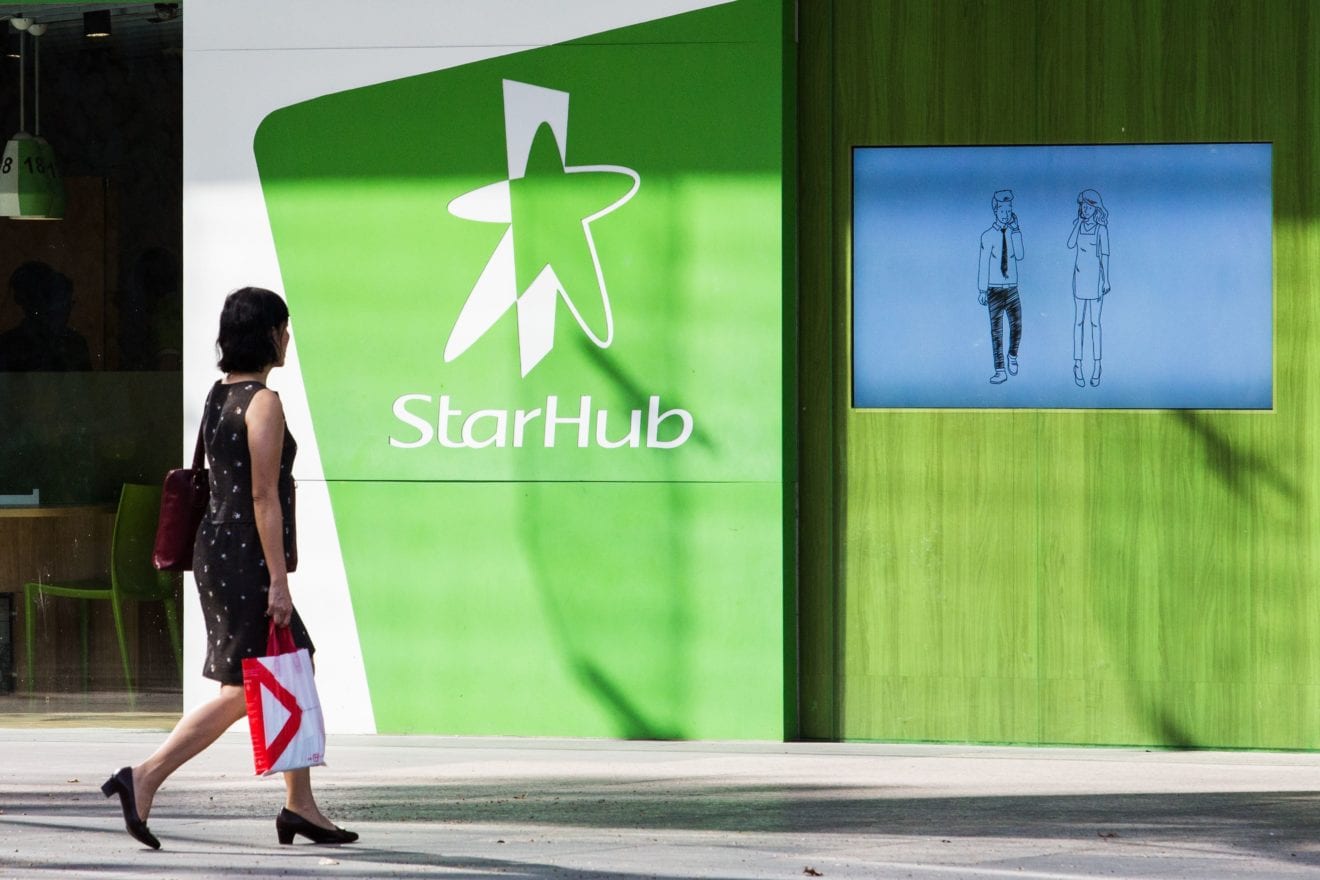
  • StarHub launches shopping channel

    StarHub launches shopping channel

    Singapore telco StarHub has launched a 24-hour Chinese language shopping channel called Go Shop in a deal with Malaysian pay-TV giant Astro.

    Singapore, 24 November 2016 This festive season, StarHub TV customers can look forward to an exciting round-the-clock shopping destination right at their fingertips. Starting tomorrow, StarHub TV, in partnership with Astro Malaysia, will be launching Go Shop (StarHub TV Channel 110), a 24-hour, Mandarin shopping channel. Go Shop will also be made available on StarHub Go, StarHub’s video streaming service, by early next year.

    Customers in Singapore can now immerse themselves in a shopping experience that is differentiated, hassle-free and convenient, anytime anywhere. Through Go Shop’s fun and informative TV demonstrations, customers can understand the benefits of each product in-depth as well as the value of the offer. The well-researched product demonstrations are specially tailored to cater to the preferences and lifestyles of Singapore’s consumers.

    Targeted at StarHub’s audiences as well as connected online and mobile shoppers in Singapore, Go Shop offerspremium and trusted international brands such as Finn Esker, HappyCall, Kloken and Shogun across various product categories from Living, Beauty, Fashion, Kitchenware and Home Appliances. New product categories such as Digital Electronics, Health and Wellness, Sports and Leisure will be introduced progressively.

    Go Shop is a joint venture between Astro Retail Ventures, a wholly owned subsidiary of Astro Malaysia, and GS Home Shopping, the global leader in TV home shopping. GS Home Shopping has international presence in nine countries such as South Korea, Malaysia, China and Russia. To celebrate its launch in Singapore, Go Shop will be introducing some of its global best-selling items on StarHub TV. These include Age 20s, an award-winning Moisture Compact Foundation from Korea, Hurom Slow Juicer which comes with a low speed rotation to preserve nutrients, and the Roichen Cookware set, made with a safe and natural stone coating.

    To entice consumers, Go Shop will introduce special offers on TV through innovative bundling that cannot be found anywhere else. It aims to offer unbeatable value by combining the main product with other product lines to complement the core offering. For instance, a set of Laneige sleeping masks can be bundled with other items from the same skincare line for a complete, value-for-money deal. Consumers can also look forward to special festive offers from time to time.

    Commenting on the launch, Ms Lee Soo Hui, Head of Content & TV, StarHub, said: “Shopping is a favourite pastime of Singaporeans, whether it is online or at the mall. Go Shop’s extensive catalogue, accompanied with detailed product demonstrations, will enable our viewers to make informed decisions before making that purchase from the comfort of their living rooms. With the upcoming festive season, the timely launch of Go Shop on StarHub TV will enable customers to get a head start on their Christmas shopping!”

    According to Go Shop’s Chief Executive Officer, Grace Lee, “Go Shop is excited to expand our wings to serve customers in Singapore, after seeing our service grow rapidly in Malaysia. We offer a differentiated shopping experience that gives our customers choice, convenience and peace of mind through our entertaining and informative product demonstrations, reputation for providing trusted international brands and products as well as great value from innovative product bundling and free delivery in a matter of days.”

    To make a purchase on Go Shop, customers can order online via www.goshop.com.sg. Payment can be made via selected credit or debit cards. The products will then be delivered to the customer within two to three days with no additional shipping fee. In addition, customers can shop with peace of mind, knowing that sales support does not end at the point of purchase. A group of specially-trained agents called Personal Go Shoppers, will be offering their assistance online or through Go Shop’s hotline around the clock. To start shopping, tune in to Go Shop on StarHub TV channel Ch 110 at 9am tomorrow.

  • Verint acquires OpinionLab to push digital customer engagement

    Verint acquires OpinionLab to push digital customer engagement

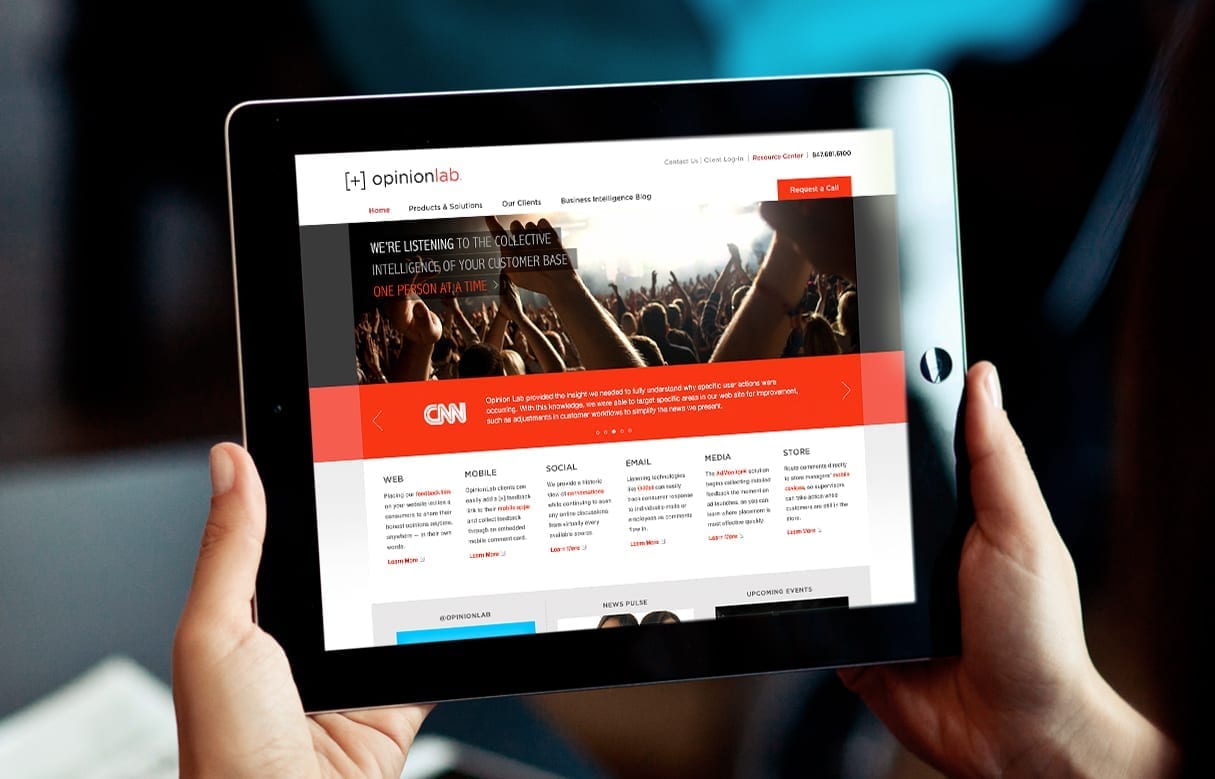
    Verint Systems has extended its Customer Engagement Optimization portfolio through its acquisition of OpinionLab, a provider of continuous voice of the customer listening solutions that drive smarter, real-time digital engagement.

    OpinionLab solutions are used by global brands to optimize web and mobile customer experiences and engagement.

    Voice of the Customer (VoC) solutions are becoming a strategic imperative, helping organizations measure and enhance experiences, satisfaction and loyalty.

    As more customer engagements follow a “digital-first” approach for conducting research and performing transactions, as well as solving problems, companies need to measure their customers’ digital experiences and quickly act on those insights to enhance both the customer experience and business performance.

    Through its acquisition of OpinionLab, Verint has extended its Customer Engagement Optimization portfolio to now include the ability to measure and act on digital customer experiences in-the-moment.

    With this addition, Verint has broadened its capabilities for listening, analyzing and acting on the VoC across all channels—digital, voice, text and social.

    “Capturing, analyzing and acting on the voice of the customer are critical for any organization in any industry,” says Elan Moriah, Verint’s president, for customer engagement solutions. “With the OpinionLab combination, we’re taking voice of the customer to a new level by giving organizations a complete solution for improving the customer experience across engagement channels.”