Category: Telecom

Retail News Asia is committed to providing both local and global retailers with the latest Telecom & Telco news throughout the Asian market. This on a daily base.

  • Revolutionizing Thai Industries: TrueBusiness Unveils ‘True AI Hub’ for Seamless AI Integration and Accelerated Transformation

    Revolutionizing Thai Industries: TrueBusiness Unveils ‘True AI Hub’ for Seamless AI Integration and Accelerated Transformation

    TrueBusiness is pledging to serve as a dependable ally for Thai businesses navigating the complexities of digital and AI transformation. The company has unveiled True AI Hub, an exhaustive AI platform engineered to address the AI needs of businesses both big and small. The platform is scalable to accommodate the needs of small, medium, and large enterprises, aiming to amplify their capabilities, expedite results, keep costs in check, and bolster competitiveness in an increasingly AI-centric business environment.

    The Innovation of True AI Hub

    True AI Hub is a revolutionary platform that makes AI adoption more accessible by offering superior performance, precision, and adaptability. It caters to a broad spectrum of business needs by granting access to over 50 AI models sourced from more than 10 premier AI platform providers. The hub was designed with user-friendliness in mind, boasting a web interface and an intelligent recommendation system that proposes the most fitting AI model and capability in accordance with the business’s objectives. This enables users to conveniently access a variety of AI models all in one place.

    One of the key features of the platform is its commitment to data security. It incorporates Algorithm Guardrail, a top-tier security mechanism designed to offer robust data protection. In addition, it includes an enterprise management system with features such as centralized monitoring, cost control, and security governance, all managed via a dashboard. True AI Hub presents an affordable monthly subscription model, with prices starting at only THB 399 per user per month, thus eliminating the need for hefty initial investments.

    A Word from the Chief Business Officer

    According to Dr. Teeradet Dumrongbhalasitr, Chief Business Officer at True Corporation Plc., working closely with businesses of all sizes has given TrueBusiness deep insights into their needs and challenges in business transformation and hastening AI adoption. These challenges often require investment in effective technologies capable of producing the right outcomes. As he explained, a single AI model is not enough to tackle today’s multifaceted business issues as each model has its strengths and weaknesses, whether in terms of data-type accuracy, processing speed, or creative capabilities.

    For this reason, TrueBusiness launched ‘True AI Hub’, an all-in-one AI platform that consolidates top-tier AI capabilities in a single location. Dr. Dumrongbhalasitr went on to say that, in conjunction with EGG Digital, Thailand’s foremost big data analytics provider, they utilize AI-driven technologies to analyze data with a deep contextual understanding of consumer challenges. This approach enhances True AI Hub’s ability to truly comprehend the unique context of Thai businesses, offering tailored AI solutions that precisely, effectively, and realistically meet their specific needs across all industries. He expressed confidence that True AI Hub will emerge as a powerful instrument that catalyzes and expedites comprehensive, end-to-end transformation for businesses in the AI era.

    Questions & Answers

    What does the True AI Hub aim to offer?
    True AI Hub is a comprehensive and scalable AI platform designed to meet the AI needs of small, medium, and large enterprises. It provides access to over 50 AI models, offers robust data protection, and features an enterprise management system.

    What makes True AI Hub user-friendly?
    True AI Hub features a user-friendly web interface and an intelligent recommendation system that suggests the most suitable AI model and capability based on business objectives.

    How does True AI Hub ensure data security?
    True AI Hub incorporates Algorithm Guardrail, an enterprise-grade security mechanism, to offer robust data protection. The platform also includes an enterprise management system with centralized monitoring, cost control, and security governance.

  • India Boosts Cybersecurity: Enforces New Compliance Rules on OTT Platforms and Smartphone Manufacturers

    India Boosts Cybersecurity: Enforces New Compliance Rules on OTT Platforms and Smartphone Manufacturers

    In a bid to enhance digital security due to increasing episodes of online fraud and mobile-related cybercrime, India has released two key directives. These new rules demand compliance from Over The Top (OTT) communication platforms and smartphone manufacturers.

    Ensuring Secure Communication

    The Department of Telecommunications (DoT) in India has instructed messaging platforms such as WhatsApp, Telegram, Snapchat, Signal, and Arattai to enable SIM binding within a 90-day timeframe. According to the Telecommunications (Telecom Cyber Security) Rules, 2024, these applications must remain connected to the mobile number and active SIM card of a user’s device. Moreover, web and desktop versions must log users out every six hours, requiring them to reauthenticate via QR code pairing. Non-compliance will result in penalties as stipulated by the Telecommunications Act.

    This decision has been made in response to the increasing number of cyber fraud cases involving OTT apps accessed without the corresponding SIM or from foreign locations. Such situations allow for identity spoofing and misuse. This order has been issued following nearly a year of discussions between government officials and OTT companies.

    Representatives of the industry have expressed concerns about the impacts on user experience and technical feasibility. They emphasized that not all platforms, particularly iOS, can consistently carry out SIM checks. They also warned about potential disruptions for legitimate uses, including eSIM and dual-SIM devices, international travel, small businesses relying on persistent desktop sessions, and elderly user accessibility. Companies are also unsure if SIM binding will effectively decrease fraud involving Indian SIM cards obtained through intermediaries.

    Demand for Preloaded Cyber Safety App

    On the same day, the telecom ministry of India issued another mandate for leading smartphone manufacturers including Apple, Samsung, Vivo, Oppo, and Xiaomi. They are required to preload the government’s Sanchar Saathi cyber safety app on all new devices sold in the country. Users will not have the option to delete or disable this app. Devices that are already in the supply chain must receive the app via software updates.

    Sanchar Saathi, launched in January, allows users to block and track lost or stolen phones, verify device authenticity, and detect fraudulent mobile connections. Government data reveals that the app has assisted in the recovery of over 700,000 phones, including 50,000 in October alone, and has facilitated the blocking of over 3.7 million lost or stolen devices. Additionally, more than 30 million fraudulent mobile connections have been disconnected using its systems.

    Questions & Answers

    What is the purpose of the new directives issued by India’s Department of Telecommunications (DoT)?
    The new directives aim to tighten digital security due to rising incidents of online fraud and cybercrime related to mobile devices. They introduce new compliance requirements for Over The Top (OTT) communication platforms and smartphone manufacturers.

    What measures are messaging platforms expected to implement under these directives?
    Messaging platforms such as WhatsApp, Telegram, Snapchat, Signal, and Arattai are required to implement SIM binding, which means these apps must remain linked to the user’s mobile number and active SIM card. Web and desktop versions of these apps must also log out users every six hours and require reauthentication through QR code pairing.

    What is the Sanchar Saathi app and why are smartphone manufacturers required to preload it on new devices?
    The Sanchar Saathi app is a cyber safety application launched by the Indian government. It allows users to block and track lost or stolen phones, check device authenticity, and identify fraudulent mobile connections. Smartphone manufacturers are required to preload this app on all new devices sold in India to enhance digital security.

  • StarHub and NeutraDC Collaborate on Quantum-Secure Connectivity, Boosting Regional Digital Ecosystem

    StarHub and NeutraDC Collaborate on Quantum-Secure Connectivity, Boosting Regional Digital Ecosystem

    StarHub, in partnership with NeutraDC, a division of Telkom Indonesia specializing in data centers, has announced the signing of a Memorandum of Understanding (MoU). The agreement is set to improve their joint efforts on quantum-safe connectivity solutions, which incorporates quantum-resistant encryption, post-quantum cryptography, and secure network infrastructure for the next generation. The intention behind these efforts is to bolster the digital services ecosystem in the region.

    Enhancing Regional Connectivity

    As part of their strategy to enhance regional connectivity, StarHub plans to establish a point of presence (PoP) at NeutraDC’s SNG-3 location in Singapore. This entails the integration of StarHub’s Low-Latency Data Centre Connect solution within NeutraDC’s digital infrastructure network. The result of this would be the enablement of enterprises to enjoy low-latency interconnectivity between data centers, cloud platforms, and essential business applications.

    This joint effort further bolsters Singapore’s role as a regional digital hub, providing enterprises with seamless, efficient, and secure access to data resources across Southeast Asia.

    Low-Latency Data Centre Connect Solution

    In the current digital economy, enterprises require a high-performance data exchange system between multiple data centers, cloud platforms, and applications. StarHub’s Low-Latency Data Centre Connect solution offers ultra-low-latency interconnect in Singapore, featuring a path with less than one millisecond to cable landing stations (CLS) for extensive regional reach.

    Quantum Security Adoption

    With the rise in security threats, quantum security is progressively being adopted as a substitute for current encryption standards. The collaboration between StarHub and NeutraDC aims to encourage the broad adoption of quantum-encrypted connectivity.

    Through the PoP at NeutraDC’s SNG-3, customers can benefit from direct CLS connectivity. This includes a fully comprehensive regional access route from data center to CLS to subsea cable, as well as software-defined networking (SDN) features like network slicing, multi-tenancy portals, and bandwidth-on-demand for dynamic scalability with data-intensive workloads. Additionally, quantum-safe encryption using post-quantum cryptography offers future-proof data protection, along with service orchestration that enables faster service provisioning and improved network agility.

    Tan Kit Yong, Chief of Regional Enterprise at StarHub, said, “Enterprises are currently facing unprecedented data demands. They require infrastructure that can match their growth pace. By collaborating with NeutraDC, we aim to simplify the process for businesses to move, protect, and scale their data. This will help them gain real performance advantages and expedite their digital transformation across the region.”

    NeutraDC Singapore’s CEO, Sendang Praptomo, expressed excitement about the collaboration with StarHub. He stated, “This strategic initiative strengthens NeutraDC’s strategy of providing seamless, secure, and cloud-ready connectivity to our regional Neutra Compute GPU clouds. Quantum-secure connectivity represents the new frontier of security, overcoming the limitations of current encryption standards. This will empower our customers to stay ahead of emerging threats and meet evolving business requirements.”

    Questions & Answers

    What is the aim of the MoU signed between StarHub and NeutraDC?
    The Memorandum of Understanding (MoU) aims to enhance collaboration on quantum-safe connectivity solutions, with a focus on quantum-resistant encryption, post-quantum cryptography, and next-generation secure network infrastructure.

    How will the collaboration between StarHub and NeutraDC benefit enterprises?
    The collaboration will provide enterprises with low-latency interconnectivity between data centers, cloud platforms, and critical business applications. This will effectively strengthen Singapore’s role as a regional digital hub and offer efficient and secure access to data resources across Southeast Asia.

    What does the quantum-safe connectivity solution entail?
    Quantum-safe connectivity includes quantum-resistant encryption, post-quantum cryptography for future-proof data protection, and service orchestration for faster service provisioning and enhanced network agility.

  • Australia Paves the Way: Unprecedented Legislation for Nationwide Mobile Coverage

    Australia Paves the Way: Unprecedented Legislation for Nationwide Mobile Coverage

    The Australian government has put forth a draft bill that would mandate leading mobile carriers, including Telstra, Optus, and TPG, to ensure baseline outdoor mobile coverage countrywide. The bill, known as the Universal Outdoor Mobile Obligations (UOMO), is meant to extend voice and SMS services to regions currently devoid of such amenities.

    An Innovative Method for Broadening Mobile Coverage

    The proposed legislation, hailed as a pioneering endeavor by the government and interested parties, suggests blending present terrestrial networks with direct-to-device (D2D) services transmitted via low-Earth orbit (LEO) satellites. The desired outcome is to stretch mobile services to remote and regional zones where commercial mobile services have previously been nonviable.

    It is projected that UOMO would extend to an area of up to 5 million square kilometers of Australian territory. Baseline services under this legislation would commence with voice calls and SMS. The possibility of integrating data services in the future has not been ruled out, contingent on technological advancements and market dynamics.

    Benefits to Remote and Regional Australians

    The draft bill outlines a proposed commencement date of December 1, 2027. The introduction of UOMO promises to enhance access to vital services and emergency assistance for Australians in regional and remote districts. It also aims to foster competition in the satellite-aided mobile services industry.

    Anika Wells, the Minister for Communications, stated, “The Universal Outdoor Mobile Obligation, in ensuring Australians receive a mobile signal almost anywhere they can see the sky, proves that no Australian should be left behind. It will offer regional and remote communities better connectivity, access to essential services, and ensure safety for Australians by providing emergency aid when necessary.”

    Kristy McBain, the Minister for Regional Development, Local Government, and Territories, also voiced her support, stating, “This significant reform will enhance connectivity for individuals in regional and remote Australia. Mobile connectivity dead zones can not only be annoying but also obstruct basic tasks. Improved connectivity not just keeps people connected, but it also ensures safer roads, stronger businesses, and easier access to services.”

    Stakeholders, such as the National Farmers’ Federation, have applauded the initiative, recognizing its potential to enhance connectivity, safety, and productivity in rural communities. Hamish McIntyre, the National Farmers’ Federation President, emphasized that “Mobile connectivity is not a luxury for farmers and regional Australians; it’s a necessity for safety, businesses, connecting families, and staying safe in emergencies. Improved outdoor mobile coverage will help bring regional Australians in line with their urban counterparts. If we get this right, Australia could become the gold standard for regional communications.”

    However, the bill remains in draft form, and successful execution will hinge on the successful deployment and functioning of satellite-based technologies.

    Questions & Answers

    What is the primary goal of the UOMO bill?
    The primary goal of the UOMO bill is to extend mobile coverage to remote and regional parts of Australia that lack access to such services, using a blend of terrestrial networks and satellite technology.

    What services will the UOMO cover initially?
    The UOMO will initially cover voice calls and SMS services. The inclusion of data services may be considered in the future, depending on technological and market developments.

    What is the proposed start date for the UOMO?
    The proposed start date for the UOMO is December 1, 2027.

  • Festive Travel Gets An Upgrade: Vietjet Provides Free eSIM to International Passengers Flying to Vietnam

    Festive Travel Gets An Upgrade: Vietjet Provides Free eSIM to International Passengers Flying to Vietnam

    Festive travel gets an upgrade: Vietjet provides Free eSIM to international passengers flying to Vietnam

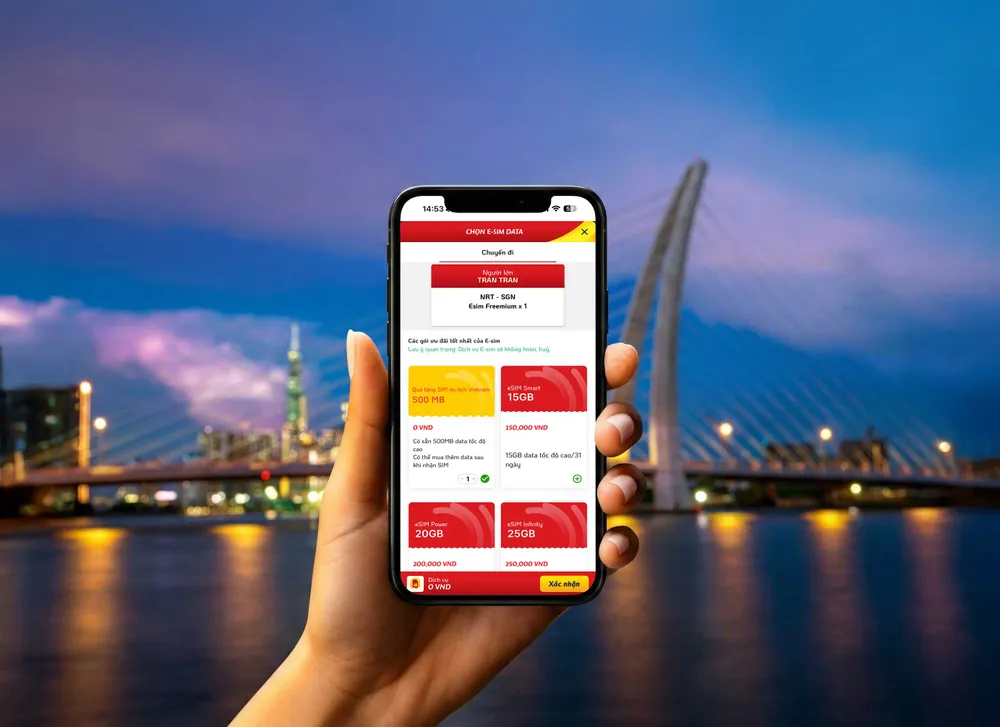
    This festive season, Vietjet is enhancing the holiday experience for international travellers by offering a complimentary SkyFi eSIM on all flights to Vietnam. Passengers departing from Singapore can enjoy seamless connectivity as they travel directly to Hanoi, Ho Chi Minh City, Da Nang and Phu Quoc, making it easier to stay connected while exploring vibrant cities or relaxing on Vietnam’s scenic beaches.

    From now until 31 December 2025 (while supplies last), travellers who book any international flight to Vietnam via www.vietjetair.com or the Vietjet Air mobile app will receive a free SkyFi eSIM loaded with 500MB of high-speed data. The eSIM is valid for 31 days from arrival in Vietnam (terms and conditions apply). Travellers simply need to select the complimentary eSIM during the add-on service step, after which the eSIM will be emailed directly for instant activation with a quick scan.

    The festive season is an ideal time to discover Vietnam’s diverse attractions, whether it is the lively energy of Ho Chi Minh City, the gentle year-end cool in Hanoi or the coastal tranquillity of Phu Quoc. The SkyFi eSIM allows travellers to stay in touch with loved ones and share their holiday moments with ease.

    Whether travellers are reuniting with family, journeying with friends or enjoying a well-deserved personal escape, Vietjet invites them to “Thank Yourself with Festive Flights”. The campaign offers passengers a chance to unwind, reconnect and celebrate the close of a hardworking year. Onboard, they can look forward to Vietjet’s modern, fuel-efficient fleet, professional crews and a selection of Vietnamese and international dishes such as pho, banh mi and other inflight services.

    Enjoy flying with Vietjet!


  • 5G Revolution in Asia-Pacific: Skyrocketing Adoption Set to Reach 4.6 Billion Connections by 2030

    5G Revolution in Asia-Pacific: Skyrocketing Adoption Set to Reach 4.6 Billion Connections by 2030

    5G technology is quickly gaining traction in the Asia-Pacific region, with its compound annual growth rate (CAGR) projected to climb by 11.4%. This surge is anticipated to elevate the number of 5G connections from 2.7 billion in 2025 to 4.6 billion by 2030. The escalation is primarily attributed to the increasing availability of cost-effective 5G devices, continual network expansions, particularly in India, Malaysia, and Thailand, and the imminent unveiling of services in Pakistan and Sri Lanka.

    Key Drivers of 5G Adoption

    Government initiatives, corporate digital transformation efforts, and the burgeoning demand for high-performance connectivity necessary for evolving application areas are the primary drivers of this growth. Emerging application areas include smart manufacturing, autonomous mobility, and cloud gaming. Additionally, government and telecom regulatory bodies in Australia, China, India, South Korea, Japan, and Taiwan have introduced national 5G strategies and action plans. These outline the vision and guidelines to establish 5G ecosystems, expand 5G coverage, and drive adoption. These strategies feature supporting initiatives such as public sector investment in 5G applications, favorable tax incentives, industry-government collaboration forums, promotion of 5G-led technological innovations, and license arrangements to optimize spectrum use.

    China Leading the 5G Market

    China is projected to maintain its position as the world’s largest 5G market throughout the forecast period. Approximately 75% of its total mobile subscriptions are expected to be on a 5G network by 2029, fueled by investment and regulatory efforts to extend 5G service coverage to rural areas and industrial parks. For instance, China had installed close to 4.2 million 5G base stations by 2024, increasing this figure to 4.6 million by the end of September 2025, significantly enhancing its network capacity and coverage. This continued expansion of 5G networks by telecom operators is also propelling the market forward throughout the Asia-Pacific region.

    Investments in 5G Infrastructure

    Regional telecom companies are planning to invest approximately USD 254 billion in network infrastructure by 2030, with a primary focus on 5G deployments. These expansions present telecom companies with opportunities to increase revenue through the sale of premium 5G mobile plans and the provision of enterprise connectivity solutions, such as private 5G. The synergy of 5G’s speed and reliability with emerging technologies like AI, data analytics, and M2M/IoT will allow telecom companies to innovate and extend their customer base into sectors like healthcare, manufacturing, and mining.

    Questions & Answers

    What is the projected compound annual growth rate (CAGR) of 5G in the Asia-Pacific region?
    The CAGR of 5G in the Asia-Pacific region is expected to be 11.4%.

    Which country is anticipated to remain the world’s largest 5G market?
    China is projected to retain its position as the world’s largest 5G market.

    What is the planned investment by regional telecom companies in network infrastructure by 2030?
    Regional telecom companies plan to invest an estimated USD 254 billion in network infrastructure by 2030, primarily focusing on 5G deployments.

  • SK Telecom and SK AX Join Forces with AWS: Aiming for Rapid Expansion in Korea’s AI Cloud Market

    SK Telecom and SK AX Join Forces with AWS: Aiming for Rapid Expansion in Korea’s AI Cloud Market

    SK Telecom (SKT) and SK AX have entered into a Strategic Collaboration Agreement (SCA) with Amazon Web Services (AWS) to stimulate a significant expansion in Korea’s AI cloud sector. This partnership will bolster the rapid development of AI infrastructure, cloud migration, and industry-specific service innovation.

    Strategic Agreement to Boost AI Cloud Services

    SKT plans to merge its telecommunications and AI technologies with SK AX’s specialized AI development skills and AWS’s international cloud infrastructure. The intention is to offer unique AI cloud services that facilitate the swift uptake of sophisticated AI tasks within the Korean market.

    A recent development saw AWS investing a staggering USD 8.3 billion in India’s cloud expansion. Now, SKT and SK AX will collectively work on developing personalized AI solutions for critical industries such as finance, gaming, the public sector, manufacturing, and startups. Their aim will be to ensure smooth transitions from preliminary AI projects to extensive operational environments, with a focus on delivering tangible business results.

    At the heart of the agreement is the development of a hybrid AI cloud model. SKT will amalgamate AWS’s international infrastructure with its own AI compute resources, including GPUs, to cater to industries with stringent data protection needs. This strategy will allow sensitive data to stay on-site while scaling workloads via AWS, guaranteeing a compliant, secure, and reliable AI service delivery.

    Building AI Cloud Hub & Enhancing Security

    The collaboration will also trigger the K-AI Alliance to construct an AI Cloud Hub that integrates infrastructure, services, and business channels. The endeavor will aim to generate industry-specific innovation models and expand AI adoption across Korea.

    In addition, SKT is planning to create cloud AI security standards and launch a new assessment framework rooted in its AI Governance Portal. This will enable customers to concentrate on developing AI services in a safe and effective manner. SK AX will develop an industrial AI cloud stack that mirrors unique data structures, regulatory needs, and operational models across diverse sectors, ensuring its practical applicability.

    Introduction of AI FinOps Solution

    The trio will introduce an AI FinOps solution that examines AWS usage patterns, optimizes cost structures, and enhances the total cost of ownership through constant monitoring and ongoing efficiency improvements. This solution is expected to aid businesses in streamlining their spending as AI workloads expand.

    In the coming five years, SKT and SK AX intend to offer stable access to AWS cloud infrastructure and AI services. At the same time, they plan to refine their cloud management skills to strengthen their position as managed service providers.

    Questions & Answers

    What is the focus of the Strategic Collaboration Agreement (SCA) between SK Telecom (SKT), SK AX, and Amazon Web Services (AWS)?
    The SCA focuses on driving large-scale expansion into Korea’s AI cloud market through AI infrastructure development, cloud migration, and service innovation.

    What is the role of the K-AI Alliance in this collaboration?
    The partnership will activate the K-AI Alliance to build an AI Cloud Hub, aiming to unify infrastructure, services, and business channels, fostering industry-specific innovation and broadening AI adoption in Korea.

    What is the proposed AI FinOps solution?
    The AI FinOps solution will analyze AWS usage patterns, optimize cost structures, and improve the total cost of ownership through real-time monitoring and continuous efficiency enhancements, aiding businesses in managing spending as AI workloads scale.

  • Samsung and SKT Forge Ahead with Advanced AI-Driven 6G Tech: A New Era in Hyperconnected Telecommunications

    Samsung and SKT Forge Ahead with Advanced AI-Driven 6G Tech: A New Era in Hyperconnected Telecommunications

    Samsung Electronics and SK Telecom (SKT) have recently formalized their cooperation by signing a memorandum of understanding (MoU). The partnership will focus on the development of crucial 6G technologies, with a special focus on artificial intelligence-based radio access network (AI-RAN) technology. The primary aim of the collaboration is to develop and test key technologies for the 6G era, including AI-based channel estimation, distributed multiple-input multiple-output (MIMO) transmission, AI-RAN-based schedulers, and core network architectures.

    Leading the Collaboration

    Samsung Research and SKT’s Network Technology Office will be spearheading the collaboration. AI-based channel estimation technology aims to improve network performance by predicting and correcting signal transmission instantaneously. This allows for quick and accurate data delivery in environments where radio waves face obstructions such as buildings or walls.

    Unlike traditional setups, where a single base station handles data processing, distributed MIMO technology enables multiple base stations or antennas to collaborate in the transmission and reception of data. This innovative approach ensures reliable, ultra-high-speed communication in both urban and rural settings.

    Improving Network Quality

    AI-RAN schedulers and AI-based core networks are crucial for data transmission optimization. They efficiently dictate when, where, and how to send data, ensuring efficient resource allocation even when numerous user devices are connected. These technologies are vital for enhancing network quality and facilitating automation in a future hyperconnected society.

    Under the partnership, Samsung Research will be concentrating on the development of AI-RAN technologies, including AI-based channel estimation models, schedulers, and distributed MIMO. Meanwhile, SKT will be responsible for providing data and setting up test infrastructure based on its nationwide network operations. The companies are also making collaborative efforts as members of the AI-RAN Alliance.

    Future Prospects

    JinGuk Jeong, Executive Vice President and Head of Advanced Communications Research Center (ACRC), Samsung Research at Samsung Electronics, has expressed optimism about the joint venture with SKT. He believes that this field-focused collaboration will enable them to verify the efficacy of AI-based wireless technologies in real-world settings and secure key AI-RAN technologies at an early stage.

    Takki Yu, Vice President of SK Telecom Network Technology Office, emphasized that the fusion of AI and wireless communications will be crucial to 6G competitiveness. Through their partnership with Samsung Electronics, they plan to secure world-class AI-RAN-based 6G technologies and lead the global 6G ecosystem.

    Since 2019, when it established the Advanced Communications Research Center (ACRC), Samsung has been proactively pursuing 6G research, publishing the 6G White Paper and 6G Spectrum White Paper, which outline its vision and direction for next-generation communications.

    Questions & Answers

    What is the main focus of the collaboration between Samsung Electronics and SK Telecom?
    The collaboration aims to develop and test key technologies for the 6G era, particularly artificial intelligence-based radio access network (AI-RAN) technology.

    Who will be leading this collaboration?
    Samsung Research and SKT’s Network Technology Office will be spearheading the partnership.

    What role does AI play in the development of 6G technologies?
    Artificial Intelligence is crucial in enhancing network quality, facilitating automation, and ensuring efficient resource allocation in a future hyperconnected society.

  • Telkomsat and Myriota Forge Alliance to Boost Satellite IoT Reach in Indonesia and Southeast Asia

    Telkomsat and Myriota Forge Alliance to Boost Satellite IoT Reach in Indonesia and Southeast Asia

    Telkomsat, an Indonesia-based telecommunications company, has entered into a memorandum of understanding with Myriota, an Australian satellite Internet of Things (IoT) provider. This strategic partnership intends to broaden the reach of satellite-supported IoT services throughout Indonesia and the wider ASEAN region. The signing ceremony took place in Jakarta, with the participation of representatives from both entities and officials from the South Australian government.

    Strengthening Satellite Solutions

    The core objective of this collaboration is to bolster Telkomsat’s satellite solutions offerings and reinforce its multi-orbit strategy. The partnership will emphasize IoT deployment in critical sectors, including maritime, oil and gas, agriculture, and environmental and disaster monitoring. These sectors require reliable, low-power connectivity for operations in remote and challenging-to-access areas.

    Introducing New Connectivity Services

    Myriota, under the terms of the agreement, will bring its multiband satellite connectivity services to Indonesia. This includes the HyperPulse 5G NTN service, which leverages Viasat’s dynamic leasing capability on its L-band network. This allows the adjustment of connectivity performance like latency and data availability according to geographic and environmental conditions. Additionally, Myriota will launch its LEO-based UltraLite service designed to provide secure, energy-efficient, and spectrum-efficient connectivity for low-power IoT applications.

    CEO of Myriota, Ben Cade believes that this partnership brings together Telkomsat’s vast regional experience and Myriota’s globally-leading satellite IoT technology. Together, they will create scalable IoT solutions that cater to the needs of Indonesia’s critical industries.

    Adding to this sentiment, South Australian Minister Joe Szakacs noted that this partnership will connect Myriota’s world-leading technology with one of the world’s fastest-growing economic regions, Southeast Asia.

    Collaboration on Future Initiatives

    Both companies have expressed plans to cooperate on market development, customer acquisition, ecosystem building, and initiatives aimed at enhancing the adoption of satellite IoT solutions across Indonesia and Southeast Asia.

    Questions & Answers

    What is the objective of the collaboration between Telkomsat and Myriota?
    The collaboration aims to expand satellite-enabled IoT services across Indonesia and the ASEAN region. It also aims to strengthen Telkomsat’s satellite solutions portfolio and support its multi-orbit strategy.

    What sectors will the partnership focus on?
    The partnership will focus on IoT deployments in key sectors including maritime, oil and gas, agriculture, and environmental and disaster monitoring.

    What new services will Myriota introduce to Indonesia?
    Myriota will introduce its multiband satellite connectivity services to Indonesia, including the HyperPulse 5G NTN service and the LEO-based UltraLite service.

  • True Corporation Sets Telecom Milestone as Thailand’s First with Dual Autonomous Network Certifications

    True Corporation Sets Telecom Milestone as Thailand’s First with Dual Autonomous Network Certifications

    True Corporation, a leading telecom provider in Thailand, has elevated the standards of the nation’s telecommunications sector by securing two globally recognized certifications from TM Forum, an international consortium of technology and telecom firms. True Corporation has received Level 4.0 Autonomous Network (AN) validation for “Service Assurance for Individual Services” and “RAN Energy Efficiency Optimization.”

    Setting New Standards in Telecommunication

    This achievement of Level 4.0, the highest level accomplished by operators across the globe so far, makes True Corporation the sole operator in Thailand to make considerable strides in these two significant areas. This accomplishment highlights True Corporation’s commitment to designing an intelligent network that not only boosts customer experiences but also advocates for environmental sustainability.

    Khurrum Ashfaque, the Chief Network Officer of True Corporation, stated that achieving both Autonomous Network Level 4.0 certifications from TM Forum marked a substantial milestone for the company. It reflected their dedication to upgrading their network services to international standards while managing energy sustainably. He emphasized their focus on becoming a global-class intelligent network service provider and evolving towards an autonomous network capable of managing itself with supreme efficiency. This will be achieved by harnessing advanced artificial intelligence (AI) to deliver high-quality services to clients and continually support the growth of Thailand’s digital infrastructure.

    Validation of True Corporation’s Innovations

    TM Forum evaluated both of True Corporation’s projects and deemed them as comprehensive case studies with operator-grade capabilities. This confirmed that these projects, designed with a focus on service quality and customer experience, could be implemented by other service providers as well.

    AN Levels, as defined by TM Forum, are global standards used to gauge the automation capabilities of telecom networks. They cover diverse use cases, including radio access network (RAN) issue management and signal quality enhancement. The system is divided into five levels, going from Level 1 that requires manual human control, to Level 5, which represents a fully autonomous network operating independently of human intervention. To reach Level 4.0 requires the use of advanced AI for management and is a strategic target for leading telecom service providers worldwide.

    Two Significant Achievements

    True Corporation achieved AN Level 4.0 certification in the “Service Assurance for Individual Services” category, which recognized it as a highly autonomous network. This system was developed in collaboration with Ericsson and leverages AI to manage the network autonomously and efficiently under current conditions.

    Additionally, in the category of “RAN Energy Efficiency Optimization,” True Corporation has obtained AN Level 4.0 certification for a project that emphasizes comprehensive base-station energy management.

    Driving Towards a Sustainable Future

    These global achievements underscore True Corporation’s transformation into a leading telecom-tech company in Thailand with a focus on creating a green network. The company aims to reduce its greenhouse gas emissions by 42% by 2030 compared to 2020 levels and attain net-zero emissions by 2050, in line with SBTi standards.

    Questions & Answers

    What is the Autonomous Network Level 4.0 certification?
    The Autonomous Network Level 4.0 certification is a globally recognized validation by the TM Forum. It recognizes telecom networks that use advanced artificial intelligence for management, enhancing service quality and customer experience.

    What does achieving this certification mean for True Corporation?
    Attaining the Autonomous Network Level 4.0 certification highlights True Corporation’s dedication to upgrading network services to international standards and managing energy sustainably. It propels them closer to becoming a global-class intelligent network service provider.

    How is True Corporation contributing to environmental sustainability?
    True Corporation is focused on creating a green network. They aim to reduce their greenhouse gas emissions by 42% by 2030 compared to 2020 levels and strive to achieve net-zero emissions by 2050, in line with SBTi standards.

  • Indosat, Nokia, and NVIDIA Unveil AI-RAN Research Center: Pioneering AI-Driven Telecom Networks in Indonesia

    Indosat, Nokia, and NVIDIA Unveil AI-RAN Research Center: Pioneering AI-Driven Telecom Networks in Indonesia

    Indosat Ooredoo Hutchison (IOH), in collaboration with Nokia and NVIDIA, has initiated a research center in Surabaya that concentrates on developing AI-powered radio access networks (RAN). This project marks the first Nokia-NVIDIA AI-RAN research site in Asia and is aimed at fostering AI-integrated telecommunications networks. It aligns with Indonesia’s Golden Indonesia Vision 2045 which is focused on promoting digital transformation and nurturing local AI talent.

    Facility Comprising Advanced RAN Technologies

    The research center comprises Nokia’s advanced RAN technologies, NVIDIA’s accelerated computing platforms, and IOH’s commercial network, creating AI-driven network capabilities. It will also connect to IOH’s current NVIDIA-powered sovereign AI Factory, which acts as a distributed computing hub. This hub will enhance network performance, improve energy efficiency and increase scalability, all while bringing AI closer to users.

    Developing AI-Driven Optimization for Wireless Networks

    The research and development at the center will focus on AI-driven optimization for wireless networks, utilizing AI/ML-powered radio signal processing techniques. It will support AI and RAN workloads on the NVIDIA Aerial RAN Computer 1 (ARC-1). It is expected to prepare the ground for commercial-grade AI-RAN deployment using NVIDIA ARC-Pro and Nokia CUDA-accelerated anyRAN software. These technologies aim to deliver more dynamic, adaptable, and intelligent mobile networks for IOH customers.

    Building an AI Grid

    IOH, Nokia, and NVIDIA are planning to establish an “AI Grid” that connects IOH’s central AI Factory with AI-RAN hubs across Indonesia. The grid is designed to host AI applications from data centers to distributed 5G networks, enabling broader access to AI-powered services for millions of Indonesians.

    Supporting Aivolusi5G Strategy

    IOH’s Aivolusi5G strategy is supported by the AI-RAN Research Center with the aim to provide intelligent connectivity for individuals and businesses. It plans to unlock AI-powered applications across sectors such as education, agriculture, and healthcare, transforming how Indonesians learn, work, and live.

    Nurturing the Next Generation of AI Specialists

    The center will serve as a hub to foster Indonesia’s next generation of AI and telecom specialists through hands-on research, mentorship, and training. This effort aligns with Indonesia’s ambition to become among the top five economies globally by 2045.

    Questions & Answers

    What is the role of the AI-RAN Research Center in Surabaya?
    The AI-RAN Research Center, a collaboration between IOH, Nokia, and NVIDIA, focuses on developing AI-powered radio access networks (RAN). It’s designed to foster AI-integrated telecommunications networks and nurture local AI talent.

    What are the AI-RAN Research Center’s areas of focus?
    The center will focus on developing AI-driven optimization for wireless networks, utilizing AI/ML-powered radio signal processing techniques. The goal is to deliver more dynamic, adaptable, and intelligent mobile networks for IOH customers.

    How does the AI-RAN Research Center align with Indonesia’s future goals?
    The center aligns with Indonesia’s Golden Indonesia Vision 2045, which aims to promote digital transformation and nurture AI talent. It also supports Indonesia’s ambition to become among the top five economies globally by 2045.

  • U Mobile Amplifies ULTRA5G Reach Across Malaysia: Adding Bangi, Putrajaya, and Petaling Jaya New Town to 5G Network!

    U Mobile Amplifies ULTRA5G Reach Across Malaysia: Adding Bangi, Putrajaya, and Petaling Jaya New Town to 5G Network!

    U Mobile is extending its ULTRA5G Advanced Network Experience to three new outdoor clusters: Bangi, Putrajaya, and Petaling Jaya New Town. This recent expansion is another stride in the company’s ongoing deployment strategy, offering continuous ULTRA5G coverage across all three townships.

    Ahead of Schedule

    The operator reports it is advancing faster than anticipated in its national rollout. Alongside the newly inaugurated outdoor clusters, U Mobile has also enabled ULTRA5G indoors in 30 buildings and anticipates more locations becoming operational in the forthcoming months.

    Woon Ooi Yuen, U Mobile’s Chief Technology Officer, expressed his excitement about the expansion:

    “Our ULTRA5G experience, fueled by both 5G Standalone and 5G Non-Standalone technologies, is now accessible to our customers in Bangi, Putrajaya, and Petaling Jaya New Town. We are committed to delivering the most extensive and profound 5G coverage to all Malaysians. Since initiating our deployment, we have not only brought our advanced 5G technology network to these three outdoor clusters but also indoors in 30 buildings, with many more on the horizon.”

    Improved User Experience

    U Mobile affirms that users in these areas can anticipate amplified and more dependable performance for everyday applications such as video calls, streaming, and gaming. The company also aspires to back businesses in these locations by allowing them to leverage 5G solutions designed to enhance operational efficiency.

    Users can detect ULTRA5G availability through the UM ULTRA5G network indicator on compatible devices. U Mobile asserts that additional outdoor clusters and indoor sites will persistently become operational as part of its ongoing deployment.

    Questions & Answers

    What is the significance of U Mobile’s latest expansion?
    The extension of U Mobile’s ULTRA5G Advanced Network Experience to three more outdoor clusters is a crucial step in the company’s ongoing deployment strategy, offering continuous ULTRA5G coverage to more areas.

    What progress has U Mobile made in its national rollout?
    The operator reports that it is moving faster than anticipated, having successfully launched ULTRA5G services in three new outdoor clusters and enabled ULTRA5G indoors in 30 buildings.

    How will U Mobile’s ULTRA5G benefit users and businesses in the new areas?
    Users can expect enhanced and more reliable performance for everyday applications, while businesses can leverage 5G solutions designed to improve operational efficiency.

  • Google Cloud Boosts Asia Pacific Connectivity with TalayLink Subsea Cable and New Hubs in Australia and Thailand

    Google Cloud Boosts Asia Pacific Connectivity with TalayLink Subsea Cable and New Hubs in Australia and Thailand

    Google Cloud has unveiled TalayLink, an innovative subsea cable system that connects Australia and Thailand. This system represents a significant move towards bolstering digital infrastructure and network resilience throughout the Asia Pacific region.

    Strengthening Regional Network Resilience

    TalayLink is as an extension of the interlink cable previously introduced under the Australia Connect initiative last year. The cable system is designed to follow a diverse route through the Indian Ocean, positioned west of the heavily trafficked Sunda Strait. This strategic routing will not only provide Thailand with a new, resilient international gateway but will also enhance the integration of Google’s global network.

    Bikash Koley, Vice President of Google Global Infrastructure at Google Cloud, explains that TalayLink is named after the Thai word for sea or ocean, ‘talay’. The new subsea cable path will establish a more diverse linkage to Thailand through the Indian Ocean, west of the Sunda Strait. This route will contribute to further integrating future data centers and cloud regions in Thailand into Google’s global network.

    Future-Proof Connectivity Hubs

    Google has also declared plans to establish new connectivity hubs in Mandurah, Western Australia, and South Thailand, in its recent announcement. These hubs aim to secure future regional connectivity and support advanced digital and AI services by facilitating cable switching, content caching, and colocation capabilities. The Mandurah hub will diversify Western Australia’s landing points beyond Perth, while the South Thailand hub will take advantage of existing infrastructure in an essential subsea crossroads.

    Pratthana Leelapanang, Chief Executive Officer of AIS, commends the strategic partnership with Google in supporting the connectivity hub in Southern Thailand. The collaboration of Google’s diverse submarine cable path and AIS’s high-reliability colocation capabilities will enhance the region’s digital infrastructure and support the country’s AI strategy.

    Preeyaporn Tangpaosak, President of ALT Telecom, also expressed enthusiasm about the International Gateway Company (IGC), a subsidiary of ALT Telecom PLC, being a crucial Google partner in landing a new submarine cable in Thailand. This new piece of digital infrastructure is pivotal in accelerating Thailand’s ambitious digital economy development strategy.

    National Importance of Deployments

    The significance of these implementations for the nation’s long-term competitiveness is underscored by Thailand’s Board of Investment (BOI). Narit Therdsteerasukdi, Secretary General of the Thailand Board of Investment (BOI), highlights the role of the TalayLink cable as a key piece of digital infrastructure. It enhances Thailand’s connectivity and resilience and, in conjunction with Google’s upcoming Google Cloud region and data center in Thailand, will significantly expand regional network and computing capacity. These forward-looking investments position Thailand as a critical digital gateway for next-generation cloud and AI innovation in Southeast Asia.

    Upon completion, the TalayLink and new connectivity hubs will boost network resilience across Australia, Africa, and Southeast Asia. Coupled with previously announced hubs in the Maldives and Christmas Island, the new system will enhance onward connectivity across the Indian Ocean and the Middle East.

    Questions & Answers

    What is the TalayLink subsea cable system?
    TalayLink is an innovative subsea cable system developed by Google Cloud that connects Australia and Thailand, strengthening digital infrastructure and network resilience in the Asia Pacific region.

    How will the new connectivity hubs in Mandurah and South Thailand function?
    These hubs aim to enhance regional connectivity and support advanced digital and AI services. They will facilitate functions such as cable switching, content caching, and colocation capabilities.

    What is the significance of the TalayLink cable to Thailand?
    The TalayLink cable serves as a pivotal piece of digital infrastructure, enhancing Thailand’s connectivity and resilience. It will significantly expand regional network and computing capacity while positioning Thailand as a critical digital gateway for next-generation cloud and AI innovation in Southeast Asia.

  • China’s 5G-Boosted M2M & IoT Market Set for 7% CAGR Surge by 2030: The Future of Mobile Connectivity

    China’s 5G-Boosted M2M & IoT Market Set for 7% CAGR Surge by 2030: The Future of Mobile Connectivity

    The cellular machine-to-machine (M2M) and Internet of Things (IoT) connectivity market in China is projected to experience considerable expansion over the next decade. Projected growth rates estimate an increase in subscriptions at a compound annual growth rate (CAGR) of 7% from 2025 to 2030. The driving factors behind this growth include the emergence of new applications across diverse industries, the development of 5G infrastructure by telecommunications firms, and their comprehensive M2M/IoT service offerings.

    Increasing Adoption of M2M/IoT Technology

    The China Mobile Broadband Forecast for the third quarter of 2025 suggests that M2M/IoT subscriptions will constitute approximately 30% of all mobile subscriptions in the nation by 2030. This statistic underscores the escalating adoption of this technology and its growing significance as a revenue stream for telecom firms.

    China’s vast manufacturing base and pervasive digitalization in the sector support the growth of the M2M/IoT market. The advent of digital factories, which require extensive automation and connectivity for real-time monitoring and predictive maintenance, will bolster this growth.

    Expanded Use Cases

    Telecom Analyst Hrushikesh Mahananda points out that the expansion of use cases beyond the manufacturing sector will also benefit the market. Applications in the utilities sector, such as smart grids and smart metering, along with vehicle-to-vehicle and vehicle-to-infrastructure applications in the automotive and transportation sector, are notable examples. Additionally, connected devices and patient monitoring in healthcare and smart city initiatives involving smart buildings, traffic control, and public safety systems show promising potential.

    Government backing for the integration of M2M/IoT technology into manufacturing, smart cities, and public infrastructure projects aligns with national strategies like Made in China 2025 and China 2035. This alignment highlights the technology’s increasing relevance in the country.

    5G Infrastructure and M2M/IoT Expansion

    The creation of a robust 5G infrastructure and advancements in 5G-Advanced technology, which support large-scale IoT deployments, will further boost the M2M/IoT sector in China. For instance, the Chinese telecom regulator MIIT plans to establish over 10,000 5G factories during the 14th Five-Year Plan (2021-2025) to enhance industrial applications of 5G, primarily in manufacturing.

    Mahananda concludes that the growing prominence of M2M/IoT has led China’s leading mobile operators to design comprehensive service offerings that are fueling growth in M2M/IoT connectivity subscriptions. These operators have also developed advanced M2M/IoT platforms that streamline deployment, integration, and management of M2M/IoT ecosystems across industries, further enhancing connectivity, device management, edge, and AI capabilities.

    Questions & Answers

    What factors are driving the growth of M2M/IoT connectivity in China?
    The growth is driven by new use cases across various sectors, advancements in 5G infrastructure by telecom companies, and their comprehensive M2M/IoT service offerings.

    What percentage of mobile subscriptions in China will M2M/IoT subscriptions make up by 2030?
    According to the China Mobile Broadband Forecast (Q3-2025), M2M/IoT subscriptions will account for approximately 30% of all mobile subscriptions by 2030.

    What role does the Chinese government play in the growth of M2M/IoT connectivity?
    The government supports the integration of M2M/IoT technology into the manufacturing sector, smart cities, and public infrastructure projects, which aligns with national initiatives like Made in China 2025 and China 2035.

  • Google Boosts Global AI Innovation with New Major Hardware Engineering Center in Taiwan

    Google Boosts Global AI Innovation with New Major Hardware Engineering Center in Taiwan

    Google has inaugurated a new engineering center in Taiwan dedicated to artificial intelligence (AI) infrastructure hardware, marking its largest establishment of this kind outside the United States. This move underscores Taiwan’s pivotal role in the global technology landscape.

    Taiwan’s President, Lai Ching-te, lauded the launch event in Taipei, noting that Google’s investment underscores the company’s faith in Taiwan’s tech prowess. According to President Lai, Taiwan is not just a fundamental component of the global technology supply chain, but also a crucial hub for designing secure and trustworthy AI.

    Taiwan continues to be a critical player in advancing global AI owing to its solid semiconductor ecosystem, spearheaded by Taiwan Semiconductor Manufacturing Co. (TSMC). The high-tech chips developed by TSMC power systems from firms such as NVIDIA, which are at the forefront of global AI innovation.

    Raymond Greene, the acting U.S. Ambassador in Taipei, emphasized the importance of this expansion. He noted that this innovative foundation sets the stage for a promising new era, dubbing it a new golden age in the economic relationship between the U.S. and Taiwan.

    Google revealed that the new facility will concentrate on sophisticated AI hardware engineering. This will include the integration of AI chips such as Google’s Tensor Processing Units (TPUs) into motherboards and their attachment to servers.

    Additionally, Google confirmed that its Taiwan infrastructure engineering team, established in 2020, has tripled in size, and that the new center will be staffed by hundreds of employees who will support Google’s global data center operations.

    Google’s presence in Taiwan is not new. The company already runs multiple hardware development sites on the island and has been operating a data center in Changhua County since 2013. Google has also invested in several subsea cable projects connecting Taiwan to global networks.

    Aamer Mahmood, Google’s Vice President of Engineering, stated that the technology developed and tested in Taipei is deployed in Google data centers worldwide, which powers Google devices relied upon by billions globally. He added that this is more than an office investment; it signifies an investment in an ecosystem, further solidifying Taiwan’s position as an essential center for global AI innovation.

    Questions & Answers

    What is the focus of Google’s new engineering center in Taiwan?
    The new engineering center will concentrate on advanced AI hardware engineering, including the integration of AI chips into motherboards and servers.

    How does Taiwan contribute to global AI progress?
    Taiwan has a robust semiconductor ecosystem led by Taiwan Semiconductor Manufacturing Co. (TSMC), making it a critical player in advancing global AI. The chips developed by TSMC power systems for AI innovation worldwide.

    What does the new facility mean for Google’s presence in Taiwan?
    The new facility marks an expansion of Google’s presence in Taiwan. In addition to the new center, Google already operates multiple hardware development sites and a data center in Taiwan, and has invested in numerous subsea cable projects.