Category: Telecom

Retail News Asia is committed to providing both local and global retailers with the latest Telecom & Telco news throughout the Asian market. This on a daily base.

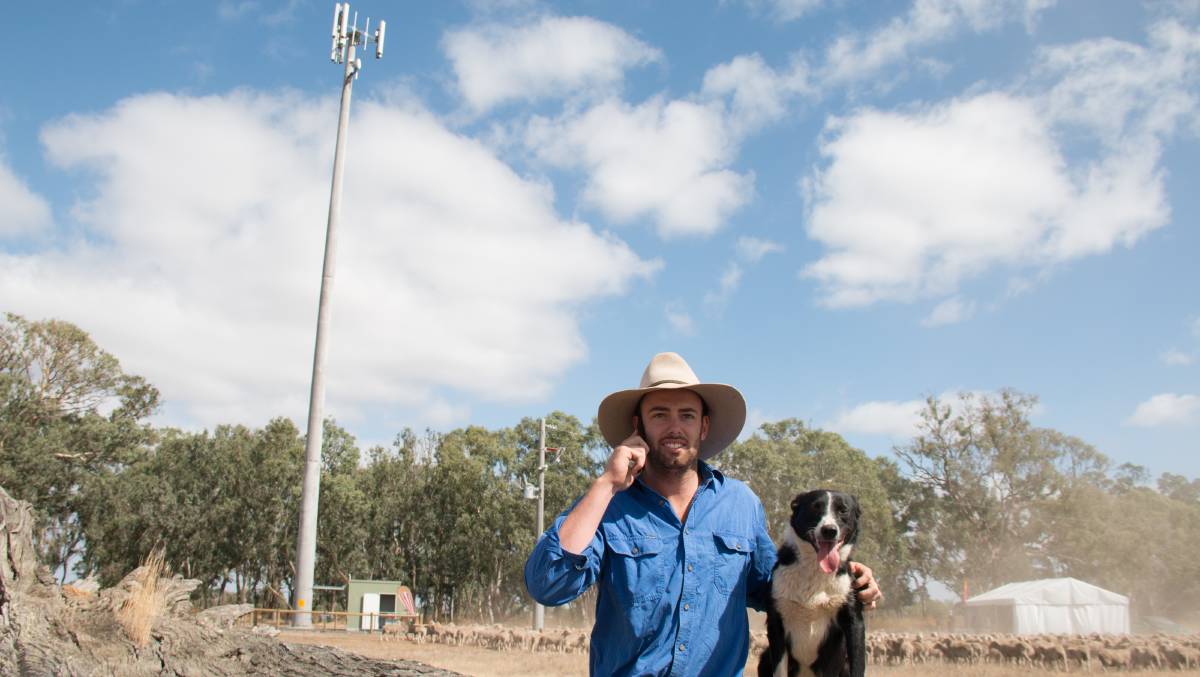
  • Australia launches fourth Mobile Black Spot round

    Australia launches fourth Mobile Black Spot round

    The Australian government has opened applications for the fourth round of the national Mobile Black Spot program, designed to improve mobile coverage in regional and remote Australia. Mobile network and infrastructure providers have been given until December 10 to submit their applications for taking part in the program to install mobile base stations at designated locations. Construction is expected to commence early next year. The government has allocated A$25 million ($17.8 million) in funding for the latest round of the program, which is designed to subsidize the deployment of base stations in unprofitable areas.

    The program has a focus on public interest premises, including economic centers, emergency services, health and educational facilities, local government facilities, as well as community and non-profit organizations.

    Co-funding is provided by state and local governments, the market’s mobile operators Optus, Telstra and Vodafone, businesses and local communities.

    Locations for the deployment were nominated by local and state governments and federal politicians, but local communities can still seek funding for locations not on the database.

    Under the first three rounds of the A$220 million federal government program, 867 new base stations are being delivered at a total cost of A$680 million.

  • Softbank said to pick banks to lead $27b mobile IPO

    Softbank said to pick banks to lead $27b mobile IPO

    Japan’s Softbank has reportedly selected the banks that will serve as lead underwriters for the IPO of its domestic mobile business. The operator has picked banks including Nomura Holdings, Mizuho Financial, Sumitomo Mitsui Financial, Goldman Sachs and Deutsche Bank to underwite the offer for around 3 trillion yen ($26.82 billion) worth of shares, citing unnamed sources. This would make the IPO the largest ever, beating Alibaba Group’s $25 billion IPO from 2014.

    According to the sources, Softbank currently plans to start marketing the IPO next month and could list shares on the Tokyo Stock Exchange by mid-December, but this timing is subject to change.

    Softbank’s founder Masayoshi Son is seeking to squeeze value from its telecoms assets to raise funds for his Vision Fund, which aims to raise $100 billion from global investors every two to three years to invest in promising startups and emerging technologies.

    The operator is expected to market most of the shares on offer to Japanese investors.

  • SK Telecom launches IoT-based cattle healthcare service

    SK Telecom launches IoT-based cattle healthcare service

    SK Telecom has developed a new IoT-based solution which allows farmers to monitor the health of their cattle in real-time using Semtech’s LoRa devices and wireless radio frequency technology (LoRa Technology). Dubbed “LiveCare”, the product is a LoRa-equipped biocapsule which is implanted into a cow’s gastrointestinal tract to monitor a variety of health indicators. The new service will see biocapsules packed with a communication module connected to the operator’s LoRA-based IoT network. The smart biocapsule is then injected into the stomach of a cow, monitoring body temperature and potential hydrogen levels, with data recorded and then sent to a central server as well as cattle farm owners via a smartphone or computer.

    Thus, ranchers can monitor the data transmitted from the devices for anomalies in a cow’s body temperature and other vitals to detect the onset of disease, estrus and to forecast delivery of calves.

    The LiveCare device is shielded from being tampered with by outside conditions due to its strategic position inside the cow itself. This solution is expected to drastically improve the quality of life for the cow and by extension the cattle as a whole on the dairy farm.

    “Our unique solution lets farmers know immediately when a cow’s health is compromised. It takes the guesswork out of farming and lets the rancher focus on preventing cattle disease,” said Taehee Moon, project leader for the small farm project group of SK Telecom. “Healthier cows mean more milk can be produced and dairy farms can focus more on growing their business.”

    According to SK Telecom, a trial run on a South Korean farm using the technology showed an increase in annual milk harvest of 1,200 liters per cow, an increase of $1,100 in income per cow for the farmer and an additional $400 in savings for each estrus successfully planned using the LiveCare solution.

    SK Telecom plans on extending its services to provide automatic notification to ranchers of contagious disease as well as location tracking in the near future.

  • Telenor Pakistan and Telenor MicrofinanceBank join hands with BISP

    Telenor Pakistan and Telenor MicrofinanceBank join hands with BISP

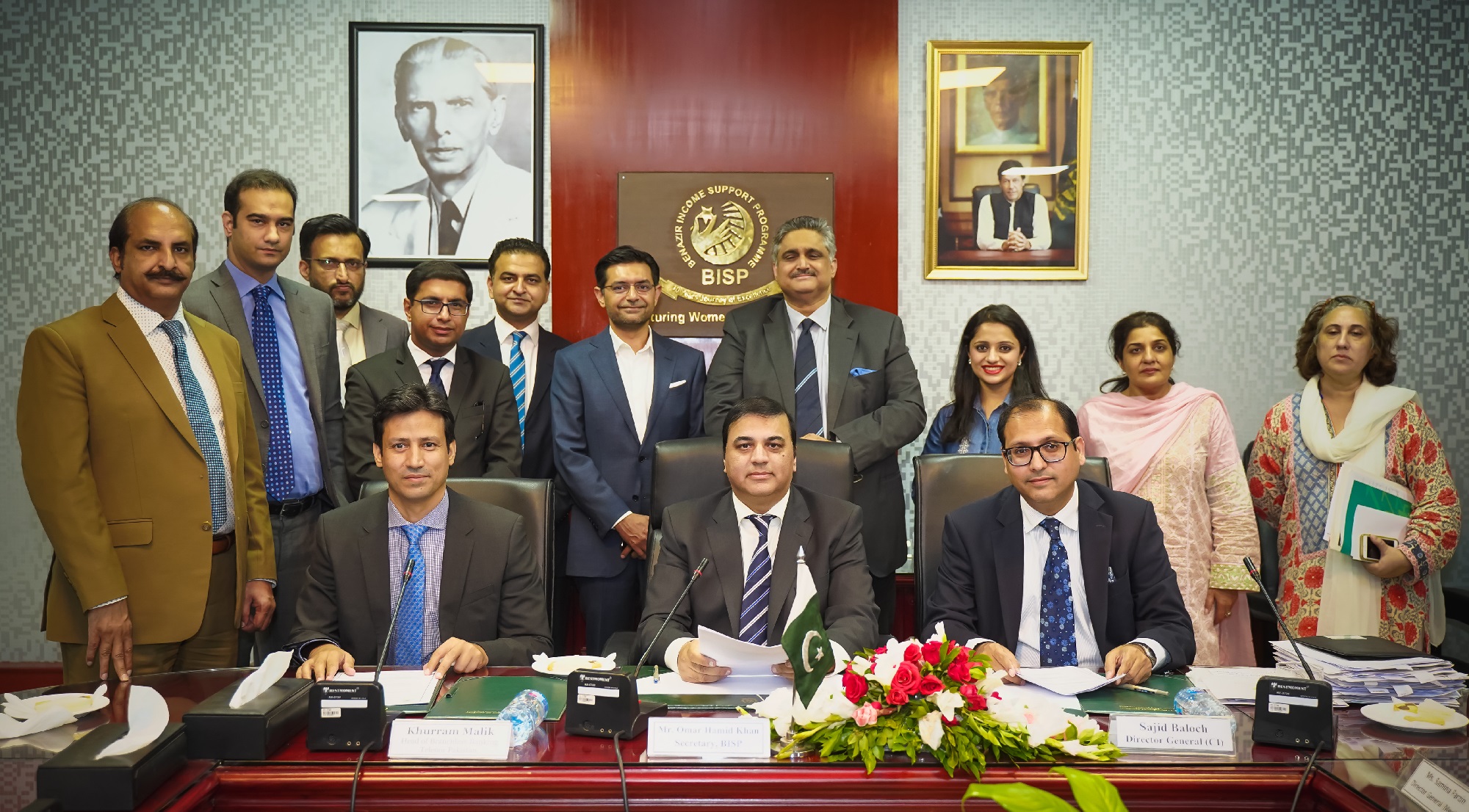
    Continuing their pursuit to the shared mission of empowering the Pakistani society, Telenor Pakistan and Telenor Microfinance Bank have partnered with the Benazir Income Support Program (BISP) to facilitate its beneficiaries across Pakistan in several ways that include creating business opportunities, granting microcredit, and extending support in education and health in the long run.

    As per the agreement, Telenor Pakistan and Telenor Microfinance Bank will select BISP beneficiaries as potential retailers for GSM & Financial products. Telenor Pakistan will give the chosen beneficiaries a unique opportunity to become retailers of its GSM products and services and thus improve their source of livelihood. Telenor Pakistan will pilot this initiative in Chakwal District among 20,000 beneficiaries, which will be later scaled to 34 Districts with a reach to 1.2 million people. Moreover, Telenor Pakistan will enlist BISP as a partner for its CSR contributions, be it in kind or cash, to help support beneficiaries in emergency situations or natural disasters.

    Through the partnership, Telenor Microfinance Bank will reach out to the beneficiaries identified by BISP to assess their credit worthiness and provide them with micro-loans. In the process, the Bank will also educate customers on the uses of m-Wallets, handling and repaying of the micro-loans, and graduating to higher loan amounts. Customers will also be offered a term-life insurance product with natural and accidental death cover of PKR 100,000 including pre-existing conditions.

    “We are pleased to have joined hands with Telenor Microfinance Bank and BISP to extend the best of our contributions to the deserving citizens,” said Haroon Bhatti, Chief Business Officer, Telenor Pakistan. “All three of the agreement partners including Telenor Pakistan, Telenor Microfinance Bank, and BISP share the vision of an empowered Pakistan where every citizen has access to opportunities and solutions to improve means of their livelihood and provide a better lifestyle to their family. The partnership also aims to fight unemployment as more people will be able to start their own business.”

    “This partnership is of great significance to us as it enables the underserved by providing them access to flexible micro-loans.” said Khurram Malik, Head of Branchless Banking, Telenor Microfinance Bank. “Driven by our mission of empowering societies, we will continue to lead in innovating financial solutions to the people of Pakistan and contributing to the country’s vision 2025.”

    “Running this unmatched poverty alleviation program in Pakistan since 2008, we have helped millions of deserving families fight inflation and enhance their purchasing power,” said Secretary, BISP Mr. Omer Hamid Khan. “We are pleased to partner with the country’s leading digital services and microfinance players to empower the BISP beneficiaries in more innovative ways. We are thankful to both parties for finding ways to help the deserving create their own sources of livelihood and gain access to formal financial solutions which will work to boost financial inclusion nationwide. We hope that the collaboration goes a long way and yields results that beat expectations.”

    In the long run, the partnership may also cover Telenor Pakistan’s Safe Internet Program as well as the e-Education project. In the Safe Internet Program, Telenor educates girls and boys on using Information Communication Technology (ICT) and the Internet responsibly in a safe manner. In the e-Education project, Telenor provides free-of-cost international-standard digital educational content to primary schools in order to improve conceptual understanding of science and other subjects.

  • Zong 4G partners with Instagram

    Zong 4G partners with Instagram

    Pakistan’s No. 1 Data Network Zong 4G and the World’s Leading Photo Sharing Network Instagram, announced the availability of an integration between the two digital service providers. Zong 4G’s prepaid subscribers who sign up on Instagram for the first time will be able to enjoy picture viewing for free in the first 3 days. Followed by WhatsApp, IMO, and free Facebook service, Zong 4G once again has risen up as the first telecom operator partnering with another social media giant, Instagram. The one of kind and exclusive offer by Pakistan’s fastest 4G network, Zong 4G for its customers is unmatched offer, which no other telecom service provider in Pakistan is offering.

    This is a new highpoint for the Pakistani customers. Their connected journeys across both the digital service providers allows for a superior experience that is unmatched in the telecom sphere. Subscribers can get to experience the fastest 4G service, wherever and whenever over free picture viewing. To add to their convenience, Zong 4G has ensured that subscribers get a seamless 4G experience as they do not need to activate the offer via a code. All they have to do is sign up on Instagram and enjoy this offer.

    The strategic partnership is a natural one, given the existing partnership between Zong 4G and Facebook. Facebook is a social networking service that also owns Instagram and WhatsApp. Apart from this, Zong 4G has created ripples across Pakistan’s telecom spectrum in recent months with its technological supremacy by launching state of the art e-commerce applications. Since inception, Zong’s three E-commerce channels: E-Care, Online Recharge and Online Shop have hit the telecom world with a bang – to facilitate its subscribers that have exceed the massive 8 million mark in the shortest possible time.

    With diverse lifestyle choices of its customers, Zong, Pakistan’s largest 4G service provider, promises to continue to play a significant and impactful role towards faster, smarter and better services towards user data experience in its own aspiring style.

  • Singtel, StarHub and M1 must keep innovating to stay in the game

    Singtel, StarHub and M1 must keep innovating to stay in the game

    Signs have not been good lately for Singtel, StarHub and M1, the country’s three large telecommunications companies. Technological innovations, as well as changes in regulations, have sent shock waves through the big three companies, and virtual mobile telcos such as MyRepublic, Zero1 and Circles.Life have also posed a threat to the larger players.

    But with new kid on the block, TPG Telcom, set to launch later this year, the question remains whether there is still a place for one more large telecommunications company in an already crowded market.

    The existing telcos say that since the country is small and has a mature mobile market with very high rates of penetration, perhaps three’s a company, but four would be a crowd.

    In other places such as Germany, Denmark and the UK there is consolidation of only three mobile network operator (MNO) providers. Indonesia, whose population of 250 million is huge, compared to Singapore’s 5 million, is also leaning toward consolidation.

    Three years ago, the  Info-communications Development Authority of Singapore (IDA) asked whether expanding mobile services in the country is a viable option. Today, opinions still are divided as to whether or not there is room in Singapore for a fourth telco.

    One concern is that tougher competition will lead to fewer revenues in the mobile sector, which would in turn discourage service innovation, and even investments as well.

    On the opposite side is the IDA, which has evolved into the Infocomm Media Development Authority (IMDA), says that there is space for telcos to innovate their services, as well as room for more competition in the market.

    When a new MNO enters the market, this may also spur existing ones to further invest in innovating their networks in order to stay competitive.

    TPG Telecom, which is based in Australia, is already making quite a splash in Singapore, with a special offer for seniors, an audience not often catered to by telcos. TPG is giving a fee mobile plan for people aged 65 and above, complete with a SIM card, 3GB of data and unlimited mobile calls.

    Other telcos are greeting TPG’s launch as a splash of cold water on their faces, to get them to innovate their strategies. The telco industry is marked by both competition and innovation, and companies have to work hard to keep up. Their strategies must remain both quick and agile to remain enticing to existing customers as they attract others.

    For example, telcos have been threatened by over the top (OTT) voice, text and messaging options that only require WiFi for consumers to make calls and send messages. This has meant that telcos can no longer rely on old revenue streams that depended on subscription plans, infrastructure and bandwidth, as consumers ceased to need them as much.

    Big players in the tech market such as Apple, Amazon and Google offer such OTT services merely using data connections, which removes the need for additional infrastructure.

    Industry experts predict that WhatsApp, Skype and different OTT applications will cause telcos the loss of around US$400 billion in revenue for this year alone.

    How then can telcos, which have invested millions on infrastructure, secure their future despite fewer returns on those investments, or else, face the possibility of growing redundant in the industry.

    Perhaps the bigger question here is not whether there is room in the country for yet another mobile telecommunications company, but to ask whether the existing companies are doing enough to innovate in order to maintain relevance in a quickly evolving industry.
  • Indian telco sector facing three more quarters of losses

    Indian telco sector facing three more quarters of losses

    India’s telecoms sector is facing at least three more quarters of losses due to the ongoing price war, according to industry body the Cellular Operators’ Association of India (COAI).

    The Indian GSM industry body’s director general Rajan Mathews told that he believes the market’s current tariffs are unsustainable in the long term.

    The industry’s woes are being added to by high license fee and spectrum charges, including high upfront payments, which has guaranteed that the current fiscal year will be tough for the industry.

    The current situation commenced in 2016 when disruptive new entrant Reliance Jio Infocomm entered the market with entirely free services during an extended promotion period. The operator continues to charge only for data, at low rates.

    Jio’s strategy prompted established operators to cut prices to compete, and prompted a wave of consolidation that has seen the market reduced to just three private operators – Jio, Bharti Airtel and the combined Vodafone India and Idea Cellular (now Vodafone Idea).

    Mathews said that there is light at the end of the tunnel, and clarity I expected to emerge in the fiscal year 2019-2020, which begins in April next year.

    But he warned that if tariffs continue to decline it will be detrimental to the health of the industry as it will threaten operators’ ability to invest in emerging technologies and in expanding coverage.

  • Optus Business expands managed solutions portfolio

    Optus Business expands managed solutions portfolio

    Australia’s Optus, through subsidiary Optus Business, has expanded its line-up of fully managed ICT solutions for enterprises.

    The operator has added contact center, security and storage solutions to its Optus GO portfolio of managed services.

    Optus GO Contact Centre provides cloud based contact center capabilities including management of inbound and outbound calls, chat and email. Optus GO Security includes email and web protection based on cloud security architecture, and Optus GO Storage provides as-a-service flash storage for data centers.

    The Optus GO managed ICT solutions suite, which launched in February, already included connectivity, collaboration and cloud services for businesses of all sizes.

    “The Optus GO solutions were created in response to our customers who are looking for the benefits of ICT solutions without the cost or burden of ownership and management,” Optus Business managing director John Paitaridis said.

    “We designed Optus GO to save our customers time and money by simplifying technology, delivering connectivity and ICT as an end to end solution in a secure and managed environment.”

    He said Optus GO aims to provide enterprise customers with the core computing foundations to support the business opportunities that will be afforded by emerging technologies including IoT, advanced analytics, AI and 5G.

    Optus is a wholly-owned subsidiary of Singapore’s Singtel Group.

  • Ericsson CEO talks 5G with US FCC

    Ericsson CEO talks 5G with US FCC

    Ericsson president and CEO  Börje Ekholm recently met with FCC Chairman Ajit Pai to talk about how the US is making more millimeter wave spectrum available for 5G, its progress in reducing the time involved in tower siting and clearing the way for network slicing, a key component of 5G.

    Ekholm applauded the FCC’s recent order removing barriers to infrastructure investment and expressed appreciation for the chairman’s focus on releasing spectrum, particularly millimeter wave spectrum, to help fuel increased innovation and investment in 5G. Ekholm also noted that the Internet Freedom order clears away a cloud of uncertainty over network slicing, according to an ex parte filing(PDF).

    Also present during the October 3 meeting were Niklas Heuveldop, president and CEO of Ericsson North America; Lynn Starr, senior director for Ericsson Government Affairs; Jared Carlson, vice president for Ericsson Government Affairs; and Rachael Bender, Chairman Pai’s wireless and international legal adviser.

    Importantly, Heuveldop covered some of the investments Ericsson is making in the US, including Ericsson’s decision to begin manufacturing in the US in the fourth quarter of this year. The Swedish vendor plans on providing volume production of next-generation radios in order to introduce products into the US market faster.

    Ericsson is also opening a new software development center with a baseband focus in 2018, eventually employing more than 200 software engineers when it’s fully operational.

    In addition, Ericsson said it will increase its investment in artificial intelligence and automation, employing about 100 specialists in North America by the end of this year. The team will work on using AI technologies to accelerate automation, examine product road maps and explore new business opportunities.

    It’s worth noting that Heuveldop joined a chorus of other industry leaders in urging the FCC to move forward with plans to make more midband spectrum available for 5G. He also stressed that the US mobile industry will need significantly more than 100 MHz in the 3.7-GHz to 4.2-GHz band for operators to offer the combination of speed and coverage they need for 5G.

    Midband spectrum also is of great interest to Ericsson’s rival Nokia, whose CEO Rajeev Suri met with Chairman Pai earlier this year. Suri and other Nokia executives stressed the urgency of making spectrum available in the 3.7-GHz to 4.2-GHz band as the centerpiece for nationwide 5G deployment in the U.S.

    This past summer, the FCC adopted an Order and Notice of Proposed Rulemaking that identifies new opportunities for flexible use in up to 500 megahertz of midband spectrum between 3.7-GHz and 4.2-GHz. The notice proposes to add a mobile allocation to all 500 megahertz in the band and seeks comment on various proposals for transitioning part or all of the band for flexible use, including market-based, auction and alternative mechanisms.

  • China Telecom enters Philippines third telco fray

    China Telecom enters Philippines third telco fray

    China Telecom and Telekom Austria’s Mobiltel have become the latest companies to purchase bid documents for the selection process for the Philippines’ third telco player.

    The operators purchased bid documents from regulator NTC on Saturday.

    The two overseas companies have joined six others, including Norway-based Telenor and fixed line operator Philippine Telegraph and Telephone (PT&T), in purchasing the application documents for the beauty contest style section process.

    China Telecom was approached by Philippines president Rodrigo Duterte last yearwith the opportunity of being awarded the third telco license, before the government elected to hold the selection process instead.

    Any overseas entity winning the third telco license will need to establish a joint venture with local companies in order to comply with the Philippines’ restrictions on foreign ownership in telecoms infrastructure.

    Meanwhile local company NOW Telecom, which has been vying to become the market’s third telco and has been fighting a legal battle to disrupt the selection process, has had its application for a temporary restraining order against the selection process rejected by a Manila court.

    The court reportedly found no basis for the restraining order on the grounds that NOW’s case does not meet the requirements such as a clear right to be protected, or an urgent need for an injunction due to the risk of irreparable injury.

    Bidders will have until early November to submit their bids for the selection process, which will be judged on criteria including guaranteed investment and rollout commitments.

  • KT expands reach of AI-powered smart city solution to SEA

    KT expands reach of AI-powered smart city solution to SEA

    South Korea’s KT has announced plans to expand the reach of its self-developed AI technology with the launch of services for hotels and smart cities in Southeast Asia.

    The operator will introduce customized AI solutions for the market, starting with Vietnam.

    KT last month entered an agreement with Vietnam’s largest construction company Hoa Binh Construction Group (HBC) JVC for the provision of AI-powered hotel and apartment services in Southeast Asia. The partners have also agreed to subsequently co-operate on smart building and city projects in major metros in the region.

    KT used its platform to launch the first hotel in South Korea to offer AI-assisted room services in July – a Novotel Ambassador hotel in Seoul – and plans to open three more smart hotels across Seoul by 2020.

    The company’s hotel AI service platform is a customization of KT’s GiGA Genie AI powered smart home media hub, which launched in 2017 and now has more than 1 million subscribers in South Korea.

    “It’s a big first step for KT’s AI platform to reach out to the world, thanks to the partnership with HBC,” KT marketing group senior vice president Lee Pil-Jai said. “With great success in South Korea, we will step up efforts to localize our AI hotel service and smart city solutions for Southeast Asia and beyond.”

  • Huawei lays out AI roadmap

    Huawei lays out AI roadmap

    AI has disrupted many industries and enterprises in recent years.  Huawei believes AI will soon become a “general-purpose technology”, which combines different technologies like cloud, IoT, and big data to help tackle existing and future problems.

    The ICT solutions provider unveils its AI strategy and AI portfolio at the recent Huawei Connect conference in Shanghai.

    “AI offers new business opportunities, strengthens our products and services to become more competitive and future-oriented, and improves our internal operational management and efficiency,” said Eric Xu, rotating chairman at Huawei.

    10 changes shaping the future

    Huawei has identified 10 changes that will help shape the future of AI. They are faster model training; abundant and affordable computing power; AI deployment in different scenarios and the protection of user privacy; data-efficient, energy-efficient, and explainable algorithms; AI automation especially during processes like data labeling, data collection, and model design; practical applications to meet the needs of real-world execution; real-time and closed-loop system; multi-tech synergy between AI and other technologies; one-stop platform; and talent availability.

    Five areas of AI focus

    To pave the way for these changes, Huawei has unveiled its AI strategy in five areas of focus—AI research investment, full-stack AI portfolio, open ecosystem and talent, existing portfolio enhancement, and operational efficiency in Huawei.

    “Our AI strategy is to invest in basic research and talent development, build a full-stack and all-scenario AI portfolio, and foster an open global ecosystem,” said Xu.

    Huawei’s full-stack AI portfolio includes chips, chip enablement, a training and inference framework, and application enablement. Its portfolio can be deployed in various scenarios including public clouds, private clouds, edge computing in all forms, industrial IoT devices, and consumer devices, according to Huawei.

    On the chip level, Huawei announced the launch of two chips—Ascend 910 and Ascend 310, which are touted to accelerate AI adoption in different industries. Xu touted that Ascend 910 has the world’s greatest computing density in a single chip, which can be applied in large-scale distributed training system. Ascend 310 is an efficient AI chip for low-power computing. The chips will be deployed to offer cloud services to customers next year. Its AI portfolio also includes an AI acceleration card, AI server, and AI appliance.

    To foster an open global ecosystem, Huawei aims to develop industry and business alliances with one million AI developers and partners over the next three years. “We believe this target can be achieved through our talent training program, full-stack AI portfolio, and technical collaboration,” said William Xu, chief strategy marketing officer at Huawei.

  • Globe gets nod to roll out small cells in Metro Manila

    Globe gets nod to roll out small cells in Metro Manila

    The Philippines’ Globe Telecom has arranged special dispensation from the authorities in Metro Manila to allow it to expedite the deployment of over 120 cell sites to improve coverage of the major thoroughfares of Metro Manila.

    The operator has entered a groundbreaking agreement with the Metro Manila Development Authority (MMDA) that will allow it to install small cell antennas along the thoroughfares without needing to secure individual construction permits.

    The regular approval process involves an average of 25 permits from local government units and takes around eight months to complete, according to Globe CEO Ernest Cu.

    “Securing various permits for the construction of telco infrastructure such as cell sites has long been a major challenge of the industry,” he said.

    “We want to thank MMDA for sharing our vision of a connected Philippines by allowing us to deploy sites faster, thus improving mobile experience at the heart of Metro Manila.”

    As part of the agreement, Globe has also agreed to provide logistical support for the MMDA’s critical traffic management operations. The operator deployed wireless infrastructure at the MMDA’s flood control facilities in 2016, and that year also started providing free Wi-Fi service at MRT stations in the city.

  • Spark launches flexible pricing broadband plan

    Spark launches flexible pricing broadband plan

    New Zealand operator Spark has moved to differentiate its broadband offerings by launching a new unlimited fiber broadband plan that offers consumers discounts on months they use less data.

    The company’s “Unplan” branded fiber broadband plan offers unlimited bandwidth for NZ$85 ($55.50) per month.

    But on months where consumers use less than 60GB of data this price reduces to NZ$65, and for months where 60GB to 120GB of data is consumed it reduced to NZ$75.

    An entertainment plan is also available for an additional NZ$10 per month that comes with 6 months of free Netflix and a subscription to the Spark-owned Lightbox SVOD service for the life of the plan.

    The offer is also available via Spark’s fixed wireless broadband service, but restrictions will apply on usage of over 300GB of data in a single month of regular usage of 180GB in an average month.

    “We think it’s a fairer way of offering broadband, as it reflects our customers’ needs. This is the first broadband plan in New Zealand that flexes to reflect customers’ data usage – and it has the potential to save our customers a lot of money,” Spark consumer lead Joe Goddard said.

    “It’s also the first plan that’s only available on new generation broadband options of wireless broadband and fiber.”

  • Telenor, PT&T interested in Philippines third telco bid

    Telenor, PT&T interested in Philippines third telco bid

    At least six companies have purchased the bid documents related to the selection process for the Philippines’ third telco.

    A representative of the nation’s telecoms regulator NTC told local media on Tuesday that Telenor and three local ventures, as well as another company that has asked not to be named, had purchased bid documents for the selection process.

    Local fixed line operator Philippine Telegraph and Telephone (PT&T) has affirmed its interest in joining the fray by purchasing the documents.

    The fixed line operator has evaluated the terms of the bid documents and found them acceptable, and believes it has a strong chance of winning as the only local company that can satisfy the requirements, PT&T’s CEO James Velasquez told the publication.

    More potential applicants may purchase bid documents in the coming days.

    Bidders will have until between November 5 and November 7 to submit their bids for the beauty contest style selection process, and the winning applicant could be announced by as early as the same month.

    Any overseas company winning the license will need to partner with at least one local company to comply with the nation’s limits on foreign ownership of telecoms operations.