Category: Telecom

Retail News Asia is committed to providing both local and global retailers with the latest Telecom & Telco news throughout the Asian market. This on a daily base.

  • Dialog Axiata to establish 5G innovation center

    Dialog Axiata to establish 5G innovation center

    Sri Lanka’s Dialog Axiata has teamed up with Ericsson to establish the market’s first 5G innovation center.

    The new center will seek to encourage Sri Lankans to develop innovative IoT and ICT technologies and solutions. It will engage in collaborative research with local universities and global institutions.

    Researchers and entrepreneurs will be able to use the center’s facilities to design and develop prototypes and conduct verification testing. Developers, academics and ecosystem partners will also be able to test 5G capabilities on-site.

    The center will be backed by investments of over 500 million rupees ($2.89 million) in connectivity, equipment and infrastructure, the two companies said.

    “The 5G Innovation Center is another milestone in Dialog’s Technology leadership as we prepare to commercially launch 5G, ahead of the rest of South Asia,” Dialog Axiata group CEO Supun Weerashinghe said.

    “5G sets a capable environment to help fast track IoT developments along with next generation video and robot/manufacturing automation. Advancing the transformational technology of 5G in Sri Lanka will enable exciting possibilities across education, health, agriculture and manufacturing and also harness entrepreneurship and provide a springboard for in-country talent.”

  • Ericsson, LimeLight to collaborate on content delivery

    Ericsson, LimeLight to collaborate on content delivery

    Ericsson has announced an agreement with Limelight Networks to add content delivery capabilities to its new Ericsson Unified Delivery Network (UDN) platform.

    Ericsson aims to develop UDN as a webscale edge delivery network, and is using the agreement with Limelight Networks to add content delivery as the first application built on the platform.

    Edge computing promises to address rapid increasing demand for data by leveraging distributed infrastructure to support low laency applications such as IoT, gaming and virtual reality.

    “We are always looking for ways to improve the performance and reach of our network,” LimeLight Networks CEO Bob Lento said.

    “The strength of Ericsson’s partnerships with communications service providers through the UDN Network is a key component of this agreement that enable us to offer even better reach and performance for our customers. We are delighted to work with Ericsson on this initiative.”

    According to Frost and Sullivan principal analyst Dan Rayburn, edge computing and content delivery are a powerful combination.

    “Combining content delivery technologies with an edge cloud platform that’s distributed inside ISPs is one of the best ways to guarantee optimal performance and allow application providers to use edge services to improve the end-user experience,” he said.

  • India allocates license-free 5-GHz spectrum

    India allocates license-free 5-GHz spectrum

    The Indian government has freed up spectrum in the 5-GHz frequency band for use in the provision of license free Wi-Fi and short range 5G services.

    The government has issued a notification stating that no license will be required to establish or operate wireless equipment for the provision of low power wireless systems including radio local area networks, in parts of the 5-GHz band.

    The directive covers spectrum in the range of 5150-MHz to 5250-MHz; 5250-MHz to 5350-MHz; 5470-MHz to 5725-MHz; and 5725-MHz to 5875-MHz, and is designed to support short range communications such as for providing coverage for apartment buildings or shopping centers.

    This frequency range is used for the provision of Wi-Fi services worldwide, and can also be used to augment capacity for 5G services, according to SN Gupta, secretary general of the ITU’s APT foundation of India.

    It will support the government’s goal of improving Wi-Fi coverage nationwide. Under the Bharat Net program, the government plans to roll out 10 million Wi-Fi hotspots across the country in rural areas, and is in discussions with the market’s telecoms operators to augment Wi-Fi coverage in urban areas.

  • Dialog Axiata launches VoWiFi

    Dialog Axiata launches VoWiFi

    Sri Lanka’s Dialog Axiata has launched what it says is the nation’s first voice over Wi-Fi calling service. The operator’s VoWiFi service does not require a third party app to be installed and allows calls to be received over Wi-Fi as if they were standard incoming calls.

    Dialog Axiata is offering five Huawei smartphones that support the VoWiFi service, and plans to extend it to other VoWiFi supported handsets from Samsung, Apple and other vendors in the near future.

    “Dialog is committed to delivering the latest in technology and connectivity to all Sri Lankans, and VoWiFi is another key step in offering next generation solutions to our customers,” Dialog Axiata CTO Pradeep De Almeida said.

    “We started this journey by enhancing the infrastructure in our network and migrating to a new state-of-the-art core network. For our customers, this means a better experience through greater agility and flexibility.”

  • Converge ICT Solutions launches all fiber network

    Converge ICT Solutions launches all fiber network

    Huawei has provided its Agile WAN Solution to the Philippines’ Converge ICT Solutions to support the operator’s goal of rolling out the Philippines’ first pure end-to-end fiber network.

    Converge, which started as a HFC-based cable TV operator, has deployed an extensive all fiber network covering Central Luzon, the Philippines’ Capital Region and South Luzon.

    The company has licenses to operate fixed networks, fiber optics, cable TV, enterprise private lines, fixed broadband, and wireless broadband services.

    The company is expanding on its MAN service market in Metro Manila with high speed optical services, and has been seeking a solution to deliver a reliable, high capacity and elastic network.

    Huawei recommended its Agile WAN Solution for the deployment. Huawei has mostly built Converge’s entire network, from its DWDM backbone and MPLS core through to the MAN and down to the access network.

    Converge COO Jesus Romero said the network upgrade will support the company’s future plans to expand into services such as FTTH, enterprise data services, data center services, cloud services, and smart city services nationwide.

    “Early on we felt we needed a network that was reliable, scalable, cost-effective, and allowed us to easily implement new products and services, and we are very pleased that we were able to, in fact, get that with Huawei,” he said.

    “Huawei has been responsive in terms of support. In terms of pricing, they remain competitive, and they help us a lot with strategy planning, what to do next, and where to go – which is one key area where we feel we should continue and expand cooperation.”

  • OnApp launches upgraded cloud management platform

    OnApp launches upgraded cloud management platform

    UK-based cloud platform software company OnApp has launched version 6.0 of its OnApp cloud management platform for telcos and MSPs.

    OnApp 6.0 includes a new version of OnApp accelerator, which boasts an up to 100% performance improvement for websites hosted in OnApp clouds.

    The new version also introduces buckets,  a combined role-based access control and billing engine designed to give cloud service providers flexibility in how they package and price cloud services.

    Other features include new SDN capabilities, enhanced cloud workload import, notification and automation features and support for the VMware vCenter suite.

    “OnApp makes cloud easy for telcos, MSPs and other service providers who have struggled to make cloud profitable – either because of the cost and complexity of building and managing their own open source clouds, or because of the commercial limitations of reselling hyperscale clouds like AWS,” OnApp chief commercial officer Tim Meredith said.

    “The new version of OnApp makes it even easier to build a cloud with OnApp, integrate cloud billing models with your existing billing systems and processes, and get to market fast with your own accelerated cloud services.”

  • KT secures $26.5m smart meter project in Uzbekistan

    KT secures $26.5m smart meter project in Uzbekistan

    South Korean telco KT has signed a 30 billion won ($26.5 million) contract with state-run power electricity supplier Uzbekenergo to install smart meters in Uzbekistan. Under the deal, KT will install smart meters in 360,000 households throughout the central Asian country over the next two years. KT has made its foray into Uzbekistan’s energy sector since it secured a 120 billion won deal ($106 million) with Uzbekenergo to provide its smart energy meters in 2015.

    The company so far installed its smart meters in 1 million Uzbek households throughout the three provinces of Samarkand, Jizzakh and Bukhara as a result of the first contract.

    Smart meters are electronic devices that record electricity consumption and have a two-way, real-time communication feature between the power company and its customers.

    With the smart energy meters, Uzbek households can monitor their real-time power usage and view online billing, enabling them to use electricity in a more efficient and effective way, KT said in a statement.

    Following the deal with Uzbekenergo, KT said it hopes to expand its smart meter business to the energy sectors in other Eurasian countries.

    “This project shows KT’s success in building trust in Uzbekistan with our technological excellence,” said Yoon Kyoung-Lim, head of KT’s global business office.

  • China Unicom more than doubles nine-month profit

    China Unicom more than doubles nine-month profit

    China Unicom has revealed it expects to report a more than doubling of its profit for the first nine months of the year, despite facing significant pressure on mobile service revenues. The operator’s unaudited results show a 116.6% increase in net profit for the first three quarters of 2018 to 8.87 billion yuan ($1.28 billion).

    Mobile service revenue grew an estimated 7.2% year-on-year to 125.42 billion yuan, despite the company’s ongoing implementation of a national policy requiring operators to upgrade network speeds while reducing tariffs for customers.

    The nation’s operators have agreed to reduce the cost of mobile data services by at least 30% by the end of the year.

    China Unicom also stopped charging domestic data roaming fees from July in response to another government directive. Roaming fees for domestic long distance calls were abolished last year.

    In a statement to the Hong Kong Stock Exchange, China Unicom said it was able to mitigate these pressures on its mobile revenues by optimizing tariff packages and more heavily promoting large data bundles to its customers.

    Fixed line revenues are meanwhile expected to have grown 5.2% year-on-year to 73.22 billion yuan.

    China Unicom’s profit for the nine month period also includes a 1.47 billion yuan influx resulting from an increase in its share of the profit from tower infrastructure joint venture China Tower following its public listing and new share issuance.

    The company added that it is anticipating a seasonal increase in competition during the fourth quarter, but it has strategic plans in place to cope with any challenges.

  • Dialog Axiata launches VoWiFi

    Dialog Axiata launches VoWiFi

    Sri Lanka’s Dialog Axiata has launched what it says is the nation’s first voice over Wi-Fi calling service. The operator’s VoWiFi service does not require a third party app to be installed and allows calls to be received over Wi-Fi as if they were standard incoming calls. Dialog Axiata is offering five Huawei smartphones that support the VoWiFi service, and plans to extend it to other VoWiFi supported handsets from Samsung, Apple and other vendors in the near future.

    “Dialog is committed to delivering the latest in technology and connectivity to all Sri Lankans, and VoWiFi is another key step in offering next generation solutions to our customers,” Dialog Axiata CTO Pradeep De Almeida said.

    “We started this journey by enhancing the infrastructure in our network and migrating to a new state-of-the-art core network. For our customers, this means a better experience through greater agility and flexibility.”

  • SK Group continues to focus on social value

    SK Group continues to focus on social value

    SK Group is reevaluating its business models in a bid to ensure that all of its affiliates create social value along with economic value. SK Chairman Chey Tae-won and the heads of all SK affiliates discussed ways to renew their business models so that doing business leads to increasing benefits for the public as well as SK shareholders and employees during a three-day meeting on Jeju Island that ended Friday.

    “Creating social value is a way to earn strong trust from our customers and society,” Chey said. “By social value, I mean increasing the benefits of all stakeholders in our business including our customers, shareholders and employees.”

    Chey then ordered the chief executives to think over whether there was any part of their business that they are tricked into believing is sustainable.

    “Rethinking business models that you believe are sustainable is the beginning of a deep change that we are trying to accomplish,” the chairman added.

    SK has been making small steps into realizing Chey’s vision from earlier this year. The group’s oil refining arm SK Energy opened up the idle space at its gas stations so a logistics start-up can move in and use the space as storage.

    However, many other SK affiliates still need to come up with ideas to create social value.

    To renew business models, the CEOs agreed that sharing data and resources between SK affiliates is crucial. The heads also said that all members of SK should be a part of the movement for the vision to materialize.

    The chief executives first decided to improve human resources management policies and the research and development system. Details of the discussion weren’t revealed, but Chey ordered the chief executives to rethink the work environment for employees and to bolster R&D capabilities.

    As SK has businesses in a range of industries, the group is also thinking about business convergence among affiliates.

  • KT’s Kids’ Land is now available on the move

    KT’s Kids’ Land is now available on the move

    KT’s Kids’ Land will soon be available on the move, as the mobile carrier tries to take on YouTube Kids by moving its popular child-friendly content service to smartphones.
    Kids’ Land, which launched in May on KT’s internet-protocol TVs, is now used by 3.6 million customers, according to KT. By creating a mobile app that is connected with the IPTV, the carrier said that kids will now be able to enjoy their favorite content anywhere they want.

    New content was also been added to the service, now upgraded to Kids’ Land 2.0, on Tuesday. While most of the content on the original Kids’ Land was for children, the new version comes with new videos dedicated to parenting, made for KT in cooperation with Dr. Oh Eun-young, a famous figure in the field of child care in Korea.

    Oh’s content will cover 10 big topics in parenting, spanning about 50 video clips, so that parents can easily learn how to behave with their children in specific situations, like when they won’t sleep.

    “There is so much, in fact, too much information on parenting that parents these days can’t really tell between reliable content and those that are not,” Oh said. “KT’s platform offers curated and reliable content that parents can always turn to.”

    Kang In-sik, vice president of the media content department at KT, said KT will be working to provide more original content to beat competition from other platform providers like YouTube. KT is currently contacting experts to make videos specifically targeting infants as well as the elderly and those hoping to learn a new language.

    The new Kids’ Land app will be ad-free and filter out harmful content for children.

  • Surge in Hong Kong Cybercrime

    Surge in Hong Kong Cybercrime

    Hong Kong has experienced a surge in fraudulent banking websites this year. In August alone, there were 15 reports of such incidents, compared with only two cases of fake websites or phishing attempts in the same month a year ago, according to the Hong Kong Monetary Authority (HKMA). In September, seven incidents were reported, up from one a year ago.

    And the trend seems to continue, with eight cases reported in October so far. Customers of DBS, Hongkong and Shanghai Banking Corporation, as well as Dah Sing have been among the targets of the criminals. With the rise of financial technology firms and mobile banking apps, experts predict that novice mobile banking users will become prime targets.

    Digital Banks Attract Attackers

    While the use of digital banking tools is spreading quickly, the technology is also attracting the attention of cybercriminals, said cybersecurity specialist Securelist in a report earlier this year. «We are sure that the world of cybercrime will see increasing attacks against this type of banks and their customers,» Securelist said in its report

    Fraudsters have long tried to trick users to visit fake bank website via e-mail messages pretending to be from the bank. On these fake websites, they try to trick account holders into revealing their access credentials. On mobile devices, the connection with the bank is typically via an application, rather than a website.

    Tricks Of Criminals

    Banks’ usage of chat applications increases the possibility that criminals could try impersonating the bank in social media chats and try to trick users into downloading and installing an «updated» version of the bank’s app. In reality, such an app would be malicious and could help attackers steal credentials from the phone.

    «Other social engineering scams have emerged which try and trick the genuine user into revealing the authentication code for their chat app and hence lose control of the account. Even if this is only temporary, it may allow enough time for a fraud to be perpetrated,» Jackson said in an interview.

    Attacks Focused On Smaller Vendors

    Experts predicts there could be more attacks on fintechs or payment providers going forward. This is due to lower investments into cybersecurity versus traditional banks, and criminals’ evolving technological skills.

    «Large financial organizations invest considerable resources in cybersecurity, thus the penetration of their infrastructure is not an easy task. However, a threat vector that is likely to be actively used by cybercriminals in the coming year is attacks on software vendors supplying financial organizations,» Securelist said. Most of these vendors have a lower level of protection compared with the financial organizations themselves.

    Attacks Via Software

    For the coming year, the cybersecurity experts expect criminals to stage attacks via software for the finance business, including such for ATMs and PoS terminals. «A few months ago we registered the first attempts of this kind, when attackers embedded a malicious module into a firmware installation file, and placed it on the official website of one of the American ATM software vendors,» Securelist wrote.

    Based on a 2017 study by Accenture, the financial services industry posted annual costs of nearly $18.3 million per firm from cyber attacks.

  • Ericsson posts first quarterly profit since 2016

    Ericsson posts first quarterly profit since 2016

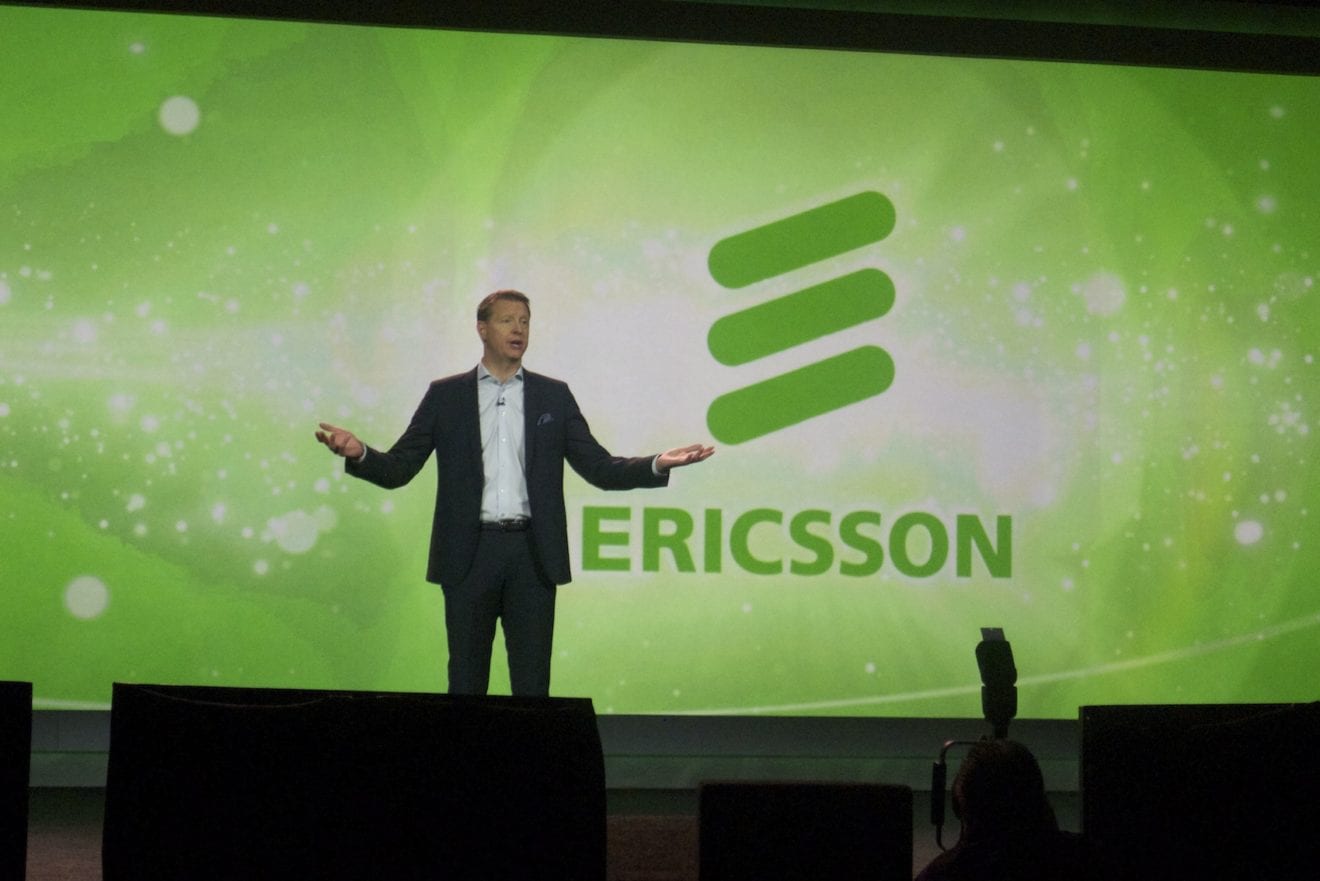
    Corrupt business practices dating back to 2007 have led to the dismissal of 50 employees and will likely result in a “material” fine for Ericsson once the Justice Department and Securities and Exchange Commission complete their investigation into the matter, the Swedish company said Thursday.

    During an earnings call with analysts, CEO Börje Ekholm said the company found evidence of corruption during an internal investigation and reported those findings to authorities. “We don’t know how the discussions will go, but we think it is likely that some measures will be taken,” he said.

    Top executives at the company were allegedly involved in a bribery scandal in Africa, Asia, Europe and the Middle East. Ekholm said the company has declined to make provisions against the expected financial penalties because it’s unsure of the magnitude of what the ongoing investigation will uncover.

    The tempered admission of guilt on the part of Ericsson overshadowed an otherwise successful quarter for the business, its first profitable quarter since June 2016.

    Investments in research and development along with 18 months of cost reductions are finally contributing to the company’s financial performance, according to Ekholm. The company has laid off 22,000 employees since June 2016 and had a total head count of 95,000 workers at the end of September.

    Strong demand for 5G network equipment in the United States also boosted sales to almost $6 billion during the quarter. “There is strong momentum in the global 5G market with lead markets moving forward,” Ekholm said in a statement. “More work remains, however, to get all parts of the business to a satisfactory performance level.”

    Net sales in North America, the company’s biggest regional market behind Europe, jumped 21% year over year and network equipment sales increased 24% in North America during the same period.

    Ericsson banked a net profit of $304 million during the quarter. Sales in North America reached nearly $1.7 billion during the quarter, representing almost 28% of its entire business. The company forecasts a steady research and development cost during the final quarter of 2018 and says it will primarily focus those expenses in the network division.

  • Nokia launches Fixed Access Health Index

    Nokia launches Fixed Access Health Index

    Nokia has announced it has developed a new metric for measuring the quality and performance of fixed access networks in a standardized way.

    The Nokia Fixed Access Health Index for service providers uses Nokia’s automation and analytics capabilities to benchmark the performance and health of fixed line networks against those of industry peers.

    It is designed to act as the foundation for network optimization programs, and measure their performance and progress over time through regular performance measurements.

    The index is already in use by multiple operators, including a major Asian service provider that used the tool to optimize the network health and quality of its recently introduced IPTV service.

    “The initial results we saw with our pioneering customers in this domain were so impressive that we decided to go for a ‘standardized’ approach, which can be replicated with other service providers,” Nokia president of fixed networks Federico Guillén said.

    “Based on a series of playbooks, each operator gets a personalized evaluation and improvement plan. To offer this kind of service, we build on our expertise in all 20 of the largest access networks globally, and with more than 300 fixed broadband customers worldwide, which gives us an endless source of knowledge to tap.”

  • Globe interconnects with DE-CIX

    Globe interconnects with DE-CIX

    The Philippines’ Globe Telecom has enhanced its peering capacity in Europe through a new agreement with Deutscher Commercial Internet Exchange (DE-CIX). DE-CIX is the world’s largest internet exchange point with a peak traffic of over 6.4Tbps. Globe has peered at the company in Germany via its location in Frankfurt. The carrier neutral DE-CIX exchange interconnects more than 800 member networks, and provides peering and interconnection services to over 1,500 network operators, ISPs and content providers from more than 100 countries.

    The company offers peering and interconnection services from 13 locations in India, the Middle East, Europe, and North America.

    “This initiative will further complement existing infrastructure and enable users direct access to European content. At the same time, it functions as alternate internet gateways to the Philippines from that region as the internet is two-way,” Globe CTO Gil Genio said.

    “Improvements may also be observed in reaching networks that are part of the exchanges as the set-up will avoid the traditional via US traverse.”

    He said Globe Telecom now has connections to 23 internet exchange providers worldwide.