Category: Telecom

Retail News Asia is committed to providing both local and global retailers with the latest Telecom & Telco news throughout the Asian market. This on a daily base.

  • Naver says its Green Dot is the future of searching

    Naver says its Green Dot is the future of searching

    Naver’s iconic green search bar may one day be a thing of the past – at least in the mobile app.

    Korea’s most popular portal site is experimenting with a new tool called the Green Dot that allows users to search for information not only by text, but also by voice, location and photos.

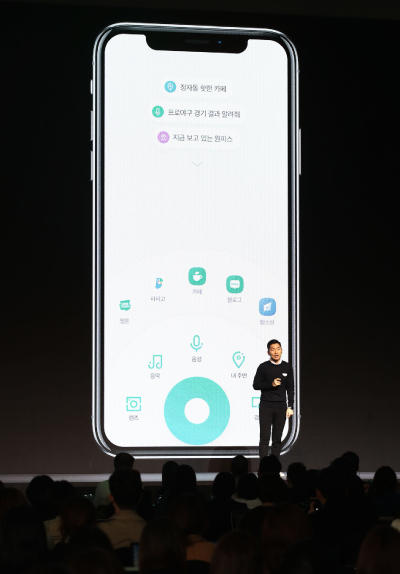
    The Green Dot was first unveiled last month. It is what the company calls an “interactive search” button located at the bottom of Naver’s app.

    When touched, the button opens a small window that offers various search functions like voice recognition, music recognition and recommendation on trending restaurants and bars nearby. The user can also add short-cuts to frequently used Naver services, from blogs to shopping.

    “Naver’s green search bar was developed at a time when searching online through PCs was about keywords and being linked to [web pages with] text information,” said Kim Seung-eon, the portal giant’s design head, at the Naver Design Colloquium held Friday in Dongdaemun, central Seoul. The annual event invites Naver designers to share their strategies and design insight.

    “But now with mobile, [portals] aren’t just about new information; we listen to music, reserve restaurants and use services that are closely linked to our daily lives. There are so many usages now and ways to input information. The Green Dot integrates all these; it’s the start of a new way to search and connect.”

    Kim added that the Green Dot will be the new design identity of Naver and a core function related to services coming in the future.
    The portal giant also shared the results of its first page overhaul on its mobile app.

    Last month, Naver introduced a new first page of its mobile app that left out news and trending keywords, leaving nothing but the search bar, weather information and the Green Dot.

    Its explanation was that the change was purposed to put a larger emphasis on searching, which accounts for 60 percent of why users turn on the Naver app. The change was available as a beta service.

    According to Naver, some users felt that the blank space was awkward, but the beta service had also showed meaningful results: the amount of time users spent on the app increased 15 percent and the number of searches rose 20 percent.
  • Korea’s KT skips Huawei for 5G

    Korea’s KT skips Huawei for 5G

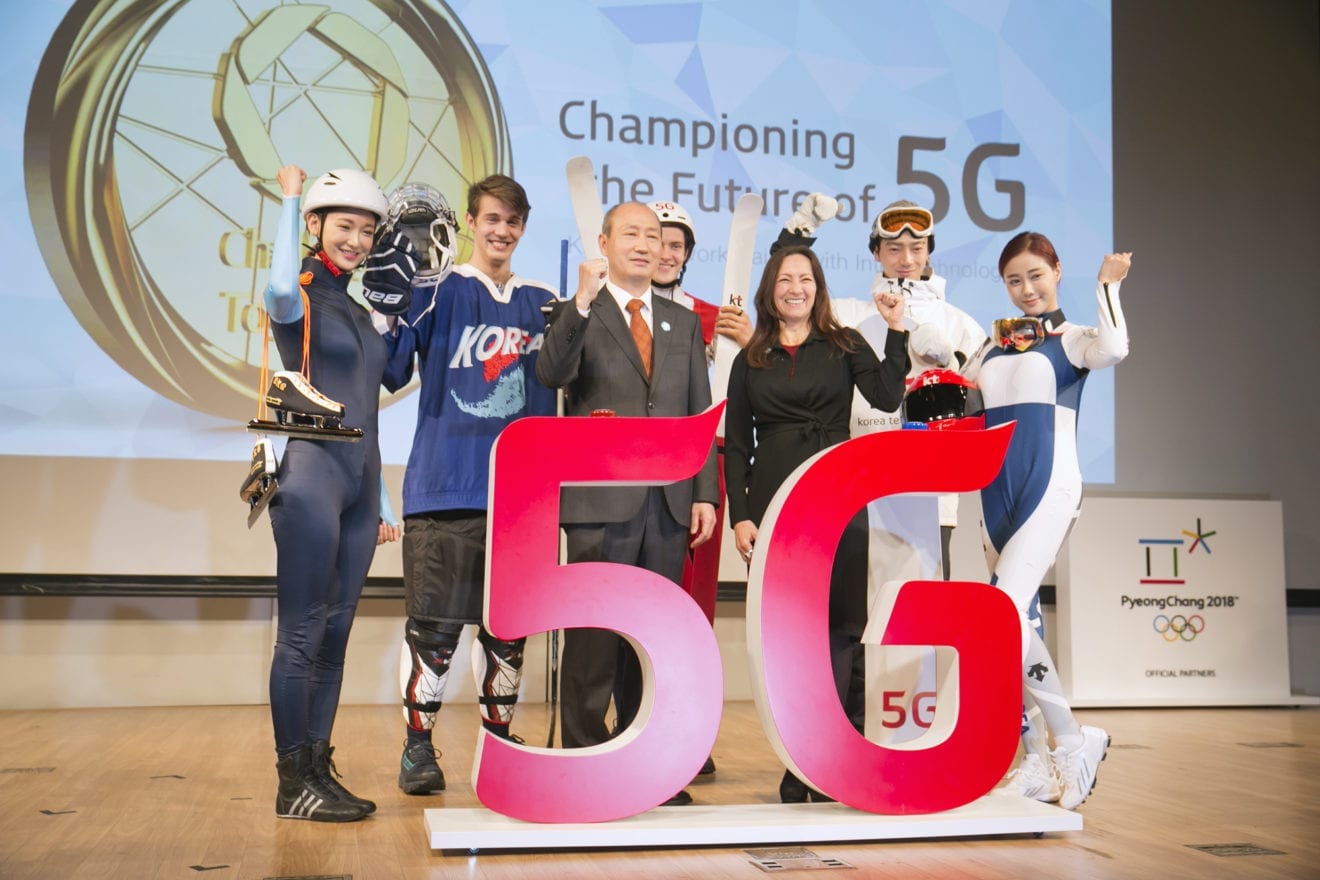
    KT has chosen Samsung Electronics, Ericsson and Nokia as suppliers of 5G network equipment. As expected, Huawei was excluded from the list.  “In choosing 5G equipment providers, the company considered a wide range of factors: the level of technology, investment costs and management stability based on the compatibility with the existing LTE network,” KT said in a statement.

    The bid results, announced by the company Thursday, come a month after SK Telecom named Samsung Electronics, Ericsson and Nokia as its 5G equipment providers.

    This is the second time Huawei was left out despite having participated in internal tests along with the three selected.

    SKT and KT’s choices were anticipated because both had used equipment from Samsung, Ericsson and Nokia for their 4G LTE networks.

    Compatibility of equipment is an advantage for mobile carriers in terms of cost and maintenance, especially in the early stages when 5G equipment is not fully installed nationwide.

    LG U+ is the only one among Korea’s three mobile carriers that has not yet announced 5G equipment suppliers. The smallest mobile carrier is likely to include Huawei on its list. It partnered with the Chinese company for its 4G LTE network, along with Samsung, Ericsson and Nokia.

    An LG spokesman said Thursday that the company “does not have plans to openly disclose selected bidders for 5G network equipment at the moment,” as it is not mandatory.

    However, LG U+ Vice Chairman Ha Hyun-hwoi gave a strong hint at the parliamentary audit late last month when he gave a positive answer to a lawmaker’s question on whether it was “unavoidable” to use Huawei’s 5G equipment as its 4G equipment was from the same company.

    The biggest advantage of Huawei’s 5G equipment is cost efficiency. The Chinese company is known to charge prices that are 20 to 30 percent lower than other global competitors for high-quality 5G equipment. A factor that argues against Huawei is security concerns.

    Due to its ties to the Chinese government, there have been worries that the company’s equipment is being used for spying. In August, the U.S. and Australian governments banned Huawei from supplying equipment for their 5G wireless infrastructure citing security reasons. Britain said in July it “is less confident” about the integrity of Huawei products.

    The concern is shared by some local customers as well. Online petitions at the Blue House’s official website have been posted since June requesting a stop to LG’s adoption of Huawei’s 5G equipment. Huawei has been denying such allegations.

    In a press release last month, the Chinese tech company highlighted that, despite ongoing security concerns, there has been zero cases of actual information leakage in the past.

    “We have supplied LTE equipment for LG U+ since 2013, and until now, there were no cases of security accidents,” said the statement. “After multiple verifications by the government, it has been proved that there have been no problems.”

  • Viettel’s foreign market earnings up in Q3

    Viettel’s foreign market earnings up in Q3

    Viettel earned gross profits of $57.25 million from overseas markets in Q3, a year-on-year increase of 8 percent. Its overseas investment arm, Viettel Global, reaped net revenues of nearly VND4.43 billion ($188.71) in the third quarter, up 5 percent over the same period last year.

    Accumulated net revenues reached VND12.43 trillion ($529.7 million) between January and September.

    The revenues include nearly VND5.61 trillion ($238.94 million) from African countries, including Cameroon, Tanzania, Mozambique and Burudi, VND4.54 trillion ($193.68 million) from Southeast Asia countries, including Cambodia and East Timor, and VND1.69 trillion ($71.82 million) from Latin America.

    The company’s revenues from its three continents rose 3-11 percent, with Latin America registering the greatest increase.

    The increase is attributed to the company’s development of 4G services, digital wallet and other information technology projects serving overseas businesses and governments.

    Viettel Global is providing 4G services in 9 overseas markets, and digital wallet services in 8 markets.

    Also, Viettel Global’s sales expense and management costs reduced 4 percent and 12 percent respectively in the first 9 months of this year, compared to the same period last year.

    Viettel Global was established in 2006 to spread Viettel Group’s presence in foreign markets. Eight out of Viettel Global’s 10 overseas markets have begun earning profits. It has taken up the largest market share of the telecommunications sectors in Laos, Cambodia, and Timor Leste.

    It plans to expand its overseas operations in the Southeast Asian region and foreign markets that share similar population sizes as Vietnam this year. The company also aims to achieve a 10-15 percent year-on-year increase in terms of the number of subscribers by the end of 2018.

  • KT increases fixed-line network speed tenfold, to 10Gbps

    KT increases fixed-line network speed tenfold, to 10Gbps

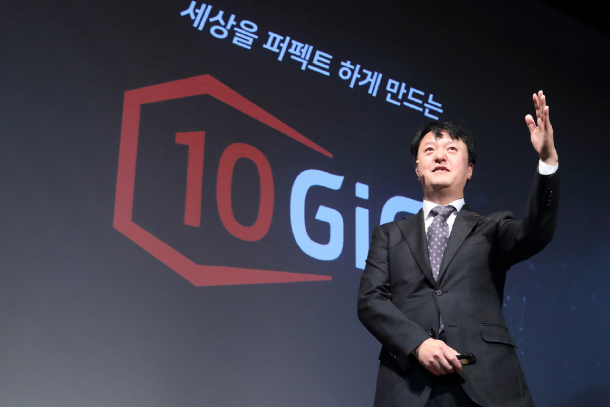
    KT announced Wednesday it will introduce a fixed-line network 10 times faster than its current offerings in Seoul as well as six major Korean cities.  The launch of Korea’s first home internet with speeds of up to 10 gigabits per second (Gbps) comes about four years after the mobile carrier launched wired internet with 1-Gbps speed.

    According to the company, Korea’s largest fixed-line internet service provider, a faster home internet has become a necessity as the number of independent content creators, like YouTubers and dedicated Esports players, has grown explosively.

    “The 10 times faster network will enable creators to air their content in ultra high-definition quality,” said Lee Pill-jai, senior executive vice president for marketing at KT. “It will also make virtual reality and augmented reality content a norm.”

    In a demonstration Wednesday at KT headquarters in Gwanghwamun, central Seoul, the actual download and upload speeds of the new internet service exceeded 8 Gbps whereas the existing internet achieved speeds of less than 1 Gbps. With the new internet, it takes only 30 seconds to download a 33-gigabyte ultra high-definition movie, according to KT. At 1 Gbps, it takes four minutes and 30 seconds.

    “You also need to think of the many devices that will be connected to home internet in the future,” said Park Hyun-jin, head of the wire and wireless business unit at KT. “I personally use five internet-powered devices, but by 2021, an average person will have 13 devices connected to the internet.”

    According to Park, the connection of numerous devices will slow internet speeds and make a 10-Gbps fixed-line a necessity to maintain tolerable internet speeds on each device.

    Faster fixed-line internet will also support the deployment of the high-speed 5G wireless internet nationwide, according to KT.

    “The 5G network is offered as wireless internet through base stations, but 5G network equipment and base stations need to be connected via a wired backbone network,” a spokesperson from KT said. “Having a 10-Gbps fixed-line network as the 5G’s backbone network will increase the stability of the wireless service.”

    The so-called backbone is a part of a computer network that connects other networks.

    According to KT, its 10-Gbps internet will be able to cover about 60 percent of the country by the early half of next year.

    To subscribe to the 10-Gbps internet, it costs 110,000 won ($96) per month, but if users already subscribe to KT for TV services, the monthly fee could be discounted to 77,000 won on a three-year contract basis.

    The company also released 5-Gbps and 2.5-Gbps internet plans, for those wanting faster but affordable home internet.

    To enable users to get a feel for 10-Gbps internet, KT said it will gradually install the network at 80 Starbucks Reserve shops in Korea and six PC rooms operated by AfreecaTV by this year.

  • Equity gains see SK Telecom record good quarterly results

    Equity gains see SK Telecom record good quarterly results

    SK Telecom, Korea’s top mobile carrier, said Tuesday that its third quarter net profit rose 32.4 percent from a year earlier.

    Net income reached a record high of 1.04 trillion won ($910.4 million) in the July-September period, compared with a profit of 793 billion won for the same period the previous year, the company said in a regulatory filing.

    SK Telecom said shareholding gains from SK Hynix. gave a boost to its quarterly bottom line. SK Telecom holds a controlling 20.1 percent stake in the world’s second-biggest chipmaker by sales.

    SK Hynix’s third quarter net profit surged 53.6 percent on-year to 4.69 trillion won on record sales of 11.4 trillion won.

    Still, SK Telecom said its operating profit fell 22.5 percent on-year to 304.1 billion won in the third quarter, while sales dropped 5.77 percent to 4.18 trillion won over the cited period.

    Shares in SK Telecom fell 2.54 percent to 269,000 won.

  • Zong 4G – The First Company to Reach 10,000 4G sites

    Zong 4G – The First Company to Reach 10,000 4G sites

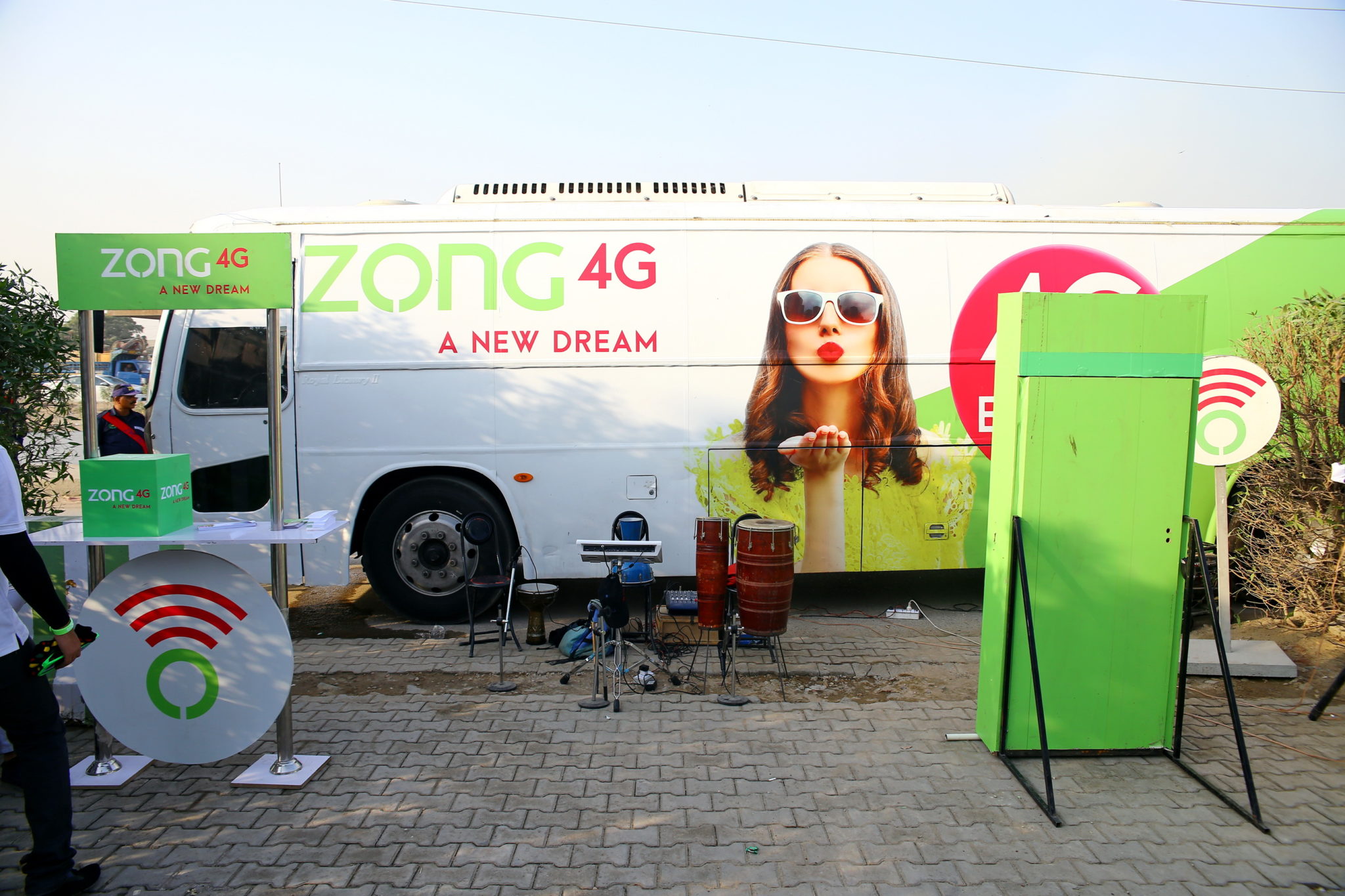
    Pakistan’s No.1 Data Network brings widest 4G coverage for its valued subscribers. Having pioneered the 4G in country, Zong 4G is the first telecom company in the country to successfully deploy and cross the prolific 10,000 4G sites mark.

    With 4G presence in already more than 300 cities, the company’s current development implies that Zong 4G has not only become the first telecom entity to own over 10,000 operational 4G sites but also the one and only to secure widest 4G coverage at every nook and corner of the country.

    Additionally, Zong 4G plans to roll out over 5,000 4G sites in the next three years to cater to the growing demands of its 4G customers whose number has been exponentially increasing with every passing day.

    “Zong 4G has taken the lead to connect Pakistan with the rest of the world. We have upgraded all our sites to 4G and developed the most seamless and technologically advanced network which is second to none,” said the telecom company’s spokesperson in a statement.

    “For a telecom company, this kind of technological excellence not only enhances the professional quotient but also brings along a host of responsibilities—to shoulder the demands of our ever growing network that offers unmatched connectivity from Peshawar to Gwadar. Being fully cognizant of the situation, Zong is eyeing to add 5,000 additional sites in next three years as we believe that our customers should experience the largest 4G coverage in country- which is unrivaled for in reliability and connectivity. With our customer focused planning and strategic investments, we will always remain geared up to provide nothing less than the best!” continued the telecom company’s spokesperson in a statement.

  • Asia-Pacific telcos to face slower revenue growth: Moody’s

    Asia-Pacific telcos to face slower revenue growth: Moody’s

    Moody’s Investors Service expects stronger competition for the Asia Pacific (APAC) telecommunications sector and stronger commoditisation, and slower revenue growth for companies across 11 markets in the region, including Malaysia. The other markets are Hong Kong, India, Indonesia, Japan, Korea, the Philippines and Singapore.

    The rating agency’s report entitled “Telecommunications – APAC: 2019 Outlook” noted that while slower overall revenue growth will be evident in all 11 markets, the emerging market is expected to see a more pronounced slowdown with revenue growth to fall to 3-3.5% in 2019 versus the 3.9% in 2017.

    “Comparing overall revenue growth across APAC with GDP (gross domestic product) growth, Moody’s says that companies as a whole will show modest revenue growth of 2-2.2%, with such growth lagging average GDP growth of about 4.6% for the region,” said Moody’s vice-president and senior analyst Nidhi Dhruv.

    Meanwhile, new entrants are expected to intensify competition in Singapore, Japan and Australia.

    High shareholder returns and capital expenditure levels will continue to temper free cash flow generation, which will consequently make companies to look into diversifying revenue as traditional telecommunications revenues contract. This will eventually lead to more cross-industry partnerships.

    Additionally, while 4G will remain the dominant technology used by telecommunications companies in APAC, 5G will gain some traction in 2019-20.

    Japan, Korea and Australia are expected to lead the region in rolling out 5G services in 2019.

    Nevertheless, Moody has given a stable outlook for the sector in APAC 2019, with companies in the region likely to show relatively stable leverage and debt levels over the next 12-18 months.
    Moreover, while liquidity is weakening, it remains supported by the companies’ access to the banks and bond market at current levels.

  • SK Group continues to focus on social value

    SK Group continues to focus on social value

    SK Group is reevaluating its business models in a bid to ensure that all of its affiliates create social value along with economic value. SK Chairman Chey Tae-won and the heads of all SK affiliates discussed ways to renew their business models so that doing business leads to increasing benefits for the public as well as SK shareholders and employees during a three-day meeting on Jeju Island that ended Friday.

    “Creating social value is a way to earn strong trust from our customers and society,” Chey said. “By social value, I mean increasing the benefits of all stakeholders in our business including our customers, shareholders and employees.”

    Chey then ordered the chief executives to think over whether there was any part of their business that they are tricked into believing is sustainable.

    “Rethinking business models that you believe are sustainable is the beginning of a deep change that we are trying to accomplish,” the chairman added.

    SK has been making small steps into realizing Chey’s vision from earlier this year. The group’s oil refining arm SK Energy opened up the idle space at its gas stations so a logistics start-up can move in and use the space as storage.

    However, many other SK affiliates still need to come up with ideas to create social value.

    To renew business models, the CEOs agreed that sharing data and resources between SK affiliates is crucial. The heads also said that all members of SK should be a part of the movement for the vision to materialize.

    The chief executives first decided to improve human resources management policies and the research and development system. Details of the discussion weren’t revealed, but Chey ordered the chief executives to rethink the work environment for employees and to bolster R&D capabilities.

    As SK has businesses in a range of industries, the group is also thinking about business convergence among affiliates.

  • Blockchain used for inter-carrier settlements in PoC trial

    Blockchain used for inter-carrier settlements in PoC trial

    Members of the International Telecoms Week (ITW) Global Leaders’ Forum (GLF), including PCCW Global and Telstra, have completed a proof of concept trial demonstrating how blockchain technology can transform inter-carrier settlement by streamlining complex transactions.

    The two operators as well as Colt Technology ServicesBTOrange and Telefonica, demonstrated the viability of a platform capable of settling voice transactions between operators within minutes rather than hours.

    The demonstration represents the first proof of concept blockchain trial to involve a multi-lateral series of relationships within the wholesale telecoms sector. It was the latest in a series of trials carried out by CLF members in collaboration with technology partner Clear, a blockchain specialist.

    The proof of concept was able to demonstrate that live data feeds could be successfully input into a distributed ledger, enabling traffic to be automatically verified and settled between two carriers.

    In a statement, the GLF said it is now reviewing its options over a potential governance structure to further develop the technology and implement a solution for the entire industry.

    “This latest PoC signals nothing less than the future of telecoms, whereby intensive manual practices can be securely automated across the wholesale ecosystem,” Colt Technology Services CEO Carl Grivner said.

    “This is a major step forward by Colt and its partners, meaning we can now invest further resources into driving both our and our customers’ businesses forward using the power of blockchain.”

  • BSNL, Nokia to collaborate on public safety networking

    BSNL, Nokia to collaborate on public safety networking

    Nokia and Indian state-owned operator BSNL are expanding their relationship with an agreement to jointly explore opportunities in the public safety sector.

    Under the agreement, Nokia will become BSNL’s OEM technology partner for public safety projects in support of the government’s efforts to advance public safety standards in the country.

    The two companies will explore developing solutions for first responders based on Nokia‘s ViTrust line of critical communications products.

    This will include the Nokia Ultra Compact Network, a portable solution designed to allow the deployment of a mission critical LTE mobile broadband network within minutes of arrival.

    The companies will explore opportunities in industry segments including smart cities, border enforcement, and mines and quarries in remote areas, and will work with India’s National Disaster Response Force (NDRF) to augment public safety communications systems with LTE technology.

    “As a trusted telecom service provider, BSNL is committed to providing the best technology solutions for public safety professionals,” BSNL chairman and managing director Anuam Srivasta said.

    “Our technology partnership with Nokia is a crucial step in this direction. We have a longstanding working relationship with Nokia, and this project starts a new chapter in our journey. Nokia’s innovation and leadership in mission-critical communications will allow us to deliver a best-in-class public safety network.”

    Last week the two companies announced another collaboration aimed at using LTE technology to improve operational efficiency at Nokia’s Chennai manufacturing plant.

  • SKT, Deutsche Telekom sign co-investment agreement

    SKT, Deutsche Telekom sign co-investment agreement

    SK Telecom and Germany’s Deutsche Telekom have signed a strategic cross-investment partnership aimed at strengthening their competitiveness in 5G.

    Under the agreement, SK Telecom will invest in MobiledgeX, a Deutsche Telekom subsidiary focused on edge computing technology.

    Deutsche Telekom will reciprocate by investing the same amount in ID Quantique, an SK Telecom strategic partner in quantum cryptography communication technology.

    The operators have made the cross-investment in a bid to ensure they are in a position to offer specilized 5G services in the upcoming 5G era, supporting the expected development of intelligent services such as connected vehicles, smart factories and wearable devices.

    As part of the collaboration, SK Telecom and Deutsche Telekom are evaluating applying quantum cryptography communications technologies on their respective 5G trial networks.

    The companies are also reviewing using mobile edge computing technologies to reduce data transfer time, for applications such as enabling authorities to conduct on-site monitoring of disaster-affected areas or responding more quickly to traffic accidents.

    The collaboration will also cover initiatives in new business areas such as artificial and virtual reality. SK Telecom is pleased to enter into a cross-investment agreement with Deutsche Telekom as it will serve as a valuable opportunity for us to further solidify our 5G leadership in the global market and drive new growth,” SK Telecom president and CEO Park Jung-ho said.

  • Construction begins on PEACE cable

    Construction begins on PEACE cable

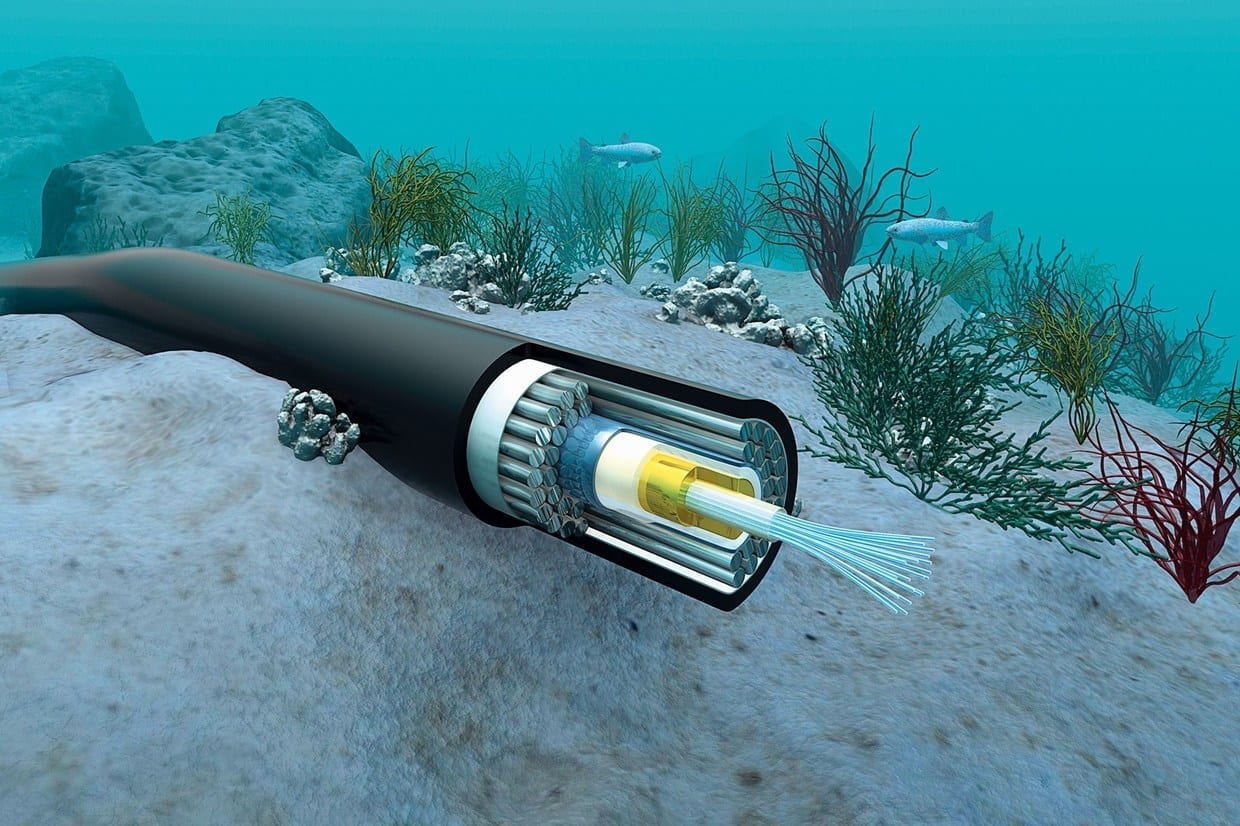
    Huawei Marine Networks and the 12,000 kilometer PEACE Cable system have hit a new milestone. The project has now entered into the cable and material manufacturing stage, staying on schedule for an RFS date in the first quarter of 2020.

    PEACE stands for Pakistan & East Africa Connecting Europe, which tells you pretty succinctly the route they will be taking. With one end in Pakistan and the other in southern France, it will come ashore in Djibouti and Egypt along the way with an extension south to Somalia, Kenya, and the Sechelles.

    Further plans suggest extending that branch further down to South Africa.  The landing parties on either end will be Pakistan’s Cybernet and Djibouti Telecom, and the agreements for destinations in between are expected to follow in the next few weeks.

    The build promises the lowest latency route between Europe and China, although the materials I have don’t say exactly how they plan to do that – a terrestrial leg through Pakistan and western China perhaps?

    When complete, the PEACE cable promises 16Tbps per fiber pair. An earlier announcement suggested 5 fiber pairs for a total of 60Tbps, though I don’t know if plans have evolved since then.

  • Malaysia’s TM hires four new board members

    Malaysia’s TM hires four new board members

    Telekom Malaysia (TM) has appointed four new directors to the company’s board, following the resignation of David Benello as an independent non-executive director. The new directors are Dato’ Asri Hamidin @ Hamidon, Dato’ Mohd Naim Daruwish, Hisham Zainal Mokhtar and Saheran Suhendran.

    Asri Hamidin is appointed as a non-independence non-executive director representing the special shareholder, Minister of Finance (Inc) on the board.

    Mohd Naim has been made a non-independent non-executive director representing the interests of the Employees Provident Fund (EPF) which is a major shareholder of the Malaysian incumbent.

    Asri is currently the deputy secretary general (investment) at the Ministry of Finance, while Mohd Naim is currently the deputy chief executive (operations) of EPF.

    Hisham and Saheran were appointed as the independent non-executive directors.

    Hisham is currently a director in the group MD’s office at Malaysian Industrial Development Finance Bhd, while Saheran is currently a consultant at Messrs Chua Associates.

    All the board appointment took effect on October 3.

    TM also announced that Farid Basir has joined the telco as its new chief human capital officer (CHCO). Farid, taking over the position previously covered by Suhaimi Sulong as the acting CHCO since early this year, assumed his new role on October 1.

    Prior to his appointment, Farid was the CHCO at Bank Rakyat for almost three years.

    Cisco names Herman Lam as MD for HK & Macau

    Cisco has appointed Herman Lam as managing director for Hong Kong and Macau.

    The company has also announced that Barbara Chiu, vice president of Hong Kong, Macau and Taiwan, will retire by end of October.

    Cisco said Lam brings to the table over 25 years of experience in IT industry combined with a wealth of leadership and management experience gained with leading technology firms.

    Prior to joining Cisco, Lam’s previous stints include CEO of Hong Kong Cyberport Management Company, and general manager of Microsoft Hong Kong.

    Commenting on the appointment, Cisco Greater China chief executive officer Hera Siu said Lam’s “unique blend of experience and knowledge, complemented by extraordinary vision and operational expertise within large organizations,” will bring valuable insights to the company.

    “I also want to thank Barbara, who has had an immeasurable impact on Cisco’s success and express my utmost appreciation for her devotion and leadership during the past 12 years,” Siu noted.

    21Vianet appoints Wing-Dar Ker as DYXnet Group’s CEO

    Chinese carrier-neutral network service provider DYXnet Group has announced that Wing-Dar Ker has been appointed as the company’s new CEO.

    He takes over the position from company founder and CEO Lap Man, who will continue to serve the group as adviser.

    The appointment was made by 21Vianet Group, parent company of DYXnet Group and one of China’s carriers and cloud-neutral internet data center service providers.

    Wing is also president of Shanghai Blue Cloud Technologies Co Ltd, 21Vianet Group’s other wholly-owned subsidiary.

    The move is aimed at facilitating greater collaboration between DYXnet Group and Blue Cloud, while exploring and capitalizing on synergies, 21Vianet said.

  • CITIC Telecom CTC opens cloud centers in London and Moscow

    CITIC Telecom CTC opens cloud centers in London and Moscow

    CITIC Telecom CPC, a subsidiary of CITIC Telecom International Holdings Limited, is launching new connected SmartCLOUD Services Center in Moscow and London. Stephen Ho, CEO of CITIC Telecom CPC, said the ‘Europe & Russia Cloud Ring’ will be crucial for European-based enterprises who are looking to invest in and explore the emerging market and business opportunities in mainland China.

    The two new sites will provide enterprise customers with scalable multi-cloud connectivity with full disaster recovery capability and intra-city, inter-city and cross-boundary redundancies. They will also provide round-the-clock professional support optimizing customers’ IT investment, achieving a faster response time and ensuring business continuity.

    The move follows the company’s recent debut of two cloud centers in Frankfurt, Germany, and Cape Town, South Africa. The company now has 18 cloud centers across Asia Pacific, America, South Africa, Europe and Russia.

    Mavenir creates open RAN ecosystem

    Mavenir has announced an Open RAN partner ecosystem that includes MTI, Tecore Networks, Baicells, NEC, AceAxis, KMW, Benetel, CommScope, Blue Danube Systems and Airrays.

    The move aims to provide more options and makes it easy for operators to deploy an innovative, flexible cloud-based Open RAN solution, the company said.

    Mavenir will act as the end-to-end systems integrator simplifying the engagement for operators and creating an offering that is on par with the traditional, hardware centric proprietary vendors.

    Juniper Networks invests $2m in Corero

    Corero Networks said it has secured a $2 million investment from Juniper Networks.

    The investment follows the pair’s recently signed multi-year global resale partnership, under which Juniper will resell and support Corero’s SmartWall DDoS protection software products and services.

    ServiceNow taps NTT Com to launch two data centers in Japan

    ServiceNow is building two new data centers in Tokyo and Osaka through a partnership with NTT Communications to provide high-performing and high-availability cloud services to enterprises in Japan.

    The two data centers being built by NTT Com are expected to be ready in the first half of 2019.

    The new Japanese data centers are expected to enhance the ServiceNow Nonstop Cloud, which has been designed to support the availability and scalability of services and processes for global enterprises.

    The new data centers will add to ServiceNow’s existing nine data center pairs, which are set up across five continents to meet customers’ location and data sovereignty needs.

  • Samsung buys Spanish AI firm Zhilabs in prep for 5G

    Samsung buys Spanish AI firm Zhilabs in prep for 5G

    Samsung Electronics announced that it has acquired Barcelona-based artificial intelligence startup Zhilabs in a bid to further enhance its 5G capabilities.

    Financial details of the deal were not disclosed.

    Zhilabs will be fully owned by Samsung, but it will continue to operate independently under its own management, the South Korean vendor said in a statement.

    Zhilabs provides AI-based network and service analytics solutions and its products are used by telecoms carriers including Celcom, Maxis, NTT East, Telenor, O2, Vodafone, TIM, and Telefonica.

    Samsung said AI-based automation will play a central role in the introduction of new services driven by 5G, such as industrial Internet of Things (IoT) and connected cars, as carriers seek to implement new automated solutions and network virtualization features.

    “5G will enable unprecedented services that generate exponentially greater data traffic, for which automated and intelligent network analytics tools are vital,” said Youngky Kim, president and head of networks business at Samsung Electronics.

    “The acquisition of Zhilabs will enable Samsung to help carriers meet these demands to measure and ensure the quality of each subscriber’s service experience.”

    The acquisition of Zhilabs is also part of the company’s pledge, announced in August, to invest 25 trillion won ($22 billion) in AI, 5G, automotive electronics components and biopharmaceuticals technologies.