Category: Telecom

Retail News Asia is committed to providing both local and global retailers with the latest Telecom & Telco news throughout the Asian market. This on a daily base.

  • India’s Reliance Industries to invest in two MSOs

    India’s Reliance Industries to invest in two MSOs

    India’s Reliance Industries, parent company of operator Reliance Jio Infocomm, has announced strategic investments in two multiple system operators (MSOs) to accelerate the planned JioGigaFiber rollout. The company plans to invest 22.9 billion rupees ($311.48 million) to take a 66% stake in Den Networks Limited, India’s largest cable TV distribution company and a provider of high-speed broadband services in 100 cities nationwide.

    Reliance Industries will also invest 29.4 billion rupees for a 51.3% stake in Hathway Cable and Datacom Limited, a cable TV company providing high speed broadband in 21 cities.

    The company intends to make open offers for DEN and Hathway shares as well as two Hathway subsidiaries, as required by Indian takeover regulations.

    Announcing the planned investments, Reliance Industries said the acquisitions will accelerate Jio’s efforts to bring the JioGigaFiber service to a potential 50 million homes across 1,100 Indian cities and towns as quickly as possible.

    Jio will work with Hathway and DEN to bring the JioGigaFiber services to the two companies’ 24 million existing cable customers.

    Jio plans to use the JioGigaFiber network to offer high-speed broadband, ultra high definition video streaming, multi-party video conferencing, VR gaming, smart home and AI virtual assistant and fixed mobile convergence services.

    Reliance Industries chairman and MD Shri Mukesh said the acquisition is also expected to benefit the 27,000 local cable operators (LCOs) that are aligned with Hathway and DEN by enabling them to participate in India’s digital transformation. Indian LCOs provide coaxial cable connections on a per-neighborhood basis.

    “With Local Cable Operators now as part of the Jio ecosystem, we look forward to bringing Jio’s advanced JioGigaFiber and Smart Home Solutions to more Indian homes, even quicker,” he said.

    “We look forward to welcoming other MSOs and LCOs to be part of this partnership. This will result in growing wireline data connectivity in India and making state-of-the-art high-speed affordable internet and digital services accessible to the widest population in the shortest possible time.”

  • StarHub offering free local calls to prepaid customers

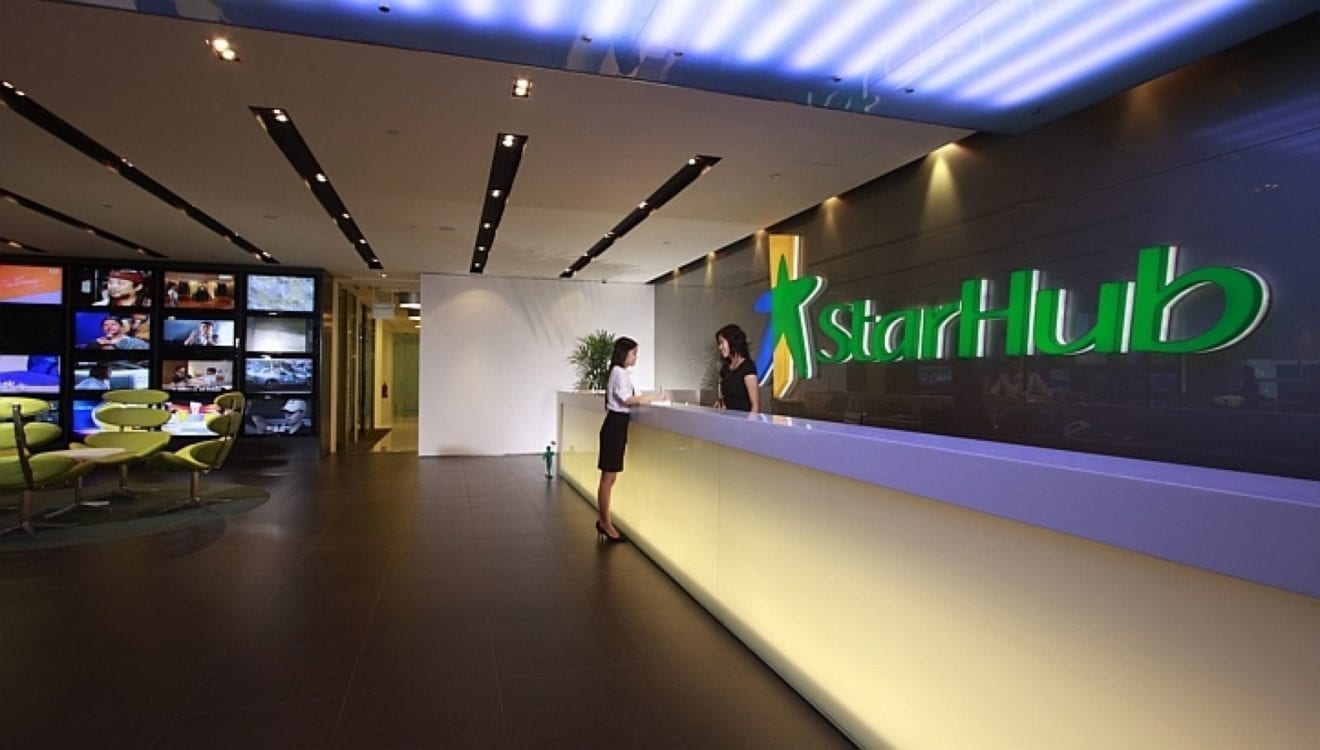
    StarHub offering free local calls to prepaid customers

    Singapore’s StarHub has started offering prepaid customers free outgoing local calls as long as they have an active data plan. The company will continue offering prepaid customers free local calls for the duration of their data plan, even if they run out of data.

    StarHub offers customers a choice of six prepaid data plan over its Happy Prepaid app, starting at S$2 for 30MB of data and free outgoing calls for three days. An S$8 mid-tier option adds 1GB and free calls for seven days, while an S$25 plan offers 5GB of data and free calls for 30 days.

    “Just by being on our new prepaid data plans, customers can enjoy the best of two worlds – surfing on Singapore’s fastest 4G network and chatting with family, friends and co-workers easily and affordably,” StarHub VP of marketing Donovan Kik said.

    “Simplicity is key and we will continually enhance our services to ensure we deliver the best possible experience to customers.”

  • Telkomsel to adopt Kinetica analytics platform

    Telkomsel to adopt Kinetica analytics platform

    Indonesia’s Telkomsel has arranged to adopt the Kinetica advanced analytics platform to help it transform the customer experience for its users.

    The operator will use the Kinetica engine and NVIDIA graphics processing units (GPUs) to enable real-time analytics, location-based visualization and AI capabilities.

    Telkomsel plans to use thee capabilities to deliver data-driven customer experiences and to enable real-time financial and business reporting.

    “The rapid growth in mobile devices, digital users, and the micro-services nature of prepaid across the Indonesian market has led to exponentially more data generated than ever before,” Telkomsel CIO Montgomery Hong said.

    “This influx of extreme data presents a massive opportunity to develop new, personalized, digital lifestyle experiences for Indonesian consumers. Unlike traditional database solutions, the Kinetica engine is purpose-built for extreme data and provides real-time data analysis and location intelligence across our business, from prepaid and postpaid mobile, to digital lifestyle services (video, gaming, music), to mobile financial services, and digital advertising for starters.”

  • BSNL helping to transform Nokia’s Chennai factory

    BSNL helping to transform Nokia’s Chennai factory

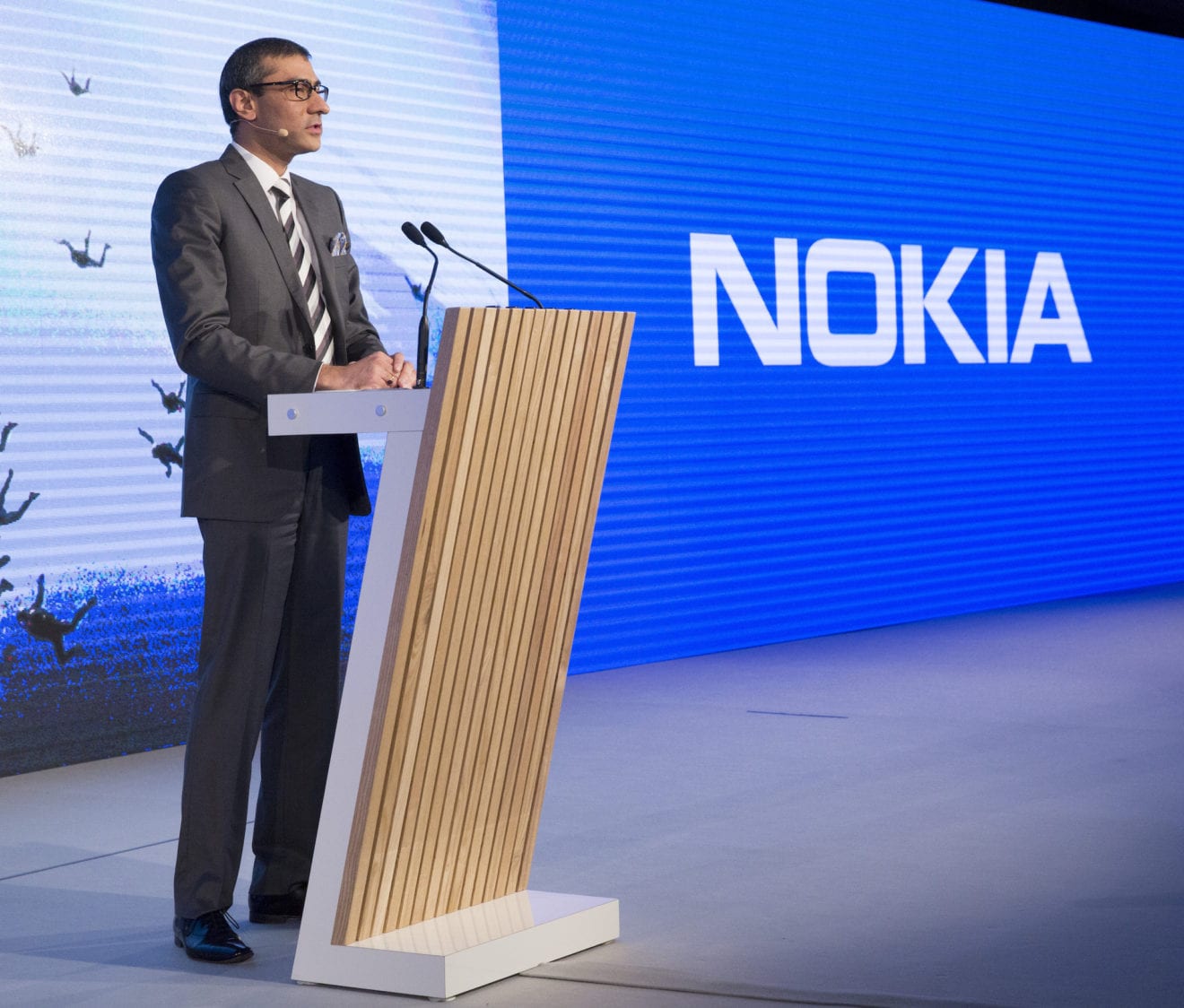
    Nokia and Indian state owned operator BSNL have announced a collaboration to use LTE technology to improve operational efficiency at Nokia’s Chennai manufacturing plant.

    The project, which the companies are billing as India’s first real world application of the Industry 4.0 concept, will see Nokia’s Chennai factory adopt advanced technologies to enhance operations and increase productivity.

    These technologies will include augmented and virtual reality, connected robotics, AI, big data analytics and IoT capability.

    Nokia deployed the LTE network using its Micro Core Network and Multi-access Edge Computing platform.

    Nokia and BSNL aim to use the project to demonstrate the ability to leverage automation across industries, and how the experience can be replicated in sectors such as oil and gas, mining, public safety and disaster management.

    BSNL has undertaken several initiatives to ensure India keeps pace with 5G evolution globally. Nokia is already one of our key partners in developing the 5G ecosystem, and now we are exploring use cases such as Industry 4.0 that can benefit tremendously with 5G,” BSNL chairman and managing director Anupam Srivastava said.

    “This network deployment for Industry 4.0 at Nokia’s Chennai factory that can be scaled to 5G demonstrates our preparedness to take advantage of new opportunities that will emerge with 5G and IoT in India.”

  • StarHub pursuing network sharing to cut costs

    StarHub pursuing network sharing to cut costs

    Singapore’s StarHub has revealed it is pursuing network sharing arrangements to further cut costs, after announcing a planned 12% reduction in the operator’s workforce.

    The operator could reach a commercial network sharing agreement shortly and be reaping financial benefits by the end of next year, the company’s CEO Peter Kaliaropoulos.

    The company’s new CEO, who took his position in July, said sharing of facilities is a necessity once an industry hits maturity.

    StarHub and smaller rival M1 have already indicated that they are evaluating further collaboration on mobile infrastructure sharing to reduce costs.

    Earlier this month, StarHub announced it will cut 300 jobs as part of cost reduction efforts aimed at saving S$210 million ($152.3 million) over the next three calendar years.

    According to the report, Kaliaropoulos believes StarHub needs to be leaner and more agile and focus its resources on growth areas such as its enterprise business.

    The company is under particular pressure due to the recent entry of Australia’s TPG as Singapore’s fourth mobile operator. Kaliaropoulos warned that the Singapore market may not be large enough to sustain four mobile operators, hinting that the smallest player may find it difficult to survive.

  • SISCC taps XSite Modular for subsea cable landing stations

    SISCC taps XSite Modular for subsea cable landing stations

    Solomon Islands Submarine Cable Company Limited (SISCC) has contracted prefabrication consultant and critical infrastructure building design builder XSite Modular to build four modular cable landing stations in the Pacific nation.

    The new cable landing stations will be deployed in Honiara, Auki, Noro, and Taro, and will form part of the Solomon Islands’ planned new subsea cable network infrastructure.

    This network will include the Coral Sea Cable System, a 4,000km cable system linking the Solomon Islands with Papua New Guinea and Australia. The network is being funded by the Australian government and will be operated by Australia’s Vocus Group. It will be the first subsea cable to directly reach the Solomon Islands.

    In addition, the 730km Solomon Islands Domestic Network (SIDN) will connect Taro, Noro and Auki with SISCC’s international hub in Honiara. This cable is also being funded by the Australian government as part of its development assistance program.

    SISCC has agreed to provide the landing party infrastructure for the two cable projects as part of the agreements between the Australian, Solomon Islands and Papua New Guinea governments.

    “XSite’s modular approach made design and construction of the structures easily customizable and able to meet both the strict delivery and budget demands of this ambitious project,” SISCC CEO Keir Preedy said.

    “Most crucially, XSite provides best-in-class and proven building techniques that offer the safety and reliability guarantees that are simply without compromise. We’re pleased to have them as our partner in developing and implementing this critical infrastructure for the Solomon Islands.”

  • Zong 4G Continues The Momentum of F-16

    Zong 4G Continues The Momentum of F-16

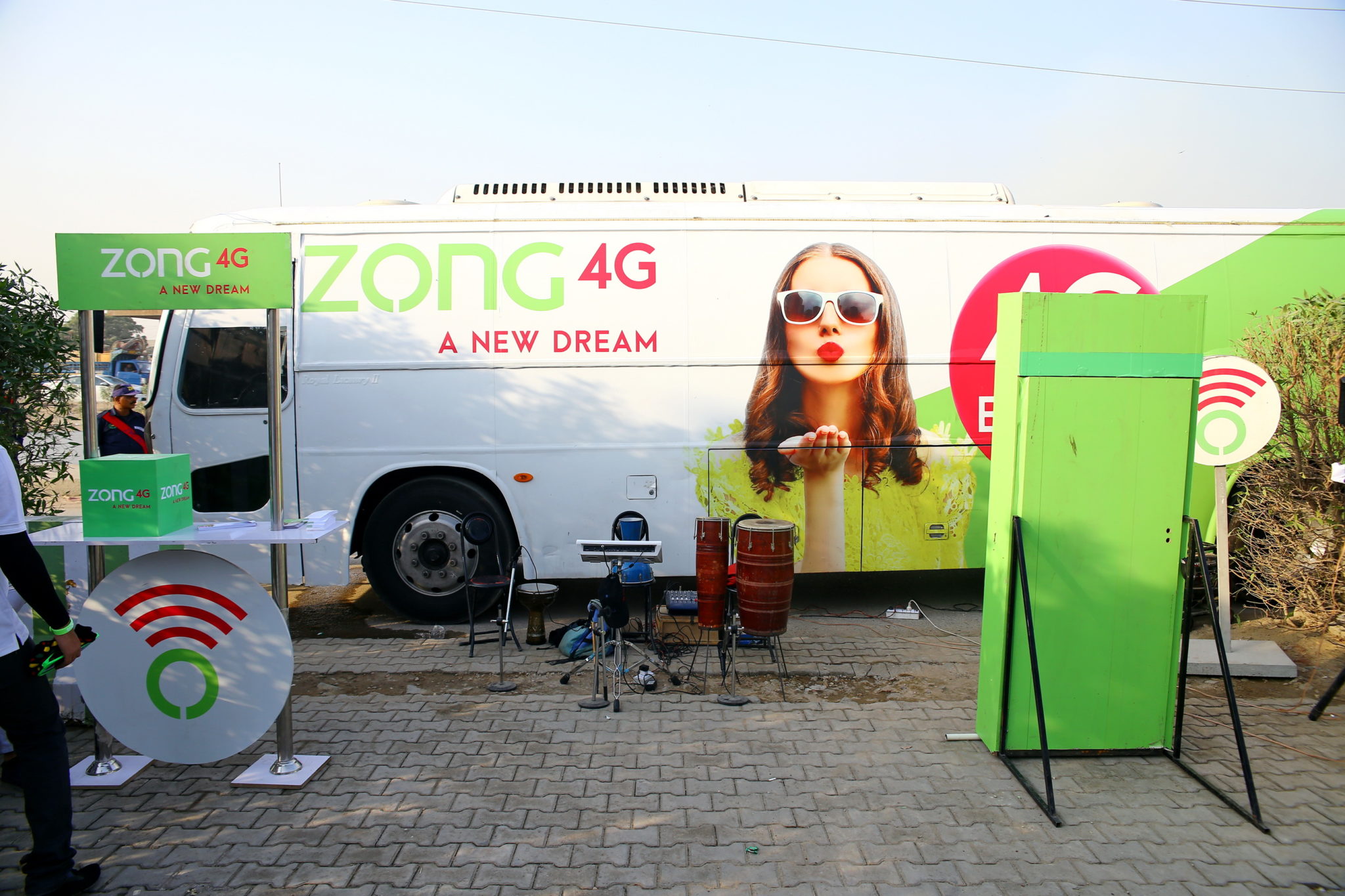
    Pakistan’s No. 1 Data Network, Zong 4G has risen to earn the distinguished title of being the “F-16 of Pakistan” on account of its fastest 4G speed and matchless connectivity. The genesis of the F-16 lies in its unmatched speed, precision and accuracy and so are the underlying features of Zong’s 4G network that offers blazing speed at the same reliability level of F-16 to more than 8 million subscribers. With the manoeuvrability like F-16, Zong 4G is enabling people to reach new heights and accelerating the tech-empowered young people to adopt digital lifestyle on the go.

    In telecommunication arena, network coverage outreach and speed are two key characteristics for being a market leader, particularly in 4G domain. Zong 4G is equipped with both these attributes; it is the largest 4G operator in Pakistan having widest network coverage ensuring seamless data connectivity.

  • Docomo invests in semiconductor startup QD Laser

    Docomo invests in semiconductor startup QD Laser

    Japanese mobile giant NTT Docomo, through its subsidiary NTT Docomo Ventures, has invested in QD Laser for an undisclosed amount.

    QD Laser – which was founded in 2006 as an offshoot of Fujitsu Ltd with funding from Mitsui Ventures – develops and manufactures semiconductor lasers, retinal scanning laser eyewear, and other products based on quantum dot laser technology.

    By leveraging its nanocrystal technology, the Kanagawa-based firm achieved mass production of quantum dot lasers capable of operating stably even at high temperature.

    In 2018, QD Laser applied its technology to incorporate a compact laser projector with extremely small output into a spectacle-type device, and commercialized what was claimed to be the world’s first retinal scanning laser eyewear that directly projects an image onto the user’s retina for image display.

    The technology for projecting a direct image onto the retina using a laser does not require the user to focus their eyes to see an image, so it is expected to improve the quality of life of patients with ametropia or corneal opacity and weak-sighted individuals.

    The technology can also be applied for realizing natural-looking augmented reality (AR) that people with normal vision can experience.

    Docomo said it has high expectations for potentials of the retinal scanning laser eyewear developed by QD Laser for resolving various social issues and contribute to creating new services through AR.

  • SKT, Samsung complete 5G NSA call

    SKT, Samsung complete 5G NSA call

    SK Telecom and Samsung Electronics have completed a 5G call using 3GPP non-standalone new radio standards and commercial 5G new radio equipment. The trial at SK Telecom’s 5G testbed at its Bundang office building used end-to-end solutions jointly developed by the two South Korean companies. It utilized 100MHz of 3.5-GHz 5G spectrum and 5G NR, LTE radio and 5G non-standalone core infrastructure.

    The 5G non-standalone new radio architecture has been designed to allow 5G to be supported by legacy LTE infrastructure, allowing mobile devices to be connected to both 4G and 5G for data traffic, and to use the 4G network for non-data traffic  such as exchanging signals for mobility controls.

    This configuration is expected to be one of the promising 5G architectures for initial deployments.

    Sasmsung announced last month that it has secured a contract to deliver 5G equipment including core and RAN technologies for SK Telecom’s 5G deployments, which will commence later this year.

    The companies have been collaborating on 5G development since 2014, and jointly completed the first successful interworking of LTE and 5G new radio utilizing both 3.5-GHz and 28-GHz spectrum during a trial last year.

  • Small Cell Forum puts orchestration, SON on roadmap

    Small Cell Forum puts orchestration, SON on roadmap

    The work program for the Small Cell Forum for the coming year covers “every aspect of densification,” including policy improvements for siting and spectrum, 5G-enabling technologies and the next iteration of its enterprise action plan, according to SCF. One of the work items focuses on the edge computing landscape, which the forum describes as an excellent example of an area where a common framework will be essential to avoid fragmentation—but one where every operator will deploy differently to support different use cases.

    Indeed, the pushing of intelligence, processing and cloud services to the edge of the network is making the small cell into a “gold mine” by adding many more services to the connectivity, according to SCF. Technologies like ETSI’s Multi-access Edge Computing or the OpenFog initiative, which is now the basis of an IEEE standard, are ways to distribute cloud services widely and bring them close to the users, supported along with radios on small cells equipped with processors or in separate miniservers. The distributed topology reduces latency and backhaul costs and improves responsiveness and QoS for users, the forum notes.

    The forum has been bringing operators, vendors and other stakeholders together as part of “Densification Summits” that it has held in the US, China and India over the past 12 months, discussing how to map clear and cost-effective migration paths to dense, software-driven and automated 5G networks. As such, the forum says it has been able to gather a range of requirements from industry and enterprise as to what future networks should enable.

    Another important task for the forum is developing a full road map for orchestration and SON. “Unsurprisingly, on the eve of commercial 5G, many of the issues which operators highlighted relate to that new standard—for instance, how it will interwork with WiFi, and what a 5G small cell for massive IoT applications should look like,” the SCF stated. “And some of the Forum’s most important 4G technologies will be revisited to plot a 5G migration, including the nFAPI interface for virtualized small cell networks.”

    According to the forum, one of the most important foundations of the new work program is the Enterprise, which is based on a year of in-depth discussions within SCF’s Enterprise Advisory Council. It identifies requirements that are common to all sectors and can be addressed by a unified small cell platform, while also drilling down on the specific variations within individual markets such as hospitality, healthcare and commercial property.

    SCF says it has been increasingly engaged with spectrum regulators and national and municipal authorities to help them understand the benefits of densification and how it can be accelerated by the right rules. Activities in 2018-19 will take this work further, to remove more of the barriers that challenge at-scale deployment.

    Last month, the FCC voted to approve rules aimed at speeding up the deployment of small cells and other 5G network equipment by regulating in part the fees and timelines cities and states can impose on wireless network operators and other wireless players.

    US outdoor small cell antenna shipments increased 84% in 2017, according to a report from EJL Wireless Research. The firm is forecasting that US outdoor small cell antenna shipments will increase by 75% in 2018 due to increasing demand from all four US national mobile operators as well as neutral host operators.

  • Nokia, STC to deploy LTE air-to-ground trial network

    Nokia, STC to deploy LTE air-to-ground trial network

    Nokia and Saudi Telecom Company subsidiary STC Business have teamed up to launch a pilot LTE-based air-to-ground network in Saudi Arabia. The agreement was signed at GITEX Technology Week 2018, and follows a successful trial of Nokia’s LTE-based air to ground solution on a flight from Riyadh to Jeddah in Saudi Arabia. Under the agreement, Nokia and STC will jointly work to build a commercial strategy for providing customers with in-flight connectivity, as well as on the network managed services and rollout of air-to-ground services across the STC Group.

    During the trial, Nokia provided a dedicated end-to-end network, including an air to ground RAN, core infrastructure and applications, while Nokia’s technology partner for aviation equipment Thales provided the onboard equipment.

    “The air-to-ground technology will enable STC to provide new and revolutionary services for their customers and add new revenue streams,” Nokia MEA head of end-to-end sales solutioning Mohamed Abdelrehim said.

    “With high-speed and low-latency broadband, airline passengers will be able to communicate with their loved ones or for business without any disruption because of air travel. Also, the airline crew will be able to improve operational efficiency because of better real-time communication between the flight crew and ground staff.”

  • Satcom Direct to distribute Intelsat’s FlexExec service

    Satcom Direct to distribute Intelsat’s FlexExec service

    Satellite operator Intelsat has teamed up with business aviation connectivity provider Satcom Direct to provide in-flight broadband connectivity to business jets globally. Satcom Direct has become the first solution partner and master distributor for Inmarsat’s FlexExec service for the business aviation sector. The company will add FlexExec to its new SD Xperience portfolio.

    Under the agreement, Inmarsat will provide Satcom Direct with immediate access to Intelsat’s Ku-band satellite fleet including its high throughput satellites.

    FlexExec is designed to differentiate from the competition by not sharing capacity with commercial aviation or customer broadband customers to provide business jet owners with guaranteed provide seamless, on-demand connectivity.

    “We are delighted that Satcom Direct has chosen FlexExec to be a part of their SD Xperience platform,” Intelsat VP and GM for mobility Mark Rasmussen said.

    “The global footprint, resiliency, redundancy and flexibility of FlexExec’s seamless Ku-band platform will ensure that passengers can easily extend fast, high quality broadband connectivity from their office into the skies.”

  • Zong 4G’s Nationwide Data Superiority

    Zong 4G’s Nationwide Data Superiority

    Pakistan’s Zong 4G is the first telecom operator in the country to enhance its world class network with the latest data technology and coverage features. With a rapid roll out of over a thousand cell sites in the past year alone and over 1,000 more sites to be set up by end of the year; Zong’s 4G footprint is and will continue to be twice as large compared to any other operator in the country. All customers with compatible devices can connect to the internet more quickly, more reliably and in more places than ever before. The new and improved network will also help businesses enhance productivity by enabling employees to work where they want to, whenever they want to.

    The upgraded 4G network will bring even faster internet speeds to customers; whilst the overall network improvements across the nation will ensure that Zong 4G’s subscribers enjoy stronger outdoor and indoor coverage. As a result, local businesses will also be able to react faster to the needs of customers and introduce remote working practices for staff which can help reduce costs and increase productivity.

    Zong 4G’s recent successful campaign associated with the patriotic blockbuster film “Parwaaz Hai Junoon” was also a reflection of what the brand intends to provide its patrons i.e. unbreakable coverage and unstoppable speed. As F-16 has always been the symbol of speed and agility; Zong 4G linked its 4G speeds with those of the F-16 and conveyed a strong message to everyone that whenever it comes to speed, Zong 4G is and will be irreplaceable. The campaign has been very successful with audience whose belief in Zong 4G has been further strengthened as Pakistan’s No.1 Data Network.

    Zong 4G has invested billions of USD in its network and services since its entry into the Pakistani market. With ever increasing investment on infrastructure and data services from China Mobile, Zong 4G will continue to cement its position as the true leader of data in network performance and coverage.

    Zong 4G is firmly focused on bringing world-class telecommunications and digital services to Pakistan and its people. Zong’s continued investments in infrastructure have produced a first-rate network and supported a decade long track-record of industry-defining innovation. Zong 4G aims to provide the very best network experience possible, predicated on super-fast internet speeds that connect customers to the people and things that matter to them the most. With largest 4G subscriber base, carrying the highest amount of data traffic and with a growing focus on data services, Zong 4G is steadily building towards an incredibly exciting and new future.

  • Malaysia’s TM hires four new board members

    Malaysia’s TM hires four new board members

    Telekom Malaysia (TM) has appointed four new directors to the company’s board, following the resignation of David Benello as an independent non-executive director. The new directors are Dato’ Asri Hamidin @ Hamidon, Dato’ Mohd Naim Daruwish, Hisham Zainal Mokhtar and Saheran Suhendran. Asri Hamidin is appointed as a non-independence non-executive director representing the special shareholder, Minister of Finance (Inc) on the board. Mohd Naim has been made a non-independent non-executive director representing the interests of the Employees Provident Fund (EPF) which is a major shareholder of the Malaysian incumbent.

    Asri is currently the deputy secretary general (investment) at the Ministry of Finance, while Mohd Naim is currently the deputy chief executive (operations) of EPF. Hisham and Saheran were appointed as the independent non-executive directors. Hisham is currently a director in the group MD’s office at Malaysian Industrial Development Finance Bhd, while Saheran is currently a consultant at Messrs Chua Associates.

    All the board appointment took effect on October 3.

    TM also announced that Farid Basir has joined the telco as its new chief human capital officer (CHCO). Farid, taking over the position previously covered by Suhaimi Sulong as the acting CHCO since early this year, assumed his new role on October 1.

    Prior to his appointment, Farid was the CHCO at Bank Rakyat for almost three years.

    Cisco names Herman Lam as MD for HK & Macau

    Cisco has appointed Herman Lam as managing director for Hong Kong and Macau.

    The company has also announced that Barbara Chiu, vice president of Hong Kong, Macau and Taiwan, will retire by end of October.

    Cisco said Lam brings to the table over 25 years of experience in IT industry combined with a wealth of leadership and management experience gained with leading technology firms.

    Prior to joining Cisco, Lam’s previous stints include CEO of Hong Kong Cyberport Management Company, and general manager of Microsoft Hong Kong.

    Commenting on the appointment, Cisco Greater China chief executive officer Hera Siu said Lam’s “unique blend of experience and knowledge, complemented by extraordinary vision and operational expertise within large organizations,” will bring valuable insights to the company.

    “I also want to thank Barbara, who has had an immeasurable impact on Cisco’s success and express my utmost appreciation for her devotion and leadership during the past 12 years,” Siu noted.

    21Vianet appoints Wing-Dar Ker as DYXnet Group’s CEO

    Chinese carrier-neutral network service provider DYXnet Group has announced that Wing-Dar Ker has been appointed as the company’s new CEO.

    He takes over the position from company founder and CEO Lap Man, who will continue to serve the group as adviser.

    The appointment was made by 21Vianet Group, parent company of DYXnet Group and one of China’s carriers and cloud-neutral internet data center service providers.

    Wing is also president of Shanghai Blue Cloud Technologies Co Ltd, 21Vianet Group’s other wholly-owned subsidiary.

    The move is aimed at facilitating greater collaboration between DYXnet Group and Blue Cloud, while exploring and capitalizing on synergies, 21Vianet said.

  • CSA, partners launch call for innovation on security threats

    CSA, partners launch call for innovation on security threats

    The  Cyber Security Agency of Singapore (CSA) and partner TNB Ventures have launched a Cybersecurity Industry Call for Innovation inviting industry providers to develop solutions for specific cybersecurity challenges. The initiative is being conducted in collaboration with five participating organizations – Ascendas-Singbridge Group, PacificLight Power, Singapore LNG Corporation (SLNG), SMRT Corporation (SMRT) and Singapore Press Holdings (SPH). The Call for Innovation consolidates and articulates the cybersecurity needs of these organizations into challenge statements that industry solution providers are invited to address through innovative solutions.

    There are two categories of challenge statements. The first category is “Advanced Protection and Detection” to help end-users avoid, defend against, and detect cyber attacks. This includes intelligent solutions that are able to detect intrusions into Operational Technology (OT) systems.

    The second category is “Advanced Security Operations” to help end-users reduce their vulnerabilities through better management of their systems. This includes solutions to increase the efficiency of patch management processes and management of Internet-of-Things (IoT) and Cloud systems.

    The submission period for the Call closes on 18 December 2018. Solution providers whose proposals are shortlisted will be invited to discuss their proposals in greater depth with the participating organizations for potential co-innovation, adoption and test-bedding.

    Selected solutions that fulfill the eligibility criteria may also be awarded with POC funding of up to S$500,000 ($363,000) under CSA’s Co-innovation and Development Proof-of-Concept Scheme.

    Teo Chin Hock, Deputy Chief Executive (Development), CSA said: “The cyber threat landscape is evolving rapidly. To build our cyber defenses and at the same time grow the industry, innovation is important. We are glad to have our partners on-board our first Cybersecurity Industry Call for Innovation. We hope to help them strengthen their cyber resilience, and at the same time, provide opportunities for solution providers to catalyze cutting-edge solutions here for commercial adoption.”