Tag: airasia

  • AirAsia food to start deliveries in Singapore in March in first foray outside Malaysia

    AirAsia food to start deliveries in Singapore in March in first foray outside Malaysia

    AirAsia Food, budget carrier AirAsia’s delivery service, is looking to spread its wings and start operations in Singapore.

    Ms Amanda Woo, Air Asia’s chief commercial officer, told The Straits Times on Thursday (Feb 18)  that its food delivery service will launch here next month, and that it has obtained all the necessary approvals from Singapore authorities.

    On top of food and beverage outlets, AirAsia is also calling for those in the beauty, fashion, fresh produce, and hotel industry to register their interest, as it is preparing to launch more products, said Ms Woo.

    AirAsia’s chief executive Tony Fernandes had said in a LinkedIn post on Wednesday that his company’s latest venture would be coming to “Singapore with a roar”.

    The food delivery service began operations in Malaysia in May 2020. According to the carrier, it had served 500 restaurants and delivered close to 15,000 orders in its first three months of its operation.

    Coming to Singapore will be AirAsia Food’s first overseas foray.

    “As a disruptive leader, we’re ready to take on the new challenge in Singapore, providing value, simplicity, and inclusivity for everyone,” Mr Fernandes said.

    Miss Sabrina Khaw, head of AirAsia food, said that the company pivoted towards food delivery after considering that food delivery platforms in Malaysia were charging “exorbitant commission rates”, averaging between 20 percent and 35 percent.

    She added that there was very little control given to merchants over their own store when it came to food deliveries.

    “AirAsia food runs on a zero-commission model. Merchants are able to choose from flat-rate plans powering payment and delivery,” she said.

    The budget carrier has been heavily affected by the Covid-19 pandemic’s disruptions to air travel. Last July, its auditors filed a report with the stock exchange in Kuala Lumpur saying the airline may not survive.

    Three months later, it was reported that its long-haul arm was out of money and needed to raise up to RM500 million ($164 million) to restart.

    AirAsia is not the only airline forced to provide other services to survive after being battered by travel restrictions due to Covid-19.

    Singapore Airlines has started restaurant services in its airplanes and conducted behind-the-scenes tours at its training facility.

    Other airlines around the world have launched sightseeing “flights to nowhere” and started selling themed merchandise.

    AirAsia food now aims to cut itself a slice of the lucrative food delivery pie here. According to research firm Statista, online food delivery was a US$464 million (S$616 million) business in Singapore last year.

    Foodpanda, Deliveroo, and GrabFood – which entered the market in 2012, 2015 and 2018 respectively – remain the major players in food delivery here, with several new platforms such as WhyQ, Chope On, and Pickupp having leaped onto the food-delivery bandwagon.

    Mr Fernandes said that he was sure AirAsia food will do well in Singapore despite the crowded food delivery space.

    “It took me seven years to get approval to fly to Singapore but better late than never. So I’d say, we’re way ahead of schedule on food. I’m sure we (are) going to get a great welcome,” he said.

    “So Singapore: here we come.”
  • AirAsia offers cheap flights to Boracay, Bohol, Palawan

    AirAsia offers cheap flights to Boracay, Bohol, Palawan

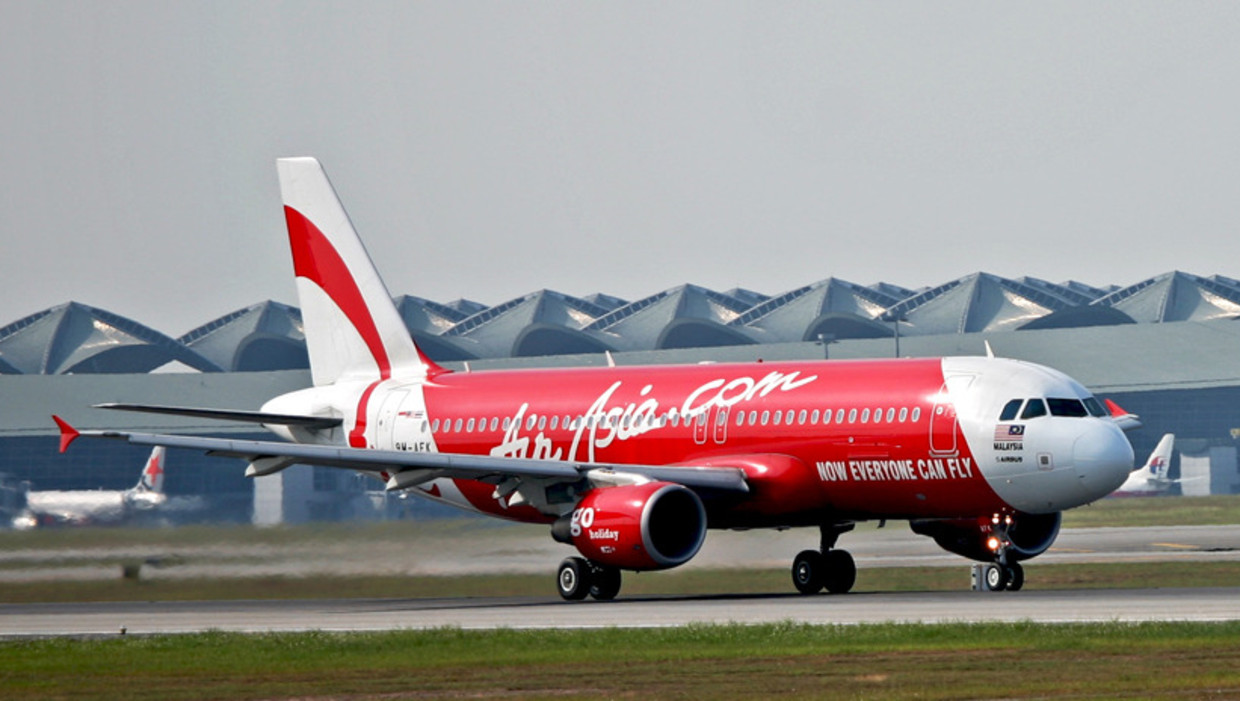
    AirAsia is offering discounted one-way flights to several destinations in the Philippines. Cebu to Davao flights can be availed for as low as P98, while Manila flights to Cagayan de Oro, Cebu, Kalibo, and Tacloban can be booked for only P288.

    For as low as P317, travelers from Manila can book flights to Caticlan (Boracay), Bohol, Davao, Iloilo, General Santos and Puerto Princesa.

  • AirAsia Food to spread its wings to Johor and Penang next month

    AirAsia Food to spread its wings to Johor and Penang next month

    Almost a year since its introduction in the Klang Valley area, AirAsia food is now set to spread its wings to other major cities in the country starting with Johor and Penang next month.

    AirAsia Bhd chief executive officer Riad Asmat said the business was recording very positive growth, especially during the return of Conditional Movement Control Order between October to December 2020, and the trajectory remained promising into 2021.

    He said under its expansion plan, the company had started an entrepreneurial program to recruit more talents to grow AirAsia food together in the upcoming potential markets, as well as securing more merchants under its umbrella”

    People are ready and looking for more (food delivery services) options right now and our offerings at AirAsia food, be it from the customer and merchant’s perspective, can accommodate their needs within the market,” he told Bernama in an interview recently.

    Riad named Ipoh, Kota Kinabalu, Kuching, Miri, and Kota Bharu as the next potential markets.

    As for the international market, he said the company aimed to mark its presence in Singapore next month, and other markets such as Indonesia, the Philippines, and Thailand soon.

    Launched during the Movement Control Order (MCO) in May 2020, AirAsia food is a seamless, fuss-free, and affordable food delivery platform for merchants as it runs on a flat-rate model that is equivalent to only a 10 percent commission rate.

    He said at present, it has the lowest commission rate in the market as other platforms’ commission fees range between 15 percent and 30 percent, and AirAsia food is the only platform that offers a flat rate.

    Merchants can also easily control their menu and prices and receive extended delivery coverage of up to 60 kilometers compared to a 15-kilometer coverage by other food ordering platforms.

    Riad said although there are service providers that have been in the market much longer, AirAsia food believes that the market is big enough for one more alternative with the advantages it can bring to the table.

    He said AirAsia food provides merchants with a competitive offering, which directly and indirectly can help them reap a greater return in terms of profitability and low cost, which in turn benefits their customers.

    As one of the businesses under the airasia.com Asean super app, AirAsia food is supported by airasia.com’s ecosystem of over 60 million users who are able to earn and pay with their BIG Points, he said.

    “The advantages of merchants joining us will be on the basis of the strong structure, including from the technology and client perspectives. A merchant now will get a potential exposure of up to 60 million clients within our ecosystem,” he said.

    On prospects, Riad said sales picked up during the lockdowns but the business would remain relevant in the future after vaccines are made available, as technology helps people to meet their needs in a very convenient way.

    “If you give the right products that people want and keep enhancing the business with innovation, surely you can sustain the business for a long period.

    “Our growth at AirAsia food does not only help local food businesses, but also has a spillover effect in creating more job opportunities,” he said.

    To-date, AirAsia food employs more than 1,500 teleporters (riders) offering services to 1,200 restaurants around the Klang Valley

  • AirAsia’s private placement will prove its capabilities to raise funds

    AirAsia’s private placement will prove its capabilities to raise funds

    Airasia Group Bhd’s private placement exercise will prove the airline’s capabilities to raise funds among the investors if it is done within the stipulated timeline, MIDF Amanah Investment Bank Bhd Research (MIDF Research) said.

    The research house added that this will bring a sigh of relief to the cash-strapped company.

    “If the private placement is completed within the stipulated timeline, it will prove that there are still lingering confidence remaining in the group among the investors, allowing it to raise funds despite its current predicament.

    “However, we would like to stress that this exercise only serves as a stopgap measure to partially address the group’s financial concerns,” it said in a recent report.

    MIDF Research cited AirAsia’s management had previously indicated a conservative estimate that the group needs between a capital RM2 billion and RM2.5 billion to tide them over comfortably until the end of the financial year 2021 (FY21).

    AirAsia is expected to raise RM250 million through the first tranche of its private placement involving 369.85 million shares priced at 67.5 sen each. This represents a discount of 9.82% to the group’s five-day volume-weighted average price.

    MIDF Research said the full placement exercise is expected to raise gross proceeds of up to RM451.51 million, considering that it was stated in its previous announcement — a large portion of the raised amount or circa 62% is earmarked for working capital expenses and fuel hedging settlement.

    “Furthermore, about 17% of the fund will be allocated to grow the group’s digital pillar via AirAsia Digital’s subsidiaries, which is in line with the group’s strategic pivot to become a digital lifestyle company,” it noted.

    The research house believes AirAsia may need to go through another few rounds of fundraising exercises, exposing its current shareholders to more potential dilution in the future.

    It added that the worrying level of Covid-19 infections in Malaysia and other the group’s key markets are alarming and dampening the recovery trajectory this year.

    “Furthermore, with other air operator certificates (AOCs) under the group in similar distress, it is probable that AirAsia will step in to inject liquidity to maintain the respective AOCs capital adequacy.

    “To note, Philippines AirAsia Inc (PAA) and PT Indonesia AirAsia (IAA) are currently in various stages of bank loan applications,” it said.

    The research house has maintained its earnings forecasts on AirAsia for now — as all the potential adverse impacts to the extent have been well priced in — and reiterated its ‘Sell’ call on the group by maintaining the target price (TP) of 37 sen per share.

    It added that the TP has taken into account the potential enlarged share base to 4.01 billion shares from the private placement exercise, which is an additional 20% of new shares from its current share base of 3.34 billion.

    “Although recovery for the aviation sector and air travel is expected to gradually take place in 2021, it remains an uphill battle for AirAsia given it is struggling financially to remain afloat in the current pandemic-laden operating environment.

    “Key risks to our call include faster than expected travel demand recovery, worsening pandemic, stricter Movement Control Order imposed on air travels, and further round of equity fundraising,” it said.

    Public Investment Bank Bhd (PublicInvest Research) has maintained its ‘Underperform’ call on AirAsia, with an unchanged TP of 39 sen.

    It added that overall, key operating statistics for its FY20 were below expectations, with passengers carried and available seat kilometers only accounting for 83% and 75% respectively.

    “AirAsia’s 4QFY20 results and passenger yield data are expected to be released in two weeks’ time, which we believe will continue to be under pressure due to lower passenger traffic and loss in revenue,” it noted in a recent report.

    AirAsia has announced its 4QFY20 operating statistics recently, with its passenger volume for the consolidated AOC operations (Malaysia, Indonesia and Philippines) declining 30% quarter-on-quarter (QoQ).

    The group said this was mainly dragged by the reimplementation of interstate travel restrictions in Malaysia, where seat capacity was reduced by 55% QoQ.

    Nevertheless, its IAA and PAA units showed a QoQ rebound in both passenger traffic and seat capacity as domestic travel restrictions eased, while its passenger load for the consolidated AOCs.

  • AirAsia to raise RM250mil via private placement

    AirAsia to raise RM250mil via private placement

    Low-cost airline, AirAsia Group Bhd is expected to raise approximately RM250mil through the first tranche of its private placement involving 369.85 million shares valued at 67.5 sen each.

    The issue price, which was fixed yesterday, represented a discount of 9.82% to the company’s five-day volume-weighted average price of 74.85 sen up to Feb 9.

    “The actual number of placement shares to be placed out under the first tranche will depend on the final acceptance by the identified places.

    “Any placement share not placed out under the first tranche will be included in the subsequent tranches, ” said RHB Investment Bank Bhd in a filing to Bursa Malaysia on behalf of AirAsia.

  • AirAsia ‘super app’ to help struggling airline rebound from pandemic

    AirAsia ‘super app’ to help struggling airline rebound from pandemic

    AirAsia Group Bhd chief executive officer, Tan Sri Tony Fernandes, said the global pandemic and country lockdowns that ensued last year served as a great opportunity for the company to work on growing its “super app”.

    The group’s website airasia.com has already been providing airline and travel-related services. However, in October last year, it unveiled the rebranding of the “super app”, combining 15 types of products and services under three pillars — travel, e-commerce and fintech.

    According to Japan’s NHK World’s interview with Fernandes recently, the app now has 16 million users a month.

    He said the airline is in a good position to succeed given its growing know-your-customer (KYC) data and wants a non-airline business to rival his airline business in a few years’ time.

    “One of the greatest assets of an airline is data. It’s KYC. It’s passport information. We have ID information. We have strong loyalty card information. People who fly have a bit more money, so there is also credit card information.

    “If you take a Grab or a GoJet, they are generally transacting at a lower value, they may not have as much information as we do over the last 19 years. So knowing what you want, we can personalize a lot of things and I think that’s one of our advantages,” he said in the video interview dated Feb 1.

    The airline industry has been hit the hardest in the wake of the Covid-19 pandemic as many flights are forced to be halted and plane fleet temporarily grounded, plummeting business performance and forcing many to be out of job.

    Fernandes said his aim is for the airline to continue attracting customers at a low price while making money, and then take the opportunity to sell other things digitally to the customers. He added that he hopes to hire back all the staff that had to be let go during the pandemic.

    The budget airline saw its worst quarter during the second quarter of last year at the peak of lockdown measures in Malaysia and around the region, as revenue dipped 96% to RM118.96 million as of June 30, 2020 compared with RM2.92 billion in the previous year while it registered a net loss of RM992.8 million versus a net profit of RM17.3 million a year earlier.

  • AirAsia expects to resume flying to most routes by the end of 2021

    AirAsia expects to resume flying to most routes by the end of 2021

    The outlook for the global aviation industry is improving as more countries begin rolling out mass immunization programs against Covid-19, AirAsia boss Tony Fernandes said Tuesday.

    As one of Asia’s top budget airlines, AirAsia expects to resume flying to “a large part” of its routes by the end of 2021 but passenger capacity is not expected to return to pre-coronavirus pandemic levels until 2023, according to Fernandes.

    “It’s been the toughest challenge,” he said,” as part of the network’s coverage of the Davos Agenda. “But I think the outlook’s getting better.”

    “The most important thing is there’s a huge amount of demand out there and we just have to wait for borders to open and I think we’re one of the first kind of businesses that will recover, from an airline perspective, because we’re very strong in domestic and regional,” he said

    The coronavirus pandemic has crippled the global travel and tourism sector. It’s sent many airlines into survival mode as they undertake mass layoffs, cancel orders, retire some of their existing fleet,s and cut down routes.

    In December, the International Air Transport Association (IATA) said airlines will suffer a net loss of $118.5 billion for 2020 and an expected net loss of $38.7 billion in 2021.

    AirAsia is also struggling. In November, the company reported a fifth straight quarterly loss between July and September and is in the process of raising funds through loans and investors. Fernandes said the company is looking at raising up to 2.5 billion Malaysian ringgit ($618 million) for the whole group. That includes AirAsia’s digital business and the logistics unit — both of which are performing well, according to Fernandes.

    “We’re a little bit behind schedule than we wanted to be but the amount’s exactly where we want to be. We are very confident that this capital that we’ll raise will take us well into 2023,” he said, adding that the company will emerge with a better cost structure, a strong digital business, and good demand for the airline.

    The AirAsia stock is down almost 22% so far this year.

    Fernandes also said AirAsia is in talks with Airbus and that the airline’s long-term order book remains. “We’re going to have to defer some of it to a later date,” he said, adding, “We don’t want to change that for short-term decisions.”

    AirAsia is one of Airbus’ largest customers since the airline made a switch from Boeing years ago. Reuters reported that since then, AirAsia has ordered a total of more than 660 Airbus jets including planes yet to be delivered.

    The CEO explained the competitive landscape for airlines has changed due to the pandemic. Some carriers have either reduced capacity or left the market altogether. Cost-cutting measures from AirAsia are expected to improve the company’s margins, he said.

    Budget airlines that fly shorter routes and sell on-demand services are expected to recover quicker than carriers that fly to intercontinental destinations and rely on first and business-class travel, according to Fernandes.

    He said business travel will take a longer time to recover as more people would opt to conduct business meetings virtually. “Time is a great healer. Eventually, business travel will come back but there’ll be an element that will say ‘well I can do it from Zoom,’” Fernandes added.

  • AirAsia Group plans to raise US$113 million in private share sale

    AirAsia Group plans to raise US$113 million in private share sale

    AirAsia Group announced it plans to raise $113 million in a private share sale to improve its financial performance and to address its cash flow position. The company said in a stock exchange filing that the sale would be used “expeditiously for working capital purposes, as well as marketing expenses and technology expenditure for the initiatives under AirAsia Digital.

    AsiaAsia, like other airlines around the world, has been struggling to survive as the COVID-19 pandemic has severely curtailed air travel. The company reported a fifth consecutive quarterly loss in November. The proposed sale includes the issuance of up to 20 percent of its total existing shares, or 668.4 million shares, to be placed with third-party investors to be identified later, the airline group said in the filing. AirAsia said it will continue to explore other fundraising options or corporate proposals to improve the group’s financial performance in the longer term.

    The company said this latest share sale will “not fully address the group’s current financial concerns as the estimated gross proceeds…would not be sufficient to meet its long-term cash flow requirements. However, the proposed private placement will serve as an interim measure to address the immediate cash flow requirements of the group while the management of the company continues to explore other available options and/or corporate proposals to be undertaken with the intention to improve the group’s financial performance in the longer term”.

  • Thai AirAsia to furlough 75% of workforce

    Thai AirAsia to furlough 75% of workforce

    Thai AirAsia will keep only one-fourth of the staff and ask the rest to take a leave-without-pay offer for four months, starting February, as the re-emerging coronavirus outbreak has dealt a heavy blow to the aviation sector.

    Tassapon Bijleveld, executive chairman of Asia Aviation Plc (AAV), the largest shareholder of the airline, said on Monday only 25% of its workforce will be active after this month as the airline is downsizing to match real demand.

    He did not mention the size of the workforce, but according to the latest AAV annual report, it had 5,974 employees in 2019.

    “Before the Covid-19 resurgence, we had 40 planes serving domestic flights. But since the re-emerging of the outbreak, some provincial lockdowns have made it impossible for people to travel and passenger demand has dropped significantly at every airport,” said Mr. Tassapon.

    The budget airline has 62 aircraft, which has not been fully utilized since the first nationwide lockdown in April last year. It flies only 10 planes now due to the sluggish demand for air travel.

    He said the company had no layoff plans for now but it was difficult to predict when the market would recover.

    He said the furlough from next month to May should allow the employees to find other revenue sources and resume work immediately if the situation improves.

    Mr Tassapon said there was little hope for financial support for airlines from the government. Thai AirAsia now is trying to secure loans from banks by itself, instead of waiting for state approval, he added.

    The furlough, the second in the past few months, was larger in scale than the first round late last year.

    “The international market should recover in the last quarter of this year, but only slowly. Half of the global population must be vaccinated before international travel can resume,” said Mr. Tassapon.

    As of September 2020, its staff-related expenses accounted for 18% of operating costs, the second-highest after jet fuel.

    During the first nine months of 2020, the low-cost airline carried 6.68 million passengers, a 60% dip compared to the same period in 2019.

    AAV stocks plunged six satangs, or 2.54%, to 2.30 baht on Monday.

  • AirAsia Wants Half Of Its Revenue To Come From Outside Flights

    AirAsia Wants Half Of Its Revenue To Come From Outside Flights

    Low-cost airline AirAsia had a tough 2020. But its CEO, Karen Chan, is taking a glass half full approach. She says the travel downturn and subsequent fallout for AirAsia was a blessing in disguise. It forced AirAsia to look outside its comfort zone and at a new way of doing business. Now, Ms Chan plans to transform AirAsia into a lifestyle brand. As a result, by the mid-2020s, she expects 50% of AirAsia’s revenue will come from non-aviation sources.

    Speaking at a CAPA Live event on Wednesday, Karen Chan spoke about her vision for AirAsia and what it would mean for the airline.

    “We anticipate in five years time, basically by the end of 2024, that 50% of (AirAsia’s) revenue would be coming from non-flight-related, non-aviation-related revenue.”

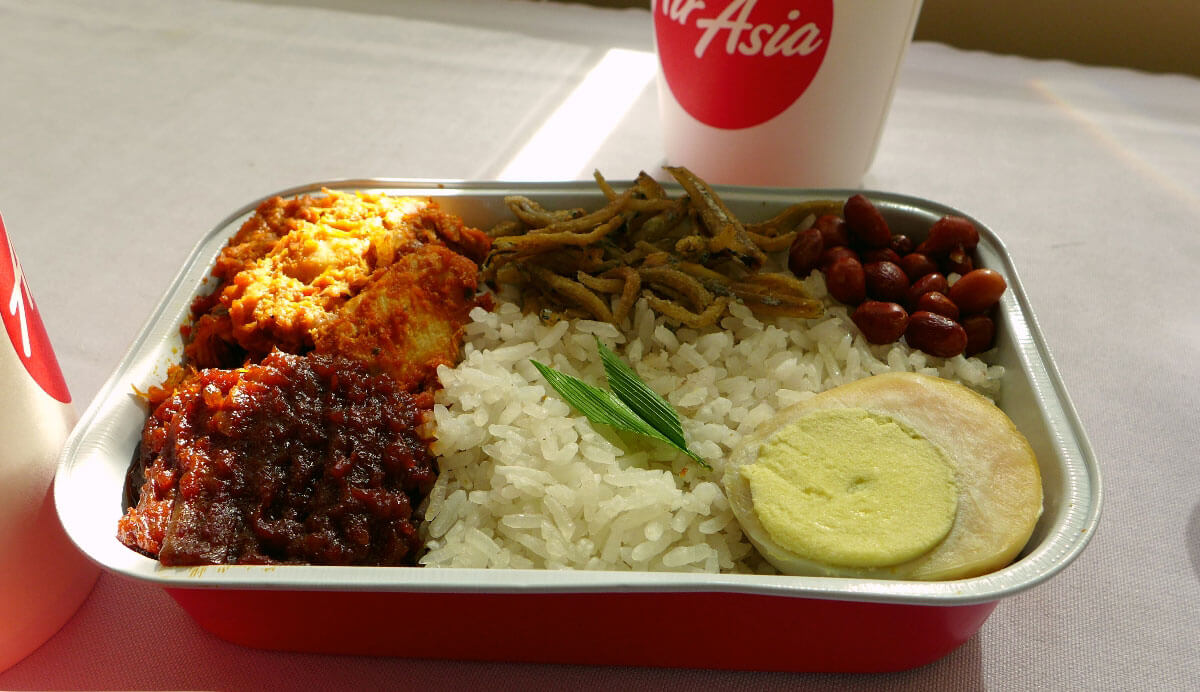
    As a low-cost carrier, AirAsia already has handy ancillary revenue streams. Their base fares are cheap, but checked-in luggage on short sectors starts from US$12, seat selection starts from just under $3, and a reheated container of AirAsia’s pretty good nasi lemak costs just over $4. In 2018, ancillary revenue made up 22% of AirAsia’s total revenue. Around half of that 22% came from baggage charges.

    Last year, AirAsia Group chief executive Tony Fernandes, said his airline group was diversifying.

    “AirAsia.com is more than just selling airline tickets,” he said. “We now have the same potential to sell hotel rooms. I can do some crazy things. I can say I can buy hotels, book a hotel room with us and I can give you a free flight. Hotels can be as large as AirAsia tickets.”

    Yesterday, Karen Chan spoke about AirAsia’s ambitions to become a fully-fledged online travel agency that offers not just hotels but also a range of travel and lifestyle products and experiences.

    “Not all the flights are always full, and the load factor will not be 100%,” said Ms Chan.

    “So the unsold infantry, and because they are so perishable, even as an 85% load factor for an Airbus A320, I still have about 20 to 25 seats unsold. I will now be able to bundle that unsold inventory for one ringgit or 25 cents with the hotel’s direct inventory. And I will be able to go into the market with a best buys guarantee.

    “We can go and expand into where other airlines are just not able to do so. We actually want to go and be seen as basically a lifestyle partner.”

    AirAsia’s ancillary revenue plans are not restricted to the travel basics of hotels, transfers, and side excursions. The airline wants to build its delivery and e-commerce business. AirAsia sees itself as a future Asian e-commerce giant. But it’s not just Amazon parcels AirAsia wants to ferry around. AirAsia has detailed data on 75 million former passengers in its database. They know you purchased a nasi lemak on your last three AirAsia flights. Ms Chan wants to get down to the nitty-gritty. She wants to be able to deliver that meal to your home.

    “Data is basically the new black gold for us,” Ms Chan said.

    With AirAsia’s fortunes taking a hammering in 2020, there’s a good reason why the airline wants to expand its ancillary revenue sources. Whether a cheap and cheerful low-cost carrier out of Southeast Asia can successfully transform into a lifestyle brand is another issue. Whatever the result, but it will be interesting to watch.

  • AirAsia’s digital platform eyes more airline partnerships

    AirAsia’s digital platform eyes more airline partnerships

    Malaysian budget carrier AirAsia Group’s travel, e-commerce and fintech unit airasia.com is in partnership talks with several Middle Eastern and European airlines, its chief executive said on Wednesday.

    Airasia.com CEO Karen Chan said the company was working on selling more flights on the online platform.

    “Apart from just selling AirAsia flight tickets, we are now selling any airline’s flight tickets. We are now in serious discussions with quite a few full-service carriers,” Chan said at a CAPA Centre for Aviation event.

    She said the company is working closely with Middle Eastern airlines to drive traffic to pilgrimage destinations.

    “Religious travel has taken a huge delay, and already we are getting a lot of requests from customers for pilgrimages,” she said.

    Airasia.com is also in talks with some European airlines, she said. “Once the international borders are open, all of us are banking on the pent up demand,” she said without providing details.

    Last November, airasia.com announced a strategic partnership with Turkish Airlines for cross-promotion of its flight inventory with AirAsia flights, and offer travel itineraries with discounted fares.

    “Now we can pull their content and inventory onto airasia.com’s platform,” Chan said. The company offers more than 15 lines of products online and via its super-app “to fly, to stay, to shop, to eat”, an earlier media statement showed.

    With the airline business taking a hit from the coronavirus pandemic, AirAsia Group last year rebranded its digital arm as AirAsia Digital, which houses airasia.com.

    Malaysia’s flagship budget airline AirAsia Group said last September it is considering raising capital to expand its digital business.

  • Thai AirAsia says latest virus outbreak has dented business

    Thai AirAsia says latest virus outbreak has dented business

    Thai AirAsia Co Ltd (TAA) said the latest Covid-19 outbreak in Thailand has dented the already weak travel sentiment in the country after the company witnessed a whopping 50% plunge in its domestic flight booking numbers this month.

    “Travel sentiment has plunged lower than last year. This is different this time because people are voluntarily skipping their travel plans even without a nationwide lockdown order from the government,” TAA largest shareholder Tassapon Bijleveld was quoted by the Bangkok Post as saying.

    Tassapon is also an executive chairman of Asia Aviation, a company that owns a 51% stake in TAA, while the remaining 49% stake is held by AirAsia Investment, an investment arm of AirAsia Group Bhd.

    Accoring to him, TAA’s domestic flight numbers shrank by more than 50% as it had to merge and cancel many flights, with the average load factor taking a nosedive this month.

    He added that some flights had only 20 to 30 passengers, a sharp contrast to the resurgent market two months ago.

    “We were just rebounding from the first lockdown last year. Despite hardly any profits, at least we could have had a consistent revenue stream from the domestic market. But this outburst of new cases destroyed us,” said Tassapon.

    Tassapon said most airlines expect the market will continue to be severe in February. He warned that the weak travel sentiment could cause some airlines to cease operations.

    He said the pessimistic outlook for next month is despite the Chinese New Year holidays, citing that “travellers may not increase domestic trips if people are worried about the outbreak”.

    “This could be the quietest Chinese New Year we’ve ever had,” he noted.

    Reuters previously reported that Thailand, which had largely controlled the virus by mid-2020, saw a second wave of outbreaks beginning in December.

    “The government has declared 28 provinces, including Bangkok, as high-risk zones and asked people to work from home and avoid gathering or travel beyond provincial borders, as infection numbers climbed after an outbreak was detected last month at a seafood market near the capital,” said the report dated Jan 4.

    The pandemic-battered aviation industry has adversely impacted most airlines in Thailand financially, as they have received no financial support from the government, particularly the soft loans they have been requesting since last year.

    Eight airlines that teamed up to send the financial aid proposal to the government last year do not have plans to discuss the progress of that proposal as they have already clearly stated their concerns, said Tassapon.

    He said the group conveyed all information to the Thailand’s prime minister and three finance ministers, as well as banks that were assigned to help airlines. But, there has not been any response since.

  • AirAsia and Penang Tourism Collaborate to Provide More Value Deals for Domestic Tourists

    AirAsia and Penang Tourism Collaborate to Provide More Value Deals for Domestic Tourists

    AirAsia and Penang Global Tourism (Penang State Tourism Bureau) have announced a new collaboration that will offer more travel options and value-added services to domestic tourists visiting Penang.

    The partnership will see airasia.com, the Asean super app pair-up with Penang Global Tourism Board to offer travelers a variety of Penang travel bundles as well as a joint marketing effort.

    Penang State EXCO For Tourism And Creative Economy (PETACE), YB Yeoh Soon Hin said, “We are observing a positive rebound on tourism activities and we are working towards accelerating the recovery of tourism, supporting jobs and the economy and increasing tourism receipts. Partnering with key travel players like airasia.com will assist us to amplify our efforts and to offer more diverse travel and tourism products by leveraging on their wide product offerings.

    “I am proud to say that Penang is at the forefront once again in assuring safe travels to our visitors. In July 2020, Penang launched the ‘Penang Responsible Tourism’ campaign. Furthermore, we have also launched the COVID-19 safety accreditation program to strengthen preventive measures undertaken by Penang’s tourism industry players. These initiatives are the first-of-its-kind in Malaysia, intending to instill confidence in travelers when visiting Penang.”

    “To further reiterate, Penang is the first in Malaysia to kickstart the “Penang Responsible Tourism” campaign and the accreditation program.”

    airasia.com Chief Commercial Officer, Amanda Woo said, “We would like to thank Penang Global Tourism Board for working with us to provide more value for travellers. Now, visitors to Penang can conveniently plan their trip with all the exciting offers made available through this collaboration under one platform on airasia.com. We hope people will take the opportunity to explore and enjoy more of what Penang has to offer.

    “We are also expanding our network from Penang to Kota Bharu with three times weekly flights which commenced yesterday, while the new route from Penang to Sibu is set to kick off in January 2021. We hope the added connectivity will provide much-needed accessibility for the Northern travelers, as well as to revive the domestic tourism industry. ”

  • Tata grabs bigger slice of AirAsia India

    Tata grabs bigger slice of AirAsia India

    A number of bids have been put forward for India’s loss-making national carrier, including one on behalf of its employees. The Indian government had tried to offload its stake in Air India in 2018 but failed to attract a single bid. One group is representing employees and plans to offer them a controlling stake in the struggling airline. Another bid is reported to have been put forward by the Tata Group, which originally founded the airline in 1932.

    Tata, which owns Jaguar Land Rover, sold its stake to the government in the 1950s. India’s Prime Minister Narendra Modi is keen to sell the government’s entire interest in the airline, which has been kept aloft by a bailout and racked up billions in debts. The airline has many assets, including prized slots at London’s Heathrow airport, a fleet of more than 100 planes and thousands of trained pilots and crew. One of the bids put in ahead of this week’s deadline was from US-based investment firm, Interups.

    Under its plan, Interups will hold 49% of Air India while a controlling stake of 51% will be held by its employees.

    “We are giving an open offer to employees of Air India to substantially own the airline,” Interups chairman Laxmi Prasad told the BBC.

    “Our group will invest the entire monies required for the airline, with no capital requirement from employees to contribute into the acquisition effort.”

    Calling them the “backbone to run the airline”, Mr Prasad added that the 51% stake would be “in exchange for the deep intangible contribution you all would be making for the airline.”

    “No-one knows Air India better than its employees and management.”

    “Any new owners will need to invest heavily in Air India, improving its technology and customer services operations,” said Jitendra Bhargava, former Executive Director of Air India and author of the book, The Descent of Air India.

    “But India is a growing market and offers huge potential. My take is that Air India is better run as a private company than by bureaucrats.”

    Interups, which specialises in turning companies around, says it has also targeted another Indian airline, and if successful, will merge it with Air India. They have not specified which airline that could be.

    “The combined operations will make Air India a global leader for passenger traffic to and from India,” said Mr Prasad.

    He described the potential battle with Tata for the airline as David versus Goliath. “But David mastered the winning, and we are equally confident.”

    The Indian government is expected to notify the qualified bidders in early January 2021.

  • AirAsia Reduces Stake In Indian Subsidiary

    AirAsia Reduces Stake In Indian Subsidiary

    AirAsia is scaling back its investment in AirAsia India as the group continues to face financial difficulties. The group will reportedly cut its stake to just 13%, giving the Tata Group significantly more stake in the airline. The change in ownership is unlikely to affect the AirAsia India brand but could see the airline separate from AirAsia’s operations.

    Questions over the future of AirAsia India have been swirling for a few months now, with both Tata and AirAsia considering an exit. Eventually, the AirAsia group stopped funding the airline and left Tata to decide the carrier’s future.

    According to a report, Tata has bought out most of AirAsia’s stake, leaving the group with only 13% of the airline. This means Tata now owns 87% of the carrier, making AirAsia more of an investor than a joint-venture partner. While the “AirAsia India” brand will survive, Tata is making some changes to the company.

    Tata is reportedly working on a new booking website for AirAsia India, which is currently integrated into the AirAsia group’s website. Additionally, a new crew scheduling software will also be put in place for the airline. While there are unlikely to be many changes on the surface, the Tata Group does have big plans for Indian aviation at large.

    AirAsia India first began flying in 2014, with 51% owned by Tata and 49% by AirAsia. The carrier hoped to capture the fast-growing low-cost market in India, similar to the model AirAsia had replicated in other regions. The partnership with Tata provided the airline with funding and strong name recognition in India.

    However, the airline struggled to make its mark in the Indian market, facing stiff competition from established players like IndiGo, SpiceJet, and GoAir. As of November 2020, the airline only has a market share of 6.6%. This places AirAsia India second-last on the list of major domestic airlines. The carrier currently operates a fleet of 33 aircraft, consisting of 30 A320-200s and three A320neo aircraft.

    All of this has resulted in AirAsia India being a loss-making airline for nearly all of its existence. Following a relatively better 2019, the pandemic has once again pushed AirAsia India deep into the red. The airline reported a 69% drop in revenue during the second fiscal quarter and losses of nearly $45 million in the first.

    This isn’t the first subsidiary AirAsia is exiting this year, with both its Indonesia and Japan arms being axed. The carrier has faced significant financial concerns this year, as flight traffic across Asia remains low. While traffic has been picking up slightly recently, the group continues to face existential crises as the pandemic drags on.