Tag: airasia

  • Budget airline AirAsia X out of money, needs $120 million for restart

    Budget airline AirAsia X out of money, needs $120 million for restart

    Long-haul, low-cost carrier AirAsia X Bhd has run out of money and needs to raise up to RM500 million to restart the airline, deputy chairman Datuk Lim Kian Onn said in a newspaper interview published today.

    The long-haul arm of AirAsia Group Bhd said this month it wants to restructure RM63.5 billion of debt and slash its share capital by 90% to continue as a going concern.

    “We have run out of money,” Lim said. “Obviously, banks will not finance the company without shareholders, both old and new, putting in fresh equity. So, a prerequisite is fresh equity.”

    He said the airline had actual liabilities of RM2 billion, with the larger figure of RM63.5 billion including all lease payments for the next eight to 10 years and its large order for Airbus SE planes and contracted engine maintenance with Rolls-Royce Holdings plc.

    “If we find RM300 million in new equity, then shareholder funds would be RM300 million at the restart of the business, and if we are able to borrow RM200 million, we feel that we will have a good platform to start all over again,” he said.

    Lim said AirAsia X also needs to convince its lessors of its business plan, adding that an unnamed lessor recently took back one of the airline’s planes to convert it to a freighter.

    The airline plans to liquidate its small Indonesia-based carrier and had completely written down its stake in Thai AirAsia X in its books, with the Thai carrier not part of the restructuring scheme, Lim said.

    Malaysia Airlines Bhd is also in financial trouble, but Lim said there would be “no good outcome” from seeking to merge two airlines in dire straits.

    AirAsia X declined to comment beyond the details published in the newspaper article.

  • US$1bil loan offer for AirAsia data

    US$1bil loan offer for AirAsia data

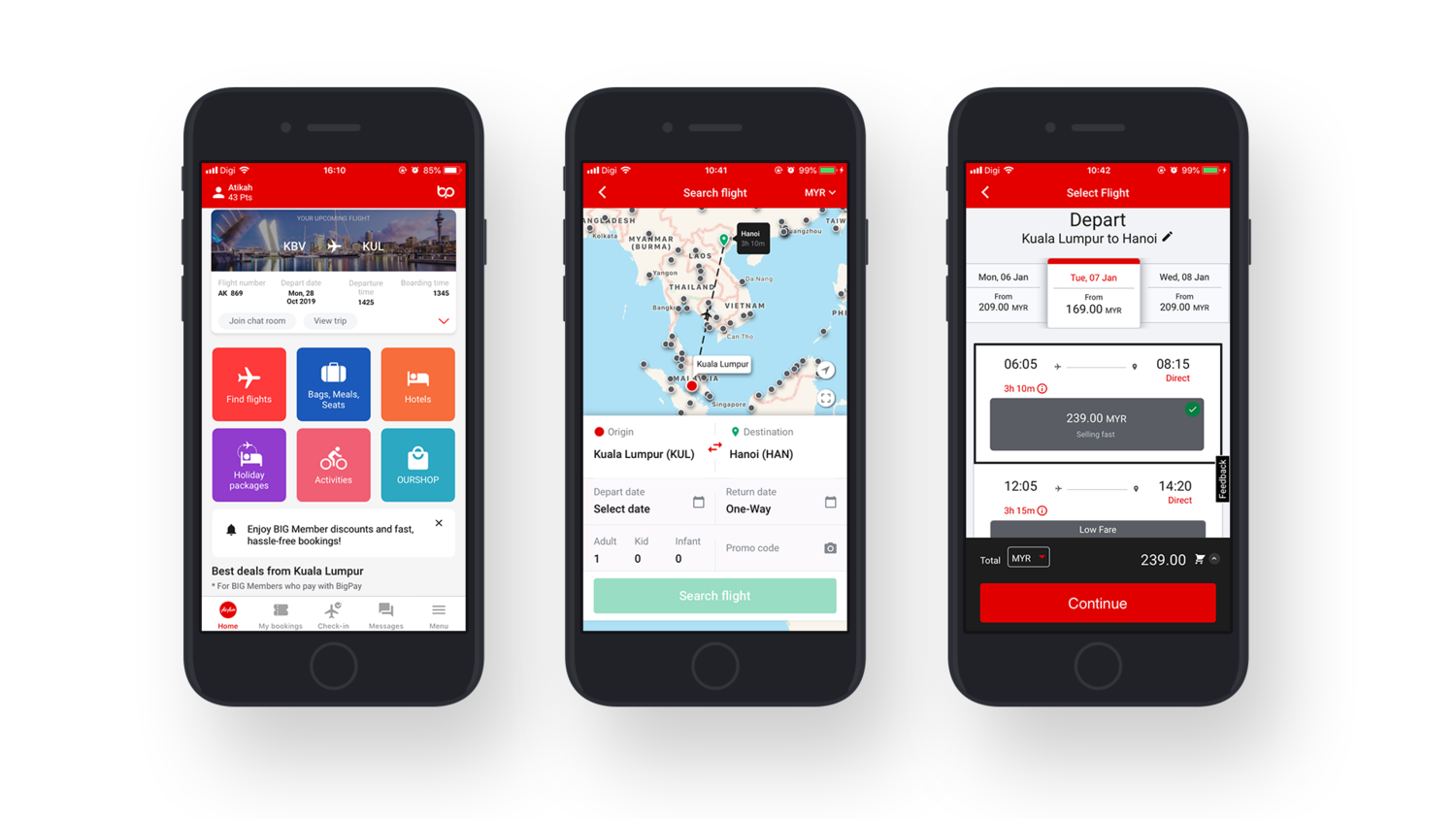
    An American lender is willing to loan AirAsia US$1bil for the data of its customers it has accumulated from its business over the years. AirAsia Group Bhd CEO Tan Sri Tony Fernandes did not reveal the name of the potential US lender but spoke on how its data-driven new “super app” would become an equal contributor to group profit with its airline business in five years.

    “The airline has created this amazing business, ” he said, adding that post-Covid, the app has seen 50 million unique visitors every month.

    “We didn’t rush into the digital age as we started this journey two years before the Covid-19 outbreak, ” he told the media.

    The contribution forecast is based on AirAsia flying 300 aircraft in five years.

    He said there was a cash-raising potential to be done at the airasia.com and airline levels.

    “The first lot of financing will be announced by the end of this month, ” he said.

    Fernandes said that all pillars of the airasia.com app have already broken even except the fintech segment of the digital business because of the interchange fees it has to pay credit card companies. However, it has secured a money lending license from the Housing and Local Government Ministry to add another element towards the app’s fintech business.

    In a statement yesterday, AirAsia said it’s airasia.com Asean super app provides over 15 types of products and services under three main pillars, which are travel, e-commerce, and fintech.

    Fernandes believes the app can be a competitor to some of the established apps in Asean like Grab and Gojek and will provide competition in a fierce segment like food delivery.

    In the lucrative food delivery business, restaurants would not have to pay a commission to airasia.com like they do for other food delivery apps, but pay instead to the food deliverer, which translates to a commission rate of between 3% and 9% per delivery.

    “Now, everyone can travel, experience, shop, eat, enjoy rewards, and more with the new airasia.com super app. From travel needs to everyday lifestyle essentials, there is something for everyone, ” said airasia.com CEO Karen Chan.

    Fernandes said AirAsia would not be taking delivery of new planes as there is a lot of excess aircraft within the industry.

    “No one is going to fly the same size of fleets they did pre-Covid-19 for a couple of years, I imagine.

    “My guess is that we would be able to fly 180 planes by end-2021 for the entire group.

    “It depends on when the borders re-open for all our markets, ” he said. AirAsia has 245 planes currently.

    In fact, Fernandes said the airline would be returning 22 planes this year to its lessors.

    “I don’t see us getting to a position where we want to buy planes for a number of years.

    “Even when you want to buy planes, there will be cheaper second-hand planes out there, ” he said.

    As for travel, Fernandes said leisure travel would likely bounce back ahead of business travel.

    “Leisure, budget, short-haul business travel will bounce back to pre-Covid-19 level and we are already seeing it.

    “In Thailand, we are 95% of the capacity of pre-Covid-19. In fact, by Q4 we will be 10% ahead of where we were.

    “When the borders re-open, (the business) will bounce back really fast, ” he said.

  • AirAsia Said to Stop Funding Indian Venture as Cash Dwindles

    AirAsia Said to Stop Funding Indian Venture as Cash Dwindles

    AirAsia Group Bhd has stopped funding its Indian affiliate as the global travel slump leaves the Malaysian group struggling to support a sprawling empire of no-frills airlines, people familiar with the matter said.

    AirAsia India Ltd’s future may now depend on Indian conglomerate Tata Group, its majority shareholder, which has provided emergency funding but has yet to commit to a full rescue, according to the people, who asked not to be named discussing a confidential matter.

    The airline isn’t at any immediate risk of folding, the people said. India’s aviation minister said over the weekend that AirAsia was shutting up shop in the South Asian nation, though his office later suggested the comment was taken out of context.

    AirAsia India declined to comment, as did a representative for Tata Group. AirAsia Group didn’t respond to requests for comment after usual office hours.

    AirAsia said earlier Monday that its Japanese arm will cease flying immediately as the coronavirus outbreak continues to roil the airline industry. Once the poster child of the region’s revolution in low-cost travel, the group is seeking as much as RM2.5 billion to steer its way through the crisis.

    Long-haul arm AirAsia X Bhd has meanwhile said it needs to reach deals with major creditors to restructure debt amid “severe liquidity constraints” that threaten its ability to resume services and continue as a going concern.

    AirAsia India has survived on 3 billion rupees (US$41 million) in funding from Tata, which owns a 51% stake, with another round of financing expected soon, one of the people said.

    Tata is weighing its options and how much it would cost to buy out AirAsia and save the carrier, another person said. The industrial group also has a 51% holding in the Vistara full-service airline venture with Singapore Airlines Ltd.

    AirAsia India predicted it would break even in four months when it began flying in 2014. In reality, it has yet to make money in a market where high fuel taxes and cut-throat fares can make even dominant players unprofitable. The carrier has a market share of 6.8% and employs more than 3,000 people.

  • AirAsia Japan may be closed down

    AirAsia Japan may be closed down

    Low-cost airline Air Asia is exploring all options over its dwindling operations in Japan, including closing it down.

    There have been reports that the group is planning to discontinue the operations of its affiliate, AirAsia Japan, due to the weak demand following the Covid-19 pandemic.

    Chief executive officer Tan Sri Tony Fernandes did not deny the reports. “We have to look at every option, including closing down the operation. We haven’t reached a decision yet, ” he said when asked to comment on the recent reports.

    On the termination of AirAsia’s flights from Malaysia to Japan, he said that was merely speculative and the board had not made a decision.

    Currently, he said, the airline is unable to fly to Japan due to the international border shutdown, and since its presence in Japan is relatively small, the board was currently evaluating possibilities, including the cessation of its flights there,

    Fernandes, who was speaking to reporters after the launch of the Redbeard Academy, said the academy was initially established in the belief that the digitalization of its airline operations may lead to many of its staff being left redundant.

    “We have to look at every option, including closing down the operation. We haven’t reached a decision yet, ” Fernandes said.

    “Hence, we have Redbeat Academy. But now, of course, we are in a position where the airline has to make retrenchments, and it’s unavoidable. Many of them, hopefully, will come here (Redbeat) and reskill themselves as well, ” he added.

    AirAsia Group’s digital arm, AirAsia Digital, has partnered with Google to launch Redbeat Academy as part of its continuous digital transformation journey.

    AirAsia Digital president Aireen Omar said admissions to the academy, which was previously open only to AirAsia’s staff, is now available to the public and businesses.

    The academy offers a series of tech workshops in areas such as Artificial Intelligence, Machine Learning, Software Engineering, Cybersecurity, Big Data and Infrastructure. Aireen said the course period ranged from two months to a year.

    “For those who have no technology background, they might have to go for a fundamental course, which takes about a couple of months or so, ” she told reporters at the launch.

    The academy was launched by Science, Technology and Innovation Minister, Khairy Jamaluddin.

    Also present were AirAsia Group executive chairman Datuk Kamarudin Meranun and Google Malaysia country head Marc Woo.

    Aireen said the tuition fee was affordable and the curriculum suited to market needs.

    “This is all based on our own experience on the kind of talent we need. The classes will be both online and physical; some classes need to be instructor-led because it’s too difficult to teach online, ” she said.

    During the event, Redbeat Academy also signed a partnership with Malaysian Industry-Government Group of High Technology to reskill a pool of talents in software engineering and high-tech projects.

    The academy also inked a partnership agreement with Universiti Teknologi Malaysia, Universiti Malaya and Asia School of Business, in collaboration with MIT Sloan Management, in awarding a micro-credential to Redbeat Academy’s courses and acknowledging it as part of the Accreditation of Prior Experiential Learning.

  • AirAsia to raise capital to fund AirAsia Digital

    AirAsia to raise capital to fund AirAsia Digital

    Airasia Group is looking into raising capital to fund its digital arm AirAsia Digital to further diversify revenue stream for the group. Group CEO Tan Sri Dr Tony Fernandes said AirAsia Digital is the group’s “next phase” and aims to be a new kind of travel technology company in the region through the strength of its assets and access to talents.

    “Our aim is to be an ASEAN super app, our strength is in ASEAN. Obviously, we have accelerated this plan in this post-Covid-19 world,” he told reporters in a media briefing in Kuala Lumpur yesterday.

    Previously known as RedBeat Ventures Sdn Bhd upon launch in 2018, AirAsia Digital leverages the group’s physical and digital assets to create an ecosystem of businesses that connect with its customers in their everyday life.

    It comprises three main pillars — venture builder, RedBeat Academy, and data center. Venture builder is dedicated to incubating and growing strategic businesses that focus on logistics and e-commerce and financial services. It includes its five portfolio companies AirAsia.com, Teleport, BigPay, BIGLIFE, and Santan.

    RedBeat Academy trains and produces a steady pool of digital experts to fill and boost the talent gaps in ASEAN, while the data center is a data consultancy department that provides a range of services including data governance, data engineering, and various types of analytics.

    Asked about the company’s strategy against competitors and to fit into an ASEAN market such as Indonesia, Fernandes said they are there to complement the market instead of competing.

    “In the same way that AirAsia is much smaller than Lion Air, but we fitted into that market. We are nowhere near the size of Gojek but again, AirAsia is not about being dominant in one country, it’s about providing an Asian product and serving the market,” he said.

    Fernandes said the business will seek venture capital or other investors to grow the user base of the super app, similar to how AirAsia raised its capital.

    “AirAsia’s first capital was raised with private equity money while the second capital was from our IPO. We will do the same.

    “We built the super app in our own capital just like we built AirAsia. We have some debt capital coming in that has been secured for part of the group including Teleport and Santan,” he added.

    He added low-cost airlines will bounce back faster than their premium counterparts in the current economic climate as people will look for value at affordable fares.

    Additionally, Fernandes mentioned AirAsia’s digital and logistics company Teleport which operates its cargo delivery.

    “We are a fantastically strong cargo operator, the strongest cargo operator in Asia, only Singapore Airlines have more tonnage than us but that’s because they fly to Europe and the US but there are no airlines that fly to all the destinations that we fly.

    “We’ve been cleared now and we are able to carry all kinds of cargo that we weren’t able to do before, so we are not far away from the DHL’s and FDex’s of the world,” said Fernandes.

  • AirAsia adding services in super app

    AirAsia adding services in super app

    AirAsia Group announced on Thursday that it is building a super app off its existing mobile application and website to provide services such as e-commerce, delivery, and payments. The app is to be available next month in Thailand and ASEAN.

    AirAsia chief executive Tony Fernandes said the idea to build a super app came before the pandemic, but new revenue streams are desperately needed after most of AirAsia’s fleet has been grounded for months because of travel restrictions. The company suffered losses of US$238 million in the second quarter of this year.

    “This journey didn’t start during the pandemic but it was accelerated because of the outbreak,” Mr Fernandes said. “This is not a Plan B, this was always our Plan A, but we still think aviation will definitely come back.”

    The new platform will be accessible through AirAsia.com and AirAsia’s mobile app on Oct 8, including digital services under subsidiary AirAsia Digital.

    These services include BigPay, a digital payment app; Teleport, a wholly-owned logistics, e-commerce, and delivery business; and Santan, a food and beverage franchise. Mr Fernandes said these services are already earning revenue for AirAsia except for BigPay, which is in negotiations with regulators to set its rates.

    Teleport came to Thailand in 2019 through a joint venture, while BigPay is available in Thailand and can transfer money to Thai bank accounts. Santan is only available in Malaysia or on AirAsia flights.

    “AirAsia’s roots are from moving people from A to B and moving cargo from A to B, and that is the basis of AirAsia Digital and the basis for our platform AirAsia.com,” Mr Fernandes said.

    The app will also allow users to book hotels and flights (from airlines other than AirAsia) and offers a travel and lifestyle rewards program. The company ended its partnership with Expedia and is offering its own travel booking service.

    AirAsia’s new venture will face stiff competition from existing super apps Grab and Gojek, which are both spending billions in venture capital to expand their presence in Southeast Asia. Grab and Gojek are in talks for a merger, which if completed would create a virtual monopoly for ride-hailing and food delivery in Asean.

    Grab is valued at about $14 billion, while Gojek was valued last year at almost $10 billion. Neither company is publicly traded.

    AirAsia, which is listed on the Malaysian stock exchange, has a market capitalization of $624 million.

    “We are nowhere near the size of Grab or Gojek, but AirAsia’s not about being dominant in one country, but providing an Asean product,” Mr Fernandes said.

    The AirAsia app hopes to differentiate itself by leveraging the data it has collected from millions of passengers, while also stressing its cross-country appeal for cross-border travelers in Asean.

    “I don’t believe we are here to compete, but here to complement,” Mr Fernandes said. “Airlines always see us as competitors, but we complemented the full service and created a new market that was not there — before, only a few people could fly, now everyone can fly, and in the same way we will complement the market.”

    He said the platform will also be open to new partners and services, not just those owned directly by AirAsia Digital.

    Michael Araneta, associate vice-president of IDC Financial Insights, said traditional businesses like AirAsia can find success with a super app by leveraging existing customer bases and technical resources.

    “AirAsia has shifted to being a lifestyle company and already has spent considerably on developing technology,” he said. “The company might not need to invest a substantial additional amount to turn their tech offerings into a super app.”

    Users of AirAsia’s super app will benefit from usage points that convert to discount flights and other related partner services supporting its core business, Mr Araneta said.

    During a pandemic, users cannot take advantage of these flight privileges as much.

    Mr Araneta said a winning super app is one that leverages considerable real-time data and various partners to provide relevant benefits to its customer base.

  • AirAsia Strengthens Mumbai-Srinagar Connectivity

    AirAsia Strengthens Mumbai-Srinagar Connectivity

    Identifying the demand forecast in the holiday season and driven by its mission to enhance the air connectivity in the country,  AirAsia India has launched two new routes, connecting Mumbai with Guwahati and Srinagar.

    The airline expanded its network by commencing operations on these new sectors from 19th Sept 2020 with fares starting from ₹5,192 and continues to deliver on its goal of providing connectivity between various cities in its network in India. The airline expanded its network and continues to deliver on providing connectivity between various cities on its network of 20 stations in India.

    The airline has embarked on a steady growth path as the travel industry recovers, to stay ahead of the curve. As per DGCA reports, The number of daily passengers flown continues to soar with the numbers trending at over 90K per day on an average in the month of August. With offerings such as ‘Flex Fares’, allowing guests the flexibility to change their travel dates an unlimited number of times at no additional cost, AirAsia India is focussed on ensuring a convenient and hassle-free travel.

    Speaking of the new connection, Ankur Garg, Chief Commercial Officer, AirAsia India, said “The launch of these routes is a testament to our confidence in growing passenger demand and strengthening our network. We are focused on building connectivity and introducing services that will assist our guests, making each journey enjoyable and memorable. We have been closely studying and mapping the needs of our guests and market conditions. Sensing the demand for more connectivity from the financial capital to Guwahati and Srinagar, we decided to launch these new routes before the festive season and aim to help patrons with a convenient, enhanced and safe travel experience.”

    AirAsia India will operate the following flights as per the schedule below:

    Mumbai-Guwahati from 19 Sep 2020

    FLT

    FROM

    TO

    DEPARTURE

    ARRIVAL

    I50678

    Mumbai

    Guwahati

    15:10

    18:15

    I50679

    Guwahati

    Mumbai

    19:00

    22:10

    Mumbai-Srinagar  from 21 Sep 2020

    FLT

    FROM

    TO

    DEPARTURE

    ARRIVAL

    I50633

    Mumbai

    Srinagar

    15:10

    18:05

    I50634

    Srinagar

    Mumbai

    18:50

    22:10

    With focus on operational excellence and endeavour to raise the bar of  On-Time Performance, reliability and customer experience, AirAsia India continues to leverage integrating processes and cutting edge technology to diversify its services. With an ever-growing range of service offerings, AirAsia India continually strives to provide a delightful experience to all its guests. The airline recently announced an array of innovative services like making the multilingual chatbot AVA available on WhatsApp and introducing Flyporter doorstep-to-doorstep baggage delivering key metro routes. A host of other initiatives offered by the airline such as safe and secure rides in partnership with Avis India, priority baggage and check-in with AirAsia India RedCarpet and biometric contactless boarding via the DigiYatra service at its hub in Bangalore has been paving the way forward and pioneering the new normal in Indian aviation.

  • SNAP deals on AirAsia Philippines

    SNAP deals on AirAsia Philippines

    To boost domestic tourism in the Philippines, AirAsia has partnered with local hotels to launch SNAP – the new way to travel.

    SNAP is a new flight + hotel combo platform on airasia.com which offers convenient fly and stay packages at unbeatable prices introduced in the Philippines at the weekend.

    AirAsia Philippines CEO Ricky Isla said: “This initiative has opened up opportunities to work with partner hotels, as we start to recover from the effects of the pandemic which have devastated the travel and tourism industry. We look forward to forming more partnerships with more hotels in the future.”

    AirAsia is offering an introductory SNAP promotion of up to 50% off on flights when you book a flight plus hotel via SNAP. The promotional fare is available on airasia.com from 21 to 27 September 2020, for travel from 21 September 2020 to 25 March 2021.

  • AirAsia Seeks Up to $600 Million Cash Injection to whitstand Crisis

    AirAsia Seeks Up to $600 Million Cash Injection to whitstand Crisis

    AirAsia Group is seeking to raise as much as 2.5 billion ringgit ($600 million) by the end of the year as it tries to survive a business slump exacerbated by the coronavirus pandemic.

    The Subang, Malaysia-based budget carrier may borrow up to 1.5 billion ringgit from banks and another 1 billion ringgit from investors, a spokeswoman said Tuesday. AirAsia is also in talks with local and foreign investors including private equity firms, strategic partners, and conglomerates, she said, confirming an earlier report that cited Group Chief Executive Officer Tony Fernandes.

    Airlines around the world are losing money after grounding thousands of planes as countries shut borders and restrict people’s movements. AirAsia, which last month posted its largest quarterly loss on record, resumed domestic operations in late April but its long-haul unit, AirAsia X Bhd., still isn’t flying. Auditor Ernst & Young said in July their ability to continue as going concerns may be in “significant doubt.”

    South Korea’s SK Group said in June that it was in talks to buy a small stake in AirAsia, without providing further details. AirAsia has also cut the salaries of management, trimmed jobs, and deferred plane deliveries in an attempt to shave costs by 30% this year.

    AirAsia is also evaluating its operations in Japan and will make a decision very soon, the company’s spokeswoman said Tuesday. Its India venture remains as is, she said without elaborating. The airline is looking to consolidate and strengthen its business in Southeast Asia, even if that means exiting Japan and India, Reuters reported earlier.

    AirAsia said last month that it needs to reach agreements with major creditors to restructure outstanding debt because it faces “severe liquidity constraints” that threaten its ability to resume flying and continue as a going concern.

    The long-haul budget unit and its AAX Leasing Two Ltd. have received a claim from BOC Aviation Ltd. regarding $23 million of outstanding amounts due under lease agreements, according to an exchange filing Friday. AirAsia X, which said it is seeking legal advice, leases four aircraft from BOC.

    AirAsia is one of Airbus SE’s major customers for A320s while AirAsia X is the world’s biggest customer of Airbus A330neo planes. AirAsia X has 78 of the aircraft on order, according to Airbus’s website, and has already deferred the delivery of some A330neos.

  • AirAsia to start charging customers for checking in at airport counters

    AirAsia to start charging customers for checking in at airport counters

    Cash-strapped budget airline AirAsia Group Bhd said on Tuesday it would begin charging customers a fee to check-in at airport counters, in part to encourage them to minimize physical contact with staff during the coronavirus pandemic.

    Travelers who do not check-in via the airline’s website, mobile app, or airport kiosk will be charged 20 Malaysian ringgit ($4.83) for domestic flights and 30 Malaysian ringgit for international flights, though some exceptions will apply.

    AirAsia Group Chief Operations Officer Javed Malik said the fees would help motivate travelers to make use of the airline’s investment in digital technology.

    “In view of the Covid-19 pandemic, these self-check-in facilities have become very crucial in minimizing physical contact between our guests and staff,” he said in a statement.

    AirAsia last month reported the biggest quarterly loss in its history due to the devastating impact the pandemic has had on travel demand, with revenue down 96%.

    The airline said it had applied for bank loans in its operating markets and had been presented with proposals from investment bankers, lenders, and potential investors to raise capital.

    The new AirAsia check-in fees are well below European budget carrier Ryanair Holdings’s PLC 55 euro ($65.95) charge for airport check-in, which was put in place before the pandemic.

    US low-cost carrier Spirit Airlines charges $10 for boarding passes to be printed at the airport, according to its website.

  • The airline founder building Asia’s next super app

    The airline founder building Asia’s next super app

    AirAsia’s founder Tony Fernandes is building what he hopes will be the region’s next “super app” as he deals with the coronavirus travel downturn. He wants to rival the likes of Grab, GoJek, and WeChat with an all-in-one app for food delivery, shopping, payments, entertainment, and travel. As the airline’s boss, he has been looking at new ways to generate income while his planes were grounded. AirAsia has struggled during the pandemic and cut 30% of its staff.

    Mr. Fernandes said he has spent his time during the travel slump improving the AirAsia app and the company’s payments platform BigPay.

    “The downturn was a blessing in disguise in some ways as it allowed us to focus more on it. Running an airline takes up a lot of our time but we have been given the opportunity and time to focus on our digital business.”

    AirAsia already has a “rich database” of over 60 million users as its starting point. The AirAsia app, which also offers users a messaging service, has set its sights on super apps like Singapore-based Grab, Indonesia’s GoJek, and China’s Meituan.

    “AirAsia has always been a digital company. We were one of the first airlines to sell online. It’s in our bloodstream,” added Mr. Fernandes, who is also a major shareholder of English football club Queen’s Park Rangers (QPR).

    “I know a super app sounds like a lofty target but Grab and GoJek also started out small as food or mobility apps. Plus people also questioned me the same way when I said I wanted to start AirAsia.”

    Mr. Fernandes’ airline has now grown to become Asia’s biggest budget carrier. Last year AirAsia launched its own record label called RedRecords in partnership with Universal Music. The aim is to discover stars from South East Asia who will appeal to a Western audience. The first major signing, Thai pop star Jannine Weigel, has already built up millions of followers across social media.

    “Boy have we got something special with the record label. The Koreans have shown how Asian music can appeal to a global audience with K-pop and there is huge potential for southeast Asia.”

    “This also helps us engage with a younger audience and gives lots of content for our app.”

  • AirAsia X to implement further payroll cut next month as losses swell

    AirAsia X to implement further payroll cut next month as losses swell

    AirAsia X Bhd’s net loss for the second quarter ended June 30, 2020 (2QFY20) widened to RM305.24 million, 47.4% more than the RM207.11 million it recorded a year ago as the airline bore the full brunt of travel restrictions implemented to curb the Covid-19 pandemic.

    AAX sees more turbulence ahead due to uncertainties surrounding the lifting of travel restrictions, which have grounded most of its aircraft fleet.

    The low-cost carrier revealed that its severe liquidity constraints persisted. “In the short term the company will need to seek agreement with major creditors to restructure outstanding liabilities, which have accrued during the period since the start of the Covid-19 pandemic, in order to continue as a going concern,” AAX said in its quarterly financial result announcement.

    Meanwhile, the carrier continues to seek payment deferrals and concessions from its suppliers, lessors, and lenders. “Further payroll reductions will be implemented in the next month to reflect the significantly lower level of operations both at the current time and also when the company is able to start operating again,” it added.

    However, the quarter’s performance was an improvement over the preceding quarter’s in which the long-haul low-cost carrier posted its largest-ever net loss of RM549.7 million due to large foreign exchange losses and losses from the hedges against higher crude oil prices.

    Quarterly revenue shrank to barely RM91.44 million compared with the RM1.01 billion reported a year ago as AAX operated only 16 scheduled flights throughout the three months versus 4,824 a year ago.

    Its total cash balance contracted almost 30% to RM252.04 million from RM357.96 million at the end of last year. Deducting pledged deposits, its cash pile stood at RM211.94 million, a drop from RM307.85 million previously.

    The airline’s current liabilities ballooned by nearly 31% to RM3.38 billion from RM2.58 billion as at end-2019. The spike in its current liabilities was mainly attributed to trade and other payables, which rose to RM1.31 billion from RM823.81 million.

    “AAX will not be able to restart scheduled operations until international borders reopen and, in recognition of the current degree of uncertainty and the timing of the lifting of restrictions, the company has stopped selling tickets for future travel dates,” said the carrier.

    Shares in AAX closed unchanged at 6.5 sen today, giving the airline a market capitalization of RM269.63 million. Year-to-date, the counter has plummeted by more than half from 15.5 sen.

  • AirAsia’s 1Q e-commerce sales leap 118%

    AirAsia’s 1Q e-commerce sales leap 118%

    Budget airline AirAsia Group Bhd saw revenue from its e-commerce platform, AirAsia.com, rose 118% year-on-year in the first quarter of this year as it rolled out new offers, promotions, flights and hotel bundle packages.

    “As travel continues to gradually resume, more activities are authorized… which in turn will support the growth of our non-airline business divisions, particularly in the lifestyle, e-commerce and media verticals,” said AirAsia.com chief executive officer Karen Chan in a statement today.

    AirAsia anticipates that its airline and ancillary revenues will gradually stabilize as non-airline revenues become a key driver of growth and business priority.

    “In the future, we foresee our non-airline revenues will outperform our airline performance which is why our focus is on offering innovative products that encompass travel, lifestyle, e-commerce and media verticals, in both the B2B and B2C segments,” said Chan.

    “While Asean is our home and domestic travel is our short-term focus, we look forward to the reopening of international borders to realize the potential of AirAsia.com,” she added.

    In anticipation of international borders reopening soon, Chan said AirAsia is in final stages of discussions with key international airlines to connect their European and MEA networks directly with AirAsia’s vast Asean network.

    “These strategic partnerships will complement our existing partnership with Kiwi.com, which provides a virtual interlining and connectivity optimization engine to offer a one-stop-shop, best-price-guaranteed service for our customers.”

    The airline wants to position AirAsia.com as a leading one-stop travel and lifestyle e-commerce platform in Asean, offering products from flights, hotels, travel activities, shopping and more.

    Chan said AirAsia has always regarded Asean as its playground, connecting its 640 million people to 160 destinations across Asia and the Pacific. “But with the pandemic still at large and continued restrictions to cross-border travel, we are looking at creative ways to overcome these limitations.”

    For now, the focus for AirAsia.com is to promote domestic travel until international borders reopen and travel restrictions are relaxed.

    “Given AirAsia’s dominant market position (with over 73% market share in capacity in Malaysia), we are using our position of strength to stimulate domestic air travel where there is demand.

    “Going back to our DNA which is all about making travel affordable for everyone, we will continue to innovate with more exciting products, leveraging on our one-stop travel shop ecosystem and focusing on our business divisions which are most relevant given current market conditions,” said Chan.

    “Based on our recent market survey, close to 45% of travelers want to travel immediately post lockdown. Flight searches on our website have increased by more than 150% post-hibernation period and as of June 2020, AirAsia.com receives 1 million daily active users.

    “Our domestic travel promotions have been very well-received. We sold over a million seats group-wide in July and we continue to ramp up capacity. With restrictions on activities being lifted, we hope to achieve a load factor of 70%-80% by the third quarter of 2020,” she said.

    Chan noted that the aviation industry, being one of the heaviest impacted by the Covid-19 pandemic, is undergoing a period of consolidation — fare rationalization will be a natural outcome.

    “We continually review our products and innovate to best meet our customer’s needs, at unbeatable prices. We survived for 18 years in a hyper-competitive industry and became the leader of the low-cost carrier segment by providing the best prices, best Asean connectivity and best customer experience.”

    Under its recently-launched Unlimited Flight Pass in Malaysia and Thailand, AirAsia sold more than 200,000 passes and has received many requests for the product to be introduced in other markets.

    “We are closely monitoring the domestic travel situation in all of our markets (that AirAsia operates) and are looking forward to extending the Unlimited Flight Pass to other markets such as Indonesia and the Philippines when flight restrictions have eased,” said Chan.

    To date, AirAsia.com partners close to 400 hotel chain properties and over 100 independent hotels across Malaysia, Thailand and Indonesia.

    In Malaysia, AirAsia.com is working closely with the Malaysian Association of Hotels to collaborate with more hotels, and hopes to increase its partnerships with independent hotels in Kuala Lumpur, Langkawi, Penang, as well as Sabah and Sarawak.

    AirAsia shares closed up one sen or 1.52% at 67 sen today, bringing a market capitalization of RM2.24 billion. A total of 11.91 million shares were traded.
  • AirAsia.com, Agoda announce strategic partnership

    AirAsia.com, Agoda announce strategic partnership

    AirAsia.com, Asean’s fastest-growing travel and lifestyle e-commerce platform, and Agoda, the world’s leading digital travel platform, have announced a strategic partnership to spur travel activity in Southeast Asia and strengthen AirAsia’s super app offering.

    The partnership between the two major online travel service providers in the region harnesses the synergistic strengths of both digital platforms, it said in a statement here, today.

    Through the sharing of flight and hotel inventories, travelers will gain access to a more extensive multi-product selection, enjoy greater convenience and benefit from superior value.

    Initiatives from the collaboration include travel bundles, membership privileges, as well as joint product marketing. Customers of AirAsia.com can now enjoy more variety with over 600,000 Agoda properties, combined with AirAsia’s great value fares by booking through SNAP — offering flight and hotel packages with the best price guaranteed.

    The partnership with Agoda is part of AirAsia group-wide strategy to revitalize travel in anticipation of the reopening of borders in Southeast Asia in the near future, AirAsia Group group chief executive officer (CEO) Tan Sri Tony Fernandes said today.

    “We are taking the opportunity during this downtime to work innovatively with strategic partners like Agoda, so that we can better serve our guests’ travel and lifestyle needs. There are more strategic ventures in development, which we look forward to announcing when the time is right.”

    Agoda CEO John Brown said: “The public’s appetite for travel is still strong, and we believe that our collaboration with AirAsia will help take the hassle out of travel by helping travelers easily find great value deals as they venture out again.”

  • AirAsia resumes KL-Singapore flights under RGL scheme

    AirAsia resumes KL-Singapore flights under RGL scheme

    AirAsia resumed its Kuala Lumpur to Singapore flights today, allowing cross-border travel for essential and official travellers, following the implementation the Reciprocal Green Lane (RGL) scheme by both countries.

    AirAsia Malaysia CEO Riad Asmat said both countries have taken relentless efforts and strict discipline in containing the spread of Covid-19, and the RGL is a first step towards reviving the economy, especially for those who have essential travel needs between both countries.

    “We look forward to seeing more ‘travel bubbles’ and ‘green lanes’ formed between countries with low infection rates or active cases, and proven pandemic curbing systems to facilitate the need for air travel.

    “At the same time, we urge all guests to adhere to the required regulations and follow the safety measures for a safe flying journey,” he said in a statement today.

    The flight departed from klia2 today at 11.50am to Changi International Airport, and returned to klia2 at 2.35pm.

    He said AirAsia will continue to review the suitability of introducing more frequencies between the two countries.

    “AirAsia would like to remind guests of travel requirements set by both countries under the RGL scheme, all inbound and outbound travellers for essential business and official travel between Malaysia and Singapore via the RGL are required to check their eligibility and travel requirements before their scheduled departure,” he said.

    More information on the matter is available on AirAsia’s Travel Requirements page.