Tag: airasia

  • AirAsia playing a big role in travel and tourism

    AirAsia playing a big role in travel and tourism

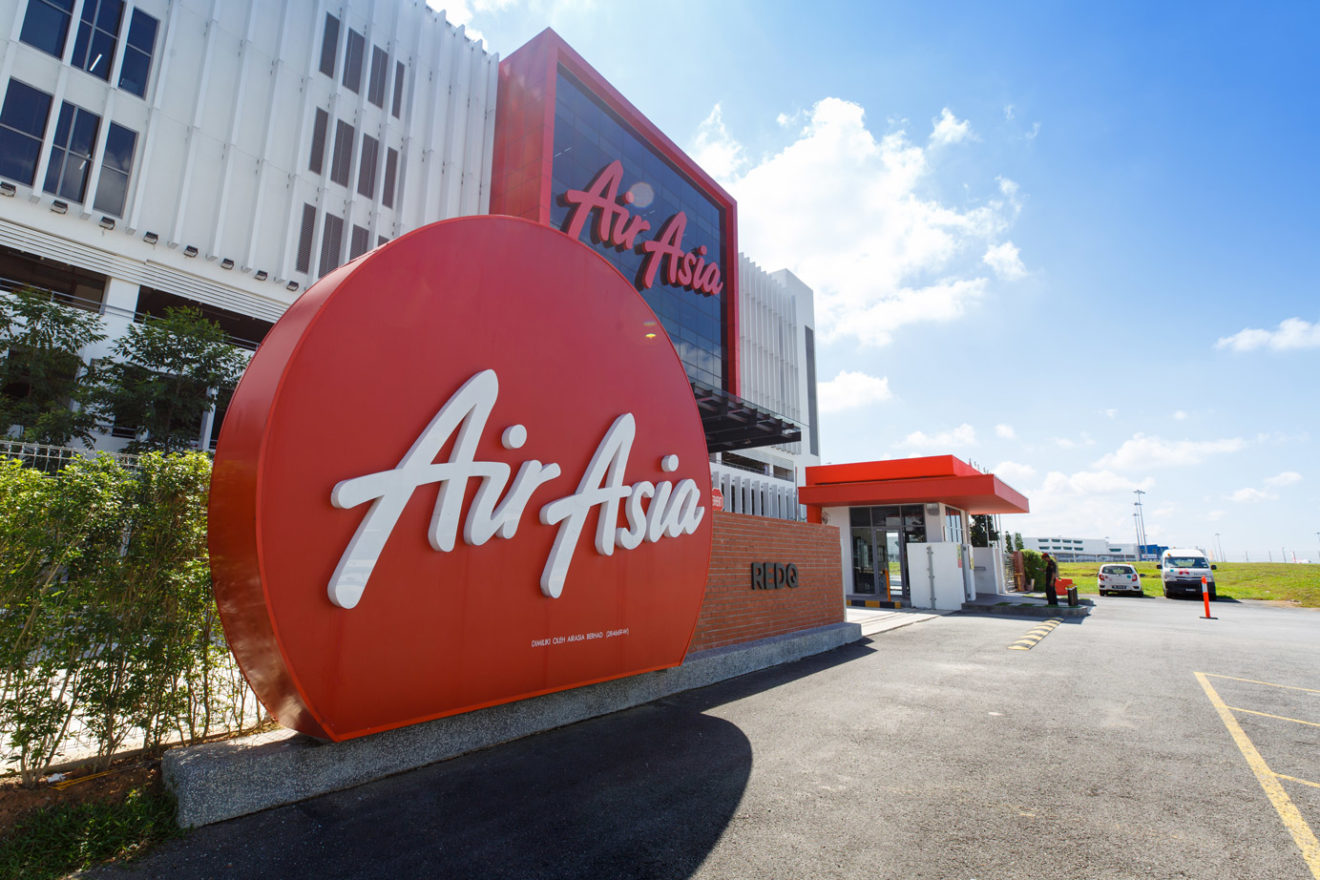
    Tun Dr Mahathir Mohamad acknowledged AirAsia’s significant contribution to Malaysia’s tourism sector since starting operations in 2001 besides creating numerous milestones along the way and being a trendsetter in air travel.The Prime Minister said the evolution of low-cost carriers in the region has been quite phenomenal and that AirAsia’s role in this was obvious.He is confident that the emergence of new technologies in the aviation industry would further propel AirAsia to improve its standing as one of the world’s leading brands.“I was informed that this is the centre of AirAsia’s operations across the Asia Pacific and congratulate AirAsia for spearheading the budget air travel revolution in this region,” he said, when visiting the AirAsia headquarters known as Red Q or Red Quarters, a stone’s throw from the Terminal Two which it operates.

    Mahathir said his last visit to the LCCT (low-cost carrier terminal) was in 2011 and was proud of the Malaysian success story the airline has become.It not only emerged as the world’s best low-cost carrier for the 11th time at the Skytrap World Airline Awards this year but was also briefed that its headquarters even matched those of Google and Facebook.“Obviously this is not the usual office. There is no partition between the staff and heads. Even the top management don’t have partitions,” he said, adding in jest that he thought it was because AirAsia had no money to install partitions. “It reminded me of a phrase that was meaningful to me at one time, i.e nothing to hide,” he quipped and hoped AirAsia would continue to remain open and transparent.

    He noted that AirAsia sets many firsts in the industry such as being the first to sell flights online when the rest of the industry was still using travel agents, the first in Asia to have a mobile app and engage in social media seriously, the first to implement self-service facilities including check-in kiosks, self-bag tag and self-bag drop machines.“Today it is taking its guest experience one step further by showcasing the possibility of future air travel and digital airports in line with Industry 4.0 that involves enhanced connectivity and automation which leads to the creation of smart autonomous systems fuelled by data and machine learning that are more efficient and less wasteful.”He was confident that AirAsia’s innovations like AVA (Airasia Virtual Allstar, AI-powered Chatbots and Faces (Fast Airport Clearance Experiencei) will help propel the industry into the future and hoped to see all these creative innovations in all airports.

    Mahathir also hoped that the new technologies would help AirAsia to continue to put Malaysia on the map as the nation forges ahead with 4.0.“The potential for growth is tremendous and it comes down to knowledge in applications.”Mahathir said businesses should not only arm themselves with new knowledge but also take risks to apply this new-found knowledge to create new products and services to boost productivity and efficiency.In this, he was glad to note that AirAsia was constantly challenging itself in its quest for continuous improvement and innovation.

    As a word of advice, he said success will always bring higher expectations and place one under more scrutiny.“If not careful and unable to meet and resolve some of the more reasonable expectations and criticisms, it may turn against you.“Its all about managing success and this is what AirAsia should give much consideration,” he said, adding that if it remains focussed and innovative, AirAsia is destined for even greater heights.Earlier at the presentation, guests were briefed on how AirAsia grew from just two planes serving two domestic routes in 2011 to 260 planes and over 390 routes across the Asia-Pacific and US with some 600 million people having travelled on it.It also prides in being one of the largest recruiters of women pilots, now numbering 220.Among those present were Transport Minister Anthony Loke, AirAsia x Chairman Tan Sri Rafidahn Aziz, AirAsia Group Exec Chairman Datuk Kamarudin Meranun and AirAsia Group CEO Tony Fernandes.

  • AirAsia launches new sustainability livery

    AirAsia launches new sustainability livery

    Air Asia unveiled its new livery design for their Airbus A320 in Bangkok last week, to promote the message of “Sustainable ASEAN Tourism”.

    The launch coincided with the ASEAN Day celebrations on August 8, marking the 52nd anniversary of the original declaration in 1967, and was attended by Thailand’s Director General of the Department of ASEAN Affairs, the AirAsia Group CEO Tan Sri Tony Fernandes, as well as staff and press from around the region.

    Alongside its signature red wings and tail, the fuselage portrays a stylistic green landscape with a river linking all the major ASEAN landmarks – from the Marina Bay Sands in Singapore to the boats of Ha Long Bay in Hanoi. Myanmar’s famous Kyaikhtiyo and Shwedagon pagodas sit at the very top of the design, beside the tail.

    The ASEAN logo is embedded in the puang malai garland, which is associated with good luck and hospitality in Thailand, appropriately located beside the front passenger door. “Ten trestles hanging from the garland symbolise the ten member states. They collectively form the shape of an outward arrow, representing their striving together in advancing partnership towards sustainability,” said Mr. Vijavat Isarabhakdi, Director General of the Department of ASEAN Affairs in Thailand.

    The design was chosen from over 300 submissions by groups of young artists across Thailand, and will now feature on two aircraft based in Thailand and Malaysia.

    Sustainability has been at the forefront of the company’s brand image in recent years, from its aims to reduce carbon emissions to the recycling of aircraft parts and life-vests.

    The company also participates in engagement programs like the recent Journey-D promotion, which challenges travelers to stay in a community in rural Thailand to help clean up the environment, and “live in peace” for two days – without a mobile phone.

  • Travellers Can Now Order Boba Milk Tea On AirAsia Flights

    Travellers Can Now Order Boba Milk Tea On AirAsia Flights

    AirAsia Thailand recently introduced bubble milk tea in their in-flight menu – much to the delight of customers. There’s even a poster that says that passengers can now enjoy Boba milk tea 35,000 feet in the air.

    You’ve probably come across articles on how unhealthy bubble tea drinks can be, due to its sugar intake, sweeteners and artificial flavourings. To combat that, AirAsia Thailand has come up with a healthier option flyers.

    Enter AirAsia’s milk tea with konjac bubbles. According to Google, konjac (also known as konnyaku and devil’s tongue) “is high in fiber and has almost no calories”. Made from the root of a plant, some of its alleged health benefits include helping people to lose weight.

    Its boba also come in diamond shapes. There is only 1 flavoured bubble tea on the menu for the time being though.

    Priced at ฿75 (RM10), it is available on AirAsia Thailand and AirAsiaX Thailand flights.

  • AirAsia may face fines for charging processing fees for card and online banking transactions

    AirAsia may face fines for charging processing fees for card and online banking transactions

    low-cost carrier AirAsia could still face fines for charging passengers additional processing fee for card and online banking transactions. This comes right after AirAsia Group CEO, Tan Sri Tony Fernandes had announced that the airline will scrap the processing fee beginning October 2019.

    The Malaysian Aviation Commission (Mavcom) had made it compulsory for all airlines in Malaysia to remove hidden charges such as card payment charges and administrative fee effective 1st June 2019. The amendments to the Malaysian Aviation Consumer Protection Code 2016 (MACPC) also require airlines to refund the passenger service charges, taxes, fees and charges prescribed under any written law for both refundable and non-refundable tickets if a passenger did not travel. Refunds must be reimbursed within 30 days and airlines are only permitted to charge a maximum of 5% processing fee if the ticket is non-refundable.

    It was also reported that the Mavcom will issue a show-cause letter to airlines on the violation of the MACPC and the commission will then determine if the airline has contravened the said provision. The commission highlights that it is compulsory for airlines to remove the processing fee and airlines must also disclose the final price of the airfare both at the point of advertisement and prior to the consumer purchasing the flight tickets.

    They added that the final price must include the base fare and all required charges to be paid to the airline, government-imposed taxes, fees as well as fuel surcharge. This, according to the commission, will eliminate hidden charges such as card payment charges and administrative fees.

    The regulator said that it has been a practice in the past where the price increases after selections are made due to additional charges that were not disclosed upfront. The Edge Markets had reported that it may seem that AirAsia and AirAsia X would be liable for contravening the MACPC as they continue to charge processing fees until 30th September 2019.

    As mentioned earlier, AirAsia charges card processing fee as high as RM12 per passenger per flight depending on the destination. This means a return ticket could cost as high as RM24 for processing fee and if you’re travelling in a group of four, that’s equivalent to RM96 for processing fees alone.

    When Tony Fernandes was asked if Mavcom had ordered AirAsia to remove the transaction fees, he denied it on Twitter.

    At the moment, AirAsia encourages its passengers to pay by BigPay prepaid Mastercard to enjoy zero processing fees for their flight tickets. It is also worth pointing out that Bank Negara Malaysia had decreed that merchants cannot impose surcharges for payments using debit and credit cards.

    The same report also highlighted that AirAsia had stopped charging a RM3 klia2 fee on passengers departing from klia2 after it was made illegal by Mavcom. According to AirAsia, the extra fee was to cover the huge amount of extra cost klia2 has created such as aerobridges and the SITA check-in/boarding systems. Although it wasn’t disclosed in AirAsia’s annual report, The Edge Markets estimated that the airline would have collected RM45.24 million from the RM3 fee based on the number of passengers carried by the group from Malaysia Airports Holdings Bhd’s 2018 annual report.

  • AirAsia Wants Tools to Engage Customers Moving to Messaging Apps

    AirAsia Wants Tools to Engage Customers Moving to Messaging Apps

    Consumers now want to talk to businesses and find resolutions the way they talk to their friends and family, and this is pushing a big transition towards messaging channels, according to Adam Geneave, chief customer happiness officer for the low-cost Asian airline.

    The carrier added support for Tencent’s WeChat in China earlier this year and was seeing significant adoption for the platform, Geneave said in an interview. In fact, the messaging tool since had grown to become AirAsia’s biggest communication channel in the Chinese market, he noted.

    The airline’s engagement with customers through such channels played a key role in its business strategy as they enabled consumer queries to be addressed quickly, he said, and urged technology and other solutions providers to integrate messaging tools into their products.

    According to Geneave, AirAsia currently provides WeChat support via a plugin developed by Salesforce.com, which suite of products had been rolled out over the past year as part of the airline’s overhaul of its customer service infrastructure. These included Salesforce Sales Cloud, Marketing Cloud with Social Studio, Service Cloud, and Community Cloud.

    The deployment enabled AirAsia service agents across eight markets to access a unified view of customer cases from all communication channels, encompassing online, email, live chat, phone, and airport communications.

    With the transition into messaging evolving so rapidly, though, it has been difficult for the airliner and its technology partners to keep pace, Geneave said. For instance, support for Facebook’s WhatsApp still was lacking, he noted.

    “We have been very vocal in wanting such support, including for Line and KakaoTalk,” he said, noting that WhatsApp processed 65 billion messages a day worldwide and there were 1 billion active WeChat users. “The way people are interacting is changing.” He attributed AirAsia’s plans to close all its call centers this year in part as a response to this trend.

    The airline is estimated to fly 100 million passengers this year and 20 million of its service cases each year are facilitated on Salesforce platforms, which currently support more than 22,000 AirAsia employees in nine languages.

    The data that runs through these systems also allow the airline to deliver personalized experiences and facilitate better decision-making.

    Geneave explained that the different datasets were collated onto a single platform and managed at AirAsia’s command center. This was manned by duty managers who would track Salesforce dashboards to identify patterns that could affect its business and monitor tweets as well as other social media messages coming through on Social Studio.

    This provided valuable learnings about its customers and, with these insights, enabled his team to work on projects and improve processes and systems to further enhance customers’ engagement with AirAsia, he said.

    The ability to study the data and identify emerging trends also meant his team could be aware of service outages even before the IT team was alerted of it, he noted, adding that his team also tracked other relevant developments such as airports and other airlines that might and might not compete directly with AirAsia.

    The airline in January also introduced its artificial intelligence-powered (AI) chatbot, named AVA, which could handle eight languages including Bahasa Indonesia, Vietnamese, and Simplified Chinese.

    Geneave said the chatbot had been performing well and handled a significant chunk of queries coming through on its live chat. AVA also was deployed on the airline’s Facebook Messenger platform.

    Apart from operating on a strong knowledge base, he said the chatbot also continued to learn from conversations it had with customers. His team also trained it on a daily basis, he added.

    AVA’s deployment was critical to enable the airline to be more agile in the way it managed its customers, he said, noting that the chatbot could take on a significant volume and allow queries to be handled more quickly.

    Geneave also pointed to the emergence of AI and machine learning technologies as a crucial development as these would further enable AirAsia agents to react more quickly and identify trends that otherwise would have taken hours to analyse.

    Beyond customer services, too, it would give airlines the ability to save fuel – for example, by improving the way it scheduled crew rosters and managed its resources, he said.

  • AirAsia names new Philippines CEO

    AirAsia names new Philippines CEO

    AirAsia has named telecommunications executive Ricardo RickyIsla as the new CEO of AirAsia Philippines.

    Isla joins AirAsia after more than a decade of international product development, sales and distribution experience with telecommunications giant PLDT Global Corporation.

    In addition to his most recent role as regional head of operations for the United Kingdom and Europe, Isla has held general manager positions in its international retail business, as well as in the US, Italy and Singapore.

    AirAsia Philippines’ chairman Maan Hontiveros said: “I am thrilled to welcome Ricky to our senior leadership team. Ricky has an outstanding track record of leading and transforming businesses, especially when it comes to increasing revenue and market share.”

    He commenced his role as CEO of AirAsia Philippines 31 July.

    AirAsia Philippines operates a fleet of 24 aircraft on more than 500 weekly domestic and international flights from its hubs in Manila, Clark, Cebu, and Kalibo.

  • AirAsia keeps improving flight services

    AirAsia keeps improving flight services

    AirAsia won for the 11th time at the prestigious Skytrax World Airline Awards as the world’s best low-cost airline during the Paris Air Show in Le Bourget, Paris, France, in the middle of June 2019. But despite the awards, it has never let itself get complacent.

    The airline keeps its commitment to continue increasing and improving its flight services for domestic routes and foreign routes, by being continually committed to providing low cost but quality flight services on all of the routes it serves.

    In July 2019, the airline launched three new routes from Jakarta to Sorong in West Papua, Lombok in West Nusa Tenggara and Semarang in Central Java. The new routes will start operating on Sept. 1 and will be served by Airbus A320 aircraft with a capacity of 180 seats. In June, AirAsia launched five new domestic routes. The five round-trip domestic routes are Jakarta-Lombok (11 flights per week), Bali-Lombok (seven flights per week), Yogyakarta Kulonprogo-Lombok (three flights per week), Bali-Labuan Bajo (seven flights per week) and Surabaya-Kertajati (three flights per week). AirAsia will start operating its flight services on the five new domestic routes from Aug. 1 onwards.

    In an effort to attract more passengers to the new routes, AirAsia is offering special prices, namely for Jakarta–Lombok starting from Rp 635,000, Bali–Lombok from Rp 243,000, Surabaya–Kertajati from Rp 626,000. All the prices are one-way but include tax and free baggage up to 15 kg.

    The flight tickets, which are offered at a price of Rp 2.49 million for Jakarta-Sorong, Rp 590,000 for Jakarta-Lombok and Rp 341,000 for Jakarta-Semarang, can be ordered at airasia.com and through the AirAsia application. The prices are only for one-way but include passenger service charge and free baggage up to a maximum of 15 kg. The prices are only available on flights booked until July 28, for flights from Sept. 1 until Oct. 26.

    Sorong is the largest city in West Papua and stands as a gateway to Raja Ampat, one of the most exotic and beautiful tourist destinations in Indonesia.

    In Lombok, where AirAsia has recently opened its new hub, travelers can enjoy a number of enchanting destinations, such as Bukit Merese, the Gili Islands, Tanjung A’an, Pink Beach and Mandalika.

    In Semarang, which is also known as the little Netherlands, travelers can trace its history through the old buildings mostly from the Dutch colonial era, while hunting for local delicacies along the exotic journey.

    Besides the route expansion, last month AsiaAsia also offered five million cheap tickets through its Big Sale 2019 program for various domestic and international destinations. The promotional tickets include those on favorite routes, such as Jakarta-Singapore at a price of only Rp 150,000, Medan-Penang from Rp 230,000 and Surabaya-Bali from Rp 359,000.

    The airline has also introduced a new standard of flight comfort with its Airbus A330neo, which will certainly change the public perception of long-distance flights. It will offer the best value of ticket prices for 30 long-distance destinations in 10 major markets of AirAsia Group.

    “Besides developing international connectivity to support the visit of foreign tourists to Indonesia, this year, as we promised, we are focusing on expanding our domestic routes, especially those to eastern Indonesia.,” said AirAsia’s president director Dendy Kurniawan recently during the ceremony to launch the new routes.

    Currently, AirAsia Indonesia operates a total of 292 flights per week from Jakarta to various domestic and international destinations, such as Kuala Lumpur, Penang, Bangkok, Phuket, Surabaya, Yogyakarta and Bali.

    Overall, AirAsia serves more than 700 flights per week on 38 direct routes from 15 cities of Indonesia for domestic and international routes. It has a fleet of more than 200 airplanes of the type Airbus A320-200 and Airbus A330-300 in six countries, namely Indonesia, Malaysia, Thailand, Philippines, India and Japan, with more than 140 international destinations in Asia, Australia, the Middle East and the US.

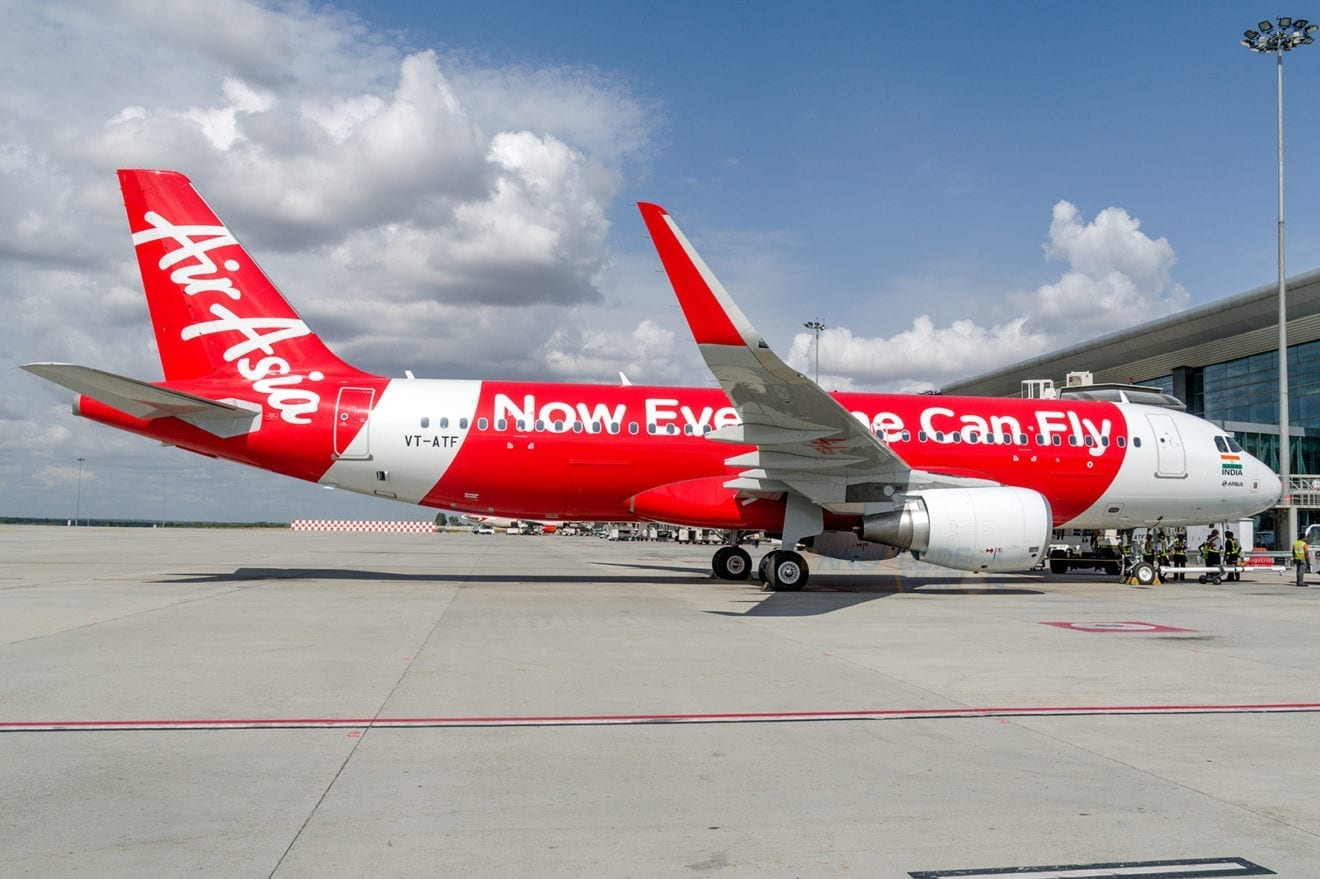
    “We’ll continue to be committed to providing low cost but quality flight services in Indonesia. We realize it through the principle of efficiency, innovation and operation digitalization. It is not just a marketing gimmick. It is part of our vision and mission to realize ‘Now Everyone Can Fly,” Dendy Kurniawan concluded.

  • AirAsia’s Tony Fernandes: ‘Too Many Leaders Stay Too Long’

    AirAsia’s Tony Fernandes: ‘Too Many Leaders Stay Too Long’

    The public nature of aviation means it tends to attract large-scale palace intrigue about executive leadership changes from employees, customers and other stakeholders and observers. With the industry typically having small margins and many uncontrollable events, it is easy to hope the executive change will improve the experience, hence calls for Bob Crandall to return to American Airlines.

    Change can be a sensitive topic, but not to AirAsia co-founder Tony Fernandes. “Retirement is important,” he said at the Rise technology conference in Hong Kong this month. “Too many leaders stay too long. I think leadership needs to be refreshed.”

    His comments were not directed at anyone or prompted by any events, but leadership change discussion can come up often for executives.

    Emirates President Sir Tim Clark has spent most of his professional life at the Dubai giant, including almost 17 years as president. He is routinely asked of his future plans, not only because of his long tenure as president but also because that at 69 years old, he is above the government’s retirement limit of 65. The official retirement age is 60 for non-Emiratis but this can be extended up to 65, the government says.

    Clark is asked so often about retirement that he has talking points with the eloquence he is known for. “Time will knock on the door and this is a younger man’s business,” he said in 2018. That is similar to his 2015 comment that “It’s a younger man’s game.”

    He deflects to the owner – the Dubai government – and told Airline Ratings: “My succession will be determined by the shareholder.” He said, “I believe that the owner will have plenty of scope there.”

  • AirAsia enters logistics JV for Thailand

    AirAsia enters logistics JV for Thailand

    Airasia indirect wholly-owned subsidiary Teleport Everywhere Pte Ltd has proposed a joint venture with Triple i Logistics Public Company Ltd to provide logistics services to Thai AirAsia Co Ltd (TAA) and Thai AirAsia X

    AirAsia said in a filing with the stock exchange that a memorandum of understanding was signed between the four parties, whereby Teleport and Triple I would establish a partnership in Thailand as a general cargo sales agent for the airlines.

    According to the statement, Teleport is a cargo and logistics services provider while Triple i is a total logistics integrator with 27 years of experience in the international forwarding and logistics industry

    “The MOU aligns with Teleport’s mission to move goods and e-commerce seamlessly throughout Southeast Asia, taking full advantage of AirAsia Group’s network of more than 100 cities and 10,000 weekly flights across Asia Pacific.

    “In particular, it allows Teleport to integrate the rights to the cargo capacity in Thailand for TAA and TAX with the wider AirAsia Group’s network,” it said.

  • AirAsia India announces new routes

    AirAsia India announces new routes

    AirAsia India is on an expansion spree. the budget carrier will start operating daily direct flight on the Delhi-Chandigarh route from 1 August onwards. The launch fare on Delhi-Chandigarh route is ₹1,365, the airline mentioned. The flight would leave from Delhi at 10.40 am every day and would reach Chandigarh at 11.50 am. The return flight would depart from Chandigarh every day at 12.50 pm and arrive at the Delhi airport at 1.55 pm, the low-cost carrier said.

    The airline will also be introducing fourth additional flight on the New Delhi-Bengaluru route from 5 August onwards. The airline currently runs three flights daily on the New Delhi-Bengaluru route.

    As part of expansion plans, AirAsia India is likely to launch international services by September-October with flights to destinations in South East Asia, including Malaysia and Thailand.

    Air Asia India, which started operations in June 2014, is a joint venture between Tata and AirAsia Berhad. It currently operates 164 flights a day, covering 19 destinations and carrying over 25,000 passengers.

    GoAir is also expanding its operations with five new international services to the Gulf region, two to Bangkok and eight new domestic services. GoAir’s new international services are Delhi-Abu Dhabi, Mumbai-Abu Dhabi, Mumbai-Muscat, Delhi-Bangkok, Kannur-Dubai, Mumbai-Bangkok and Kannur-Kuwait routes.

    GoAir is expanding its India operations from Hyderabad with eight new flights covering cities like Cochin, Chennai, Jaipur, Bengaluru, Chandigarh and Patna.

  • AirAsia ordered to pay at least $9.9 million to Malaysia Airports

    AirAsia ordered to pay at least $9.9 million to Malaysia Airports

    The Malaysian High Court in Kuala Lumpur has ordered AirAsia and AirAsia X to pay operator Malaysian Airport Sepang (MA Sepang) MYR40.73 million ($9.9 million) in unpaid passenger service charges after ruling in favor of the national airport operator.

    The LCC was also ordered to pay MYR972,381 and MYR24,000 for late payment and lawsuit fees, respectively.

    In retaliation, AirAsia Group CEO Tony Fernandes took to Twitter and posted photos of beehives at the airport, as well as uneven parking aprons at Kuala Lumpur International Airport (KLIA) Terminal 2, known as KLIA2. Since moving to KLIA2 in 2014, AirAsia has been very unsatisfied with terminal design and facilities.

    MA Sepang, a subsidiary of Malaysia Airports Holdings Bhd (MAHB) first sued AirAsia and AirAsia X in December 2018 for unpaid passenger service charges after the former raised the charges from MYR50 to MYR73. AirAsia refused to charge its passengers the increased rate as it said the facilities at KLIA2 were sub-standard. The LCC later countersued MAHB in January 2019 for losses and damages incurred by both airlines because of operational disruptions at KLIA2.

    The High Court also dismissed AirAsia’s appeal against the Malaysian Aviation Commission for failing to mediate the issue between the two parties, as regulations stipulate.

    “We will continue to fight the battle on behalf of all Malaysians and travelers to Malaysia,” Fernandes said in his posts, adding he hopes MAHB will act like a partner.

  • AirAsia X opens up on Hawk-less pair of A330neos

    AirAsia X opens up on Hawk-less pair of A330neos

    When the first AirAsia X Airbus A330neo was unveiled at the Paris Air Show amid much discussion about Airbus’ ‘sub-economy’ ultra-narrow seating strategy, two surprises awaited on board — or, rather, didn’t await.

    At last year’s Farnborough Air Show, AirAsia X Group Chief Executive Officer Kamarudin Meranun (now chairman of AirAsia) confirmed to Runway Girl Network that the airline planned to take Mirus’ Hawk long-range version and Collins’ Minipod for its A330neos. Yet on board the two seating products were neither of those.

    It turns out this first aircraft is one of a pair of leased jets from Avalon that Thai AirAsia X is taking earlier than the hundred that will come directly from Airbus. “AirAsia currently has 66 Airbus A330neo aircraft on order. In addition, AirAsia’s fast-growing long-haul affiliate AirAsia X Thailand will take delivery of an additional two leased aircraft in the coming months,” AirAsia X Group CEO Nadda Buranasiri explained to RGN.

    The airline’s head of group communications later followed up to confirm that those 66 aircraft are firm orders, with the additional 2018 Farnborough Air Show order of “34 currently MOU [Memorandum of Understanding] and under review”.

    Mirus confirmed to RGN that the seat on the Avalon aircraft was not the long-range version of the short-range Hawk seat that AirAsia uses on its Airbus A320s, and Buranasiri confirmed that “The two Airbus A330neo aircraft on lease from Avolon have been fitted with the Zodiac UK Aura Lite in Premium Flatbed and Geven Piuma AQ in economy.”

    But Buranasiri also flagged potential evolution in AirAsia X’s passenger experience. “The seating and cabin configuration for AirAsia’s Airbus A330neo aircrafts on order is subject to change. We are currently reviewing cabin space and configuration options on the new Airbus A330neo. This includes options for a new premium and economy class seat.”

    AirAsia X’s Thai operation will put its first A330neo into service at the end of July, with routes expected to include Japan, Korea and Australia, although schedules have not yet been published.

    But starting next year, more A330neos will arrive with AirAsia X, and the company has been expansive with its promises of “new and exciting destinations such as to Eastern Europe and North Asia”, according to Buranasiri.

    Within Europe, the airline previously flew to London Gatwick and Stansted as well as Paris Orly with elderly A340-300 aircraft, but with both countries charging relatively high departure tax rates, and costs higher in Western Europe, an Eastern Europe strategy could make good sense for AirAsia. Indeed, a partnership with an airline like Wizz Air to provide feed on the European end of the longhaul flight would make much sense.

    “Our current network strategy is focused on medium haul — five to nine hours — meaning nine-abreast is a comfortable option. Nine abreast on the A330neo gives very similar levels of personal comfort for each guest even compared to other aircraft options with full service carriers,” Buranasiri argued, and with AirAsia’s reasonable legroom combined with the decision of many full service airlines to go nine-abreast on their 787s and ten-abreast on their 777s, this is a fair suggestion.

    More crucially, perhaps, “Nine abreast on the A330neo drives the aircraft economics to allow us to maintain the lowest CASK [cost per available seat kilometre] and therefore deliver the lowest fares to our guests. This brings more guests the opportunity to fly and this mission will continue for our long haul market strategy,” Buranasiri said.

    Given that the passenger experience will be relatively similar to its existing widebody fleet, the efficiency of the A330neo AirAsia X expects is impressive. “The aircraft will reduce our fuel burn by 11% on every trip, and with extended range help us to open up new and exciting destinations,” compared with the existing A330ceo fleet, Buranasiri said.

    AirAsia X has always been very up front about what it offers, and with one-way fares for the 6h20m Bangkok to Tokyo even a few days out at an impressive 79€ (US$89), AirAsia X’s simple way to purchase a second seat for passengers who would want or need to, and the angled lie-flat seats up front at around a 3-4x multiplier of economy, it’s hard to criticize the value for money of its ultra-narrow seats — whoever makes them.

  • AirAsia launches three new routes for Jakarta flights

    AirAsia launches three new routes for Jakarta flights

    Low-cost carrier AirAsia is launching three new routes for direct flights from Jakarta to Sorong, West Papua; Lombok, West Nusa Tenggara; and Semarang, Central Java. These flights will start operating on Sept. 1 using the Airbus A320 plane with a 180 seat capacity.

    The airline is offering a special price for a one-way ticket for these flights starting from Rp 2.7 million (US$193.97) for Jakarta – Sorong, Rp 634,000 for Jakarta – Lombok, and Rp 341,000 for Jakarta – Semarang. All of these flights are available through airasia.com or the AirAsia mobile apps. The offer is available starting from July 20 to 28 for flights from Sept. 1 to Oct. 26.

    AirAsia Indonesia CEO Dendy Kurniawan said that his company was currently focusing on expanding its domestic and international routes.

    “We showed our commitment to provide affordable and high-quality flights through this offer,” Dendy said through a written statement.

    According to Dendy, the ticket includes 15kg checked baggage for passengers.

    “We hope that our service will be able to boost economic growth, especially in tourism,” Dendy said.

  • AirAsia adopts Workday cloud tech to manage 22,000 global employees

    AirAsia adopts Workday cloud tech to manage 22,000 global employees

    Southeast Asia’s largest budget carrier, AirAsia, is adopting cloud technology to manage the company’s 22,000 employees across the region as part of its digital transformation.

    AirAsia operates flights to more than 140 destinations across 22 markets.

    AirAsia announced it had recently taken a huge leap in human capital management (HCM) in cooperation with Workday, a provider of financial and human capital management software that is based in California.

    AirAsia chief people and culture officer Varun Bhatia said that Workday’s cloud technology could help the company maintain what he called “single-source truth and employee data”.

    “We believe we have to move towards a more personalized approach and employees have to get a personal experience,” Bhatia said recently.

    The collaboration, Bhatia said, enabled the airline’s employees to access the integrated, cloud-based platform individually from their mobile phones at any time and from anywhere.

    “It is a self-service platform where employees can do basic [things] like arranging leave, completing their data information and the like,” he said.

    The platform keeps information on each individual employee and their employment records, including career path, technical skills level and professional development, as well as standard information that employees need to do their jobs.

    Employees can also check their daily work schedule, manage leave days and track information about their salaries.AirAsia chief people and culture officer Varun Bhatia (right) and Workday president of Asia Rob Wells (left) shake hands to mark the collaboration in cloud-based human capital management recently at AirAsia Headquarters, Malaysia. (Courtesy of /AirAsia)

    Workday president for Asia Rob Wells said that with the help of technology and digitalization, AirAsia could allow its workforce to achieve efficiency and make their jobs easier.

    “Every day, the 22,000 employees of AirAsia are either serving us, flying us, caring for our baggage or making sure that the airplane works all the time,” said Wells.

    “They don’t have the time to come to the office to a desktop device. Thus, engaging the workforce through mobile, through access to digitalization, is essential,” he said.

    Adopting cloud technology to manage its human capital is part of the airline’s “AirAsia 3.0” vision to go beyond being an air travel company and become a travel tech company. AirAsia 3.0 also envisions providing hotel booking and logistics services as a one-stop e-commerce platform for travelers.

  • Thai AirAsia X begins new service to Brisbane

    Thai AirAsia X begins new service to Brisbane

    Thai AirAsia X has started its newest service from Bangkok to Brisbane, with the first arrival touching down at 11:46 am local time on Wednesday. This marks the first AirAsia service to Brisbane Airport. The aircraft received a water salute on arrival, courtesy of the airport’s fire and emergency service.

    The route is operated by Thai AirAsia X under flight number XJ310 (Bangkok to Brisbane) and XJ311 (Brisbane to Bangkok); duration of the flight is approximately nine hours and 20 minutes. Before this connection, the only non-stop service between Brisbane and Bangkok was operated by Thai Airways using the Boeing 777-200. The Malaysian AirAsia X serves Gold Coast Airport, which is located 90 kilometres (56 miles) south of Brisbane.

    We are delighted to have a new home in Queensland, adding Brisbane to our Queensland ports after we commenced operating flights from the Gold Coast in 2007. This direct service between Bangkok and Brisbane strengthens our connections into Australia and adds to our extensive network of more than 140 destinations worldwide.Nadda Buranasiri, AirAsia X CEO
    Asia is a key market for Queensland’s tourism industry and this new service will bring more than 235,000 inbound seats to Brisbane over the next three years, providing a $156 million boost to the state’s economy and supporting 660 jobs.Kate Jones, Minister for Tourism Industry Development

    Thai AirAsia X is a sister airline of AirAsia’s long haul carrier AirAsia X. The Thai airline is based at Bangkok Don Mueang Airport. Together with AirAsia X and Indonesia AirAsia X, it operates a fleet of 36 Airbus A330-300 with up to 100 of the new generation A330-900neo on order. Thai AirAsia X will soon receive its first A330neo and become the Asian launch-customer of the aircraft type. The airplane, which is already due for delivery, was on display at Paris Air Show 2019.