Tag: airasia

  • MavCom fines AirAsia, AirAsia X RM200,000 each

    MavCom fines AirAsia, AirAsia X RM200,000 each

    RM200,000 each for charging credit card, debit card and online banking processing fees separate from their base fares.

    MavCom said in a statement on Tuesday the fees charged by the airlines contravened the Malaysian Aviation Consumer Protection Code 2016 (MACPC). It said MACPC came into effect on July 1,2016, and was published in line with MavCom’s aim to protect the rights and interests of consumers.

    MavCom said as the first consumer protection code specifically intended for Malaysia’s aviation industry, the MACPC ultimately provides for more transparency on aviation service providers’ obligations towards consumers and clearer guidance for consumers on their rights and interests as air travellers.

    MavCom said from June 1,2019, it had been monitoring for compliance with the new provisions of the MACPC.

    “AirAsia and AirAsia X have been found to contravene subparagraph 3(2) of the MACPC which requires full disclosure of the final price of the airfare.

    “As part of the due process to determine whether a contravention has been committed, MavCom issued show-cause letters to both airlines and afforded opportunities to the airlines to provide factors to mitigate the quantum of the penalties.

    MavCom said that Section 69(4) of the Malaysian Aviation Commission Act 2015 [Act 771] together with paragraph 22 of the MACPC empowered it to impose a financial penalty for a non-compliance of the MACPC, an amount not exceeding RM200,000 and in the case of a second or subsequent non-compliance, an amount ten times of the financial penalty which was imposed for the first non-compliance.

    “Upon thorough evaluation and taking into consideration the written representations by the airlines, the commission has imposed on AirAsia and AirAsia X a penalty of RM200,000 each for the first violation of subparagraph 3(2) of the MACPC, for the period commencing June 1,2019 to Aug 9,2019, ” it said.

  • AirAsia India Airbus A320 Aborts Takeoff Due To Dog On The Runway

    AirAsia India Airbus A320 Aborts Takeoff Due To Dog On The Runway

    An AirAsia Airbus A320-200 aborted its take-off on Sunday (01/09/19) due to a dog appearing on the runway. The flight from Goa to Delhi was delayed by 50 minutes while the aircraft’s braking systems were checked.

    Reports Aviation Herald, Flight I5-778 was cleared to take off at around 08:25 local time. The A320 (registration VT-IXC) began rolling but its crew was instructed to abort a few seconds later. The A320 rejected the take-off at a relatively low speed and returned to the apron.

    Following normal procedure, the flight crew assessed the effect of the aborted take-off on the aircraft’s systems. After 50 minutes the plane was again cleared to take-off, and this time did so successfully.

    Flight I5-778 landed at Delhi’s Indira Gandhi International Airport just 30 minutes behind schedule. Writes News in Flight, a spokesman for Goa airport said,

    Goa’s Dabolim civilian airport operates within an Indian military base called INS Hansa. The airport is jointly used by civilian and military jets. With over seven million passengers passing through the terminal each year the airport’s airside aprons suffer severe congestion.

    A second airport is in the process of being built in Mopa, north of Dabolim. The Indian government intends this airport to become the main civilian hub for Goa’s burgeoning tourist trade, thereby easing congestion at GOI.

    Dabolim will continue to receive civilian passengers.

    An investment in the old airport of around Rs.4 Bn (US$60 million) is set to improve the passenger facilities by the provision of a larger terminal and more adequate parking. Whether the expansion works will also include better perimeter security is yet to be seen.

    The sight of dogs on Indian runways is all too common. In 2018, the Directorate of Civil Aviation identified at least 20 airports that were at risk of canine incursions. At all 20 of these sites, animals could enter freely through perimeter barriers.

    Passenger safety at these sites was deemed to be compromised by the number of animals accessing the operational areas.

    On August 13th, a similar incident at Goa was reported by Aviation Herald. This time an Air India Airbus aborted its landing due to the pilot’s reporting a group of dogs on the runway.

    The flight crew of the A320-200N Flight AI-33 from Mumbai to Goa performed a go-around due to the animals being on the ground, although the Tower Controller did not see the dogs. The aircraft landed safely on the second attempt.

    According to reports, there are an estimated 200 dogs in the vicinity of the airfield.

    In response to public concern about the safety of passengers arriving and departing at Goa, the AAI revealed their intention to be more pro-active.

  • AirAsia X orders 42 new long-haul Airbus jets

    AirAsia X orders 42 new long-haul Airbus jets

    AirAsia X, the long-haul part of the AirAsia Group, has now finalized a major order with Airbus for 12 more A330-900 and 30 A321XLR aircraft.

    The contract was signed today by Tan Sri Rafidah Aziz, chairman of AirAsia X, along with Guillaume Faury, CEO of Airbus, in KL, in the presence of Mahathir Mohamad, the Malaysian PM.

    Tony Fernandes, the CEO of the AirAsia Group, says the two aircraft are the perfect equipment for long-haul, low-cost operations.

    “This order reaffirms our selection of the A330neo as the most efficient choice for our future wide-body fleet. In addition, the A321XLR offers the longest flying range of any single aisle aircraft and will enable us to introduce services to new destinations.”

    Aziz says the order showed the airlines’ commitment to long haul air travel.

    “This will move our long-haul service sectors up to a higher level and allow AirAsia X to look at expanding beyond the eight-hour flight radius, such as to Europe for example.”

    The new contract increases the number of A330neo (new engine option) aircraft ordered by AirAsia X to 78, reaffirming the carrier’s status as the largest airline customer for the type. Meanwhile, the A321XLR (long range) order sees the wider AirAsia Group strengthen its position as the world’s largest airline customer for the A320 “family”, having now ordered a total of 622 aircraft.

    AirAsia X currently operates a fleet of 36 A330-300s on services to points within the Asia-Pacific region and the Middle East. In addition, in August the first A330neo joined the fleet of AirAsia’s Bangkok-based long haul affiliate, AirAsia X Thailand. The aircraft is the first of two leased A330neos joining the airline’s Thai affiliate by the end of the year.

  • AirAsia eager to introduce bio-fuel powered flight, supported by Airbus

    AirAsia eager to introduce bio-fuel powered flight, supported by Airbus

    AirAsia Group Bhd is expected to introduce a biofuel-powered flight in the future as the airline initiated research and developments (R&D) into aviation biofuels supported by Airbus SE.

    Group chief executive officer Tan Sri Tony Fernandes has expressed interest to explore the production of alternative and sustainable aviation biofuels in Malaysia.

    “However, it is too early to comment right now but obviously, we as an airline would like to do more in biofuels. We can not do it alone. So, it is great that Airbus supports our vision of trying to get biofuels into the aircraft. Hopefully that dream is not so far away with Airbus’ support,” Fernandes said after the signing ceremony between AirAsia and Airbus involving the airline’s 42 new aircraft orders in Kuala Lumpur last Friday.

    Market observers believe the move likely to cut the group’s jet fuel cost and reduce carbon emissions.

    Fernandes said aviation biofuels R&D requires a lot of work involving comprehensive studies on how the alternative fuel burns compared with the conventional kerosene jet fuels.

    He said technical support from airframe maker Airbus SE would facilitate the airline’s initiative to develop its aviation biofuels.

    Airbus had last Friday announced it would increase participation in the Aerospace Malaysia Innovation Centre (AMIC) to provide more funds for joint research programs.

    Airbus is also one of AMIC founders, which is set to appoint an Innovation Technical Director to support the non-profit organization including into aviation biofuels in Malaysia.

    This was also part of Airbus’ US$120 million (RM505 million) planned investments announced last week comprising three initiatives to further develop Malaysia’s aviation and aerospace industry.

    Under the initiatives for AMIC, Airbus said the programs benefitting from additional funding such as alternative and sustainable aviation biofuels.

    Inter’s Romelu Lukaku was allegedly subjected to racial abuse during the match against Cagliari at Sardegna Arena Stadium in Cagliari, Italy. – EPA

    Chief executive officer Gauillaume Faury said Airbus’ new initiatives also include the expansion of the company’s wholly-owned maintenance, repair, and overhaul (MRO) facility – Sepang Aircraft Engineering (SAE); and the establishment of the Airbus Malaysia Digital Initiative.

    “These initiatives will significantly enhance our presence in Malaysia, which is one of our most important markets in Asia,” he said at a press conference at the signing ceremony of the firm order between AirAsia Group and Airbus here, recently.

    He said Airbus’ initiatives would also strengthen its win-win partnerships with Malaysia, contributing to the development of the Malaysian aerospace sector and enabling the company to benefit from the competencies and skills available in the country.

    Major airlines had been experimenting for years with biofuels in an effort to reduce both carbon emissions and their reliance on fossil fuels.

    According to Bloomberg, several major carriers were planning larger-scale usage of biofuel in 2019 and 2020, including JetBlue Airways Corp and Cathay Pacific Airways Ltd.

    Meanwhile, the International Air Transport Association (IATA) had approved a resolution that called on governments to continue working towards the implementation of the Carbon Offsetting and Reduction Scheme for International Aviation (CORSIA).

    Having agreed through the United Nations’ International Civil Aviation Organisation (ICAO), CORSIA would limit net carbon dioxide emissions from international aviation at 2020 levels to achieve carbon-neutral growth.

    The first test flight with biojet fuel was undertaken by Virgin Atlantic in 2008. As at June 2019, more than 180,000 commercial flights using sustainable aviation fuels have been performed, according to IATA.

  • AirAsia to consider flying to Albania

    AirAsia to consider flying to Albania

    AirAsia Group Bhd chief executive officer Tan Sri Tony Fernandes said the airline will consider flying to Albania.

    The Southeastern Europe nation could be one of its routes in Europe, a market which the airline had hinted about re-entering.

    “Why not? AirAsia is always looking for different places and I never thought about Albania. We are going to have a look.

    “The Albanian Minister (Tourism and Environment Minister Blendi Klosi) is very positive (about bringing us to the country). So let’s see,” he told Bernama on the sidelines of the World Tourism Conference 2019 here, today.

    Fernandes, who was one of the speakers at the conference, shared his experience about transforming AirAsia from a small loss-making company into a global giant in the aviation industry.

    Klosi, who was also a speaker at the conference, expressed his welcome to AirAsia, which he said would help to promote the country’s tourism as well as those of other Balkan neighbours.

    During the conference, both of them jokingly agreed to have AirAsia fly to Albania if the country was willing to provide a free airport and promotional assistance.

    Previously, AirAsia X Bhd chairman Tan Sri Rafidah Aziz said that the airline was looking at expanding its market and had not discounted the possibility of re-entering the European market.

    Earlier this month, Fernandes said Thai AirAsia X would be flying to Europe by the end of this year or early next year.

    He said the long-haul low-cost airline was applying for approval from the relevant authorities.

  • Five things to watch for as AirAsia reveals earnings

    Five things to watch for as AirAsia reveals earnings

    Budget airline pioneer Tony Fernandes has built AirAsia Group into a benchmark for aviation in Southeast Asia in the 17 years since he founded the company.

    No longer satisfied with just flying passengers from A to B, Fernandes wants to use the data collected from the 100 million passengers he transports each year to transform the group into the “Amazon of travel.”

    Buffeted in recent months by the global trade war, high fuel costs, increased competition and other hurdles such as a failure to crack the lucrative Vietnamese market, the company’s shares are down nearly two-thirds from the all-time high of 4.6 ringgit ($0.53) in February last year.

    As AirAsia Group reveals its financial results for the second quarter on Wednesday in Kuala Lumpur, here are five things investors will be watching.

    One of the aviation industry’s most important metrics that measures the average fare per passenger per kilometre, Maybank Investment Bank’s Mohshin Aziz, is expecting lower yields to dampen profits.

    Mohshin is forecasting a second-quarter net profit of 111 million ringgit ($13 million), that’s 65% lower than for the same period last year, but up 9% on the first quarter.

    “Load factor declined by 0.4 percentage points year-on-year to 85.1% in second-quarter 2019 on the back of 16.8% year-on-year capacity growth,” Mohshin said. ” This is a very respectable load but it likely came at the expense of lower yields, in our view.”

    Mohshin said in terms of yields, AirAsia’s published fares look relatively weak in the second quarter of 2019 when compared to the same period last year.

    In the first quarter of 2019, yield declined by 4.1% year-on-year. “We expect more of this in the reported second quarter of 2019.”

    Fuel Prices

    Rising fuel prices have hit other regional carriers such as Virgin Australia hard, with the airline reporting a loss of AU$315.4 ($212.5 million) on Wednesday for the 12 months to June 30.

    But MIDF Amanah Investment Bank’s Adam Mohamed Rahim believes AirAsia’s prudent hedging policy could help the bottom line this quarter.

    “Our positive outlook on the group stays intact on its more prudent hedging policy, stable operations with added capacity and continuous improvement to derive higher values per kilometre flown,” said Adam.

    Adam will also be watching out for any estimate from AirAsia on whether a new departure tax to levied from September 1 of 8 Ringgit per passenger for destinations within the Association of Southeast Asian Nations, and 20 Ringgit for non-ASEAN destinations will cause a dip will impact on passenger growth.

    Geographic Segment

    AirAsia carried 42.2 million passengers in Malaysia last year, making it one of the group’s most profitable markets, but operations in Indonesia, Thailand and elsewhere have struggled, with net income slipping 92% in the three months to the end of March from the same period a year ago.

    Second quarter earnings could tell a different story though, said Ahmad Maghfur Usman of Nomura Securities, who believes AirAsia’s short-haul operations, especially to Indonesia and Japan, will show significant improvement.

    Ahmad added that improving supply and demand dynamics were in the carrier’s favor, with lower fuel costs going forward also expected to help boost profitability.

    ‘Amazon of Travel’

    After announcing a leadership reshuffle earlier this month, Fernandes’ ambitious plans to morph AirAsia into something other than a budget carrier is starting to take shape.

    “We are now the 13th largest airline flying about 100 million passengers annually and collecting piles of data in the process,” Fernandes said in June. “It is not a huge leap to say we are becoming a digital power.”

    Any further light that Wednesday’s results can shed on exactly how Fernandes plans to expand online, and fend off established rivals such as Expedia and Booking.com, will also be keenly anticipated.

    Philippines AirAsia

    When Philippine business mogul Michael Romero revealed in June that he had upped his stake in Philippines AirAsia to 45%, as well as announcing a $350 million capital infusion, it seemed like the long-awaited initial public offering of the AirAsia Group affiliate would finally get off the ground.

    That was until last weekend when Fernandes told reporters in Bangkok that he was still in wait-and-see mode regarding the Philippine unit’s bid to go public.

    “It’s there, but with no particular rush to be honest,” Fernandes said. “We want to maximise the valuation, so you know after a very tough start our earnings are very strong, the fuel price is going down, tourism is going up.”
  • AirAsia Good hub opens in Kuala Lumpur

    AirAsia Good hub opens in Kuala Lumpur

    AirAsia Foundation opened its first social enterprise hub, Destination: GOOD, at the weekend, marking a new milestone in its social entrepreneurship advocacy.

    Located downtown Kuala Lumpur in the former Rex Cinema premises now called REXKL, Destination: GOOD retails more than 400 responsibly and ethically produced goods sourced from over 30 social enterprises from around ASEAN.

    More than a shop, it aims to be an exchange that fosters collaboration between ASEAN social entrepreneurs and community-based enterprises.

    “In the last seven years, we have awarded 24 grants to innovative ASEAN social enterprises to help them grow. We realised that to expand our reach, we needed to create broad-based platforms to speak to new markets and audiences. Through Destination: GOOD, we hope to do just that and make social enterprise goods and services accessible to anyone seeking sustainable travel and lifestyle solutions,” said AirAsia Foundation executive director Yap Mun Ching.

    Malaysia’s Minister of Finance, YB Lim Guan Eng, joined AirAsia Group executive chairman Datuk Kamarudin Meranun and AirAsia Group CEO Tony Fernandes at the opening ceremony.

    Also present to share their stories were 10 of AirAsia Foundation’s Malaysian social enterprise partners, including The Basikal, Langit Collective and The Picha Project.

    On the sidelines of the shop opening, AirAsia Foundation signed a Memoranda of Understanding (MoU) with Kraftangan Malaysia to bring Malaysian crafts to a new audience and with Minconsult Sdn Bhd, the AirAsia philanthropic arm’s first corporate partner, to jointly fund social enterprise outreach activities in Kuala Lumpur. Over the past two years, AirAsia Foundation has operated Destination: GOOD as a pop-up store in various locations, including Kuala Lumpur International Airport (klia2). This is the first time the shop will have a permanent address in the city centre.

  • AirAsia eyes flights to Guam by 2020

    AirAsia eyes flights to Guam by 2020

    AirAsia Philippines is planning flights to Guam by 2020 as rival budget airline Cebu Pacific pulls out.

    AirAsia Philippines’ newly appointed CEO Ricardo Islas said the airline would seek a permit to fly to the United States territory once it had secured regulatory approval to be designated an official carrier to the United States.

    “Upon receipt of designation, AirAsia will be ready to apply for an operating permit to operate flights specifically to Guam,” Isla said in a text message.

    “With a fleet of 24 Airbus A320 aircraft, AirAsia is capable of launching flights as soon as permits are ready,” he added.

    AirAsia Philippines earlier filed a petition before the Civil Aeronautics Board (CAB) for designation and allocation of entitlements to the United States currently held by Air Philippines, an affiliate of Philippine Airlines. A CAB hearing on the matter has been set on Sept. 10 this year.

    “We are hopeful the Civil Aeronautics Board will grant our petition,” Isla said.

    Guam, about three and a half hours away from the Philippines, has a population of more than 160,000 people—a quarter of which are Filipinos. This made it attractive for Cebu Pacific, which launched flights between Manila and Guam on March 2016.

    “It was a good market but it’s more of us concentrating efforts on North Asia and Southeast Asia,” Cebu Pacific vice president Alexander Lao said in a recent interview. Lao said the carrier would end Manila-to-Guam flights by Dec. 8 this year.

    AirAsia Philippines earlier announced plans to aggressively expand its fleet and add more destinations. Cebu Pacific, the country’s biggest budget airline, is also on expansion mode.

    Cebu Pacific expects to receive more than 60 aircraft in the next eight years. This will include new orders from the Paris Air Show in June for 31 new planes, comprised of 16 Airbus A330neos, 10 A321XLRs, and five A320neos. The new aircraft has a list price of $6.8 billion.

  • AirAsia India to start direct Delhi-Chennai flight from September

    AirAsia India to start direct Delhi-Chennai flight from September

    Budget carrier AirAsia announced a new direct Delhi to Chennai flight. The new flight will be introduced from September 2019. The sale of tickets will begin on 20 September. The tickets can be booked through airasia.com or the AirAsia mobile app.

    “The new daily direct flight between Chennai and New Delhi will help boost our operations in Chennai. We have also increased the frequency between Chennai and various other destinations like Bangalore, Hyderabad and Kolkata,” the airline said in a statement.

    AirAsia will also operate a third daily flight between New Delhi and Kolkata.

    The Bengaluru-headquartered airline is also set to launch additional flights on New Delhi-Kolkata route from 20 September.

    The airline has also increased the frequency and introduced a fourth service on the Delhi-Bengaluru route.

    AirAsia India currently flies to 19 destinations with a fleet of 22 aircraft.

    Air Asia India, which started operations in June 2014, is a joint venture between Tata and AirAsia Berhad. It currently operates 164 flights a day, covering 19 destinations and carrying over 25,000 passengers.

    The budget carrier has already started daily direct flight on the Delhi-Chandigarh route from 1 August onwards. The launch fare on Delhi-Chandigarh route is 1,365, the airline mentioned. The flight would leave from Delhi at 10.40 am every day and would reach Chandigarh at 11.50 am.

    The return flight would depart from Chandigarh every day at 12.50 pm and arrive at the Delhi airport at 1.55 pm, the low-cost carrier said.

  • AirAsia cleared to start five new Asian services

    AirAsia cleared to start five new Asian services

    AirAsia was granted traffic rights by the Malaysian Aviation Commission (MAVCOM) to start five new Asian services from August onwards.

    Mavcom’s latest bulletin shows that these flights will operate from Kuala Lumpur to Guangzhou, Jambi and Tanjung Pandan, alongside Sibu-Singapore and Penang-Kuala Terengganu routes.

    The low-cost airline was also cleared to raise frequencies on two domestic services, while both Malaysia Airlines and Malindo Airwere permitted to add flights internationally.

    Traffic rights on nine domestic and international routes were also returned in July, although Mavcom did not specify operators whose traffic rights were given back. This covers three routes to China, two routes to Nepal, one domestic route, as well as one route each to Indonesia, Japan and Vietnam.

  • AirAsia playing a big role in travel and tourism

    AirAsia playing a big role in travel and tourism

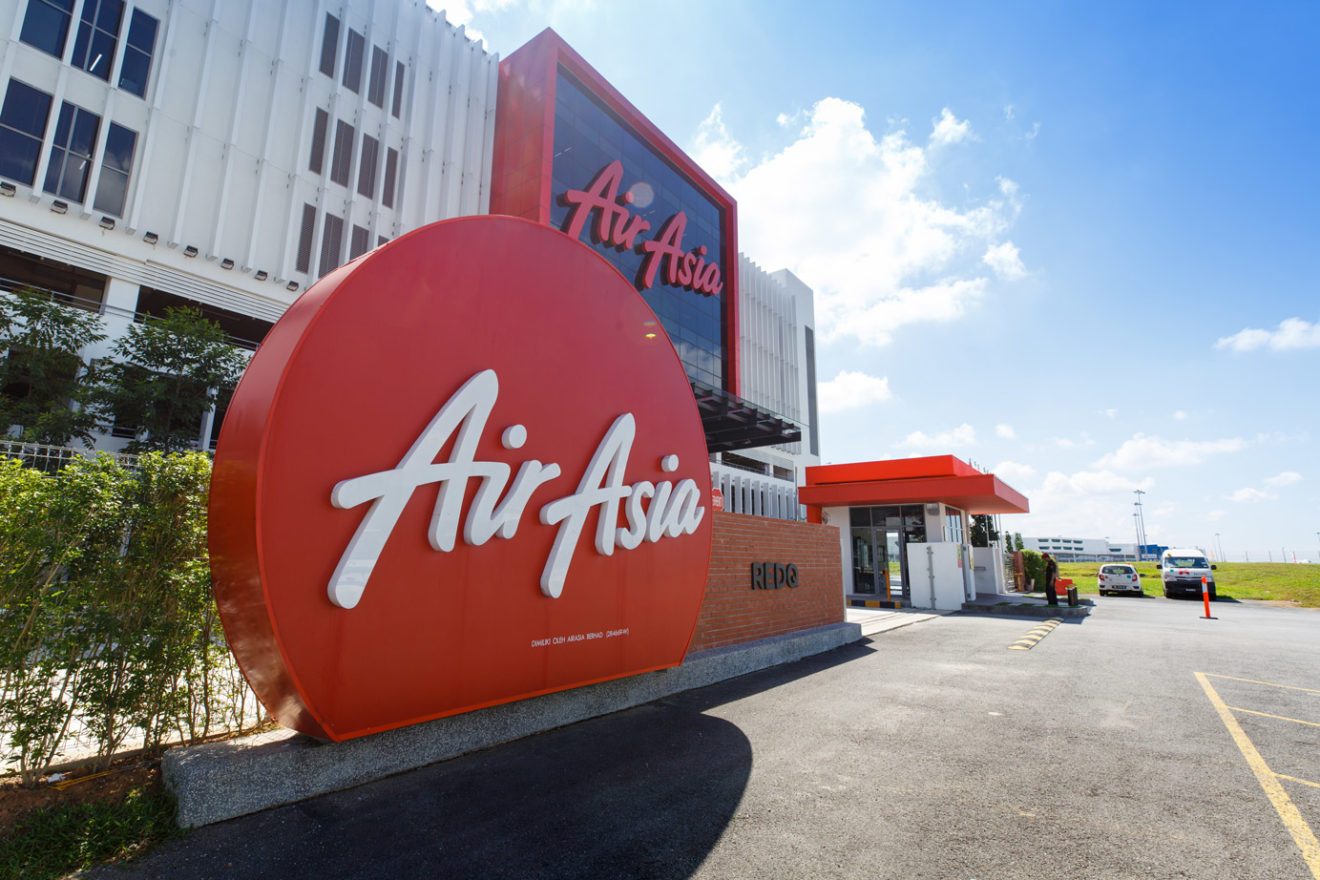
    Tun Dr Mahathir Mohamad acknowledged AirAsia’s significant contribution to Malaysia’s tourism sector since starting operations in 2001 besides creating numerous milestones along the way and being a trendsetter in air travel.The Prime Minister said the evolution of low-cost carriers in the region has been quite phenomenal and that AirAsia’s role in this was obvious.He is confident that the emergence of new technologies in the aviation industry would further propel AirAsia to improve its standing as one of the world’s leading brands.“I was informed that this is the centre of AirAsia’s operations across the Asia Pacific and congratulate AirAsia for spearheading the budget air travel revolution in this region,” he said, when visiting the AirAsia headquarters known as Red Q or Red Quarters, a stone’s throw from the Terminal Two which it operates.

    Mahathir said his last visit to the LCCT (low-cost carrier terminal) was in 2011 and was proud of the Malaysian success story the airline has become.It not only emerged as the world’s best low-cost carrier for the 11th time at the Skytrap World Airline Awards this year but was also briefed that its headquarters even matched those of Google and Facebook.“Obviously this is not the usual office. There is no partition between the staff and heads. Even the top management don’t have partitions,” he said, adding in jest that he thought it was because AirAsia had no money to install partitions. “It reminded me of a phrase that was meaningful to me at one time, i.e nothing to hide,” he quipped and hoped AirAsia would continue to remain open and transparent.

    He noted that AirAsia sets many firsts in the industry such as being the first to sell flights online when the rest of the industry was still using travel agents, the first in Asia to have a mobile app and engage in social media seriously, the first to implement self-service facilities including check-in kiosks, self-bag tag and self-bag drop machines.“Today it is taking its guest experience one step further by showcasing the possibility of future air travel and digital airports in line with Industry 4.0 that involves enhanced connectivity and automation which leads to the creation of smart autonomous systems fuelled by data and machine learning that are more efficient and less wasteful.”He was confident that AirAsia’s innovations like AVA (Airasia Virtual Allstar, AI-powered Chatbots and Faces (Fast Airport Clearance Experiencei) will help propel the industry into the future and hoped to see all these creative innovations in all airports.

    Mahathir also hoped that the new technologies would help AirAsia to continue to put Malaysia on the map as the nation forges ahead with 4.0.“The potential for growth is tremendous and it comes down to knowledge in applications.”Mahathir said businesses should not only arm themselves with new knowledge but also take risks to apply this new-found knowledge to create new products and services to boost productivity and efficiency.In this, he was glad to note that AirAsia was constantly challenging itself in its quest for continuous improvement and innovation.

    As a word of advice, he said success will always bring higher expectations and place one under more scrutiny.“If not careful and unable to meet and resolve some of the more reasonable expectations and criticisms, it may turn against you.“Its all about managing success and this is what AirAsia should give much consideration,” he said, adding that if it remains focussed and innovative, AirAsia is destined for even greater heights.Earlier at the presentation, guests were briefed on how AirAsia grew from just two planes serving two domestic routes in 2011 to 260 planes and over 390 routes across the Asia-Pacific and US with some 600 million people having travelled on it.It also prides in being one of the largest recruiters of women pilots, now numbering 220.Among those present were Transport Minister Anthony Loke, AirAsia x Chairman Tan Sri Rafidahn Aziz, AirAsia Group Exec Chairman Datuk Kamarudin Meranun and AirAsia Group CEO Tony Fernandes.

  • AirAsia launches new sustainability livery

    AirAsia launches new sustainability livery

    Air Asia unveiled its new livery design for their Airbus A320 in Bangkok last week, to promote the message of “Sustainable ASEAN Tourism”.

    The launch coincided with the ASEAN Day celebrations on August 8, marking the 52nd anniversary of the original declaration in 1967, and was attended by Thailand’s Director General of the Department of ASEAN Affairs, the AirAsia Group CEO Tan Sri Tony Fernandes, as well as staff and press from around the region.

    Alongside its signature red wings and tail, the fuselage portrays a stylistic green landscape with a river linking all the major ASEAN landmarks – from the Marina Bay Sands in Singapore to the boats of Ha Long Bay in Hanoi. Myanmar’s famous Kyaikhtiyo and Shwedagon pagodas sit at the very top of the design, beside the tail.

    The ASEAN logo is embedded in the puang malai garland, which is associated with good luck and hospitality in Thailand, appropriately located beside the front passenger door. “Ten trestles hanging from the garland symbolise the ten member states. They collectively form the shape of an outward arrow, representing their striving together in advancing partnership towards sustainability,” said Mr. Vijavat Isarabhakdi, Director General of the Department of ASEAN Affairs in Thailand.

    The design was chosen from over 300 submissions by groups of young artists across Thailand, and will now feature on two aircraft based in Thailand and Malaysia.

    Sustainability has been at the forefront of the company’s brand image in recent years, from its aims to reduce carbon emissions to the recycling of aircraft parts and life-vests.

    The company also participates in engagement programs like the recent Journey-D promotion, which challenges travelers to stay in a community in rural Thailand to help clean up the environment, and “live in peace” for two days – without a mobile phone.

  • Travellers Can Now Order Boba Milk Tea On AirAsia Flights

    Travellers Can Now Order Boba Milk Tea On AirAsia Flights

    AirAsia Thailand recently introduced bubble milk tea in their in-flight menu – much to the delight of customers. There’s even a poster that says that passengers can now enjoy Boba milk tea 35,000 feet in the air.

    You’ve probably come across articles on how unhealthy bubble tea drinks can be, due to its sugar intake, sweeteners and artificial flavourings. To combat that, AirAsia Thailand has come up with a healthier option flyers.

    Enter AirAsia’s milk tea with konjac bubbles. According to Google, konjac (also known as konnyaku and devil’s tongue) “is high in fiber and has almost no calories”. Made from the root of a plant, some of its alleged health benefits include helping people to lose weight.

    Its boba also come in diamond shapes. There is only 1 flavoured bubble tea on the menu for the time being though.

    Priced at ฿75 (RM10), it is available on AirAsia Thailand and AirAsiaX Thailand flights.

  • AirAsia may face fines for charging processing fees for card and online banking transactions

    AirAsia may face fines for charging processing fees for card and online banking transactions

    low-cost carrier AirAsia could still face fines for charging passengers additional processing fee for card and online banking transactions. This comes right after AirAsia Group CEO, Tan Sri Tony Fernandes had announced that the airline will scrap the processing fee beginning October 2019.

    The Malaysian Aviation Commission (Mavcom) had made it compulsory for all airlines in Malaysia to remove hidden charges such as card payment charges and administrative fee effective 1st June 2019. The amendments to the Malaysian Aviation Consumer Protection Code 2016 (MACPC) also require airlines to refund the passenger service charges, taxes, fees and charges prescribed under any written law for both refundable and non-refundable tickets if a passenger did not travel. Refunds must be reimbursed within 30 days and airlines are only permitted to charge a maximum of 5% processing fee if the ticket is non-refundable.

    It was also reported that the Mavcom will issue a show-cause letter to airlines on the violation of the MACPC and the commission will then determine if the airline has contravened the said provision. The commission highlights that it is compulsory for airlines to remove the processing fee and airlines must also disclose the final price of the airfare both at the point of advertisement and prior to the consumer purchasing the flight tickets.

    They added that the final price must include the base fare and all required charges to be paid to the airline, government-imposed taxes, fees as well as fuel surcharge. This, according to the commission, will eliminate hidden charges such as card payment charges and administrative fees.

    The regulator said that it has been a practice in the past where the price increases after selections are made due to additional charges that were not disclosed upfront. The Edge Markets had reported that it may seem that AirAsia and AirAsia X would be liable for contravening the MACPC as they continue to charge processing fees until 30th September 2019.

    As mentioned earlier, AirAsia charges card processing fee as high as RM12 per passenger per flight depending on the destination. This means a return ticket could cost as high as RM24 for processing fee and if you’re travelling in a group of four, that’s equivalent to RM96 for processing fees alone.

    When Tony Fernandes was asked if Mavcom had ordered AirAsia to remove the transaction fees, he denied it on Twitter.

    At the moment, AirAsia encourages its passengers to pay by BigPay prepaid Mastercard to enjoy zero processing fees for their flight tickets. It is also worth pointing out that Bank Negara Malaysia had decreed that merchants cannot impose surcharges for payments using debit and credit cards.

    The same report also highlighted that AirAsia had stopped charging a RM3 klia2 fee on passengers departing from klia2 after it was made illegal by Mavcom. According to AirAsia, the extra fee was to cover the huge amount of extra cost klia2 has created such as aerobridges and the SITA check-in/boarding systems. Although it wasn’t disclosed in AirAsia’s annual report, The Edge Markets estimated that the airline would have collected RM45.24 million from the RM3 fee based on the number of passengers carried by the group from Malaysia Airports Holdings Bhd’s 2018 annual report.

  • AirAsia Wants Tools to Engage Customers Moving to Messaging Apps

    AirAsia Wants Tools to Engage Customers Moving to Messaging Apps

    Consumers now want to talk to businesses and find resolutions the way they talk to their friends and family, and this is pushing a big transition towards messaging channels, according to Adam Geneave, chief customer happiness officer for the low-cost Asian airline.

    The carrier added support for Tencent’s WeChat in China earlier this year and was seeing significant adoption for the platform, Geneave said in an interview. In fact, the messaging tool since had grown to become AirAsia’s biggest communication channel in the Chinese market, he noted.

    The airline’s engagement with customers through such channels played a key role in its business strategy as they enabled consumer queries to be addressed quickly, he said, and urged technology and other solutions providers to integrate messaging tools into their products.

    According to Geneave, AirAsia currently provides WeChat support via a plugin developed by Salesforce.com, which suite of products had been rolled out over the past year as part of the airline’s overhaul of its customer service infrastructure. These included Salesforce Sales Cloud, Marketing Cloud with Social Studio, Service Cloud, and Community Cloud.

    The deployment enabled AirAsia service agents across eight markets to access a unified view of customer cases from all communication channels, encompassing online, email, live chat, phone, and airport communications.

    With the transition into messaging evolving so rapidly, though, it has been difficult for the airliner and its technology partners to keep pace, Geneave said. For instance, support for Facebook’s WhatsApp still was lacking, he noted.

    “We have been very vocal in wanting such support, including for Line and KakaoTalk,” he said, noting that WhatsApp processed 65 billion messages a day worldwide and there were 1 billion active WeChat users. “The way people are interacting is changing.” He attributed AirAsia’s plans to close all its call centers this year in part as a response to this trend.

    The airline is estimated to fly 100 million passengers this year and 20 million of its service cases each year are facilitated on Salesforce platforms, which currently support more than 22,000 AirAsia employees in nine languages.

    The data that runs through these systems also allow the airline to deliver personalized experiences and facilitate better decision-making.

    Geneave explained that the different datasets were collated onto a single platform and managed at AirAsia’s command center. This was manned by duty managers who would track Salesforce dashboards to identify patterns that could affect its business and monitor tweets as well as other social media messages coming through on Social Studio.

    This provided valuable learnings about its customers and, with these insights, enabled his team to work on projects and improve processes and systems to further enhance customers’ engagement with AirAsia, he said.

    The ability to study the data and identify emerging trends also meant his team could be aware of service outages even before the IT team was alerted of it, he noted, adding that his team also tracked other relevant developments such as airports and other airlines that might and might not compete directly with AirAsia.

    The airline in January also introduced its artificial intelligence-powered (AI) chatbot, named AVA, which could handle eight languages including Bahasa Indonesia, Vietnamese, and Simplified Chinese.

    Geneave said the chatbot had been performing well and handled a significant chunk of queries coming through on its live chat. AVA also was deployed on the airline’s Facebook Messenger platform.

    Apart from operating on a strong knowledge base, he said the chatbot also continued to learn from conversations it had with customers. His team also trained it on a daily basis, he added.

    AVA’s deployment was critical to enable the airline to be more agile in the way it managed its customers, he said, noting that the chatbot could take on a significant volume and allow queries to be handled more quickly.

    Geneave also pointed to the emergence of AI and machine learning technologies as a crucial development as these would further enable AirAsia agents to react more quickly and identify trends that otherwise would have taken hours to analyse.

    Beyond customer services, too, it would give airlines the ability to save fuel – for example, by improving the way it scheduled crew rosters and managed its resources, he said.