Tag: airasia

  • AirAsia Considers Prospects for Heavy Maintenance Facility

    AirAsia Considers Prospects for Heavy Maintenance Facility

    AirAsia is assessing whether to set up its own heavy maintenance operation to accommodate its fleet growth plans, and if so, where it would be located. While the LCC is yet to make a decision, it wants to handle some of its own base maintenance needs in the future, AirAsia head of group aircraft engineering Nantha Kumar said during the Aviation Week MRO Southeast Asia conference Mar. 6.

    AirAsia currently outsources all of its heavy maintenance to a range of providers such as Sepang Aircraft Engineering (SAE). Kumar stressed that AirAsia will continue to work with these providers, as the carrier will have an increasing MRO requirement that can be addressed with both insourced and outsourced work. It is still too early to say how the additional work would be divided between existing suppliers and AirAsia, Kumar said.

    There is no specific timeline for deciding about the heavy maintenance facility, although the group’s senior leadership envisages beginning operations within two years of making a decision, Kumar said. AirAsia will review whether “it makes business sense for us to invest” in an MRO facility.

    Any such operation would handle work for AirAsia and its various overseas affiliates, as well as widebody operator AirAsia X. The scope would potentially include airframe work up to C-checks, wheels and brakes and composite repair, but not engine work or components. While AirAsia would primarily be focused on its own fleet, there may be opportunities for third-party work in the long term, Kumar said.

    The new maintenance facility would likely start with one hangar, and at least 2-3 lines, Kumar said. The carrier would select one location, which could be in Thailand or Malaysia. AirAsia would consider establishing a partnership or joint venture with an existing MRO provider.

    AirAsia is interested in becoming one of the MRO providers in a new aerospace development in U-Tapao, Thailand, and group CEO Tony Fernandes in 2018 said AirAsia wanted to open a facility there. However, there is still much uncertainty about how the Thai government selection process will work and what benefits will be offered.

    This will be one of the factors in determining the timing of AirAsia’s own decisions about whether to proceed with heavy maintenance and where it will be located, Kumar said. Once more details about U-Tapao are known, AirAsia will be able to conduct a review and determine if the business case makes sense.

    If the carrier decides to establish an MRO base in Malaysia instead, it would be located either in Kuala Lumpur or in another part of the country. AirAsia’s main hub is at Kuala Lumpur International Airport, and major MRO provider SAE is also based there. However, various Malaysian state governments have been engaging with AirAsia to try to secure the MRO facility for their airports.
  • AirAsia buys Irish leasing units; Citilink Indonesia bid rejected

    AirAsia buys Irish leasing units; Citilink Indonesia bid rejected

    Asia Aviation Capital Ltd (AACL), the aircraft leasing unit of AirAsia Group Bhd, has acquired four newly incorporated companies in Ireland. AirAsia said in a stock exchange filing that AACL — its indirect wholly-owned subsidiary — had acquired the entire issued and paid-up share capital of Merah Aviation Asset Holding Two Ltd, Merah Aviation Asset Holding Three Ltd, Merah Aviation Asset Holding Four Ltd, and Merah Aviation Asset Holding Five Ltd.

    AirAsia said the four Merah Aviation companies were incorporated under the laws of Ireland on Wednesday for the purpose of owning, leasing and/or financing of aircraft. Each of Merah Aviation has issued and paid-up share capital of US$1 (RM4.09).

    In a separate matter, the Jakarta Post reported yesterday that AirAsia Indonesia’s proposal to acquire low-cost carrier (LCC) Citilink Indonesia had been rejected by Garuda Indonesia, quoting Garuda president director Ari Askhara.

    Citilink is a subsidiary of Garuda, according to the Jakarta Post report that is based on a report.  Ari was quoted as claiming that “Citilink is doing better than AirAsia, even under Garuda’s new management”.

    He said there are no internal talks within Garuda and no order from shareholders to sell Citilink. He also said Garuda has not received an official proposal from AirAsia Indonesia to buy Citilink.

    Though he conceded that talks had taken place between Garuda and AirAsia, he gave assurance that they were about possible cooperation, not acquisition.

    The report came after AirAsia Indonesia president director Dendy Kurniawan said on Monday the company was interested in acquiring Citilink because of the similarities between the two LCCs.

    “Both are LCCs. We are strong in international routes, while they (Citilink) are strong domestically. We have also a similar rating of pilots and cabin crew members.

    “We are interested. If Citilink’s shareholders welcome our offer, we will thank God. But if not, it is no problem,” Dendy said, adding that both LCCs operate Airbus aircraft.

  • Thai AirAsia says it will not buy shares in Nok Air

    Thai AirAsia says it will not buy shares in Nok Air

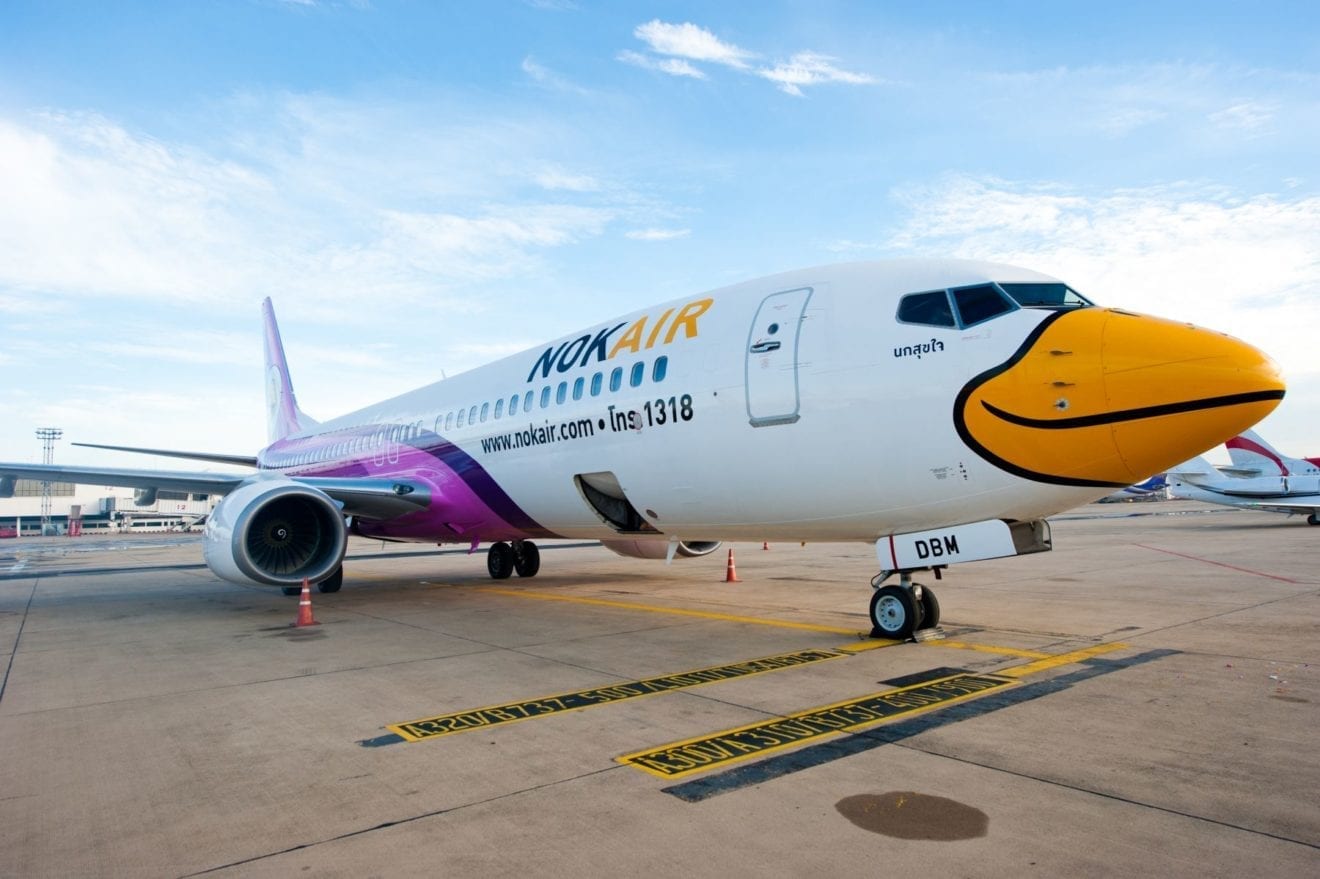
    Asia Aviation, majority shareholder of budget airline Thai AirAsia, said on Wednesday that it would not proceed with an acquisition of shares in rival carrier Nok Airlines, sending Nok’s shares down.

    Nok’s shares fell more than 12% and Asia Aviation’s prices slid nearly 3% in the morning trading session.

    Asia Aviation said in February that it was in talks to buy Nok shares, although Nok had said at the time that it was “not aware of any details in this respect”.

    Nok is 53% owned by the Jurangkool family, which also controls Thai Steel Cable PCL and unlisted auto parts maker Thai Summit.

    Intense competition among budget airlines has led to quarterly losses since 2015 for Nok.

    Asia Aviation owns 55% of Thai AirAsia, with the remainder held by Malaysia’s AirAsia Group Bhd.

  • AirAsia sets up venture capital fund to boost, Redbeat

    AirAsia sets up venture capital fund to boost, Redbeat

    AirAsia has launched a new venture capital fund, RedBeat Capital, to invest in start-up businesses that aims to boost the low-cost carrier’s ancillary segment. RedBeat Capital will work alongside San Francisco-based venture capital firm 500 Startups in supporting businesses seeking to enter or expand their presence in southeast Asia, with a particular focus on travel and lifestyle, logistics, and financial technology.

    It will also invest in digital streams as such artificial intelligence, the internet of things, and cyber security.

    AirAsia and RedBeat Capital are on the lookout for the world’s best and brightest to help us develop a travel technology ecosystem,” says AirAsia Group‘s chief executive Tony Fernandes.

    “We intend to operationalise this year… to identify and invest in startups that are willing to grow and expand, particularly into southeast Asia where we have the network, data and regional expertise to help accelerate their business.”

    AirAsia adds that the venture capital fund will complement and enhance the group carrier’s transformation into a travel technology company.

    In a separate interview, Fernandes tells FlightGlobal that AirAsiahas already invested over $10 million into RedBeat Capital.

    “One of the reasons we’re doing what we’re doing is because you can’t survive long-haul low-cost purely on an airfare, so there are lots of ancillary streams to supplement that,” he said.

    AirAsia‘s digital venture arm RedBeat Ventures will oversee RedBeat Capital. Aireen Omar, who is AirAsia Group‘s deputy chief executive for technology, also serves as the chief executive of RedBeat Ventures.

  • AirAsia X fits Fukuoka as destination into its network

    AirAsia X fits Fukuoka as destination into its network

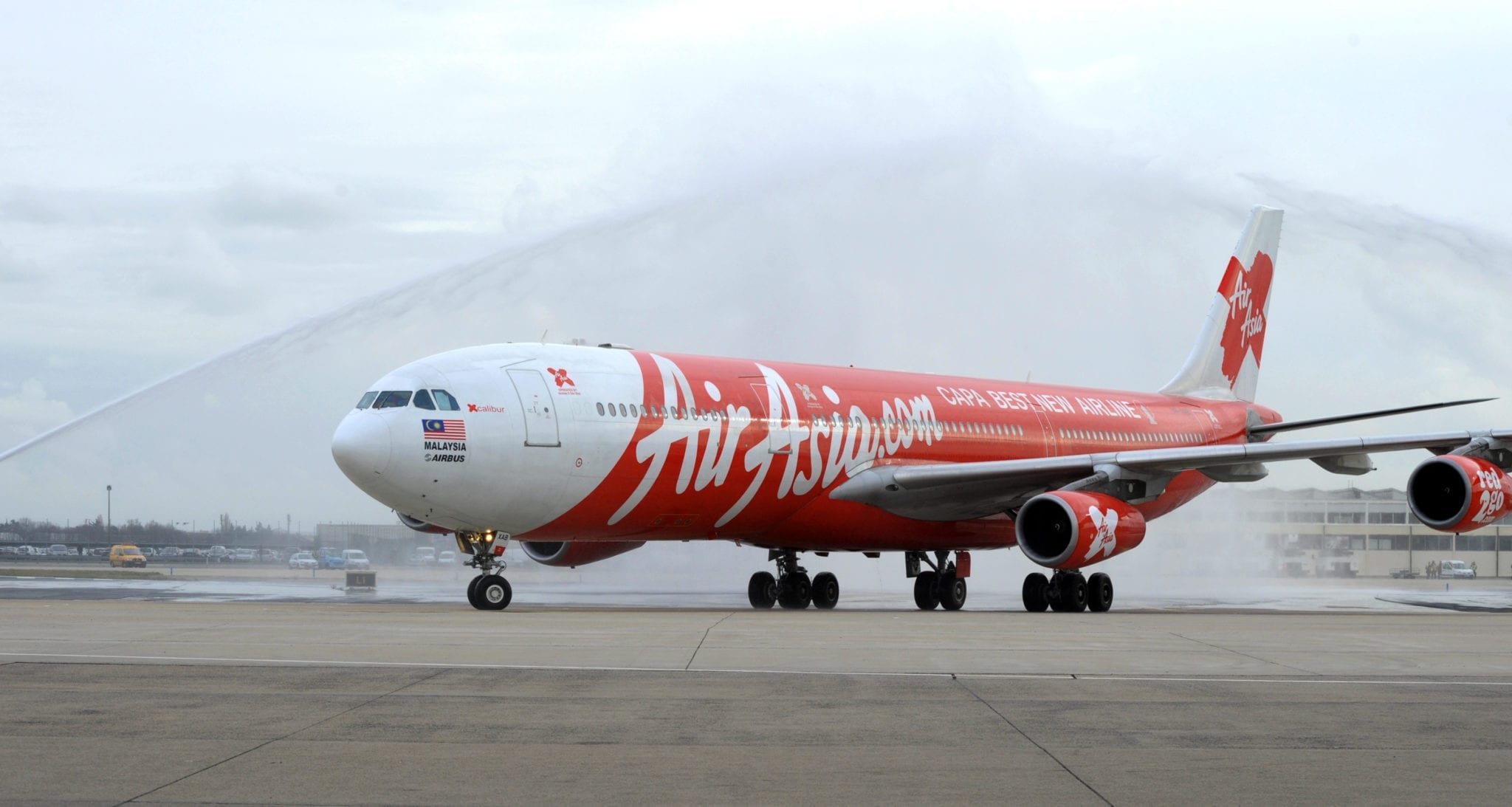
    AirAsia X launched its fourth Japanese route from Kuala Lumpur (KUL) on 28 February, beginning a four times weekly service to Fukuoka (FUK). The carrier already flies from the Malaysian hub to Osaka Kansai, Sapparo Chitose and Tokyo Haneda in Japan. The airline will operate the 4,545-kilometre route using its fleet of A330-300s, with it being the only carrier to fly the airport pair.

    “More than 156,000 seats per year will be available on this new route, providing guests with the opportunity to book low-cost travel to yet another amazing destination in Japan,” commented Benyamin Ismail, CEO of AirAsia X.

    “This new service signifies our commitment to accelerating our growth story in Japan, and we’re confident the route will deliver a significant boost to the local economy. We wish to thank our airport, tourism and local government partners and authorities for making this new route a reality.”

  • AirAsia withdraws flight tickets from Traveloka

    AirAsia withdraws flight tickets from Traveloka

    AirAsia has withdrawn its tickets from Traveloka. The move follows an incident in which the low-cost airline’s flights were unavailable on the sites of several online travel agents, namely Traveloka and Tiket.com.

    “As a group, AirAsia has discontinued the sales of all of our tickets on Traveloka. It’s based on our disappointment with them,” Dendy Kurniawan, president director of AirAsia Indonesia, said in a press conference on March 4 in South Jakarta. In the meantime, AirAsia is still waiting for official clarification from Tiket.com.

    AirAsia flights were missing from Traveloka and Tiket.com from Feb. 14 to 17. At the time, Traveloka told that it was due to the airline’s system upgrades, while Tiket.com had remained silent on the matter. However, Rifai Taberi, AirAsia Indonesia commercial director, wrote on his Facebook account that it was not caused by AirAsia’s system.

    The flights then reappeared on Feb. 18, but have been missing for the second time since March 2 on both sites.

    “We’ve been patient enough waiting for Traveloka’s official explanation – despite rumors that were spread at that time,” said Dendy. “If [they said] it’s because of the system – come on, they should’ve anticipated it. They could’ve contacted us directly.”

    Dendy said he had received reports that Traveloka had not provided a clear explanation about the unavailability to their customers and that the online travel agent had not directed AirAsia customers to the airline’s official website or app to book tickets. “But they suggested that people choose other airlines that were available on their website. We perceive this as something that hurts our good business relations with them,” said Dendy.

    Dendy added that the withdrawal could have a short-term impact on the airlines. “Perhaps [for] less than a month,” he said. “I believe our customers [will] check our website directly.”

    Also present at the press conference, Rifai agreed with Dendy’s statement. “Our sales in February were not affected by it at all,” said Rifai, adding that his side had emailed Traveloka five times since Saturday afternoon but had not received a response.

    Rifai confirmed the statement, but said Traveloka had contacted AirAsia through phone communication. “What we didn’t get was professional communication […] but we already responded to them,” he said.

    In a statement on Monday, Sufinitri Rahayu, public relations director for Traveloka, said the travel site highly prioritized continuous collaboration with all stakeholders and partners. “Since last weekend, we’ve asked for time to talk with AirAsia to come up with the best solutions for both parties,” Sufinitri said.

    Additionally, in February, Rifai once indicated an instruction forcing online travel agents to stop selling AirAsia tickets on his Facebook account, but Dendy said he did not want to make any speculation. “Just let the relevant agencies investigate it. We’re not going to cooperate with parties with the intention of unhealthy competition. That’s none of our business,” Dendy said.

  • AirAsia unveils plans to begin international flights to Vietnam city

    AirAsia unveils plans to begin international flights to Vietnam city

    AirAsia will start flying from Kuala Lumpur and Bangkok to Can Tho in Vietnam’s Mekong Delta in the next few months. The budget carrier has announced it will begin the Kuala Lumpur – Can Tho service on April 8 with four flights a week and the Bangkok – Can Tho service from May 2 with three flights, AirAsia said in a recent statement. Tran Viet Phuong, director of the city’s Department of Culture, Sports and Tourism, told local media that the services would help increase the number of foreign tourists visiting the Mekong Delta.

    He added that visitors from not only Southeast Asia but also from India and Australia would find it easier to reach the city given AirAsia’s network.

    AirAsia Malaysia CEO Riad Asmat said: “We foresee the new route not only contributing to the socio-economic development of the city, but also providing new opportunities for the people in Mekong Delta to connect with ASEAN and beyond through our wide network.”

    According to the Can Tho Tourism Association, 8.48 million tourists visited the city in 2018, a 12.5 percent increase from the previous year.

  • Higher fuel prices dent AirAsia X’s Q4 performance

    Higher fuel prices dent AirAsia X’s Q4 performance

    AirAsia X Bhd suffered a net loss of RM99.27 million in the fourth quarter ended Dec 31, 2018 compared with a net profit of RM84.42 million a year ago due to higher fuel prices. In a filing with Bursa Malaysia, the airline reported an increase in average fuel price to US$89 per barrel during the quarter from US$69 per barrel a year ago, which resulted in a lower net operating profit of RM27.4 million from RM120 million a year ago.

    In addition, the group provided an impairment on amount due from joint venture amounting to RM24 million during the quarter under review.

    During the quarter, the group reported a 1% improvement in cost per available seat kilometre (CASK) to 12.27 sen while CASK ex-fuel improved by 16% from 8.22 sen to 6.94 sen a year ago, due to enhanced cost management.

    Revenue for the quarter fell 5.93% to RM1.15 billion from RM1.22 billion a year ago.

    For the financial year ended Dec 31, 2018 (FY18), the group also swung into the red registering a net loss of RM312.7 million compared with a net profit of RM98.89 million a year ago while revenue fell marginally to RM4.54 billion from RM4.56 million a year ago.

    AirAsia X said its current forward booking trend and average fares for the first quarter of 2019 are within expectation and prospects are anticipated to remain encouraging.

    The airline will be adding up to five aircraft through operating leases this year via AirAsia X Thailand while AirAsia X Malaysia will remain with 24 aircraft.

    AirAsia X Malaysia will focus on maximising aircraft utilisation of its current fleet and leverage on the group’s strategy in new route launches as well as increasing frequencies of core routes.


  • AirAsia X Wants To Launch Flights From The US West Coast To Japan

    AirAsia X Wants To Launch Flights From The US West Coast To Japan

    Air Asia is the world’s largest and best low-cost carrier (They have won awards for the last 10 years). Air Asia X, their low-cost long haul carrier has built a route network spanning from the middle east to southern Australia. But many people in the US have never had a chance to fly on Air Asia, as the name would imply, have only ever been centered around South East Asia.

    Could Air Asia X routes from Japan to the US West Coast work?

    In a massive new rumor, Air Asia might be starting direct routes between Japan and the US West Coast onboard their fleet of brand new Airbus A330-900 aircraft. As none of the 66 new aircraft on order have been delivered yet, Air Asia X has been reluctant to place address the theory. They are however one of the first airlines to order the aircraft, and as deliveries have begun, we expect news sometime this year.

    Previously, the current fleet of older A330-300s has only been able to reach as far as Hawaii from Osaka, Japan (their range is 6,350 nmi (11,750 km)), limited by their ability to cross the Pacific ocean.

    But these new A330neo aircraft, with a range of 7,200nmi (13,334km), allow Air Asia X to reach destinations like Los Angeles and San Fransisco. This opens up a huge potential market for the company, and on the flip side, a cheap (and good) way for American’s to access Japan, and through transfer, South East Asia.

    What is the service like on Air Asia X?

    Whilst there has been no information yet on the fit out of the new Airbus A330-900 aircraft, we can hazard a guess based on their current A330-300 jets.

    There are three classes on board, a ‘premium’ business light class, a quiet zone and a normal economy class. There are also exit row seats scatted throughout.

    The business class features “flat beds” (They do not go entirely 90 degrees flat, but are more around 70-80 degrees), as well as included entertainment (via tablet), baggage allowance and food and beverages. They have around 60 inches of pitch and are 20 inches wide.

    There is every possibility that AirAsia will upgrade the seat truly lie flat in their newer aircraft.

    The quiet zone on board is a section of economy row seats at the front of the economy section that only allows adults and forbids loud noise. The economy section is laid out in a 3 by 2 by 3 configuration.

    Naturally, as it is a low-cost carrier, passengers will need to budget for seat selection, baggage, food and bring their own entertainment. The economy seats have 32 inches of pitch and are 16 1/2 inches wide.

    The real win, however, is the cost. Typically you would be looking at around $1000 USD return in economy to fly from Los Angeles to Osaka. Air Asia typically offers premium business for the cost of an economy ticket (which is well worth the upgrade) and economy for dirt cheap prices (through economies of scale). It is very likely that Air Asia will instantly undercut the market on these routes and be the cheapest to fly.

  • MAHB turned down our offer for mediation, says AirAsia

    MAHB turned down our offer for mediation, says AirAsia

    Air Asia has claimed that Malaysia Airports Holdings Berhad (MAHB) has turned down their offer of mediation, in a letter sent by the airport operator’s lawyers. The airline said that in an attempt to resolve the parties’ ongoing dispute over passenger service charges at  Kuala Lumpur International Airport 2 (klia2), they had proposed mediation to MAHB.

    “We regret that MAHB has refused AirAsia’s olive branch to resolve outstanding issues between us through mediation, particularly in light of MAHB’s recent statement that it is ‘optimistic that these matters can and will be resolved’,” said AirAsia Malaysia CEO Riad Asmat in a statement on Wednesday (Feb 6).

    “We will seek guidance from Malaysian Aviation Commission (Mavcom) on the next steps to address this situation. However, we reserve our rights to take all necessary actions to protect the interests of our guests and shareholders,” added Riad.

    Under the Malaysian Aviation Commission (Mavcom) Act 2015, MAHB and airline operators have an obligation to mediate any dispute, and legal action may only be used as a last resort when other efforts have failed.

    Last month, the budget airline sought more than RM400mil in counterclaims against MAHB in response to a suit filed by the airport operator last month over airport taxes.

    The counterclaims were for losses and damages experienced by AirAsia and its long-haul sister airline, Air Asia X Bhd, due to alleged operational disruptions at klia2, the airline had said.

    AirAsia claims that it agreed to move to klia2 after the government scrapped the initially approved plans for its own low-cost terminal in Labu, Negri Sembilan in 2008 following MAHB’s claim that it could build a similar terminal closer to KLIA with the same facilities and charges at the former Low-Cost Carrier Terminal (LCCT).

    The airport tax in klia2 was increased to RM73 from RM50 for non-Asean international passengers.

    Domestic passengers were not spared from the increase and now have to pay RM11, up from the previous RM6.


  • AirAsia strengthens Malaysia-Thailand connectivity with new Chiang Rai hub

    AirAsia strengthens Malaysia-Thailand connectivity with new Chiang Rai hub

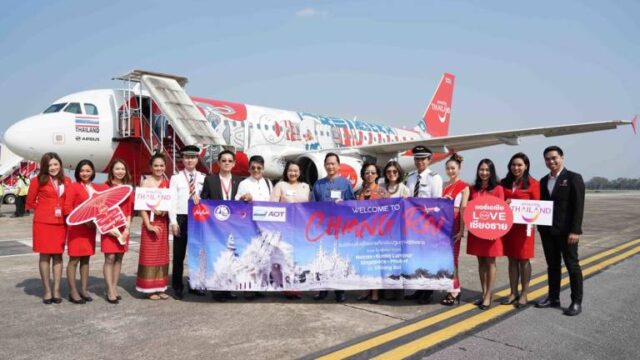
    AirAsia has further strengthened Malaysia-Thailand connectivity with the launch of a new route from Kuala Lumpur to Chiang Rai, its seventh and newest hub in Thailand. AirAsia Thailand, which will base an Airbus A320ceo at Chiang Rai’s Mae Fah Luang International Airport, will also operate new services to Phuket, Singapore and Macau, providing a massive boost to the local tourism and business communities, the airline said in a statement.

    AirAsia currently operates a total of six routes to and from the capital of Thailand’s northernmost province, including existing services from Bangkok Don Mueang and Hat Yai.

    AirAsia Thailand director of ground operations Witchunee Kuntapeng said the opening of its new hub in Chiang Rai is much like building a new home.

    “Chiang Rai has great potential to be one of the top tourism destinations in Thailand, with its unique Lanna culture and hill tribe way of life recently gaining global attention.

    “We believe it is a great time to promote Chiang Rai to travelers and are pleased to see that our four new routes between Chiang Rai and Phuket, Macau, Singapore and Kuala Lumpur have been well received. We’d like to thank the local community for their wonderful support,” Kuntapeng added.

    A welcoming ceremony led by Chiang Rai vice governor Paskorn Boonyalug, Tourism Authority of Thailand executive director for the East Asia region Titiporn Manenate and local travel agents was held at the new hub for each of AirAsia’s four inaugural flights from Phuket, Macau, Singapore and Kuala Lumpur between Jan 30 and Feb 1, 2019.

    The flight from Kuala Lumpur saw a load factor of 85% percent, proving the airline’s efforts to promote Chiang Rai as a leading destination for overseas visitors was off to a great start, it added.

  • AirAsia carried 16% more passengers in 2018

    AirAsia carried 16% more passengers in 2018

    AirAsia Group Bhd Consolidated AOCs carried a total of 12.1 million passengers in the fourth quarter ended Dec 31, 2018 (4Q18), reflecting a 16% growth from 10.4 million passengers carried a year ago. During the quarter, load factor was 4 percentage points lower at 84% from 88% a year ago, due to significant increase in capacity, which rose 21% to 14.3 million from 11.9 million a year ago.

    The group said in a statement that its available seat kilometres (ASK) grew 14% year-on-year, in line with the group’s strategy to grow its market share.

    For the full financial year ended Dec 31, 2018 (FY18), the group carried a total of 44.4 million, an increase of 14% from 39.0 million passengers carried a year ago.

    Capacity grew 18% to 52.5 million from 44.4 million a year ago while load factor fell 3 percentage points to 85% from 88% a year ago. ASK for the period grew 14%.

    The consolidated AOCs refers to AOCs whose financial and operational results are consolidated for financial reporting purposes, namely the Malaysian, Indonesian and Philippines AOCs.

    In 4Q18, Malaysia AirAsia carried a total of 8.5 million passengers, reflecting a 9% increase from 7.7 million passengers carried a year ago. Load factor fell 5 percentage points to 84% from 89% a year ago.

    The Malaysian operations saw a 16% increase in capacity to 10.2 million from 8.8 million a year ago while ASK rose 9% year-on-year.

    For FY18, Malaysia AirAsia carried 32.3 million passengers, 11% higher than 29.1 million passengers carried a year ago while load factor fell 4 percentage points to 85% from 89% a year ago.

    Capacity grew 16% to 38.0 million from 32.8 million a year ago while ASK rose 12% year-on-year.

    Overall, the group carried a total of 74.8 million passengers in FY18, which is an increase of 14% year-on-year. This includes all operations in Malaysia, Indonesia, Philippines, Thailand, India and Japan.

    The group also expanded its capacity during the year, with ASK up by 15% and load factor of 85%. The group’s total fleet size closed at 224.

  • AirAsia, AirAsia X in RM400m counterclaim against MAHB

    AirAsia, AirAsia X in RM400m counterclaim against MAHB

    AirAsia Group Bhd and its affiliate AirAsia X Bhd are seeking over RM400 million in counterclaims against Malaysia Airport Holdings Bhd (MAHB) in relation to the suit filed against them over the passenger service charges (PSC) collection. AirAsia and AirAsia X told Bursa Malaysia that they had filed a statement of defence against Malaysia Airports (Sepang) Sdn Bhd (MASSB), a wholly-owned subsidiary of Malaysia Airport Holdings Bhd (MAHB).

    “In the statement of defence, AirAsia Bhd (AAB) contended, amongst others, that the claim by MASSB is misconceived, invalid and/or premature as MASSB has not complied with and/or availed itself of the statutory provisions for dispute resolution within the Malaysian Aviation Commission Act 2015 (Mavcom Act). Accordingly, AAB has filed an application to strike out the suit on the above grounds,“ said AirAsia.

    “Further, AAB together with its affiliate AirAsia X Bhd (AAX), will be availing themselves of the statutory provisions for dispute resolution within the Mavcom Act to seek more than RM400 million in counter-claims against MASSB and/or MAHB for losses and damages experienced by AAB and AAX due to operational disruptions at klia2,” it added.

    Last month, AirAsia was being sued for refusing to collect the additional RM23 PSC per passenger at klia2.

    AAB was served with an unsealed copy of a writ of summons in the sum of RM9.4 million by MASSB pertaining to PSC that AAB has not collected and refuses to collect from traveling passengers. Meanwhile, AAX was served with an unsealed copy of a writ of summons in the sum of RM26.7 million for alleged PSC arrears.

    AirAsia yesterday closed up 1.33% to RM3.05 with 5.17 million shares done; while AAX closed 1.72% lower at 28.5 sen with 12.17 million shares traded. MAHB was up 0.25% at RM8.12 with 3.33 million shares changing hands.

  • AirAsia abolishes KLIA 2 fee

    AirAsia abolishes KLIA 2 fee

    AirAsia Group Bhd will cease charging the RM3 klia2 fee for all flights departing from Kuala Lumpur International Airport 2 (klia2) starting today. The klia2 fee was introduced in May 2014 to cover the additional cost created at klia2 due to the use of mandatory facilities imposed by Malaysia Airports Holdings Bhd (MAHB) such as aerobridges and SITA check-in and boarding systems, compared to the low-cost carrier terminal previously.

    “Following our announcement last week, we have removed the klia2 fee. We have said from the very beginning that klia2 is not fit for low-cost carrier operations, and we will be going directly to MAHB for all the extra costs they’re costing us,” AirAsia Malaysia CEO Riad Asmat said in a statement.

  • AirAsia to freeze launches for next 3 years barring Vietnam

    AirAsia to freeze launches for next 3 years barring Vietnam

    Malaysian discount carrier AirAsia Group won’t open any new airline in the next three years and will focus on current operations after its proposed Vietnam launch, Group CEO Tony Fernandes said Wednesday. “After Vietnam, we will focus on what we have,” Fernandes said in a twitter post. “Focus this year is to make Indonesia and Philippines very profitable.” Fernandes said he is confident of India and Japan operations turning profitable in 2021, noting that the company’s strong franchise in Southeast Asian markets such as Indonesia, Malaysia, Thailand, Philippines and Vietnam will help fuel growth.

    According to September data, AirAsia operated 127 planes flying to over 130 destinations. The Southeast Asia’s largest budget carrier by fleet has also placed orders for 100 Airbus A330neo wide-body jets for long-haul flights. The company most recently signed a pact “reaffirming” its intention to set up a low-cost carrier in Vietnam with its local partner Tran Trong Kien in his capacity as CEO of Thien Minh Travel Joint Stock Company and General Director of Hai Au Aviation Joint Stock Company.

    Analysts doubt certainty of Indonesian and Philippines operations turning profitable this year as intense competition in both the markets amid highly-volatile fuel prices will continue to weigh on AirAsia’s operations. While Indonesia AirAsia could be slightly profitable in 2019 thanks to robust demand, the company’s Philippines unit will likely remain in the red, said Nomura analyst Ahmad Maghfur Usman. Fallout from a recent crash of Lion Air flight could help drive traffic to AirAsia Indonesia, he said. It is possible for AirAsia’s Indian operations to turn in a profit as early as next year although its business in Japan could remain in the red until the end of

    2020, he said. Global airlines have grappled with fickle input costs in 2018 as crude oil swung between a gain of nearly 30% and loss of 23% before ending the year at $66.73 a barrel. Jet fuel price averaged $86.8 per barrel for 2018, according to the International Air Transport Association.

    Every one dollar increase in crude oil prices could potentially lower AirAsia’s profit by as much as 47.5 million ringgit, according to Nomura’s Ahmad’s estimates.

    Fuel cost will largely determine whether Indonesia and Philippines operations would be profitable for AirAsia, said TA Securities research analyst Tan Kam Meng. Among the risks facing AirAsia is a rebound in crude oil prices to $70 a barrel, he flagged. Still, Malaysia remains key for AirAsia, said Tan. “Although profitability of Thailand, Philippines and Indonesia is a concern, it would not change valuation of the company significantly,” Tan said. Shares of AirAsia, which have added 6.94% over the past year, are currently trading 0.34% lower at 2.96 ringgit apiece.