Tag: airasia

  • AirAsia strengthens Malaysia-Thailand connectivity with new Chiang Rai hub

    AirAsia strengthens Malaysia-Thailand connectivity with new Chiang Rai hub

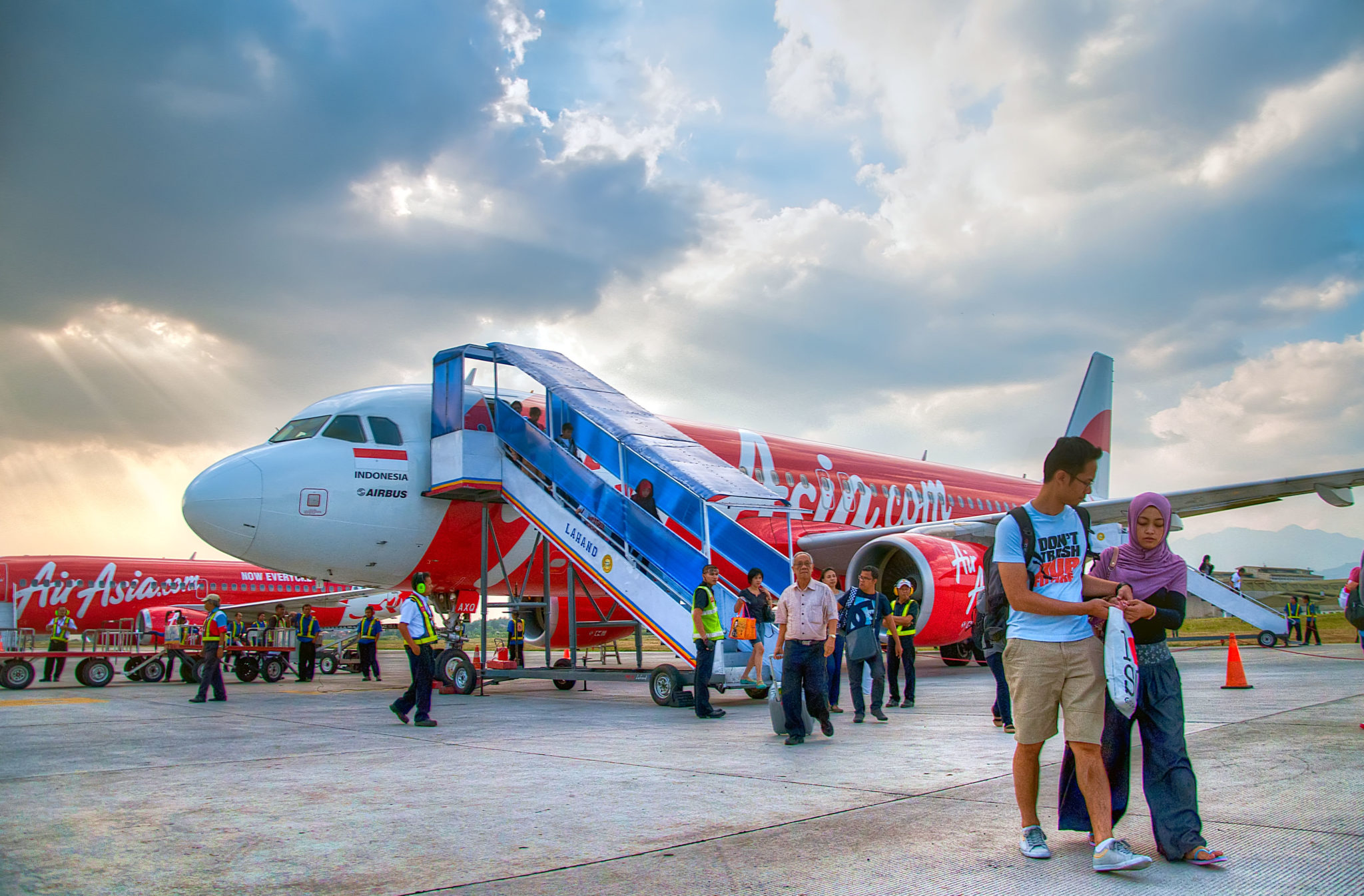
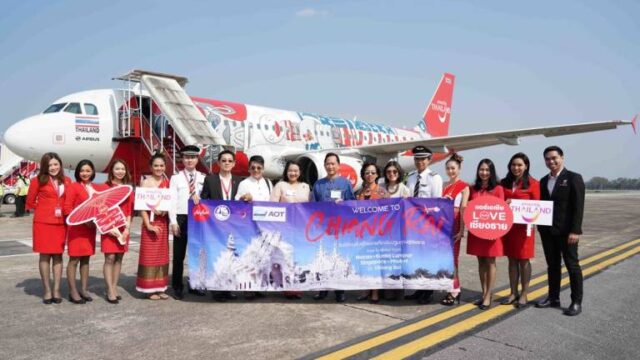
    AirAsia has further strengthened Malaysia-Thailand connectivity with the launch of a new route from Kuala Lumpur to Chiang Rai, its seventh and newest hub in Thailand. AirAsia Thailand, which will base an Airbus A320ceo at Chiang Rai’s Mae Fah Luang International Airport, will also operate new services to Phuket, Singapore and Macau, providing a massive boost to the local tourism and business communities, the airline said in a statement.

    AirAsia currently operates a total of six routes to and from the capital of Thailand’s northernmost province, including existing services from Bangkok Don Mueang and Hat Yai.

    AirAsia Thailand director of ground operations Witchunee Kuntapeng said the opening of its new hub in Chiang Rai is much like building a new home.

    “Chiang Rai has great potential to be one of the top tourism destinations in Thailand, with its unique Lanna culture and hill tribe way of life recently gaining global attention.

    “We believe it is a great time to promote Chiang Rai to travelers and are pleased to see that our four new routes between Chiang Rai and Phuket, Macau, Singapore and Kuala Lumpur have been well received. We’d like to thank the local community for their wonderful support,” Kuntapeng added.

    A welcoming ceremony led by Chiang Rai vice governor Paskorn Boonyalug, Tourism Authority of Thailand executive director for the East Asia region Titiporn Manenate and local travel agents was held at the new hub for each of AirAsia’s four inaugural flights from Phuket, Macau, Singapore and Kuala Lumpur between Jan 30 and Feb 1, 2019.

    The flight from Kuala Lumpur saw a load factor of 85% percent, proving the airline’s efforts to promote Chiang Rai as a leading destination for overseas visitors was off to a great start, it added.

  • AirAsia carried 16% more passengers in 2018

    AirAsia carried 16% more passengers in 2018

    AirAsia Group Bhd Consolidated AOCs carried a total of 12.1 million passengers in the fourth quarter ended Dec 31, 2018 (4Q18), reflecting a 16% growth from 10.4 million passengers carried a year ago. During the quarter, load factor was 4 percentage points lower at 84% from 88% a year ago, due to significant increase in capacity, which rose 21% to 14.3 million from 11.9 million a year ago.

    The group said in a statement that its available seat kilometres (ASK) grew 14% year-on-year, in line with the group’s strategy to grow its market share.

    For the full financial year ended Dec 31, 2018 (FY18), the group carried a total of 44.4 million, an increase of 14% from 39.0 million passengers carried a year ago.

    Capacity grew 18% to 52.5 million from 44.4 million a year ago while load factor fell 3 percentage points to 85% from 88% a year ago. ASK for the period grew 14%.

    The consolidated AOCs refers to AOCs whose financial and operational results are consolidated for financial reporting purposes, namely the Malaysian, Indonesian and Philippines AOCs.

    In 4Q18, Malaysia AirAsia carried a total of 8.5 million passengers, reflecting a 9% increase from 7.7 million passengers carried a year ago. Load factor fell 5 percentage points to 84% from 89% a year ago.

    The Malaysian operations saw a 16% increase in capacity to 10.2 million from 8.8 million a year ago while ASK rose 9% year-on-year.

    For FY18, Malaysia AirAsia carried 32.3 million passengers, 11% higher than 29.1 million passengers carried a year ago while load factor fell 4 percentage points to 85% from 89% a year ago.

    Capacity grew 16% to 38.0 million from 32.8 million a year ago while ASK rose 12% year-on-year.

    Overall, the group carried a total of 74.8 million passengers in FY18, which is an increase of 14% year-on-year. This includes all operations in Malaysia, Indonesia, Philippines, Thailand, India and Japan.

    The group also expanded its capacity during the year, with ASK up by 15% and load factor of 85%. The group’s total fleet size closed at 224.

  • AirAsia, AirAsia X in RM400m counterclaim against MAHB

    AirAsia, AirAsia X in RM400m counterclaim against MAHB

    AirAsia Group Bhd and its affiliate AirAsia X Bhd are seeking over RM400 million in counterclaims against Malaysia Airport Holdings Bhd (MAHB) in relation to the suit filed against them over the passenger service charges (PSC) collection. AirAsia and AirAsia X told Bursa Malaysia that they had filed a statement of defence against Malaysia Airports (Sepang) Sdn Bhd (MASSB), a wholly-owned subsidiary of Malaysia Airport Holdings Bhd (MAHB).

    “In the statement of defence, AirAsia Bhd (AAB) contended, amongst others, that the claim by MASSB is misconceived, invalid and/or premature as MASSB has not complied with and/or availed itself of the statutory provisions for dispute resolution within the Malaysian Aviation Commission Act 2015 (Mavcom Act). Accordingly, AAB has filed an application to strike out the suit on the above grounds,“ said AirAsia.

    “Further, AAB together with its affiliate AirAsia X Bhd (AAX), will be availing themselves of the statutory provisions for dispute resolution within the Mavcom Act to seek more than RM400 million in counter-claims against MASSB and/or MAHB for losses and damages experienced by AAB and AAX due to operational disruptions at klia2,” it added.

    Last month, AirAsia was being sued for refusing to collect the additional RM23 PSC per passenger at klia2.

    AAB was served with an unsealed copy of a writ of summons in the sum of RM9.4 million by MASSB pertaining to PSC that AAB has not collected and refuses to collect from traveling passengers. Meanwhile, AAX was served with an unsealed copy of a writ of summons in the sum of RM26.7 million for alleged PSC arrears.

    AirAsia yesterday closed up 1.33% to RM3.05 with 5.17 million shares done; while AAX closed 1.72% lower at 28.5 sen with 12.17 million shares traded. MAHB was up 0.25% at RM8.12 with 3.33 million shares changing hands.

  • AirAsia abolishes KLIA 2 fee

    AirAsia abolishes KLIA 2 fee

    AirAsia Group Bhd will cease charging the RM3 klia2 fee for all flights departing from Kuala Lumpur International Airport 2 (klia2) starting today. The klia2 fee was introduced in May 2014 to cover the additional cost created at klia2 due to the use of mandatory facilities imposed by Malaysia Airports Holdings Bhd (MAHB) such as aerobridges and SITA check-in and boarding systems, compared to the low-cost carrier terminal previously.

    “Following our announcement last week, we have removed the klia2 fee. We have said from the very beginning that klia2 is not fit for low-cost carrier operations, and we will be going directly to MAHB for all the extra costs they’re costing us,” AirAsia Malaysia CEO Riad Asmat said in a statement.

  • AirAsia to freeze launches for next 3 years barring Vietnam

    AirAsia to freeze launches for next 3 years barring Vietnam

    Malaysian discount carrier AirAsia Group won’t open any new airline in the next three years and will focus on current operations after its proposed Vietnam launch, Group CEO Tony Fernandes said Wednesday. “After Vietnam, we will focus on what we have,” Fernandes said in a twitter post. “Focus this year is to make Indonesia and Philippines very profitable.” Fernandes said he is confident of India and Japan operations turning profitable in 2021, noting that the company’s strong franchise in Southeast Asian markets such as Indonesia, Malaysia, Thailand, Philippines and Vietnam will help fuel growth.

    According to September data, AirAsia operated 127 planes flying to over 130 destinations. The Southeast Asia’s largest budget carrier by fleet has also placed orders for 100 Airbus A330neo wide-body jets for long-haul flights. The company most recently signed a pact “reaffirming” its intention to set up a low-cost carrier in Vietnam with its local partner Tran Trong Kien in his capacity as CEO of Thien Minh Travel Joint Stock Company and General Director of Hai Au Aviation Joint Stock Company.

    Analysts doubt certainty of Indonesian and Philippines operations turning profitable this year as intense competition in both the markets amid highly-volatile fuel prices will continue to weigh on AirAsia’s operations. While Indonesia AirAsia could be slightly profitable in 2019 thanks to robust demand, the company’s Philippines unit will likely remain in the red, said Nomura analyst Ahmad Maghfur Usman. Fallout from a recent crash of Lion Air flight could help drive traffic to AirAsia Indonesia, he said. It is possible for AirAsia’s Indian operations to turn in a profit as early as next year although its business in Japan could remain in the red until the end of

    2020, he said. Global airlines have grappled with fickle input costs in 2018 as crude oil swung between a gain of nearly 30% and loss of 23% before ending the year at $66.73 a barrel. Jet fuel price averaged $86.8 per barrel for 2018, according to the International Air Transport Association.

    Every one dollar increase in crude oil prices could potentially lower AirAsia’s profit by as much as 47.5 million ringgit, according to Nomura’s Ahmad’s estimates.

    Fuel cost will largely determine whether Indonesia and Philippines operations would be profitable for AirAsia, said TA Securities research analyst Tan Kam Meng. Among the risks facing AirAsia is a rebound in crude oil prices to $70 a barrel, he flagged. Still, Malaysia remains key for AirAsia, said Tan. “Although profitability of Thailand, Philippines and Indonesia is a concern, it would not change valuation of the company significantly,” Tan said. Shares of AirAsia, which have added 6.94% over the past year, are currently trading 0.34% lower at 2.96 ringgit apiece.

  • AirAsia targets 100 million passengers in 2019

    AirAsia targets 100 million passengers in 2019

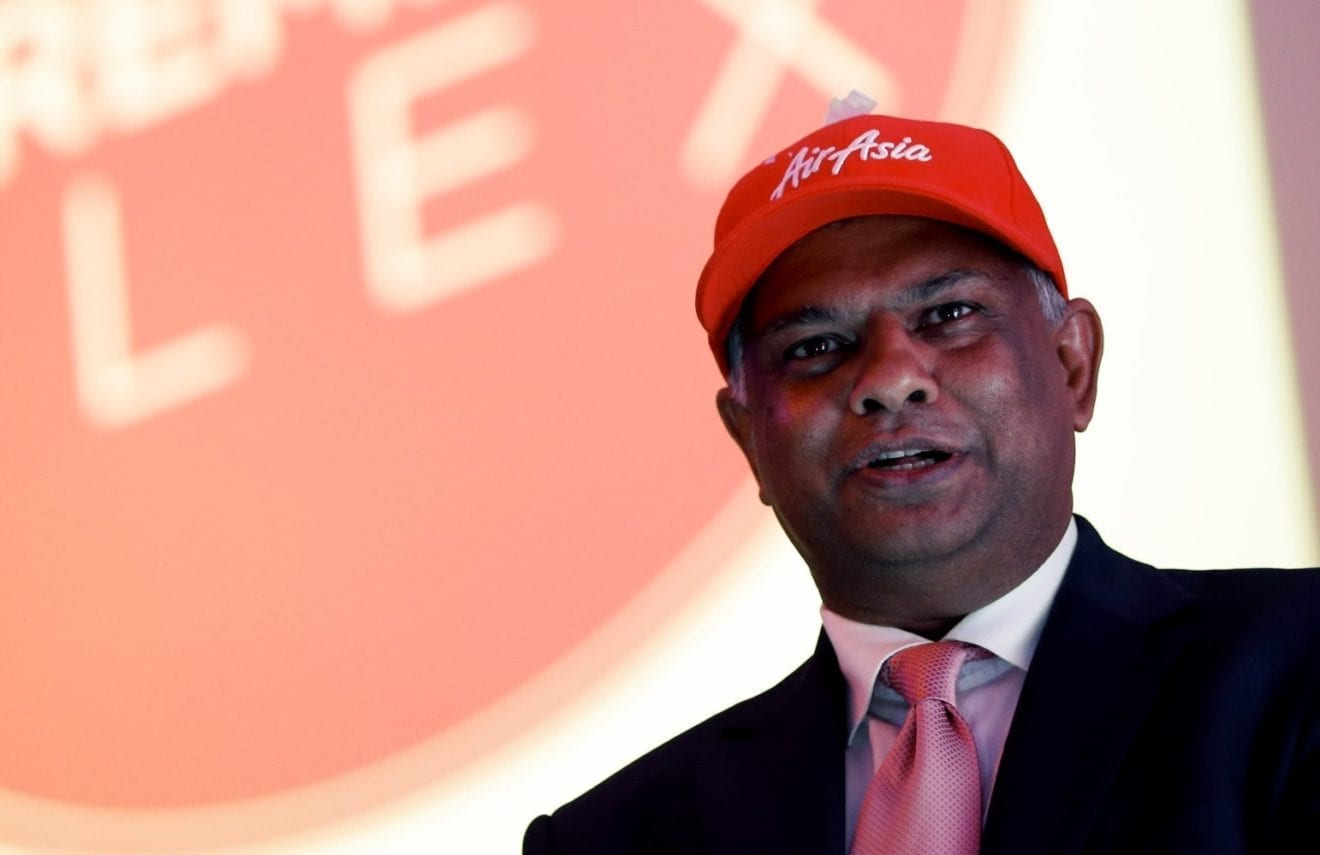
    AirAsia Group is out to monetise its digital businesses and broaden the group’s digital footprint this year but has no plan to open more new airlines over the next three years. The airline wants to focus on growing its existing business especially in Indonesia and Philippines. “As 2019 approaches I would like to confirm that AirAsia will not be opening up any more new airlines for the next 3 years,’’ AirAsia Group chief executive officer Tan Sri Tony Fernandes (pic) said in his series of posts on Twitter yesterday.

    He added that “after Vietnam, we will focus on what we have. Focus this year is to make Indonesia and Philippines very profitable.’’

    There is where “all the major population and growing economies (are), coupled with two great countries (India and China) to enable us to cover the world,’’ he added.

    Fernandes added that he was confident the airline’s operations in India and Japan would be profitable in 2021.

    This year Fernandes is hoping that his airline group would be able to carry over 100 million passengers.

    When contacted he merely said it is “around there”.

    In the first nine months of 2018, the airline group carried 61.4 million passengers across its network. The target set for 2018 was 90 million passengers.

    “We are on track to achieve a group load factor target of 85%,’’ Fernandes had said earlier.

    With fuel prices falling, the airline also expects to maintain its cost this year and hopefully offers more low fares to travellers. It was reported that AirAsia group has hedged 48% for Brent at US$67.24 bbl for the first quarter (1Q19) and 27% for 2Q19 at US$65.40 bbl to manage volatility of fuel prices.

    Turning to the digital side of the business, Fernandes said in a tweet “this is the year people will begin to see our strength in digital’’.

    He would not go into details but earlier he has been talking about the BigPay app, which is a digital alternative to bank accounts and it comes with a card that allows users to use and spend it anywhere in the world.

    AirAsia Group has in mid-December completed the transfer of its non-digital businesses to Redbeat Ventures, its wholly owned subsidiary. The digital-related services include AirAsia BIG Loyalty, BigPay, travel360, ROKKI, Ourshop, RedCargo Logistics, RedBox Logistics, Vidi and RedTix.

    That is the first step towards monetising the digital business and allow AirAsia to broaden the digital footprint.

    In an announcement to Bursa Malaysia earlier, AirAsia deputy group CEO (digital, transformation and corporate services) Aireen Omar said that by placing the digital assets under Redbeat Ventures, they hope to more effectively expand and monetise the digital businesses and broaden AirAsia’s digital footprint.

    The vision for Redbeat Ventures was to connect with the start-up community globally through collaboration to foster entrepreneurship and stimulate market-driven innovation that would benefit not just AirAsia’s ecosystem but help lead the digital economy and lifestyle in Asean.

    Redbeat Ventures will work with tech start-ups and look out for investment opportunities in the high-tech and digital space to remain competitive and relevant in these rapidly changing commercial and technological environments.


  • AirAsia eyes Vietnam launch, turnaround India and Japan units

    AirAsia eyes Vietnam launch, turnaround India and Japan units

    AirAsia Group chief executive Tony Fernandes says the group has no plans to establish new subsidiaries over the next three years, apart from a unit in Vietnam. In a series of tweets, Fernandes says the low-cost carrier will focus its efforts on launching AirAsia Vietnam, as well as making Indonesia AirAsia and AirAsia Philippines “very profitable”. Last December, AirAsia signed a memorandum of cooperation with Thien minh Travel for a Vietnamese joint venture.

    Meanwhile, AirAsia‘s Indonesia and Philippines units, which have suffered losses over the years, have had their financials incorporated into the Group since the start of 2017. AirAsia has said that it is planning for a secondary listing for its Indonesia operations in fiscal 2019.

    Fernandes is also expecting AirAsia India and AirAsia Japan to be profitable by 2021. AirAsia India is working towards launching international services while AirAsia Japan plans to start connecting to points in North Asia.

    “We have a great seam[less] franchise. Indonesia, Malaysia, Thailand, Philippines and Vietnam… All the major populations and growing economies. Coupled with two great countries to enable us to cover the world – India and Japan.”

    The AirAsia Group previously had plans to launch a China unit and signed a MoU in May 2017. The pact with China Everbright Group and the Henan Government Working Group however lapsed in August 2018.

  • AirAsia Malaysia sells Merah Aviation Asset for RM3.22b

    AirAsia Malaysia sells Merah Aviation Asset for RM3.22b

    AirAsia Group Bhd is disposing of its entire stake in Merah Aviation Asset Holding Ltd to AS Air Lease Holdings 5T DAC for US$768 million (RM3.22 billion). AS Air Lease is indirectly owned by Castlelake LP, a US-based global private investment firm and leader in aircraft ownership and servicing.

    AirAsia told Bura Malaysia that its indirect wholly-owned subsidiary Asia Aviation Capital Ltd (AACL) had entered into agreements to sell Merah Aviation, which will comprise 25 existing aircraft to be leased to AirAsia.

    Castlelake will also purchase from AACL a total of four new aircraft to be delivered in 2019 for a purchase consideration to be determined at a later date. The aircraft will be leased back to AirAsia and/or its affiliates.

    Merah Aviation is principally engaged in the owning, leasing and/or financing of aircraft.

    AirAsia said the transaction is subject to its shareholders’ approval and other relevant customary closing conditions, and is expected to be completed in the second quarter of 2019.

    Bulk of the proceeds will be used for the repayment of existing debt.

    AirAsia noted the proposed disposal is in line with the group’s strategy to focus on its core airline operations with an estimated net gain of about RM174.9 million.

    It will also allow the group to reduce its financial leverage as the gross gearing ratio is expected to fall from 0.53 times to 0.24 times.

    Castlelake specialises in providing creative, flexible capital solutions for its airline partners. Since its inception in 2005, Castlelake has invested in and managed more than 500 aircraft on behalf of its funds

    With the closing of this transaction, Castlelake’s current fleet will comprise more than 250 aircraft.

  • MAHB’s record profits come at a cost to the Malaysian economy and tourism

    MAHB’s record profits come at a cost to the Malaysian economy and tourism

    Against a backdrop of a challenging economy and falling profitability in corporate Malaysia, Malaysia Airports Holdings Berhad (MAHB) won a major Malaysian award last week, topping billion ringgit companies for giving its shareholders the best three-year returns in its class.

    MAHB’s net profit more than tripled in 2017 to RM237 million from RM73 million in 2016 – itself nearly double from RM40 million in 2015 – and it is set to break yet another record this year.

    In the write-up that accompanied the award, the sharp increase in profits was attributed to two reasons: an increase in Passenger Service Charge (PSC) and growth in passenger numbers coming through its airports.

    The write-up unabashedly stated that MAHB owed its vastly improved performance to its structural dominance and described MAHB as a structural monopoly.

    Kudos to MAHB. But then, it is not difficult to keep showing such numbers when you are a monopoly.

    Nevertheless, unjustified price increases, such as the PSC hike imposed by MAHB, will lead to unintended consequences when its clients, who have no choice but to use its services, are eventually squeezed out of business. Then, everything will collapse – Malaysia’s tourism arrivals, billions in tourism receipts and revenues to MAHB’s own coffers (a fact it has failed to acknowledge).

    MAHB rewards itself with excessive monopoly profits, yet it provides the Malaysian public with embarrassingly low service levels.

    AirAsia X Malaysia CEO Benyamin Ismail said, “In addition to the RM50 PSC it already imposes, MAHB is now demanding an additional RM23 from each passenger travelling through klia2. The millions of passengers departing from klia2, more than 90 percent of whom fly with AirAsia, will attest to the long walks they have had to endure to reach their gates in what is a passenger-unfriendly airport with inferior facilities yet unjustified high charges.

    “Furthermore, since klia2 opened, there have been constant flight disruptions and cancellations due to major apron and runway defects, unscheduled closure of runways, ponding of water on the best of days and fuel pipeline ruptures.

    “We were sued after we refused to collect the extra RM23 that MAHB has imposed for the sole benefit of its shareholders. We will vigorously fight this suit. We will not be part of this scheme to burden the travelling public by making them pay more for below par services.”

    Benyamin added that while the operating results of klia2 itself were not immediately apparent, AirAsia estimates that MAHB’s returns on capital are well in excess of the level of the cost of capital set by regulators.

    AirAsia Malaysia CEO Riad Asmat said, “The overall tourism sector, one of Malaysia’s biggest revenue earners, and the interests of millions of Malaysians who have been able to fly because of the low fares pioneered by AirAsia, are being threatened by MAHB’s price hikes. We urge the regulators and policy makers to rebuff this unfair and unreasonable attempt by MAHB to use its monopoly to enrich itself further by revisiting and rescinding the decision to raise the PSC.

    “MAHB has argued it needs more profits to operate smaller loss-making airports on behalf of the government, but it is obvious from its exponential growth in profits over the last three years – even after taking into account losses in its Turkish operations – that this is not the case.

    “The additional RM23 to be collected will amount to more than RM100 million a year that will go straight to MAHB’s bottom line rather than to the government. MAHB will continue to be among the most profitable Malaysian companies for many years to come. But this will come at a cost to the wider Malaysian economy and at the expense of engines of growth such as AirAsia and AirAsia X.”

    Riad also referred to MAHB’s defence of its decision to charge the extra RM23 in PSC from each travelling passenger, saying it is “bound by Article 15 of the Chicago Convention of 1944.”

    “This would almost be laughable if it were not so serious. MAHB is falling back on a convention ratified in 1944, when Japan still ruled Malaya and when Frank Whittle was testing the jet engine and when only the well-heeled could fly.

    “For all these reasons, we shall not accede to MAHB’s demands and we will take our battle both to the people and to the court of law.”
  • AirAsia: High cost of unjustified PSC hike

    AirAsia: High cost of unjustified PSC hike

    Unjustified price increases such as the hike in passenger service charge (PSC) could result in airlines being squeezed out of business and subsequently affect tourism arrivals, said low-cost carrier AirAsia. In a strongly worded statement titled “MAHB’s record profits come at a cost to the Malaysian economy and tourism industry”, the airline said the PSC hike imposed by airport operator Malaysia Airports Holdings Bhd (MAHB) will lead to unintended consequences when MAHB’s clients, who have no choice but to use its services, are eventually squeezed out of business.

    “Then, everything will collapse – Malaysia’s tourism arrivals, billion in tourism receipts and revenues to MAHB’s own coffers (a fact it has failed to acknowledge). MAHB rewards itself with excessive monopoly profits, yet it provides the Malaysian public with embarrassingly low service levels,” it said.

    The two parties have been in a row over the additional PSC imposed by MAHB of RM23 per passenger at klia2, in a move to equalise the PSC rate at klia2 and Kuala Lumpur International Airport (KLIA).

    Last week, MAHB slapped AirAsia Group Bhd and AirAsia X Bhd (AAX) with a RM36.1 million lawsuit for refusing to collect the additional PSC and alleged arrears in PSC.

    AirAsia X Malaysia CEO Benyamin Ismail said more than 90% of the “millions” of passengers departing from klia2 who fly with AirAsia will attest to the long walks to the departure gates, labeling klia2 as a passenger-unfriendly airport with inferior facilities and unjustified high charges.

    He reiterated AirAsia’s complaints about the airport such as flight disruptions and cancellations due to major apron and runway defects, unscheduled closure of runways, ponding of water and fuel pipeline ruptures.

    “We were sued after we refused to collect the extra RM23 that MAHB has imposed for the sole benefit of its shareholders. We will vigorously fight this suit. We will not be part of this scheme to burden the travelling public by making them pay more for below par services,” he said.

    AirAsia noted that MAHB’s net profit more than tripled in 2017 to RM237 million from RM73 million in 2016, and estimates that MAHB’s returns on capital are well in excess of the level of the cost of capital set by regulators.

    AirAsia Malaysia CEO Riad Asmat urged regulators and policy makers to rebuff the “unfair and unreasonable” attempt by MAHB to use its monopoly to enrich itself further by revisiting and rescinding the decision to raise the PSC.

    “The overall tourism sector, one of Malaysia’s biggest revenue earners, and the interests of millions of Malaysians who have been able to fly because of the low fares pioneered by AirAsia, are being threatened by MAHB’s price hikes,” he said.

    He challenged MAHB’s argument of needing more profits to operate smaller loss-making airports on behalf of the government, noting MAHB’s “exponential” growth in profits over the last three years even after taking into account losses in its Turkish operations.

    “The additional RM23 to be collected will amount to more than RM100 million a year that will go straight to MAHB’s bottom line rather than to the government. MAHB will continue to be among the most profitable Malaysian companies for many years to come. But this will come at a cost to the wider Malaysian economy and at the expense of engines of growth such as AirAsia and AirAsia X,” he said.

  • AirAsia’s Vietnam venture set to fly in August

    AirAsia’s Vietnam venture set to fly in August

    A new Vietnam-based airline set up by Malaysian budget carrier AirAsia and a local company is expected to fly by next August. Tran Trong Kien, CEO of Hanoi-based resort ooperator Thien Minh Group, AirAsia’s partner, said that applications for aviation licenses would be made next February and likely obtained in six months.

    Vietnam will become the newest market for AirAsia, the largest low-cost carrier in Southeast Asia, which has affiliates in India, Indonesia, Malaysia, the Philippines, and Thailand.

    Kien said Prime Minister Nguyen Xuan Phuc had expressed support for the airline, which has yet to be named.

    The airline plans to deploy five or six Airbus SE A320 and A321 aircraft on domestic and regional routes, and expand the fleet to 30 within three years, he added.

    Last week Thien Minh Group signed a memorandum of understanding with AirAsia for setting up the new airline with a capital of VND1 trillion ($44 million).

    AirAsia will hold a 30 percent stake in it, and Thien Minh, 70 percent.

    The new airline would be a direct competitor to Vietnam’s budget carriers Vietjet Aviation and Jetstar Pacific, according to industry insiders.

    Vietnam Airlines is currently the biggest airline in terms of passengers carried.

    Bamboo Airways, owned by private corporation FLC, last month received a license and expects to make its maiden flight on December 29. It is allowed to operate 10 aircraft on domestic and international routes.

    There are five carriers in Vietnam: Vietnam Airlines, Vietjet Air, Bamboo Airways, Jetstar Pacific and VASCO. Vietnam Airlines owns VASCO and has a 70 percent stake in Jetstar Pacific.

    Vietnam received 14.12 million foreigners in the first 11 months of the year, up 21.3 per cent year-on-year, according to the General Statistics Office. Eighty percent of foreign tourists arrive by air.

    Vietnam’s aviation market has averaged 17.4 percentage growth in the past decade, far higher than the 7.9 percent rate for the Asia-Pacific, according to the International Air Transport Association.

    AirAsia almost struck a deal with Vietjet, but in 2010 the deal collapsed.

  • Indonesia AirAsia X to cease scheduled operations in January

    Indonesia AirAsia X to cease scheduled operations in January

    Indonesia AirAsia X< will cease scheduled operations in January 2019 and operate as a non-scheduled commercial airline thereafter. The carrier’s only scheduled operation – a seven-times weekly service between Denpasar and Tokyo Narita using an A330 – will be suspended in January, the AirAsia X Group disclosed in its third quarter results.

    “With the challenging operational environment in Indonesia, primarily due to the series of natural disasters that occurred in proximity to Bali, the company is underway to evaluate the available options for our Indonesian associate to ensure sustainability of the company with the last schedule flight from Bali to Narita will end in January 2019,” says AirAsia X group CEO Nadda Buranasiri.

    AirAsia X Indonesia will operate on a non-scheduled commercial airline basis.” IAAX posted a net loss of $1.53 million in the third quarter of the year, compared to a profit of $2.15 million a year ago. It attributed the poor performance to a 34% jump in costs, driven by the rise in fuel prices.

    During the period, it saw a 32% drop in the number of passengers carried, while load factor held steady at 80%. Average base fare climbed 21% to $146.The airline, which has struggled for some time now, also disclosed that it terminated its Jakarta-Tokyo Narita service in October. Last month, sister carrier Indonesia AirAsia said it will take over the routes and slots that IAAX had been using to operate a trio of Airbus A320s. IAAX was operating short-haul services to Denpasar, Jakarta and Surabaya.

    IAAX with two A330-300s. 2005-built PK-XRA is owned and managed by Aviator Capital, while PK-XRC, also built in 2005, is owned by KDAC 2017-1 ABS Portfolio and managed by Deucalion Aviation Funds.

  • Vietjet to finalize $6.5 billion Airbus order: sources

    Vietjet to finalize $6.5 billion Airbus order: sources

    Vietjet is set to finalize a $6.5 billion jet order with Airbus ​during a visit to Hanoi by French PM Edouard Philippe on Friday. The order for 50 A321neo jets is part of an aggressive investment in the Vietnamese fast-growing budget carrier Vietjet’s fleet that has provided lucrative business for both Europe’s Airbus and its U.S. rival Boeing.

    It is also a boost for Airbus as it seeks to turn a raft of provisional orders put together at July’s Farnborough Airshow into hard revenues, narrowing a gap against Boeing this year.

    The deal is the biggest economic component of an official visit to Vietnam by Philippe from Nov. 2-4, during which he will oversee deals with French firms and hold talks with Vietnamese counterpart Nguyen Xuan Phuc, people familiar with the matter said.

    Airbus and Vietjet both declined to comment.

    Vietnam and France also signed an agreement in September to expand defense collaboration, although details are scant.

    VietJet CEO Nguyen Thi Phuong Thao said this week that Vietjet plans to maintain an average fleet age of just three years to keep fuel and maintenance costs low.

    It placed provisional orders for the A321neo jets and 100 Boeing 737 MAX jets in Farnborough and has been negotiating to firm them up, with deliveries expected between 2020 and 2025.

    The formal signing, to take place on Friday, will help to dispel doubts over the substance of deals announced in Farnborough, which was marked by a rash of vague or incomplete order announcements.

    Finalizing such deals can involve tough negotiations as airlines try to squeeze out last-minute concessions.

    However, finance industry sources have expressed concerns about a glut of orders in Southeast Asia from airlines like Vietjet, Malaysia’s AirAsia and Lion Air of Indonesia and question whether all of the several hundreds of planes on order from the Asian low-cost carriers will actually be delivered.

    Vietjet told the Airline Economics conference in Hong Kong this week that low-cost airlines have a relatively low market position in Vietnam, and that those most successful in driving down unit costs would ride out any downturn in the market.

    Vietnam’s expansion has also been peppered with trade sensitivities as Vietjet – which says it enjoys government support – juggled Airbus and Boeing procurements: a strategy also designed to win bigger discounts.

    Two years ago, Boeing upstaged Airbus by clinching an order for 100 737s during a visit by then-U.S. President Barack Obama.

    Until then, VietJet had only bought from Airbus, including an order for 92 jets in 2013.

    Philippe’s visit is the latest example of Western leaders beating a path to Asia’s low-cost carriers, whose orders have secured thousands of manufacturing jobs, trade experts said.

  • AirAsia Philippines Passes Massive Safety Audit

    AirAsia Philippines Passes Massive Safety Audit

    Manila-based AirAsia Philippines has passed a major international safety audit, the International Air Transport Association Operation Safety Audit (IOSA), that covers more than 1060 separate parameters. The operational safety audit is compulsory for IATA members and airlines that have completed the audit have a safety record almost four times better than those that have not. AirAsia Philippines CEO Captain Dexter Comendador said, “We are pleased to announce that we have successfully completed IOSA accreditation. This achievement is a recognition of everyone at AirAsia’s dedication to safety and security.”

    Earlier this year, AirAsia Philippines received its ISO Certificate which gives world class specification for products, services, and systems to ensure quality, safety, and efficiency. ISO 9001:2015 helps ensure passengers get consistent, good quality products, and services. This international standard is based on quality management principles including a strong customer focus, the motivation and implication of top management, the process approach and continuous improvement.

    “We are closing this year with two important achievements from IOSA and ISO and it is but fitting to dedicate an aircraft to our hardworking team who we proudly call, Allstars. We are officially launching this month a special Allstars livery bearing faces of more than one thousand Filipino Allstars including AirAsia Group’s management team,” Comendador added

    Now 426 airlines have completed the audit, which is renewed every two years. The awarding of the IOSA accreditation is expected to be a major boost for the airline. The IOSA certification audit is an internationally recognized and accepted evaluation system designed to assess the operational management and control systems of an airline. The audit covers eight functional and operational areas: organization and management system, flight operations, operational control, and flight dispatch, aircraft engineering and maintenance, cabin operations, ground handling operations, cargo operations, and security management.

    IOSA was introduced to stem the increasing number of crashes in the late 1990s and into the beginning of the last decade. The AirAsia Group airlines now fly to 165 destinations in 25 countries. It has just ordered or reconfirmed orders for 100 A330s for its AirAsia X operation. Separately long-haul, low-cost, operator AirAsia X is evaluating Airbus’ long-range version of the  A321neo as it moves to target more destinations within a range of seven hours.

    Powered by CFM International’s LAEP-1A engines, the A321neo LR,  is due to enter service in the fourth quarter of 2018 and is designed to carry up to 240 passengers 4000 nautical miles. The airline confirmed last month it was evaluating “the potential introduction” of the 321neo LR for developing routes.

  • AirAsia Big Loyalty launches ‘BIG Big Giveaway’ Finale

    AirAsia Big Loyalty launches ‘BIG Big Giveaway’ Finale

    AirAsia Bhd’s loyalty programme, AirAsia BIG Loyalty has launched its “The BIG Big Giveaway” year-end finale with over 90 irresistible offers to BIG members beginning today until December 31. Big Loyalty Sdn Bhd, the owner and operator of the loyalty programme, said the offer would be filled with fantastic discounts, free hotel stays, return flights and 50 per cent bonus BIG points for all of shopping sprees during this regional mega sale.

    BIG members in Malaysia, Thailand, Indonesia, Singapore, the Philippines and beyond can enjoy deals by BIG Loyalty’s entire group of partners ― among them are ZALORA, Agoda, Rebate Mango, Grab, Petron, Maybank and Citibank ― that range from travel, lifestyle, airline to financial services.

    Members who convert their credit card points to BIG points during this period could also enjoy 50 per cent more points on top of the everyday conversion rate, so they can accelerate their way to redeeming free flights, hotel stays and tickets to popular attractions to make their holidays free.

    An additional prize to the 50 per cent bonus BIG points reward for shopping from a variety of travel and lifestyle deals, including some 2,000 rooms at First World Hotel, Genting Highlands, will be given away weekly to lucky members.

    The sale is also doubling up the rewards for members who redeem flights from November 11-18 by sending them on a return trip to Siem Reap, Phuket, Langkawi and more.

    In a statement today, AirAsia BIG Loyalty Acting Chief Executive Officer Sereen Teoh said 2018 was a year of big milestones for BIG Loyalty, which included achieving 20 million BIG members and the launch of the world’s first airline points exchange platform called BIG Xchange.

    BIG members in Malaysia who are Visa cardholders also stand a chance to win a share of over 40 million BIG Points, which is equivalent to nearly 600 return flights to Melbourne, Tokyo, Seoul and many more destinations.

    For every RM50 spend on flight bookings via airasia.com or the AirAsia app members will earn one automatic entry, while those who spend RM50 by using Tap to Pay will earn five entries, and the same amount spent overseas with only physical swipes will double their entries to 10.