Tag: airport

  • Vietnam’s largest airport set for $496 million expansion

    Vietnam’s largest airport set for $496 million expansion

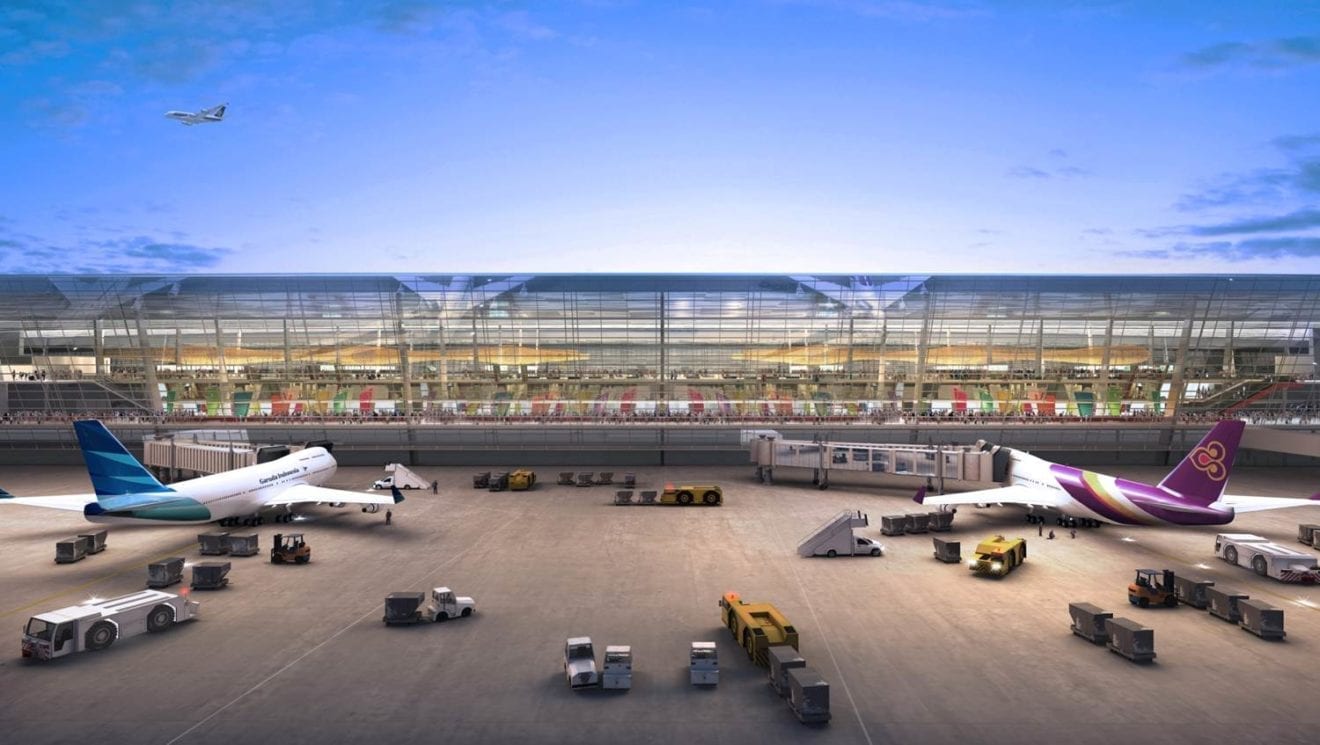
    The Tan Son Nhat Airport could get a third terminal and other facilities at the cost of over $496 million. The Airports Corporation of Vietnam (ACV), which manages and operates civil airports in the country, has submitted to the Ministry of Transport a pre-feasibility report on the construction of a third terminal (T3) at HCMC-based Tan Son Nhat International Airport to reduce overload.

    T3 will be designed to have a capacity of 20 million passengers per year, with total floor area of about 100,000 square meters. ACV proposes to construct in tandem an additional airport apron, a two-lane overhead path, a 5-lane viaduct in front of the terminal and a multi-storey car park. The total cost is estimated at over VND11.43 trillion ($496.18 million).

    The completion of feasibility reports and selection of construction blueprints is set to be finished in February 2020.

    Once T3’s design has been approved, contractors will be chosen via a tendering process so that construction starts in the third quarter of 2020 and can be completed in the second quarter of 2022.

    Because the construction area is located on the Defense Ministry’s land, ACV has suggested allowing a temporary handover of the site in Q1 next year for construction along with completion of necessary legal procedures.

    There are also plans to expand existing terminals T1 and T2 of the Tan Son Nhat airport, raising their combined capacity to 30 million passengers per year.

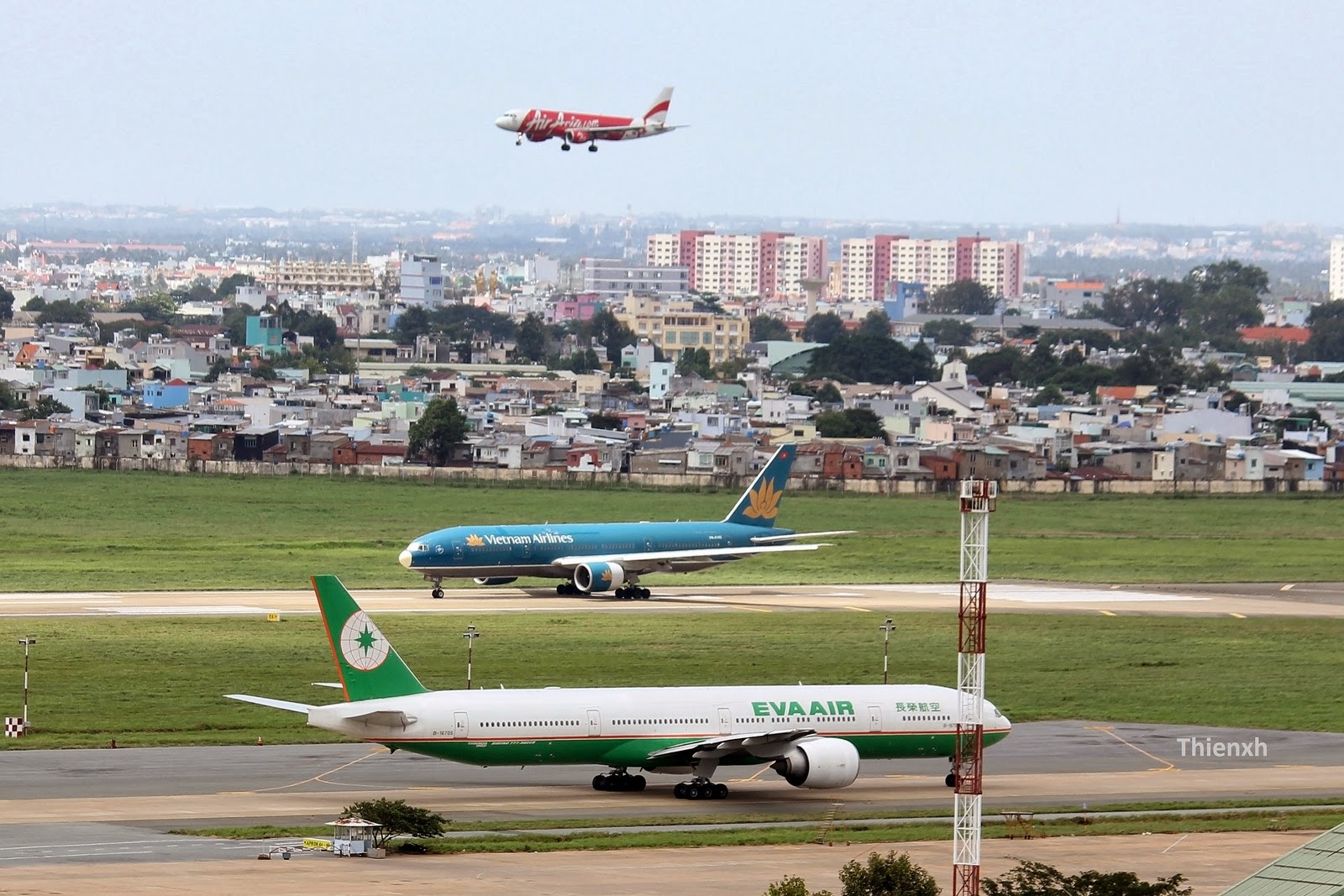
    The airport currently handles 36 million passengers per year, which is way above its designed capacity of 25 million.

    The Transport Ministry has hired French consulting firm ADPi to work on the plan alongside local firms. The plan proposed by ADPi was approved by the Prime Minister last March and it formed the basis for the new, detailed version.

    ACV has also proposed to the Ministry of Transport that it be assigned as investor for the construction of essential components for the proposed Long Thanh International Airport, including passenger terminal, flying zone (runway, taxiway, apron), and refueling systems.

    ACV chairman Lai Xuan Thanh said that the company is willing to spend between $1-1.5 billion for constructing the first phase of the proposed airport, which is estimated to cost $5.4 billion.

    The Long Thanh Airport, to be built in three phases over three decades, was recently listed by CNN Travel as one of the world’s 16 most exciting airport projects.

    The first phase is scheduled for completion in 2025 when it will be able to handle 25 million passengers annually. The next two phases will be built in 2030-2035 and from 2040-2050.

    The new airport would have an annual capacity of 100 million passengers and five million tons of cargo when completed.

    ACV has announced that in its 2019 plan, the company will spend more than VND10 trillion ($432.71 million) on upgrading and expanding several airports, including Cat Bi in northern Hai Phong City, Vinh in central Nghe An Province, Phu Cat in central Binh Dinh Province, and Noi Bai in Hanoi.

    Most of these upgrades are expected to be completed by the third quarter of 2019.
  • Bite & Bite with Line Friends cafe opens

    Bite & Bite with Line Friends cafe opens

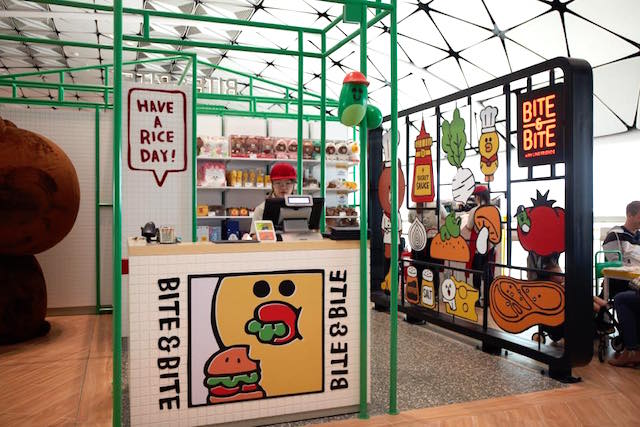
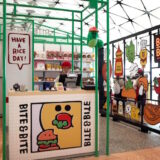
    The world’s first Bite & Bite with Line Friends cafe has opened at Hong Kong International Airport. Operated by food and beverage company SSP Hong Kong, the cafe is located on level 7 near gate 201. The cafe combines original Line Friends characters with a variety of dishes ranging from breakfasts through to snacks and dinner fare in a 60-seat dining area. The menu features both Korean and western food.

    Line, a chat program headquartered in Japan owned by South Korea’s Naver Corporation, has opened Line Friends stores in Bangkok, Hong Kong, Seoul, Shanghai, Tokyo, Taipei, New York and Los Angeles, all selling memorabilia featuring the characters of software.

    The Bite & Bite with Line Friends cafe also sells lifestyle products, souvenirs and travel items, such as neck pillows, luggage tags and travel bags.

    View gallery below for pictures (6 images) :


  • AirAsia abolishes KLIA 2 fee

    AirAsia abolishes KLIA 2 fee

    AirAsia Group Bhd will cease charging the RM3 klia2 fee for all flights departing from Kuala Lumpur International Airport 2 (klia2) starting today. The klia2 fee was introduced in May 2014 to cover the additional cost created at klia2 due to the use of mandatory facilities imposed by Malaysia Airports Holdings Bhd (MAHB) such as aerobridges and SITA check-in and boarding systems, compared to the low-cost carrier terminal previously.

    “Following our announcement last week, we have removed the klia2 fee. We have said from the very beginning that klia2 is not fit for low-cost carrier operations, and we will be going directly to MAHB for all the extra costs they’re costing us,” AirAsia Malaysia CEO Riad Asmat said in a statement.

  • JD stores open in Beijing and Mongolia

    JD stores open in Beijing and Mongolia

    Chinese online retail giant JD has opened two new innovative stores at Beijing Capital International Airport (BCIA) and Hohhot East Railway Station in Inner Mongolia. In a move to further expand the firm’s “boundaryless retail” strategy, the JD travel retail stores use the e-commerce company’s latest retail technology in order to make it easier and more enjoyable for travellers to purchase on the go. The openings add airports and railway stations to JD’s offline retail offerings, which already include convenience stores, supermarkets, and partnerships with hotels.

    Located in the departure lounge of Terminal 3 at BCIA for the next three months, JD’s pop-up store will offer popular travel items such as daily necessities, clothing, mobile accessories, beauty products, and bags and suitcases. The store uses JD’s smart store technology to understand how customers interact with products as well as which products to offer them. The integrated JD Zu Chongzhi platform can analyse customer behaviour and traffic flow, such as generating heat maps, in order to assist with product selection and inventory management, ensuring smooth store operations.

    “[Stocked] with items popular among travellers, the new shop will not only offer the products they want to buy most on their journeys – it will also allow them to personally experience what shopping of the future will be like, brought to them by China’s largest and most innovative retailer,” a spokesperson for BCIA said.

    The 100sqm unmanned Hohhot East Railway Station JD travel retail store opened in partnership with China Railway Express. It also makes the most of JD’s technological capabilities, with features such as facial-recognition payment and smart vending machines. Later, the store will make use of a Mini Program in WeChat so that customers can choose to buy on the spot and take their purchases with them, or shop online and have them delivered to a convenient location.

    JD Logistics and China Railway Express have been cooperating in logistics transportation since 2014, and have worked together to help facilitate the JD Luxury Express “white glove” delivery service as well as fresh food delivery via high-speed rail.

    “Many of our customers enjoy shopping while traveling and we’re determined to make sure they benefit from the convenience of JD wherever they are,” JD’s GM of social e-commerce and retail innovation, Bing Zhang, said.

    The new JD travel retail stores in Beijing and Inner Mongolia will provide them with a truly seamless experience that is unrivalled anywhere”.

  • New Vietnam international airport welcomes first passenger flight

    New Vietnam international airport welcomes first passenger flight

    An international airport that will be used for both commercial and military purposes was officially opened to traffic after two years of construction. A Vietnam Airlines Airbus A321 carrying Vietnam’s Prime Minister Nguyen Xuan Phuc and government officials made the first touchdown at the Van Don International Airport near the world-famous Ha Long Bay on Sunday morning, marking the opening of the first private airport in Vietnam.

    Construction of the airport, 50 kilometers away from Ha Long Bay in the northern province of Quang Ninh, began in 2015.

    The 325-hectare (803 acres) airport, owned by real estate giant Sun Group, costs VND7.7 trillion ($330 million) and can handle 2.5 million passengers a year equivalent to 1,250 passengers per hour. Its parking bay will have place for at least four aircraft by 2020 and seven by 2030.

    It is expected to focus on services to Northeast Asian destinations like South Korea, Japan, Taiwan, and mainland China and Southeast Asian ones like Thailand, Malaysia, Singapore, and Cambodia. Domestically, flights will mostly be to and from the southern and central regions.

    The airport now has four gates and the number will be increased to seven by 2030.

    Prime Minister Nguyen Xuan Phuc said at the airport’s opening ceremony that Quang Ninh has much potential to attract more tourists and the new airport would help the province raise the number of tourists from current 15 million to 50 million in the coming time.

    As Van Don District is home to one of the three special economic zones planned in the country, the airport is expected to open up opportunities for socio-economic development in the area, including tourism at Ha Long Bay, said Nguyen Duc Long, Chairman of Quang Ninh Province.

    The private airport is among a series of infrastructure projects aimed at boosting the tourism industry, including a new expressway between Ha Long and the proposed special economic zone in Van Don and the Ha Long International Passenger Port, which were both officially operational from December 30.

    The launch of the Van Don Airport made it easier for foreign tourists to touch down in Ha Long Bay, which was named among the world’s seven new natural wonders by Swiss organization New Open World in 2011.

    The bay was used to film the recent Hollywood blockbuster “Kong: Skull Island”, and has been raved about by many travel bloggers.

    Quang Ninh welcomed 7.5 million travelers in the first half of 2018, including 2.46 million foreigners, up 14 percent from a year ago. Tourism revenues for the period rose 31 percent year-on-year to VND12.8 trillion ($546.7 million), according to official figures.

    Vietnam’s aviation industry has experienced rapid growth in recent years. The country served some 106 million passengers this year, a 12.9 percent increase from last year and highest of all time.

  • Vietnamese carriers get busy with early holiday plans

    Vietnamese carriers get busy with early holiday plans

    With six weeks to go for Tet, the Lunar New Year festival, Vietnamese carriers are bracing for the upsurge in demand. Jetstar Pacific, the low-cost arm of flag carrier Vietnam Airlines, announced Tuesday that it would increase the number seats on local routes by 80,000.

    It has also opened a new route from Hanoi to the southern city of Can Tho to meet travel demand between the two destinations before and after the Tet holiday, which falls February 2-10 next year.

    Earlier, the carrier had announced plans to operate 3,210 flights, or 600,000 seats, to serve customers for the Tet holiday.

    Vietnamese people traditionally move from the cities to their hometowns and villages all over the country to reunite with their families before the Lunar Near Year begins.

    State-owned Vietnam Airlines has also raised its number of seats from January 20 to February 19 to 1.4 million, 100,000 higher than the same period last year. This involves an addition of 566 more flights, to serve customers in Tet.

    The flag carrier has also announced that it will open a new route from Ho Chi Minh City to the new Van Don International Airport near Ha Long Bay in Quang Ninh Province. It will start operating one flight a day between the two destinations starting December 30.

    About 90 percent of flights between Ho Chi Minh City and Hanoi, central cities of Vinh and Da Nang have already been booked, a Vietnam Airlines representative said.

    As there are signs of the demand increasing further, the largest airline in the country by passengers carried plans to open another 56,000 seats in the next few days.

    Many VietJet Air agents have confirmed that VietJet has opened ticket sales from Ho Chi Minh City to Van Don Airport in Quang Ninh Province starting January 20. The Van Don International Airport, the first private airport in the country, is set to open for business on December 25, 2018.

    Dinh Viet Thang, head of the Civil Aviation Administration of Vietnam (CAAV), said at a conference last month that the number of airplanes will increase by 32 to 180 to meet the high travel demand around Tet time. This means that the transport capability of the Vietnamese aviation sector will increase by 20 percent, he added.

    The number of air passengers for the upcoming New Year’s Eve and Tet holidays is expected to increase by 11 percent year-on-year, according to the Civil Aviation Administration of Vietnam (CAAV).

    It also says that local airlines have registered to increase the number of flights by 2,611 to 19 airports for Tet. The number of passengers during the holiday is expected to increase by around 280,000 over normal days.

    The highest holiday surge in the number of passengers will be seen on the HCMC-Hanoi route, which will have 519 additional flights, or 20 percent of the total increase. The corresponding numbers for the HCMC-Da Nang route will be 354 flights and 14 percent; HCMC-Vinh, 306 flights and 12 percent; and Hanoi-Phu Quoc, 24 flights and one percent.

    Vietnamese carriers have served almost 45.1 million passengers in the country in the first 11 months of this year, up 11.9 percent from a year ago, according to the General Statistics Office.

  • Singapore Changi Airport extends key DFS

    Singapore Changi Airport extends key DFS

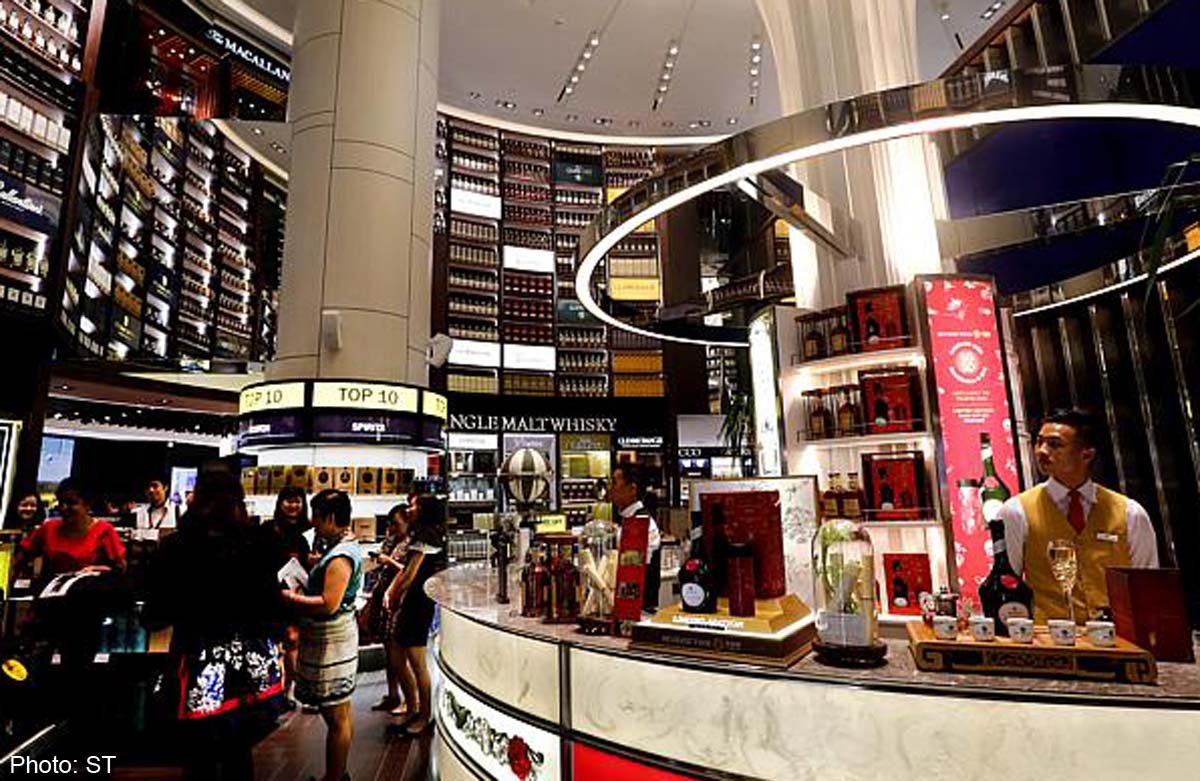
    Key Changi Airport duty-free liquor and beauty concessions held by DFS and Shilla Travel have been extended for two years. The extensions will start from 2020 after the expiration of their current six-year concessions. Over the past four years, the airport’s two core-category concessions have involved pioneering retail concepts including unique duplex stores and the world’s first airport integrated duty-free zone.

    Executive VP of commercial at Changi Lim Peck Hoon said: “We are very pleased to continue our partnership with DFS and The Shilla Duty Free for another two years. Their passion for the travel retail industry continue to deliver new ideas and novel retail concepts at Changi Airport, and were instrumental in driving sales growth over the past four years.”

    A release from the company stated that Changi plans to leverage new technologies and innovations for a seamless retail experience when passengers shop from online to offline, from before they fly to the time they board.
    The extended tenancy terms for the liquor concession will commence from April 9, 2020 until April 8, 2022, covering 18 stores and spanning more than 8000sqm of retail space in Terminals 1, 2, 3 and 4.

    For the beauty concession, the extended tenancy terms will begin from October 1, 2020 to September 30, 2022, covering 22 outlets and spanning more than 7400sqm of retail space across Changi Airport’s four terminals.

  • Atelier Cologne opens first pop-up in Kuala Lumpur airport

    Atelier Cologne opens first pop-up in Kuala Lumpur airport

    Atelier Cologne Travel Retail Asia Pacific announced the Southeast Asia airport debut of its pop-up concept at Kuala Lumpur International Airport (KLIA). In collaboration with Malaysia Airports and Colours & Fragrances (C&F) under DR Group, the pop-up is now officially open till end February 2019 for arriving and departing passengers through the Satellite Building at KLIA.

    For the launch of the pop-up, cologners could enjoy a personalised fragrance profiling session to discover their very own scent.

    The background of the pop-up was also dressed up as a Parisian rooftop featuring a skyline of the elegant Paris, cobbled flooring and a rustic swing. This set-up will be available till end of December 2018.

    A gift and engraving workshop is offered to customers, allowing them to personalise the leather case of their perfume bottles with a name, initials or even a message.

    According to Nazli Aziz, Senior General Manager for Commercial Services, Malaysia Airports, the duty-free sales in the Asia Pacific region is growing significantly, largely driven by perfumes and cosmetics with a market value of USD 14 billion in 2017.

    As for KLIA, overall sales per passenger recorded a double-digit growth of 13 per cent in 2017.

  • Long Thanh Airport could host long haul or beyond-ASEAN flights

    Long Thanh Airport could host long haul or beyond-ASEAN flights

    Several options, including exclusive servicing of long-haul flights, have been proposed for the Long Thanh Airport planned in southern Vietnam. The Civil Aviation Authority of Vietnam (CAAV) has recommended two broad options for dividing traffic between the existing Tan Son Nhat International Airport in Ho Chi Minh City and the Long Thanh Airport that will built in the neighboring province of Dong Nai.

    The first option that it has suggested to the Transport Ministry is that Long Thanh will handle all international flights of more than 1,000 km, with the rest flying into Tan Son Nhat.

    For domestic flights, carriers can choose where they want to be based.

    The second option is to allocate all flights from outside Southeast Asia to Long Thanh.

    The allocation criteria can be reconsidered after five years of actual operation, the CAAV proposed.

    Carriers Jetstar Pacific and Vietjet have supported the second option.

    Vietnam Airlines wants to use Long Thanh for all international flights and certain domestic flights and Tan Son Nhat only for domestic flights.

    The preliminary feasibility report on the Long Thanh airport by a joint venture between firms from Japan, France and Vietnam had suggested that all budget carriers could fly into Tan Son Nhat, and all full-service airlines use Long Thanh.

    But CAAV executives said the law does not distinguish between full-service and low-cost airlines, making the suggestion impractical.

    In the communication it sent recently to the Transport Ministry, the CAAV suggested operating international and domestic flights from both airports, ensuring their equal and non-discriminatory use.

    An aviation specialist who did not want to be named pointed out that airlines would prefer to operate from Tan Son Nhat because of its high capacity and proximity to downtown Ho Chi Minh City.

    The ministry needs to allocate flights in such a way as to ensure both airports benefit equally and the load on Tan Son Nhat eases. The allocation of domestic flights to Tan Son Nhat and international flights to Long Thanh is not feasible since airlines fly the same aircraft on both international and domestic routes, meaning they would often have to fly empty between the two airports, the specialist noted.

    He said the distribution of routes should also depend on the growth of the aviation market.

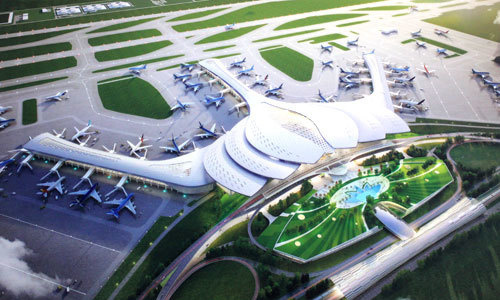
    Situated 40 kilometers east of Ho Chi Minh City, the Long Thanh airport is expected to take up the overflow from the largest existing airport in the country, the Tan Son Nhat International Airport.

    The Tan Son Nhat International Airport now receives 32 million passengers a year, far beyond its designed capacity of 25 million.

    Long Thanh, to be built in three phases over three decades, was recently listed as one of the world’s 16 most exciting airport projects.

    The first phase is scheduled for completion in 2025 when it will be able to handle 25 million passengers a year. The next two phases will be built in 2030-2035 and 2040-2050.

    It will have a capacity of 100 million passengers and five million tons of cargo when completed.

    The Airports Corporation of Vietnam said airports had handled 87 million passengers in the first 10 months of this year, up 12 percent year-on-year.

    The number of international passengers rose by 23 percent and domestic passengers by 7 percent.

  • Vietnam’s biggest airport start building in 2020

    Vietnam’s biggest airport start building in 2020

    Work on Vietnam’s biggest airport would start in 2020 and it will become operational in 2025, the Airports Corporation of Vietnam (ACV) says. ACV, which manages and operates civil airports in the country, also says that it will complete business appraisals and feasibility reports for submission to the National Assembly for approval in October 2019.

    Transport Minister Nguyen Van The had told legislators at a meeting late last month that the government was likely to approve land acquisition plans for the project this month, and release funds for it immediately after.

    Situated 40 kilometers east of Ho Chi Minh City, the Long Thanh International Airport is expected to take up overflow from the largest existing airport in the country, the Tan Son Nhat International Airport.

    Tan Son Nhat now receives 32 million passengers a year, far beyond its designed capacity of 25 million.

    The Long Thanh Airport, to be built in three phases over three decades, was recently listed by CNN Travel as one of the world’s 16 most exciting airport projects.

    The first phase is scheduled for completion in 2025 when it will be able to handle 25 million passengers annually. The next two phases will be built in 2030-2035 and from 2040-2050.

    The new airport would have an annual capacity of 100 million passengers and five million tons of cargo when completed.

    The first phase is estimated to cost VND114 trillion ($4.87 billion), and will be raised from public funds, a bond issue and private sources.

    Experts have warned that the cost of the airport could double every five years.

    ACV announced that in its 2019 plan, the company will spend more than VND10 trillion ($432.71 billion) on upgrading and expanding several airports, including Cat Bi in northern Hai Phong City, Vinh in central Nghe An Province, Phu Cat in southern Can Tho City, and Noi Bai in Hanoi.

    Most of these upgrades are expected to be completed by the third quarter of 2019.
    According to a recent announcement by ACV, by the end of October, the total amount of passengers going through airports this year was estimated at 87 million, by 12 percent over the same period in 2017.

    This year, the number of international passengers rose by 23 percent, while the figure for domestic customers increased by 7 percent.

  • Vietnam’s first private airport set for Christmas launch

    Vietnam’s first private airport set for Christmas launch

    Vietnam’s first private airport near the world-renowned Ha Long Bay is getting finishing touches for a Christmas day opening. The 325-hectare (803 acres) airport at Van Don District, northern Quang Ninh Province cost VND7.7 trillion (more than $330 million) and can handle 2.5 million passengers a year and 1,250 per hour.

    It is expected to focus on services to Northeast Asian destinations such as South Korea, Japan, Taiwan, and China and also Southeast Asian ones like Thailand, Malaysia, Singapore and Cambodia.

    Domestically, flights will mostly be to southern and central regions.

    Dinh Viet Thang, head of the Civil Aviation Authority of Vietnam (CAAV), said the airport could handle the largest of aircraft.

    Construction had begun in 2015.

    Real estate conglomerate Sun Group, who owns it, is completing licensing procedures now so that the first flight can land on December 25.

    It now has gates for four aircraft and the number will be increased to seven by 2030.

    According to the CAAV, the private airport will have to follow all regulations in terms of aviation safety and security like all other airports in the country.

    Airlines served almost 80 million passengers in the country in the first nine months of this year, up 12.1 percent from a year ago.

    The number is expected to cross 100 million for the very first time this year.

  • Lion Air to Serve Umrah Flight from Kertajati Airport

    Lion Air to Serve Umrah Flight from Kertajati Airport

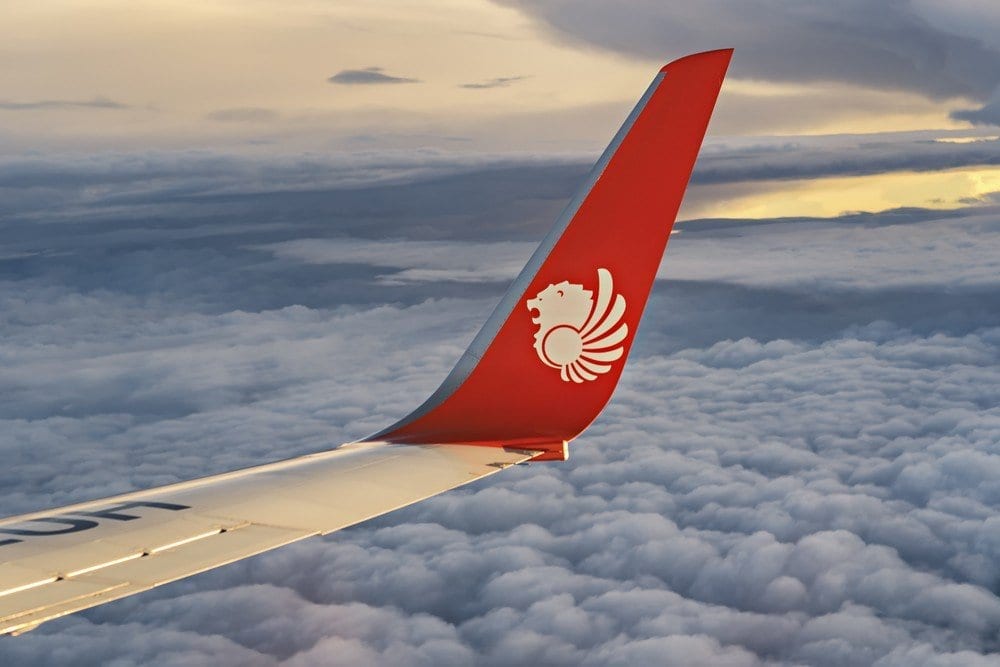
    Managing Director of Lion Group, Captain Daniel Putut Kuncoro Adi said that his company will serve the first umrah flight from Kertajati Airport, Majalengka, on Saturday, October 13. Lion Air will use Boeing 737-800 Max8 made in 2018 with the capacity of 176 passengers. “Our hope is it the flight will increase. We are ready to serve every day. For now, we start with one flight in a week,” Daniel said. The flight route is from Kertajati to Madinah, and the return flight is from Jeddah to Kertajati.

    “We start with once a week flight frequency. Up to this year’s Umrah season, the slot is already full,” he said at Gedung Sate, Bandung, Tuesday, October 9

    Daniel said that Lion Air has planned to replace the aircraft with a larger one. “We have an Airbus 330 with a capacity of 440 passengers, then a Boeing 747 with a capacity of 500 passengers,” he said.

    Samira Ali Wisata’s Managing Director, Fauzi Wahyu Muntoro, said his Umrah travel agent DGI (Dini Group Indonesia) could get 90 people in a month, to depart from Kertajati Airport.

    President Director of West Java International Airport (BIJB) Virda Dimas Ekaputra said that Lion Air agreed to serve the Umrah flight from Kertajati Airport twice a week.

    West Java Governor Ridwan Kamil said the Umrah flight service from Kertajati Airport had long been awaited by the West Java people.

  • Vietnam warned it is planning too many airport

    Vietnam warned it is planning too many airport

    Vietnamese provinces are proposing new airports without realizing that the country is already overloaded with these facilities, experts say.

    Authorities in the southern Ba Ria-Vung Tau province have been working with private firm Ho Tram Ltd. on constructing a civilian airport.

    The airport, estimated to cost VND4.2 trillion ($193.6 million), will cover 250 hectares (618 acres) with a runway of 2,400 meters. It will be invested in by Ho Tram, the investor of the Grand Ho Tram Strip resort nearby.

    The province had previously proposed another airport to serve military and cargo purposes, which is estimated to cost $1 billion.

    These two airports would be just 30 kilometers away from each other.

    Meanwhile, Ba Ria-Vung Tau already has an airport on Con Dao Island in operation and the mega Long Thanh International Airport being planned in southern Dong Nai Province is just 40 kilometers away.

    In July, the northern province of Lao Cai proposed that an airport built near Sa Pa, one of Vietnam’s top tourist attractions, for both civilian and military purposes.

    Provincial authorities estimated investment for the airport at over VND5.7 trillion ($246 million).

    Apart from the Noi Bai International Airport in Hanoi, the northern region is already set to get another one, the Van Don International Airport near Ha Long Bay, this December.

    Experts are concerned that Vietnam is building too many airports without carefully evaluating their necessity.

    ‘Airport race’

    Dr. Nguyen Thien Tong, former faculty head of aeronautical engineering at the Ho Chi Minh City University of Technology, said that there is an “airport race” in the country.

    “If every province in the country had an airport, things would be chaotic,” he said.

    It’s not necessary to have two new airports in Ba Ria-Vung Tau, as the province does not have a large number of tourists, Tong added.

    Echoing Tong, Ngo Viet Nam Son, an architect who participated in designing the Ninoy Aquino International Airport Terminal in the Philippines, said that the province should only have one helicopter airport.

    “It would be much more efficient if money is spent on building an expressway which connects Ba Ria-Vung Tau and HCMC,” Son said.

    Speaking of the proposed airport near Sa Pa, Tong said that roads should be the focus of this area, not airports.

    “There needs to be a very large number of tourists influx to result in profits for an airport, otherwise it would be a waste,” he said.

    Investing in roads in this area will allow different vehicles to travel to multiple destinations in the north, serving the majority of the population, Tong added.

    Son was concerned about the distance from the airport to Sa Pa town, which is about 100 kilometers away, a distance too long to attract tourists.

    Traveling from the airport to Sa Pa town will take two hours with that distance, the same time tourists have to spend for flight procedures, he noted.

    As travelling from Hanoi to Sapa now takes just five hours via expressway, roads should be the main focus of the area, not airports, Son said.

  • Vietnam eyes $2.4 bln upgrade to all civilian airports

    Vietnam eyes $2.4 bln upgrade to all civilian airports

    Vietnam’s airport operator has recommended a VND56.7 trillion ($2.4 billion) upgrade of 16 of the 21 civilian airports in the country.

    The Airports Corporation of Vietnam (ACV) wants to renovate Tan Son Nhat Airport in Ho Chi Minh City, Noi Bai in Hanoi; Da Nang, Chu Lai, Cat Bi, Phu Bai, Dong Hoi, Cam Ranh, Tuy Hoa, and Vinh airports in central Vietnam; Phu Quoc and Con Dao airports on the two southern islands; Lien Khuong Airport in the Central Highlands; and Dien Bien, Na San and Lao Cai airports in the northern region.

    The ACV said it would use internal resources for the upgrade in a proposal submitted to the Ministry of Transport for the development of aviation infrastructure from now through 2021.

    It expected the number of passengers to grow by 10 percent a year to around 137 million by 2021.

    By 2025 the figure is forecast to reach 185 million.

    Head of the Civil Aviation Authority of Vietnam (CAAV), Dinh Viet Thang, agreed with the projections.

    ACV runs all the civilian airports in the country.

    It is now the main investor of the proposed Long Thanh International Airport in the southern province of Dong Nai near HCMC.

    Long Thanh will be built in three phases over three decades. The VND92.1 trillion (over $4 billion) first part is scheduled for completion in 2025, when it will handle 25 million passengers a year.

    Flying into the future: Check-in at Vietnam's planned largest airport 

    It is expected to be fully finished in 2050.

    Once completed Long Thanh is expected to replace Tan Son Nhat as the largest airport in Vietnam.

    Tan Son Nhat currently handles 32 million passengers a year, far above its designed capacity of 25 million.

  • Indonesia Commits to Developing Low-Cost Airport Terminals

    Indonesia Commits to Developing Low-Cost Airport Terminals

    The Ministry of Transportation has given its support for the development of airport terminals specifically catering to low-cost carriers, as part of Indonesia’s efforts to lower travel costs and boost tourism.

    “Be it specialized terminals or airports for low-cost carriers, we will certainly explore the matter further,” the ministry’s civil aviation director general, Agus Santoso, said on Tuesday (24/07), as quoted by Antara.

    Agus said President Joko “Jokowi” Widodo issued a directive for the establishment of more welcoming transportation infrastructure to attract more foreign tourists to Indonesia.

    Indonesia took a cue from Malaysia and Singapore, which have been operating low-cost terminals over the past several years. The two neighboring countries last year attracted 26 million and 17 million foreign tourist arrivals, respectively. Indonesia only managed to attract 14 million.

    Low-cost terminals, which provide only basic amnesties, could allow airlines make significant cost savings. This may allow them to offer cheaper tickets and in turn, attract more travelers, Agus said.

    “The low costs are derived from minimal services, but we will nonetheless always uphold safety, whether it be for low-cost airlines, terminals, or even airports,” he said.

    The country’s largest airport operator, Angkasa Pura II, earlier announced a plan to transform Terminal 1 and Terminal 2 at Soekarno-Hatta International Airport outside Jakarta into Indonesia’s first low-cost terminals.

    The terminals are undergoing a massive revamp to update and expand facilities dating back to their opening in 1985 and 1992, respectively. Angkasa Pura II president director Muhammad Awaluddin said the company will use the opportunity to transform them into low-cost terminals.

    “We saw that it is possible to synchronize this program with the revitalization effort,” he said.

    Awalludin said he will reduce human involvement in low-cost terminal services, which would further trim costs. Terminal 4 of Singapore’s Changi Airport has managed to achieve that by implementing automated machines from the check-in counters, through baggage storage to immigration counters.

    “Is Changi low in quality? No. Did Changi abolish many of its functions? No. So we will match that standard,” he said.

    Awaluddin said Soekarno-Hatta Airport’s low-cost terminals would further benefit budget airlines currently operating from there, including the country’s largest, Lion Air and Citilink.