Tag: apple

  • Your Apple Wallet is about to get much better

    Your Apple Wallet is about to get much better

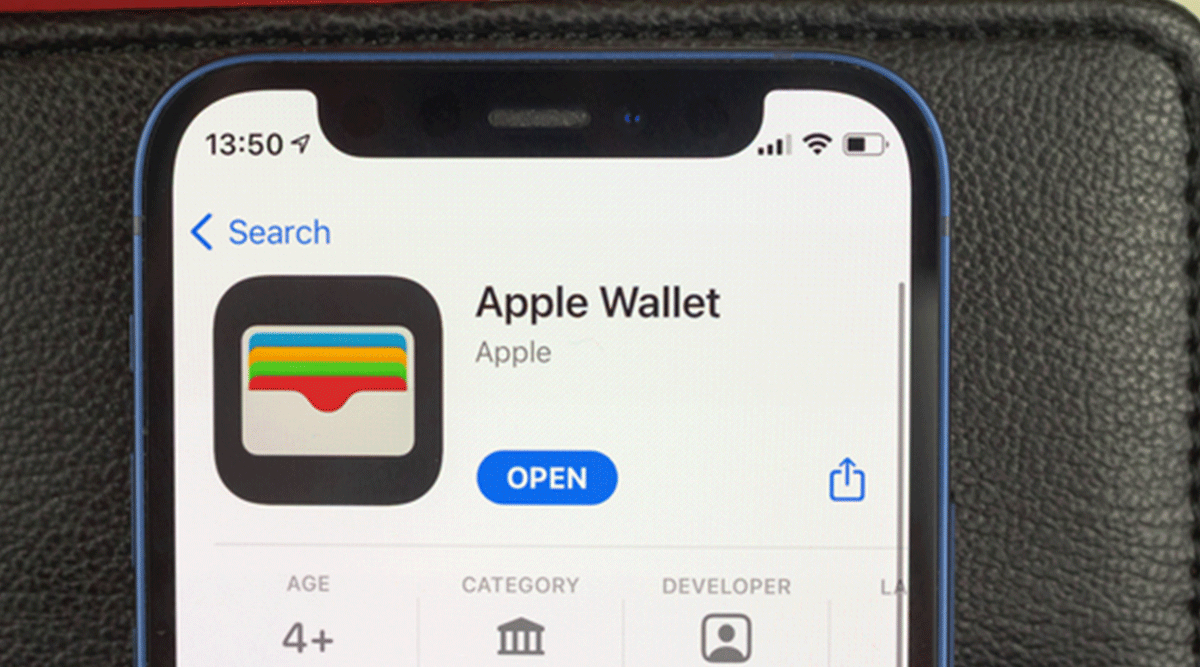
    As we await the stable release of iOS 18.4 in April, the beta versions are already giving us a solid preview of what’s coming. The latest beta release reveals a useful new feature for tracking your spending that is set to land in Apple Wallet.

    In the first iOS 18.4 beta, the Wallet app introduced a menu labeled “Subscriptions & Payments.” Now, with the latest update, it has been rebranded to “Preauthorized Payments,” and as you might guess, this change shifts the focus more toward payments that have been authorized in advance.

    This section in Wallet will now display merchants that you have given the go-ahead to charge your Apple Pay for things like subscriptions, automatic top-ups and regular bills. So, if you use Apple Pay for things like adding money to your transit card or paying for your gym membership, those transactions should show up here.

    Apple seems to have recognized that calling this section “subscriptions” could be a bit misleading, so the new name – preauthorized payments – makes it clearer. However, while the name change is helpful, it doesn’t change the fact that you are still managing recurring payments across different sections rather than having them all in one place.

    Right now, if you want to check your subscriptions, you can do it through the App Store or your iPhone’s Settings, which is a bit faster and easier. Just tap the Apple Account section at the top with your profile picture and you will find the Subscriptions section there.

    Whether you go through the App Store or Settings, the Subscriptions page looks the same. It shows all your active subscriptions and when they are set to renew.

    While this works, I think the new addition to Wallet is a nice step forward in making it easier to track your recurring payments. It gives you a better view of your spending, which has been a key focus of the Wallet app lately.

    Still, I think Apple could make it even easier by bringing everything under one roof. Imagine being able to see exactly how much you are spending each month – whether it is for Apple TV shows, Netflix, or any other subscriptions – all in one place. It would save a lot of time and make managing your money that much simpler.
  • Apple confirms your iPhone won’t be getting this key Apple Intelligence feature until next year

    Apple confirms your iPhone won’t be getting this key Apple Intelligence feature until next year

    Apple has announced that some of its planned artificial intelligence enhancements for Siri, its well-known voice assistant, will not be available until 2026, pushing back the initial rollout. This adjustment means certain features designed to make Siri more personalized and capable of handling tasks across various apps will require additional development time.

    The company released a statement explaining that their work on a more context-aware Siri, capable of understanding and acting on user-specific information within and between applications, is proving more complex than initially anticipated. Apple had previously indicated these features would be introduced in 2025. Now, users will have to wait longer to experience these advanced capabilities.

    Apple representative to John Gruber, Daring Fireball

    These planned improvements are part of Apple’s broader “Apple Intelligence” initiative, which includes a range of AI-driven features. Among the most anticipated are those that would allow Siri to interact more seamlessly with data stored on Apple devices. For instance, imagine asking Siri to find a podcast recommendation from a friend or to retrieve flight details sent by a family member. These actions would rely on Siri’s ability to access and process information directly from the device.

    To support these AI features while maintaining user privacy, Apple has been developing a new cloud computing infrastructure powered by its own chips. This infrastructure is designed to process data in a way that respects user privacy, a core principle for the company. The complexities of building and refining this system, while also enhancing Siri’s capabilities, appear to be contributing to the delay.

    This delay was actually first reported by Bloomberg’s Mark Gurman last month, explaining that the company had been running into issues when it came to getting them working as expected in iOS 18.4, which is expected to roll out in April. He also predicted the possibility of a delay until iOS 18.5, which is expected in May. However, with a delay until next year, it is now looking like the delay is more serious than originally thought.

    While this news is disappointing, I believe Apple users would prefer the launch of a finished product, rather than an unfinished one with the potential to compromise user privacy. It will be interesting to see how Apple manages to deliver these features in the future, and how they balance privacy and functionality.

  • Apple teases a new Air device

    Apple teases a new Air device

    Anticipation is reaching peak levels today as Apple has hinted at a new “Air” device launching this week, and while a MacBook Air refresh seems probable, many are hoping for an iPad or even an iPhone version. A brief social media post from Apple CEO Tim Cook, featuring a cryptic video and the phrase “There’s something in the air,” has fueled this anticipation.

    Though analysts like Mark Gurman from Bloomberg suggest updated 13-inch and 15-inch MacBook Air models, powered by the M4 chip, are the most likely candidates, the desire for a new iPad or iPhone Air persists. This is especially true given recent reports of Apple clearing out existing iPad Air inventory, a common precursor to a new product launch. The timing aligns with past releases, as Apple introduced the M3 MacBook Air around this time last year.

    The possibility of a new iPad Air would enhance features and design improvements in Apple’s tablet line. Given how much many users enjoy the iPad, this would be a welcome change.

    The more distant, but still tantalizing, possibility is a new iPhone “Air” model. Although it is generally believed that this is too soon, the thought of a new iPhone model is still exciting. This iPhone rumor, while less likely, adds an element of surprise to the unfolding narrative.

    The focus on the M4 chip, if it does pertain to a MacBook, indicates Apple’s continued push for performance and efficiency in its laptop series. However, the prospect of a refreshed iPad or even a new iPhone “Air” model offers a different kind of excitement, especially with the focus on thin devices that smartphone OEMs seem to be heavily focused on lately. The clearing of iPad inventories adds some weight to this hope, even if the MacBook refresh is the most likely outcome.

    Personally, I’m hoping for the iPad Air. While the MacBook is always welcome, a new iPad Air would be a nice change for those who like tablets. A new iPhone would be even better, but that seems like a long shot.

  • Siri on your iPhone could be getting help from one of its biggest competitors soon

    Siri on your iPhone could be getting help from one of its biggest competitors soon

    As previously reported, it looks like Apple might soon let you choose between different AI models to power Siri. Currently, Apple Intelligence allows users to route Siri requests through ChatGPT for richer responses. However, a recent discovery in Apple’s software code suggests the expansion of these integrations to include other AI models, like Google’s Gemini — and that this might happen soon.

    A code sleuth found references to both “Google” and “OpenAI” within the Apple Intelligence framework in a backend update accompanying the iOS 18.4 beta. This suggests Apple is preparing to offer users a choice of AI models, similar to how you might choose a search engine in your browser. While this doesn’t guarantee Gemini integration in the final version of iOS 18.4, it strongly indicates that Apple is actively working on it. It’s possible this feature could arrive in a later iOS 18 update, or perhaps be a key feature of iOS 19.

    The backstory here is that Apple has been working on improving Siri’s capabilities for years. While Siri has made progress, it has often lagged behind other virtual assistants in terms of understanding complex requests and providing contextually relevant answers. By integrating with third-party AI models like ChatGPT, Apple has already shown a willingness to look beyond its own technology to enhance Siri’s performance.
    The potential addition of Gemini and other models further underscores this approach. It signifies a shift towards a more open and collaborative approach to AI development, where different companies can contribute their expertise to create a better user experience.

    This could be a major step forward for personal assistants. Having the ability to choose between different AI models could personalize the experience and allow users to leverage the unique strengths of each. For me, this is exciting because it’s proof that Apple is making some headway with the more helpful and intelligent Siri that has been promised. I often find myself frustrated with Siri’s limitations, so the prospect of it becoming more capable and adaptable is definitely appealing. It will be interesting to see how this plays out and what other AI integrations Apple might introduce in the future.

  • Apple makes a power play for your subscription dollars

    Apple makes a power play for your subscription dollars

    As previously reported by Mark Gurman, Apple Insider at Bloomberg News, Apple is showing clear signs that it intends to double down on its subscription strategy. From making significant changes to AppleCare and introducing the Apple Invites app for iCloud+ subscribers, these moves signal a clear push towards recurring revenue and a desire to integrate more services into its subscription ecosystem.

    Starting with AppleCare, the company is reportedly streamlining its device protection offerings, but this simplification comes at a cost. Previously, customers could choose between two AppleCare tiers: a standard plan covering typical hardware issues like cracked screens and battery problems, and a more comprehensive plan that also included coverage for theft and loss. If your phone went missing or was stolen, the premium plan would get you a replacement device, albeit with a deductible. Now, Apple is eliminating the basic plan altogether. This means the only option available is the more expensive theft and loss coverage, and that price is going up by 50 cents a month.

    Beyond the price hike, it’s also been reported that Apple will also be changing how you pay for AppleCare. Instead of the option to pay upfront for two years of coverage, customers will now be required to subscribe either monthly or annually. This shift to a subscription model locks users into recurring payments, further emphasizing Apple’s focus on predictable revenue streams. While some may appreciate the flexibility of monthly payments, others may miss the option for a one-time, longer-term payment.

    As you may have seen last week, Apple is also sweetening the deal for its iCloud+ subscribers with a new perk: the app and web service called “Invites.” This new app is Apple’s take on event planning apps like Partiful, aiming to simplify the process of organizing gatherings, from birthday parties to other special occasions. The app integrates with your photo library and music collection, allowing you to easily share memories and create a personalized experience for your guests.

    The iCloud+ tie in lies in that while users without a subscription can still download the Invites app to RSVP to events, the clear intention is to incentivize more people to sign up for a paid iCloud+ plan. By bundling this new app with iCloud+, Apple is hoping to demonstrate the added value of its subscription services and entice users to join the ecosystem. It’s a clever strategy: offer a unique and useful feature exclusively to subscribers, thereby making the subscription more attractive.

    According to Gurman, these latest changes reinforce the company’s commitment to subscriptions and its strategy of offering a range of interconnected services. As a consumer, I am wondering if further changes like these will be coming down the line as well from Apple, as the company looks for more opportunities to strengthen its bottom line.

  • Apple needs a new Steve Jobs

    Apple needs a new Steve Jobs

    Since early 2024 it has been quite clear that Apple is trying its hand at new product categories in an attempt to secure another source of revenue. From the canceled car project to the Apple Vision Pro, the company is struggling to come up with the next big thing. And as Apple insider Mark Gurman points out in his newsletter Power On: that just won’t fly.

    A company as big as Apple can coast by on its existing products for a while. The iPhone and Apple’s accessories make up a major share of the company’s yearly revenue. But to stay at that coveted spot amongst the other giants of the world Apple will need to innovate and give consumers a reason to give it their business.

    And yet this massive and highly successful company has been failing to do that for years. Not because its new devices are bad — on the contrary most of them are top of the line — but because Apple is failing to connect with the consumer as it once did.

    When Steve Jobs passed away, current Apple CEO Tim Cook had a strategy to keep shareholders’ faith in the company: senior employees who barely work. This worked for a long time and designer Jony Ive’s work continued to help Apple put out unique and interesting products. After Ive left in 2019 it feels like most of Apple’s offerings have started stagnating.

  • With iOS 18, you can remotely take control of your mom’s iPhone to help her solve an issue

    With iOS 18, you can remotely take control of your mom’s iPhone to help her solve an issue

    This might have happened to you. If not, it’s bound to. You’re enjoying an evening at home when you get a call from your mom. Her iPhone has received an update but she doesn’t know what to do. You know exactly how to send her to the software update but vocalizing the directions to your mom might not be a good idea. After all, her iPhone is the first smartphone she’s ever owned after years of being the poster mom for Consumer Cellular. You can’t drive over to see her since she’s on the other end of the country, but thanks to iOS 18, there is something you can do.

    As long as both you and your mom are using an iPhone running iOS 18 or later, or an iPad powered by iPadOS 18 or later, you can remotely control your mother’s iPhone screen and show her exactly how to fix her issue. Requesting remote control of her screen is done via the FaceTime app on a video or audio call. You also must be listed in your mom’s Contacts if you’re going to take over her screen.

    Here’s how you are going to make this happen. Call your mom on FaceTime. When she answers, tap on the Share button. In the Share Sheet that will pop up, tap on Ask to Share. Then, ask your mom to tap on the Share button on her screen. That will allow you to see a blurred image of your call because you are then viewing things through her FaceTime app. Ask her to go to her home screen.

    Once she opens her home screen, you can start sending her drawings that can serve as directions since they will show up on her device. You want to send her to the new software update so you can draw an arrow to the Settings icon. Or, you can tap to animate a circle that will highlight on her iPhone display the area you tapped. Drawings and animations will blow away like dust in a windstorm so that the display doesn’t get too cluttered.

    Once mom understands what you are showing her, you can drop control of her device by tapping the Control button on your screen. She can stop you from having control any time by tapping the Stop button on her screen. At that point, you can still draw on her device. To end the sharing of the screen, ask mom to tap the Share button on her iPhone or iPad.

    Obviously, you can offer remote help to anyone with the same Apple device as you whether it is an iPhone or iPad. It doesn’t have to be your mother who can benefit from your knowledge although we’d bet that for many of you, mom will be the first person you help using iOS 18’s FaceTime Remote Control.

  • The time for a new Apple Card issuer might finally be near

    The time for a new Apple Card issuer might finally be near

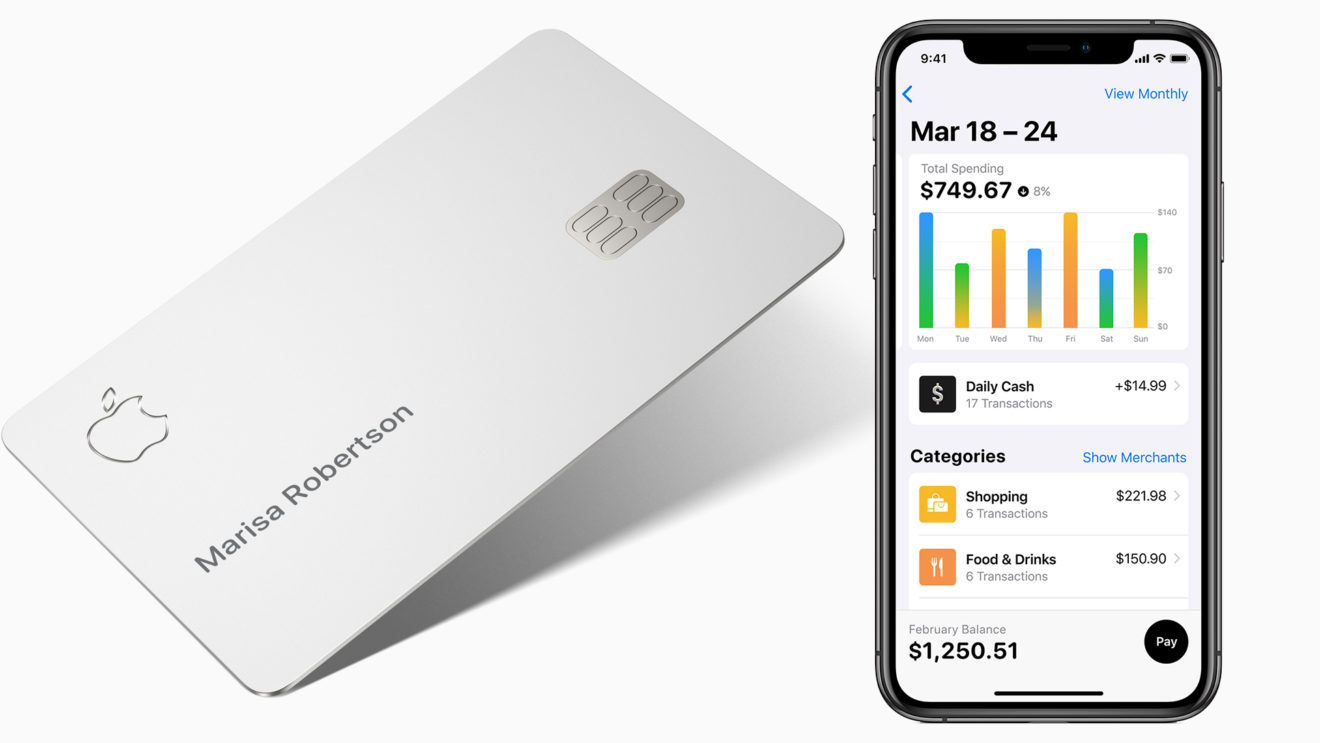
    It’s 2025 and the Apple Card saga is still unfolding. Last year, reports surfaced that talks between Apple and JPMorgan Chase had picked up, possibly signaling a move away from the current issuer, Goldman Sachs. A new player is joining the mix, while Goldman Sachs seems eager to bow out, particularly after the Apple Card missteps led to over $89 million in fines for both Apple and Goldman last year.

    A new report reveals that Apple is discussing with Barclays to take over from Goldman Sachs as its credit card partner, according to two sources familiar with the matter. This comes as the Wall Street giant pulls back from its consumer finance plans. Additionally, according to one of the sources, Synchrony Financial, a credit card issuer, is reportedly in talks with Apple about the potential partnership.

    Multiple financial firms are competing to replace Goldman Sachs, which partnered with Apple to launch the credit card back in 2019, according to the sources. While the appeal of working with Apple, one of the most recognizable names globally, is strong, some lenders have reportedly seen the initial terms of the deal as risky and not profitable. Talks between Apple and Barclays have been underway for months, but it could still take a while before an agreement is finalized.

    As mentioned earlier, JPMorgan Chase has also been in discussions with Apple about the partnership since last year. Although Goldman Sachs’ deal with Apple runs until 2030, Goldman CEO David Solomon recently suggested the collaboration could wrap up earlier. So, it’s no surprise that talks with other potential partners are in full swing.

    A switch in the Apple Card’s issuer could bring a host of new features and perks for cardholders, along with the possibility of a different or more consistent interest rate for Apple Card Savings accounts. Recently, Apple and Goldman Sachs reduced the savings rate again. Ultimately, as a consumer, I’m hoping that whoever Apple partners with next will result in a stronger and more competitive product for us.

  • Apple is expanding its presence in the Middle East

    Apple is expanding its presence in the Middle East

    So much is happening in the Middle East right now and the other thing is that Apple is expanding in Saudi Arabia.

    The Cupertino giant is set to launch its first online store in Saudi Arabia in summer 2025, followed by multiple flagship physical stores beginning in 2026. The expansion includes plans for a notable retail location in Diriyah, a UNESCO World Heritage site.

    Apple will also provide customer service and support in Arabic for the first time, offering its full product range through online and physical channels. CEO Tim Cook emphasized the compay’s commitment to supporting local customers, businesses, and innovators.

    This expansion builds on Apple’s existing investments in the country, particularly its Apple Developer Academy in Riyadh, which was established in 2021 through partnerships with local institutions. The all-women academy has trained nearly 2,000 students in programming, enabling them to publish apps on the App Store.

    Apple is also expanding its educational programs, having recently hosted the country’s first coed Apple Foundation Program. The monthlong course focused on coding and app development, with an emphasis on gaming. Future programs are planned for spring 2025.

    Apple says its investment has significantly impacted the local tech ecosystem. Saudi developer earnings have increased by over 1,750% since 2019. Apple has spent more than 10 billion SAR (over $2,6 bln) with local companies over the past five years and continues to support technological innovation.

    Additional technological integrations include Apple Pay’s expansion in Riyadh, where users can now use Express Mode to pay for metro and bus transit by simply holding an iPhone or Apple Watch near a reader. Since its 2019 launch, many Saudi customers have transitioned from traditional payment methods to Apple Pay, the US company notes.

  • Apple plans $1B manufacturing plant investment in Indonesia

    Apple plans $1B manufacturing plant investment in Indonesia

    Tech giant Apple plans to invest $1 billion in a manufacturing plant in Indonesia that produces components for smartphones and other products, Indonesia’s investment minister said on Thursday.

    In October, Indonesia banned sales of the iPhone 16 because it said Apple had not adhered to rules that require phones sold domestically to have at least 40% locally made parts. And this week, the government said it would increase the local content requirement.

    Investment minister Rosan Roeslani told reporters that details of the planned investment were still being ironed out, but when asked confirmed it was the expected $1 billion investment he had flagged earlier this week.

    “We will discuss with them some more … our hope is for everything to be announced in the next week after receiving a written commitment from them,” he said.

    Last week, the government had rejected a $100 million investment proposal from Apple to build an accessory and component plant as not enough to reverse the iPhone 16 ban.

    Apple did not immediately respond to a request for comment.

    Apple currently has no manufacturing facilities in Indonesia, a country of about 280 million people, but since 2018 it has set up application developer academies.

    Indonesia considers that strategy an attempt to meet local content requirements for the sale of older iPhone models.

    Companies typically increase the local composition through local partnerships or by sourcing parts domestically.

  • Indonesia says Apple’s $100M investment proposal inadequate

    Indonesia says Apple’s $100M investment proposal inadequate

    Indonesia said a $100 million investment proposal from Apple to build an accessory and component plant was not enough for the country to allow the tech giant to sell its latest iPhone model, its industry ministry said on Monday.

    Indonesia in November banned sales of Apple’s iPhone 16 after it failed to meet requirements that smartphones sold domestically should comprise at least 40% locally-made parts.

    Indonesia has also banned the sale of Alphabet’s Google Pixel phones over a similar lack of use of local components.

    Indonesian authorities last week said Apple had put forward the investment proposal to lift the sales ban.

    Apple did not immediately respond to a request for comment.

    “We have done an assessment and this (proposal) has not met principles of fairness,” Industry Minister Agus Gumiwang Kartasasmita told a press conference, comparing the proposal to Apple’s bigger investments in neighboring Vietnam and Thailand.

    Apple has no manufacturing facilities in Indonesia, but has since 2018 set up application-developer academies, which Jakarta considers a way for the company to meet local content requirement for the sale of older iPhone models.

    Companies usually increase the use of domestic components to meet such rules through partnerships with local suppliers or by sourcing parts domestically.

    Agus said Apple had an outstanding investment commitment of $10 million it should have carried out before 2023. He also wanted Apple to commit to new investment until 2026.

    The ministry would invite Apple to visit Indonesia to negotiate further, Agus said.

  • Apple says it will invest $100 million in Indonesia if the country ends iPhone 16 sales ban

    Apple says it will invest $100 million in Indonesia if the country ends iPhone 16 sales ban

    Back in October 2024 word got out that Apple was facing an iPhone 16 sales ban in Indonesia. Ministers in the country demanded that Apple renew a certificate that is issued when at least 40% of the components used in a device sold in Indonesia are sourced from the country. The last certificate Apple received for the iPhone has expired and needs to be renewed. To renew the certificate Apple will need to work out deals with local manufacturers, develop an app in the country, or work out an innovation development scheme.

    Apple is also a little shy of the investment in the country it previously promised which was supposed to add up to 1.71 trillion rupiah ($109.6 million). Thus far, Apple has invested 1.48 trillion rupiah ($94.53 million) in Indonesia which is slightly short of the amount the tech giant said it would invest. As a result, Apple has been unable to sell any of the four new iPhone 16 models in Indonesia and that will continue to be the case until Apple agrees to increase its investment in the country and receive a new certificate.

    Apple has started to work out an innovation development scheme by creating Apple Academies in the area. So far three of these have been built with a fourth one announced last April. The Academies are for aspiring app developers.

    With the sales ban, those Indonesians wanting to buy an iPhone 16 model will have to pick up the device overseas and at the same time, add on an import fee. The base iPhone 16 model, priced at S$1,299 ($994) will require an additional import fee of $155 to bring the phone from Singapore to Indonesia.

    According to a new report, Apple has increased its offer to invest $100 million in Indonesia, Southeast Asia’s largest economy, over the next two years. That is a huge increase of 10 times Apple’s previous proposal to invest $10 million in a factory in Bandung, located southeast of Jakarta, that would make accessories and components. While Indonesia has yet to give an answer to Apple’s latest proposal, the Ministry of Industry wants Apple to focus more on research and development for the iPhones released in the country.

    Indonesia has also blocked the sale of Google’s Pixel 9 handsets in the country for a similar lack of investment in the country on Google’s part. There is plenty of potential for both Apple and Google to make thins right in Indonesia. More than half of the country’s population of 278 million consumers is under 44 years old and is considered tech savvy.

  • Indonesia blocks Apple from selling iPhone 16

    Indonesia blocks Apple from selling iPhone 16

    Indonesia has blocked Apple from selling the iPhone 16 in the country but still allows travelers to bring it in for personal use.

    The iPhone 16, released in September, is not permitted for domestic sale because PT Apple Indonesia has yet to meet the country’s requirement of 40% local content for smartphones and tablets, the Ministry of Industry said in a statement on Oct. 25 as reported by Bloomberg.

    Each traveler can bring up to two iPhone 16s into Indonesia, according to the Jakarta Globe.

    Between August and October, around 9,000 iPhone 16 units were brought into Indonesia as personal belongings with taxes paid, data from the ministry shows.

    Industry Minister Agus Gumiwang Kartasasmita mentioned on Oct, 22 that Apple has yet to fulfill its commitment to investing 1.7 trillion rupiah (US$108 million) in Indonesia to secure a license for local sales. So far, Apple has invested 1.5 trillion rupiah.

    Apple’s older products can still be sold in Indonesia.

    Samsung Electronics and Xiaomi have set up factories in Indonesia to comply with the domestic content regulations introduced in 2017. Other ways to boost local content include sourcing materials or hiring workers in the country, according to Bloomberg.

    Apple on Oct 11 said that it was “deeply committed to Indonesia and excited to bring all of our latest products, including the iPhone 16 line-up, to our customers as soon as possible.”

  • Apple Music will let you relive a concert you have been to

    Apple Music will let you relive a concert you have been to

    I don’t know about you, but one of my favorite things about attending live music performances is the element of surprise. Besides the music itself, there’s an art to how artists choose the order of their songs. Now, Apple Music is recognizing that.

    A new feature allows artists to create playlists featuring the songs they performed at their recent shows. This should make it a breeze for you to relive the concert you just attended and jog your memory with some good (fingers crossed) vibes. Plus, you can check out all the tracks an artist plans to perform before catching them on tour.

    Now, while this feature is aimed at artists, I think it also brings some perks for us regular users. For example, when artists put together a setlist and share it on social media to announce their upcoming tours or concerts, it makes staying in the loop a whole lot easier. Plus, it’s a great way to reconnect with someone you experienced the live show with.
    If you’re an artist eager to try out this new feature on Apple Music and create a Set List on your artist page, head over to Artist Content and scroll down to Artist Playlists. Here’s how to kick things off:

    1. Click the (+) button next to Artist Playlists or the Create a Set List button if you haven’t made one yet.
    2. Choose the type of show (concert, tour, or residency) and enter an event name.
    3. Add an event: If you’ve linked your Bandsintown account with Shazam, you can select from upcoming events. If not, connect your Apple Music artist page to Bandsintown or manually enter your event details, including location and date.
    4. Set a publish date for the playlist, ensuring it’s at least one day in the future. The playlist will be published based on your local time. Click Continue when ready.
    5. Use the search function to add tracks to your Set List, either by song name or by pasting an Apple Music link. Include the songs performed during the show, and adjust the order as needed. Click Publish when done.

    You can create multiple Set Lists for different shows, which will display by popularity on your Apple Music artist page and Shazam pages. However, keep in mind that any playlists managed by Apple are not editable.

    In other Apple Music news, Apple recently gave Apple Music Classical a classic twist by introducing new album booklets. Before that, with the rollout of iOS 18, Apple Music launched a personalized New tab to help with music discovery.

  • iOS 18 launch date revealed: here’s when you can update your iPhone

    iOS 18 launch date revealed: here’s when you can update your iPhone

    The time has come for Apple to officially announce its new iPhone 16 series, alongside other new devices, and, of course – the exact day you can expect the iOS 18 software update.

    At today’s so-called Glowtime event, the Cupertino giant made it official – iOS 18 is coming to supported iPhones on September 16. The release day for iPadOS 18 is also that one.

    This is the day iPhone 16 users can update their software and get all the promised iOS 18 features, although if you’re waiting for the crowning selling point – Apple Intelligence – there is a caveat.

    Apple Intelligence is expected to arrive in its fullest only on the iPhone 16 models, and 15 Pro models, only in the US (at first), and only when iOS 18.1 comes around sometime in October.