Retail News CRM

Tag: apple

  • Apple releases iOS 17.5 beta 2 giving EU iPhone users more unique capabilities

    Apple releases iOS 17.5 beta 2 giving EU iPhone users more unique capabilities

    Surely there are iPhone users living outside of the EU who wish that their country had something like the Digital Market Act (DMA) that forces Apple to unbutton locked-down iPhone capabilities. For example, with iOS 17.4, iPhone users in the EU could install browsers using browser engines other than Apple’s WebKit. It also allows iPhone users in the EU to sideload apps from third-party App Stores and use alternative payment options in the App Store among other things.

    Outside of the 27 member EU countries, none of the actions that Apple is forced to allow in the EU because of the DMA is available. What gives the DMA its bite is the penalty that can be imposed on tech companies that don’t follow the rules. The penalty could be as much as 10% of a company’s global revenue during the most recent year. If Apple, for example, failed to abide by DMA rules, it could face a fine as large as $38.3 billion

    Today, Apple released the second developer beta for iOS 17.5 and with this update, iPhone users in the EU can download apps directly from the websites belonging to app developers instead of having to install these apps from the App Store or another app storefront. Developers offering their apps through websites must protect iPhone users by meeting certain criteria. Developers need to be members of the Apple Developer program for at least two consecutive years.

    Apple has released iOS 17.5 beta 2 – Apple releases iOS 17.5 beta 2 giving EU iPhone users more unique capabilities
    Apple has released iOS 17.5 beta 2

    Apps that can be downloaded from a website must have rung up at least one million installs on iOS in the EU during the preceding year. Developers offering their apps through their websites will need to show their policies toward collecting data from users. Additionally, apps offered outside of the App Store need to include a way for iPhone users to get refunds, access customer service, and manage these apps.

    Apps distributed through developer websites avoid having to pay Apple its cut of revenue known as the Apple Tax. However, they must pay Apple a 0.50 euro Core Technology Fee for each install over 1 million over the past 12 months. Some organizations such as nonprofit organizations, accredited educational institutions, and government entities do not have to pay the fee.

    There might be a time when other countries institute their own versions of the DMA, but for now, installing apps from developer websites is limited to iPhone users in the EU.

  • Tim Cook arrives in Vietnam

    Tim Cook arrives in Vietnam

    Apple CEO Tim Cook arrived in Hanoi Monday morning for a two-day business trip to meet notable content creators and app developers on App Store.

    Cook said upon arrival he was excited to meet with content creators, students and customers in Vietnam and learn about the way they use Apple’s products.

    Apple has unveiled plans to strengthen its commitments to Vietnam during his visit, including increasing spending for suppliers and fund a clean water initiative at schools.

    Since last year the company has been launching new major services in Vietnam.

    It opened the Apple Store Online in May and launched payment service Apple Pay in August, is taking pictures of Vietnamese streets to develop its Apple Maps and expanding recruitment to hire engineers to develop its Siri voice assistant in Vietnamese.

    Cook, 64, became CEO in 2011, and doubled the company’s revenues and profits by 2020. Under him, new products like Apple Watch and Apple Vision Pro, a virtual reality headset, were developed.

    In 2023 it became the first company in the world to achieve market cap of $3 trillion.

  • Siri might end up King in the realm of digital assistants after iOS 18 AI makeover

    Siri might end up King in the realm of digital assistants after iOS 18 AI makeover

    On June 10th at WWDC 2024, iPhone users might finally hear about improvements to one lagging feature that has frustrated them for years. Ever since Apple introduced its digital assistant Siri in 2011 with the iPhone 4s, iPhone users have had lofty ideas about how Siri was going to help them. When it comes to asking for a timer or alarm to be set, no assistant-even Google Assistant-is faster than Siri. But when you have a question that you need an answer to, Siri really drops the ball.

    For example, ask Siri the release date for the first iPhone and instead of seeing one specific date, you see excerpts from three websites and only the last one has the correct date of  June 29, 2007. Of course, you can read each of the three articles, but this is not quick or easy. Ask Google Assistant and you will instantly receive the correct date.

    Just so you understand, ask Siri a question about Apple’s most important product ever and you have to spend time reading through three websites to get your question answered. Use the iOS version of the Google Assistant app and you see very clearly the date that the first iPhone was released along with a photo showing it on display after being unveiled by Steve Jobs on January 9th of that year.

    Forget for a moment that Siri doesn’t seem to be too knowledgeable about Apple’s history, or at least as knowledgeable as Google Assistant. Getting an answer from Siri often means digging through websites for the correct answer while Google Assistant will show an easy to find response. That is why I always suggest that outside of setting clocks, and alarms, opening apps, and making vocal requests about your iPhone, iOS users should download and use the iOS Google Assistant app which can be installed from the App Store.

    According to Windows Central, Apple is working on a Large Language Model called Reference Resolution As Language Modeling (ReALM) which would allow Siri to understand the context of a conversation and even understand the content that is on screen. Researchers recently published a paper noting Apple’s plans to use AI to improve Siri.

    The smallest AI model that Apple might ship with iOS 18 met performance benchmarks achieved by OpenAI’s GPT-4. Apple’s larger AI model outperformed it by a large margin.

    None of the AI improvements might help us get quicker and to-the-point answers from Siri, but that doesn’t mean we can’t hope it does.

  • Google reveals when Apple will add RCS support to iPhone

    Google reveals when Apple will add RCS support to iPhone

    Back in November, Apple announced that it would add RCS (Rich Communication Services) support to the iPhone later this year. With this support, iPhone users will be able to view images and videos sent to them by Android users over RCS without having to deal with low-quality pictures and videos. Once Apple adds RCS support to the iPhone, iPhone users will be able to get read receipts when communicating with Android users, and see typing indicators. Messages will still be protected thanks to end-to-end encryption.

    Currently, when an iPhone user messages an Android user and vice versa, the chat takes place over the old-school SMS/MMS platform which is why videos shared look like crap as do  shared images. Because RCS and iMessage have almost the same features, iPhone users should have no problem using RCS when Apple does add support for it.

    The question is, when will this take place? When will Apple start supporting RCS? On the Android.com website, Google has published an updated landing page that reads, “Apple has announced it will be adopting RCS in the fall of 2024.” Apple actually said in November 2023 that the support would come “later next year” which means that we can call this “news.”

    The first day of fall this year will be September 22nd, 2024 which would dovetail with a possible release date for the iPhone 16 line and iOS 18. So there is a strong possibility that if Apple does say that support for RCS will take place in the fall, it will mean that RCS support for the iPhone will debut with the release of iOS 18 in September. If Apple adds it to the iOS 18 Developer Beta, iPhone support for RCS could be available to those installing the iOS 18 developer beta right after Apple unveils iOS 18 during the WWDC 2024 Keynote on June 10th.

    When Apple does add RCS support to the iPhone, you should be able to see whether you have an RCS connection by looking at the text field before you start typing a message. For example, after you tap on the name of the Android-using recipient you are sending a message to and you see RCS in the text field, it means that you will be chatting with the recipient using Rich Communication Services. On the other hand, if the text field says Text Message, you are messaging an Android user who doesn’t use RCS, or an RCS signal is not available. Thus, you’ll be chatting using SMS/MMS.

    Apple will no doubt make a big deal about adding RCS support as it gets closer to September, so stay tuned. We can tell you that Apple’s support for RCS will not add the blue bubble/green bubble rift.

  • Apple in talks to license Google’s Gemini AI to improve Siri, add new iOS features

    Apple in talks to license Google’s Gemini AI to improve Siri, add new iOS features

    The upcoming iOS 18 update is expected to be one of the biggest-if not the biggest-in iOS history. Part of that is due to the myriad AI features that Apple will be adding to the operating system including possible improvements to digital assistant Siri. While the date has not yet been announced, many iPhone users are looking forward to this June’s WWDC 2024 developer conference to see what changes Apple plans for its digital assistant.

    When Siri first hit the scene in 2011 with the introduction of the iPhone 4s, it appeared that Apple was on to something big. But eventually, Siri’s capabilities and performance were surpassed by Google Assistant and Amazon’s Alexa and a shot of AI could be the cure for what ails the old gal. Apple is talking with Google about licensing the latter’s Gemini AI. The talks between the two tech giants have progressed to the negotiating stage.

    Besides improving Siri, Apple hopes to use Gemini to add new AI-based features to iOS 18. Apple and Google already have an agreement to make Google the default search engine on Safari, a deal that reportedly pays Apple nearly $20 billion annually. Because the DOJ is investigating this deal, any deal involving Apple and Google, including one that would allow Apple to use Gemini, would probably have to be agreed to by the Justice Department or some other regulatory agency in the U.S.

    On Android, users can install the Gemini app and opt-in to have Gemini replace the Google Assistant although some features, such as reminders, controlling media, and routines will not work with Gemini. If you opted in to replace Google Assistant with Gemini and want to switch back, go to the Gemini app, tap the profile icon, go to settings, tap on “Digital assistants from Google” at the bottom, and select Google Assistant. On iOS, Gemini can be accessed from the Gemini tap in the top center of the Google app, right under the digital assistant.

    Should Apple and Google agree to license Gemini, we should see a greatly improved Siri, which is what all iPhone users have been hoping for.

  • Chip Apple developed for the Apple Car reportedly carried a whopping 536 billion transistors

    Chip Apple developed for the Apple Car reportedly carried a whopping 536 billion transistors

    Last month, Apple put an end to the development of the Apple Car after spending ten years and ten billion dollars to create an autonomous vehicle. One of the components that Apple built for the car was a new chip that supposedly had the same performance capabilities as four M2 Ultra chips! Considering that each M2 Ultra chip is equipped with 134 billion transistors, a 24-core CPU, a 76-core GPU, and a 32-core Neural Engine, stitching together four of these components creates an extremely powerful chip.
    Imagine a chip carrying 536 billion transistors with a 96-core CPU and a 304-core GPU. While there is no definitive proof that the chip Apple was planning to use to power the Apple Car was perfectly equivalent to four M2 Ultra chips, consider that the number of transistors inside a chip determines how powerful and/or energy efficient that chip is. Using the “UltraFusion” technology that helped Apple combine two M1 Max chips to become the M1 Ultra, and combine two M2 Max chips to become the M2 Ultra, Apple might have been hoping to create an incredibly powerful silicon component from four M2 Ultra chips.
    Let’s do a simple comparison. The A17 Pro application processor (AP) that powers the iPhone 15 Pro and iPhone 15 Pro Max contains 19 billion transistors, only 3.5% of the number of transistors that might have been placed inside the chip Apple would have used to “drive” the Apple Car. Wccftech says that the new chip that Apple was developing for the Apple Car was “nearly done” before Apple put the kibosh on the project. Could that chip have been the M3 Ultra?
    When Apple introduces the M3 Ultra, it will be interesting to see whether any of that chip’s specs match the rumored powerhouse chip that would have been used on the Apple Car. One thing that we can be sure of, this chip would have been built by TSMC, the world’s largest foundry.
  • Apple further loosens grip on iPhone apps in the EU by allowing direct downloads

    Apple further loosens grip on iPhone apps in the EU by allowing direct downloads

    Just recently, Apple rolled out iOS 17.4, introducing big changes to the App Store landscape in the European Union. Why? To comply with the newly adopted Digital Markets Act (DMA). These changes include support for alternative app marketplaces, new business terms, in-app purchase options, and more.

    Now, in response to developers’ feedback, Apple has announced a few additional tweaks. Notably, the Cupertino tech giant will introduce a new Web Distribution feature this spring, allowing developers to offer their apps for direct download from their websites.

    For developers in the EU who have agreed to the Alternative Terms Addendum for Apps, the new options include the ability for app marketplaces to exclusively offer apps from the marketplace developer. This change allows a company to run an app marketplace and provide only its own apps for download.

    Additionally, when guiding users to complete transactions on external web pages, developers can now choose how to design promotions, discounts, and deals, with Apple’s design templates becoming optional.

    As mentioned earlier, Apple is introducing a Web Distribution feature, set to launch later this spring. This feature will allow developers to distribute their iOS apps directly from their websites. iPhone users in the EU will have the freedom to download apps without relying on the App Store or any alternative marketplace.

    However, apps distributed through the web must adhere to Apple’s notarization guidelines, restricting installations to registered website domains in App Store Connect.

    For EU iPhone users, this could mean a broader array of apps to choose from, potentially leading to increased competition and, thus, lower prices. Nonetheless, users may need to pay more attention when downloading apps from sources outside the App Store, and managing these apps and updates might be less convenient.

    The recent changes in digital practices, including those made by Apple, are a response to the EU’s Digital Markets Act. This law targets big tech companies like Apple, Google, Microsoft, Meta, TikTok, and Amazon, instructing them to follow new rules to encourage competition and offer users more options. Apple, adapting to comply with these regulations, is even working on a tool to make it easier for iPhone users to switch to Android.

  • The Apple Car could have changed the face of the auto industry

    The Apple Car could have changed the face of the auto industry

    Last month, Apple calmly went around to the back of company headquarters in Cupertino carrying the self-driving Apple Car files and put a bullet through the project. Apple spent a decade and a ton of money on what would have turned out to be an amazing game-changing vehicle according to the description of what Apple was working on written by Bloomberg’s Mark Gurman in his latest Power On newsletter.

    Gurman said that the design Apple was working on around 2020 was similar to the rounded Canoo Lifestyle Vehicle. This is a van that at the time, looks the same in the front and back so that it always appears that the vehicle is moving forward. Gurman says that the vehicle resembled no other vehicle mass-produced at the time and was designed for full Level 5 autonomous driving.

    While Apple changed the looks of the car’s interior a few times, the look was a minimalist one with seats that looked like those seen in a limo or private jet; the vehicle would accommodate four people. Some versions of the interior featured a big television set in the center to show videos and FaceTime video chats. From the roof of the vehicle, multiple iPad-sized screens were suspended to give passengers access to certain controls. A special air-conditioning system pushed the air along the sides of the interior instead of blowing it right at the passengers’ faces.

    Two previous designs for the Apple Car included the first one which resembled the 1950s Volkswagen microbus; inside Apple, this design was known as the Bread Loaf. The second design for the vehicle looked like the 2017 Volkswagen ID Buzz prototype before VW showed off its concept. The fourth design, the one that looked like the Canoo Lifestyle Vehicle, had CEO Tim Cook and COO Jeff Williams excited.

    But the most recent design also included a less ambitious Level 2 autonomy forcing Apple to add a steering wheel and pedals. The sliding van doors were replaced by gull-wing doors. Nonetheless, it’s all moot at this point anyway and while Apple might have changed the face of the automobile similar to what it did with the smartphone, the company decided to stick to its knitting since the project still had a long way to go and a lot more red ink to spill before it would be ready to be launched.

  • Apple to add new accessibility features to the iPhone with iOS 18

    Apple to add new accessibility features to the iPhone with iOS 18

    We already know that iOS 18 is going to be one of the biggest updates in Apple’s history. New AI features including a revised Siri have many iPhone users looking forward to June when Apple previews iOS 18 during WWDC 2024. Other changes will be coming to the operating system’s accessibility features. These are features designed for those with “vision, mobility, hearing, speech, and cognitive needs” and can be found in the Accessibility app.

    MacRumors spoke with industry sources who told them about some new accessibility features expected to be added to iOS 18. Traditionally, these are announced before WWDC which makes it quite possible that Apple is wrapping up the development of these new features now which could be why they have leaked at this point in time.

    Voice Shortcuts would allow an iPhone user to connect a phrase to start a particular accessibility feature. Unlike Siri Shortcuts, no wake phrase, such as “Hey Siri,” would need to be spoken first. The rumor says that Voice Shortcuts would work with accessibility features such as VoiceOver and Voice Control. The former reads the content on an iPhone, while the latter allows you to use vocal commands to “perform gestures, interact with screen elements, dictate and edit text, and more.”

    Another change will have Apple adding font size control throughout the system. Currently, users can change the font size of an app but only if this is supported by the app, and some of Apple’s system apps do not offer such support; all of them will in iOS 18. The company also previously announced Personal Voice for Live Speech which uses AI to create a digital version of a user’s voice after running through 15 minutes of “training” with often-used phrases recorded. If someone has a disease that will cost them their speech, this feature will allow them to “talk” once he/she can no longer do so.

    We should see iOS 18 released this coming September.

  • VIB introduces easy, secure, private payment via Apple Pay

    VIB introduces easy, secure, private payment via Apple Pay

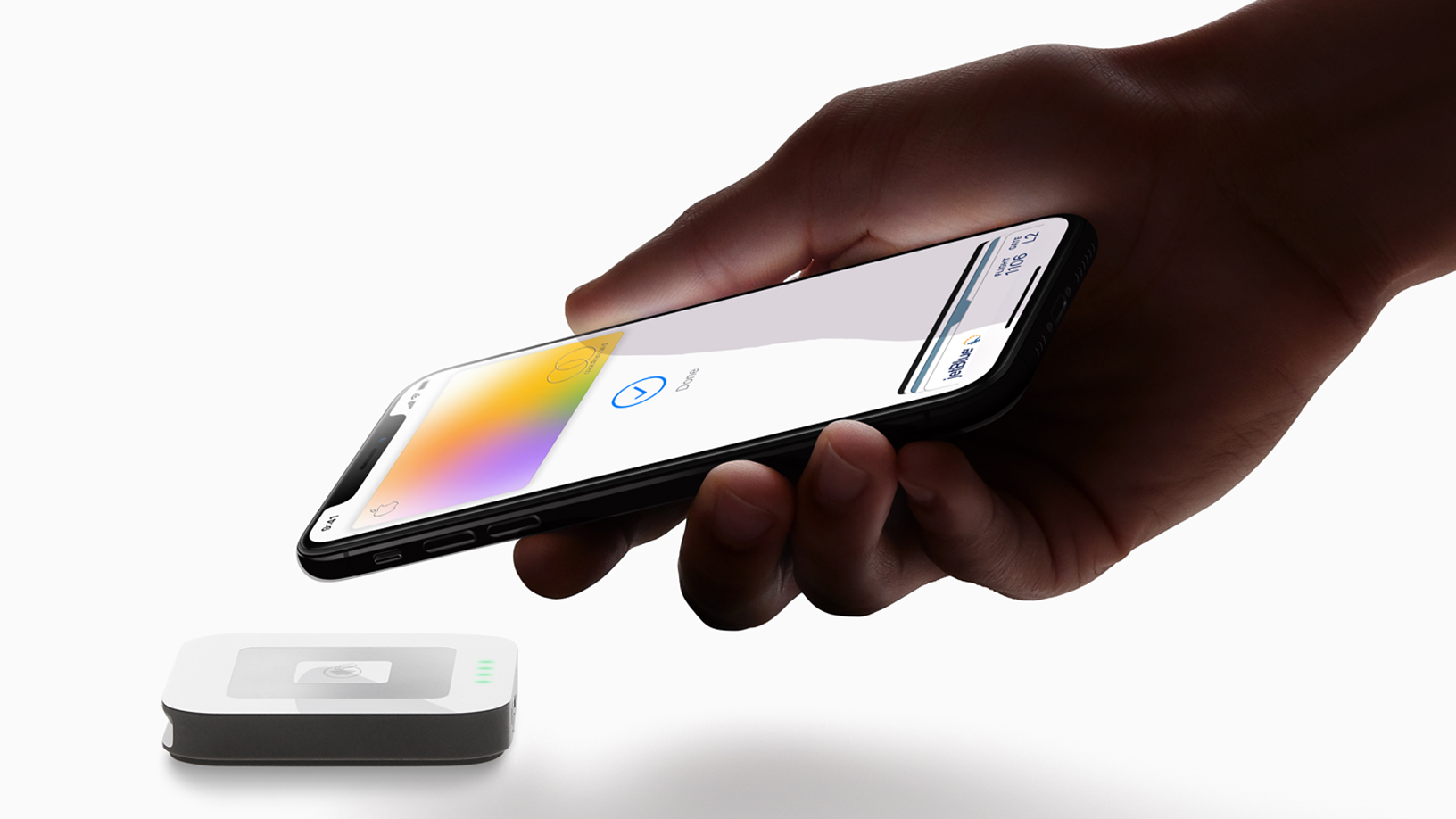
    Apple Pay is now available with the VIB Mastercards, bringing to card holders an easier, safer and more secure way to pay.

    Each Apple Pay transaction takes a few seconds and is done in just three simple steps. Beyond that, facial recognition (FaceID) technology will enhance security and privacy for cardholders.

    “Now, customer can easily pay for everything you love, from everyday purchases like groceries and coffee, to online shopping and travel, using just your Apple devices,” a VIB’s representative said.

    Apple Pay leverages tokenization to safeguard credit and debit card information. Upon adding a credit or debit card to Apple Pay, the actual card number remains undisclosed; it is neither retained on the device nor Apple’s servers.

    A distinct device account number is created, encrypted, and safely stored on the user’s device. Each transaction is authorized using a unique, dynamic security code.

    With Apple Pay now available on VIB Mastercard, users can expect a multitude of benefits, most notably the top-tier easy, secure, and private payment features that Apple provides, ensuring the protection of personal information, transaction data, and credit/debit card details.

    Tuong Nguyen, Head of the Card Strategy and Operation Center at VIB, said that they bring contactless payment methods via Apple Pay to customers based on their understanding, grasping the needs of customers, and offering financial solutions that suit their modern lifestyle.

    “With Apple Pay, VIB Mastercard cardholders enjoy a seamless and trustworthy payment experience every day,” she said.

    VIB Mastercard cardholders can now easily add Apple Pay to their Apple devices, such as the iPhone, iPad, MacBook, and Apple Watch. This can be done by adding their VIB Mastercard through either the Apple Wallet app on their devices or the MyVIB app, and enjoying the ease of paying anytime, anywhere.

    Getting started takes just a few simple steps. First, customers should open the Apple Wallet app on their Apple devices, tap the “+” icon on the top right corner, or access their Mastercard card on the MyVIB app, and click the “Add to Apple Wallet” button right below the card image.

    Then, they should scan or enter the VIB Mastercard information. They will not to go through this if they start via MyVIB in Step 1.

    Next step is to follow the on-screen instructions, make the VIB card the default card, and they are all set to use Apple Pay.

    VIB is now offering a VND50,000 cashback for the first Apple Pay transaction of at least VND100,000. The promotion is valid until May 5.

  • New Apple Watch ads replay real-life situations where the timepiece saved the user’s life

    New Apple Watch ads replay real-life situations where the timepiece saved the user’s life

    While the Apple Watch was not originally created to save lives, over the years some of the health-related features on the device have sent out timely warnings allowing users to get to the doctor or the hospital before it was too late. In other situations, the Apple Watch on a person’s wrist notified emergency services or first responders, and a timely rescue was made. If you recall, when Apple was planning to launch the Apple Watch in April 2015, the tech giant was looking at the device as a piece of luxury jewelry.

    Apple was able to get its timepiece on the cover of regional editions of Vogue months before the product was released. In early 2017, Apple started shutting luxury-themed Apple Watch pop-up stores in Europe as it moved away from promoting the Apple Watch as a luxury timepiece as reports started to come in about users having their lives saved thanks to the watch.

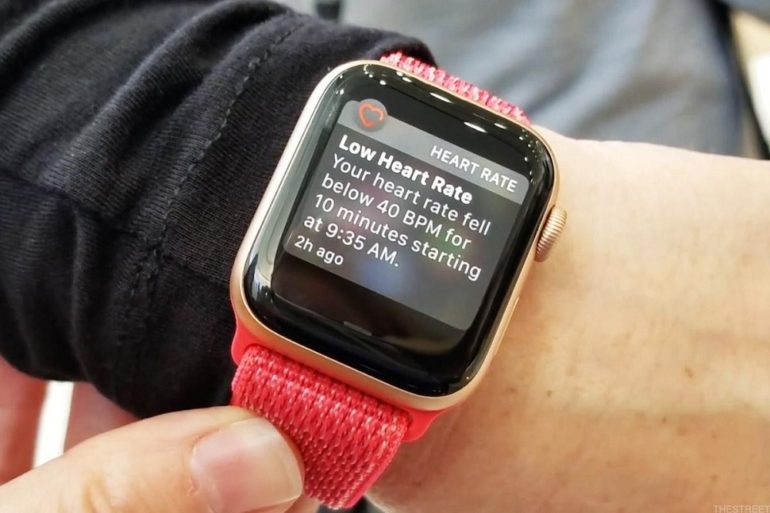
    Apple has released a couple of new television commercials for the Apple Watch, both of which are based on real-life events and focus on a specific health-related feature. The first ad, created by Apple Australia, is called “Lexie’s Heart.” A young woman Lexie Northcott started to get low heart rate notifications on her Apple Watch and after a trip to the hospital, she was diagnosed with a congenital heart block. Doctors operated and gave her a pacemaker and, as Lexie’s mom says later in the ad, “If it wasn’t for that watch, she might not be here right now.” This 30-second ad is focused on “Heart Rate Notifications.”

    The second ad, also 30 seconds in length, also from Apple Australia, and also based on a true story, is called “Bruce and the Roo.” A gentleman named Bruce Mildenhall had been knocked unconscious by…wait for it…a kangaroo while he was biking. Bruce hit the ground hard, activating the Fall Detection feature on his Apple Watch. The device called emergency services and even messaged his wife to alert her.

    When Bruce came to, he heard the sound of someone hitting the back glass of the ambulance he was placed in. He then heard his wife asking, “Have you got Bruce Mildenhall in there? Is he alive?” The first responders told her, “Yes, he’s OK.” As the ad for the Apple Watch’s Automatic Fall Detection comes to an end, Bruce says, “I still wear my watch and I’m still looking for that kangaroo with tire marks.”

    Suppose Apple does run these ads outside of Australia and adds them to its advertising rotation in the U.S.. In that case, you might see one or both appear during this weekend’s big NBA and NHL games, college basketball telecasts, and between innings or during a pitching change on MLB spring training broadcasts.

  • Apple has started designing 2nm chips for future iPhone models

    Apple has started designing 2nm chips for future iPhone models

    An Apple employee on Linked In  is supposedly the source of a new report that claims Apple has started designing chips that will be built using TSMC’s next-gen 2nm process node. Leaked slides published on the Korean website gamma0burst and posted via a tweet on “X” by leaker Revegnus the heavily redacted Apple slide refers to older 5nm chips such as the A15 Bionic, 3nm chips such as the A17 Pro, and a future 2nm chipset.

    As the process node used to build a chip “shrinks” in size, the features of the chip get smaller including the transistors allowing more of them to fit inside a chip. That is important because the higher a chip’s transistor count, the more powerful and/or energy-efficient that chip is. The iPhone 15 Pro and iPhone 15 Pro Max are currently the only smartphones powered by a 3nm chip.

    Later this year, Apple is expected to use 3nm application processors (AP) for all four iPhone 16 models. The iPhone 16 and iPhone 16 Plus could be powered by the 3nm A18 Bionic AP while the iPhone 16 Pro and iPhone 16 Pro Max will sport the more capable A18 Pro AP. Both components will be built using TSMC’s second-generation N3E 3nm node.

    SMC is supposedly planning to start production of 2nm chips during the second half of 2025 with the foundry churning out 1.4nm chips in 2027. Apple is expected to be the first company to obtain 2nm chips. The latter should deliver 10% to 15% performance upgrades at the same power or use 25% to 30% less power running at the same speed when compared to 3nm chips.

    Apple is TSMC’s top customer which is why it is usually able to be the first to receive chips made by TSMC using its latest process node. Apple will need to make some design changes in order to take advantage of TSMC’s 2nm node which will feature Gate-all-around (GAA) transistors instead of the currently used FinFET transistors.

    Using horizontal nanosheets placed vertically, GAA transistors allow the gate to surround the channel on all four sides reducing current leak and increasing the drive current. This results in stronger electrical signals between the transistors improving the performance of the chip. Back in December, TSMC showed off a prototype 2nm chip to both Apple and Nvidia.

  • Netflix starts forcing grandfathered subscribers to stop paying Apple

    Netflix starts forcing grandfathered subscribers to stop paying Apple

    In 2018, Netflix stopped accepting payments for new subscriptions through the App Store, forcing new subscribers and those returning after a brief hiatus to pay Netflix through its website. It has been six years since Netflix allowed such subscribers to pay for their service through the App Store. This way, Netflix could avoid paying Apple its 15% to 30% cut on in-app transactions that go through Apple’s in-app payment processing platform.

    Netflix representative Momo Zhao told The Verge that all “members on the basic plan who were using an iTunes method of payment” now must pay Netflix directly for service using a credit card or a debit card. Those who signed up for Netflix before the video streamer stopped allowing users to subscribe through the App Store were able to hold on to a good deal for years and continued to pay each renewal period through Apple.

    Netflix has allowed grandfathered subscribers to continue to pay each month through the App Store, but that is about to change. As one “X” subscriber wrote in a tweet, “Netflix stopped working with Apple Pay and didn’t inform me. Now I’m locked out of my $9.99 a month price I had paid for years and I had to get charged $31 until I get a refund through Apple.”

    If you’re in the same shoes as the person who posted the above tweet, you’ll have to pay $5.50 more a month for the same plan you were paying $9.99 a month for or pay $3 less per month for the privilege of having your streaming interrupted by ads. No matter which plan you choose, you’ll be paying Netflix directly.

    To reiterate, if you are a long-time Netflix subscriber and have been paying through the App Store to maintain your Netflix subscription, be on the lookout for an email from the video streamer that says that if you want to remain a Netflix subscriber, you will have to stop paying your bill through Apple. And you might be paying a little more or a little less each month for Netflix service depending on whether you can live with ads running on the videos you’re watching.

  • Apple suppliers need 103,000 workers in Vietnam this year

    Apple suppliers need 103,000 workers in Vietnam this year

    U.S. tech giant Apple’s contract manufacturers in Vietnam plan to hire over 103,000 workers this year, mostly for their factories in northern Bac Giang Province.

    Foxconn, Apple’s biggest supplier, needs 15,000 workers for its plants in the Dinh Tram and Quang Chau industrial parks (IPs) in the first half of the year, and 12,000 in the second.

    New Wing Interconnect Technology, a Foxconn subsidiary based in the Van Trung IP, will hire 27,000 workers this year, including 6,000 in the next two months.

    Fukang Technology, another Foxconn unit with a plant in the Quang Chau IP, needs 13,600 more workers this year.

    Another Apple supplier, Luxshare-ICT, plans to hire 47,300 workers at its plants in Quang Chau and Van Trung IPs.

    It will hire 200-300 people a month in February and March before increasing it to 7,000-9,000 after June or July when it expects to receive more orders.

    All these factories require workers aged 18 to 40 who have graduated high school and are in good health.

    Foxconn is even willing to take in applicants who have only completed the sixth grade.

    All the companies will pay a basic salary of VND5 million (US$203.8), social insurance contributions and other benefits, according to Nguyen Van Hue, director of the Bac Giang Province Job Center.

    They usually attract and retain workers mainly through other benefits such as housing rent and meal allowances and overtime work, which take workers’ incomes to VND8-9 million a month, he said.

    Factories simultaneously hiring en masse makes it difficult to find enough people quickly, he said.

    In contrast to the mass layoffs early last year, factories are trying to maintain their workforces this year since they have massive orders.

    “Many companies’ human resources personnel have even traveled to small villages in the northern mountains and central region to hire people, and ask existing employees to introduce relatives and friends.”

    Bac Giang has over 7,600 businesses that employ around 306,000 workers.

    Its real estate market has been thriving for the last five or six years and several industrial zones have been built or expanded.

    Business upscaling and a surge in new orders has led to soaring demand for labor here.

    Foxconn has been present in Vietnam since 2007 when it established plants in Bac Ninh and Bac Giang provinces before expanding to several other northern provinces.

    It is a critical cog in Apple’s supply chain.