Tag: Artificial intelligence

  • NIQ and Similarweb Partner to Launch AI Commerce Measurement in Q4 2026

    NIQ and Similarweb Partner to Launch AI Commerce Measurement in Q4 2026

    NIQ and Similarweb are collaborating on an Agentic Commerce Measurement solution to help brands, retailers and technology platforms track purchases made through artificial intelligence, with an initial version scheduled for Q4 2026.

    The collaboration combines NIQ’s product intelligence, consumer behavior data and retail sales measurement with Similarweb’s digital signals across generative AI platforms. Together, the two New York Stock Exchange-listed companies will connect AI discovery to measured sales outcomes.

    Five tracking pillars

    The planned solution will initially focus on 5 areas across the buying journey: consumer intent, agentic shelf visibility, product content readiness, AI-driven traffic and AI-driven conversion into verified omnichannel purchases.

    Initial monitoring will cover major generative tools including ChatGPT, Gemini, Google AI Mode, Perplexity and Claude. These analytics feed directly into NIQ’s Commerce Intelligence ecosystem, which links brand product catalogs with enterprise retail operations.

    AI is becoming a new commerce channel, and NIQ intends to make it measurable. Our clients want to know where AI is already influencing their business, how quickly that influence is growing and what they should do about it.

    The shift to agentic checkouts

    Protocols such as Google’s Universal Commerce Protocol and OpenAI’s Agentic Commerce Protocol prompted the project. Both frameworks allow autonomous software agents to research, evaluate and purchase merchandise inside a single chat window without redirecting the shopper to a traditional storefront.

    For consumer brands and multi-brand merchants, automated shopping removes the classic digital shelf where banner placements and search bidding drove conversion. Brands drop out of the basket entirely if an AI agent filters options down to two choices based on structured technical metadata they lack.

    Catalog hygiene and algorithmic bias pose immediate hurdles for suppliers. A brand cannot buy sponsored placement inside an autonomous agent if the underlying Large Language Model cannot parse the product description or confirm inventory in real time.

    Platform coverage and next stages

    Integration relies on NIQ’s existing enterprise analytics tools, Optiq and ConnectAI, which feed commercial data directly into corporate workflow software. Similarweb previously built out dedicated digital footprint tools to capture referral traffic from generative artificial intelligence search portals.

    NIQ and Similarweb plan to reveal initial product categories and regional test markets ahead of the fourth-quarter rollout in 2026.

  • Foreign Tech Investors Pay up to US$15,000 for Access to Chinese Factory Floors

    Foreign Tech Investors Pay up to US$15,000 for Access to Chinese Factory Floors

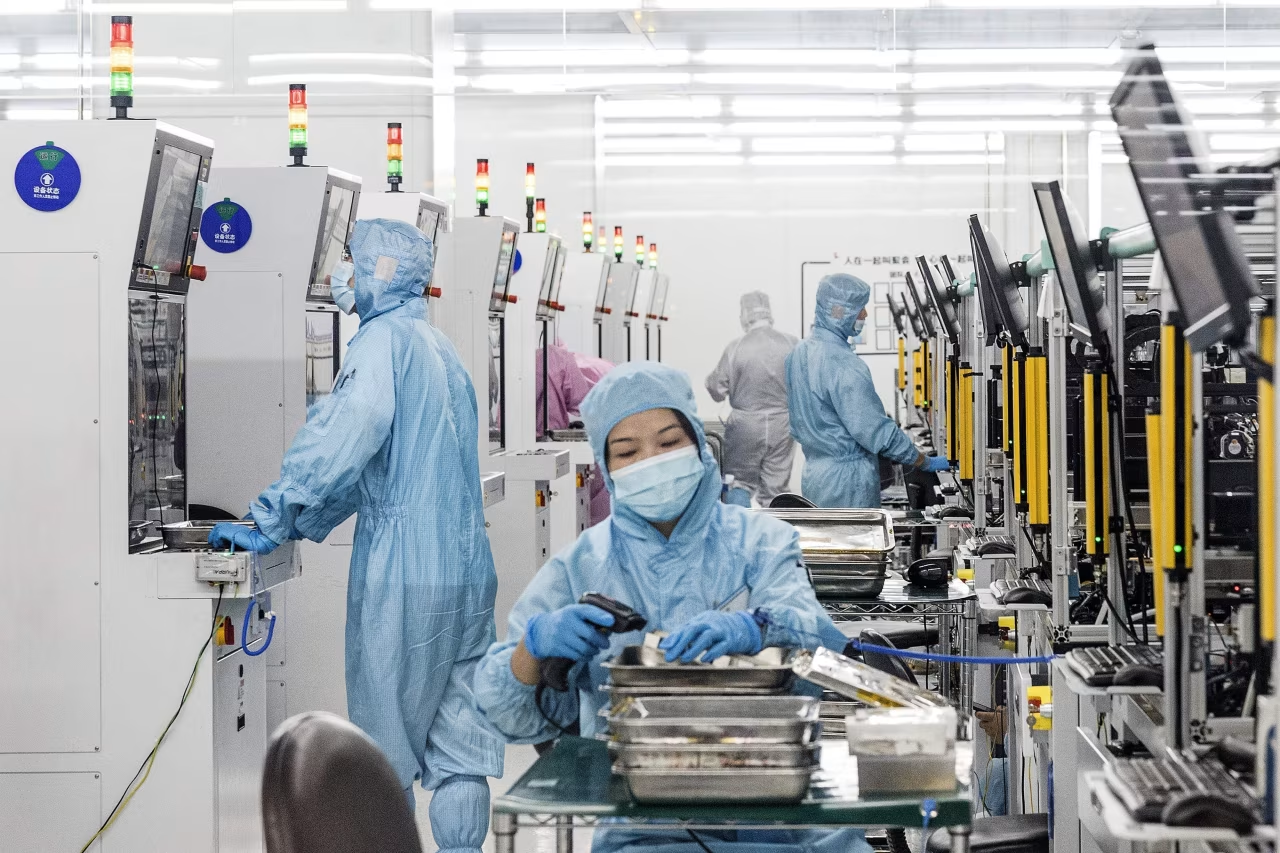
    Foreign investors and tech executives are paying up to US$15,000 each to tour Chinese manufacturing plants. The visits cover robotics, electric vehicle and artificial intelligence facilities across five industrial hubs.

    Western and regional boardrooms face pressure to see if Chinese automation has pulled ahead of global rivals. These paid delegations offer a direct look at mainland hardware supply chains.

    Programmes span Beijing, Shenzhen, Shanghai, Hangzhou and Hefei. Shanghai-based data research firm Baiguan charges up to US$15,000 for a five-day itinerary. Around half its participants come from Southeast Asia. Tech tour agency Glopen reported a 50 per cent jump in enquiries during 2026, mostly from European and Singaporean clients. It now operates more than 100 single-day corporate visits every month. Tech Buzz China founder Rui Ma has organised 11 delegations since 2019, including an April tour through three cities focusing on robotics.

    The Business Behind Factory Tourism

    State backing has turned industrial site visits into commercial business across the mainland. Beijing has designated more than 140 demonstration sites for industrial tourism. The sector generated US$17.8 billion last year and is projected to reach 300 billion yuan (US$44.6 billion) by 2029.

    Public rates for individual factory visits usually run around US$60, but premium access commands steep markups. Xiaomi’s electric vehicle assembly plant in Beijing has recorded more than 250,000 visitors since March 2024. Entry slots from Xiaomi’s official lottery system have been scalped on secondary platforms for up to 2,000 yuan (US$300), despite company rules barring transfers.

    Institutional investors have quietly joined the circuit. US firms Dimension, Capital Group and Thrive Capital have all sent representatives to inspect mainland production setups. European corporate delegations have also toured sites to study state-backed technology coordination.

    Hardware Dependence and Supply Realities

    Consumer hardware and robotics brands see that physical supply chains remain tethered to southern China. Geopolitical posturing has not changed that reality. Western developers still depend on mainland ecosystems for sensors, battery cells, structural frames and precision actuators. Replicating those supplier clusters outside the Pearl River Delta remains slow and capital intensive.

    Visitors risk mistaking demonstration speed for total commercial dominance. Non-Chinese technology firms still hold most global market share, high-margin software profits and core intellectual property. In sectors like autonomous robotaxis, Chinese domestic deployment continues to move cautiously. Regulators remain concerned about urban transport employment.

    Shenzhen Emerges as the Focal Point

    Years of infrastructure spending transformed Shenzhen from a contract assembly zone into an integrated hardware design centre. The current tour rush builds on that base. Foreign visitor arrivals in Shenzhen jumped 70 per cent last year and rose another 30 per cent in the first quarter. Total entries topped 5 million through August.

    Founders use 10-day visa-free entry policies to test prototypes directly with component suppliers. Local operators have opened communal hacker houses for visiting robotics and AI engineers. Informal network groups coordinate factory access across Shenzhen and Silicon Valley.

    Next up is the Asia-Pacific Economic Cooperation forum in November, which Shenzhen will host. Municipal officials plan to show automated assembly plants and urban drone networks to pitch the city’s hardware infrastructure to visiting regional trade delegations.

  • Taiwan Targets Silicon Photonics to Cut AI Chip Power Use by 50 Percent

    Taiwan Targets Silicon Photonics to Cut AI Chip Power Use by 50 Percent

    Taiwan is mobilising its chipmaking sector to commercialise silicon photonics and copackaged optics, with the Ministry of Economic Affairs backing efforts to overcome artificial intelligence computing bottlenecks.

    The island holds over 90 percent of global manufacturing capacity for chips at 7 nanometers or below, while more than 30 firms including Taiwan Semiconductor Manufacturing Co and MediaTek Inc formed an industry alliance in 2024.

    Silicon photonics replaces conventional copper wiring between chips with optical signals. Because optical transmission generates negligible heat, the technology cuts device power consumption by 30 to 50 percent, according to the Ministry of Economic Affairs. That saving eases cooling limits in high-density AI data centres. It also clears the 1.6-terabit-per-second bandwidth ceiling that hampers electronic links.

    Optics Replace Copper Interconnects

    Heavy capital is pouring across the hardware supply chain. Nvidia invested US$4 billion into silicon photonics development in March. The chipmaker needs architectures that sustain real-time AI workloads and high-definition streaming without overheating server racks.

    Taiwanese authorities have folded the technology into their New 10 Major AI Infrastructure Projects. Funding flows through the government’s A+ Enterprise Innovation research programme. The scheme subsidises domestic research teams and equipment developers building local manufacturing tooling.

    Alliance Mobilises Heavyweights

    Execution on the ground rests on the Silicon Photonics Industry Alliance, a consortium established in 2024 with industry group SEMI. The group brings together more than 30 technology suppliers. Members include Taiwan Semiconductor Manufacturing Co, ASE Technology Holding, MediaTek and Hon Hai Precision Industry.

    Asian hardware vendors and server assemblers face shifting procurement cycles. Traditional printed circuit board layouts will yield to integrated optical packaging. As a result, component suppliers must retool production lines for optical transceivers and precision glass substrates.

    Manufacturing risks centre on packaging yields and costs. Integrating laser sources and optical waveguides directly alongside silicon dies requires packaging tolerances tighter than standard wire bonding. These yield hurdles could delay volume delivery.

    Race for Next-Generation Packaging

    Foundry and packaging operators have spent years researching optics to counter the slowdown of traditional transistor scaling. Physical node shrinking now delivers diminishing returns. Advanced packaging formats like copackaged optics have become the primary path to computing efficiency.

    Prototype lines are now running across alliance members to finalise copackaged optics standards before volume production begins for 2026 data centre hardware cycles.

  • 87% Of Australians Have AI Privacy Concerns, Report Finds

    87% Of Australians Have AI Privacy Concerns, Report Finds

    Eighty-seven per cent of Australians have concerns about privacy for artificial intelligence, according to Australian Retail Council research discussed at an industry roundtable in September 2026.

    The findings, highlighted by Diebold Nixdorf, show that only 5 per cent of Australians say they trust AI companies, presenting a live commercial risk for retailers integrating automation into everyday operations.

    Senior retail leaders at the gathering noted that while the technology for age verification, customer service, and loss prevention is ready, customer trust remains the primary barrier to adoption across Australian stores.

    Designing privacy into the checkout lane

    Automated age verification and theft detection represent the front line of store deployment. In international grocery markets, automated systems now approve most age-restricted purchases at self-checkout within seconds by processing visual data locally without retaining personal files.

    Hardware suppliers argue that keeping customer records off retail servers prevents chains from becoming targets for regulatory scrutiny. Similarly, loss prevention algorithms in newer self-checkouts prompt shoppers to scan missed items before store staff intervene, reducing confrontation at the register.

    Operating standards across store networks

    Supermarket operators across the Asia-Pacific region have accelerated camera-assisted checkout rollouts over the past three years to curb inventory shrink. Australian grocers that run uncoordinated systems across point-of-sale, payments, and security cameras risk alienating shoppers if privacy safeguards vary between store departments.

    For regional retail executives, deploying store AI without clear boundaries creates legal and operational liabilities. While Asian retailers in markets such as Singapore and Japan have integrated automated kiosks with high public compliance, Australian consumers push back when surveillance feels unchecked.

    Industry proposals for shared rules

    The push toward automation follows earlier disputes between major Australian supermarket chains and privacy regulators over facial recognition testing in retail aisles. Industry participants at the roundtable raised support for a retail-specific AI code of practice to set standard data retention limits across the sector.

    Diebold Nixdorf published the findings alongside its research report on self-service systems in Australia. Retailers now weigh whether to adopt voluntary operating rules or wait for formal regulatory guidelines on customer data capture at the till.

  • World Bank Urges Thailand to Lift 12% AI Adoption Rate for 2037 Goal

    World Bank Urges Thailand to Lift 12% AI Adoption Rate for 2037 Goal

    Thailand must lift its corporate artificial intelligence adoption beyond the current 12 per cent rate to hit high-income status by 2037, according to the World Bank.

    Only about one in eight Thai businesses currently deploys AI tools, despite recent data centre investments and an established electronics manufacturing base. Speaking at the Bangkok Business Summit, World Bank vice-president for East Asia and Pacific Carlos Felipe Jaramillo warned that commercial adoption remains too concentrated among large corporations in the capital.

    Closing the SME technology gap

    Small, medium and micro-enterprises outside Bangkok account for the bulk of employment but lag in digital capabilities. The multilateral lender presented its “Building Thailand’s Future Today” report at the summit, hosted by the Joint Standing Committee on Commerce, Industry and Banking, setting out reforms for enterprise competitiveness.

    Thailand spends roughly 1 per cent of gross domestic product on research and development. Across the East Asia-Pacific region, that average sits at 2.5 per cent. World Bank senior economist Katherine Stapleton said closing that divide requires redirecting state R&D incentives toward smaller firms rather than limiting innovation programmes to top-tier conglomerates.

    RetailNews Asia notes that enterprise technology providers across Southeast Asia face a similar bottleneck: high digital consumer penetration alongside sluggish software uptake inside merchant supply chains. While Bangkok ranks among the region’s most connected consumer markets, commercial software integration across provincial retail and logistics networks remains sparse.

    Raising growth targets

    Meeting the government’s 2037 high-income target will require annual real GDP growth to jump to 5.4 per cent per person. Thai economic expansion has averaged 2.2 per cent per person since the pandemic.

    Exports generate roughly 70 per cent of Thailand’s gross domestic product, yet foreign direct investment continues to generate weak spillover gains for local suppliers. The World Bank argues that upgrading domestic software capabilities and fostering regional commercial hubs will determine whether the economy escapes middle-income stagnation.

    The Joint Standing Committee and state planning agencies are now reviewing corporate tax breaks and startup development programmes ahead of the next fiscal policy cycle.

  • Japan AI Data Center Capacity to Quadruple by 2033 with $60 Billion Push

    Japan AI Data Center Capacity to Quadruple by 2033 with $60 Billion Push

    Japan will more than quadruple its artificial intelligence data center capacity over the next eight years through planned investments totaling $60 billion. The buildout aims to place the country directly behind the United States and China in compute scale while securing domestic data processing independence.

    Telecommunications giant NTT is driving a major share of that expansion, targeting 2 gigawatts of operational data center capacity by fiscal 2033. Trading houses and commercial operators are also stepping into the sector, including Itochu, which is preparing 10 facilities across Japan to capture surging commercial enterprise demand.

    Power Targets and Commercial Scale

    Data center developers across Tokyo and regional prefectures are racing to secure land and high-voltage grid connections required for high-density processing racks. Artificial intelligence workloads require substantially more electricity than legacy cloud hosting, forcing operators to structure long-term power purchase agreements before breaking ground.

    Japanese enterprises have accelerated their adoption of generative computing tools in supply chain planning, automated retail operations and customer service systems. Domestic infrastructure provides local businesses with lower latency and ensures sensitive corporate records stay within national borders under local privacy frameworks.

    Regional Competition and Sovereign Tech

    Across the wider Asia-Pacific region, rapid infrastructure development has sparked competing bids for power and municipal resources in key hubs such as Singapore, Malaysia and South Korea. Japan offers investors established grid stability and transparent property regulations, countering higher real estate and construction overheads.

    The investment pipeline gives enterprise software vendors and consumer brands access to dedicated domestic processing capacity that avoids overseas routing bottlenecks. What remains to be watched is how rapidly regional utility providers can deliver grid upgrades to NTT and competing operators as initial project phases break ground toward the 2033 capacity deadline.

  • Intellisia Raises ₩3.4 Billion to Replace Consumer Panels with AI

    Intellisia Raises ₩3.4 Billion to Replace Consumer Panels with AI

    Intellisia has raised ₩3.4 billion ($2.5 million) in pre-Series A funding to scale its synthetic consumer research and retail simulation platform across Asia and North America. The round closed above its initial ₩3 billion target.

    Kakao Ventures led the investment, joined by Murex Partners, Capstone Partners, and founder Baek Seung-guk, who committed personal capital to the round. The Seoul-based company builds virtual consumer profiles trained on real-world purchasing data to answer product surveys, evaluate packaging, and simulate retail store behavior.

    Enterprise Traction and Accuracy Metrics

    Traditional consumer research takes weeks or months to recruit panels and return responses. Intellisia runs identical query sets through its platform, TheSurvey.ai, within hours. The company reports an average reproduction rate above 90 percent when testing its synthetic models against actual human survey results.

    That accuracy has converted pilots into commercial contracts across South Korea’s consumer sector. Intellisia has logged more than 200 project engagements, working with packaged food manufacturers CJ CheilJedang, Pulmuone, and Lotte Wellfood, as well as telecoms group LG Uplus, furniture maker Fursys Group, and convenience store operator BGF Retail. More than 60 percent of enterprise proof-of-concept trials converted into paid annual contracts.

    Baek previously co-founded content recommendation engine Dable, which scaled across seven Asian markets before selling to travel platform Yanolja in 2021. He founded Intellisia to apply similar predictive data modeling to consumer behavior testing.

    From Survey Panels to Store Twins

    Packaged goods manufacturers and retail chains across East Asia face compressed product lifecycles and rising sample recruitment costs. Using synthetic consumer cohorts allows brand managers to test dozens of packaging variations or pricing structures before committing physical inventory to supermarket shelves.

    Intellisia is now pushing beyond questionnaires into physical store simulation. The company is preparing trials for ParaStore, an AI digital twin platform where virtual shoppers interact with store layouts, shelf placements, and merchandising plans. BGF Retail, which operates South Korea’s CU convenience store chain, will test the system for store operations and category management.

    A commercial subscription-based software platform goes live in the fourth quarter of this year, followed by market launches in Japan and the United States next year.

  • Retail Asia Summit 2026 Sets Singapore Agenda for Responsible AI and Unified Data

    Retail Asia Summit 2026 Sets Singapore Agenda for Responsible AI and Unified Data

    Singapore will host the Retail Asia Summit on September 29, 2026, gathering brand executives and technology leaders to address artificial intelligence governance and omnichannel store operations.

    The day-long gathering at the Grand Copthorne Waterfront Hotel will focus on deploying automation, unifying customer data, and meeting data privacy standards across Southeast Asian retail networks.

    Speakers and Operational Themes

    Speakers include Cindy Ngiam, director of retail at Enterprise Singapore, and Zhu Hui, partner in Bain & Company’s retail and advanced analytics practice. Ngiam heads public-sector capability building for Singaporean retailers expanding domestically and overseas, following earlier roles developing startup ecosystems and tourism marketing. Zhu advises Southeast Asian grocery, fashion, and quick-service restaurant chains on operating models and generative AI implementation.

    Discussions during the event will examine how retail operators deploy Internet of Things applications in physical stores, integrate online-to-offline customer data, and maintain cybersecurity protocols.

    Regional Tech Adoption in Retail

    Store networks across Southeast Asia face stricter data compliance requirements while attempting to automate frontline staffing and inventory planning. Regional operators in grocery and fashion increasingly test predictive logistics and machine-learning tools to manage rising labour costs in core cities like Singapore.

    The summit runs from 8:30 AM to 5:00 PM SGT at the hotel’s Waterfront Ballroom on September 29.

  • Japan Startup Muse Deploys Retail Robots to New York Grocery Stores

    Japan Startup Muse Deploys Retail Robots to New York Grocery Stores

    Japanese robotics startup Muse rolled out its automated retail helper robots in a New York grocery store to capture US supermarket demand for labor-saving physical artificial intelligence.

    The deployment puts automated shelf-stocking hardware directly into commercial grocery aisles alongside store clerks. Rising operational expenses and stubborn retail worker shortages across North America have accelerated the commercial rollout of Asian service robotics beyond domestic test markets.

    Automating shelf replenishment

    Muse built its physical AI machines to assist staff with the physical strain of routine grocery restocking. The robots navigate sales floors to handle merchandise replenishment tasks, reducing the repetitive lifting required of store associates during standard operating shifts.

    Store operators in the United States face persistent labor turnover in entry-level inventory roles. Deploying autonomous replenishment units allows grocers to maintain shelf availability without increasing headcount during peak restocking hours.

    Exporting Asian physical AI

    Japanese robotics developers are increasingly targeting overseas retail markets where wage pressures create faster paths to commercial adoption than domestic pilot schemes. While Japanese supermarkets have tested automated replenishment in limited urban formats, the scale of floor space in American grocery chains offers substantially larger hardware deployment volumes per client.

    Muse plans to use the New York supermarket deployment as an operational reference site to secure multi-unit rollouts across broader US retail chains.

  • Taiwan Pitches Global Chip Alliances as Market Heads for 1.5 Trillion Dollars

    Taiwan Pitches Global Chip Alliances as Market Heads for 1.5 Trillion Dollars

    Taiwan President William Lai told tech executives in Taipei that international chip partnerships will anchor an industry projected to exceed 1.5 trillion dollars this year.

    Foreign semiconductor leaders continue to pour capital into the island, led by Nvidia’s annual procurement and investment topping NT$3 trillion ($94.84 billion). Micron Technology has committed more than NT$1.4 trillion to local operations, while Advanced Micro Devices pushed its research spending in Taiwan past NT$300 billion.

    TSMC’s Overseas Buildout

    Taiwan Semiconductor Manufacturing Co is matching domestic research with heavy spending abroad to insulate buyers against supply shocks. The world’s largest contract chipmaker announced an additional $100 billion commitment to its Arizona facilities in July, while its plant in Kumamoto, Japan, continues on schedule.

    In Europe, TSMC expects its Dresden fabrication facility to begin commercial chip production before the end of next year. That site will supply automotive and industrial customers across the European Union.

    For consumer electronics makers and device brands across Asia, the dual strategy offers reassurance. Taiwan is retaining cutting-edge wafer fabrication and packaging on home soil while duplicating mature and specialized capacity in Western markets to guarantee steady silicon delivery during regional crises.

    State Support for Next-Gen Tech

    Taipei plans to back corporate spending by funding core infrastructure, including power generation, water supplies, land access, and computing capacity. State research backing will focus on silicon photonics, quantum computing, and artificial intelligence robotics.

    US Undersecretary of State for Economic Affairs Jacob Helberg told attendees via video link that concentration without resilience creates systemic vulnerabilities. He pointed to the Pax Silica framework, an alliance designed to secure technology supply lines among trusted trade partners.

    Discussions continue this week as the Semicon Taiwan trade exhibition runs through Friday at the Taipei Nangang Exhibition Center.

  • Google to Roll Out Two AI Chips a Year and Expand Taiwan Hub

    Google to Roll Out Two AI Chips a Year and Expand Taiwan Hub

    Google will accelerate its custom artificial intelligence chip rollout from a two-year cycle to two processors annually while expanding its Taiwan research footprint by 60 per cent.

    The revised schedule shifts the company away from its traditional multi-year hardware cadence as competition for proprietary cloud computing silicon intensifies across the tech sector.

    Faster Silicon Cadence

    Amin Vahdat, Google’s senior vice president and artificial intelligence infrastructure chief, announced the accelerated timeline during a keynote address at Semicon Taiwan in Taipei on Wednesday. The company plans to release two bespoke chips every year and expects to lift that frequency even further over time.

    Backing the faster production tempo requires more engineering capacity on the ground. Google is growing its dedicated research and development floor space across Taiwan by 60 per cent to house expanded design and testing teams.

    Regional Hardware Footprint

    Taiwan sits at the centre of global advanced semiconductor fabrication and packaging. By enlarging its local engineering hubs, Google tightens operational proximity to key foundry partners, contract assemblers and component supply chains that manufacture its custom processing units.

    For cloud platforms and enterprise services operating across Asia-Pacific, in-house silicon helps control operational power costs and workload efficiency in regional data centres. Competing tech operators across the region are running similar programs to secure custom processing capacity.

    The company will now focus on staffing the expanded Taiwan design facilities ahead of its next scheduled processor rollouts.

  • John Ternus to Take over as Apple CEO as Tim Cook Becomes Executive Chairman

    John Ternus to Take over as Apple CEO as Tim Cook Becomes Executive Chairman

    Apple chief executive Tim Cook will step down after 15 years, handing leadership of the US$4.5 trillion tech company to hardware head John Ternus.

    Cook expanded Apple from a US$350 billion business into the world’s most valuable hardware maker before preparing to shift into the executive chairman role in September.

    Hardware leadership and AI priorities

    Ternus takes charge as Apple faces growing pressure across artificial intelligence development and device assembly. Having run Apple’s hardware engineering division, he oversaw major product portfolios across iPhone, Mac, and iPad product cycles.

    Cook built Apple’s post-2011 growth on rigorous manufacturing coordination and deep consumer distribution networks. His operational playbook turned the brand into a retail powerhouse across China, Japan, and newer retail growth corridors such as India and Southeast Asia.

    Production footprint and next steps

    For electronics supply chains in Asia, the executive change lands as hardware brands reshape procurement and expand production footprints beyond mainland China into India and Vietnam. Regional competitors are simultaneously pushing rapid consumer AI deployments to test Apple’s premium smartphone sales.

    Ternus takes the top post this September as Cook moves into the board chairmanship.

  • Taiwan Pledges NT$40 Billion to Train 500,000 AI Specialists by 2040

    Taiwan Pledges NT$40 Billion to Train 500,000 AI Specialists by 2040

    Taiwan will allocate more than NT$40 billion (US$1.26 billion) next year across 10 major artificial intelligence projects to train 500,000 technical specialists by 2040.

    President William Lai confirmed the funding commitment in Taipei, tying the long-term headcount target to the government’s newly established AI Talent Ark Project. The program combines basic technical schooling, professional upskilling, and data-driven instruction to supply engineering talent to domestic hardware and software sectors.

    Building Domestic GPU Capacity

    Alongside the training quota, the Ministry of Digital Affairs is targeting the installation of at least 10,000 graphics processing units across local data centers within 12 months. The compute capacity will be developed through private investment under a build-own-operate framework.

    Minister of Digital Affairs Lin Yi-ching designated domestic AI computing facilities as public infrastructure eligible for private capital. The policy requires data centers to operate under Taiwanese legal jurisdiction so that commercial models remain compliant with local data governance standards.

    The ministry is also assembling a sovereign AI training corpus by opening state datasets to domestic and foreign developers. The goal is to build base models capable of handling Taiwanese language variants and local commercial contexts without relying entirely on offshore platforms.

    Sovereignty and Network Resilience

    Taiwan’s push mirrors parallel infrastructure plays across East Asia, where governments in Tokyo and Seoul are funding domestic compute clusters and localized foundation models to avoid complete reliance on US cloud hyperscalers. For technology hardware makers and enterprise software vendors operating in the region, the plan secures subsidized access to local high-performance compute capacity and a steady supply of specialized engineers.

    Network resilience forms the secondary layer of the digital sovereignty push. Lin noted that low-Earth-orbit satellite systems remain an active priority to safeguard data traffic against potential disruptions to undersea telecommunications cables.

    The digital ministry will roll out the private investment terms for the build-own-operate compute centers later this fiscal year, with the first 10,000 GPU deployments expected on line before late 2027.

  • Graas Raises US$17 Million and Buys Trustana to Expand Retail AI Tools

    Graas Raises US$17 Million and Buys Trustana to Expand Retail AI Tools

    Singapore e-commerce technology platform Graas has raised US$17 million in fresh capital and completed the acquisition of product data company Trustana.

    The transaction brings Trustana’s catalogue and product intelligence software directly into Graas’s automated operating system for consumer brands across the region.

    Integrating Product Data

    Graas builds artificial intelligence software designed to optimize inventory, ad spend, and pricing decisions across digital marketplaces. Adding Trustana, an enterprise data startup initially incubated by Temasek, gives the combined entity deeper capability in structuring product catalogues and syndicating retail data across fragmented sales channels.

    Brand operators across Southeast Asia frequently run concurrent storefronts on Shopee, Lazada, TikTok Shop, and standalone web platforms. Managing product data across those channels remains one of the most persistent operational bottlenecks in regional digital commerce.

    Consolidation in E-Commerce Tech

    Software vendors across the region are consolidating capabilities as enterprise clients push to trim their technology vendor counts. Graas previously expanded its footprint by acquiring specialized marketing and logistics analytics companies across India and Southeast Asia.

    RetailNews Asia views the deal as a clear shift away from standalone point solutions toward unified enterprise software suites capable of running daily merchant operations autonomously.

    Integration of Trustana’s data pipelines into the Graas platform begins immediately, with the combined software suite scheduled for enterprise rollout over the coming quarter.

  • Australian Shoppers Trust AI Recommendations over In-Store Retail Staff

    Australian Shoppers Trust AI Recommendations over In-Store Retail Staff

    Australian consumers now place more trust in artificial intelligence for shopping recommendations than in human retail staff, according to new industry research tracking store-floor buyer habits.

    The findings point to a decisive shift in how shoppers research products, compare prices, and finalize purchasing decisions across Australian retail channels.

    The shift away from floor staff

    Shoppers increasingly turn to automated search assistants, chatbot tools, and algorithm-driven recommendation engines before speaking to floor employees. Fast access to product specifications, unvarnished peer reviews, and real-time inventory checks gives digital tools an edge over human staff who may lack deep product knowledge.

    Retail workers face higher shopper expectations as a result. Store visitors often arrive having already researched technical details online, using physical visits primarily to confirm choices rather than seek basic sales guidance.

    What the preference change means for store networks

    Across the Asia-Pacific region, merchants in mature retail markets like Australia, Japan, and Singapore are reallocating technology budgets to support instant customer queries at the shelf edge. Retailers that integrate generative assistants into loyalty apps and in-store digital kiosks capture buyer intent earlier in the shopping cycle.

    Store operators must now decide how to retrain frontline staff to handle complex customer service issues rather than standard product lookup tasks.