Tag: asia

  • Gozoop retains Mumbai City FC’s integrated marketing duties for the third year

    Gozoop retains Mumbai City FC’s integrated marketing duties for the third year

    Gozoop, one of India’s leading integrated marketing agencies, has retained the integrated marketing mandate for the Indian Super League (ISL) franchise Mumbai City FC for the third time. As part of the mandate, the agency will take charge of the mainline, digital and content creation duties for the brand.

    The strategic partnership will see Gozoop playing a pivotal role in conceptualizing 360 degree marketing and communication strategies for MCFC. Over the next season, they will be responsible for creating and executing some unique activations and campaigns for the professional football team to engage their fan base across mediums and reach newer audiences. The agency will also be working with the ISL franchise on a range of video offerings including real-time fan engagement during matches.

    Commenting on the win, Ahmed Aftab Naqvi, Gozoop CEO & Co-founder said, “We have been helping top sports brands reach, engage and delight their fans across the world for a decade now with our best-in-class digital and creative capabilities. Throughout our association with Mumbai City FC, our focus has always been on pushing the boundaries and exceeding expectations to create a multi-dimensional plan for marketing the brand across new-age channels. We are looking forward to give our best to the team once again. Mumbai City FC is very special for us especially since we are based out of Mumbai. We have a team which specialises in sports and will be giving in their best to make this season a successful one in every way possible.”

    Indranil Das Blah, CEO of Mumbai City FC added “Gozoop’s understanding of our Team, category, passion for sports coupled with their understanding of the sports fans from Mumbai, made them the perfect partner for us. This is the third year of our association and we believe that our work will be able to better our relationship with fans even further across all touch points.”


  • More travellers are going solo, either for business or leisure

    More travellers are going solo, either for business or leisure

    With longer working hours, constant digital contact and increasing obligations, it’s no wonder more people are treating themselves to solo trips to (temporarily) get away from it all! According to a survey by Agoda, one of the world’s fastest-growing online travel agents (OTA), travellers are choosing to go solo to take respite from the stresses of modern living.

    Agoda’s ‘Solo Travel Trends 2018’ survey, conducted by YouGov, found that relaxation and time to unwind is the number one motivator for solo leisure travel globally (61%), which compares to 48% when traveling with friends. Solo travellers surveyed also ranked getting away from routine (52%) and exploring new cultures (45%) as top motivators.

    Age gap between Asian and Western solo travellers

    Interestingly, Asian solo travellers are more likely to be younger – Millennials (41%) and Generation Zers (38%) – while in the West, solo travel is more prevalent among Baby Boomers (39%) and Generation Xers (24%).

    Western solo travellers are more likely to indulge in solo travel for longer periods, more often taking trips for 4-7 nights (34%). In addition, Western solo travellers are twice as likely to go on trips of 14 nights or more (20% versus 10%). The Millennial and Generation Z Asian solo traveller tend to take shorter 1-3 night solo trips (46%).

    Trend towards more screen time

    Unsurprisingly, solo leisure travellers spend more time in front of their laptops and phones than any other traveller type –  two hours a day (119 minutes), which compares to 15% more time than when travellers are with friends (100 minutes) and 26% more time than if they are with family (86 minutes).

    Asian solo travellers are the most digitally connected and are more than two times as likely to spend four or more hours a day in front of their screens than their Western peers (31% versus 12%).

    Cosmopolitan destinations dominate the charts

    Whether for business, leisure or ‘bleisure’ (a combination of business and leisure travel), independent solo travellers are all heading to cosmopolitan cities around the world. According to Agoda’s booking data, Bangkok (Thailand) is the top destination for Asian solo travellers this year, while London (United Kingdom) is number one for Western solo travellers. Both cities have a lot of attractions to keep any solo traveller busy, from shopping and nightlife to culture and dining.

    Tokyo (Japan) is a popular choice for both Asian and Western travellers, hitting the top three for both groups. With various food, culture and accommodation options, from capsule hotels to homes and luxury 5-star retreats, the city has a lot on offer for every kind of solo traveller.

  • Manhattan Associates Named a Leader in the Industry’s Top Order Management System Evaluation

    Manhattan Associates Named a Leader in the Industry’s Top Order Management System Evaluation

    Manhattan Associates Inc. announced that it has been named a Leader in The Forrester Wave™: Order Management Systems (OMS), Q3 2018 report by Forrester Research. Specifically architected for advanced omnichannel environments, Manhattan Order Management received the highest score in the Strategy category – with the highest scores possible in the Product Vision and Innovation Road Map criteria. Forrester’s analysts also gave Manhattan’s OMS among the highest Current Offering scores in the Order Channel Capabilities, Store Fulfilment, Order Orchestration, and Contact Centre Capabilities criteria.

    Forrester evaluated products across 40 criteria and Manhattan’s OMS achieved the highest scores possible in 23 of these categories. The report also notes Manhattan’s strongest offerings in store fulfilment capabilities, including endless aisle, BOPIS, and ship-from-store. Forrester analysts describe the product in the report as “a good fit for companies looking for an enterprise-class, cloud-based solution, with robust features and functionality that are built for complex but common omnichannel scenarios.”

    “We’re honoured to be named a leader in the Forrester OMS Wave. We see our placement as further validation of the collaboration and co-innovation we’ve done with our customers, some of the most successful omnichannel businesses in the world,” said Brian Kinsella, senior vice president, Product Management, Manhattan Associates. “Our OMS customers receive immediate access to these enhancements without ever having to worry about an upgrade, and have the full flexibility to extend the solution with their own proprietary innovations.”

    Manhattan’s Order Management solution is part of the Manhattan ActiveTM Omni platform, the most technologically advanced omnichannel commerce solution ever engineered. Built for the cloud, Manhattan Active Omni not only delivers the industry’s leading order management solution, it also includes next generation point of sale, intuitive store fulfilment, omnichannel promotions and a retail-focused CRM with case management and native social integration to ensure retailers are ready to deliver on their customer promises.


  • Mekong Capital Has Won an Award From Private Equity International

    Mekong Capital Has Won an Award From Private Equity International

    Mekong Capital announced that it was awarded the 2018 Private Equity International (PEI) Award for Operational Excellence for a Lower Mid-Market/Small Cap investment in Asia Pacific, based on the performance of Traphaco.

    This is the sixth year in a row of Mekong Capital winning an award by Private Equity International, after having won the Operational Improvement Firm of the year for the Asian Small Cap category in 2013, 2015 & 2017, and Frontier Market Firm of the year for 2014 & 2016.

    Mekong Capital is well-known for its Vision Driven Investing framework – the secret sauce for its series of consistently successful investments. Traphaco has applied certain elements of the framework and was one of the best performers in Mekong Capital’s Vietnam Azalea Fund.

    Mekong Capital worked closely with Traphaco on projects covering areas such as establishing a clear vision and organizing around achieving the vision; optimizing working capital; aggressively expanding the nationwide distribution network; bonus system; consolidation of subsidiaries by acquiring minority interests; improving corporate governance; etc.

    As a result, during the 10-year lifecycle of Vietnam Azalea Fund’s investment in Traphaco, Traphaco developed from the 5th largest into the 2nd largest pharmaceutical company in Vietnam. The company possesses one of the largest direct-to-pharmacy distribution networks in Vietnam and is #1 in traditional medicine. In 2017, Traphaco delivered $82.6 million net revenue and $11.4 million net profit.

    In November 2017, the Vietnam Azalea Fund successfully divested the entire 24.99% holding in Traphaco for $64.5 million, realizing a gross IRR of 27.7% and a gross return multiple of 6.3 times.

  • Touché and Eddits makes in-store cryptocurrency payments easier

    Touché and Eddits makes in-store cryptocurrency payments easier

    EDDITS and Touché have jointly developed a new solution that significantly simplifies in-store cryptocurrency transactions, allowing customers to make purchases and pay directly in Ether from their own Ethereum addresses in a fully decentralised way. Current in-store cryptocurrency purchases are cumbersome and costly due in part to the difficulties in accessing the buyers’ Private Key. Payment providers are required to manage their user wallets and users must send cryptocurrencies to their payment providers’ managed accounts to transact. The most common way to do so is to generate a QR Code on the merchant’s Point of Sale (POS) machine and scan it with a mobile phone that contains the user’s Private Key to generate payment.

    With the new solution, EDDITS and Touché have for the first time initiated cryptocurrency payment from a POS device that uses only the end-user wallet with a touch of two fingers. Touché’s industry leading biometric POS device authenticates the fingerprints.

    EDDITS, thanks to ERC725 and ERC735-based Smart Contract, enables a user to authorise the payment provider to initiate a payment from its identity to the merchant’s, provided that the proof of authorisation of the transaction is given.

    During the enrolment process, the user’s fingerprints are linked to its identity Smart Contract as claims issued by Touché. When a payment is requested, the user authenticates himself on the device using his fingerprints and authorise the transaction. The data are signed and sent to the payment provider’s Smart Contract. If the fingerprint proof matches the one linked to the user identity, a transaction is generated by the payment provider’s Smart Contract to move the ETH from the buyer identity to the merchant’s one.

    “This innovative payment solution will greatly simplify cryptocurrency transactions for payment providers, removing the need for them to manage user wallets,” said Sahba Saint-Claire, Chief Executive Officer and Co-Founder, Touché. “It will also enhance security for customers since each payment will require cryptographic proof generated on the Point of Sale device at the touch of two fingers.”

    “With EDDITS, we started by linking strong off chain identities to ERC725 Smart Contract in a trustless way in order to ease the KYC of blockchain address owners. Through this cooperation with Touché, we achieved a further step by providing an easy to use yet highly secure in-store payment solution based on the same foundation.” Said Fabrice CROISEAUX, CEO of InTech and creator of EDDITS. “ERC725/735 allows us to leverage the power of blockchain while staying compliant with current regulations.”

  • Crown celebrates 40 years of its operational anniversary

    Crown celebrates 40 years of its operational anniversary

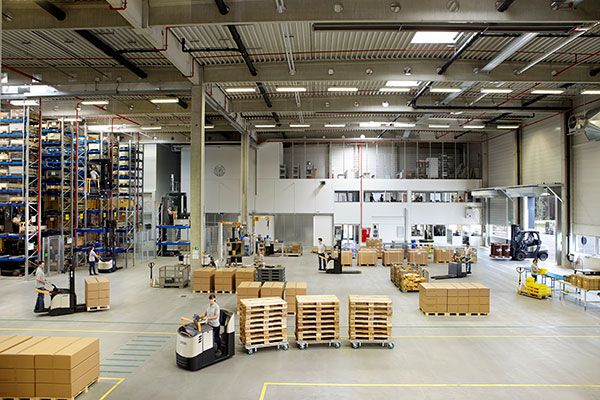
    Crown Equipment Corporation, one of the world’s largest material handling companies, is celebrating 40 years as a leading provider in the Asian market. With the region rapidly rising to become a manufacturing and logistics powerhouse, Crown is helping its customers manage market demands and meet industry challenges through its flexible product range and innovative, customised solutions.

    Pallet management is one of the major issues for emerging distribution companies and small to medium-sized enterprises lacking the knowledge to deal with the challenge. Within Asia, the two most popular pallet sizes are the square 1,100mm x 1,100mm pallet and the 1,200mm x 1,000mm pallet. The U.S., Europe, and Australia, however, use different International Organization for Standardization (ISO) approved pallet sizes, and these diverse pallet types can create challenging problems if not handled correctly.

    Crown’s global approach to research, design, engineering and manufacturing means that it produces a range of lift trucks that offer the best fit to the pallets relevant to the warehouse facilities in multiple regions globally. While the company builds a range of lift trucks to cover all aspects of material handling work, from the dock to the top space of a high bay rack, Crown also customises its standard designs to help solve specific problems, such as modifying the width and position of the legs so that it would work effectively according to the required pallet size.

    With a focus on providing end-to-end material handling solutions, Crown can also identify other areas of the warehouse that can add efficiency when dealing with a range of pallet sizes. Crown consultation includes a detailed review of customers’ operations to help decide the most appropriate material handling equipment and provide inputs to improve productivity, such as enhancing warehouse design and safety culture.

    “When you work with Crown, you are working with people in possession of great product knowledge and a thorough understanding of warehouse supply chain requirements. Knowledge is a major factor that separates Crown from the competition in the Asia Pacific region and the ability to provide customers with an end to end total material handling solution partnership,” said Steven Hill, the Managing Director of Crown Equipment for Southeast Asia.

    Crown set up operations in Southeast Asia in 1978 with the Southeast Asia regional headquarters now located in Singapore. The Asia Pacific region is serviced through an extensive retail branch network, which includes locations across Australia, New Zealand, Singapore, Thailand, South Korea, the Philippines, Indonesia, Malaysia, Vietnam, Taiwan and China.

    Crown has recently launched in a number of new locations with branches in the growth hubs of Johor, Malaysia; Rayong, Thailand; Clark, the Philippines; Incheon, South Korea; and Ho Chi Minh City in Vietnam.

  • Pavilion Hotel Kuala Lumpur Managed by Banyan Tree Opens This Year

    Pavilion Hotel Kuala Lumpur Managed by Banyan Tree Opens This Year

    Pavilion Hotel Kuala Lumpur stands 13 floors above Pavilion Kuala Lumpur, the award-winning six-storey shopping centre, adjacent to the Couture Precinct extension. Right in the heart of the capital of Malaysia, hotel guests have easy access to popular shopping hotspots and attractions – from well-known street markets such as Bukit Bintang to the best dining and nightlife experiences such as Jalan Alor and Changkat Bukit Bintang. They can also explore world-renowned landmarks such as Kuala Lumpur Tower, Petronas Towers and Kuala Lumpur Convention Centre, all within walking distance.

    Impeccable service and unrivalled experiences await guests at Pavilion Hotel Kuala Lumpur. The hotel features 325 rooms and suites decked in contemporary décor for the discerning traveller in need of an urban getaway. These include 115 City Oasis rooms [32 to 43 square metres (sqm)], 60 Courtyard Oasis rooms (38 to 43 sqm) and 45 Grand Oasis rooms (42 to 60 sqm).

    For guests who enjoy a bit more exclusivity, the hotel has four dedicated club floors, including 59 Club City Oasis rooms (32 to 49 sqm) and 20 Club Grand Oasis rooms (42 to 60 sqm). Club room guests have exclusive access to the Club Lounge located on Level 14, relaxing with a delectable breakfast spread, light bites or cocktails while taking in the magnificent view of Kuala Lumpur’s cityscape.

    There are also 26 contemporary suites available for an extra touch of luxe and space: 16 Urban Studio Suites, (64 to 72 sqm), eight Urban Suites (70 to 76 sqm), one Pavilion Suite (113 sqm) and one Presidential Suite (319 sqm).

    In the world of dining, guests are in for a treat with a dedicated and skilful F&B team. Level 8 houses The Courtyard, Pavilion Hotel Kuala Lumpur’s all-day dining restaurant that offers a mouth-watering smorgasbord of Southeast Asian-inspired cuisine. Guests can also dine at Ebisu, a restaurant and bar space featuring an array of Japanese cuisine with a twist. On Level 7M, the Whisky Cove is the place to unwind with a wide selection of whiskies and blends from around the world.

    Pavilion Hotel Kuala Lumpur also offers a range of meeting and event facilities suitable for all occasions. The total event space measures 1,298 sqm, with a ballroom that can accommodate up to 500 persons, a crescent-shaped venue that sits 120 persons in banquet setting and five fully-equipped meeting rooms that can accommodate 40 persons per room.

    The urban escapade is not complete without a rejuvenating experience at the award-winning Banyan Tree Spa. A selection of Asian-inspired treatments are available and with highly-skilled therapists who have undergone a minimum of 350 hours of training at Banyan Tree Spa Academy, guests are in for a pampering time.

    The Sky Gym and Rooftop Infinity Pool are located on Level 18, offering an unparalleled view of Kuala Lumpur. Guests can shop at Banyan Tree Gallery, the hotel’s dedicated retail outlet offering a collection of handicrafts, resort apparels and signature spa amenities.

    “This effervescent and cosmopolitan city is filled with vibrant beauty and diversity. With the flourishing business landscape that Kuala Lumpur possesses, this charming city has become a mecca of sorts for both tourists and business travellers around the world.  In addition, some of the best shopping malls in the world, as well as modern and historical landmarks – are within a stone’s throw away. Pavilion Hotel Kuala Lumpur is in an ideal hotel destination for business travellers and holidaymakers — and even locals looking for a pampering staycation,” said Anders Dimblad, General Manager of Pavilion Hotel Kuala Lumpur and Banyan Tree Kuala Lumpur.

    To celebrate the opening of Pavilion Hotel Kuala Lumpur, the hotel is launching an Opening Celebration package ranging from room up to spa promo deal.

  • Katrina acquires Japanese cuisine  F&B business for S$1.0 million

    Katrina acquires Japanese cuisine F&B business for S$1.0 million

    Katrina Group Ltd. (“Katrina” or the “Group”), an established and recognised Food & Beverage (“F&B”) group specialising in multi-cuisine concepts and restaurant operations, has announced its acquisition of 100.0% of Tomo Izakaya Pte. Ltd. for approximately S$1.0 million.

    Tomo is a company incorporated in Singapore on 23 May 2008. It is principally engaged in the F&B business and currently operates two restaurants serving Japanese cuisine in Singapore, one in Clarke Quay and another in Esplanade Mall.

    The Purchase Price of approximately S$1.0 million comprise the Initial Purchase Price of S$0.6 million and the estimated net tangible assets value of Tomo as at 30 September 2018 of S$0.4 million, as determined from the unaudited management financial statements of Tomo as at 31 August 2018 and mutually agreed between the parties.

    The Purchase Price was derived on a willing-buyer and willing-seller basis and is to be satisfied in cash. The acquisition will be funded through internal resources.

    Commenting on the acquisition, Mr. Alan Goh, Founder, CEO and Executive Chairman of Katrina said, “The acquisition is part of a larger strategy to diversify the Group’s revenue stream across businesses, markets and segments. Sustainable growth is what we hope to achieve and this acquisition is a step in the right direction for us to extend our market reach locally.”

    The acquisition increases the number of restaurants in Singapore operated by the Group to 40 from 38, and the types of cuisines served by the Group to eight from seven.

  • Bitcoin Cash Wallet Cointext Expands to Asia via Hong Kong

    Bitcoin Cash Wallet Cointext Expands to Asia via Hong Kong

    Hong Kong is the primary city in Asia to formally be associated by Cointext, an administration which empowers anybody to send cash to mobile numbers or Bitcoin Cash addresses without Internet, applications, or records. Notwithstanding inhabitants of the Chinese independent domain, Israelis and Palestinians likewise now approach the administration.

    Cointext, an administration which empowers digital money clients to execute transactions straightforwardly over mobile  SMS, has declared that it released bolster for its Bitcoin Cash (BCH) wallet to Hong Kong, and additionally Israel and the Palestinian regions. It is private and secure for casual use.

    “These are important regions for us to connect because they’re financial centers, and Cointext gives them a simple alternative to physical cash,” said founder and lead developer Vin Armani.

    Cointext clients get to their wallets by sending SMS directions like BALANCE, RECEIVE, and SEND to a local number. It never holds funds. Another wallet is in a split second set up the minute the beneficiary gets a message through the administration.  The system does not write data to disk and stores no information about phone numbers, keypairs, or transactions pushed through the system. There’s no database layer. All transactions are settled immediately on-chain. Citizens in the new nations get a Cointext wallet by messaging the word START to their separate numbers: 85257456744 for Hong Kong and 972526230418 for Israel.

    Propelled back in March of this year in the US, Canada, South Africa, Switzerland, Sweden, Netherlands, and the UK, Cointext is a full-highlighted wallet that doesn’t require applications, records, passwords, or even access to the Internet. The administration offers an entrance ramp to the digital money community for anybody with an SMS-empowered phone.  In order to be viable, the CoinText application requires a cryptocurrency that is committed to 0-confirmation speed and on-chain scaling to keep network fees low.

    Not long ago, it was revealed that Cointext has extended its support of six more European nations. On Oct. 1, the organization reported that individuals would now be able to utilize the application to send BCH over SMS in Portugal, Estonia, Germany, France, Austria, and Czech Republic. CoinText collects a fee of 10 Satoshi (.0000001 BCH) per byte to broadcast a SEND message through its API.  In US Dollars, the fee is about $.05 (five cents). This cost is fixed no matter how much perceived value of BCH is moved on the network. This fee may differ by region due to varying costs of SMS gateways.

    Both the Hong Kong and Israel discharges have the default information in English. However, Hebrew and Chinese dialects are in progress of development, the organization said. With this most recent extension to East Asia and in the Middle East, Cointext currently caters to over 25 nations and backings of 15 dialects.

  • Online lending booms in Vietnam, but lack of regulations

    Online lending booms in Vietnam, but lack of regulations

    It is easy these days to find a site for online lending and borrow quickly with simple procedures. Companies have entered the peer to peer (P2P) online lending realm that directly connects borrowers, whether individuals or companies, with lenders, and get up to 2,000 customers a day, Can Van Luc, chief economist of the state-owned creditor BIDV, said.

    This lending format does not require the involvement of an intermediary. It is flourishing because there are always people who have need for loans or want to lend money, and the rapid growth of technology precludes the need to go through intermediary financial institutions, he said.

    “This model has several strong points, including low cost and quick disbursement time, but the worry is it is easy for investors to make use of it for other purposes. There are many lenders who come to the P2P platform not to find borrowers but to invest in other fields and the relationship between the suppliers of the platform, borrowers and lenders is unclear due to the lack of a legal framework.”

    And because of this, lenders have been using gangs to recover their loans and put up their interest rates much higher than the legal cap set by the State Bank of Vietnam.

    Luc said there is a risk for both borrowers and lenders.

    He said authorities need to create a legal framework for this model soon to meet the strong demand in the market for credit.

    Economist Nguyen Tri Hieu argued authorities should create legal regulations related to contracts, interest rate, fees, and other aspects to avoid problems.

    Nguyen Thi Hong, Deputy Governor of the central bank, told a government meeting early this month that online lending has more or less turned into loan sharking.

    It is a no-go area for the central bank but it would monitor and make recommendations to the government to regulate the market, she said.

  • Vietnam’s FastGo app looks to speed across borders

    Vietnam’s FastGo app looks to speed across borders

    FastGo CEO Nguyen Huu Tuat told on Friday that the app will have its own payment system and will “personalize” promotion deals that will match customers’ interests.

    “Our goal is to reach 30 percent of the market share after six months in these two countries,” he said.

    Explaining the choice of these two countries for the company’s first overseas expansion, Tuat said he wanted to start with the easiest neighboring countries to tap.

    “After looking at their national policies as well as the market’s current competitiveness, we believe that Indonesia and Myanmar would be the perfect destinations,” he said.

    “We also have strategic partners, networks and business strategies for us to be successful in these countries.”

    The company is in the process of hiring staff and renting facilities.

    After launching in Hanoi on June 12, the app is now available in Da Nang and Saigon.

    FastGo last month said it has 15,000 taxi and motorbike partner drivers in Hanoi and Ho Chi Minh City, but they are still not a common sight on the streets, unlike the ubiquitous red and green uniforms of Go-Viet and Grab drivers.

    Tuat said he wants FastGo to become one of Southeast Asia’s top 3 ride-hailing apps in the future.

    The company hopes to make its service available in 20 cities in Vietnam and five other Southeast Asian markets, including the Philippines, Cambodia and Thailand, by the end of next year.

  • Huawei lays out AI roadmap

    Huawei lays out AI roadmap

    AI has disrupted many industries and enterprises in recent years.  Huawei believes AI will soon become a “general-purpose technology”, which combines different technologies like cloud, IoT, and big data to help tackle existing and future problems.

    The ICT solutions provider unveils its AI strategy and AI portfolio at the recent Huawei Connect conference in Shanghai.

    “AI offers new business opportunities, strengthens our products and services to become more competitive and future-oriented, and improves our internal operational management and efficiency,” said Eric Xu, rotating chairman at Huawei.

    10 changes shaping the future

    Huawei has identified 10 changes that will help shape the future of AI. They are faster model training; abundant and affordable computing power; AI deployment in different scenarios and the protection of user privacy; data-efficient, energy-efficient, and explainable algorithms; AI automation especially during processes like data labeling, data collection, and model design; practical applications to meet the needs of real-world execution; real-time and closed-loop system; multi-tech synergy between AI and other technologies; one-stop platform; and talent availability.

    Five areas of AI focus

    To pave the way for these changes, Huawei has unveiled its AI strategy in five areas of focus—AI research investment, full-stack AI portfolio, open ecosystem and talent, existing portfolio enhancement, and operational efficiency in Huawei.

    “Our AI strategy is to invest in basic research and talent development, build a full-stack and all-scenario AI portfolio, and foster an open global ecosystem,” said Xu.

    Huawei’s full-stack AI portfolio includes chips, chip enablement, a training and inference framework, and application enablement. Its portfolio can be deployed in various scenarios including public clouds, private clouds, edge computing in all forms, industrial IoT devices, and consumer devices, according to Huawei.

    On the chip level, Huawei announced the launch of two chips—Ascend 910 and Ascend 310, which are touted to accelerate AI adoption in different industries. Xu touted that Ascend 910 has the world’s greatest computing density in a single chip, which can be applied in large-scale distributed training system. Ascend 310 is an efficient AI chip for low-power computing. The chips will be deployed to offer cloud services to customers next year. Its AI portfolio also includes an AI acceleration card, AI server, and AI appliance.

    To foster an open global ecosystem, Huawei aims to develop industry and business alliances with one million AI developers and partners over the next three years. “We believe this target can be achieved through our talent training program, full-stack AI portfolio, and technical collaboration,” said William Xu, chief strategy marketing officer at Huawei.

  • AirAsia wins IDC Digital Transformation award

    AirAsia wins IDC Digital Transformation award

    AirAsia was named Operating Model Master for Malaysia at the IDC Digital Transformation Awards (IDC DXa).

    In a press statement, it said, the award honours companies that have enabled discernible and measurable excellence in their ability to make business operations more responsive and effective by leveraging digitally connected products/services, assets, people and trading partners.

    AirAsia won the award for its deployment of Alibaba Cloud’s Content Delivery Network (CDN) and Web Application Firewall (WAF) solutions to distinguish legitimate customers from crawlers and bots that negatively impacted bookings and revenue, and reduce massive traffic flows from bots that led to additional operational costs.

    Using CDN in China, the airline was able to improve the latency and Round Trip Time (RTT) of airasia.com, and optimise traffic to the website based on user profiles.

    AirAsia also worked with Alibaba security teams to block illicit traffic using an extensive database of known hackers and their patterns, before customising rules and applying them to the WAF.

    The award was presented during the IDC Digital Transformation Summit 2018 held in Aloft Kuala Lumpur Sentral on Tuesday.

    AirAsia Group chief information officer Declan Hogan said, “We tried many security tools, with limited success, prior to moving to Alibaba.

    “Only Alibaba made a consistent, long-lasting impact, and they proved that they’re willing to take the risk to try it. And we appreciate that they were willing to make the investment to prove that they have the technology that
    works.”

    IDC DXa honours the achievements of organisations that have successfully planned and executed the digital transformation of one or multiple areas of their business through the application of digital and disruptive technologies.

  • Globe gets nod to roll out small cells in Metro Manila

    Globe gets nod to roll out small cells in Metro Manila

    The Philippines’ Globe Telecom has arranged special dispensation from the authorities in Metro Manila to allow it to expedite the deployment of over 120 cell sites to improve coverage of the major thoroughfares of Metro Manila.

    The operator has entered a groundbreaking agreement with the Metro Manila Development Authority (MMDA) that will allow it to install small cell antennas along the thoroughfares without needing to secure individual construction permits.

    The regular approval process involves an average of 25 permits from local government units and takes around eight months to complete, according to Globe CEO Ernest Cu.

    “Securing various permits for the construction of telco infrastructure such as cell sites has long been a major challenge of the industry,” he said.

    “We want to thank MMDA for sharing our vision of a connected Philippines by allowing us to deploy sites faster, thus improving mobile experience at the heart of Metro Manila.”

    As part of the agreement, Globe has also agreed to provide logistical support for the MMDA’s critical traffic management operations. The operator deployed wireless infrastructure at the MMDA’s flood control facilities in 2016, and that year also started providing free Wi-Fi service at MRT stations in the city.

  • Spark launches flexible pricing broadband plan

    Spark launches flexible pricing broadband plan

    New Zealand operator Spark has moved to differentiate its broadband offerings by launching a new unlimited fiber broadband plan that offers consumers discounts on months they use less data.

    The company’s “Unplan” branded fiber broadband plan offers unlimited bandwidth for NZ$85 ($55.50) per month.

    But on months where consumers use less than 60GB of data this price reduces to NZ$65, and for months where 60GB to 120GB of data is consumed it reduced to NZ$75.

    An entertainment plan is also available for an additional NZ$10 per month that comes with 6 months of free Netflix and a subscription to the Spark-owned Lightbox SVOD service for the life of the plan.

    The offer is also available via Spark’s fixed wireless broadband service, but restrictions will apply on usage of over 300GB of data in a single month of regular usage of 180GB in an average month.

    “We think it’s a fairer way of offering broadband, as it reflects our customers’ needs. This is the first broadband plan in New Zealand that flexes to reflect customers’ data usage – and it has the potential to save our customers a lot of money,” Spark consumer lead Joe Goddard said.

    “It’s also the first plan that’s only available on new generation broadband options of wireless broadband and fiber.”