Tag: asia

  • Brooks Running arrives in South Korea

    Brooks Running arrives in South Korea

    South Korean fashion retailing group Samsung C&T has announced plans to sell Brooks Running products under exclusive contract.

    The Seattle-based sports apparel label occupies a large share of the American running gear market and is one of the top three running labels globally, with operations in more than 50 countries.

    The company expects to lead the local running market with its expertise and technology to match the growing wellness trend and number of runners in the country, according to an official spokesperson.

    The brand’s five-level flagship store will open in the fashionable district of Gangnam in southern Seoul.

  • Indonesia Raises Import Taxes on 1,000-Plus Goods to Support Rupiah

    Indonesia Raises Import Taxes on 1,000-Plus Goods to Support Rupiah

    Indonesia will raise import taxes on more than 1,000 goods, ranging from cosmetics to cars, as part of measures aimed at cutting imports and supporting a weak rupiah, Finance Minister Sri Mulyani Indrawati said on Wednesday (03/09).

    The import tax will be raised to up to 10 percent on 1,147 mostly consumer goods, from an existing 2.5 percent to 7.5 percent, effective next week, Sri Mulyani said in a news briefing.

    “We want to be alert, but we also want to be selective. These are unusual times, so we are carrying out measures that we wouldn’t do during normal times,” Sri Mulyani said.

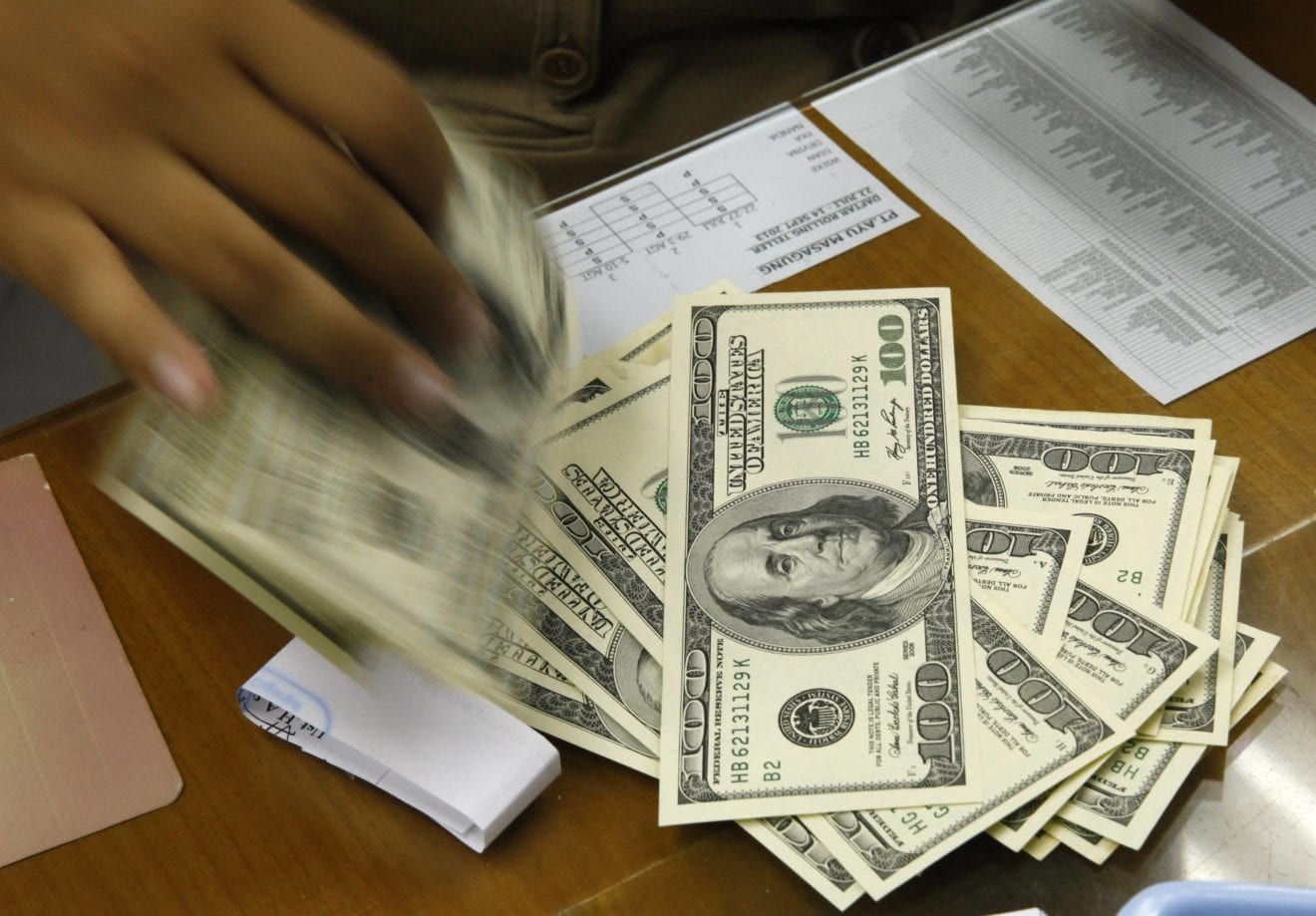
    The rupiah dropped to its weakest level since the 1998 Asian financial crisis this week, closing at 14,930 per dollar on Wednesday. Stocks tumbled the most in nearly two years and bond prices also fell.

    The battered currency has been one of emerging Asia’s worst performers as investors dump assets as US rates rise and amid fear of contagion from crises in Argentina and Turkey.

    Tariffs will be kept at 2.5 percent for raw materials used by the manufacturing industry because of the important role in domestic production, Indrawati said.

    Consumer goods such as ceramics, audio speakers and swimwear will have a 7.5 percent import tax applied. Products that can be made domestically ranging from soap and shampoo to kitchen appliances will be taxed at 10 percent.

    Luxury cars will also be taxed at 10 percent, while Industry Minister Airlangga Hartarto said the import of cars with engine capacity of 3,000 cc and above will be stopped.

    “This is a good chance for local producers to penetrate our own domestic market that is usually filled with imported goods,” Sri Mulyani said.

    Trade Minister Enggartiasto Lukita said the higher taxes did not breach free trade rules set by the World Trade Organization because importers can offset the tariffs on their tax liabilities.

    Government data showed goods covered by the taxes were worth $5 billion in the first eight months of this year and $6.6 billion throughout 2017.

    The government will also relax rules on coal, palm oil and rattan exports, Enggartiasto said, without providing details.

    It is unclear whether importers would pass on the higher tariffs to consumers, though Enggartiasto predicted the impact on inflation would be minimal.

    Some manufacturers relying on imported raw materials are already feeling the impact from the rupiah’s slump.

    Unilever Indonesia director Sancoyo Antarikso said his company had adjusted some prices in August and was reviewing costs to preserve profitability, growth and support brands.

    Agus Nurudin, managing director of market researcher Nielsen Indonesia, expects the price of food containing dairy, soy, beef and wheat to rise if the rupiah falls further.

  • India is Hyundai’s land of opportunity

    India is Hyundai’s land of opportunity

    Hyundai Motor is still working hard to woo Indian consumers as the world’s second-most populous country emerges as one of the fastest growing markets in the global auto industry.

    Hyundai Motor Vice Chairman Chung Eui-sun made a speech at the first Move Global Mobility Summit on Thursday, presenting the automaker’s plan to pursue future mobility and its dedication to the Indian market.

    The summit is a two-day state-run event taking place in New Delhi under the theme “Shared, Connected and Zero Emissions Mobility.” More than 1,200 attendees, including the CEOs of auto giants and start-ups, will participate in discussions centering on future mobility.

    “Hyundai Motor will actively pursue to become a smart mobility solution provider from a manufacturer,” Chung said in his speech.

    “I am certain that innovation in mobility will improve not only people’s lives but also improve environment and energy issues at the same time. It will also act as a means to connect the urban with the suburban and a person with another person,” he added.

    Chung also unveiled plans to launch a total of four eco-friendly vehicles in India in the near future, three of which will be electric models and the fourth a hydrogen-powered Nexo.

    Hyundai Motor, the world’s fifth-largest automaker, has seen huge potential in India’s auto market for some time.

    India is currently the world’s fourth-largest auto market, posting a year-on-year sales growth rate of 9.5 percent according to 2017 market data.

    Hyundai Motor established its Indian office in 1996 and has been using the regional office as an export hub, sending cars made there to more than 90 countries.

    Hyundai Motor is currently the No. 2 player in India. It sold some 320,000 units this year as of July, posting a year-on-year growth rate of 7.5 percent. The i20 hatchback and small SUV Creta are the most popular models.

    Most recently, the automaker has made a hefty investment in local car-sharing start-up Revv.

    Hyundai’s smaller affiliate Kia Motors belatedly entered the Indian market in 2017 by starting the construction of a local factory with a $1.3 billion investment. It will start sales of its models from next year.

    At the forum, Hyundai Motor summed up its strategies in pursuing future mobility with three keywords – clean mobility, freedom in mobility and connected mobility.

    “India has been taking significant steps toward the future it has long dreamt of,” Chung said. “[The country] will play a leading role not only in the manufacturing industry but also in ICT in the face of the fourth industrial revolution as well,” he added.

    According to Hyundai Motor, Chung attended a tea meeting with Indian Prime Minister Narendra Modi and 50 other global companies CEOs after making the speech on Thursday.

    The CEOs of Maruti Suzuki, Mahindra & Mahindra, Tata, Toyota, Ford, Mercedes-Benz, Uber and SoftBank all attended the summit.

  • Shinsegae opens Show&Tell stores for men

    Shinsegae opens Show&Tell stores for men

    South Korean retail conglomerate Shinsegae has launched a lifestyle editorial shop for men.

    The “Show&Tell” store opened in two Shinsegae locations; one at the Starfield luxury shopping complex in Hanam, and the other as an outlet in Yeoju city.

    Described as “providing a new playground for men,” Show&Tell displays a range of local and foreign brands priced to attract consumers to visit offline malls.

    Shinsegae has recently introduced giant luxury and leisure shopping malls locally and a discount chain store in Japan.

  • Astra Sets Up Joint Venture With Hong Kong’s WeLab to Provide Loans to Indonesians

    Astra Sets Up Joint Venture With Hong Kong’s WeLab to Provide Loans to Indonesians

    Diversified Indonesian conglomerate Astra International has established a joint venture with Hong Kong-based technology company WeLab to provide financial products and loans to unbanked people, the company announced on Thursday (06/09).

    “We hope to expand our digital portfolio, while we also aim to further encourage financial inclusion in Indonesia. We continue to seek partners with the industry’s leading companies. We believe WeLab is at the forefront of fintech innovation.

    Through this partnership, we want to offer innovative solutions to provide benefits to consumers throughout Indonesia,” Astra International director Suparno Djasmin said in a statement.

    Astra subsidiary Sedaya Multi Investama and WeLab established a joint venture, Astra WeLab Digital Arta (AWDA), to give unbanked people access to loans.

    The joint venture, which uses big data analysis to better assess customers’ financial profiles, will offer loan products for retail consumers that can be accessed by smartphone, while also providing financial solutions to corporate customers.

    AWDA will launch its mobile application, Maucash, in the third quarter of this year to allow customers to apply for loans anytime and anywhere.

    The new entity sees massive potential in Indonesia’s fintech industry and seeks to capture the untapped potential.

    Supported by rapid growth in the adoption of smartphones, Indonesia recorded a 7.9 percent year-on-year increase in the number of internet users to 143.26 million last year, according to the Indonesian Internet Service Providers Association (APJII).

    An APJII survey showed that about 44.16 percent of respondents use smartphones to access the internet, while 30.28 percent do so with both computers and mobile phones and the remainder use computers only.

    “We believe our advanced technology, combined with Astra’s operational experience in the Indonesian market, can provide new experiences for consumers in Indonesia,” said Simon Loong, WeLab founder and chief executive.

    WeLab, founded in 2013, operates Woalaidai, one of the largest mobile credit delivery platforms in China. It also operates WeLend, an online loan platform in Hong Kong.

    The company also partners with traditional financial institutions that utilize WeLab technology to offer fintech-based solutions to their customers.

  • Uber Eats aims to boost presence with CJ deal

    Uber Eats aims to boost presence with CJ deal

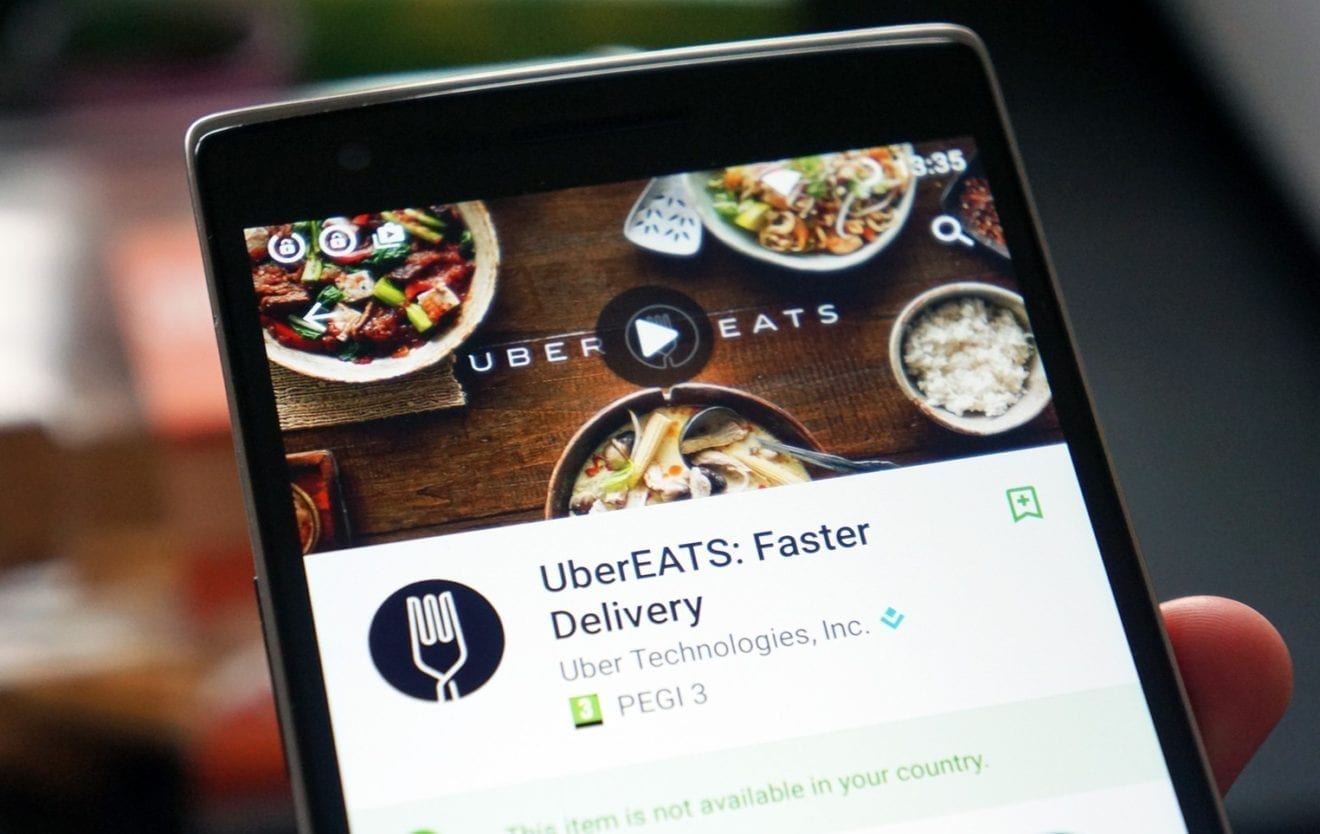
    U.S. food delivery app Uber Eats said Wednesday that it has signed a partnership with Korean food service company CJ Foodville in the latest move to boost its presence in the country’s growing food delivery market.

    Uber Eats said major CJ Foodville brands, such as VIPS, Cheiljemyunso, The Place and Juice Solution, would be easily accessible through its app in Seoul, a heavily populated city with a population of some 10 million.

    Eight out of 10 Koreans use smartphones, and they increasingly order popular food items through mobile apps.

    “We are excited about our partnership with CJ Foodville, the national representative food service brand, bringing its diverse selection to our customers,” Jean-Marc Serayssol, head of Asia sales at Uber Eats, said of the deal signed last Tuesday. “With this partnership, Uber Eats customers can now order CJ Foodville brands at the simple tap of a button, and Uber Eats will continue to expand to provide our services anytime, anywhere.”

    The food franchise unit of Korean food and entertainment conglomerate CJ Group has about 1,500 franchises across Korea and nearly 400 franchise stores in seven countries, including the United States, China and Vietnam. CJ Foodville is planning to reinforce the collaboration with Uber Eats overseas.

    Uber Eats, a food delivery service app run by ride-sharing pioneer Uber Technologies, began its business in Korea in August last year and currently has more than 1,500 local restaurant partners in Seoul.

    Uber Eats did not disclose its share in Korea’s estimated 12 trillion won ($10.7 billion) food delivery app market dominated by homegrown apps, such as YoGiYo and Baedal Minjok.

    Uber Eats is part of Uber’s attempt to expand its presence in Korea, where the company’s flagship ride-sharing service, Uber X, was banned in 2015 because it conflicted with the local transportation law.

  • Two new-format Maison Boucheron stores opens in HK

    Two new-format Maison Boucheron stores opens in HK

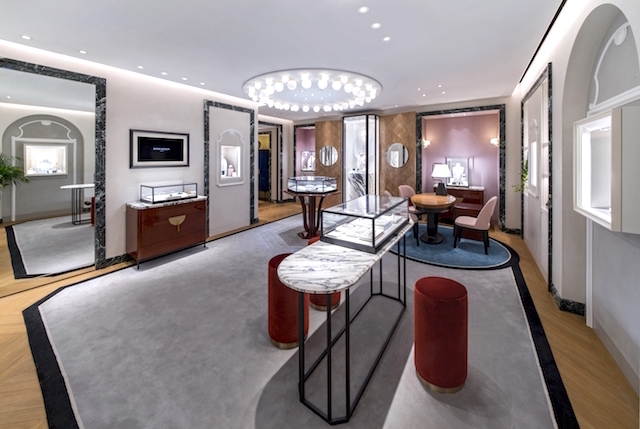
    Heritage jewellery design house Maison Boucheron has opened two new boutiques in Hong Kong.

    The boutiques, located at Pacific Place and Admiralty and IFC mall in Central, showcase a Parisian design ethic that recalls the historical Boucheron Hotel Particulier on the French capital’s Place Vendome. The Pacific Place boutique features a personal one-on-one experience in a dedicated VIP room.

    The openings further strengthen the presence of Boucheron in greater China as it celebrates its 160th anniversary this year. They represent the first steps in the brand’s expansion in the region, with more new boutiques marked for Hong Kong, Macau, Shanghai and Beijing. There are currently more than 55 Boucheron boutiques across the world.

  • Retailers acknowledge the new paradigm shift in consumer behavior

    Retailers acknowledge the new paradigm shift in consumer behavior

    Indian retail is coming to terms with the digital disruption that is converging the online and offline retailers to explore customer insights using artificial intelligence in the new landscape for retail that is set to usher.

    At the two-day conclave of India Retail Forum 2018 that concluded today, experts across the spectrum deliberated on the affluence index and retail potential in the country and the tectonic shift in changing space allocation at shopping malls towards food and entertainment as online takes precedence in shopping.

    With the advent of the online shopping, malls are getting reconfigured with food and beverage along with entertainment now allocating for up to 40 percent for the space compared to 15-17 percent in the past few years, said Ashutosh Limaye, Director & Head, Consulting Services, ANAROCK Property Consultants.

    Mobile penetration on the other hand has boosted online shopping with lower cash on delivery and more through payment gateways. Moreover, with messaging on the rise, the internet linked mobile usage is set to reshape the retail business with mobile moving from being a mere technology to consumer behavior.

    “By 2020 mobile will drive the majority of all sales but 90 percent plus of these sales will still occur in stores,” said Prateek Sinha, Industry Manager, Retail & E-commerce, Facebook India.

    Further, mobile is increasingly reshaping the retail business with 2.2 hours per day mobile usage per young adult and 80 percent users using net on their mobile while watching TV, he said.

    Over the past four years, share of e-commerce transaction over mobile has rose to 29 percent from 7 percent while Cash on Delivery has declined to 16 percent from 31 percent.

    “Decreasing data prices and a ubiquitous mobile penetration is driving the always online consumer with attractive online deals and discounts,” said Anurag Mathur, Partner & Leader – Consumer Goods & Retail, PwC Strategy.

    Amid the rising online shopping fueled by internet and mobile penetration, the digital disruption has impacted the brick and mortar retail malls, that had seen record supply and absorption in 2011.

    Since then there has been a rationalization of supply in recent years. However, the future looks promising with healthy supply pipeline and robust absorption going forward, said Shajai Jacob, Director and Head, Marketing, JLL India.

    The two-day conclave also gave indications about increasing amicable relationships between offline and online players with global retail giants like Walmart, Amazon, IKEA showing interest in the Indian growth story.

  • Go-Jek Indonesia to Partner With Peer-to-Peer Lending Firms

    Go-Jek Indonesia to Partner With Peer-to-Peer Lending Firms

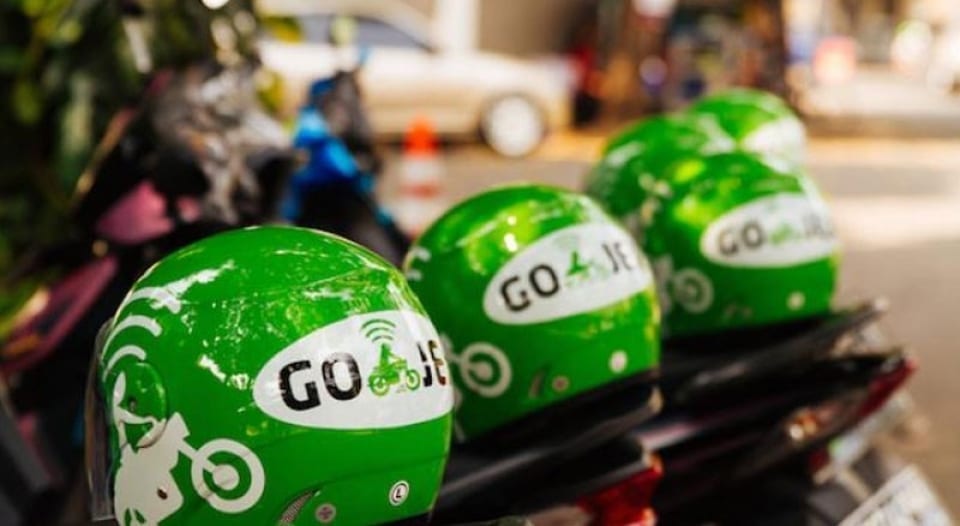
    Indonesian ride-hailing and online payment company Go-Jek said on Tuesday (04/09) that it will partner with three peer-to-peer lending firms as the startup looks to expand its financial technology services in Southeast Asia’s biggest economy.

    Go-Jek, whose backers include Google and China’s Tencent Holdings, has grown rapidly since launching eight years ago in Indonesia, a country with a population of more than 250 million people.

    The company already offers a wide range of app-based services outside of ride-hailing, such as food delivery or movie tickets, as it competes with the other main ride-hailing app operating in Indonesia, Singapore-based Grab, which bought the Southeast Asian business of Uber Technologies earlier this year.

    Go-Jek said it had formed a strategic partnership with Indonesian peer-to-peer lenders Findaya, Dana Cita and Aktivaku.

    “We believe that a strong collaboration between financial services providers and technology companies can reach a wider range of people who have difficulty accessing financial services, such as unbanked communities,” Go-Jek president Andre Soelistyo said in a statement.

    P2P lending is an internet-based business where small-business owners or individuals usually without access to bank credit can seek loans – helping alleviate a financing shortfall estimated at more than $73 billion in Indonesia.

    The emergence of P2P lending platforms has so far been welcomed by Indonesia’s financial regulators which see them as offering a much needed service to cash-strapped businesses and consumers at a time when Indonesia’s economy has been hobbled by sluggish bank lending.

    “This collaboration is very positive to increase financial inclusion in Indonesia,” said Hendrikus Passagi, who oversees fintech at the Financial Services Authority (OJK).

    Go-Jek founder Nadiem Makarim said in August that the platform has 20 million to 25 million monthly users, for whom it processes more than 100 million transactions.

    Go-Jek’s payment system, known as Go-Pay, has emerged as one of the most popular mobile payment platforms in Indonesia and last year Go-Jek acquired three smaller payment system fintech firms.

    Go-Jek said the partnership with P2P lenders would be separate from its Go-Pay payment vertical.

  • Smart vending machine sells a lot in China, Japan

    Smart vending machine sells a lot in China, Japan

    The deployment of smart vending technologies will surge in the Asia-Pacific as high-tech unmanned retail continues to attract major investment.

    The demand for technology-driven frictionless retail experiences, combined with cheap production costs and limited data privacy barriers, is driving rapid adoption in China, Japan, and South Korea, leaving the rest of the world behind, according to a report by ABI Research.

    By 2023, the Asia-Pacific will be home to more than 1 million automated retail units and 4.5 million smart vending machines, the market-foresight advisory firm concludes.

    “The initial growth rate of automated retail units in the Asia-Pacific market, driven primarily by China, has already been astonishing and will continue to grow exponentially over the next five years,” said Nick Finill, senior analyst at ABI Research.

    “This will create a vast regional disparity in adoption figures, largely a result of technological and societal factors. Ultimately it signals a strong future for smart retail in East Asia,” he said.

    But the unprecedented growth of automated retail units in Asia is just half of the smart vending story. Intelligent vending machine trends also indicate how the wider smart vending market is gravitating eastwards. While North America is currently home to 76 per cent of total smart vending machines, by 2023 China will become the primary market for intelligent vending machines.

    Smart vending is emerging as an additional retail channel offering unique benefits versus traditional brick and mortar retail and e-commerce. Intelligent vending machines and automated retail units, equipped with advanced customer and operational analytical capabilities, offer immediate convenience to the customer while enabling additional revenue streams to be exploited by operators and partners.

    “Successfully entering new markets, attracting new customer segments, monetising data, and cutting operating costs can all be achieved simultaneously in addition to profiting from direct product sales,” said Finill.

    “Smart vending is therefore not just a powerful retail channel for the customer, but also potentially a valuable marketing tool for retailers and brands.”

    The combination of mobility and smart vending is also suggesting that further innovation is around the corner for the unattended retail market. Several proofs of concept have emerged which enable autonomous vehicles to act as mobile vending machines, opening up new opportunities for customer-focused operators to better adapt to consumer needs.

    The traditional smart vending market is being transformed by established market leaders such as Intel, Swyft, Nayax, and Sierra Wireless; in addition to emerging players such as Invenda, DeepMagic, and DeepBlue Technology.

    The findings are from ABI Research’s report Smart Vending Trends and Market Opportunities.

  • Indonesia’s Forex Reserves Decline Around $400m in August

    Indonesia’s Forex Reserves Decline Around $400m in August

    Indonesia’s foreign exchange reserves slipped around $400 million in August to $117.9 billion, Bank Indonesia said last Friday, partly because of the central bank’s intervention to defend the rupiah.

    The rupiah has lost around 9 percent of its value so far this year. The currency was trading around its weakest levels in 20 years this week, closing at 14,815 per dollar on Friday.

    The end-August reserves level, sufficient to meet 6.8 months of imports, “remained adequate as they will be supported by our confidence in stability, better economic prospect and positive export performance,” the central bank said in a statement.

    From February until August, the reserves had declined $14.1 billion.

  • LG vows to invest more in Austrian affiliate ZKW

    LG vows to invest more in Austrian affiliate ZKW

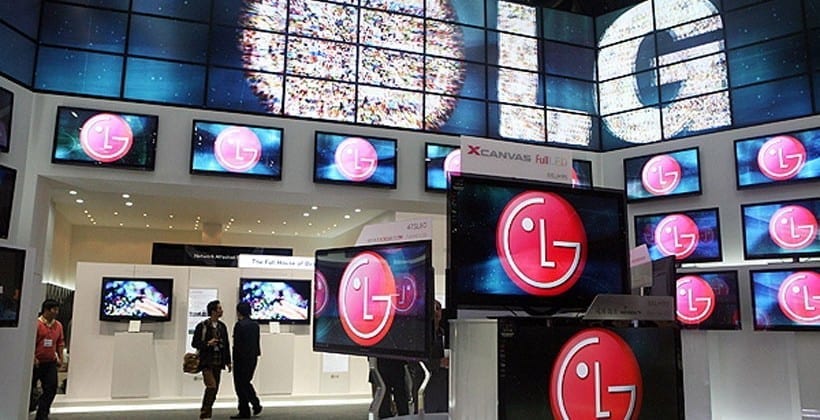
    LG Electronics said Friday it will continue to invest more in Austrian automotive lighting system firm ZKW Group, which was purchased by the South Korean company earlier this year.

    In April, LG Electronics bought a 70 percent stake in ZKW, with the holding firm LG Corp. purchasing a 30 percent stake. The 1.4 trillion-won ($1.24 billion) deal marked the biggest merger project carried out by LG to date.

    The Korean tech giant said LG Vice Chairman and CEO Jo Seong-jin visited the headquarters of ZKW, located in Wieselburg, Austria, earlier this week, sharing the company’s vision with the new sister firm.

    Jo stressed ZKW will play a great role in LG’s future projects and promised to give leeway to the Austrian-based firm’s management based on trust.

    In April, LG said it will retain the current management at ZKW even after the acquisition and guarantee the employment of its Austria-based staff for the next five years. LG also vowed to continue making investments in ZKW.

    ZKW, meanwhile, announced its new logo to mark a new start after becoming a member of the LG family.

    The Austrian firm was established in 1938 and is specialized in the production of premium automobile lights.

    LG Electronics plans to increase investments in ZKW to bolster its automotive parts business.

  • Sandro’s parent enjoys double-digit growth

    Sandro’s parent enjoys double-digit growth

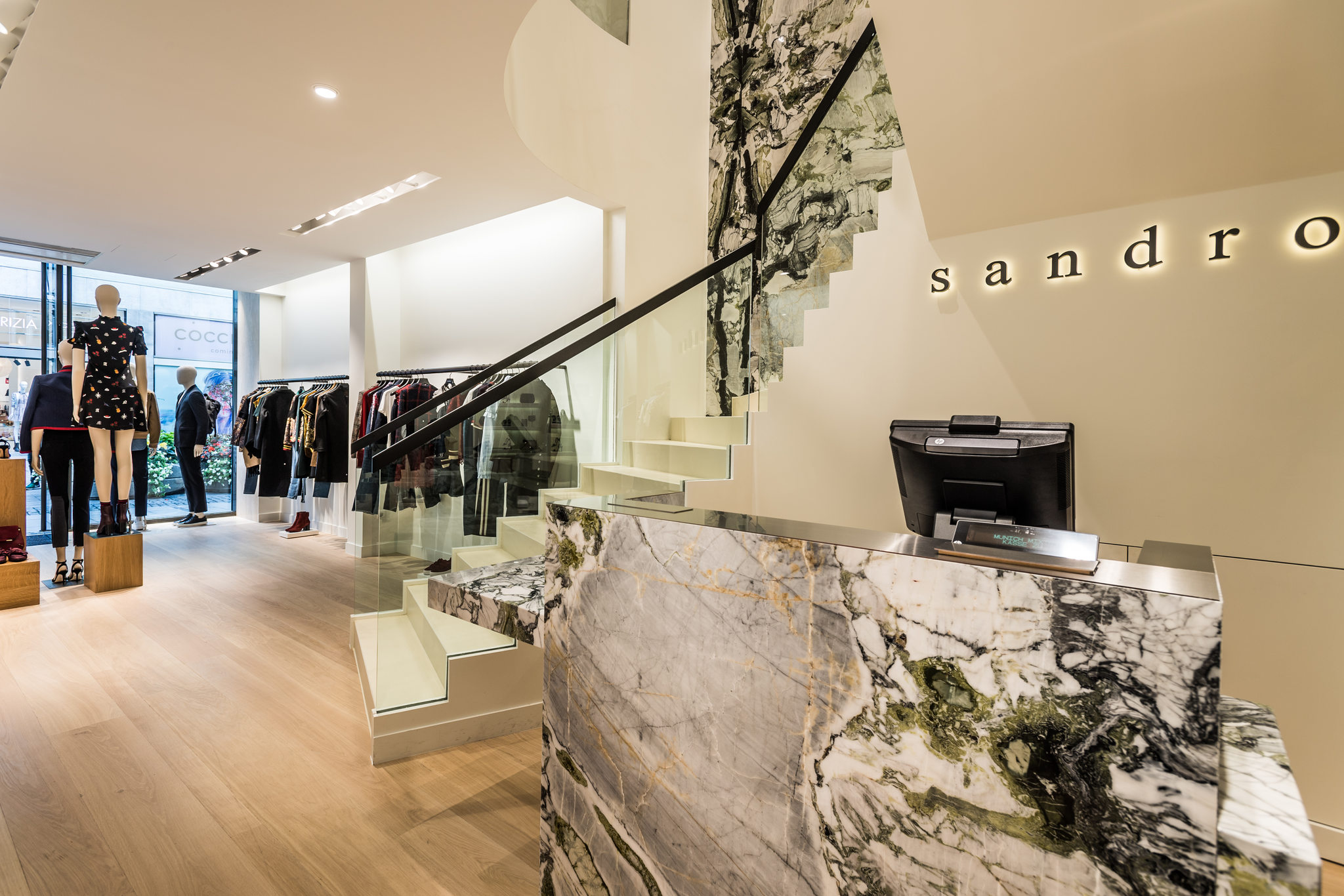
    Affordable luxury fashion group SMCP has cited Asia as one of the reasons for double-digit growth across all its brands in the first half year.

    The French-headquartered affordable luxury brand has reported global consolidated sales of  €493.3 million, up 15.5 per cent at constant currency, driven by “outstanding” growth outside Europe of 27.2 per cent.

    CEO Daniel Lalonde said double-digit growth was achieved across all brands, together with “strong profitability” and a resulting reduction in debt.

    SMCP owns three contemporary Parisian fashion brands: Sandro, Maje and Claudie Pierlot. As at the end of last year, the brands were available at 1300 points of sale in 39 countries.

    Globally, like-for-like sales growth remained strong over the first semester, reaching 5.8 per cent, “driven by the dynamism of the brick and mortar store network as well as the exceptional results of the digital strategy,” which reached 14.3 per cent of net group sales.

    “This achievement underlines the effectiveness of our strategy, to generate profitable growth through the dynamic expansion of our core business, the success of our e-commerce approach and new store openings in highly attractive locations,” said Lalonde.

    “It also attests to the creativity and talent of our teams across the world. This well-executed strategic roadmap will continue to drive our long-term vision for the group.”

    Adjusted earnings before tax increased by 14.8 per cent from €73.1 million to €83.9 million in the first half, driven by strong sales growth and expanded margins.

    “This margin expansion is the result of a strong retail margin driven by the growing share of e-commerce and Asia-Pacific … while maintaining the pace of investment to support future growth.”

    Group net income rose from €1.1 million in the first half of last year to €27.4 million during the same period this year.

    Figures for Asia were not broken out, but the company has recently invested significant amounts in opening stores in Hong Kong and in Southeast Asia.

  • US, China dig in as Trump prepares to impose fresh tariffs

    US, China dig in as Trump prepares to impose fresh tariffs

    With US President Donald Trump gearing up to impose tariffs on US$200 billion (RM828 billion) on Chinese goods and Beijing certain to retaliate against any measures, the world’s two biggest economies are locked in an escalating trade war, with no resolution in sight.

    The United States is negotiating with Canada this week to try and finalise a deal to modernise the North American Free Trade Agreement (Nafta), an outcome some in the White House say will allow Washington to turn up the heat on Beijing.

    “The hope is that this (Nafta) puts a lot of pressure on the Chinas of the world to help us negotiate better reciprocal trade deals,” Kevin Hassett, chair of the White House Council of Economic Advisers said.

    The world’s two largest economies have already applied tariffs to US$50 billion of each other’s goods. Talks aimed at easing tensions ended last month without major breakthroughs, and Washington appears emboldened by a sell-off in Chinese markets and a weakening economy.

    China is planning two choreographed celebrations of free trade – a major import fair in November and the 40th anniversary in late December of its move towards market reforms. However, Chinese government advisers are tamping down expectations either occasion will yield measures that could defuse tensions.

    “China seems unable or unwilling to announce major liberalisations that could be termed ‘confidence building
    measures’ or ‘down payments’ on expected near-term reforms,” Craig Allen, president of the Washington-based US-China Business Council, said in a letter to members over the weekend.

    “We know that the President has received reports that the Chinese economy is struggling – reports that we believe are overstated – and thus he may believe that additional pressure might be effective in the short-term,” Allen said.

    Washington is demanding Beijing improve market access and intellectual property protections for US companies, cut industrial subsidies and slash a US$375 billion trade gap.

    The Trump administration is ready to move ahead with a next round of tariffs after a public comment period ends at midnight in Washington on Thursday (Friday afternoon Malaysian time), but the timing is uncertain, people familiar with the administration’s plans said.

    The new duties will start to hit consumer products directly, including furniture, lighting products, tyres, bicycles and car seats for babies.

    Trump said he was not prepared to make a deal with China “that they’d like to make”.

    “We’ll continue to talk to China,” he said at the White House on Wednesday. “But right now we just can’t make that deal. In the meantime, we’re taking in billions of dollars of taxes coming in from China, with the potential of billions and billions of dollars more taxes coming in.”

    Given the smaller amount of goods China imports from the US on which it could slap duties, Beijing has vowed to hit back with unspecified “qualitative” and “quantitative” measures, actions perceived within the US business community as likely to be increased customs and regulatory scrutiny.

    Beijing appears to be bracing for a long fight.

    Official Chinese media is asserting that Trump’s trade war is aimed at containing China’s rise, a perception solidifying Beijing’s resolve not to buckle under US demands.

    In light of such a US agenda, China should “maintain strategic determination” and “take care of our own matters”,
    Long Guoqiang, vice-president of the State Council’s Development Research Centre said.

    “The Soviet Union was pulled into an arms race in the Cold War. Japan’s economy became a bubble in a trade war. These profound lessons are close at hand,” Long said.

    While US businesses in China do not yet appear to face widespread retaliation, some company officials have said they are bracing for blowback. Some are shifting supply chains to avoid tariffs.

  • Property Sector Will Continue to Face Headwinds in 2019

    Property Sector Will Continue to Face Headwinds in 2019

    Indonesia’s property sector will continue to face headwinds next year amid the usual uncertainties associated with an election year, a declining rupiah and rising interest rates, global credit rating agency Moody’s Investors Service said.

    In a report titled “Indonesian Property Developer Chartbook,” Moody’s rated eight of the country’s property developers, Bumi Serpong Damai, Lippo Karawaci, Sentul City, Intiland Development, Alam Sutra Realty, Agung Podomoro Land and Modernland Realty.

    “The chartbook [report] provides updated snapshots of the developers’ business positions, marketing sales trends, revenue, profitability, cash flow, liquidity, leverage and interest coverage ratios, debt maturity profiles, foreign exchange exposure and covenant quality scores,” Jacintha Poh, vice president and senior analyst at Moody’s Investors Service, said in a statement on Tuesday (04/09).

    Moody’s said further rupiah depreciation, along with rising interest rates, will hamper growth in the property sector.

    Bank Indonesia has raised interest rates by 125 basis points since May this year and many observers expect further increases towards the end of the year.

    The rupiah has depreciated by 11 percent against United States dollar so far this year and traded at 14,927 against the greenback on Wednesday, near its lowest point in 20 years.

    Moody’s found that five of the eight property companies did not have sufficient cash as of June 30 this year to repay their short-term debt. These are Agung Podomoro, Modernland Realty, Intiland Development, Sentul City and Lippo Karawaci.

    For example, Agung Podomoro Land had Rp 1.3 trillion ($87 million) in internal cash, while its short-term debt stood at Rp 5.9 trillion as of June 30. Intiland Development had Rp 976 billion, while its short-term debt stood at Rp 4.61 trillion.

    But the global firm noted that some of these companies have replaced short-term debt with longer-term debt, which in the end could improve their cash coverage ratios.

    Higher debt-funded capital expenditure and a surge in the cost of funding will further weaken some developers’ leverage and interest coverage ratios over the next 12 to 18 months, Moody’s said.

    The ratings agency also highlighted that most of the developers will generate operating cash flow over the next 12-18 months, but only Pakuwon Jati, Bumi Serpong Damai and Intiland Development will be able to generate free cash flow – allowing them to expand, reduce debt or pay dividends to shareholders.

    However, Moody ‘s still expects demand for property to recover next year. The increase in new property projects, sales promotions and lower property prices will boost demand and support an improvement in marketing sales.

    Moody’s said in the report that the marketing sales of Bumi Serpong Damai, Alam Sutra Realty and Modernland Realty have exceeded 50 percent of their full-year target in the first half.