Tag: asia

  • Lego Hong Kong embraces its 60th anniversary with positive energy

    Lego Hong Kong embraces its 60th anniversary with positive energy

    Lego Hong Kong operations continue to expand as the iconic toy brand marks its 60th anniversary.

    In an interview, the brand’s regional GM Troy Taylor explained how in such a well-established market as Hong Kong (as opposed to neighbouring regions where the brand’s reputation is still emerging) the company’s strategy is focused on retaining the attention of children and fans.

    “We make sure everything we do benefits children, and they see value playing with our products,” said Taylor. “And I think the educational purpose becomes so much more important now than ever before, because parents are looking for something to get their children away from the screen. We offer something that can help break that, and help children learn, but they are learning through play, so they don’t actually realise they are learning… that’s the value of our brand.”
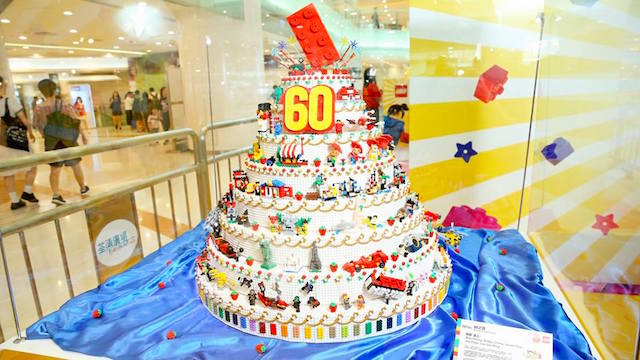
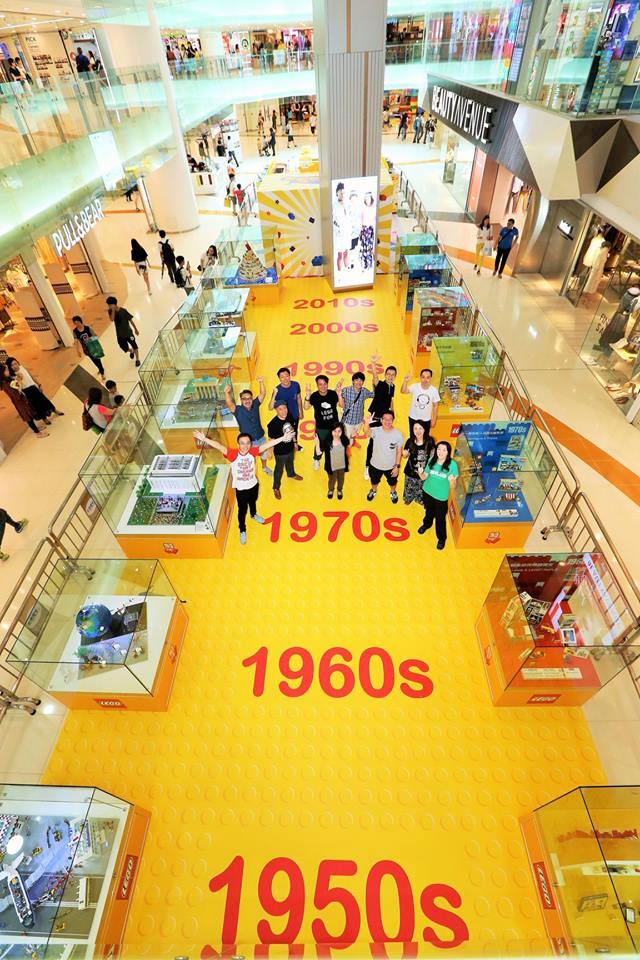
    Anniversary celebrations for Lego Hong Kong were marked with the opening of the Tsuen Wan Plaza X Lego Our Playground.

    The local growth comes in the wake of a decade-long sales boom that came to an end for the Danish toymaker last year. At the time, the company warned it may not achieve growth again for up to two years. The unexpected sales decline followed a slump in growth from 25 per cent in 2015 to just six per cent the following year, and coincided with the dismissal of both its CEO and eight per cent of its workforce.
    Part of the blame for the decline was placed on the unsustainably strong demand for its Star Wars merchandise following the 2015 movie, at a time when the proliferation of smartphones within developed markets was adding a lot of competition for the attention of children.

    Hong Kong is traditionally a particularly strong market for Lego. Three years ago, the local Lego Certified Store reported pulling in the highest spending per square foot of any branch worldwide, according to sole distributor Kidsland International Holdings’ VC Dr William Lo. The store distinguished itself by marketing to adult fans – Hong Kong’s community of adult fans is the most engaged in the world, with the highest number of active fans per capita.
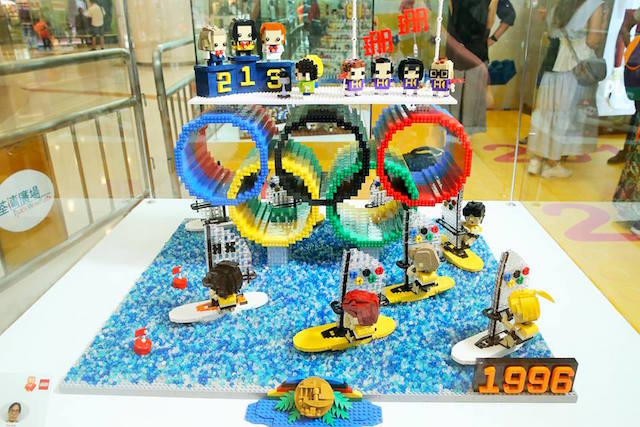
    This year, Lego has focused on grassroots marketing strategies. “We have support from our shopping mall partners,” said Taylor. “Not only do events boost the numbers in the malls, they also allow customer to have ‘brick-in-the-hands’ moments with Lego. It gives family reason to get out of the house, and bond the family.”

    The brand has also embraced technological marketing strategies, including augmented reality, creation-sharing and remote control apps, as well as a Lego Facebook filter.

    “Lego bricks will always be the core of everything we do, but we realised the environment changes, and we adapted,” said Taylor. “We are still true to ourselves, we are still true to who we are as a company. But we have to evolve with the changing ways that people consume.”


  • More than 80 pct of IT workforce has start-up dreams

    More than 80 pct of IT workforce has start-up dreams

    A survey of 1,100 IT workers by VietnamWorks has found that 82 percent want to start their own companies in future.

    However, 58 percent said they have never been involved with a startup. Forty one percent had been involved with startups at least once.

    They listed artificial intelligence (AI), automated products and blockchain as the top 3 fields they wished to enter.

    More than half said they are willing to move overseas if presented with good offers to work for a start-up in blockchain or AI.

    A quarter of the respondents said their companies plan to expand into AI or blockchain in the next three years.

    Gaku Echizenya, CEO of Navigos Group, which owns executive search company VietnamWorks, said to lessen the danger of a tech brain drain, companies should focus on talent retention, creating good conditions for innovating products and opportunities to come in contact with new technologies.

    Now only a small number of enterprises use innovative technologies like AI (19 percent) and blockchain (9 percent), the survey found.

    World Economic Forum President Borge Brende has said Vietnam has to proactively pursue technologies related to AI and the Internet of Things as it prepares for the fourth industrial revolution or Industry 4.0 as it is dubbed.

    Eighty six percent of the respondents were optimistic about the impacts AI and blockchain would have on human life.

    They predicted AI would greatly benefit Vietnam in the next 5-10 years as it can provide people with better solutions after analyzing large data (39 percent); fully automate industry (24 percent) and create smart robots to perform dangerous tasks.

    The poll also found that more tech workers want to become specialists with focused skills and knowledge rather than be supervisors with soft and leadership skills.

    However, language proficiency was still the biggest limitation for many, with only 27 percent saying they are fluent in speaking, reading and writing English. Eighty four percent of workers in this industry have a bachelor’s or master’s degree or a doctorate.

    Earlier this month Vingroup announced the setting up of a research fund worth VND1 trillion ($44 million) for its Institute of Big Data to focus on fields like machine learning and AI.

  • Ermenegildo Zegna acquires Thom Browne

    Ermenegildo Zegna acquires Thom Browne

    The Italian company Ermenegildo Zegna Group has acquired 85 percent of the business at a $500 million valuation. Browne is the sole other shareholder.

    The American designer label, best known for its intellectual and imaginative take on silver-spoon tropes — most notably, its signature shrunken grey suits — is partnering with a strategic investor on a bold expansion plan that will likely broaden its customer base and reach.

    Today, Thom Browne announced that Italian menswear stalwart Ermenegildo Zegna Group has acquired an 85 percent stake in the company, valuing the business at approximately $500 million. Browne, the label’s founder and chief creative officer, is the only other remaining shareholder.

    The transaction marks a brisk, successful exit for private equity firm Sandbridge Capital, which has held a majority stake in the brand since 2016.

    “Thom and I took great care in choosing a new partner who would continue to both honor and celebrate Thom’s uniquely visionary approach to marrying the highly conceptual with the beautifully commercial,” Ken Suslow, founding managing partner at Sandbridge, said in an email to BoF. “It was readily apparent from the very beginning that Gildo and the Zegna Group constituted this ideal partner in every important respect.”

    Chief executive Rodrigo Bazan, who joined Thom Browne in 2016 from Alexander Wang, will continue in his role. According to a report, Thom Browne generated $100 million in sales in 2016 and was on track to reach $120 million to $125 million in 2017.

    In July 2018, Bazan said the company is still growing, with 31 directly owned retail stores in New York, London, Milan, Tokyo, Hong Kong, China, South Korea and Singapore. (A store in Miami is set to open in October.) “If anything, we’re containing the growth,” Bazan said.

    “My goal is to keep Thom Browne independent,” Ermenegildo Zegna, chief executive of the Zegna Group said. “It’s a good company, a good organisation, a good business and profitable. The company has to stay autonomous from Zegna with support and help from the group. It will be a gradual approach. If something is working, don’t change it, just support it.”

    In addition to leveraging Zegna Group’s global reach to expand the Thom Browne retail footprint, the New York-based fashion house will also benefit from Zegna’s expertise in fabrics and manufacturing. While Browne has volleyed between manufacturing in the US and Italy, most of his clothing is now produced in Europe.

    Browne said that he was “proud” of the new partnership. “I think the most important thing is that Zegna represents the best quality,” he said. “As conceptual as my collections may be, the quality is the most fashionable part of what I do across the board.”

    In return, Thom Browne will provide a contemporary fashion play for the family-owned textiles giant, whose current portfolio includes its flagship luxury menswear brand, sister-line Z Zegna and womenswear label Agnona. Zegna described the Thom Browne brand as one that appeals to consumers with a “millennial mindset.”

    “I never put an age to it,” added Browne. “I think it’s just because of the way I approach design. It’s the youthful sensibility and spirit.”

    Zegna also cited Thom Browne’s “thriving” women’s business — which launched in 2011 and now makes up 35 percent of sales — and its resonance with younger generations as proof that the brand will offer long-term value for the group. The deal also marks Zegna’s first notable investment in an American brand in recent history. “Both Thom Browne and Zegna have not fully utilised the opportunity of the US market, which is growing very very well, second only to China,” he said. “We believe in the market, and we can do much better with both brands.”

    In July, he announced a partnership with Spanish football club FC Barcelona as the team’s official off-field outfitter. Most recently, the company has been working on signaling that Thom Browne is about more than runway showpieces and suiting. “That’s one of the reasons we bought Thom Brown,” Zegna said. “He’s the master of fun casualisation.”

    Relaxed, yet still stylised, pieces — from sweatpants to quilted jackets — now play a starring role in the line’s commercial collections. At the time of the Barcelona announcement, Bazan said that that the brand will “continue to expand the product pricing architecture to touch more consumers, while continuing to prioritise quality.”

    For Browne, the deal marks natural progression. While it was adamant on maintaining a financial stake — “I founded the business and it was just really important to know that I still had a piece of it,” he said — the series of investors he has brought on over the years, from Japan’s Stripe International to Sandbridge and now Zegna, have helped to continue building the business in the way he wants to build it: led by creativity.

    “The most important thing for me that there was a real personal connection to all of them. It’s the reason why they worked,” he said. “With Ken and Sandbridge, it worked because we had a really close friendship. It’s refreshing to know that you can grow a successful big business and still be a gentleman. Sitting down with Gildo, I saw in him a true gentleman.”

  • DHL Birmingham (UK) Facility Becomes 300th TAPA-Certified Site

    DHL Birmingham (UK) Facility Becomes 300th TAPA-Certified Site

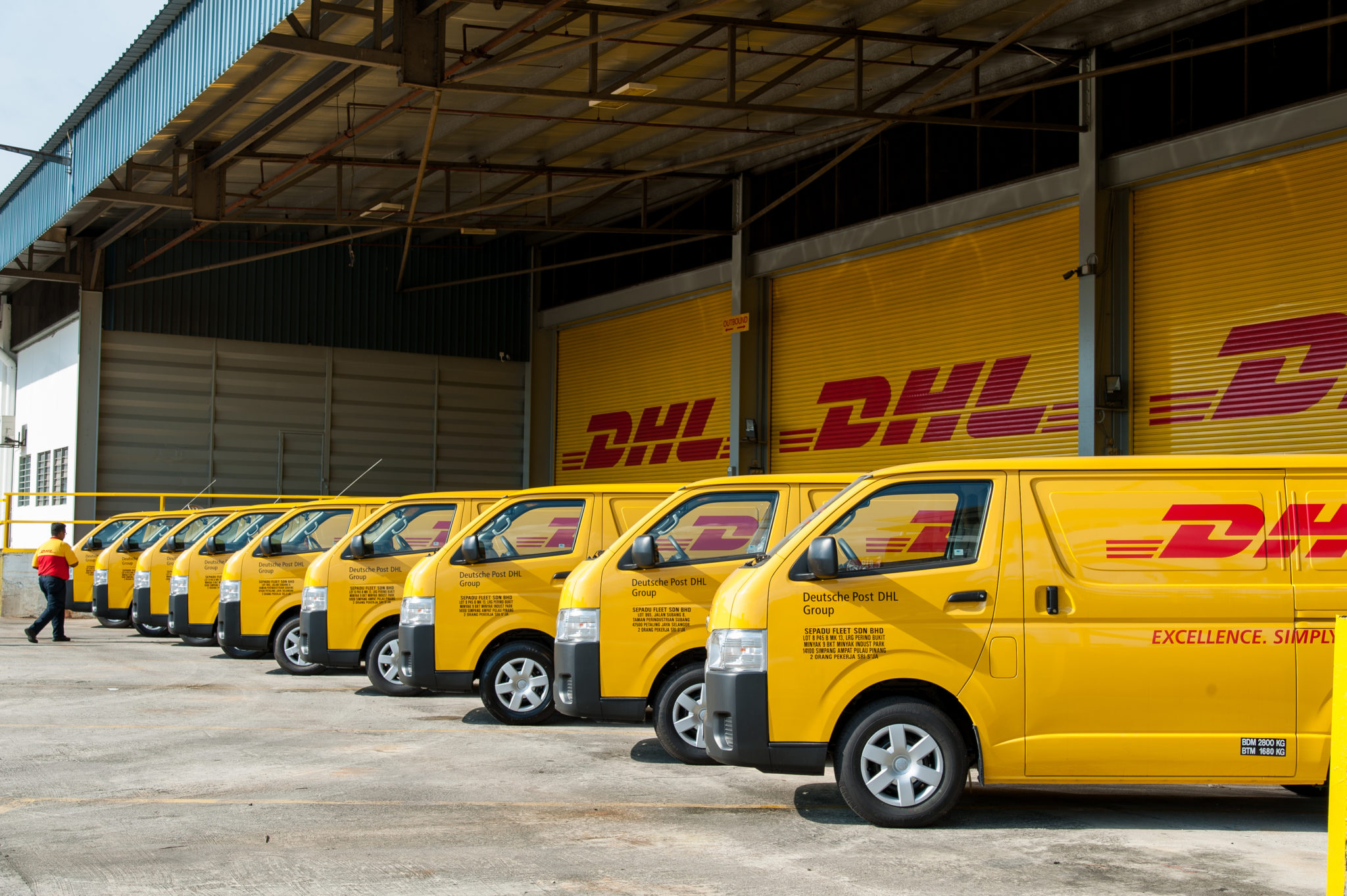
    DHL Express Birmingham (UK) achieves TAPA “A” certification, becoming the 300th TAPA-certified site in the DHL Express global network.

    The Birmingham Service Centre of DHL Express in the UK, has become the 300th facility worldwide to be awarded with the Transported Asset Protection Association (TAPA) security certification.

    This independent recognition confirms that DHL Express has implemented the highest security standards for transporting shipments through the supply chain.

    This milestone for the DHL Express global network demonstrates the company’s commitment and tireless efforts to meet the highest TAPA Freight Security Requirements (FSR) worldwide.

    The internationally recognized TAPA certification is one of the most rigorous logistics and supply chain security certifications.

    This independently audited certification is widely respected as the leading security standard in this sector, and focuses on the way in which high-value goods are handled, warehoused and transported.

    As the global leading logistics provider DHL Express ensures that its processes and services provide the highest standards possible in the industry.

    DHL is Global Leader in TAPA Certified Facilities

    With 300 certified TAPA Level A and B sites, DHL Express is the global industry leader with the number of TAPA certified facilities.

    The accredited facilities now span 82 countries, with 96 DHL Express facilities located in Europe, 87 in Asia-Pacific, 25 in China, 43 in the Americas, 30 in Sub Saharan Africa and there were 19 certificates obtained in the Middle East and North Africa.


  • India’s ecommerce Myntra plans to go offline

    India’s ecommerce Myntra plans to go offline

    Indian online retailer Myntra is planning a network of offline stores.

    The fashion subsidiary of Flipkart, sees physical stores as an opportunity to build trust and awareness in the company’s online offer an to engage with existing customers.

    According to a report, Myntra plans to open as many as 100 offline stores selling cosmetics over the next two years. The first is likely to open in Bengaluru, within the next six months.

    Myntra-Jabong CEO Ananth Narayanan says the company will recruit franchisees to run the beauty and cosmetics stores.

    Bengaluru has been chosen for the first store because it is the city in which Myntra is headquartered. Sites in shopping centres and high street locations are being sought in large Indian cities.

  • Starbucks strengthens India commitment with opening of 125th store at The Pavillion Mall

    Starbucks strengthens India commitment with opening of 125th store at The Pavillion Mall

    Tata Starbucks Private Limited, the 50/50 joint venture between Starbucks Coffee Company and Tata Global Beverages Limited, celebrates the opening of its 125th Starbucks store in India at The Pavillion Pune. With 125 stores now operational across 7 cities, Tata Starbucks Private Limited continues to grow in the market with a commitment to offer the unique Starbucks Experience, unparalleled service, handcrafted beverages and extensive food offerings.

    “As we continue on our journey in India, we are doubling down on our commitment to customers and building a strong presence for Starbucks in India. We are thrilled to celebrate the opening of our 125th store in India and to extend our unique Starbucks third place Experience to coffee lovers across the country. We are humbled by the way we have been embraced by our customers and greatly supported by our partners since the opening of our first store in 2012,” said Sumitro Ghosh, CEO, Tata Starbucks Limited. “As we continue to achieve our well thought out expansion in India, we are committed to exceeding the expectations of our customers and those of our partners.”

    The newly opened Starbucks store houses an elaborate coffee bar with innovative brewing techniques like the Siphon, Chemex® and the signature Starbucks® Nitro Cold Brew. Siphon brings out the intense flavours of the coffee, using halogen to produce heat for boiling water and the movement of coffee through chambers. This fascinating process makes a rewarding cup for those who enjoy well-defined flavours dominating the coffee. Nitro Cold Brew on tap allows customers to enjoy small‐batch, slow‐steeped coffee using the highest quality coffee beans. In today’s fast‐paced world where everything is instant and on‐demand, Nitro Cold Brew unfolds an irresistible coffee experience where time meets texture. Chemex® is an example of a manual pour-over method, an elegant one-piece hourglass shaped vessel, made of high quality, heat-resistant glass. With a brew time typically between 4 and 5 minutes, Chemex® is great at balancing out the coffee – heavy coffees come through more cleanly, and bright coffees come through a little more balanced.

    The Pavillion Pune is a renowned multi-brand mall that is known to provide a unique shopping, retail and entertainment experience. With the opening of India’s 125th Starbucks store this week, Pune locals now have a new meeting spot. The Starbucks store invites customers for an immersive journey of coffee discovery while delivering an unparalleled Third Place experience. The store’s artwork celebrates the story of the Starbucks bean – unraveling each bean’s journey. Other store elements include a comfortable seating arrangement for large groups, close friends and individuals to enjoy a cup of coffee in this unique atmosphere.

    Starbucks takes its count to 11 stores in the city of Pune with the opening of Starbucks store at The Pavilion. As Tata Starbucks continues to grow in India, so does its commitment to be a positive force in contributing to the future success of the country.

  • The Children’s Place growth is satisfying

    The Children’s Place growth is satisfying

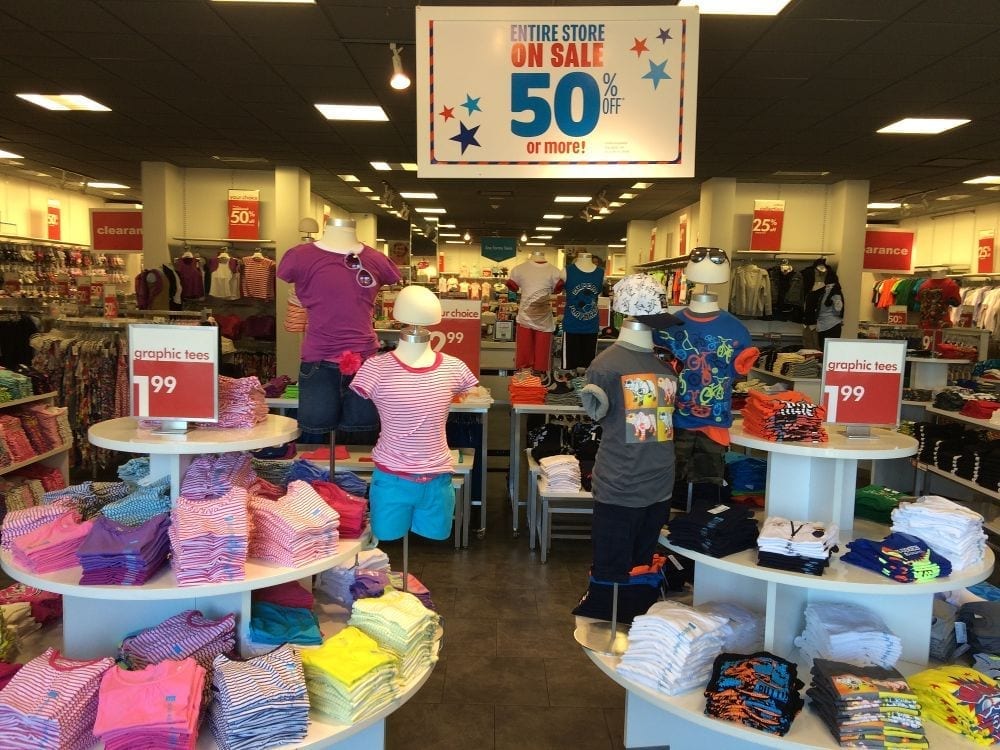
    US apparel chain The Children’s Place has recorded same-store sales growth of 13.2 per cent – its highest ever comparable sales gain.

    Five years ago, The Children’s Place revealed plans to close 300 stores across the US and focus its efforts on stores located in the best malls. To date it has closed 191.

    Second-quarter sales rose to from US$373.6 million to $448.7 million, well above analysts estimates of $428 million.

    The company reported net income of $7.5 million in the quarter to August 4, which was down from $14.3 million, due to higher interest payments and tax provisions.

    “We delivered positive brick-and-mortar sales comps and positive digital-sales comps every month in the second quarter,” said CEO Jane Elfers. “Additionally, we drove positive brick-and-mortar traffic comps every month of the quarter resulting in a positive mid-single digit traffic increase. Our mall traffic was exceptional.”

    Elfers said the increased sales continued into August.

  • India’s FMCG sector may grow 12-13% over July-December

    India’s FMCG sector may grow 12-13% over July-December

    India’s fast-moving consumer goods industry is expected to grow at 12-13 percent in the July to December period, according to Nielsen India.

    The rationale behind a double-digit growth forecast is strength in the GDP, a boost in rural income, the uptrend in private consumption and an increase in consumer confidence.

    The research agency said the FMCG  industry grew at 11 percent in value terms in the April-June quarter on the back of better consumer off-take, rate cuts due to the implementation of GST (Goods and Services Tax) and also a low base. 

    According to Nielsen India, in volume terms, the industry grew at 8 percent.

    The research agency pointed out that during the April- June quarter retail stocks jumped to levels higher than the pre-demonetisation period.

    Also, modern trade channels have witnessed a bounce- back and the sector saw 10 percent of sale come from this channel. 

    This is the first time that modern trade contribution has entered into double-digits, Sameer Shukla, Executive Director at Nielsen India said. 

    The company witnessed stress in rural FMCG consumption around demonetisation and before the rollout of GST. As a result, growth in rural markets came down to be at par with urban growth in the months following demonetisation.

    In the personal care space, the natural trend continues to gain traction and is growing three times the pace compared to the non-natural segment. 

    However, the foods category witnessed growth higher than personal care and home care due to consumers opting for branded foods over unbranded. The main reason for it being that price gap between branded and unbranded has narrowed considerably post the implementation of GST.

    An analysis of the fastest growing FMCG manufacturers in India suggests that domestic companies performed better than the MNCs in recent years.

  • Indonesia tour prices rise as Vietnam enters Asiad semis

    Indonesia tour prices rise as Vietnam enters Asiad semis

    As soon as the final whistle blew in Vietnam’s victorious Asian Games quarterfinal game, Indonesia tour prices rose.

    Vietnam’s first ever semifinal game in the Asian Games will be played against defending champions South Korea on Wednesday, August 29, at the Pakansari Stadium in Cibinong, Indonesia.

    The match will begin at 4 p.m. local time.

    The unexpected progress made by the national team in football crazy Vietnam has seen demand for Indonesia tours soar, accompanied by a rise in prices.

    A representative of HanoiRedtours said airline and entrance ticket prices have gone up, forcing the tour operator to increase its tour prices from Monday night, right after Vietnam beat Syria by a goal in the 108th minute.

    HanoiRedtours said that the price for a one-day tour to Indonesia to watch Vietnam’s semifinal match went up $43 to $683 per person, while those for the final match on September 1 have to pay $812, up $86 against the earlier listed price.

    “We are offering tours to Indonesia for football fans costing VND15.9 million for those departing from Hanoi and VND12.9 million from Ho Chi Minh City,” a Viettravel representative said.

    Such prices are common at most local tour companies, he added.

    Nguyen Tien Dat, deputy director of Transviet Tourism Company, said it has reserved around 150 seats for Vietnamese supporters to Indonesia to cheer Vietnamese men’s football team for the semifinal match.

    For the final match, customers only need to pay VND2 million in advance. In the event of the Vietnamese not making it to the final, customers will be refunded, Dat said.

    In response to higher demand, airlines have also increased the number of flights to Indonesia.

    On Monday night, Vietnam Airlines announced it would add three direct flights to Jakarta from Hanoi, Saigon and Da Nang to serve Vietnamese football fans.

  • 7-Eleven launches first fully-automated stores in South Korea

    7-Eleven launches first fully-automated stores in South Korea

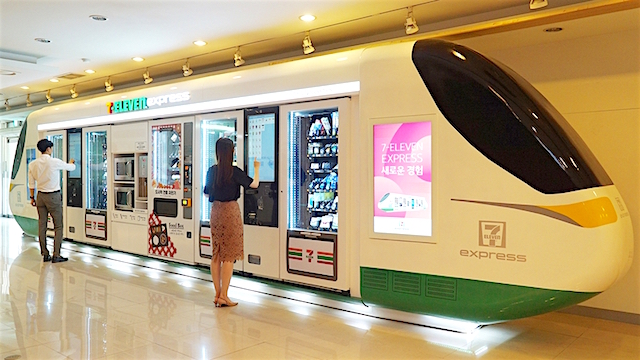
    7-Eleven is launching first fully-automated stores 7-Eleven Express in South Korea.

    Currently under trial, four vending machine-style convenience stores are being operated: two at the headquarters of 7-Eleven in downtown Seoul, one at Lotte E&M in Incheon, and one at the headquarters of Lotte Rent-a-Car in Anyang, Gyeonggi Province.

    The store is designed as a 10-metre long express train, and consists of five vending machines with 200 products, which are divided into five categories for which there is high consumer demand: drinks, snacks, prepared meals, processed food and non-food products.

    Consumers can make a purchase by inputting the product number into the machine or selecting items from the central kiosk, and pay via a prepaid transit card or credit card, not cash.

    The stores feature a microwave oven and a hot water dispenser in the central area.

    7-Eleven is taking steps to commercialise the vending machine-style convenience stores, and will accept franchise applications from its current franchisees, as a “second store”.

    “This model is designed to maximise the profit of our current franchise owners,” 7-Eleven explained.

    Self-service convenience stores are being tested in several markets around the world.

    South Korean 7-Eleven also tested its “c-store of the future” with hand-payment at Lotte World Tower while the Taiwanese branch opened second unstaffed X-Store.

  • Lazada offers credit lines to sellers in Singapore

    Lazada offers credit lines to sellers in Singapore

    It’s been almost two and a half years since Alibaba initially invested in Lazada, and the Chinese e-commerce giant has now invested at least $4 billion total in the company, including a $2 billion infusion this past April. At that point, Alibaba saw great potential in a region of the world where online sales represented only 3% of all retail sales.

    Partnering with Finaxar on a seller financing program shows how Lazada and its majority owner are continuing to build up this Southeast Asia marketplace to take advantage of that growth opportunity. If the strength of an online marketplace lies in the number and variety of sellers, brands and products that can be found there, it makes sense for the operator of that marketplace to support firms in growing their businesses.

    Lazada is not the first player in the space to offer financing. For example, just last month, eBay partnered with Square Capital on a program to offer eBay sellers access to more funds for working capital. Just a few weeks before that announcement, Payability unveiled a program to give sellers who participate in multiple different online marketplaces faster access to needed financing.

    Sellers in online marketplaces often may be too busy to think about their own growth road maps, and they may lack large enough sums to pursue growth even if they do have a roadmap. Seller financing, whether direct loans, credit lines or in some other form, can give them an opportunity to invest more in their own inventory growth, marketing and operations.

  • Tao Heung sales improved as visitors increases

    Corporate restaurateur Tao Heung is reporting improved sales in both its core Hong Kong market and on the mainland as people dine out more often and the average tab increases.

    Tao Heung operates 60 restaurants under its own brand, two RingerHut eateries focused on non-Chinese cuisine, and 18 Tai Cheong Bakery stores.

    In the half-year to June 30, consumption sentiment improved both in Hong Kong and Mainland China, the company said. Its strategy to strengthen its culinary portfolio to attract a more diversified customer base, and right-size its operations led to a 5.4 per cent increase in year-on-year sales to HK$2.08 billion.

    “The increase was principally driven by same-store sales growth, in turn the result of the rise in per-head spending particularly for seafood and including late night dining – “all you can eat hotpot”,” the company said in its results commentary.

    Profit attributable to shareholders rose to $51.3 million (from $40.8 million in the same period last year) and would have been up by 53.7 per cent to $62.7 million had it not been for a one-off expense relating to the government-enforced closure of the company’s pig farm during the period.

    In Hong Kong, which accounted for 61.7 per cent of the company’s sales, the company says it faced “fierce competition” rebuffed by several seasonal marketing strategies. “All these helped to further drive same-store sales growth as well as increase per-head spending.”

    Eight Hong Kong restaurants were renovated during the six months, including Tao Heung – The Pier Market Store in Mong Kok which opened in June, specialising in seafood. It is targeted towards affluent customers – “a segment that not only appreciates fine Chinese cuisine but also a suitably sophisticated ambience”. Other restaurants were either closed or right-sized, leaving a net reduction of six outlets since the end of last year.

    As the company looks to diversify its restaurant portfolio, several collaborations were realised, with more partnerships in the pipeline. Du Hsiao Yueh, which specialises in Taiwanese cuisine, which opened its first Hong Kong branch in Tsim Sha Tsui in June last year, now has a sister restaurant in Causeway Bay. Another collaboration involves Flamingo Bloom, a modern, chic Chinese tea salon that opened at IFC mall in July.

    “Management trusts that such collaborations will not only broaden the group’s portfolio, but also provide it with greater flexibility in terms of business development,” the company said.

    Tao Heung is also exploring overseas partnership opportunities for its Tai Cheong Bakery, after achieving success in Singapore.

    “Besides consolidating its bakery network, further efforts will be made at increasing distribution channels through collaboration with different brands and supermarkets.”

    Mainland China operations

    On the mainland, the group operates an integrated complex business model, comprising Chinese restaurant, self-owned supermarket, indoor playground, museum, shops and parking facilities covering over 22,000sqm. The company said the three family-oriented complexes it operates continued to deliver stable income during the period, attracting the patronage of middle-to high-income families.

    The company’s packaged food business on the mainland also experienced strong growth. Sales of frozen food increased by 26.3 per cent, largely due to e-commerce partnerships with online platforms such as Tmall.com and JD, which give the group access to customers nationwide. Takeout services like Dianping.com, Meituan and ele.me also boosted sales.

    As at June 30, Tao Heung operated 46 restaurants in Mainland China, along with 26 Bakerz 180 outlets during the period.

  • Indonesia’s Rice Imports to Be Largest Since 2011

    Indonesia’s Rice Imports to Be Largest Since 2011

    President Joko “Jokowi” Widodo may import 2 million tons of rice this year, falling short of fulfilling his 2014 presidential campaign promise of rice self-sufficiency.

    Since 2015, Indonesia has imported 3.35 million tons of rice. This year the imports are going to be increased, as severe droughts are expected to disrupt harvests. A price spike in the country’s staple food would not be beneficial to the president who is seeking reelection next year.

    Last week, the Ministry of Trade issued a permit for the the national procurement agency, Bulog, to import 1 million tons of medium quality rice for the second half of the year. The year’s total rice imports would then become 2 million tons, the highest since 2011.

    Said Abdullah, coordinator of the People’s Coalition for Food Sovereignty (KRKP), a farmers’ advocacy group, said droughts may continue until the end of the year, making it hard for the government’s rice production target of 47 million tons to be achieved.

    “Rice harvests dropped by at least 50 percent due to droughts, even there are regions that failed 100 percent, especially those far from rivers, lacking irrigation,” Said told the Jakarta Globe on Sunday (27/08).

    According to the Meteorology, Climatology and Geophysics Agency (BMKG), most of the country’s rice-producing regions, especially in Java, will see no rains before October.

    Bulog data shows in mid-August the agency’s rice supplies were 2 million tons in its warehouses across the country. The amount, Said said, should be at least 3 million tons to be safe.

    Nailul Huda, economist at the Institute for Development of Economics and Finance (Indef), said this year’s imports are meant to secure Bulog’s rice supplies during the 2019 election campaign.

    “As harvests are between April and May, the beginning of next year is the most crucial time, because there is a risk of price fluctuations. Importing rice at that time would be [politically] suicidal. Therefore, the safest way is to issue import permits this year, with less political risk,” Nailul said.

    Trade Minister Enggartiasto Lukita said the rice imports are meant to keep the inflation rate at 3.5 percent, in accordance with this year’s state budget, not because of the upcoming election.

    “We are not talking about the election, we are talking about inflation, the rising prices, so we cannot leave it unattended,” Enggartiasto told reporters on Monday.

    “We need to import … because we see there is a tendency for the prices to increase while the supplies decrease. We need to fill the stock,” Enggartiasto said.

    Jokowi has been importing rice since 2015, the highest imports so far were in 2016, with 1.28 million tons, up a 49 percent from a year earlier. The country’s imports then decreased by 76 percent to only 305,275 tons last year.

    According to data from the Ministry of Agriculture, Indonesians will consume 33.8 million tons of rice this year, compared with 30.65 million tons in 2017. Last year, 47 million tons were produced domestically.

    Edhy Prabowo, a Great Indonesia Movement Party (Gerindra) lawmaker who sits at House of Representatives Commission IV, which oversees agriculture, has questioned the government’s decision to import rice again, as to him rice supplies seem sufficient.

    “I can’t understand the logic of importing rice again. Programs that we provide in the agriculture sector are supposed to have fulfilled the country’s rice needs for one year … Import is allowed only if [a commodity] is not available domestically,” Edhy said.

    Rice consumption in Indonesia is among the highest in the world, with the average citizen consuming 114 kilograms every year. In comparison, the average annual consumption of rice in Vietnam is 191 kilograms per person, in Thailand 147 kilograms, in India 78 kilograms and in China 75 kilograms, according to data compiled by the Organization for Economic Cooperation and Development in 2016.

  • Uniqlo gives Mickey Mouse a street makeover with Kate Moross’ designs

    Uniqlo gives Mickey Mouse a street makeover with Kate Moross’ designs

    Japanese retailer Uniqlo has rolled out its exclusive Love & Mickey Mouse Collection by British graphic designer and illustrator Kate Moross.

    The 32-year-old, who was in town two weeks ago for a live mural drawing performance at Uniqlo Orchard Central and a sharing session at Lasalle College of the Arts, said the collaboration is a “good fit”.

    It is available at Uniqlo Orchard Central and online, and will be available in all Uniqlo stores from Sept 3.

    Moross told The New Paper: “I’m a notorious Disney fan and it came across to Uniqlo that I’m enthusiastic for the brand. My style is very fun and illustrative so I think that overlaps with Disney.

    “This (collection) means a lot to me because it is the first time I am doing a global collaboration and working with Uniqlo, as well as (designing on apparel and T-shirts). ”

    Known for her signature typographic illustration and freeform lettering style, Moross has designed shoes, tote bags, water bottles and product packaging bottles for notable brands, like Kiehl’s in 2013 and adidas in 2012.

    For the Uniqlo collection for women and kids, she gave Mickey and Minnie Mouse a dynamic monochrome treatment and incorporated playful lettering for a street style look.

    She said: “I use digital paintbrushes and pencils for my pieces. This is the future – you can draw with your hand but there are different ways of doing it. ”

    And the project turned out to be “easier than (I) thought”.

    She said: “I’m happy with the balance – it’s both cute and cool, for a more fashion-forward look.

    “I enjoyed designing the kids collection most because I got the chance to be super playful.

    “You can find similar designs on the women’s tees, it’s great for a matching outfit and a super cute family photo.”

  • Air Asia India offering cheap flight tickets starting at Rs 1,199

    Air Asia India offering cheap flight tickets starting at Rs 1,199

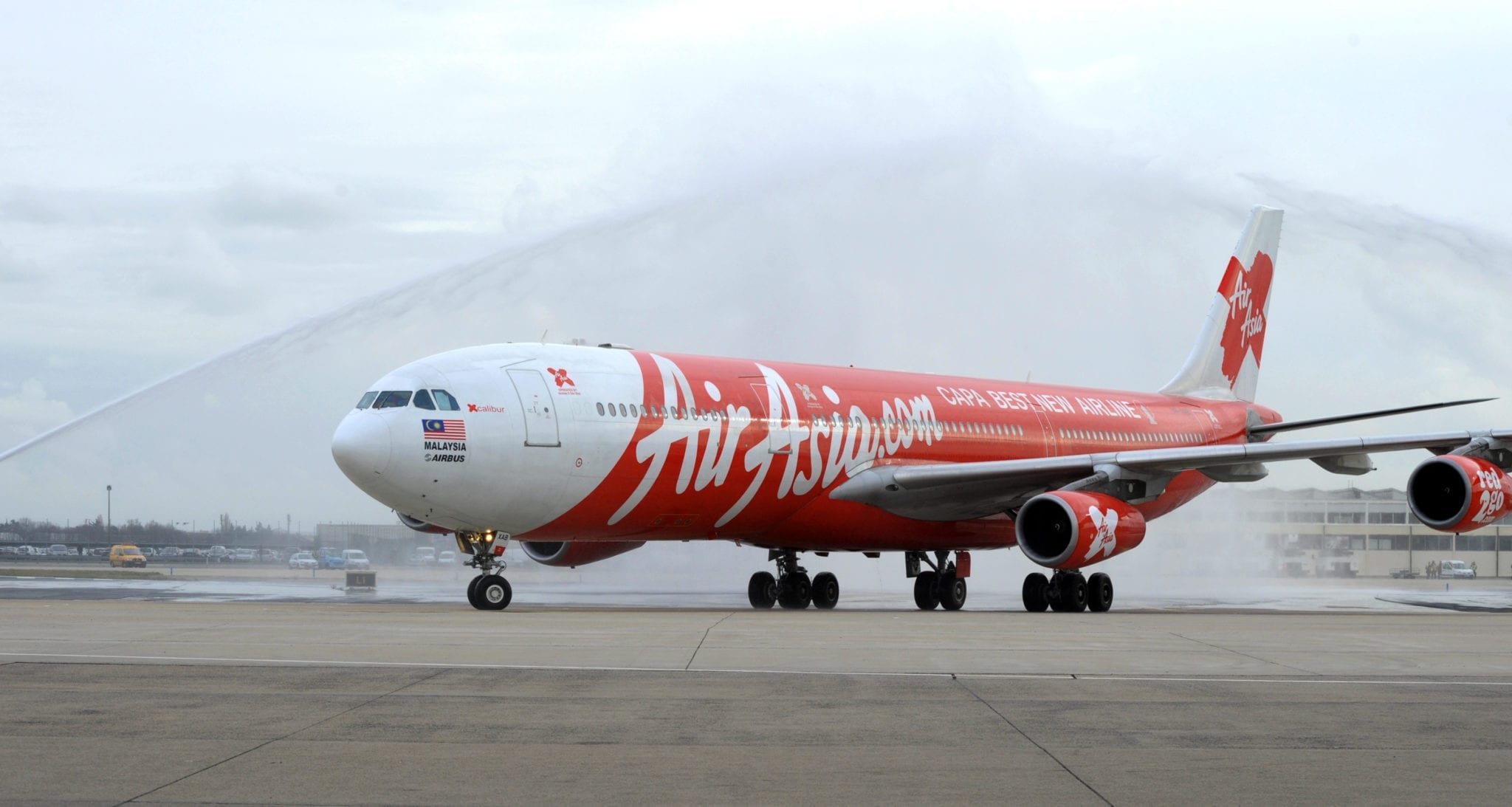
    AirAsia has started its ‘Trust your Wanderlust’ promotional sale under which it will be selling flight tickets starting from Rs 1, 199.

    The promotional sale includes domestic destinations such as Kolkata, Hyderabad, Chennai, New Delhi, Kochi, Goa, Guwahati, Jaipur, Chandigarh, Pune, Ranchi, Bagdogra, Bhubaneshwar, Indore and other places.

    The offer could be availed on tickets booked till 2 September 2018, and discounts applicable on travel period up to 17 February 2019.

    The sale offers the cheapest ticket of Rs 1, 199 for travel between 27 August 2018 and 17 February 2019, from Bengaluru to Hyderabad; and Rs 3,499 for travel from Amritsar to Bengaluru.

    The sale, however, does have its own terms and conditions that include a non-refundable processing fee for payments made via credit cards, debit cards or charge cards.

    The fare includes airport taxes (this is not applicable for selected airports where taxes are collected at departure entry point), and all taxes should be paid during purchasing of the tickets.

    The offer would be valid for new purchases only as seats would be limited. Bookings to avail the offer could be done on the company’s official website. The sale does not offer any refunds once the payment has been made.

    The company has further stated that it reserves the right to change its terms and conditions of the offer without a prior notice and has the right to deny any passenger from boarding without proper documentation.

    The offer would be subjected to availability and flight and date changes are subject to a change in fees.