Tag: asia

  • Channeling Artificial Intelligence in beauty

    Channeling Artificial Intelligence in beauty

    Since time immemorial women have been using various aids to enhance their beauty. Between the ancient times and the advancement of scientific techniques, we have seen the phenomenal growth of the beauty and cosmetics business. We have seen the modernisation of beauty treatments from ancient Egypt to the present day. We have also seen and experienced the heights of product innovations, using research and development of cosmetic techniques. New ingredients are being researched and used and then promoted as the next best beauty discovery. Even ingredients from ancient texts are being combined with scientific techniques to formulate beauty products. Each product claims to be better than the previous one.

    We have also been through basic customised beauty care, formulating products for different skin and hair types. Even here, there is a kind of generalisation and the theory of ‘different skin types’ does not take into account the many differences there are between one individual and the other. Through these years, branding has become important. The customer starts believing that using a certain branded product will make her look like the brand’s ambassador. Actually, the product she uses has not really taken into account her personal characteristics and features. But, Artificial Intelligence is changing all of this.

    What is Artificial Intelligence? Actually intelligence itself is difficult to define, so one can imagine how complex the concept of Artificial Intelligence must be! In fact, the definition itself has undergone changes, since the developments have been so rapid. The basic and simple definition refers to ‘machine that imitate human behaviour’. However, this is too simple a definition, because a machine maybe made in a way that it imitates human behaviour, but can it imitate human intelligence? Experts say that computer programmes can be made to imitate human behaviour, but the programme must be such that it ‘must be able to do many different things in order to be called intelligent’.

    As far as Beauty is concerned, programming has helped to prepare a database that can take many individual characteristics into account, so that it is possible to manufacture a product that is specifically meant for an individual, rather than conforming to broader specifications of ‘skin types’. Advances in technology can help to further machine learning with Artificial Intelligence, so that it becomes possible to find a custom made product for each individual.

    When I started my first herbal salon, more than four decades ago, I followed the principle of customised beauty care, at the client card level. The details of the individual client would be noted down in the Client Card. Apart from the basic, details of allergies, history and past treatments would also be noted down. In a way, we were preparing a data base. But, now with computer programming, it is possible to create an immense data base, with more detail. The customer herself can refer to the virtual card and refer to it while searching for a custom based product.

    There are beauty brands abroad, who are adopting Artificial Intelligence to create personalised products that are specifically tailored for customers. The ‘search’ for products will also have to be detailed and specific, so that the customer can make the connection among the different categories of products, ingredients, the different key words in order to select the best suited product. Most online retailing outlets do have ‘chats’ where the customer can be helped to find the products best suited. However, machines will have to be programmed to take many other distinctions into account, like geographical location, climate, skin colour, ethnic background, and so on.

    With the help of Artificial Intelligence, the customer may be able to find a skin profile that is totally personalised and unique, so much so that it may not fit any other person. If such detailed data is taken into account by product developers, it maybe possible to make similar products, with or without a particular ingredient, which is suited to one, but not to the other. In fact, one can consider including the medical aspect to find solutions for skin problems. Medical professionals or pharmacists may also be involved to work out the different aspects of the programming.

    It seems the possibilities are limitless with further development of technology. But, I still feel that at some point, the human factor must come in. For instance, only a human being can say whether a particular product feels good or not, whether it really does all that it promises to do. We cannot rely totally on machines and Artificial Intelligence.

  • Indonesia Gov’t Undecided on New Coal Policy

    Indonesia Gov’t Undecided on New Coal Policy

    Indonesia President Joko “Jokowi” Widodo will decide on Tuesday (31/07) whether the government’s policy on coal for domestic use should be revised, considering both the need for price stability and for reducing the current external deficit.

    The government in March set a ceiling price for 25 percent of its coal production bound for state utility company Perusahaan Listrik Negara at $70 a metric ton, in order to keep electricity prices stable ahead of the 2019 elections.

    The quota and price cap mean miners miss out export revenues amid the commodity’s rising global price, to the tune of $5 billion a year, a substantial amount that could reduce Indonesia’s current account deficits, Coordinating Maritime Affairs Minister Luhut Pandjaitan said on Monday (30/07).

    The government may charge a coal sales tax to coal companies at between $2 and $3 per ton to subsidize PLN. A new agency could be established to manage the process.

    The government may also revise the 25 percent quota to allow coal with energy levels above 4,500 kilocalories per kilogram (kcal/kg) or below 4,000 kcal/kg to be exported, because PLN needs it between 4,000 and 4,500 only, said Rosan Roeslani, chairman of Indonesia’s Chambers of Commerce and Industry (Kadin), who was present in a discussion with top government officials on Monday.

    All revisions will still need to be discussed with the coal and power industry, and their impact on state revenue would need to be calculated, Luhut said.

    “Even if this happens it will probably be next year at the earliest,” he said.

    Indonesia is the world’s top exporter of thermal coal, and its economy has benefited from rising demand for the dirty fuel — which hit $104.65 a ton in July — the highest since May 2012.

    Expert and consumer groups are against the government’s proposal.

    “Abandoning the domestic coal price will be a blunder policy, which will not increase foreign exchange from coal exports to reduce the balance of payment deficit, but only increases the income of coal businesses as well as the cost of production for PLN,” Fahmy Radhi, an energy analyst at Gadjah Mada University, said in a statement on Sunday.

    PLN would bear $3.68 billion in additional costs to buy coal at the current market price, Fahmy said. Even with the sales tax on coal companies, which is estimated to bring $1.28 billion, PLN would still be left with an additional expense of $2.40 billion.

    PLN has been under financial pressure for the past few years, trying to meet the government’s plan for 35,000 megawatts of additional power capacity.

    In September, Finance Minister Sri Mulyani Indrawati sent an official letter to Energy and Mineral Resources Minister Ignasius Jonan and State Enterprises Minister Rini Soemarno, warning of PLN’s poor financial performance.

    The company suffered losses of Rp 6.49 trillion in the first half of this year. In the same period last year it recorded a net income of Rp 510 billion.

    “If the rule is really implemented, then it means the government favors more the interests of a handful of people [coal businessmen] rather than the interests of a larger community — electricity consumers,” Tulus Abadi, managing director at the Indonesian Consumer Protection Foundation (YLKI), said in a statement.

  • Orchard Road retail vacancy rate free jump

    Orchard Road retail vacancy rate free jump

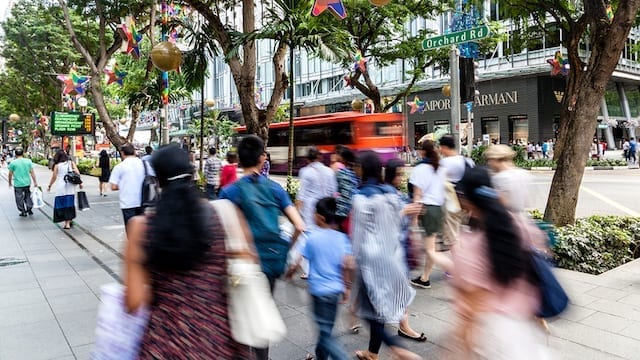
    The Orchard Road retail vacancy rate has dropped to 5.6 per cent in the second quarter.

    According to a report by CBRE, the rate is the lowest in 14 quarters and well below 2016 figures.

    CBRE’s head of research for Southeast Asia Desmond Sim said, “On the back of an improved tourism market, coupled with limited new supply along our famous shopping belt, Orchard Road is still able to attract new tenants.”

    Noting that new-to-market brands still require and demand visible frontages with high footfall, Sim cautioned that there may be vacancies on secondary corridors and secondary floors.

    Meanwhile, senior director of research at Cushman & Wakefield, Christine Li, said, “A two-tier market is forming in the retail segment, as accessible and well-managed malls attract the bulk of pedestrian footfall.

    Retailers and landlords have to continue to reinvent themselves, invest in technology and focus on lifestyle and activity-based experiences to keep pace with the fast-changing retail landscape.”

    This year’s new openings were largely in the food and beverage and fashion categories.

  • Forbes lists Vietnam’s most valuable brands, Vinamilk, Viettel remain top

    Forbes lists Vietnam’s most valuable brands, Vinamilk, Viettel remain top

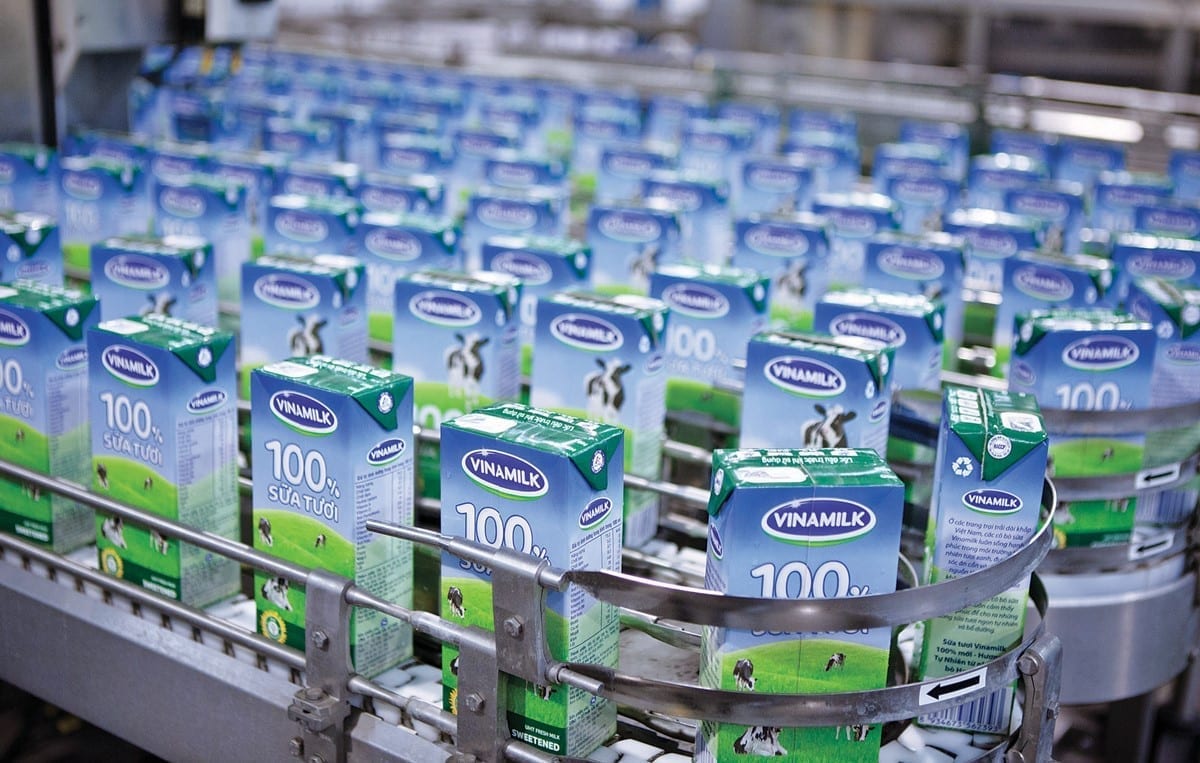
    Forbes Vietnam has released its third annual list of the 40 most valuable brands in Vietnam, putting their total value at $8.1 billion.

    The value is 50 percent up from last year. Dairy giant Vinamilk and military-run telecom firm Viettel remain the top two as they were in the two previous years.

    Forbes estimates Vinamilk’s brand value at $2.28 billion, much higher than the $1.7 billion last year, and Viettel’s at $1.39 billion.

    State-owned Vietnam Posts and Telecommunications Group (VNPT) takes over third position from Vingroup, Vietnam’s largest real estate company. With a value of $416 million, VNPT makes it to the list for the first time.

    The other brands in the top ten are the country’s biggest brewery Sabeco ($393 million), Vinhomes, the residential property arm of Vingroup ($384 million), Vinaphone, one of Vietnam’s big three mobile operators and belonging to VNPT ($308 million), Vingroup ($307.2 million), food and beverages producer Masan Consumer ($238 million), JSC Bank for Foreign Trade of Vietnam, or Vietcombank ($177.9), and tech giant FPT ($169 million).

    Vinhomes and Vinaphone are also newcomers.

    Just like last year, consumer goods brands account for the majority of this year’s list, followed by finance and banking and technology.

    But the gap between the total value of the finance-banking and consumer goods groups has narrowed, Forbes said.

    The other new entrants this year are Vincom Retail, the shopping mall subsidiary of Vingroup, top coffee firm Trung Nguyen Group, sugar, energy, real estate, and tourism conglomerate TTC Group, and Ho Chi Minh City Development Joint Stock Commercial Bank, or HD Bank.

    Forbes compiled the list by looking at brands’ incomes before and after tax based on their financial reports and data on the stock market.

  • Short-term leasing could be a long-term trend in Hanoi, HCMC

    Short-term leasing could be a long-term trend in Hanoi, HCMC

    Thanh’s apartments in Ho Chi Minh City have been behaving like hotels for more than a year now.

    Individuals and groups of tourists stay at his serviced apartments for a few days before they leave for another destination in the country, and the apartment is open almost immediately for new guests.

    Thanh, who did not want his surname revealed, has invested in three apartments in HCMC, and all of them can be booked by anyone on Airbnb, an online service that connects tourists with hosts offering accommodation in a room, or rooms, or an apartment or villa, typically for short stays.

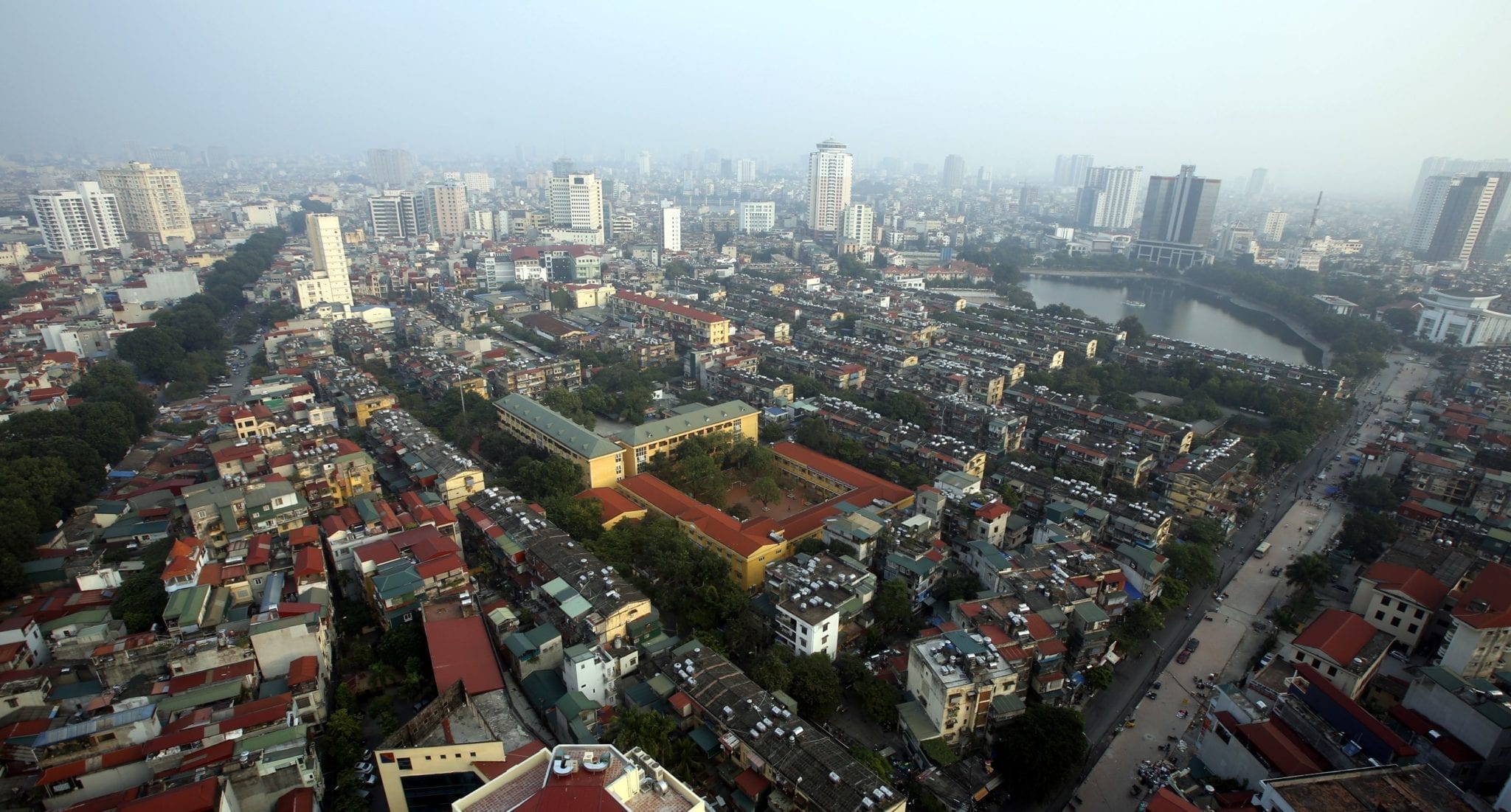
    The large supply of apartments in major cities like Hanoi and Ho Chi Minh City has spurred investors who have spotted an opportunity to earn higher incomes through short-term leases rather than long-term rental contracts.

    In addition, the driving force shifting consumer attention to Airbnb in Vietnam is a willingness to experience something new and affordable when it comes to rented accommodation, said accounting and consulting firm Grant Thornton.

    According to a Nielsen report, 76 percent of respondents in Vietnam like using shared products or services, compared to 66 percent of consumers globally.

    The total number of Airbnb listings in Vietnam has surged exponentially since the service was officially launched in Vietnam in 2015.

    There were only 6,500 listings in 2016, but last year, this rose almost 2.5 times to 16,000, according to accounting and consulting firm Grant Thornton.

    The apartment rental market has changed remarkably in the last 12-18 months, with more owners moving from traditional rental services to listing their apartments on Airbnb or similar online housing services, said Tran Anh Khoa, a renting agent in HCMC.

    This transition is happening as owners realize short-term rentals can earn 15-20 percent higher revenues than long-term leases, Khoa said.

    A 50-square-meter serviced apartment in HCMC’s District 2 can earn its owner $700-800 a month in a long-term contract, but this revenue can go up to $1,000 a month if it is leased short-term with an occupancy rate of 80 percent a month, he said.

    Apartment owners like this model, especially real estate speculators who want to earn money while waiting to sell their apartments, Khoa added.

    “This way, owners don’t get tangled in contractual obligations with tenants when they want to sell the apartment,” he noted.

    Growing trend

    Airbnb and similar services are favored by single or small groups of guests as they offer cheaper prices compared to a hotel room or a fully-serviced apartment, said Stephen Wyatt, country head of real estate firm Jones Lang LaSalle Vietnam.

    The supply of apartments in Vietnam has been growing in recent years, especially in HCMC, with an additional 129,000 apartments coming on line by 2020, according to real estate service provider Savills Vietnam.

    The “oversupply” will likely lower the profitability of long-term rental apartments, Wyatt said.

    So short-term leasing of these apartments is a positive trend as their sales show signs of slowing down, he added.

    Pham Thi Thanh Huyen entered the apartment-sharing business a year ago to earn extra income apart from her office job.

    The 24-year-old paid a total of VND400 million ($17,200) to do up the interiors of two apartments in Hanoi which she rents for VND6 million each a month.

    One of her apartments has had an occupancy rate of almost 100 percent every month, and the other, over 70 percent. Together, she earns a net profit of VND10 million a month by subletting them for short periods.

    She was confident: “If your apartment is in a good location, it won’t be long before guests start to pour in.”

    In 2017, Vietnam welcomed nearly 13 million international visitors. In the first half of 2018, the number was nearly 7.9 million, a 27 percent increase over the same period last year, according to VNAT.

    Tourism is expected to contribute 10 percent to Vietnam’s gross domestic product by 2020 when the country hopes to welcome up to 20 million foreign visitors and earn $35 billion in tourism revenues. Vietnam has set a target of receiving 15-17 million foreign arrivals this year.

  • Facebook blocked by China’s Great Firewall

    Facebook blocked by China’s Great Firewall

    Earlier last week, the rumor of Facebook’s comeback to China was spreading fast.

    Banned since 2009, the technology giant was apparently trying to gain a foothold into the country with the establishment of an innovation hub. The word spread as screenshots of the subsidiary’s registration in Hangzhou were released on the Internet.

    By Thursday, the filing had vanished from the website of China’s National Enterprise Credit Information Publicity System. According to the New York Times approval was withdrawn after the national internet regulator, the Cyberspace Administration of China, disagreed with the provincial government’s approval of the subsidiary.

    Moreover, all terms related to the operation were censored on Chinese social media.

    The country has the media and Internet on a very short leash. Foreign companies strive every day to operate in the region as they face legions of ministries, regulators and local and central authorities. But the Chinese market is a very attractive one as it is the world’s biggest Internet market with over 710 million users as of 2017 (Forbes).

    The numerous bans and difficulties foreign companies are experiencing have favored the emergence of a monopolist in the market: WeChat. Indeed, along with Facebook, Twitter is also banned in China while messaging apps such as WhatsApp work intermittently. Apple and Google services are also very restricted.

    The legal status of Facebook’s expansion remains uncertain. Nevertheless, we are a long way from fully removing the ban of the platform even should the innovation hub manage to go through. Speaking of the company’s efforts in China, Mark Zuckerberg said they are “a long time from doing anything”.

    2018 has so far been a hard year for the social media giant as the company is facing many other challenges from slower user growth and tanking share price to scandals over user data.

  • S. Korean retail sales rise in first half on increased online sales

    S. Korean retail sales rise in first half on increased online sales

    South Korean retail sales rose 7.4 per cent in the first half of this year based on solid performance in e-commerce.

    Data from the Ministry of Trade, Industry and Energy showed online sales running 16.3 per cent higher than during the same time last year, while offline sales rose just 2.7 per cent.

    Grocery shopping via online malls with home delivery saw a major rise this year, with a 20.8 per cent increase in sales over last year.

    Similar rises were reported for convenience stores, department stores and online marketplaces, although a 1.8 per cent drop hit large discount store chains.

  • Tyco Retail Solutions releases the new 2018 Sensormatic Global Shrink Index

    Tyco Retail Solutions releases the new 2018 Sensormatic Global Shrink Index

    “Shrink,” otherwise known as a reduction in inventory due to shoplifting, employee theft or other errors, significantly impacts a retailer’s bottom line.

    Tyco Retail Solutions, a global leader in data-driven loss prevention, today released the industry’s most extensive study conducted in recent years of senior retail executives, providing insights into the sources and impacts of global shrink.

    The report is a culmination of research that measures world-wide retailer performance, allowing them to benchmark their shrink rates to others in the same vertical and region.

    Tyco commissioned global retail market intelligence provider PlanetRetail RNG to conduct the 2018 Sensormatic Global Shrink Index which included over 1,100 retail decision makers across four regions, 14 countries representing the world’s leading economies and 13 vertical markets. They operate over 229,000 stores and generated an estimated $1.56 trillion in sales during 2017-2018. The retailers work in the world’s leading economies, which account for 73 percent of global Gross Domestic Product (GDP), and retailers account for 80 percent of total retail sales.

    The scope and coverage of the study includes how loss prevention professionals are measured and incentivized, the technologies and services being leveraged, the top stolen items and brands, and data elements being used to monitor and predict shrink.

    According to the Sensormatic Global Shrink Index, shrink cost retailers nearly $100 billion globally last year. Out of this, 24 percent comes from APAC region, and this amounts to $24.04 billion, which is the third region in ranking. Shrinkage across retail stores in APAC accounted for 1.75 percent of sales, slightly below the global rate (1.82 percent). Countries included in this study for APAC are Australia, China, India, Japan and South Korea.

    Other key APAC findings:

    • India recorded the #2 spot (2.13 percent) as a country with the second highest shrinkage rate in the world. This could be attributed to the lower level of LP technology investment locally.
    • While China took the #7 spot (1.96 percent), its shrinkage value amount to $13.52 billion, which makes it the second biggest loss as a country after USA ($42.49).
    • Japan has the second lowest shrinkage rate in the world (Germany being the lowest).
    • Main sources of shrink are from external sources – namely shoplifting (29 percent) and vendor/supplier fraud (29 percent). Japan leads the region with a reported 35.5 percent from the latter, this being the highest reported in the region.
    • Drugstores, pharmacies & perfumeries have the highest rate of shrink by retail vertical at 2.62 percent.
    • Public view monitor is most popular loss prevention investment, followed by closed-circuit television (CCTV) and Electronic Article Surveillance (EAS).

    These statistics highlight the magnitude of shrink’s impact on retail, and affords the opportunity to dive deeper into the sources of shrink and the various loss prevention tools used to combat loss.

    “Shrinkage is still a pressing issue for retailers today. It adversely affects their bottom line. With the concepts of “New Retail” and burgeoning of online retailers disrupting brick-and-mortar stores in APAC, reducing shrinkage will allow more resources to be directed into improving customers’ experiences. This profitability risk can be combated by the implementation of solutions such as Electronic Article Surveillance (EAS) and Radio Frequency Identification (RFID) Inventory, thereby safeguarding store merchandise and securing profits”, said Jack Wu, general manager, APAC, Tyco Retail Solutions.

    The Sensormatic Global Shrink Index benchmarks retailer performance globally and sheds light on other factors affecting loss prevention. Knowing the state of shrink helps retailers better assess the challenges and solutions to make merchandise secure yet accessible for a better customer experience.”

    Tyco Retail Solutions, part of Johnson Controls, is a globally trusted leader, helping retailers discover new ways to control loss and leverage it as an opportunity to increase profitability.

  • A US$1 Million post – Instagram’s most paid celebrities

    A US$1 Million post – Instagram’s most paid celebrities

    After having its net worth valued at US$900 million by Forbes earlier this July, Kylie Jenner has now become the world’s most paid Instagram celebrity according to HopperHQ.com’s Instagram Rich List 2018.

    The annual ranking reveals which celebrities, athletes, models and influencers generate the most revenue from posting on the famous social media platform.

    Estimated at $400,000 in 2017, the youngest of the Jenner-Kardashian clan now reaps $1 million per sponsored post that she shares with her 111 million Instagram followers.

    With her 139 million followers, Selena Gomez trails in second at $800,000 per post despite having more followers.

    Surprisingly, Kim Kardashian and Beyoncé are relinquished to the 4th and 5th spot as famous football player Cristiano Ronaldo takes the 3rd position; earning roughly $750,000 per post.

    Discover the top 10 below:

    1. Kylie Jenner — $1,000,000 per post
    2. Selena Gomez — $800,000 per post
    3. Cristiano Ronaldo — $750,000 per post
    4. Kim Kardashian — $720,000 per post
    5. Beyoncé Knowles — $700,000 per post
    6. Dwayne Johnson — $650,000 per post
    7. Justin Bieber — $630,000 per post
    8. Neymar da Silva Santos Junior — $600,000 per post
    9. Lionel Messi — $500,000 per post
    10. Kendall Jenner — $500,000 per post


  • Nickelodeon to Open Its Largest Indoor Theme Park in Mall of China

    Nickelodeon to Open Its Largest Indoor Theme Park in Mall of China

    Viacom International Media Networks Asia will build a Nickelodeon indoor theme park at the Mall of China in Chongqing.

    It will be Nickelodeon’s largest indoor park in the world, and its first in Asia when it opens in December 2020.

    The Mall of China is being developed by Jiayuan Group, China Creation Group and Triple Five Group and the three partners signed an agreement with Viacom last week.

    Cartoon and movie characters including SpongeBob SquarePants, Dora the Explorer, the Paw Patrol gang and the Teenage Mutant Ninja Turtles will feature in the park which will host 29 attractions including the world’s highest and fastest indoor roller coaster and Asia’s first  tilting drop-tower attraction.

    The $750 million Mall of China is located about 15 minutes’ drive from Chongqing’s Jiangbei International Airport. Construction of the 1.5 million sqft mall started in 2016. The adjacent theme park Nickelodeon indoor theme park will take up about 92,000sqft and the entire complex will be buttressed by 40,000 residential units, an international hospital and an international school. The entire project will cost an estimated $4.2 billion.

    “Creating immersive on-the-ground consumer experiences remains an important part of our business, especially in Asia,” said Mark Whitehead, president and MD, Asia Pacific at Viacom International Media Networks.

    “As we continue to grow the footprint of Nickelodeon theme parks across Asia Pacific, I am confident this will also open up new opportunities for the Nickelodeon brand and for our partners across multiple platforms in this important Chinese market.”

    Nickelodeon-branded attractions and parks around the world include the Nickelodeon Universe in Minneapolis’ Mall of America, SeaWorld on the Gold Coast and Wet n Wild Sydney in Australia, Nickelodeon Land at Pleasure Beach Blackpool in the UK, Nickland at Movie Park Germany, Nickelodeon Land at Parque de Atracciones Madrid in Spain and Nickelodeon Lost Lagoon at Sunway Lagoon in Malaysia. There are also Nickelodeon attractions at the Universal Studios in Hollywood and Orlando, Florida.

  • Starbucks China remain confident after sales slip

    Starbucks China remain confident after sales slip

    Starbucks China sales slipped 2 per cent on a same-store basis in the latest quarter, but the company will persevere with its expansion plan.

    The number of transactions in China and Asia Pacific slipped 3 per cent.

    “We remain confident in our global growth strategies, in the sustainability of our leadership position around all things coffee and tea and in our leadership teams around the world to navigate our next phase of growth,” said CEO and president Kevin Johnson.

    While global sales growth was a modest 1 per cent – driven by a 3 per cent increase in the average transaction value, it was still a record for the coffee retailer. Consolidated net revenue rose by 11 per cent to US$6.3 billion in the three months to July 1, in part thanks to store openings, selling its Tazo division and closing Teavana mall stores in the US.

    In China-Asia Pacific, net sales grew 46 per cent year on year, to US$1.229 billion, primarily driven by taking over ownership of the Starbucks East China business, a net increase of 746 stores year on year and favorable foreign currency translation. That was partly offset by the absence of revenue following the sale of the Singapore retail operations to Hong Kong-based Dairy Farm International subsidiary Coffee Concepts and a 1 per cent regional decrease in same-store sales.

    Another highlight of the quarter was a 14 per cent increase in the number of active Starbucks Rewards members in the US, to 15.1 million customers.

    Starbucks opened 511 net new stores in the quarter and now operates 28,720 stores across 77 markets.

    CFO Scott Maw said Starbucks’ record revenues and profits for the quarter reflected the underlying strength of the Starbucks business and brand all around the world.

    “We continue to grow share in virtually every market and channel in which we operate at the same time that our streamline initiatives are enabling us to sharpen our focus – and leverage our resources – against our highest value, long-term growth opportunities.”

  • BMW to sell Fossil designed branded watches

    BMW to sell Fossil designed branded watches

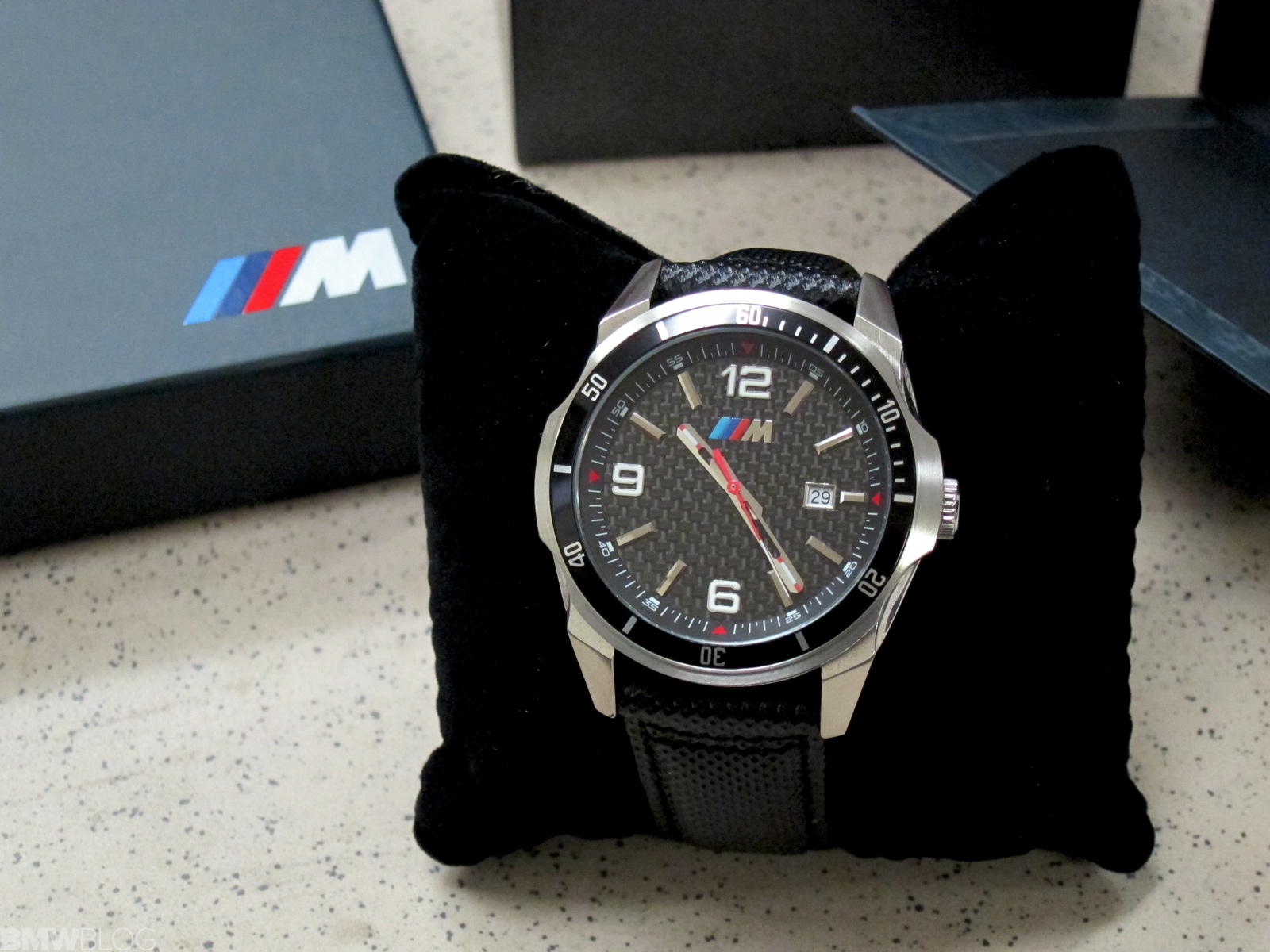
    Fossil Group has signed a global licensing agreement with BMW to design, develop and distribute BMW-branded watches and smartwatches until 2023.

    “BMW is one of the most iconic brands in the world,” said Fossil Group chairman and CEO Kosta Kartsotis. “We look forward to bringing our watch design expertise and smartwatch capabilities to BMW enthusiasts around the world.”

    The first collection of BMW-branded watches designed by Fossil will go on sale next year after a collaboration by designers from the two companies.

    The collections will be sold globally in more than 4000 BMW retail channels and key retailers in Fossil Group’s global network.

    Fossil Group already has design partnerships with licensed brands including Armani Exchange, Chaps, Diesel, DKNY, Emporio Armani, Kate Spade New York, Marc Jacobs, Michael Kors, Puma and Tory Burch.

  • JD Sports continues Australia expansion

    JD Sports continues Australia expansion

    The JD Sports Perth store in Westfield Carousel will open on 30 August and the new store in Brisbane’s city centre will open on 20 September 2018.

    In April 2017, JD Sports was brought to Australia by local retail agent Hilton Seskin, whose Next Athleisure firm also brought out from the UK Topshop and Topman, which filed for administration only a few years after, before being rescued by parent company, Arcadia Group, effectively saving it from exiting the market.

    However, JD Sports has exploded in Australia in the last twelve months and expanded rapidly on the continent, opening nine stores on the east coast, namely in bigger cities such as Sydney and Melbourne.

    The opening in Perth will see the retailer enter the west coast of Australia for the first time, already a burgeoning online market for the brand, according to Seskin, since JD Sports launched its e-commerce platform in Australia upon entry.

    “The move into Perth is highly anticipated as Western Australia has always interacted with the brand, even before we launched a physical store — it was actually the number one traffic location for online users prior to launch,” said local retail distributor, Hilton Seskin, in a statement.

    Compared to fast-fashion and apparel, the sportswear retail market is relatively unsaturated in Australia, meaning big name international chains are starting to stake their claim via physical and online store debuts.

    However, competition is heating up for JD Sports. France’s Decathlon has since launched in Australia in December 2017, prompting local retailer Super Retail Group to rebranded its sporting brands Rebel Sport and Amart stores to simply Rebel last year.

  • Apple Piazza Liberty now open in Milan

    Apple Piazza Liberty now open in Milan

    Apple Piazza Liberty has opened in Milan, the latest significant global flagship for the tech retailer.

    The store is an ensemble of two fundamental elements: a stepped plaza and a fountain. Located just off the Corso Vittorio Emanuele – one of the most popular pedestrian streets in Milan – visitors are drawn towards the piazza by the sight of the dramatic new fountain.

    Designed by London-based Foster + Partners, which has an ongoing relationship with Apple to design flagships globally, the store is described as “a celebration of the joys of city life” and embodying Milan’s dynamic nature with a signature water feature which is an “interactive, multisensory experience”.

    Visitors enter the fountain through a glass-covered entrance enveloped by the sights and sounds of vertical jets of water that splash against the 26-foot (8-metre) high glass walls.

    A Foster + Partners spokesperson likens the experience as “an immersive recreation of the childhood game of running through fountains” with an experience which changes throughout the day as sunlight filters through the water. At night, the glass ceiling creates a kaleidoscopic effect, with the water falling down the walls, its reflections travelling infinitely up into the sky.

    The fountain flows down into the base of the amphitheatre, a new social hub and an outdoor extension of ‘Today at Apple’. The amphitheatre is defined by broad and sun-soaked stone steps descending below street level and opening up to a stage, backed by a second fountain’s wall of water. The entire plaza is newly created and paved with Beola Grigia – a typical local stone from Lombardy, and surrounded by 21 new Gleditsia Sunburst trees.

    “The interior is a bright, monolithic space, metaphorically carved out of the same stone as the plaza above,” says Foster + Partners. “The ceiling follows the stepped profile of the amphitheatre, with skylights and backlit ceiling panels that innovatively combine artificial and natural light. Through the roof and stairs, warm shafts of sun penetrate deep into the sunken store, connecting the interior with the light and rhythm of Milan and giving it a feel of a spacious daylight-filled art gallery.”

    The stairs leading into the store consist of polished stainless-steel clad cantilevering treads that also become a sculptural light installation, the designers say creates a theatrical and exciting experience.

    View the full gallery below (7 images) :

  • Lululemon’s success drives store expansion

    Lululemon’s success drives store expansion

    Athleisure is the new fad of the retail industry.

    Lululemon is one of the most iconic brand following the trend. Founded in 1998, it has flourished to empower healthy lifestyle through its innovative products and community events.

    The company’s values have been very well received by Asian consumers who blissfully adopted the brand. Thanks to its ever-increasing fan base, Lululemon has expanded its IFC store in Hong Kong which reopened the 7th of July. The new space offers an extensive range of both female and male workout apparel in a beautiful, bright and energetic space.

    Asia’s finest wellness and fitness symbols were invited along with members of the public to enjoy curated in-store experiences, including an interactive photo booth, and celebrate the grand re-opening. Guests were welcomed to enjoy a meditation class led by yoga aficionado Nikita Ramchandani or t-shirt customization by silk screening with local artist Magaga.

    Striving to spread its values among the Asian Community, Lululemon is pursuing its Ambassador Program. Nikita Ramchandani, founder of Kita Yoga, Brian Woo, founding member of Harbour Runners, and Ada Cheung, program director and spin instructor at XYZ, joined the force and partnered with Lululemon to nurture a community of driven and inspirational individuals to harness the brand’s passion.

    Mindful and committed, Lululemon has thought of their Asian customers and developed a unique line labelled Asia Fit. Specifically tailored to suit the Asian body type through various aspects including the cut, material and design, the collection is available online and at all Hong-Kong lululemon stores, in black and white.

    Throughout the years, Lululemon has never wavered from its desire to empower people to reach their full potential by providing them with the right tools and resources, and has continuously encouraged a culture of leadership, goal setting, and personal responsibility.