Tag: asia

  • iPrice Thailand is profiling online shoppers

    iPrice Thailand is profiling online shoppers

    Thai online shoppers are most active before leaving the office or school, according to research from online shopping startup iPrice Thailand.

    Based in Kuala Lumpur, iPrice has a presence in seven markets across Asia and aims to uncover important e-commerce metrics from the perspective of thousands e-commerce practitioners, highlighting the differences and similarities in each market.

    Its research draws on its proprietary data from more than 1000 e-commerce players in Indonesia, Malaysia, Philippines, Singapore, Thailand and Vietnam.

    For Thailand, mobile traffic is the second-highest in Southeast Asia, where mobile traffic has grown by an average of 19 per cent in the past 12 months to now account for 72 per cent of overall e-commerce web traffic.

    Indonesia leads the field, accounting for 67 per cent in the third quarter of 2016 and 79 per cent in the second quarter last year.

    Therefore, mobile e-commerce traffic accounts for more than 70 per cent of overall web traffic, while desktop traffic is less than 30 per cent.

    Meanwhile, Thailand’s conversion rate is lowest in Southeast Asia (conversion rate is the percentage of website visits that result in a product purchase). Along with the Philippines, Thailand’s conversion rates are 20 per cent lower than average.

    The comparison between mobile and desktop conversion rates shows that mobile is 1.7 times higher on average. For Thailand, the desktop conversion rate is 1.3 times higher than mobile. However, there is an increasing trend of mobile e-commerce traffic.

    Thai basket size is fourth among the six countries in the study. This metric measures the average total amount spent for every order made by customer over a defined period of time. Singapore has the highest basket size of $91, with a GDP per capita of US$90,530; on the other hand, Vietnam was the lowest with a basket size of $23 and a GDP per capita of $6880. Thailand’s basket size is in the middle with the value of $42 and a GDP per capita of $17,000.

    On average, the basket size on desktop is slightly higher than the basket size on mobile. In Thailand, desktop conversion rate is 1.3 times higher than mobile, which implies that people in Thailand prefer using desktops over mobile phones when buying online.

    Also, Wednesday shows the highest peak in online shopping in Thailand. Taking Monday as a base value, e-commerce merchants have an increase in conversion rate on Wednesdays of up to 15 per cent, but it dips up to 30 per cent over weekends, which is consistent across the region. For Thailand, the Wednesday conversion rate increases 8 per cent above the average while the weekend conversion rate drops 19 to 22 per cent.

    For Thailand, orders increase in volume up to 53 per cent at 11am and reach up to 69 per cent at 3pm. A dip in conversion rate is noted across all countries between 5pm and 7pm.

    Bank transfer and offline POS are among popular payment methods in Thailand.

    Credit cards are used for 90 per cent of payments, but the credit-card transaction rate in Thailand is relatively low at 6 per cent, which is below the average of 9 per cent in Asean countries, according to Global Findex database 2014.

    To work around this issue, Thai e-commerce companies offer alternatives. For example, 81 per cent offer a bank transfer option such as ATM, making the country rank third in Southeast Asia. Also, 46 per cent of e-commerce sellers offer offline POS such as counter service at 7-11, ranking Thailand second place when it comes to frequency of using this type of payment.


  • Payments and lending dominate Indonesia’s Fintech scene

    Payments and lending dominate Indonesia’s Fintech scene

    Payment and lending focused Fintech startup companies dominate the overall Indonesia Fintech landscape in terms of maturity level, according to IDC Financial Insights.

    This was followed by marketplace, wealth management, company solution and accounting based software providers.

    “The collaboration between Fintech and traditional institutions (banks) becomes mandatory for now and in the future. There are several Indonesia banks that have done collaboration actions either in [the] operation aspect or through investment funds. We believe that speed to dominate the market is the key to win for Fintech especially in payments category,” said Handojo Triyanto, Senior Research Manager, IDC Financial Insights.

    “In the future Indonesia Fintech market will have consolidations by collaboration, mergers and acquisitions between the players. It has already happened as Go Jek (Go Pay) acquired Midtrans, Kartuku, and Mapan. The driver is the need to penetrate consumer market as soon as possible… not only to grab higher market share, but also to attract more investors.”

  • Florentia Village ready to build seventh China site

    Florentia Village ready to build seventh China site

    Luxury outlet group Florentia Village is to invest RMB1 billion (US$159 million) in building an outlet in Chongqing, its seventh China location.

    Anticipated to be ready within 12 months, the new outlet will be in the Shapingba area of Chengdu, southwest China. It follows Florentia Villages in Shanghai, Beijing-Tianjin, Guangzhou-Foshan, Wuhan, Chengdu and Hong Kong.

    “With Florentia Village Chongqing, we will have completed our strategic enterprise growth in China’s main cities,” says MD Maurizio Lupi.

    He says the enterprise, which provides reductions of up to 80 per cent on high-end goods will next target lower-tier cities.

    Florentia Village will be seeking locales within a 60-minute drive from town centres but accessible by highways, public transport and airports.

  • Mobile wallets seeing strong adoption in SEA

    Mobile wallets seeing strong adoption in SEA

    A new study from Juniper Research predicts that 2.1 billion consumers worldwide will use a mobile wallet to make a payment or send money in 2019, up 30% from the 1.6 billion in 2017.

    The study claimed that while contactless card payments were far more prevalent than NFC mobile payments in many markets, leading wallets were seeking to redress the balance by enabling both online and offline options.

    The researcher cited a number of wallets have augmented payments offerings with banking services in a bid to deliver a holistic financial portfolio for consumers.

    Kenya’s M-PESA led the way in sub-Saharan Africa, focusing initially on P2P (Person-to-Person) money transfer services. China’s Alipay achieved critical mass as the de facto payment mechanism in the country’s burgeoning eCommerce market, although it continues to face strong challenge from Tencent’s Wexin Pay (known as WeChat Pay internationally).

    In India, the government’s demonetization initiative saw mobile wallets rapidly gain traction. However, this is now being threatened by new regulations on KYC checks imposed by the RBI (Reserve Bank of India), resulting in a sharp drop in transactions in March 2018.

    The Juniper report, Mobile Wallets: Service Provider Analysis, Market Opportunities & Forecasts 2018-2022, argued that while QR code-based in-store payments had seen quite astonishing levels of adoption in China, successful use cases in Europe and North America were likely to be limited to ‘closed loop’ wallets such as those deployed by Starbucks and WalMart.

    According to the research, the greater security offered by NFC-based wallets, which include tokenized credentials and, increasingly, biometric authentication, make them more attractive to both consumers and merchants.

    That said, technology deployment costs continued to limit adoption of such solutions at the point of sales counter.

    “QR code based payments are likely to have significant growth in markets such as India and sub-Saharan Africa, due to the negligible implementation costs. However, their greater susceptibility to alteration to include viruses and phishing scams is likely to act as a major deterrent elsewhere,” report author Dr. Windsor Holden observed.

  • Paragon dip hits SPH Reit income

    Paragon dip hits SPH Reit income

    Lower revenue at Paragon mall hit net property income for SPH Reit Management for its second quarter to the end of February.

    The return of S$42.2 million (US$32 million) dipped 1.1 per cent from the same period last year. This reflected a rental reversion of -7.1 per cent for new and renewed leases at Paragon in the first half, mainly because of negotiations during the retail sales downturn since 2014. The decline was more moderated in the second quarter, says SPH.

    There were only three changes in tenancies at Clementi Mall, representing 1.4 per cent of the mall’s net lettable area.

    However, tenant sales have grown in the malls in tandem with the recovery in retail sales since June. Both properties also continued their track record of full occupancy.

    “In keeping with our philosophy of treating tenants as business partners, we work closely with them to ride through both cyclical and structural challenges in the retail environment,” says SPH Reit Management CEO Susan Leng.

  • Samsung tips record first quarter profit as chip boom winds down

    Samsung tips record first quarter profit as chip boom winds down

    Samsung Electronics tipped a surprise record first-quarter profit on Friday but market reaction was muted due to growing concerns that the semiconductor boom that has driven the South Korean tech giant’s earnings is about to end.

    Samsung shares fell after the announcement as analysts forecast similar or lower profit in the second quarter, due to slower growth in DRAM chip prices and higher marketing costs for the flagship Galaxy S9 smartphone.

    “Even if profits start falling in the second half, Samsung will have a strong balance sheet this year,” said Song Myung-sup, analyst at HI Investment & Securities, predicting looser supply of DRAM chips to start driving down prices.

    The global semiconductor leader and Apple Inc smartphone rival forecast January-March profit to leap 57.6 percent from a year earlier to 15.6 trillion won (US$14.7 billion), beating an average forecast of 14.5 trillion won from a Thomson Reuters survey of 21 analysts.

    Revenue for the quarter was tipped to rise 18.7 percent to 60 trillion won, Samsung said in a regulatory filing. The company did not elaborate on its performance and will disclose detailed earnings in late April.

    Samsung shares fell as much as 2.7 percent on Friday before paring losses to close down 0.7 percent, compared to a 0.3 percent drop in the wider market.

    Analysts said Samsung’s shares were affected by a UBS report forecasting an increase in the supply of DRAM chips used in servers, which dragged down Micron Technology Inc shares more than 6 percent on Thursday.

    The prices of NAND chips commonly used in mobile devices began falling late last year and analysts have been closely watching for signs of the peak in the DRAM price boom as well.

    Even if DRAM price growth is at its peak, analysts said Samsung remained on track for record annual earnings.

    “Although gains in memory chip prices have slowed from the height of the chip boom, lower prices could also increase demand for chips, and Samsung has the cost-cutting ability to keep profits up,” said Greg Roh, analyst at HMC Investment & Securities.

    MOBILE BUSINESS

    While the chip business underpinned Samsung’s profit growth, the mobile business – which accounted for 40 percent of 2017 revenue – appeared to have made a surprisingly solid contribution to first-quarter earnings, analysts said.

    They put this down to Samsung’s early launch of its flagship Galaxy S9 device in March, healthy sales of older devices as consumers balk at the high price of new premium models, and a short-term dip in advertising costs.

    “I think lower marketing costs for the mobile business helped, because the first quarter is traditionally not a boom season for rival Apple, so Samsung did not need to spend a lot on marketing,” said Claire Kim, analyst at Daishin Securities.

    Worldwide smartphone shipment volumes shrank for the first time in 2017, and Samsung is coming under increasing competition from the likes of low-cost Chinese rival Xiaomi .

    Concerns about the smartphone market and a subsequent fall in demand for components like OLED screens – used in Apple’s iPhone X – are behind a roughly 5.3 percent fall in Samsung Electronics’ share price so far this year, from a record high in November.

    In a separate development, prosecutors searched the offices of a Samsung Electronics unit on Friday as part of a probe into allegations the conglomerate had sabotaged worker’s efforts to strengthen labor unions, a South Korean prosecutors’ office said.

    A Samsung spokeswoman said prosecutors had secured labor-related documents. She declined comment further.


  • Xiaomi pushes smartphone component suppliers to invest more in India

    Xiaomi pushes smartphone component suppliers to invest more in India

    China’s Xiaomi said it wants its global smartphone component makers to set up base in India, in what is likely to bring as much as US$2.5 billion of investment to the South Asian nation while also creating up to 50,000 jobs.

    Xiaomi’s push could boost Prime Minister’s Narendra Modi’s flagship ‘Make in India’ drive that is aimed at adding tens of millions of new jobs and turning Asia’s No.3 economy into a global manufacturing hub.

    Xiaomi, which looks headed for a big initial public offering later this year, currently has six smartphone manufacturing plants in India. It hosted more than 50 of its global suppliers in New Delhi at an investment summit on Monday that was also attended by key government officials.

    If the suppliers at the summit were to set up shop in India, a top market for Xiaomi, it would bring in US$2.5 billion in investment and create as many as 50,000 jobs, the company said.

    The Chinese firm has unseated Korean rival Samsung Electronics to take the pole position in India’s smartphone market – the world’s second biggest.

    Xiaomi, which began assembling smartphones through Foxconn in southern India in 2015, will now assemble parts like memory and processors on printed circuit boards locally, said Manu Jain, managing director of Xiaomi’s India operations.

    “Today we are deepening this commitment with three more smartphone factories and our first surface-mount technology (SMT) plant dedicated towards local manufacturing,” Jain said in a statement.

    SMT is a method by which components are embedded onto printed circuit boards (PCBs). Once populated with components, PCBs that house memory, chips and other components, typically account for about half the cost of a smartphone.

    This announcement comes a week after New Delhi levied a 10 percent import duty on some key smartphone components, including populated PCBs. The South Asian nation is Xiaomi’s second-largest market after China.

    Xiaomi’s SMT plant will be run by Taiwan’s Foxconn, the world’s largest contract electronics manufacturer and a key Apple supplier.

    However, Xiaomi’s push to get suppliers to India could spark job loss concerns in neighbouring China that is currently among the top electronics manufacturers in the world.

    “India’s cheap labour offers more competitiveness to manufacturers, demand is vast and in India opportunity is also huge because the market is much less saturated compared to China,” said Jaipal Singh, a senior market analyst for client devices at tech research firm International Data Corporation.

  • Operator capex to return to growth in 2018

    Operator capex to return to growth in 2018

    Global operator capex will to return to growth this year after two consecutive years of decline, research firm Dell’Oro predicts.

    The company is expecting a compound annual growth rate of 1% in constant currency terms between 2017 and 2020. This is an improvement on the company’s previous forecast for the period.

    The more optimistic projection is largely due to signs of improvement in both the US and Chinese markets, Dell’Oro carrier economics lead Stefan Pongratz said in a blog post.

    But total capex spend in China [Figure 1] is still expected to decline year-on-year in 2018 and stay flat in 2019 before returning to growth in 2020.

    Pongratz noted that constrained operator revenue growth is expected to be one of the primary inhibitors of further capex acceleration that could be expected with the introduction of 5G.

    Currency adjusted operator revenues are projected to remain flat between 2017 and 2020, with operators expected to struggle to find new revenue streams to offset slower smartphone revenue growth.

    Likewise, while the IoT has long-term revenue generation possibilities, there is expected to be limited benefit over the next few years. Dell’Oro estimates that carrier IoT revenues will account for just 2% of total mobile revenues by 2020. This could be even lower if current pricing trends prevail.

  • Jollibee Foods causes long queues in Toronto

    Jollibee Foods causes long queues in Toronto

    Filipino fast-food chain Jollibee Foods Corporation has opened its first Toronto store to a queue of fans, some of them waiting up to eight hours.

    Its Canadian expansion comes as Filipino restaurants have been opening as well as a major grocery store catering to cooks of the cuisine.

    Jollibee entered Canada in 2016 with an outlet in Winnipeg, reporting that despite the freezing winter, thousands waited overnight for the store to open.

    Toronto’s store is the third, with another having opened in Winnipeg. The first 40 customers spending more than $3 each won a six-piece bucket of crispy chicken each month for a year. At the grand opening, customers were buying bucketfuls of chicken and taking photos with the chain’s mascot, a red and yellow bee.

    The Philippines was the top country of birth of new migrants to Canada, according to Statistic Canada. Its 2016 census shows that 188,805 people, or 15.6 per cent of recent immigrants, were born in the Philippines.

  • Adidas closes stores and strong focus on online

    Adidas closes stores and strong focus on online

    Global sportswear brand Adidas is shifting its retail model with the times and will look to store closures in coming years alongside an increase in its digital investment.

    In an interview, chief executive Kasper Rorsted, who has overseen a revitalisation in Adidas’ forward looking targets since stepping into the top job in 2016, said that the business would be thinning its portfolio of stores.

    “Our website is the most important store we have in the world,” Rorsted told. “It has priority when we hire [and] when we allocate our resources.”

    Adidas booked a 57 per cent increase in e-commerce sales in 2017, while total revenues increased by 16 per cent to more than $38 billion globally.

    The business hoping to double its e-commerce sales by 2020 to more than $7.3 billion and has been investing heavily in digital initiatives, including the launch of a shopping app last year that received more than 600,000 downloads in less than two months.

    To achieve its goal Rorsted has previously outlined around $1.64 billion in annual capital expenditure over the next few years, up from $1.378 billion in 2017 – with an emphasis on digital and online.

    Adidas has already begun to thin its store portfolio, having already closed around 50 per cent of its owned Reebok stores in the US market.

    There are still more than 2,500 company retail stores around the world though and approximately 13,000 mono branded franchise stores at the end of 2017, with no guidance provided on the extent of coming closures.

  • China to capture 40% of 5G subs by 2025

    China to capture 40% of 5G subs by 2025

    China is expected to dominate the 5G market by 2025, accounting for 40% of all subscriptions, according to CCS Insight.

    South Korea, Japan and the US are expected to be first out of the blocks with 5G, with launches planned on a limited scale as early as late 2018. But China will quickly take over, achieving 100 million connections in 2021 and over 1 billion in 2025, the research firm forecasts.

    Globally, 5G subscriptions are on track to reach 280 million in 2021 and grow to 2.7 billion in 2025, with most markets having deployed 5G by this time.

    CCS Insight has meanwhile raised its estimates for total 5G connections in 2020 by more than 50% from its previous forecast in October to nearly 60 million. Its projection for 2021 has also been increased by 25%.

    “The industry might be struggling to establish the business models for investment in 5G, but this isn’t stopping leading operators battling for bragging rights to launch the first networks,” CCS Insight principal analyst for operators Kester Mann said.

    “Competitive forces and the need for capacity are the leading drivers of early deployment, although we caution this could set unrealistic expectations for initial network capability.”

    Meanwhile the first 5G smartphones are expected to emerge in 2019, but there will be relatively few by this time, the company said. The real ramp up is expected in 2021, by which time over 350 million 5G handsets will be sold worldwide.

  • SookSiam centrepiece for IconSiam Thailand

    SookSiam centrepiece for IconSiam Thailand

    IconSiam will showcase the best products, services and artistic creations from Thailand’s 77 provinces in a single exciting destination when the massive THB 54 billion (US$1.7 billion) riverside landmark development opens later this year.

    Called SookSiam, the retail space will take up 15,000sqm of the ground floor of the massive shopping destination being built on the banks of the Chao Phraya River.

    The THB 700 million (US$22.4 million) SookSiam is expected to attract 21.9 million visitors, annually, and introduce a new retail concept to Thailand which IconSiam calls “co-creation”.

    Chadatip Chutrakul, IconSiam director and Siam Piwat CEO, promises SookSiam will be “an immersive, emotional and entertaining” drawcard to the mall.

    “It is a part of IconSiam’s commitment to bring all that makes Thailand great to the world’s attention. It will help small enterprise owners, artisans, artists, and performers who are local heroes from around the country access a globally visible, omni-channel platform on which to showcase their creations and become integrated into a greater commercial ecosystem. This will help local heroes become national heroes and global heroes,” she says.

    “SookSiam is conceived as a place that will present the cultural heritage of the four main geographic regions of Thailand, capturing their arts, handicrafts, performing arts, and local wisdom. Within SookSiam are outlets of varying types that are built in the style of their respective regions, and which offer regional specialties, whether they be crafts, foods, beverages, or services that are unique to that region.

    “We have layered on top of this a completely new, emotional dimension by letting visitors experience the stories behind everything they see, and we let them know about the people involved with each place, product, and service at SookSiam. It makes the offerings at SookSiam exciting and meaningful, and the destination very much more engaging because of the deeper knowledge that visitors will have about all that is around them,” says Chutrakul.

    Local builders drawn from each region will construct SookSiam and more than 200 artists have been commissioned to decorate it.

    “Their involvement in the creation of the regional zones has been the key to making the entire destination impeccably faithful to the artistic heritage of the localities and in a way that could only be done by a truly local person,” she says.

    Authenticity key

    “What’s never been done before and what makes SookSiam truly unique is its authenticity.

    The outlets at SookSiam are real stores that all also exist in towns and villages around Thailand and which have been transposed into SookSiam. They are small mom-and-pop operations that are famous in their localities but which have never had a chance to present themselves to a wider national or global audience. They are stores with real, extraordinary stories and real, multi-generational legacies that are rooted in their respective local communities,” says Chutrakul.

    “SookSiam is like a window into every province and into every corner of Thailand. People can see, feel, and experience with their every sense the true heart and soul of each locality.”

    She believes the destination will help every Thai and foreign visitor connect with and admire products, recipes and artistic creations that are the result of dedication and accumulated knowledge built up through generations.

    “Because of this, the destination has an emotional dimension that comes from the lives and life stories behind everything present at SookSiam. It is a very moving experience because it honours the heritage of so many great people who have been a living part of our culture and of Thainess, but who have been hidden from view. Nothing like this has ever been done in Thailand before,” she says.

    SookSiam is being produced and curated by Luckana Naviroj, who is known for her expertise in sourcing authentic products and foodstuffs from around Thailand.

    Naviroj said the outlets in SookSiam all have a real counterpart in small towns in Thailand, and that many of them are enterprises that have been operated by several generations of the same family.

    “We travelled the entire country to find these unique shops, artisans, and artists, and invited them into SookSiam, which will serve as an extraordinary platform onto which people – the “local heroes” from around the country – can place their talents and products, and draw global attention as well as expanded sales opportunities, 365 days a year.

    “Thai and foreign visitors to SookSiam will have the opportunity to experience or purchase some genuinely exciting and special offerings which have been hidden away in towns and villages around Thailand,” she says.

    Preserving the nation’s heritage

    Naviroj says helping these small operators will help preserve Thailand’s cultural heritage and the rapidly disappearing Thai way of life.

    “SookSiam offers a platform that will help the next generation turn their legacies into bigger enterprises that can challenge and reward them enough for them to continue in their families’ proud traditions while preserving Thailand’s priceless cultural heritage at the same time.  Without an opportunity to expand their businesses and become part of a greater commercial ecosystem, or for artists and artisans to attract more sponsors, the next generation will, almost certainly, abandon their occupations and turn to new sources of employment leading to the loss, forever, of our cultural heritage and the way of life that has defined what it means to be Thai.”

    Co-creation initiative

    Meanwhile, Chutrakul says SookSiam is the first example of a new retail approach called “co-creation” around which the entire IconSiam development is designed.

    “Everyone involved with IconSiam, whether they be outlets selling products, or designers and artists showcasing their creations, are an inseparable part of our business model and our design and development process. IconSiam is being created in collaboration with thousands of tenants and other partners. SookSiam represents that co-creation concept perfectly because everything special being presented at SookSiam is actually created by someone somewhere else in Thailand. We ‘co-create’ with them by adding our knowledge of consumer preferences and supporting them with innovation as well as retailing and marketing techniques based on our insights into the needs of Thai and foreign visitors. We also assist them in ‘curating’ the selection and presentation of their offerings at SookSiam, all in a way that is consistent with the government’s Thailand 4.0 program to help people add value to their intellectual property and proprietary skills,” she concludes.

    IconSiam will open in the last quarter of this year.

  • Kokuyo plans stores for employees working from home

    Kokuyo plans stores for employees working from home

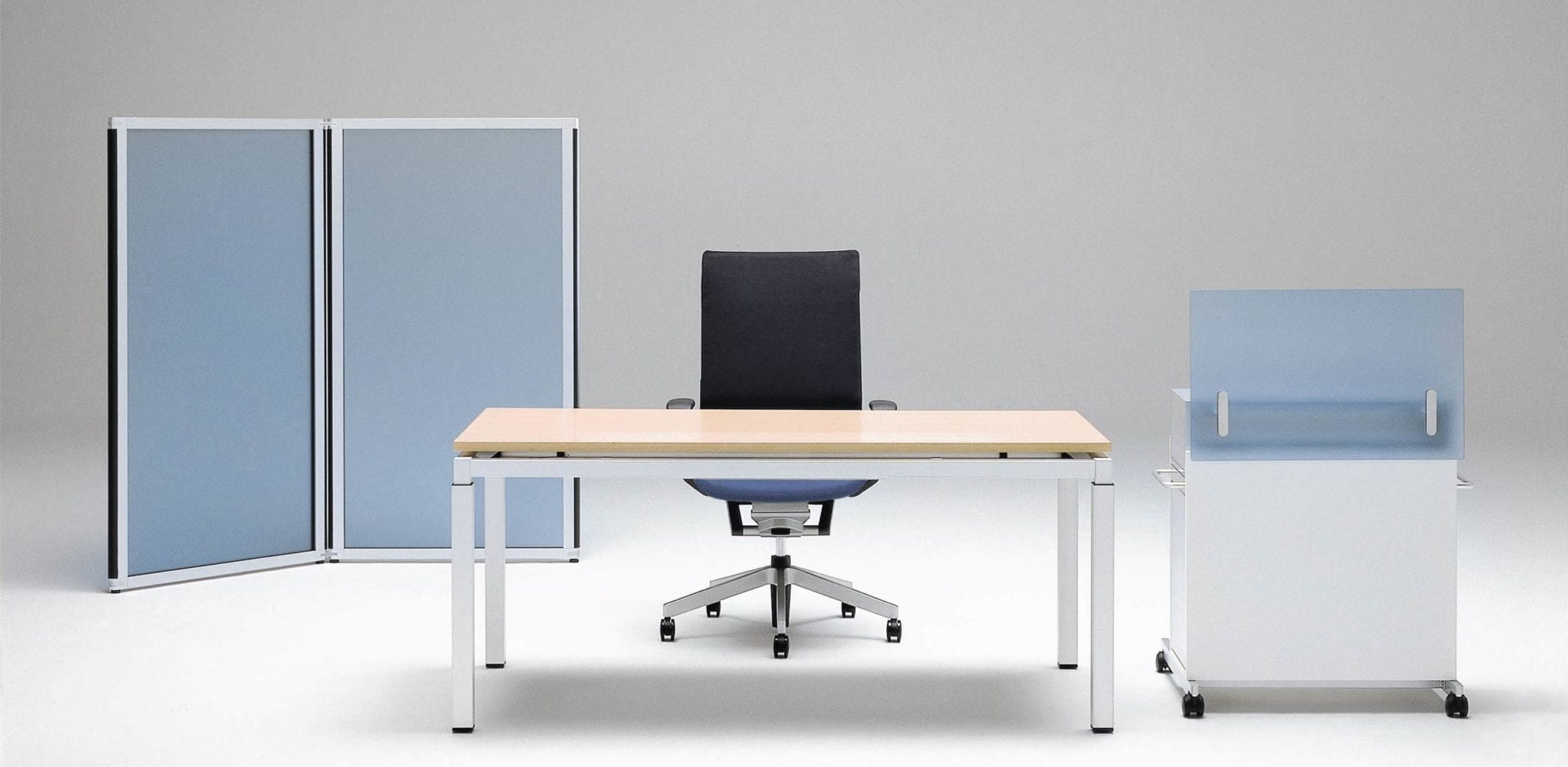
    Japanese office furniture maker Kokuyo is to open retail shops in Thailand targeting the growing ranks of people who work from home.

    Kokuyo Thailand is a joint venture between the Japanese parent (which holds 49 per cent) Central Group and local furniture maker Practicable.

    The company has opened a 250sqm showroom for walk-in customers on the ninth floor of Bangkok’s CentralWorld on Rama 1.

    “We are studying a dealer system as well as opening sales corners or shops in department stores in the next stage,” CEO Tarida Klaipracha told The Nation newspaper.

    A larger, 400sqm showroom is being planned for another shopping mall in 2020.

    Klaipracha said that when the company launched in Thailand in 2004, it focused on supplying office furniture to Japanese companies operating in the kingdom, broadening the target to Thai companies as it gained critical mass.

    “We achieved THB460 million (US$14.7 million) in total sales last year, up from THB430 million in 2016. Japanese clients accounted for 70 per cent of our sales with the balance to non-Japanese firms,” she said.

    “We aim to achieve Bt600 million in sales in 2020, with Japanese companies accounting for half of the total. About 5 per cent of sales is expected to non-Japanese clients who will be end-consumers.”

    MD Sachio Kobayashi said Kokuyo saw huge opportunity in the Thai office furniture market because there is no real major player in the category.

    The Thai office also oversees the Myanmar and Cambodia markets, while its Malaysian subsidiary looks after the Philippines and Vietnam.

  • Zilingo raises $54 million in a new funding round

    Zilingo raises $54 million in a new funding round

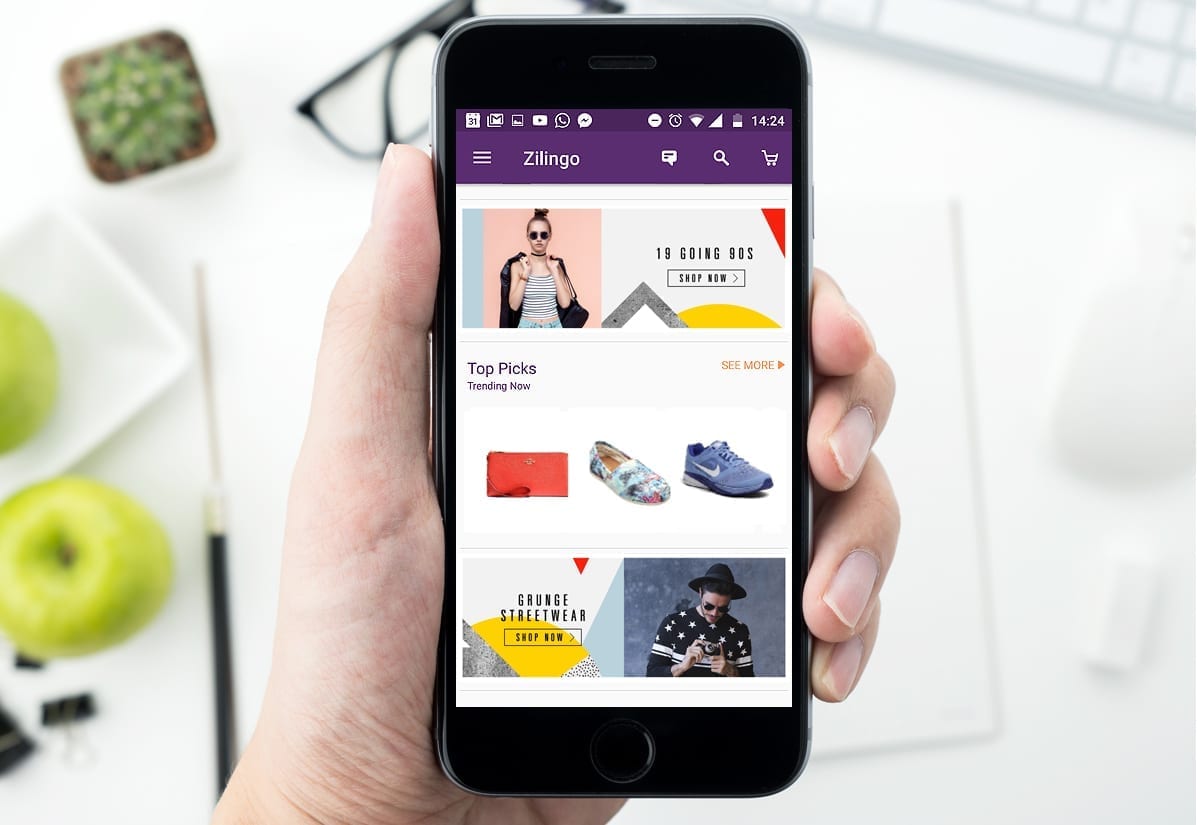
    Singapore-based lifestyle marketplace Zilingo has raised US$54 million in series-C funding, taking its total capital raised to $82 million.

    Zilingo was founded in October 2015 by Dhruv Kapoor and Ankiti Bose, who was inspired after seeing the clothing stalls in labyrinthine markets while backpacking across Indonesia and Thailand.

    Their idea was to connect a fragmented landscape of fashion supply for buyers across Asia.

    “Nowhere in the world has a horizontal e-commerce company also cracked fashion,” says Bose. “It’s a unique, high-margin category that is highly dependent on fast-moving cycles and has its own nuances. Unlike buying detergent or electronics, fashion is much more about your choice, individuality and trends. It requires a different approach than the rest of e-commerce.”

    Bose and Kapoor set out to build a proprietary platform where merchants could upload and manage their inventory in any language, using any currency, connecting them through 25 interfaces with logistics, warehousing and payment providers, as well as services like loans, cataloguing and insurance.

    They launched their B2C sites and apps in November 2015 across Southeast Asia, followed by their B2B business, Zilingo’s AsiaMall, where merchants internationally can buy wholesale from Asian suppliers.

    Zilingo is now selling in Indonesia, Singapore and Thailand, and ships internationally to four further countries. As well as Indonesia, Singapore and Thailand, Zilingo has supply bases in Bangladesh, Cambodia, China and Vietnam. There are more than 10,000 independent merchants using the platform to sell to millions of customers around Asia and the world.

    Revenue growth has growth tenfold, and during the past year Zilingo has launched a TV campaign in Indonesia and expanded its merchant ecosystem.

    Zilingo’s latest capital injection follows a $17 million series-B round five months ago.

    “We think the market is showing us the right signs in terms of adoption and retention, so it’s good to double down,” says Bose.

    Each Zilingo office has local leadership, and half the top leadership team are women. “Having so many women at the leadership level, despite being a tech company, gives us a special edge while scaling,” says Bose,

    “Our leadership team comes from 10 different countries in Asia, Europe and North America, and 15 languages are spoken. The cultural diversity gives the team a unique perspective on how to solve challenges creatively.”

  • AirAsia to change flight schedule due to Boracay closure

    AirAsia to change flight schedule due to Boracay closure

    AirAsia will change its flight schedule in line with the Philippines’ government order to close Boracay island for rehabilitation from April 26 to Oct 26, 2018.

    During the six-month period, AirAsia will make the following changes to its scheduled Caticlan (MPH) and Kalibo (KLO) flights.

    To not disrupt their guests’ holiday plans, AirAsia will mount additional flights to popular leisure destinations Palawan, Bohol, Cebu, and Davao in the Philippines.

    Guests who are affected by the changes and hold flight bookings from 26 April to 26 Oct, 2018 will be notified via email and SMS.

    “AirAsia strongly urges all guests to keep their email address and mobile number (with country code prefix) updated in their AirAsia member profile to ensure we can reach them for timely assistance,” said the low-cost airline in a statement on Thursday.

    For immediate assistance and additional information, customers can reach AirAsia via their contact channels listed on support.airasia.com.

    Listed below are the guides provided to assist customers.

    Affected guests will be able to choose one from the following service recovery options:

    a.     Change destination: Option to be accommodated on any domestic flights operated by AirAsia Philippines (carrier code Z2) within 30 days of the original travel date at no extra cost, subject to seat availability and government mandated taxes. Fare difference shall apply for international flights and changes to travel date beyond 30 calendar days; or

    b.     Move flight date: Change to a new travel date on the same route without additional cost, subject to seat availability; or

    c.     Credit account: Retain the value of fare in your AirAsia BIG Loyalty account for future travel with AirAsia. The online credit  account is valid for booking within 180 calendar days from the date of issue; or

    d.     Full refund: Obtain a full refund to your original payment method for the amount equivalent to your booking.

    Guests who wish to opt for move flight date, change destination or credit account are urged to fill in an e-Form available on support.airasia.com:

    1.     Click on the Email Us tab on the right panel

    2.     Select Enquiry/Request under Type of Feedback

    3.     Select Booking under Sub Category 1

    4.     Select Boracay Closure for Sub Category 2

    5.     Type in your option under Subject: “Boracay – Move Flight” OR ”Boracay – Change Destination” OR “Boracay – Credit Account”

    6.     Complete the remaining form fields and click Submit to proceed

    a.     For move flight, please provide new flight details (date and time) and passenger name(s)

    b.     For change of destination, please provide new destination, flight details (date and time) and passenger(s)

    c.     For credit account, please provide your AirAsia BIG Loyalty member ID

    Guests wanting a full refund must fill in an e-Form available on support.airasia.com:

    1.     Click on the Email Us tab on the right panel

    2.     Select Refund under Type of Feedback

    3.     Select Flight Cancellation under Sub Category 1

    4.     Type in Subject field: “Boracay – Refund”

    5.     Complete the remaining form fields and click Submit to proceed