Tag: asia

  • Time to go to into a retail rehab

    Time to go to into a retail rehab

    Why are retailers failing at such an alarming rate?

    The preconditions for any business to be successful are:

    1. Is there a real market need that I understand?
    2. Do I have access to a product or service address that need?
    3. Am I sufficiently equipped (skills, resources, motivation etc) to address this opportunity in a particular way that provides me with a competitive advantage or at least desirable point of difference?

    Points one and and two are usually not the issue because failure is quick – if the business even succeeds in getting off the ground.

    The root cause of many failures can be found in HOW the retailer chooses to play the arbitrage game of tapping into a supply to meet a need.

    That is, entrepreneurs will pick the way in which business is done (proposition delivered) and attempt to build some differentiation around that that can be defended at a profit.

    Timing: First or faster

    An example would be Zara that aims to bring the latest fashion (from the catwalk to the store) in less than six weeks – and if anecdotal reports are to be believed have done so in a matter of days. Or you can be the Concord. Or the movie house that shows all the premiers.

    Leverage:  Add value, minimise cost

    Someone turns raw meat into patties, someone solves the challenge of distributing fuel to every town in every country. Someone is the cheapest, someone figures out how to make things smell better, work differently, last longer or taste better. We are limited only by our imagination and the possibilities of innovation are endless. Of course, any particular innovation can be made redundant in a flash.

    Change: Adapt, transform, improve

    More than simply adding value, there are opportunities for entrepreneurs to transform products completely. Old tires can become road base. Cars can be turned into supercars or transformed into vehicles for mobility impaired people and clothes can be altered to fit. Wind can be turned into electricity.

    Access: Exclusive or convenient

    Businesses also exist on the premise that access to the product/ service is exclusive or particularly convenient. This is a very typical ‘advantage’ that many smaller retailers rely on, and it is most often also their weakness. E.g. to be the only menswear retailer in Yepoon or the only newsagent in the shopping centre, or maybe even the only convenience store on that particular side of that particular city block leverages ‘access’ as the method of arbitrage.

    Most small, product-oriented retailers tend to rely on the ‘access’ angle to create a POD. Retailers tend to be resellers, so innovation is not a primary focus. The only value-add lies in the bulk-breaking activity. These SME retailers are content to be ‘the only shoe shop’ in the mall as their core proposition.

    In the past this has been a legitimate approach to ‘capitalise’ on an opportunity. There has always been limits as to how far people would travel to gain access to a product, so geography-based retail propositions have been viable since forever.

    But, reliance on this particular approach is the reason why the technological shift in the market is causing serious competitive pressure. And being blind to the change that has occurred is the cause of many retail failures.

    Too many retailers rely on the fact that they are ‘the only’ cafe on the strip, the only menswear retailer in a suburb, the only servo on that street.

    If you merely rely on being the only store in a particular geography, the internet obliterated that point of difference because on the internet, geography hardly matters.

    Everything that is for sale is in every customer’s pocket. And the time delay (caused by delivery requirements) are (a) offset by cost saving and (b) becoming shorter and shorter. In metropolitan areas, many e-commerce providers are providing same-day delivery and food delivery businesses do it in a matter of hours.

    This leaves traditional corner-stores an ever-shrinking market comprising mostly of emergency shoppers or impulse buyers.

    That is why Amazon poses such a threat to retailers – suddenly there is a competitor that it is more convenient and cheaper than your shop on your corner, and you can do very little about it.

    The internet has made geography irrelevant – and if THAT has been the basis of your business, so is the business.

    The only appropriate response is to change your execution. You need pick a different propositional dimension to differentiate.

    The problem is obvious. The solution is obvious. But maybe, like any good rehab program, the starting point is to admit the problem.

  • Arvato and C & A are developing new cartons for the e-commerce business

    Arvato and C & A are developing new cartons for the e-commerce business

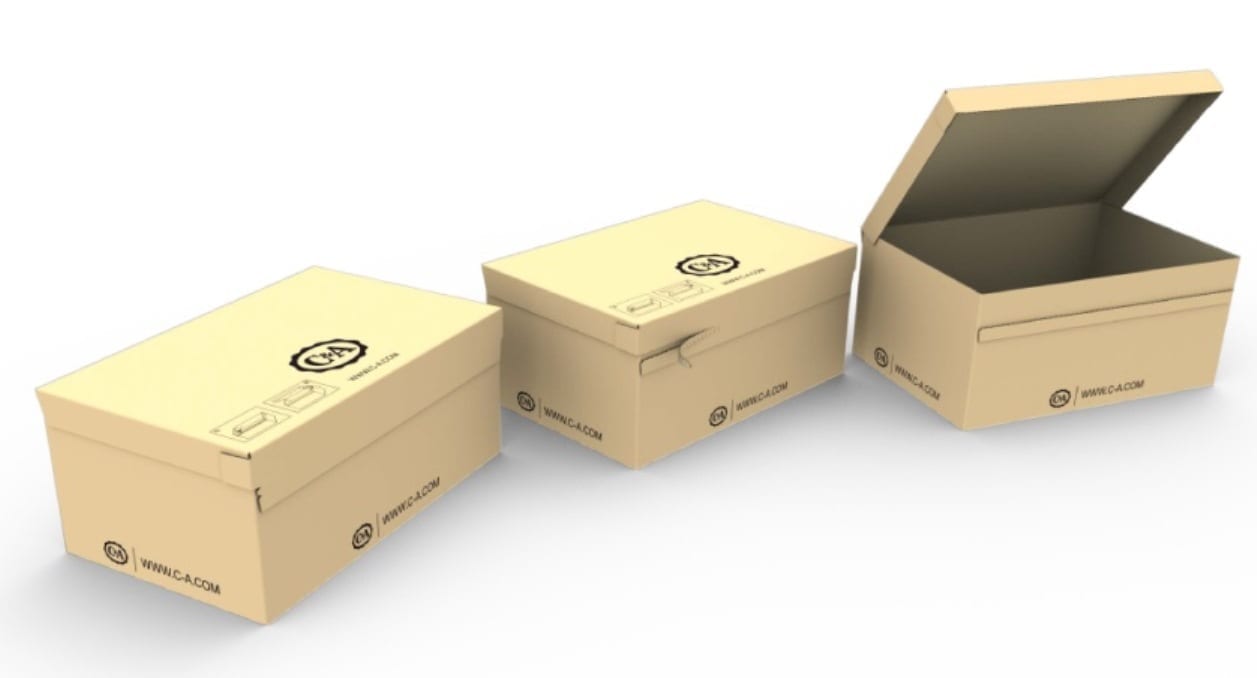
    Arvato SCM Solutions and C & A have jointly developed a new packaging solution for shipping fashion items in the online business. So far, cartons have already been automatically cut to the actual size required, which saves costs on the material and optimizes shipping, as less air is transported. Now, the lid has been redesigned, and is fixed to the back and front of the carton after being positioned. The punched tear strip on the front of the lid enables easy opening as well as re-closing in case of a return of the package. The cardboard itself, which adeptly displays C & A branding on all sides, is made from unbleached recycled material.

    “We have noticed that many of our customers are not sure where to open packages,” says Knut Brüggemann, Head of E-Commerce Operations at C & A. “That’s why we analysed our packaging concept together with Arvato and developed a more functional design that now displays our C & A branding even more prominently.”

    Efficient use of materials saves costs

    But not only simple handling and an appealing design are required for modern packaging solutions. Sustainability also plays an increasingly important role against the backdrop of steadily increasing transport volumes in online commerce. For this reason, C & A not only uses recycled materials in its cardboard packaging, but also uses as little material and space as possible to protect the environment: for this reason, the cardboard is automatically cut to the correct size before the package is sealed.

    In practice, this process is as follows: after the articles have been picked and automatically pre-sorted for the customer’s order, an employee at the shipping packing station checks the ordered goods for completeness and packs all articles in a prepared cardboard base. After that, the open carton is transported to the sealing machine by means of conveyor technology that is equipped with both photo and video documentation as well as weight determination. After the delivery papers and a return label have been automatically attached to the packaging, a pressure-sensitive unit measures the box filling height. Once this has been determined, the cardboard is reduced at the corners to the exact size in millimetres by means of cutting knives and is then glued to the newly developed cardboard lid.

    Through this cutting process, less filler material such as air cushioning is needed because the cut-down material remains in the carton as a space filler. In addition, adhesive material is saved because, thanks to the

    innovative cover, only an adhesive strip for closing a return shipment is required at the most.

    A further environmental aspect: “If the boxes contain less air, they require less space on the truck. This reduces the transport volume by around 250 truck journeys per year. Not only does this benefit the environment through less CO2 pollution, but also the consumer who has less packaging material to dispose of,” explains Michael Sorge, site manager of the 45,000 m² Arvato distribution centre in Hannover-Langenhagen, from where C & A customers in 20 European countries will soon be supplied. “Space-saving packaging brings the requirements of environmental compatibility, resource avoidance, damage limitation and customer experience into an optimal relationship.”

  • How to action data from your business

    How to action data from your business

    E-commerce websites have the ability to collect a ridiculous amount of information.

    With access to such large data sets it’s no wonder so many e-commerce businesses are touting about how “big data” and “business intelligence” (“BI”) sets them apart from the pack.

    We certainly agree that the insights that can be generated from data represent a significant opportunity for a business of any size, but for all the focus on the systems, tools, and resources, the other side of BI needs just as much consideration – that is, what are you doing with the information?

    The ability to answer this question is what turns the data from numbers into actionable insights. While there is no shortage to the questions and solutions that data can provide, BI gets discussed in such general terms that it’s not always clear how one takes data and uses it to make actionable recommendations. So, how do you turn data into actionable insights?

    First you need to find patterns in your data.

    A year has a lot of data points, so start with peak sales period(s). Look at your data, including the age and gender shopping on your website during that key period, it can offer meaningful insights that can be actioned to improve performance over that period. We’ve found that there are patterns to indicate when certain customers tend to shop over others.

    For instance, we found that on certain key dates male customers aged 18-24 were more likely to go online and shop than other days. We also found that during other key dates in the period, woman aged above 35 years were shopping on certain dates but what they were purchasing on those dates were largely for younger males, suggesting that they were purchasing on behalf of their children.

    With this data in hand, we then determined what our key objectives were for this period to best identify how to tailor a marketing plan to achieve them; looking to grow revenue so we used the data to launch specific marketing campaigns aimed at increasing conversion rates, capturing new customers and recovering customers who had not purchased for over 360 days. With these goals in hand, we identified specific products that were likely to resonate by customer type before creating multiple creative assets with the product, tone of voice, message/visuals all geared towards each specific customer type. Using these assets to place them in emails and media where each of these customer sets were most likely to view it in order to maximise the exposure, click through rate and conversion. And finally, we launched look-a-like campaigns across social media to capture new customers.

    While this data was used to find ways to enhance key sales periods from a marketing perspective, the insights can be used to make decisions from as early on as setting the season’s buying plan. Setting a buying plan that considers what cross-sell opportunities exist to the shopper at hand – without compromising the brand proposition – would provide an even stronger opportunity to maximise sales. Simply knowing who you are buying for and what dates they are likely to buy let you both target your messaging and curate what you’re selling to meet that customers’ needs.

    The specific implementation is an important component – what, when and where you are advertising needs to be aligned with the insights you’ve found and the assortment aligned to your customer, but these serve as examples into how you can use your data to action meaningful change to your marketing and buying initiatives.

  • Soo Kee Group plans rebranding

    Soo Kee Group plans rebranding

    Listed jewellery retailer Soo Kee Group is planning to change its name.

    In a statement to shareholders, CEO and executive director Lim Yong Sheng says the company proposes to adopt the new title SK Jewellery Group.

    “The group currently retails fashionable jewellery and mementoes under, amongst others, the well-established SK Jewellery brand in Singapore and abroad. As such, the board is of the view that the proposed change of name will better reflect the profile, business activities and business direction of the group,” he wrote.

    “In addition, the, the proposed change of name will also allow investors and the group’s business partners to better identify and associate the company with the SK Jewellery brand.”

    Shareholder approval for the change will be decided at an extraordinary general meeting of the company on April 30, following the annual meeting.

    The new name has already been reserved with the Accounting and Corporate Regulatory Authority of Singapore.

  • Pocket Greens introduces a brand new travelling farm

    Pocket Greens introduces a brand new travelling farm

    Pocket Greens has introduced Singapore’s first-ever travelling farm, stopping at three locations for three months each – Bougainvillea Park, Raffles Place Park and Dhoby Ghaut Green.

    The urban farming consultancy says people do not need to own a plot of land to have a garden. Its “express gardening” concept enables people to grow microgreens and other green vegetables, even in HDB homes.

    The Travelling Farm (TTF) is housed in a yellow 20-foot container fitted out as a shop for plants and gardening equipment. It also provides craft activities and mini gardening lessons that can also be accessed online.

    Visitors can also sample drinks and snacks made from the farm’s produce, such as a salad of microgreens like sunflower and cranberry hibiscus shoots.

    Founder Eng Ting Ting says the aim is to reach out to different groups of people. The farm adapts to its locale. While it stocks more flora-like air-purifying plants for CBD office workers, it has more herbs and plants like chilli while in the residential area of Bougainvillea Park.

    The TTF’s roving set-up is made possible by a Ministry of Trade and Industry scheme, which has granted it use of park space for 36 months.

  • Swiss Prestige incorporates Armin Strom watches

    Swiss Prestige incorporates Armin Strom watches

    Armin Strom has formed a distributor partnership with Swiss Prestige, which promotes Swiss watch manufacturers in Asia.

    Swiss Prestige CEO Jacqueline Ng says Armin Strom, with its distinctive designs featuring in-house movements, all made in small quantities, will be a “terrific” addition to the company’s curated selection.

    Armin Strom watches are designed so the inner mechanics of the movement can be seen through the dial.

    This partnership is an extension of the Armin Strom’s business network. With 20 employees in its Bienne headquarters, the company designs and makes all its own movements and cases. Every watch is hand finished, and can be personalised.

    Swiss Prestige represents Swiss watch brands in Hong Kong, China, Taiwan and Australia.

  • Honestbee aims for national expansion in the Philippines

    Honestbee aims for national expansion in the Philippines

    After launching last year, online grocery- and food-delivery service Honestbee Philippines has set a goal of national expansion.

    Set up in Singapore in 2014, the concept soon spread to such neighbouring countries as Malaysia, Taiwan, Indonesia, Thailand, Hong Kong and Japan.

    In the Philippines, meanwhile, the Honestbee team has grown from five members to 150 “and counting”, says country manager Crystal Lee-Gonzalez. “We have about 100 grocery partners and nearly 300 food partners on the platform.”

    Services have expanded to include Metro Manila areas like Antipolo, Cainta, Malabon, Malolos Bulacan, Marikina, Meycauayan, Novaliches and Valenzuela. It has also launched in Metro Cebu, with other locations such as Camanava under consideration.

    “Right now, we have our eyes on highly populated urban areas with relatively difficult traffic conditions, such as Dasmariñas, Imus and Lipa,” says Lee-Gonzalez.

    Aside from online grocery shopping, a Wet Market Concierge Service has been added. Consumers can choose and buy the best produce and freshest seafood from the Alabang Wet Market, Cubao Farmer’s Market and the Pasay Wet Market.

    Honestbee has also launched concierge services for laundry pick-up and delivery (including dry-cleaning), and will soon offer deliveries from restaurants.

  • Billabong’s last day on the Exchange

    Billabong’s last day on the Exchange

    Monday will be Billabong International’s last day of trading on the ASX after the Federal Court approved Quiksilver parent Boardriders Inc’s scheme of arrangement to acquire all of the issued shares in the company.

    The surf wear business will suspend from quotation and the close of trading on April 9, notifying the market that the $1.05 per share Boardriders offer was legally effective on Monday morning.

    Billabong shareholders who hold shares at the record date for the scheme (16 April) are due to receive payment under the scheme on 24 April.

    The Boardriders deal passed its major hurdle late last month when shareholders voted in favour of the scheme, despite a last-minute change to the deal that saw the price increase by 5 cents per share.

    85.87 per cent of shareholders voted in favour of the deal, passing the 75 per cent needed for the acquisition to proceed.

    Not all shareholders were happy with the outcome, with a cloud dropping over the deal around the price in the lead up to the shareholder vote, but in the end Billabong chairman Ian Pollard, a staunch advocate of the proposal, said the business would be left in “good hands”.

    “The outcome of today is that we will see the creation of one of the world’s strongest action sports companies,” Pollard said of the deal late last month.

    “I believe the brand will be in good hands following today’s vote.”

  • Pop-ups leading way for Dickies Vietnam

    Pop-ups leading way for Dickies Vietnam

    Dickies Vietnam is planning to open its first Ho Chi Minh City flagship store.

    Meanwhile, the American apparel brand is paving the way by opening pop-up stores at Diamond Plaza, Parkson C&T, Parkson Hung Vuong, Parkson Saigon Tourist and Takashimaya from this month through to June.

    Dickies arrived in Vietnam in November under distribution deal between Son Kim Fashion and Williamson-Dickie, with a flagship store being opened at Vincom Royal City in Hanoi.

    The group plans to open 30 Dickies stores in five years.

  • Starbucks Coffee Korea walks the talk

    Starbucks Coffee Korea walks the talk

    Voice recognition ordering has been introduced by Starbucks Coffee Korea, thanks to a 50/50 JV between Starbucks Coffee International and Shinsegae Group.

    Starbucks Coffee Korea has become the first retailer to use Samsung’s intelligent assistant Bixby, available on certain Samsung Galaxy devices, to allow for end-to-end ordering and payment.

    The features are an extension of Starbucks Siren Order, the company’s mobile order-and-pay technology that lets customers in South Korea order and pay for their purchases before arriving at the store.

    Bixby allows members of Starbucks loyalty program (My Starbucks Rewards) to place an order and pay through voice recognition “on command”. Customers simply speak as they would to a barista, including modifying their drinks to meet their preferences.

  • Thai Airways ban obese flyers and young kids from business class on new Dreamliner

    Thai Airways ban obese flyers and young kids from business class on new Dreamliner

    The ban was explained on Friday by the airline’s director of security and flight standard division, Flight Lieutenant Pratthana Pattanasirim. Thai Airways received two new 787-9 Dreamliners in September, which included brand new Zodiac Cirrus seats for their Royal Silk business class in a more spacious 1-2-1 configuration.

    The seats convert to a fully flat bed and allow privacy and direct aisle access.

    In accordance with the US Federal Aviation Administration, the seats have been installed with new airbag systems and safety belts, which cannot accommodate passengers with a girth wider than 56 inches (142.24 centimetres).

    This also rules out parents flying with young children seated on their laps, who will now be forced to fly cattle class on the Bangkok to Auckland and Taipei routes the new Dreamliners operate.

    The new Boeing 787-9 planes were introduced to bring the most technologically advanced aircraft  to its fleet for passenger comfort, and to open up opportunities to fly new long distance, non-stop routes to destinations such as North America.

    This is in addition to their existing fleet of Boeing 787-8s (slightly smaller than the 787-9s) and Airbus A350s (a direct competitor to Boeing’s Dreamliner) – which operate on flight routes to Europe, Melbourne and Singapore.

    Of course, this is not the first time international airlines have sidelined overweight passengers.

    In 2013, Samoa Air was the world’s first airline to charge passengers according to their weight. The now defunct airline asked passengers for one Samoan tala –around 55 cents – for each kilo that they were bringing aboard (including luggage). Samoa has one of the highest rates of obesity in the world, with nearly three quarters of its adult population considered obese.

    Hawaiian Airlines also introduced a new policy for those flying to or from Pago Pago, American Samoa’s capital, whereby passengers were no longer allowed to choose their seats online and were subject to weighing before boarding, so that the airline could redistribute weight in its cabins accordingly.

    The enforced weigh-in was made after the airline discovered their fuel burn on Pago Pago flights were consistently much higher than projected, indicating their estimated weight for the flight route was inaccurate.

    In late 2017, Finnair began weighing their boarding passengers as they believed the average weight estimates from the European Aviation Safety Agency (EASA) – a report compiled nine years ago – were off.

    The EASA estimates the average male weighs 84.6 kilograms, and the average female 66.5 kilograms. Yet average weights for the Finnish population tend to be slightly higher at 85 kilograms for males and 70 kilograms for females.

    So Finnair set about conducting its own report, surveying 2000 voluntary passengers to gain more current figures on passengers’ weight.

    To estimate how much fuel is required for a flight, airlines must know the weight its aircraft carries.

    The heavier the plane, the more expensive the flight, but safety is an important factor too as planes have a maximum take-off weight.

    The new seats in business have been installed with new airbag systems and safety belts, which cannot accommodate passengers with a girth wider than 142.24 centimetres.

  • Fook Tai Holdings seeking to go on the stock exchange

    Fook Tai Holdings seeking to go on the stock exchange

    Jewellery retailer Hong Kong Fook Tai Holdings is seeking an IPO on the growth enterprises market board with the aim of opening more retail stores and improving brand recognition.

    Fook Tai runs seven retail shops under the Fook Tai Jewellery brand in Hong Kong, while also selling products to VIP customers at its office. The company is a wholesaler of products mainly to a few jewellery retailers with stores outside Hong Kong and is a trader of recycled gold products. The company’s products come under three major categories – gold jewelry, platinum, karat gold and silver jewellery, as well as gem-set jewellery for mid- to high-end customers. Those categories accounted for 32.4, 4 and 24.3 per cent of total revenue respectively last year.

    Recycled gold products bought from the public and sold to recycled gold products collector/dealers, who resell them to goldsmiths, generated 39.3 per cent of total revenue.

    All the retail shops of Fook Tai are in residential areas of non-prime districts in Hong Kong, including Tsuen Wan, Jordan, Sham Shui Po, Tseung Kwan O, Sheung Shui and Kwun Tong. Fook Tai believes these locations will help grow a loyal customer base.

    The company intends to grow sales in major shopping and residential areas after going public. It plans to open two street-level shops in North Point and Sheung Shui in June and October respectively this year.

    Fook Tai directors believe the company should broaden its customer base and try to attract mainland customers. The new Sheung Shui store is near the border and is expected to benefit from mainland tourists. Also, North Point’s population includes high-income immigrants from the mainland.

    Fook Tai also plans to refurbish its retail stores after going public, and aims to attract younger buyers.

    Meanwhile, in its IPO prospectus, Fook Tai says its business may be adversely affected by the fluctuation of gold prices, while turnover from retail stores is subject to the risk of decline in the coming years.

  • PastaMania flagship opens in Colombo

    PastaMania flagship opens in Colombo

    PastaMania, Singapore’s largest Italian casual-dining restaurant chain, has opened its first restaurant in Sri Lanka.

    The PastaMania Sri Lanka flagship is located in Colombo on R A De Mal Mawatha, Colombo 3 (otherwise known as Duplication Road).

    Sri Lanka is the company’s 14th international market and it now has more than 50 outlets, with plans to continue expansion.

    Finding the right location and building the restaurant in Colombo took more than a year.

    “Our architect and contractors work with the PastaMania international design team from external facade to interior space planning. PastaMania’s brand elements from the Italian grocery shop ‘Alimentari’, open-kitchen ‘Pasta Al Dente’, newspaper stand ‘Edicola’ to details like the mural wall and signage are all carefully designed and fabricated,” said Hilme Azeez, MD (F&B business) of licensee Azeez Brothers.

    “The PastaMania Sri Lanka flagship is designed to reflect Italy’s piazza concept, creating the ambience of the day-to-day public life of an Italian ‘City Square’.

    “The timing is right as we see a lot potential for casual dining in Sri Lanka. We want to bring a ‘piece of Italy’ and the pleasure of ‘living like an Italian’ to the local and expatriate communities in Sri Lanka.”

    Wilson Lim, executive director, international business, with PastaMania’s parent, Commonwealth Capital Group, said the restaurant will use top-grade ingredients from Italy, such as high-protein durum wheat pasta, extra virgin olive oil, coffee and gelato.

    PastaMania Sri Lanka, will roll out the ‘Doughworkz’ programme whereby young children will be taught how to make their own ‘pasta and pizza’ and to work within a community. They will also be taught on healthy eating habits and living through our series of ‘PastaMons’ characters and story books aimed at educating the young generation in a ‘Learn-as-You-Play’ mode.

  • Qoo10 visitors balloon by 70%

    Qoo10 visitors balloon by 70%

    Visitors to e-commerce site Qoo10 ballooned 70 per cent to hit an average of 14.4 million in last year’s fourth quarter, according to Malaysian online aggregator iPrice.

    Qoo10 has about 3 million registered members and offers products ranging from women’s fashion to groceries, and services that include credit card and insurance policy subscriptions. The site offers daily deals, limited-time sales and coupons.

    Discounts and savings of up to 70 per cent off are offered through promotional deals.

    Qoo10’s Live10 mobile app includes a GPS-enabled interactive game with daily discounts, coupons or Qpoints as prizes.

    Based in Singapore as a JV established between founder Ku Young Bae and eBay, Qoo10 launched online in 2010 and has expanded its marketplaces to Korea, Indonesia, Malaysia, Hong Kong and Mainland China.

  • Fendi Thailand has launched two pop-up stores in Bangkok

    Fendi Thailand has launched two pop-up stores in Bangkok

    Fendi Thailand has launched two pop-up stores in Bangkok’s Siam Paragon. Its concept is a luxurious reinterpretation of the Roman-style vintage newsstands typical of piazza in the heart of Rome. One kiosk is dedicated to the label’s spring/summer women’s collection while the other puts its focus on the men’s collection. Both outlets feature ready-to-wear, leather goods, small leather goods, accessories and shoes.

    To mark the launch of the pop-ups, Fendi hosted a Roman-inspired cocktail party with special guests including Chontida Asavahame, Mai Davika, Nattarat Nopparuttayaporn, Note Panayangkool, Pasakorn Vanasirikul, Sonya Singha, Sorawis Saengvanich and Violette Wautier.

    Included in the men’s collection are everyday Fendi items including illustrations done by British artist Sue Tilley. Items include a glossy red corkscrew, an antique set of keys, leaky bathroom taps, a plastic rotary telephone and a desk lamp.

    The kiosks will be active until June.