Tag: asia

  • Apple patching a serious WebKit flaw by disseminating iOS 16.5.1 (c)

    Apple patching a serious WebKit flaw by disseminating iOS 16.5.1 (c)

    Back on June 21st, Apple disseminated iOS 16.5.1 and iPadOS 16.5.1. But soon it was discovered that the updates had a flaw in the WebKit browser engine that could lead an attacker to create an arbitrary code execution which would allow said attacker to run any command or code on a targeted device. That is a serious problem and to top it off, Apple said that it had reports that the vulnerability was being actively exploited.
    Instead of having to develop iOS 16.5.2 and iPadOS 16.5.2, Apple decided to use its Rapid Security Response feature to push out iOS 16.5.1 (a) and iPadOS 16.5.1 (a). These updates can be installed in a matter of minutes and can be quickly disseminated to Apple device users to patch a serious vulnerability such as the one that was supposed to be patched by Monday’s update. Note that we said that the update was “supposed” to patch the flaw. That’s because the updates sent out to fix the WebKit issue on Monday had issues of their own.
    According to several iPhone and iPad users, the updates changed the user agent for Safari. The user agent tells server information about the device requesting content from it so the server knows what information to send out. For example, the user agent will determine whether a request to see a phone manufacturer’s website should return the U.S. site with models sold in the States priced in Dollars, or whether it should show the site created for European buyers that lists models offered on the continent with prices posted in Euros.
    As a result of the issue with the user agent, iPhone, and iPad users complained that they were not able to access sites like Zoom, Facebook, and Instagram after installing iOS 16.5.1 (a) and iPadOS 16.5.1 (a). Apple, realizing that there was a problem with the updates, pulled them yesterday and even included directions on how to delete them. But if you haven’t deleted the updates, don’t worry. Apple has now released iOS 16.5.1 (c) and iPadOS 16.5.1 (c).
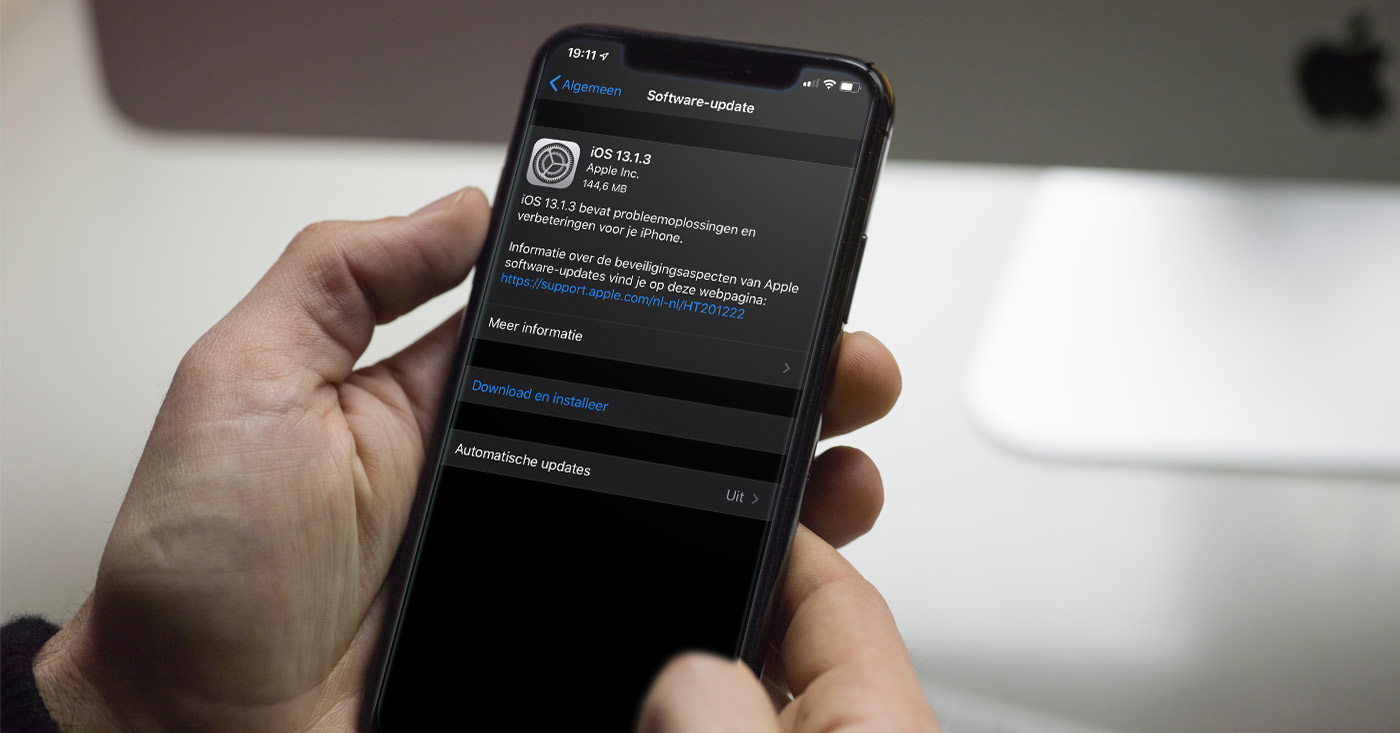
    We said the other day that the vulnerability was too serious for Apple not to push out another patch right away, and now it has happened. To download and install the updates, go to Settings > General > Software Updates and follow the directions. Hopefully, Apple won’t be taking these updates back.

  • UBS Announces Latest Round of Personnel Decisions

    UBS Announces Latest Round of Personnel Decisions

    The bank has made further personnel decisions as it reshuffles staff following its takeover of Credit Suisse.

    UBS has made another round of personnel decisions, appointing Patrick Grob as head of Global Wealth Management Unified Global Markets in the process, according to an internal memo.

    The global markets team also reportedly includes Brent Johnson (head of execution services), Dushyant Chadha (head of derivatives & solutions), Natalie Horton (head of financing), Chris Purves (head of digital platforms), and David Innerdale (head of global markets risk & trading).

    In Asia Pacific, Thomas de Garidel and Tim Wannenmacher are co-heads of Global Markets APAC, and in Europe, Middle East, and Africa (EMEA) Paolo Croce gets the leadership role.

    Credit Suisse also made several new appointments. Olivier Charhon is named operating officer for risk and resource management at the UBS investment bank. Neil Hosie, formerly head of Global Equities at Credit Suisse, is appointed co-head of Global Markets Distribution.

  • Spotify targets Gen Z Filipino and Indonesian listeners with local artists in new brand film

    Spotify targets Gen Z Filipino and Indonesian listeners with local artists in new brand film

    Spotify aims to connect with their Gen Z Filipino and Indonesian listeners through their new “Music That Finds You” campaign that illustrates the streaming platform’s personalized music discovery services.

    The campaign, which stars Pinoy hip-hop artists Nik Makino and Flow G and Indonesian rock band NOAH, will span across film, television, OOH, and digital assets.

    “Gen Z are voracious consumers of Spotify’s library of audio content,” said Jan-Paul Jeffrey, SEA head of marketing, Spotify.

    “They play more than 578 billion minutes of music in Indonesia and the Philippines and are more engaged with digital audio than any other generation,” he continued.

    The brand film which features Nik Makino and Flow G for the Philippines begins with an individual struggling to study for her college entrance exams. When she presses play on the Discover Weekly personalized playlist, a light, reminiscent of a bat signal, shines from her bedroom window

    The hip hop duo then ziplines through the city from the party they were at to the protagonist’s house to perform for her as she resumes her studying while bopping along with them.

    The brand film brings the magic of Spotify to life and showcases the cultural influence Spotify has on Gen Z listeners that witness how niche homegrown artists are able to amass streams on Spotify, according to a statement by the brand.

    “As the world’s largest global music streaming service, Spotify has the unique ability to reach youths plugged into culture and provide them with an avenue to foster more meaningful connections with artists and podcasters they love,” added Jeffrey.

    Similarly, the advertisement for Indonesia begins with an individual playing their Discover Weekly playlist before starting their morning when members from NOAH parachute out of an airplane filled with other artists.

    As NOAH rocks out with the protagonist in his front yard, the advertisement emphasizes the playlist’s capabilities to provide listeners with personalized music that will make their day better.

    Along with Discover Weekly, Spotify has Daily Mixes and their Time Capsule which are both tailored specifically to each individual listener, while features such as BLEND offer a social experience for any two listeners with a shared playlist.

    As Spotify improves its services for their listeners, last month the streaming platform announced that it would be conducting another round of layoffs, just a few months after its previous wave of job cuts.

    This particular wave affects the podcast division, wherein approximately 2% of Spotify’s workforce in this division will be let go.

    According to Spotify in a statement, it is expanding its partnership efforts with leading podcasters from across the globe, with a tailored approach optimized for each show and creator which marks a fundamental pivot for Spotify in order to support the creator community better.

  • Uniqlo parent’s profit seen soaring to a Q3 record on China recovery

    Uniqlo parent’s profit seen soaring to a Q3 record on China recovery

    The Japanese operator of apparel retailer Uniqlo is expected by analysts to post a 25 percent jump in profit to a third-quarter record on Thursday (Jul 13), when the focus will be on whether its sales recovery in China is on track.

    Fast Retailing’s operating profit in the three months through May likely reached 102.4 billion yen (US$733.37 million), according to the average of forecasts from seven analysts surveyed by Refinitiv. That’s compared to 81.8 billion yen posted last year, a company record for the third quarter.

    The company, known for its fleece jackets and inexpensive basics, has 925 Uniqlo outlets in mainland China, more than in Japan and making it a bellwether for a retail market that was hammered by strict COVID-19 restrictions in recent years.

    Business in China started to turn around in January, resulting in sharp increases in sales and profit from the region in the second quarter, the company said in April.

    Fast Retailing’s shares have soared 30 percent so far this year, helping founder Tadashi Yanai cement his place as Japan’s richest person. The shares have outpaced a 23 percent advance in the benchmark Nikkei which has been one of the hottest equity markets worldwide.

    “The recovery in China has been weaker than expected, but Uniqlo is well positioned,” said Jamie Halse, who manages US$500 million in Japan strategies at Platinum Asset Management in Sydney but does not currently own Fast Retailing shares. “We have a positive view on the business, but are apprehensive of the elevated expectations represented in a premium valuation.”

    While China languished under lengthy pandemic curbs, Fast Retailing put more focus on its North American and European operations.

    Uniqlo had 61 locations in North America as of February, and is adding four stores in the US and two in Canada this summer as part of a plan to reach 200 by 2027.

  • New Balance introduces new retail concept to Singapore

    New Balance introduces new retail concept to Singapore

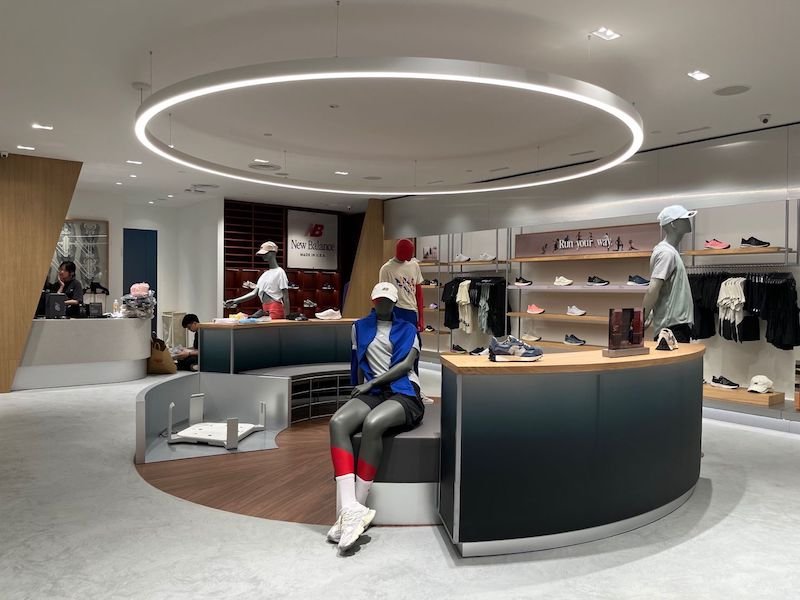
    New Balance recently opened a concept store in Singapore, featuring a Volumental 3D foot scanner in the fitting area.

    Since partnering with Volumental in 2017, the retailer says that it has scanned the feet of more than one million shoppers worldwide.

    The scan, which takes less than five seconds, provides employees with detailed information about a customer’s feet, helping them find a shoe that’s sure to fit.

    Volumental claims that the solution helps brands and retailers to: reduce return rates by 18%; increase footwear sales by 20%; achieve email capture rates of 71%.

    Earlier this year, Volumental launched a new self-service version of its AI-powered foot scanners.

    Specifically designed for an in-store experience, customers can take their own foot measurements at the click of a button and receive their best-fitting footwear recommendations on their phones.

    Volumental said it expected to launch this globally starting with select stores in the sporting goods industry, outlet malls and brand warehouses in 2023. This followed a beta test with Under Armour.

    “Our new self-service scanners will bring the same technology that specialty footwear retailers have enjoyed to many more retail segments,” said Alper Aydemir, CEO, Volumental.

    “Having worked with footwear retailers across different store formats, service environments, and staffing models, we realized the need for a self-service enabled shopping experience that is both innovative and easy to use for shoppers.”

    “This solution takes the guesswork out of the whole fitting experience and helps shoppers make smarter and faster purchase decisions with better-fit outcomes.”

    “The personalized recommendations create a more engaging customer experience, allow retailers to manage inventory in a much smarter way, and help solve the huge returns issue facing the industry.”

    Volumental’s self-service scanners will be placed in dedicated co-branded spaces in-store.

    Touchscreens will provide the customer with instructions on use as well as nearly instant personalized size recommendations on their perfect fitting brands and styles.

    Volumental was highly commended at the 2022 RTIH Innovation Awards last month, after impressing our judging panel in the Omnichannel Retail Initiative of the Year category.

    Our 2022 winners and highly commended entries were revealed at a sold-out event in central London on Tuesday, 6th December.

    RTIH Editor, Scott Thompson, said: “Innovation and technology play a critical role in the success of the retail sector, so it is great to recognize standout examples through our awards.”

    “Thanks to all those who entered the 2022 event. We received a record number of submissions and many fantastic examples of the continued resilience and dynamism of the retail space during hugely challenging times.”

    “Congratulations to our 2022 retail technology hall of fame entrants.”

  • Olive oil brand Moro launches Eco Bottle made from recycled material

    Olive oil brand Moro launches Eco Bottle made from recycled material

    Moro, Australia’s number one brand of olive oil*, has expanded its olive oil and vinegar ranges with the launch of four new products.
    The new flavours to market include:

    • Moro Intenso Extra Virgin Olive Oil;
    • Moro Sherry Vinegar;
    • Moro Unfiltered and Organic Apple Cider Vinegar with the ‘Mother’ and
    • Moro Gourmet Chilli Glaze with Balsamic Vinegar of Modena.

    Marketing and Innovations Manager at Moro, Nicolett Butchard, said these products were developed in response to the growing consumer trend towards inspired home cooking.

    “The ongoing trend towards home cooking and creating a meal experience, is leading consumers to increasingly want to discover new flavours and experiment with easy and new ways to add depth of flavour to meals,” Nicolett said.

    “As a category leader, Moro puts great importance on the early identification of cooking and flavour trends, a must when striving to provide accessible, quality and authentic flavours that appeal to consumers”.

    “We can’t wait to hear how consumers find the newest additions to their cooking,” Nicolett said.

    New innovations: 
    Moro Intenso is the most robust and peppery Extra Virgin Olive Oil in the Moro range and was developed in response to consumers’ growing appreciation for different flavours of extra virgin olive oil.

    Moro’s Sherry Vinegar is produced in the Jerez region of Spain and aged for six months in oak barrels . A deep and complex flavour which is ideal for simply enhancing salad dressings or marinades but versatile enough for use in stews, soups and sauces.

    Moro’s Organic Apple Cider Vinegar is unfiltered and retains ‘The Mother’ which is linked to health benefits such as improved digestion and cholesterol management. Made with the finest Italian apples, this versatile vinegar will add a hint of fruit flavour to dressings, marinades and sauces.

    Moro’s Gourmet Chilli Glaze is a deliciously thick consistency made with Balsamic Vinegar of Modena and Italian chillies. Brush over meats prior to cooking or drizzle over salads for an easy way to add some warmth and bite to dishes.

  • Pirelli Launches P Zero Trofeo RS Tyres For Supercars, Hypercars

    Pirelli Launches P Zero Trofeo RS Tyres For Supercars, Hypercars

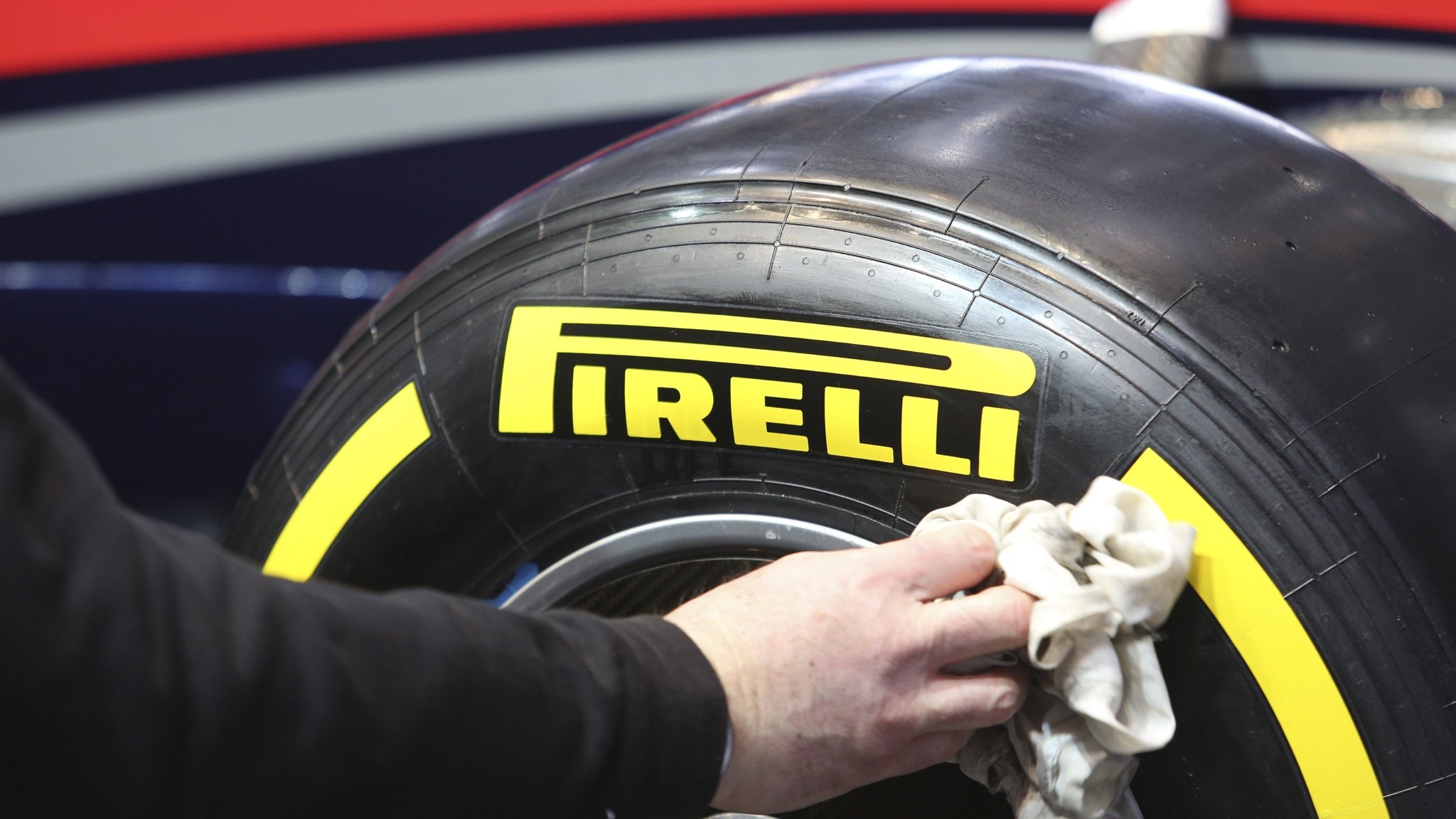
    Pirelli has expanded its range of P Zero tyre series with the new semi-slick Trofeo RS. Pirelli says that the tyres are the technical successor of the Trofeo R and unlike the latter are available to manufacturers for use as an OEM part. The Trofeo R were only offered as aftermarket alternatives. Pagani Automobili, the Italian hypercar manufacturer, has already chosen the P Zero Trofeo RS as the original equipment for their latest car, the Utopia.

    Pirelli says, the P Zero Trofeo RS delivers performance on dry surfaces and improved consistency over prolonged usage. The Trofeo RS maintains its performance for longer durations, providing both speed and safety throughout multiple track sessions. Furthermore, as a road-approved tire, Pirelli has prioritised safety even in wet conditions.

    The company says that the new Trofeo RS was developed using the company’s learning from its extensive involvement in motorsports. The tyre range also offers a degree of customisability with car manufacturers able to custom order tyres for their performance cars through an on-demand catalogue. This includes multi-compound tread which allows for personalised tire configurations by combining different tread compounds from the company’s catalogue. For the Pagani Utopia, a set of P Zero Trofeo RS tires was specifically engineered to enhance sporty driving performance compared to the original P Zero Corsa tires, without compromising the car’s balance or the driver’s experience.

    Another feature available is Virtual Geometry Development, enabling precise calibration of the tire’s response to the driver’s requirements through virtual modeling of countless footprint profiles and shapes. In the case of the Pagani Utopia, extensive 3D development was employed to optimise grip and control by fine-tuning the tire’s footprint.

    The new Pirelli P Zero Trofeo RS is already being used by car manufacturers as original equipment, and in the near future, it will become available in a wide range for the aftermarket segment. The Trofeo R range too will continue to be available for aftermarket fitment.

  • Gasoline prices rise

    Gasoline prices rise

    Except for E5 RON 92, gasoline and diesel prices have risen by VND70-660 per liter starting 3 p.m. Tuesday.

    The price of the widely used RON95 went up 0.33% to VND21,490 (91 cents) per liter. Biofuel E5 RON92 decreased by VND60 (0.29%) to VND20,410.

    Diesel had a VND450 (2.48%) rise to VND18,610.

    Oil prices edged higher on Tuesday supported by supply cuts by the world’s biggest oil exporters and continued hopes for higher demand in the developing world in the second half of 2023.

    Supply cuts by top exporters Saudi Arabia and Russia set for August helped to lift the benchmark prices, which were also supported as the U.S. dollar fell to a two-month low.

  • Vietnam Airlines to auction three narrow-body aircraft

    Vietnam Airlines to auction three narrow-body aircraft

    Vietnam Airlines is set to auction three narrow-body aircraft Airbus A321CEO at a starting price of $5 million apiece in this quarter.

    The three jets were made in 2007 and are currently at Noi Bai International Airport and Tan Son Nhat International Airport.

    In 2020 the state-owned carrier sold five Airbus A321 aircraft for $7.4 million apiece.

    Selling jets was part of the airline’s plan to restructure its fleet and increase post-pandemic income.

    The airline now has a fleet of 94 jets, including 65 A321 jets with an average age of just over 9 years, according to aircraft data provider Planespotters.

    Vietnam Airlines served over 10 million passengers in the first half of this year, up 23.6% year-on-year.

    Its revenue rose by nearly half to over $1.91 billion, almost the same as in 2019.

  • Bamboo Airways CEO resigns after two months

    Bamboo Airways CEO resigns after two months

    CEO of Bamboo Airways Nguyen Minh Hai has resigned less than two months after assuming the position.

    Following his resignation announced by the carrier on Tuesday, deputy chairman Nguyen Ngoc Trong will be the airline’s acting CEO.

    Hai was named Bamboo Airways’ CEO in late May, replacing Nguyen Manh Quan.

    Hai, 51, has a bachelor’s degree in tourism business management from Vietnam National Economics University and 25 years’ experience in the airline industry. He was deputy general director of Vietnam Airlines between April 2015 and January 2019.

    In a meeting last month, Hai informed the carrier’s shareholders the company would be restructuring under a new investor, the Him Lam Corporation. He said making Bamboo Airways profitable to satisfy investor demands was a top priority.

    And then also last month, Bamboo Airways accepted the resignation of four members: chairman Oshima Hideki, standing deputy chairman Nguyen Ngoc Trong, and two deputy chairmen Doan Huu Doan and Phan Dinh Tue.

    The new chairman of Bamboo Airways is Le Thai Sam, who now holds over 50% of the airlines’ shares. The company has said the changes in personnel are part of its restructuring.

  • Google is working to take Airplane Mode to the next level

    Google is working to take Airplane Mode to the next level

    Google has filed for a patent via the World Intellectual Property Organization (WIPO) that is titled “Activating a Connected Flight Mode.” What Google is doing here is taking Airplane Mode to another level. While you probably know how to activate Airplane Mode on your phone, the patent calls for sensors on the device to determine whether you are flying by  tracking changes in acceleration and speed, a drop in pressure, and by listening for certain sounds.

    According to the patent filing and Parkifly, more precisely, the triggers that would enable Connected Flight Mode include environmental factors such as a drop in pressure and changes in acceleration and velocity; cabin sounds like the noise of the flight engine and altitude ding, ultrasonic airplane beacon signals, various radio signals (GPS, Cellular ID, Wi-Fi signal), and contextual factors such as travel booking activity and check-in status.

    Once the device determines that you are flying, Connected Flight Mode is activated automatically. The goal here is to shut down the radios on your mobile device while keeping you connected to Bluetooth and the plane’s Wi-Fi signals. Currently, if you activate Airplane Mode on your phone, all connectivity including Wi-Fi and Bluetooth are turned off. But you can access Bluetooth and Wi-Fi by turning them on separately after activating Airplane Mode. This is true for both Android and iOS.
    With the Connected Flight Mode enabled as outlined in the patent application, Bluetooth and Wi-Fi connectivity remains open for use on the plane. The feature would also allow the device connected to Wi-Fi to operate as though it was connected to the same “high bandwidth capabilities and un-metered use” as the Wi-Fi you use on the ground. Thus, the inflight Wi-Fi would get treated the same as other Wi-Fi networks.
    What does this mean? Google explains. “Therefore, processes which use a lot of bandwidth, such as photo backups, may still execute while on a flight regardless of actual flight network capacities and qualities and thus can take up a significant amount of the limited resources of the plane’s internet connectivity. The disclosed technology can automatically switch a connected flight mode on before or during a flight to provide portable computing devices with granular levels of connectivity.”
    This sounds like a cool idea although Google is still working on this. Hopefully it won’t be too long before Connected Flight Mode becomes a reality on Android.
  • Mercedes-Benz Partners With Tesla To Integrate NACS Charging Ports Into Its Lineup

    Mercedes-Benz Partners With Tesla To Integrate NACS Charging Ports Into Its Lineup

    Mercedes-Benz is the latest manufacturer to partner with Tesla to integrate NACS (North American Charging Standard) charging ports across its lineup of electric vehicles. This will provide electric vehicles from the brand with access to Tesla’s supercharger network. The German company will manufacture its vehicles in North America with NACS ports starting from 2025 onwards. The automaker also said that it will offer an adapter that enables cars with CCS configuration to charge on the NACS network from 2024 onwards.

    NACS is a connector system developed by Tesla. The manufacturer recently opened its use for all brands following which the likes of Ford, GM, Volvo, and Rivian partnered with the Elon Musk-led company to incorporate it into their own electric vehicles. Tesla’s supercharger network also has the advantage of being the largest one in North America and having a proven track record of reliability from glitches. Mercedes-Benz is the first German OEM to partner with the American brand.

    Mercedes Benz also plans to establish its own charging network of almost 400 Charging Hubs, including more than 2,500 high-power chargers in North America by the end of the decade. The first Mercedes-Benz charging hubs in North America will be opened by the end of 2023 and be equipped with both CCS1 and NACS plugs.

    Globally, the manufacturer plans to establish more than 2,000 Charging Hubs in countries like North America, Europe, China and other core markets by the end of the decade. This will include 10,000 charging ports that can be expanded depending on market need. The brand also stated that when open, these ports will be accessible to all EVs regardless of which brand.

  • Samsung reportedly delays its extended reality device up to six months because of Apple

    Samsung reportedly delays its extended reality device up to six months because of Apple

    Samsung has delayed production of its mixed reality AR/VR headset until sometime in the middle of 2024. And you can put the blame for the delay squarely on Apple and its Vision Pro AR/VR headset, uh, excuse me, spatial computer. An internal Samsung memo cited by SBS Biz says, “…we decided to review all internal specifications and performance, such as the design and panel of the new XR (extended reality) product.”
    So why is Samsung taking its mixed-reality headset back to the drawing board? Apparently, Sammy was so impressed by Apple’s Vision Pro presentation at WWDC that it decided that some design changes and other revisions were in order. Among the changes that Samsung is expected to make include the addition of higher resolution displays and the use of faster chips to improve performance. Samsung plans on equipping the device with a Snapdragon chip and Google is developing the operating system which will most likely be based on Android.
    Samsung has reportedly informed its panel suppliers of the delay. Originally, test production of the headset was to start at the end of this year with mass production of Samsung’s XR device scheduled to start in early 2024. Now we are looking at a three to six-month delay that could result in mass production of the product starting around the middle of this year.
    The delay does prove that Samsung’s target here is Apple and its $3499 Vision Pro, not Meta and the upcoming Quest 3. Samsung’s decision to revise its XR device to make it even better might not only have to do with what Samsung saw in the Vision Pro preview but could also be a decision based on the trouble Apple is having producing the Vision Pro. Where Apple originally hoped to build one million units of the device this year, the actual number of units produced could be under 400,000 according to a recent Financial Times report.
    This shortfall might give Samsung an incentive to design a device that is more likely to compete against the Vision Pro and satisfy early adapters who won’t be able to find the Vision Pro after its release. Based on the report out of South Korea, it seems that even Samsung believes that the only way it can compete with Apple’s spatial computer is to improve its own product before it is released.
  • Google Calendar update brings new working locations improvements

    Google Calendar update brings new working locations improvements

    One of the most important Google apps for those using the search giant’s tool for work is by far Calendar. Many of its features help users keep track of their meetings scheduled, as well as the overall workflow. Ever since the COVID-19 pandemic, the need for tools that would provide users with the same level of productivity while working from different places has increased.

    Google Calendar has had a specific feature since 2021 that enables users to provide information about where they’re working from directly in the app. Although Google has further improved this feature in the last couple of years, there’s always room for improvement.

    The most recent Calendar update introduces a new feature for the working locations functionality, which allows users to set working locations in Calendar that indicate where they are working for specific portions of the day. Up until now, you could only highlight one or more days to indicate the period of time you’ll spend working from a specific location.

    The new option makes working locations even more accurate when reflecting the availability of a user based on the physical location they set, which can change throughout the day. Important for those that are part of a hybrid work environment where employees may work from home, and office, a specific building, or a combination of any of these, the new feature is meant to appeal to another type of audience, one that has become larger since pandemic.

    According to Google, the new Calendar feature is already available for those using the app, but only if you’re enrolled in the rapid release program. For the rest of us, the new feature should start rolling out on July 14.

    The working location feature will be enabled by default (unless disabled by an admin). To start using the new option and set a sub-day working location, simply select Working Location as an event type in Calendar, choose a location, and modify time, date, or recurrence by clicking on the time element.

    It’s important to add that this is available to Google Workspace Business Standard, Business Plus, Enterprise Standard, Enterprise Plus, Education Fundamentals, Education Standard, Education Plus, the Teaching and Learning Upgrade, and Nonprofits.

  • Lychees enter Thailand’s major shopping malls

    Lychees enter Thailand’s major shopping malls

    Vietnamese lychees were already present in Thailand a few years ago, but this is the first time that the fruits are on sale at a major supermarket chain in the country.

    “I am very happy to be one of the pioneering firms to bring fresh lychees to Thai consumers,” said Nguyen Xuan Viet, Chairman of Vifoco, exporter of lychees to Thailand. “My company hopes to export from 1,000 – 2,000 tonnes of fresh lychee to Thailand next year.”

    At the Siam Paragon shopping mall, the lychees from Vietnam have attracted attention from shoppers.

    Somkiat Wongsakulchai, chief executive of Ekthai, distributor of Vietnamese lychees in Thailand, said that his company will expand the distribution of Vietnamese lychees to more branches next year.

    Lychee is grown in many localities in Vietnam, mostly in the north, with Bac Giang province known as the country’s lychee growing hub.

    The province harvested 199,500 tonnes of lychee in 2022 and earned over 290 million USD from lychee sales and support services.

    Bac Giang lychee has affirmed its brand and value in many countries and territories around the world with 75,900 tonnes shipped abroad, making up 38% of the accumulative sales.