According to the patent filing and Parkifly, more precisely, the triggers that would enable Connected Flight Mode include environmental factors such as a drop in pressure and changes in acceleration and velocity; cabin sounds like the noise of the flight engine and altitude ding, ultrasonic airplane beacon signals, various radio signals (GPS, Cellular ID, Wi-Fi signal), and contextual factors such as travel booking activity and check-in status.
Tag: asia
-

Google is working to take Airplane Mode to the next level
Google has filed for a patent via the World Intellectual Property Organization (WIPO) that is titled “Activating a Connected Flight Mode.” What Google is doing here is taking Airplane Mode to another level. While you probably know how to activate Airplane Mode on your phone, the patent calls for sensors on the device to determine whether you are flying by tracking changes in acceleration and speed, a drop in pressure, and by listening for certain sounds.Once the device determines that you are flying, Connected Flight Mode is activated automatically. The goal here is to shut down the radios on your mobile device while keeping you connected to Bluetooth and the plane’s Wi-Fi signals. Currently, if you activate Airplane Mode on your phone, all connectivity including Wi-Fi and Bluetooth are turned off. But you can access Bluetooth and Wi-Fi by turning them on separately after activating Airplane Mode. This is true for both Android and iOS.With the Connected Flight Mode enabled as outlined in the patent application, Bluetooth and Wi-Fi connectivity remains open for use on the plane. The feature would also allow the device connected to Wi-Fi to operate as though it was connected to the same “high bandwidth capabilities and un-metered use” as the Wi-Fi you use on the ground. Thus, the inflight Wi-Fi would get treated the same as other Wi-Fi networks.What does this mean? Google explains. “Therefore, processes which use a lot of bandwidth, such as photo backups, may still execute while on a flight regardless of actual flight network capacities and qualities and thus can take up a significant amount of the limited resources of the plane’s internet connectivity. The disclosed technology can automatically switch a connected flight mode on before or during a flight to provide portable computing devices with granular levels of connectivity.”This sounds like a cool idea although Google is still working on this. Hopefully it won’t be too long before Connected Flight Mode becomes a reality on Android. -

Mercedes-Benz Partners With Tesla To Integrate NACS Charging Ports Into Its Lineup
Mercedes-Benz is the latest manufacturer to partner with Tesla to integrate NACS (North American Charging Standard) charging ports across its lineup of electric vehicles. This will provide electric vehicles from the brand with access to Tesla’s supercharger network. The German company will manufacture its vehicles in North America with NACS ports starting from 2025 onwards. The automaker also said that it will offer an adapter that enables cars with CCS configuration to charge on the NACS network from 2024 onwards.
NACS is a connector system developed by Tesla. The manufacturer recently opened its use for all brands following which the likes of Ford, GM, Volvo, and Rivian partnered with the Elon Musk-led company to incorporate it into their own electric vehicles. Tesla’s supercharger network also has the advantage of being the largest one in North America and having a proven track record of reliability from glitches. Mercedes-Benz is the first German OEM to partner with the American brand.
Mercedes Benz also plans to establish its own charging network of almost 400 Charging Hubs, including more than 2,500 high-power chargers in North America by the end of the decade. The first Mercedes-Benz charging hubs in North America will be opened by the end of 2023 and be equipped with both CCS1 and NACS plugs.
Globally, the manufacturer plans to establish more than 2,000 Charging Hubs in countries like North America, Europe, China and other core markets by the end of the decade. This will include 10,000 charging ports that can be expanded depending on market need. The brand also stated that when open, these ports will be accessible to all EVs regardless of which brand.
-

Samsung reportedly delays its extended reality device up to six months because of Apple
Samsung has delayed production of its mixed reality AR/VR headset until sometime in the middle of 2024. And you can put the blame for the delay squarely on Apple and its Vision Pro AR/VR headset, uh, excuse me, spatial computer. An internal Samsung memo cited by SBS Biz says, “…we decided to review all internal specifications and performance, such as the design and panel of the new XR (extended reality) product.”So why is Samsung taking its mixed-reality headset back to the drawing board? Apparently, Sammy was so impressed by Apple’s Vision Pro presentation at WWDC that it decided that some design changes and other revisions were in order. Among the changes that Samsung is expected to make include the addition of higher resolution displays and the use of faster chips to improve performance. Samsung plans on equipping the device with a Snapdragon chip and Google is developing the operating system which will most likely be based on Android.Samsung has reportedly informed its panel suppliers of the delay. Originally, test production of the headset was to start at the end of this year with mass production of Samsung’s XR device scheduled to start in early 2024. Now we are looking at a three to six-month delay that could result in mass production of the product starting around the middle of this year.The delay does prove that Samsung’s target here is Apple and its $3499 Vision Pro, not Meta and the upcoming Quest 3. Samsung’s decision to revise its XR device to make it even better might not only have to do with what Samsung saw in the Vision Pro preview but could also be a decision based on the trouble Apple is having producing the Vision Pro. Where Apple originally hoped to build one million units of the device this year, the actual number of units produced could be under 400,000 according to a recent Financial Times report.This shortfall might give Samsung an incentive to design a device that is more likely to compete against the Vision Pro and satisfy early adapters who won’t be able to find the Vision Pro after its release. Based on the report out of South Korea, it seems that even Samsung believes that the only way it can compete with Apple’s spatial computer is to improve its own product before it is released. -

Google Calendar update brings new working locations improvements
One of the most important Google apps for those using the search giant’s tool for work is by far Calendar. Many of its features help users keep track of their meetings scheduled, as well as the overall workflow. Ever since the COVID-19 pandemic, the need for tools that would provide users with the same level of productivity while working from different places has increased.
Google Calendar has had a specific feature since 2021 that enables users to provide information about where they’re working from directly in the app. Although Google has further improved this feature in the last couple of years, there’s always room for improvement.
The most recent Calendar update introduces a new feature for the working locations functionality, which allows users to set working locations in Calendar that indicate where they are working for specific portions of the day. Up until now, you could only highlight one or more days to indicate the period of time you’ll spend working from a specific location.
The new option makes working locations even more accurate when reflecting the availability of a user based on the physical location they set, which can change throughout the day. Important for those that are part of a hybrid work environment where employees may work from home, and office, a specific building, or a combination of any of these, the new feature is meant to appeal to another type of audience, one that has become larger since pandemic.
According to Google, the new Calendar feature is already available for those using the app, but only if you’re enrolled in the rapid release program. For the rest of us, the new feature should start rolling out on July 14.
The working location feature will be enabled by default (unless disabled by an admin). To start using the new option and set a sub-day working location, simply select Working Location as an event type in Calendar, choose a location, and modify time, date, or recurrence by clicking on the time element.
It’s important to add that this is available to Google Workspace Business Standard, Business Plus, Enterprise Standard, Enterprise Plus, Education Fundamentals, Education Standard, Education Plus, the Teaching and Learning Upgrade, and Nonprofits.
-

Lychees enter Thailand’s major shopping malls
Vietnamese lychees were already present in Thailand a few years ago, but this is the first time that the fruits are on sale at a major supermarket chain in the country.
“I am very happy to be one of the pioneering firms to bring fresh lychees to Thai consumers,” said Nguyen Xuan Viet, Chairman of Vifoco, exporter of lychees to Thailand. “My company hopes to export from 1,000 – 2,000 tonnes of fresh lychee to Thailand next year.”
At the Siam Paragon shopping mall, the lychees from Vietnam have attracted attention from shoppers.
Somkiat Wongsakulchai, chief executive of Ekthai, distributor of Vietnamese lychees in Thailand, said that his company will expand the distribution of Vietnamese lychees to more branches next year.
Lychee is grown in many localities in Vietnam, mostly in the north, with Bac Giang province known as the country’s lychee growing hub.
The province harvested 199,500 tonnes of lychee in 2022 and earned over 290 million USD from lychee sales and support services.
Bac Giang lychee has affirmed its brand and value in many countries and territories around the world with 75,900 tonnes shipped abroad, making up 38% of the accumulative sales.
-

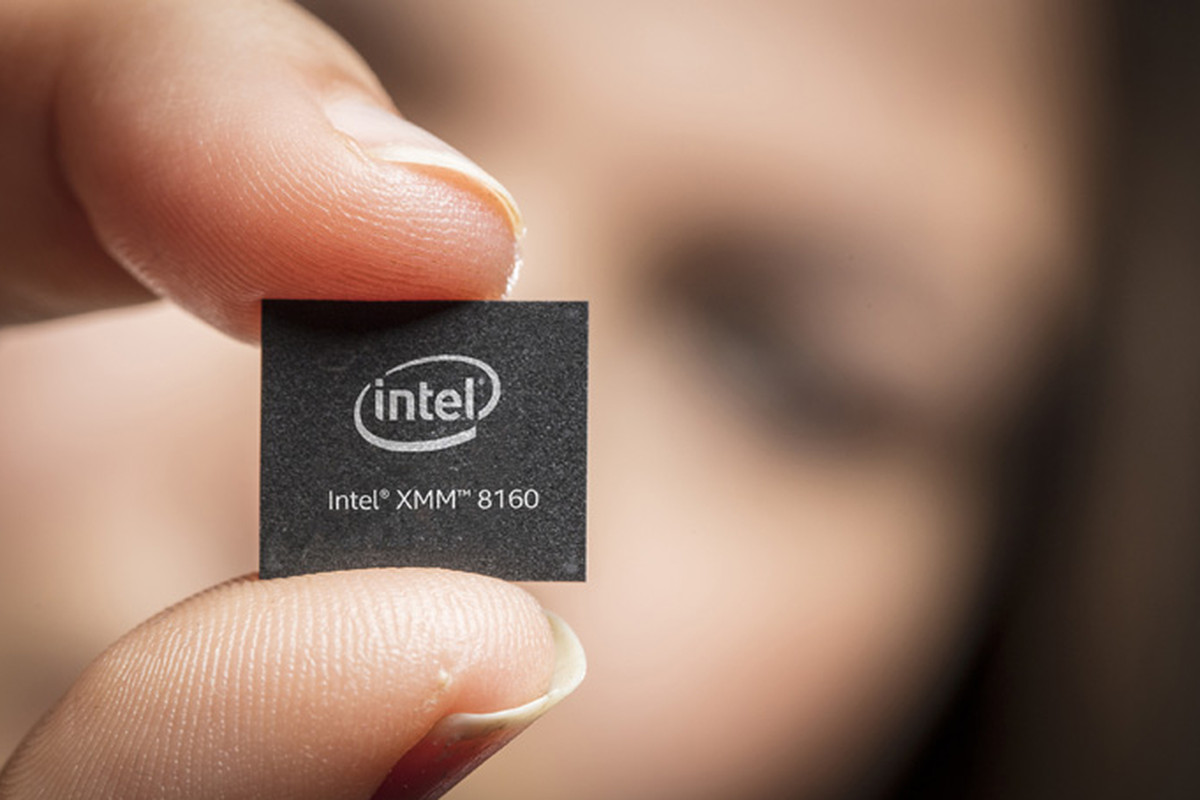
Intel exec lauds Vietnam chip autonomy ambition
Chip autonomy is an ideal aspiration but it is advisable to avoid setting too big goals in the immediate future, an Intel Products Vietnam executive has told the government.
In 2006, the U.S. chipmaker became the first foreign high-tech investor in Ho Chi Minh City.
“The past 17 years have been a miraculous journey,” Kim Huat Ooi, vice president and general manager of Intel Products Vietnam, said.
“Vietnam has transformed and become much more prosperous. Foreign investors coming here all want to have a foothold and a solid launch pad in Vietnam.”
A number of other major chip manufacturers too have set up plants in Vietnam, forming an open semiconductor supply chain.
Some local technology companies such as FPT and Viettel are also investing in the sector, and hope to export large volumes of “Made in Vietnam” chips.
AdvertisementIn April Prime Minister Pham Minh Chinh assigned the Ministry of Planning and Investment with developing a program for electronic chip production.
Vietnam’s advantage
Kim, who has nearly 40 years of experience in the semiconductor field, said when Intel entered Vietnam it had to import most raw materials, but now over 200 local suppliers were working with the plant, helping create a closed process for chip autonomy.
“It is completely right that the Vietnamese Government and companies think big and are ambitious to be self-sufficient in chip sources. Some companies have designed very good microcontrollers for specific applications. Vietnam will have a big opportunity to make more chips.”
Before it set up the plant in Vietnam, Intel was invited by many other countries in the neighborhood. One of the important reasons for Intel choosing to build the plant in Ho Chi Minh City was the stability of the Vietnamese political system.
During the Covid pandemic, many supply chains around the world were broken, but the Intel Vietnam factory was still operating smoothly.
In 2021, its exports surged by 25% from the pre-pandemic period.
Vietnam remained stable even in the most challenging periods.
“It can be seen that in future local supply chains will gradually form and be able to operate independently. As the amount of high-tech investment increases, production costs will decrease, bringing more opportunities for domestic enterprises.
“The Vietnamese government can use this to accelerate its ambition to produce chips.”
It was right to dream big but it was also necessary to avoid being too ambitious to invest in non-optimal areas and waste money.
Each country should focus on areas where it had an advantage instead of spreading itself too thin. Chip production was resource-intensive.
Local companies also needed to design chips appropriate for their actual capabilities and needs, he said.
Another challenge was human resources since the chip industry required great technical and technological capability to cope with new problems.
“If we look at the current education system in Vietnam, we are seeing that resources are mainly focused on bachelor’s training. To enter the chip industry, more researchers in post-graduate programs are needed.
“To design chips, engineers need a lot of R&D skills.”
However, though investing in human resources required time and money, it was definitely profitable in the long run.
For this, Vietnam needed the right talent, and for this tertiary education should have new curriculums.
Intel and other large foreign enterprises in Vietnam also paid special attention to linking up with universities to improve curriculums and foster talent.
“Seventeen years ago we entered Vietnam and started looking for the first basic workers. Now our plant has continuously sent Vietnamese engineers to the U.S. to work and develop specialized technologies. Initiatives by local talent have been patented in the U.S., making an important contribution to improving the plant’s performance.”
Besides manpower, special attention should be paid to infrastructure and traffic, like dealing with the electricity shortages in some parts in June.
The shortage had been solved, but in the long term investors would need specific plans to ensure reliable power availability.
After the pandemic many neighboring countries had come up with incentives to get major international investors to come and set up supply chains.
Vietnam too should have appropriate policies to retain existing investors and attract new ones.
“The world is changing. Many countries are emerging, attracting large investors back. In Vietnam, we are doing well. Intel wants to continue to invest and contribute to Vietnamese society.”
-

Australia’s Coles Supermarkets enters Malaysia via Jaya Grocer
Australia’s leading retailer Coles Supermarkets has entered the Malaysian market, bringing in 200 products through an exclusive collaboration with Malaysian supermarket Jaya Grocer.
The deal allows Jaya Grocer to expand their Australian product offerings with over 1,000 products from Australian-based brands, including Coles, available at all 43 stores and for GrabMart delivery nationwide.
The well-known Australian home-grown supermarket chain is renowned for its diverse range of quality fresh ingredients and imported goods.
“Coles has been exporting high-quality Australian food for over 20 years to more than 30 countries.
“We think Malaysia is a great country and with Jaya Grocer and GrabMart supporting our brand, we hope growth will continue into the future,” said Coles’ general manager for exports Will Mulholland at a ceremony here, today.
He said Coles would broaden its offerings to include Australian dairy products and ice creams.
At the moment, most of its products are predominantly placed in the grocery aisle.
“We are here for the long term. Jaya Grocer’s great offerings and presentation fit very well with our stores in Australia,” said Mulholland.
Shoppers enjoy up to a 15 per cent off some of Coles’s top-selling products such as Coles Rice Crackers Seaweed, Coles Chocolate Finger Biscuits, Coles Drinking Chocolate and Coles Hot Chocolate Sachets until July 9, 2023.
There will be more value deals and discounts every month via Jaya Grocer’s membership programme powered by Grab. Access to the membership programme is directly via the Grab mobile app.
-

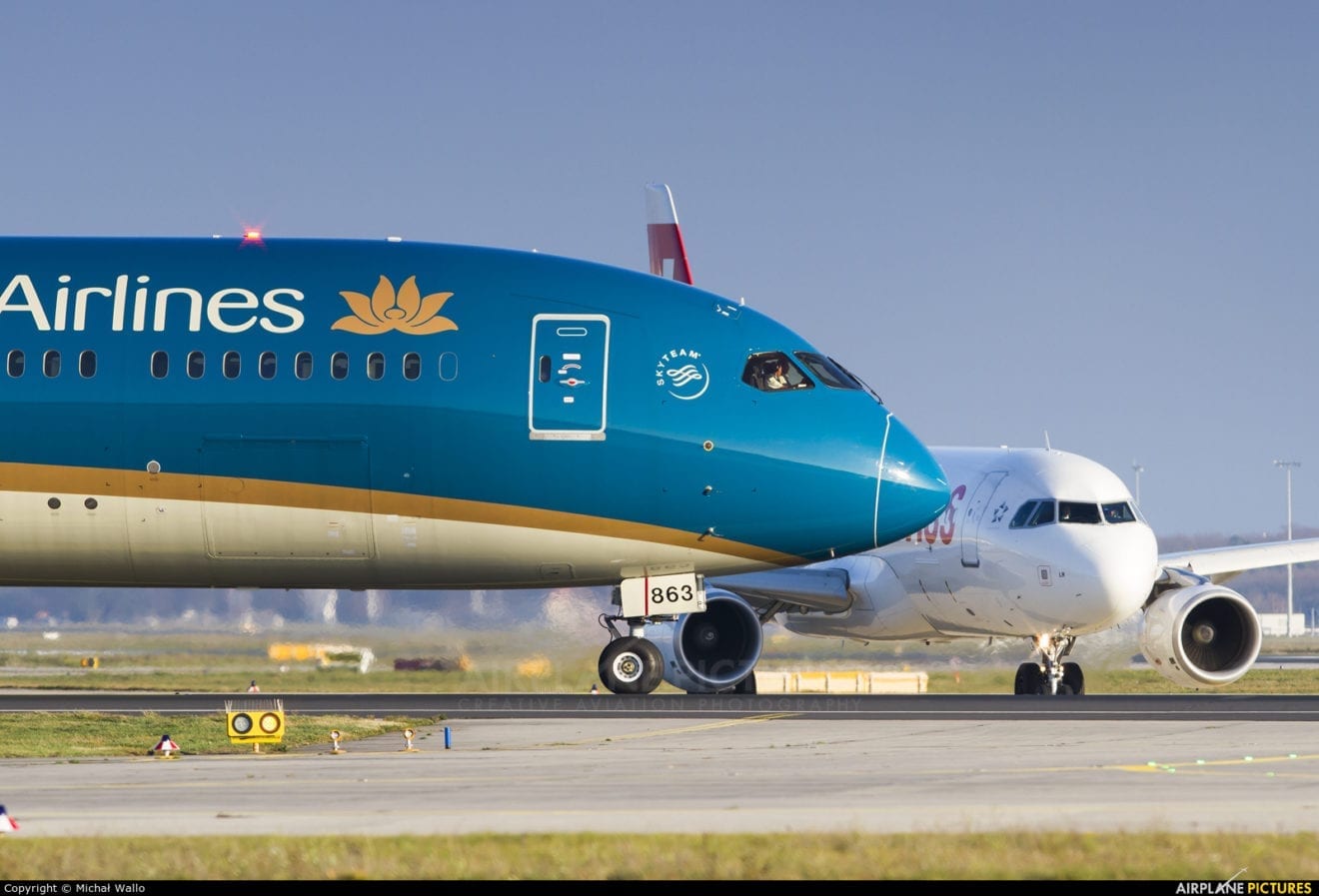
Vietnam Airlines shares restricted to afternoon trading only
Over 2.2 billion HVN shares of Vietnam Airlines will be restricted from trading in the afternoon only, starting from July 12, due to the company’s delay in submitting its financial reports.
The Ho Chi Minh Stock Exchange made the restriction decision on Wednesday after the airline was more than 45 days late in filing its audited 2022 financial figures.
Vietnam Airlines in early May requested more time to compile its report, saying that its auditor needed to review and evaluate more data.
The airline’s unaudited financial report for last year showed an accumulated loss of VND32 trillion ($1.35 billion).
Vietnam Airlines, however, seemed to be recovering in the first half this year, transporting 10.14 million passengers, up 23.6% year-on-year.
Its revenue rose nearly 50% to over VND45.2 trillion, almost the same as in 2019 before the pandemic.
-

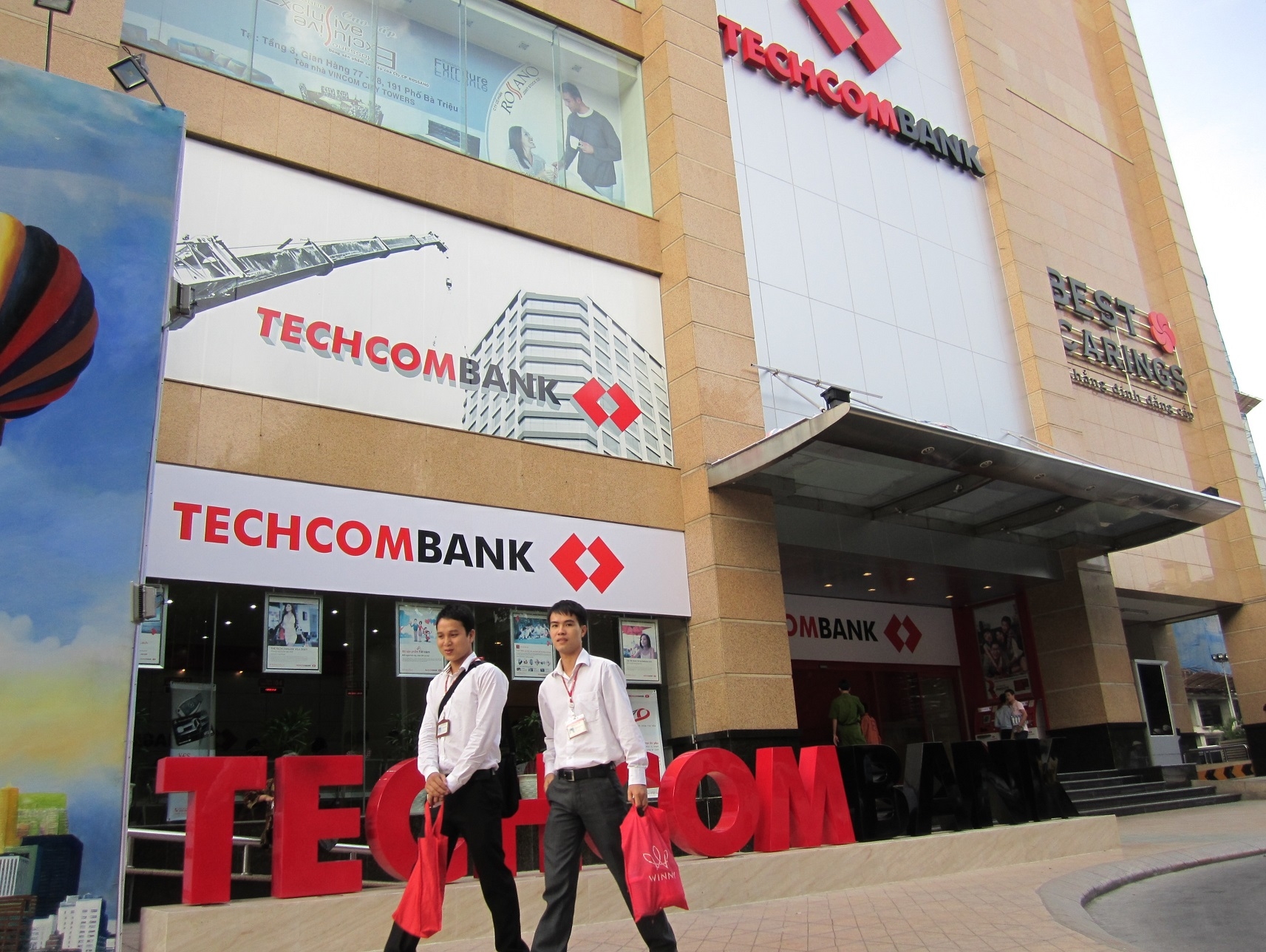
Techcombank strengthens cooperation with international partners
Techcombank has been extending technological collaboration with worldwide partners and organizations in order to improve client personalization, digitization, and security.
The bank aims to lead the digital transformation of Vietnam’s financial industry with a three-pillared strategy focusing on digital, data, and talent.
Digital banking would make regular banking easier, more convenient, and simpler. Data is the basis for utilizing analytical skills to make quicker and better decisions. In the “talent” pillar, the bank taking the extra miles to go overseas to bring the best Vietnamese talents to Vietnam, at the same time training all the bank’s staff to use digital and data to provide better services to their customers.
Techcombank has been focusing on innovation and technology since its establishment.
This long-term target has led to several technological industry milestones in Vietnam’s banking industry, such as the first credit card launch, zero-fee bank transfers, the digital signature platform for corporate clients, and various world-class platforms being synced on the cloud.
The three-pillar strategy had been discussed at a virtual press conference of the 7th Singapore Regional Business Forum held in Hanoi on July 7, for which Techcombank is one of two platinum sponsors.
During this press conference, participants also discussed the crucial role of its partners, trustees, and friends across the region.
Partners are keys to Techcombank’s success and have shaped its growth story over the last 30 years since its establishment. The bank was founded at a pivotal time for Vietnam, as the government encouraged the transition to a more market-oriented economy.
Ever since, it has been part of the extraordinary growth of Vietnam’s banking industry over the past three decades, with over 11.2 million retail and corporate customers and more than 12,000 employees in over 46 Vietnamese cities and provinces.
Partners that are key to its strategic success include McKinsey, Salesforce, Adobe, MISA, and Amazon Web Services.
In 2009, Techcombank became the very first Vietnamese bank to partner with McKinsey. Following this, in recent years it has also announced partnerships with Amazon Web Services, Salesforce, Adobe, Personetics, and MISA…
The Techcombank mobile app, developed with Backbase in late 2021, will be instrumental in offering a seamless, highly personalized user experience on a modern digital platform.
The bank has also partnered with Amazon Web Services to enable a “cloud first” strategy, shifting over the coming years nearly all its applications and, consequently, transactions to the cloud. This will lay the foundation to create and scale new innovative business models, synchronize customer information for better insights, and drive employee productivity.
In late 2022, Techcombank has partnered with Adobe to provide personalized customer experiences across offline and online platforms.
The investment in Adobe Experience Cloud and the Adobe Real-Time Customer Data Platform will enable instant interactions and analysis of user behavior.
In addition, the bank has worked with leading local companies like Masan to launch its WINLife ecosystem, with the aim of ultimately bringing financial services and deepening customer engagement in over 3,400 WIN stores nationwide.
According to Jens Lottner, CEO of Techcombank, Vietnam’s privatization process has highlighted the importance of cooperation and outward thinking in today’s connected world, such as strategic partnerships between Vietnam and Singapore, for many years.
“Vietnam and Singapore are attractive global economies with different profiles. Vietnam offers tremendous growth opportunities with its rapidly growing incomes and low financial penetration. Banks and businesses play a critical role in accelerating growth in Vietnam, while Singapore’s highly educated and skilled workforce attracts global businesses. Both countries will continue to leverage their respective strengths for growth,” Lottner said.
The CEO hopes that both nations will play critical roles in addressing global challenges and capitalizing on opportunities.
-

Enhance Inventory Management With Satellite Pallet Racking Systems
Innovative solutions are in high demand as businesses seek to enhance efficiency and maximize storage space. Implementing efficient inventory management systems can significantly improve operational efficiency, streamline workflows, and increase profits. A revolutionary trend on the rise is using satellite pallet racking systems.
This article delves into the details of satellite pallet racking and explores how it can enhance inventory management. You’ll discover the benefits of these systems and the impact they can have on your business operations.
Understanding Satellite Pallet Racking Systems
In the world of warehouse management, pallet racking systems are essential. They’re the backbone of most storage environments, providing efficient use of space and easy access to products. Satellite pallet racking systems take this concept to the next level.
These systems use automated satellite vehicles that move along the racking system’s rails, storing and retrieving pallets as required. They function with precision, speed, and efficiency, making them a powerful asset for any warehouse.
Maximizing Space With Satellite Pallet Racking
One significant advantage of satellite pallet racking systems is their ability to maximize storage space. Traditional racking systems often leave unused space that could be utilized more effectively.
With satellite racking, you’ll experience space utilization like never before. The satellite vehicles operate within the racking, eliminating the need for wide aisles to accommodate forklifts. It leads to a higher storage density and better use of warehouse space.
In the next section, you’ll delve into these systems’ operational efficiency.
Boosting Operational Efficiency
Satellite pallet racking systems aren’t just about saving space; they also enhance operational efficiency. Human errors are significantly reduced as these automated vehicles handle most of the work. The consistency of automated operations allows for better planning and forecasting.
Not only do these systems save time on handling products, but they also reduce the physical demand on your staff. It can increase team member satisfaction and productivity, making your business operations more effective overall.
As you’ll see in the next section, satellite pallet racking systems also contribute to inventory management and control.
Revolutionizing Inventory Management And Control
Inventory management and control are crucial for all businesses, and satellite pallet racking systems provide a major leap forward. Automated operations and digital controls make inventory tracking significantly more precise.
Satellite vehicles are often equipped with sensors and tracking systems, offering real-time updates on your inventory. It ensures accurate inventory control, aids in preventing losses, and enhances overall business efficiency.
Furthermore, this level of precision and control allows for better planning and forecasting, minimizing issues with overstocking or understocking.
Improving Inventory Accuracy and Reducing Loss
The advantages of satellite pallet racking systems are manifold, and a significant aspect where they excel is in improving inventory accuracy and reducing loss, which is critical to maintaining a profitable business. Here’s how they do it:
- Inventory accuracy: Thanks to the automation and digitization of satellite pallet racking systems, tracking inventory becomes easier and more accurate. Each pallet’s location is tracked in real time, reducing the chances of misplacement and contributing to improved inventory accuracy.
- Reduced loss: The likelihood of misplaced or lost items decreases with precise tracking. It could translate into substantial savings over time, especially for businesses dealing with high-value items.
- Minimized damage: Using automated vehicles for storing and retrieving pallets reduces the chance of human errors that can lead to product damage. Satellite vehicles are designed to handle pallets with care, ensuring the integrity of your products.
The next section will focus on the environmental benefits that these systems offer.
Creating an Environmentally Friendly Warehouse
In today’s world, sustainability isn’t merely a trend; it’s a business necessity. More and more businesses are realizing the importance of implementing green practices. Not only can these efforts improve a company’s reputation, but they can also contribute to global sustainability. Satellite pallet racking systems can play a significant role in these efforts.
One of the ways these systems contribute to sustainability is through the efficient use of space. By maximizing space utilization, a warehouse can significantly reduce its energy consumption. It’s because less energy is required for lighting and climate control in a well-organized space.
Moreover, many components of satellite pallet racking systems are made from recyclable materials. It means that even when the system eventually needs to be replaced, it won’t contribute significantly to landfill waste. Instead, many of its parts can be recycled, thus further contributing to sustainability efforts.
Finally, automated operations and optimized logistics require fewer forklifts and other vehicles. It leads to a decrease in carbon emissions, helping to lower your business’s carbon footprint.
Conclusion
In conclusion, satellite pallet racking systems are an investment worth considering for businesses seeking to maximize storage space, boost operational efficiency, and enhance inventory control. These systems have a proven track record of driving business performance and could be the key to unlocking your warehouse’s potential.

-

The Most Popular Sports in Malaysia 2023
Malaysia has a diverse sporting culture and decent success in international competition across many sports. Due to this and its great sports infrastructure, the interest in sports in Malaysia is at its all-time-high. Here are five sports that are the most popular in Malaysia.
1. Badminton
Malaysia is probably the second-largest badminton hub in the world in terms of representation. Now, given the fact that the first place goes to China (18%) and Malaysia has 44 times fewer people than China, this goes to show you just how serious Malaysia is about badminton (14%).
This country is the home of the Malaysian Open, one of the most significant tournaments in this sport.
This is hardly surprising because just over 12% of the Malaysian population plays badminton, making it the most-participated-in sport in the country.
2. Soccer
Soccer is the most popular sport in the world, and Malaysia is no exception to this rule. When the national football team is playing (Harimau Malaya), the whole country is out to cheer them, but many great local football teams are active there. Most notably, there are:
- Johor Darul Ta’zim (JDT)
- Selangor FA
- Kuala Lumpur City
There’s no denying that football is fun, whether you’re playing it, watching it, or even betting on it. While it’s illegal for sportsbooks to operate in Malaysia, it’s not illegal for foreigners to bet on Malaysian teams or for locals to bet via sites whose servers are not based in Malaysia, as more and more residents are doing. Fortunately, there’s a long list of betting sites on sportslensmalaysia.com for that very purpose, each offering competitive odds on Malaysian leagues, which just goes to show the popularity of Malaysian soccer leagues both in the country itself and around the world.
3. Hockey
Hockey is a surprisingly popular sport in Malaysia, and the Malaysian men’s team even won a gold medal at the 1966 Asian Games. In 1975, they hosted the Men’s Hockey World Cup.
The MHL (Malaysian Hockey League) is the premier domestic competition, and it attracts thousands and thousands of local viewers, with a sizable foreign interest, as well.
Due to this rich history and tradition, it’s no wonder so many Malayans have shown interest in hockey since a young age.
4. Cycling
Cycling is one of the fastest-growing trends in Malaysia. The sport is promoted everywhere, and more than a few government incentives exist to get this wheel rolling, so to speak.
Another thing to remember is that participation always plays a huge role in the sport’s popularity. Following a bit of a pro cycling scene could help make the sport more interesting. The country has the perfect terrain for mountain biking, which is another pro in its favor.
5. Sepak Takraw
This list wouldn’t be complete without Sepak Takraw, Malaysia’s autochthonous version of kick volleyball. Now, anyone who has already read that soccer and badminton are the two most popular sports in the country should not be surprised to find that a sport embodying the rules of the two is also incredibly popular.
It’s played in teams of two to four players on a small court with a special traditional ball that’s 5.3 inches in diameter. While the standardized sport is new, everyone agrees that Sepak Takraw amalgamates several traditional, local sports.
-

VietinBank to sell 358 properties to collect debts
State-owned VietinBank is selling 358 foreclosed properties pledged by loan borrowers, including four- and five-star hotels, worth a total of VND8 trillion (US$337.69 million) to realize their debts.
The properties will be either auctioned or negotiated for sale.
The bank is also selling 38 vehicles, machines and other equipment.
The most valuable asset is a five-star hotel in Da Nang City built on a 1,200-square-meter parcel of land with 236 rooms and priced at around VND600 billion.
The second most expensive are two four-star hotels in Hoi An with around 100 rooms each and priced at VND420 billion apiece.
The lender is also set to sell nearly 60 other hotels and properties in Hoi An.
Vietinbank is also selling office buildings, including one worth VND213 billion in Ho Chi Minh City’s District 12, and a water treatment plant worth VND108 billion in Gia Lai Province.
The bank is also selling 566 consumer loans at 90% of their remaining value.
Other banks too have been selling off collateral assets this year to restructure their credit portfolio.
BIDV has been trying to auction a hydropower plant with a reserve price of VND325 billion but 10 attempts have proven unsuccessful.
Sacombank has been selling bad debts this year.
Banks saw credit quality deteriorate in the first quarter this year due to the slump in the property and consumer goods markets.
Bad debts in the sector rose from 2% to 2.91% in the first two months, according to the latest data available from the State Bank of Vietnam.
VNDirect analysts said in a note that banks’ rising bad debts are driven by the property sector, which accounts for 21% of all credit.
-

South Korean cafe chain Compose Coffee to launch in Singapore
The popular coffee chain from Korea, Compose Coffee, is set to open in Singapore at Suntec City.
The scaffolding of the number one coffee in Korea can be seen around the shop, showing off the brand with two simple words: “Coming soon”.
Its menu boasts a wide range of beverages, from its usual coffee to teas, frappés and even milkshakes.
-

Vertu’s first duty-free store opens in Sanya ahead of global roll-out
VERTU, the world’s premier luxury mobile phone brand, has unveiled its strategic plan to establish duty-free stores worldwide. Following the recent opening of their duty-free store in Sanya, VERTU is set to revolutionize the duty-free shopping experience for global travelers.
VERTU’s duty-free store, located at Sanya International Duty Free Complex, is scheduled to open its doors on July 1, 2023. Positioned at B Zone, Ground Floor, next to Tiffany, this store will serve as a hallmark destination for discerning travelers seeking the finest in luxury mobile devices.
In line with their commitment to providing unparalleled service and exclusivity, VERTU offers a range of key features and highlights that make them stand out in the market. Let’s take a closer look:
VERTU- Brand debuts its pop-up store with CDFG in duty free channel.VERTU’s duty-free stores serve as a platform to showcase the brand’s commitment to excellence and luxury as well as cater to the unique needs of luxury travelers.The stores provide a captivating environment for customers to immerse themselves in the world of VERTU, surrounded by the finest craftsmanship and cutting-edge technology.
VERTU prides itself as the world’s only luxury mobile phone brand to offer a dedicated British private butler concierge service. Customers can enjoy a truly unique experience with their own personal assistant, catering to their every need and ensuring an extraordinary level of service.
VERTU’s duty-free store introduces the highly anticipated METAVERTU, the world’s first WEB3 phone. Combining the power of blockchain and decentralized applications, this revolutionary device offers unparalleled security, privacy, and connectivity.
VERTU’s duty-free store presents the exclusive IVERTU collection, a range of limited edition devices available only through duty-free channels. These meticulously crafted phones showcase VERTU’s dedication to creating unique and unforgettable luxury experiences. IVERTU, as the one of the most popular models, has undergone updates in hardware, software, and aesthetics. The metallic V logo has been upgraded to a sleek black finish, enhancing its tactile appeal, and the leather components have been enhanced for a fuller and better feel.
In a groundbreaking move, VERTU unveils its first AI experience store within the duty-free outlet. Customers can explore the fusion of technology and luxury as they interact with VERTU’s cutting-edge AI assistant V-GPT.Unlike Apple’s App Store version, METAVERTU allows free and unlimited usage of ChatGPT without paying a subscription fee. Accessible via MetaSpace, METAVERTU grants users a comprehensive set of functionalities, including seamless one-click login, unlimited conversations at no cost (in contrast to the paid model on other platforms), and voice input for user queries.
With its Global Duty-Free And Travel Retail market strategy, VERTU aims to establish a strong presence in key travel hubs worldwide. By offering unparalleled luxury, personalized service, and exclusive products, VERTU continues to redefine the mobile phone industry and elevate the standards of luxury living.
-

Vietnam earns over $2B from coffee exports
Coffee is an export highlight of agricultural products in the first half of 2023, as the industry’s export revenue earned $2 billion in the period, the General Department of Customs has announced.
According to statistics from the department, as of June 15, the country exported 934,900 tonnes of coffee, down 3.7% compared to the same period in 2022 with export prices increasing nearly $2 per tonnes.
The sector has been listed in “one-billion-USD” club since 2010 and reached its peak of $4.056 billion in 2022. The club includes exports that fetch at least $1 billion a year.
Vietnamese coffee has been present in 38 markets worldwide, of which it enjoys an export turnover of over 10 million in 25 markets and more than $100 million in six traditional ones.
If export turnover reaches about $360 million a month from now until end of this year, the sector will set a new record of $4.5 billion in 2023, an increase of 10.9% compared to 2022.