Tag: asia

  • UPS To Purchase 14 Additional 747-8F Freighters and Orders 4 New 767s

    UPS To Purchase 14 Additional 747-8F Freighters and Orders 4 New 767s

    UPS announced it has ordered 14 Boeing 747-8 cargo jets and four new Boeing 767 aircraft to provide additional capacity in response to accelerating demand for the company’s air services. All of the new aircraft will be added to the existing fleet and no existing aircraft are being replaced.

    The aircraft will be delivered on an expedited schedule, building on the company’s 2016 order of 14 Boeing 747-8 freighters. All 32 of the jets will be delivered by the end of 2022, adding more than 9 million pounds of cargo capacity. UPS’s global airline network includes more than 500 owned and leased aircraft. UPS received three new 747-8 freighters in 2017.

    “Our intra-U.S. next-day and deferred air shipments are expanding to record levels, and UPS’s International segment has produced four consecutive quarters of double-digit export shipment growth,” said David Abney, UPS chairman and CEO. “To support this strong customer demand, we continue to invest in additional air capacity, providing the critical link our customers need to markets around the world.”

    In addition to growing customer demand for express services, recent US tax reform legislation is enabling UPS to utilize tax savings to significantly increase capital investments and to make them earlier than previously planned.
    “As we celebrate the 30th anniversary of UPS Airlines today, we are seeing unprecedented demand for our air products,” said UPS Airlines President Brendan Canavan. “The new freighters will allow us to continue upsizing aircraft on routes and will create a cascading effect that will boost capacity on regional routes around the world.”

    The 747-8 freighter carries 46 shipping containers, 34 on its main deck and 12 in its lower compartments. The -8 has a cargo capacity of 307,600 pounds, or approximately 30,000 packages and a range of 4,200 nautical miles. The new -8 aircraft line has a strong industry safety, reliability, and environmental record. The Boeing 767 freighter has cargo capacity of 132,200 pounds and capacity for 31 air containers, 24 on the main deck and 7 in its lower compartments. It has a range of approximately 3,000 nautical miles. UPS currently operates 59 Boeing 767 aircraft.

    “UPS has clearly tapped into the power and efficiency the 747-8 Freighter brings to the market,” said Boeing Commercial Airplanes president and CEO Kevin McAllister. “We’re impressed with how UPS is leveraging the airplane in its operations and excited to see them bring additional 767s into their fleet.”

  • Retail News Asia makes it to Final with a Selection in the Top Asia Pacific Best News Websites

    Retail News Asia makes it to Final with a Selection in the Top Asia Pacific Best News Websites

    Retail News Asia is selected as one of the winners of the Top Asia-Pacific News websites list! This is the most comprehensive list of best Asia-Pacific News websites on the internet and we’re honoured to be there! Retail News Asia is the leading Retail News portal in Asia Pacific since many years and we show deep respect and bow for being selected as one of the most influencing medias in Asia Pacific.

    RetailNews.asia has always been committed to providing both local and global retailers with the latest breaking retail news throughout the Asian market on a daily base since many years. With over 20 post per day with relevant Retail News, we can proudly say that we’re the leading media in the Retail industry.

    We have resources for everyone from the independently owned business owners, online-only retailers, and major chains expanding their reach throughout the Asian market.

    We Are Stronger Together

    You can quickly and easily search for the latest breaking retail news by country, or come here to keep an eye on the latest local, global and seasonal trends on our portal, watch video’s and/or follow uw with both local and international Retail Events.

    You can network, engage, and share invaluable information with other retailers. Our retailers come from a wide range of industries and expertise, meaning that whatever the question may be—we have you covered!

    We keep you apprised of the upcoming retail events, and even provide coverage and updates during many retail events.

    Thank You

    Retail News Asia wishes to congratulate all the team members, editorial and advertising departments for all hard work, overtime and sweat. We did it together says Sven, Founder of Retail News Asia

  • Massive expansion action by Phoenix Lava in Vietnam

    Massive expansion action by Phoenix Lava in Vietnam

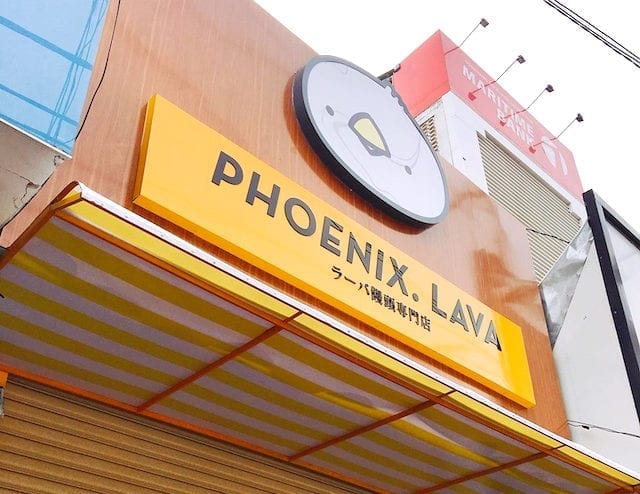
    Thailand’s steamed-bun chain Phoenix Lava has erupted in Vietnam, opening with four stores in Ho Chi Minh City.

    Its flagship store is in District 3 with the other outlets in Districts 1 and 5,  and one in the Vinhomes Central Park development in the Binh Thanh district.

    Inspired by Japanese-style lava buns and cakes, Phoenix Lava offers seven flavours for its phoenix-shaped buns – Uji tea, bamboo charcoal, chocolate, durian, cheese/bacon, pork and salted duck egg.

    Founded in 2013, the company has six branches in its homeland.

  • Second Moleskine Cafe Italy will be opened in China

    Second Moleskine Cafe Italy will be opened in China

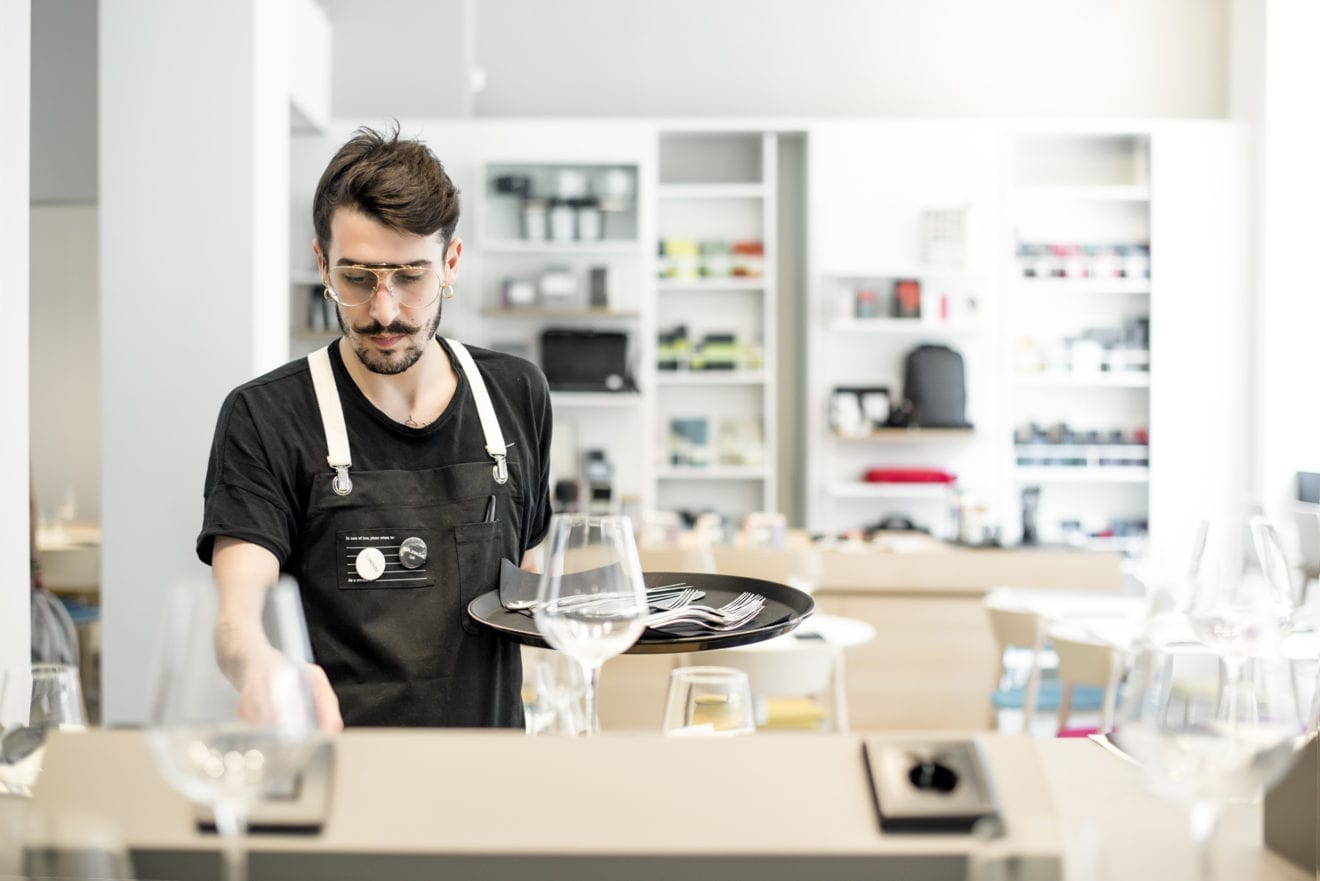
    Following the success of its cafe in Milan, which launched in 2016, Italy’s Moleskine stationery brand has opened a second outlet – in Beijing’s Taikoo Li shopping centre.

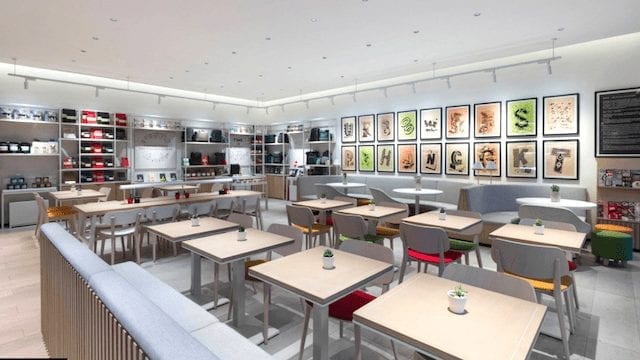
    It continues the minimalist concept with neutral colours, space and natural light. The open-concept 150sqm cafe offers individual and communal tables, including an al-fresco area.

    Like its Milan predecessor, it is a combination of cafe, gallery, library and store, reports Concrete Playground. The menu combines Italian and local cuisine across breakfast and lunch options.

    As well, the cafe will stage exhibitions dedicated to architects, designers, illustrators and movie directors, as well as events, talks and workshops.

    Cafes for Hamburg, London and New York are also planned this year.

  • Vietnam property sales rise in January

    Vietnam property sales rise in January

    The domestic property market reported more sales in January compared to December 2017, according to the Ministry of Construction’s Housing and Property Market Management Department.

    It said that in January, Hà Nội had 1,650 transactions, an increase of 13.8 per cent and HCM City had 1,900, a rise of 8.6 per cent over December’s figures.

    In Hà Nội, many housing projects have been completed and offered with attractive trade promotion programmes. The offerings are in the high- and mid-end segments and are located in convenient places. There are many kinds of area and payment methods can be flexible, the department said.

    Some projects had many sales in January, including Season Avenue, Hà Đông; An Bình City-Bắc Từ Liêm; Sunshine Riverside Tây Hồ and Romance Plaza, Hà Đông.

    Average offered price of an apartment in January rose 0.14 per cent against the December price. Of which, the price surged 0.17 per cent for high-end apartments, 0.05 per cent for mid-end apartments and 0.56 per cent for affordable apartments.

    Price of house on land had an increase of 0.24 per cent compared with December.

    Liquidity on the HCM City property market also increased in January. High- and mid-end apartment segments reported many sales.

    Customers paid attention to apartments having one or two bedrooms and price at about VNĐ1 billion (US$44,000) per unit, but the supply was low.

    Projects reporting many transactions included New City Thủ Thiêm, District 2; Saigon Intela-Bình Chánh District; and Melosa Garden, District 9.

    Average selling price increased 0.24 per cent for apartments and 0.81 per cent for house and land.

    The price declined 0.05 per cent for high-end apartments, but rose 0.33 per cent for mid-end apartments and 0.53 per cent for affordable apartments.

    The department said that by January 20, the value of the property inventory stood at VNĐ25 trillion, a drop of 19 per cent from the previous month.

    The value of property inventory in January was VNĐ5.27 trillion in Hà Nội, VNĐ19 billion lower than the value in December.

    In HCM City, the property inventory was VNĐ4.62 trillion, a fall of VNĐ47 billion.

    According to the State Bank of Việt Nam’s report, total outstanding loans in the property sector reached VNĐ446.36 trillion in the third quarter of 2017, a quarter-on-quarter increase of 2.1 per cent.

    Resort property

    The department also had a report on development of resort property, the hot spot on the property market.

    In the report, the Ministry of Construction appraised 71 “condotel” and “officetel” projects that have been built nationwide since 2015. .

    Meanwhile, provincial and municipal authorities have given licences to develop many more projects.

    However, many difficulties have arisen over investment, construction, trading and management of operation for those projects, the department said.

    Therefore, the ministry has proposed that the Prime Minister direct ministries to solve them.


  • Alibaba to thank New Retail for Its record sales

    Alibaba to thank New Retail for Its record sales

    Continuing momentum in Alibaba Group’s New Retail business helped drive a 56 per cent year-on-year growth in sales for the quarter to December 31.

    The performance of the New Retail category – which combines its online (non-marketplace) and fast-growing offline retail businesses, including investments in Sun Art Retail and other established businesses – was a core highlight of the quarter, according to CEO Daniel Zhang.

    “Alibaba had another great quarter driven by the continued strength of the Chinese consumer and the wide and innovative range of services we provide for merchants and consumers,” he said.

    “We are excited by the continued momentum in New Retail, which came to life during another record-breaking 11.11 Global Shopping Festival. We expanded the scale and footprint of our New Retail initiatives with the vision of delivering true convergence of the online and offline consumer experience through mobile and enterprise technology.”

    Maggie Wu, CFO, said the group’s core business generated significant free cash flow of US$7.1 billion during the quarter, “enabling us to invest in New Retail, cloud computing, digital entertainment and globalisation”.

    Revenue from core online commerce (marketplace) activities rose 57 per cent to US$11.257 billion and from cloud computing by 104 per cent to $553 million. Digital media and entertainment sales rose 33 per cent to $832 million.

    The number of annual active consumers on Alibaba Group’s China retail marketplaces reached 515 million, an increase of 27 million from the year to September 30.

    Net income was $3.586 billion with operating margin was 31 per cent and adjusted EBITA margin for the core e-commerce business 53 per cent.

    Group highlights

    Alibaba summarised group highlights in its earnings statement, including:

    Taobao: Artificial Intelligence (AI) drove user engagement, with the Taobao app’s intelligent personal recommendations and innovative content formats continuing to drive strong growth in user engagement, conversion and annual active consumers. “We continue to invest in machine learning technologies which we apply to use cases that match consumer intent and product selection to deliver the best consumer experience.”

    Tmall: Tmall recorded 43 per cent year-on-year growth in physical goods GMV during the quarter, reflecting robust growth across all major categories including apparel and accessories, consumer electronics (mobile phones) and FMCG. “Tmall continues to be the platform of choice for the world’s top brands, with Givenchy, Giorgio Armani Beauty and Volvo establishing Tmall flagship stores and Longines, Hennessy, Dom Perignon and Baccarat joining our Luxury Pavilion in this quarter.”

    11.11: Last year’s annual November 11 Global Shopping Festival exceeded the previous year’s records, with GMV settled through Alipay on Alibaba’s marketplaces up 39 per cent year-on-year to $25.9 billion. “The continuous success of this record-breaking event is enabled by our resilient and scalable technology, as well as payments and logistics infrastructure that is capable of operating at massive scale.”

    New Retail: Rapid expansion through partnerships and innovative technologies included the opening of five new Hema fresh grocery stores in Shanghai, Beijing, Ningbo and Suzhou, taking the network to 25 at year end. “Hema exemplifies the convergence of online and offline retail by leveraging our in-store proprietary technology, digitised supply chain system, consumer insights and mobile ecosystem to provide a seamless experience for consumers.”

    In November, Alibaba formed a strategic alliance with Sun Art Group, the leading hypermarket and supermarket chain by revenue in China with over 440 stores nationwide. “Through this partnership, we aim to equip traditional retailers with our proprietary technology and know-how in online offline convergence to implement their digital transformation. In addition, the partnership with Sun Art will also enable us to accelerate the expansion of our New Retail offerings with national scale.

    International:  Alibaba’s cross-border and international retail businesses continue to show strong growth. Revenue from international commerce retail business reached $727 million in the, representing 93 per cent year-on-year growth, driven by its Southeast Asian platform Lazada and its global retail marketplace AliExpress. “While the markets for Southeast Asia and cross-border commerce remain very competitive, they are in the early innings of the game. We are optimistic about the long-term secular growth prospects of our international markets and will therefore continue to make significant investments for market share growth and focusing on the best customer experience.”

    Cainiao Network: Alibaba’s logistics division, Cainiao Network, processed 812 million orders during the 11.11 event. Cainiao Network operates an electronic shipping label system that standardises shipping data into structured formats, which enables efficient pick-and-pack operations for merchants and sorting and routing operations for delivery partners. “The advantages of this system have resulted in broad adoption by merchants and logistics service providers, both on and off our platforms, putting us in position to serve the growing consumption economy in China and roll out our New Retail strategy.”

    Cloud Computing:  Cloud computing revenue grew 104 per cent year-over-year to $553 million, driven by both robust growth in paying customers and revenue mix toward higher value-add product.  “In the December quarter, Alibaba Cloud launched 396 new products and features and continued to introduce proprietary AI technologies to tackle real-world challenges, such as traffic planning and optimising efficiency in manufacturing and airport operations. Alibaba Cloud continues to expand its customer base across a variety of industries.”

    Alibaba Cloud customers include Watsons China, carmaker Geely, and Beijing Capital International Airport.

    Digital Media and Entertainment: During the quarter, Youku video’s daily average subscribers more than doubled year-on-year, driven by several original drama series and shows that became popular hits with users.

    AI and innovation: Alibaba says its AI-powered voice assistant, Tmall Genie, surpassed 1 million unit sales since its official launch in July and the end of the year. “Tmall Genie is supported by a growing collection of sales and services and is an effective vehicle for offering a comprehensive set of every-day living applications within the Alibaba ecosystem,” the company said.

    In January, Alibaba’s Institute of Data Science Technologies (iDST), its AI research arm, developed a deep-learning neural network for natural language processing that scored higher than humans on a Stanford reading-comprehension test, the first time a machine has outperformed humans on such a test. “This development underscores Alibaba’s commitment to technology research which we believe builds the foundation for our growth in the long run.”

    Ant Financial: Alibaba Group agreed to take a 33 per cent equity stake in Ant Financial that will strengthen its strategic relationship pursuant to the series of agreements reached with Ant Financial in 2014. “We believe deepening our relationship through an equity stake in Ant Financial will bring key strategic benefits to us, including advancing our New Retail strategy with mobile payments, increasing user acquisition and retention through collaboration with the Alipay digital wallet (Alipay Wallet), and enhancing the execution of our international expansion.”

    The number of Alipay Wallet’s daily active users more than doubled during the quarter on a year-on-year basis.


  • AEON Mini Marathon #2 will be held in March

    AEON Mini Marathon #2 will be held in March

    AEON Thailand Foundation together with Ramathibodi Foundation invites all runners and health lovers to take part in “AEON Mini Marathon #2”, to raise funds for the Ramathibodi Foundation in “New innovation to beat cancer”. The AEON run is divided into 2 types which are – the 10.5km mini marathon, and the 5km walk-run for health. The winner will get a trophy cup and medals for all participants.

    For everyone who interested to join the charity event on Sunday, March 18, 2018 from 04.00 am. – 07.30 am at Rama 8 Park, registration costs 500 baht for 10.5 km run and 400 baht for 5 km walk-run. You can also register for the event online, pr for more information, please call 02-689-7188 Thailand number.

  • Vietjet IPO wins prestigious award for “Best Vietnam Deal” in 2017

    Vietjet IPO wins prestigious award for “Best Vietnam Deal” in 2017

    Vietjet Aviation Joint Stock Company (HOSE: VJC) has received the “Best Vietnam Deal” award from Asia’s leading publication, FinanceAsia, for its IPO held early 2017.

    The prestigious award not only highlighted Vietjet’s highly successful IPO but also the airline’s subsequent performance for the rest of the year, which boosted the position of Vietjet in particular but also Vietnam-based companies on the global capital market in general.

    The presentation ceremony for the FinanceAsia Awards, one of the world’s leading awards for the regional finance industry, took place at the Grand Hyatt Hong Kong on January 31, 2018. Mr. Chu Viet Cuong from the Vietjet Board of Directors represented the airline to receive the coveted award.

    Leading “a series of successful deals” in 2017, Vietjet’s US$164 million IPO was professionally conducted, involving the consultation of world-renowned law firms and financial institutions for a period of nearly 800 days (due on the listing date, February 28, 2017), and following all the international IPO standards Regulation S.

    Earlier, Vietjet was also awarded for “The IPO Deal of the Year 2017” and named “The Company with Best M&A Information Disclosure” at the M&A Awards 2016-2017 Vietnam as part of the Vietnam M&A Forum 2017 in Vietnam.

    The airline’s 2016 annual report also received a Platinum Award in early 2017 at the Vision Awards 2016 organized by the League of American Communications Professionals (LACP) which ranked Vietjet fourth out of all awardees from the Asia Pacific region and 11th out of 100 worldwide participating businesses. Themed as “the flight to the future”, the 150-paged annual report received top scores for sub-categories, including First Impression, Letter to Shareholders, Report Financials and sustainable development programs.

  • Ogilvy rearranges creative leadership across Asia

    Ogilvy rearranges creative leadership across Asia

    Ogilvy & Mather has unveiled another raft of changes to its leadership across Asia as Ajab Samrai moves from the agency in Tokyo to take up the new position of chief creative officer for ASEAN.

    Samrai has held the same role at Ogilvy in Tokyo for the past five years. He will be replaced by Doug Schiff, who was previously the executive creative director at DigitasLBi in Boston and Detroit.

    Meanwhile, Reed Collins has been promoted from Hong Kong creative lead to CCO of North Asia.

    Reed Collins

    His markets include Hong Kong, Japan, Korea and Taiwan and China. This latest comes just days after Ogilvy China announced the departure of creative heavyweight Graham Fink and the CCO role in the country. Now,Ogilvy China’s creative leadership is formed of three ECDs who report to Cheong.

    Together with Sonal Dabral, Collins and Samrai will form a regional leadership team reporting to Eugene Cheong, Ogilvy’s chief creative officer for Asia Pacific.

    Kent Wertime, co-CEO of Ogilvy Asia, said: “Ajab and Doug are true Ogilvy giants. Ogilvy Japan saw exception growth under Ajab’s leadership and he has been one of our most awarded creative leaders in recent years.

    “I am excited to see what he will do next. For Doug, we are delighted to have him return. He’s exactly the kind of transformative thinker that will continue Ajab’s extraordinary work for that office.”

    Meanwhile, Ogilvy Singapore has been on a winning streak lately, having won major local accounts with Changi Airport and Pizza Hut.

  • Apple sales report doesn’t look good

    Apple sales report doesn’t look good

    Apple has been quick to point out the record-breaking revenue numbers for its first quarter.

    The Cupertino-based company reported first-quarter sales of US$88.3 billion and a record quarterly profit for the final three months of last year of $20.1 billion.

    As much as this is praiseworthy, it also masks some more worrying trends.

    First is the 1 per cent fall in unit sales of the iPhone. Although revenue for phones increased by 13 per cent, this was a function of higher prices rather than increased volume. On the surface, this may not seem like a problem, but in our view, it indicates that Apple is, once again, struggling to persuade consumers to upgrade or switch to new devices. This slowing of the upgrade cycle will likely have an impact on phone revenue in future quarters.

    Moreover, the slowdown in iPhone sales is emblematic of Apple’s inability to come up with meaningful and valuable innovations that wow consumers. Even the iPhone X is an incremental product that lacks the excitement and newness earlier models brought to market. Apple is fortunate in having a strong base of fans and many consumers who are bought into its ecosystem of services; but without device innovation, even this may prove insufficient to maintain market share in the face of rising competition.

    Mac sales disappoint

    The second area of disappointment comes from Mac sales where both volume and revenue slipped over the prior year. Admittedly, Apple is up against a comparative from last year when its new MacBooks Pros were gaining ground, but even so, this also underlines a dearth of serious innovation in the home and professional computing segments.

    We also believe that lower volumes, and the fact that Apple’s products were not at the top of everyone’s Christmas lists, put a dampener on service growth. Last quarter this segment grew by 34 per cent and by 22 per cent in the quarter before that. Over this period, the increase was a much more modest 18 per cent. Arguably, the holiday period should be a bumper time for Apple subscriptions; that it wasn’t is concerning – not least because Apple needs income from services to make up for softness in product sales.

    That Apple’s HomePod wasn’t available in time for the holidays was a misstep, not least because it could have helped boost service revenue. Our data show smart speakers and smart home devices were popular gifting and self-purchase items over November and December – with both Amazon and Google growing their market shares. Although Apple will point out its product is superior to rivals’ efforts, it is a latecomer to the party, and we believe its potential sales will be crimped as a result.

    For all of these challenges, Apple remains a solid and financially successful company. Indeed, its profits increased over the period. However, a lack of serious and significant innovation means it runs the risk of diluting future earnings. Apple thrives off serving a mass market; a move to providing more expensive items to fewer people will ultimately prove harmful to the bottom line.

    In essence, we believe that the clear blue water that once existed between Apple and rivals is much diminished. The company has time to reopen the gap, but to do so, it needs to pull something new and unique out of its hat sooner, rather than later.

    -Neil Saunders-

  • Boostcom acquires all customer and technology related assets in Mall-Connect.

    Boostcom acquires all customer and technology related assets in Mall-Connect.

    Boostcom, the globally leading “proptech” provider for shopping malls, has signed an agreement to acquire all customer and technology related assets in Mall-Connect based in the Netherlands.
    Mall-Connect has been helping shopping malls in EMEA, Latin America, and Asia on the digital side since 2011.

    Mall-Connect customers, prospects, and industry relations will now be introduced to the complete Boostcom offering of data-driven marketing and automation capabilities.

    The CEO and founder of Mall-Connect, Ilia Riaskoff, will join Boostcom as Sales Director for Europe and Latin America.

    “We are very excited about adding the Mall-Connect business to the growing global Boostcom operations. There are not many digital companies specialising on digital for shopping malls, and Mall-Connect is one of these few. We are always looking for possible acquisitions or partnerships to speed up or complete our global positioning and offering for the mall industry. Future trend analysis of the mall industry gives great support for the Boostcom strategy of bridging physical malls with online to the benefit of both mall owner and their tenants. Getting Ilia Riaskoff on board in our management team is a huge win. He has all the industry experience and know how that we could possibly wish for”, says Peter Tonstad, CEO of Boostcom Group.

    “I am very happy that we will now be able to offer Mall-Connect’s clients a broader range of quality digital marketing services. Boostcom has developed a solid platform and client base for many years, and is backed by some of Europe’s largest tech investors which gives us an exciting perspective for the future.“, says Ilia Riaskoff, CEO and founder of Mall-Connect. “Our visions are well aligned both on product strategy and geographical focus. I am confident that this is the right step for Mall-Connect and its clients and I look forward to becoming part of Boostcom Group.”


  • Many Korean goods to receive Vietnam tax exemption

    Many Korean goods to receive Vietnam tax exemption

    Many goods imported from the Republic of Korea (RoK) into Việt Nam will be exempted from import taxes in 2018, due to the Việt Nam-Korea Free Trade Agreement (VKFTA).

    The Government recently issued Decree No149/2017/NĐ-CP, which regulates a new special preferential import tariff, as agreed upon in the VKFTA, and to be put in place between 2018 and 2022.

    Under the decree, import taxes imposed on 704 types of products imported from the RoK to Việt Nam, will be eliminated in 2018. The groups of commodities that will enjoy tax exemptions this year are mainly in seafood, wheat flour, confectionery, diesel fuel, jet fuel, paint, laundry detergent, plastic, iron and steel products, power machinery and equipment, and electronic products.

    In 2018, an additional 653 products imported from the RoK will also have their tax rates lowered from last year.

    The preferential tax rates will be applied to commodities directly transported from the RoK to Việt Nam. The goods must also meet origin regulations, as stated in the agreement, and exporters must provide certificates of origin in a form stipulated by the Vietnamese Ministry of Industry and Trade.

    This year, Việt Nam has set several new preferential import tariffs to implement bilateral and multilateral FTAs with partner countries and territories, such as mainland China, Hong Kong, Japan and RoK.

    Under the Việt Nam-Japan Economic Partnership Agreement (VJEPA) and the ASEAN-Japan Comprehensive Economic Partnership Agreement (AJCEP) for 2016-19, nearly 4,000 import tariff lines for many groups of commodities imported from Japan will be also eliminated this year.


  • Chengdu’s first unmanned supermarket closed down

    Chengdu’s first unmanned supermarket closed down

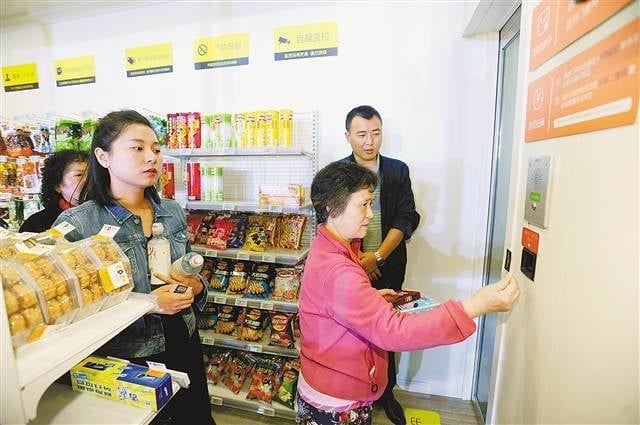
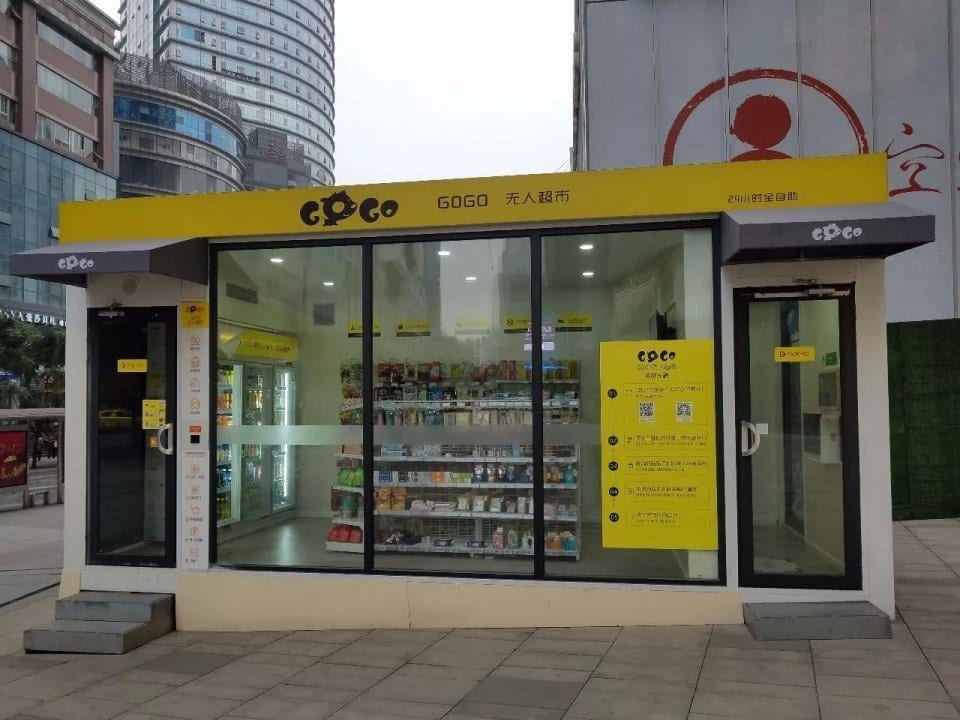
    After just four months, Chengdu’s first unmanned supermarket, Gogo Nobody, has reportedly shut down.

    This follows the unmanned shelf project Gogo Small, run by the same Chengdu-based startup Xiao Mang Guo Technology, closing down in November.

    It is reported that at least 30 employees have not been paid on time, one claiming they had not received payment since November.

    A Xiao Mang Guo spokesman says the unmanned supermarket is only “temporarily closed” and will be re-opened after its facial-recognition system has been upgraded.

    However, he did admit the company had misjudged the market, forcing it to terminate the unmanned shelf project. “In hindsight, the project expanded way too fast.”

    He also acknowledged the issue of backpay, saying the company is sorting out its financial problems and will handle the unpaid wages by April or May. “We did violate the regulations, and we apologise … We will not avoid any responsibilities.”

    Originally the company planned to open 500 Gogo supermarkets in commercial complexes across China, and establish 500 unmanned shelves near business districts and office buildings.

  • Singapore lags Japan and China with e-commerce use

    Singapore lags Japan and China with e-commerce use

    In contrast with data about digital transformation and government’s engagement in promoting digital solutions for retail, Singaporeans have not fully embraced e-commerce.

    Credit Suisse data show that Singapore falls behind China, US, and Japan in terms of e-commerce usage.

    In 2017, Singapore e-commerce comprised 5% of the country’s total retail.

    Meanwhile, e-commerce comprised 23% of total retail in China and 8% of retail in the US.

    Singapore still beat other ASEAN countries, however. The proportion of e-commerce in total retail in Indonesia is at 3%, nearly 2% in Malaysia and Thailand, and 1% in Vietnam and the Philippines.

    Those data also do not match with marketers’ opinions that frame those markets as a huge opportunity given the slow development of retail physical infrastructure. The fact that most brands are present in the main cities only, and cannot reach the remote areas yet, places e-commerce  as a complementary service to compensate the offline retail.

    However, those data show that there is still a long way to go. Definitely, millennials in those areas are tech-savvy, but the lack of sophisticated infrastructure slow down the process.

    Credit Suisse said with 158 million middle class consumers, ASEAN is often seen as the next frontier for the e-commerce market, but e-tailing — online retailing — is still at China’s levels in 2010.

    The firm said the entry of Chinese tech giants could change the ASEAN e-commerce scene significantly.

  • Finland becomes the first country to offer Chinese travelers a completely cashless experience

    Finland becomes the first country to offer Chinese travelers a completely cashless experience

    Alipay, the world’s largest mobile payment and lifestyle platform, operated by Ant Financial Services Group, today announced that a group of Chinese travelers have concluded the first ever cashless journey to Finland, with all transactions throughout their trip made via their Alipay accounts. From booking flights, making local retail purchases in Helsinki, and dining out, to visiting museums, experiencing recreational activities, and managing transportation, as well as receiving an instant tax refund at the airport, Finland becomes the first country outside China where Alipay users can make all payments with their smartphones, and enjoy their trip without worrying about cash and language barriers, just as they would at home in China.

    To encourage future seamless, cashless journeys, Alipay has also teamed up with Lähitaksi, one of Finland’s major taxi companies. Alipay will be made available on all 1,250 Lähitaksi taxis in Helsinki and the city’s surrounding towns before the Chinese Lunar New Year holidays later this month.

    “More and more Chinese travelers have been asking whether our taxis accept Alipay, which is why we decided to launch this payment method and provide our Chinese passengers a better experience during their time in Helsinki,” said Heidi Säynäjoki, Marketing Manager of LähiTaksi. Since 2017, Alipay has also been made available at the Airport Taxi in Helsinki and in taxis and buses operated by local taxi company Santa Line across Finland’s northernmost region, Lapland.

    The group of eight Chinese tourists who visited Finland were selected from an online social media campaign initiated by Alipay at the end of 2017. The selected group commenced on a 6-day trip, visiting the cities of Rovaniemi and Helsinki in mid-January to experience the cashless journey, flying Finnair and staying in Nova Skyland Hotel in Rovaniemi and IHG’s Holiday Inn Helsinki’s City Centre, leveraging Alipay’s in-app outbound tourism service platform to find nearby merchants, collect coupons and enjoy exclusive offers. All the merchants accept Alipay for online reservation and onsite spending. Finnair became the first airline in the world to accept mobile payments for in-flight purchases when it began accepting Alipay on flights between Helsinki and Shanghai in January 2017.

    Zoe Cai, 28, a housewife and frequent overseas tourist from Guangdong Province, said, “I didn’t expect us to be able to use Alipay almost everywhere in Finland. I brought some cash with me, but the only place I got to use it was in a supermarket in Rovaniemi. At first, we were surprised when so many merchants accepted Alipay, but after this experience, we may be surprised if a merchant doesn’t accept Alipay when we travel next time.”

    Retail shops in popular overseas destinations have benefited from the rise of China’s middle-class over the last decade. An increase in disposal income has led to a greater interest to travel abroad, where Chinese tourists enjoy experiencing different cultures, exotic cuisines and new adventures. Alipay has now become a must-have tool for overseas merchants to provide Chinese tourists with a seamless traveling experience.

    Paavo Virkkunen, Executive Vice President of Finland’s national tourism board Visit Finland, said, “Alipay was first made available in Finland in December 2016. I am glad to see it is widely accepted among Finnish merchants today, and it demonstrates Finland’s commitment to ensure that Chinese visitors leave our country with an unforgettable experience.” Official statistics of Visit Finland show that China is Finland’s fifth largest source of tourist arrivals. ePassi is Alipay’s local partner in providing tailor-made solutions for various types of Finnish merchants to accept Alipay across the country.

    Alipay is focused on upgrading the overseas Chinese travelers’ experience throughout their visit, enabling a cashless journey via mobile payment, thus omitting language and currency barriers. It offers Chinese consumers their most preferred payment method and offers greater convenience during their travels, particularly when making transactions with overseas bricks-and-mortar merchants. Alipay is now accepted by merchants across 38 countries and regions who connect with travelers via the Alipay marketing platform and accept payments in stores and online.