Tag: asia

  • VIMO to provide Wechat payment at Airport outlets in Vietnam

    VIMO to provide Wechat payment at Airport outlets in Vietnam

    Dealers are now turning their attention to the release later in the day of key U.S. jobs data, which is expected to show the world’s top economy continuing to improve.

    A forecast-smashing reading Thursday on private take-ups boosted optimism, which had already been bolstered by U.S. tax cuts, healthy corporate profits and strong manufacturing figures from around the world.

    Global markets powered ahead in 2017 as economies showed long-running improvements after years of faltering.

    Greg McKenna, chief market strategist at AxiTrader, said in a note that data from the manufacturing and services sectors “suggests economic strength across the globe remains robust”.

    He noted that an index of world factory activity was at its highest level in seven years.

    On Wall Street the Dow ended above 25,000 for the first time, leading records across Wall Street.

    In Tokyo the Nikkei ended up 0.9 percent at a 26-year high following its more than three percent jump Thursday, while Sydney added 0.7 percent.

    Seoul rose 1.3 percent, with dealers buoyed by news that North Korea had accepted the South’s offer of talks next week, further easing geopolitical tensions in the region.

    Shanghai closed 0.2 percent higher but Hong Kong lost 0.1 percent and Singapore eased 0.2 percent.

    Pause in oil?

    While oil prices inched down in Asia they remain elevated after recent rises to around three-year highs thanks to Middle East tensions, while the U.S. sees stockpiles fall as it is hit by a severe cold snap.

    The latest gains have given impetus to petroleum-linked firms, sending them rallying this week. In Hong Kong Sinopec was up two percent while CNOOC was also higher. Woodside Petroleum in Sydney was up along with Santos, though Tokyo-listed Inpex eased.

    However, Ric Spooner, a Sydney-based analyst at CMC Markets, said: “There’s been a one-way, very steep and uninterrupted rally off the last minor low in mid-December near $56, so it won’t be surprising to see a pause here.”

    On forex markets the dollar rose slightly against the euro, but the single currency remains buoyant with the eurozone continuing to improve, which raises the chances of a reduction in the region’s massive stimulus programme, bringing monetary policy in line with the Federal Reserve.

    McKenna added: “It’s again the story of a weaker U.S. dollar as the fact its data is solid and improving is lost on traders focused on expectations that the EU strength will drive the European Central Bank to chase the Fed, and that synchronised global growth will, in fact, drag most central banks along the tightening path.”


  • JD.Com, Online Fashion Retailer Meili Ally to Develop ‘No Boundary Retail’

    JD.Com, Online Fashion Retailer Meili Ally to Develop ‘No Boundary Retail’

    JD.com plans to form a JV with online fashion retailer Meili to build and run a commerce platform on Chinese voice-messaging service Weixin.

    Merchants who sell through the new platform, expected to launch before the Lunar New Year next month, will gain access to JD’s logistics network.

    The move follows the joint introduction of “no-boundary” retail by JD.com and Tencent in October, a concept that aims to create online communities of consumers with similar buying preferences, fusing e-commerce with social life.

    Meili founder/CEO Chen Qi, who will also be the JV’s chairman, says the platform will draw on Meili’s ability to reach female shoppers, particularly in lower-tier cities in China.

    Established in 2016, Meili has several platforms including Meilishuo and Mogu Street, and more than 15 million active daily users. It not only provides online retail, but also society and fashion information.

  • Korea cosmetics industry eyes growth recovery in 2018

    Korea cosmetics industry eyes growth recovery in 2018

    South Korea’s cosmetics industry is looking to regain growth in 2018 after taking a big hit from China’s retaliation against Seoul over a missile row in 2017.

    In March 2017, China banned sales of group tours to South Korea in retaliation against Seoul’s decision to deploy an advanced US missile defense shield, which Beijing sees as a security threat.

    The move has dealt a big blow to South Korean cosmetics manufacturers and retailers, whose main customers were Chinese tourists.

    Top cosmetics maker AmorePacific Corp. was hit hardest. In the third quarter of the year, its operating profit plunged nearly 40 percent on-year to 132.4 billion won ($123 million), with sales falling 14.2 percent to 1.4 trillion won.

    The dismal records marked a drastic turnaround from its stellar performances over the past years. The company had registered double-digit growth in sales and operating profit in recent years.

    LG Household & Health Care Ltd., South Korea’s No. 2 cosmetics and household goods maker, was no exception. In the wake of China’s retaliation, its sales edged down in the second quarter after renewing records each quarter.

    But its sales climbed 2.9 percent on-year to 1.6 trillion won in the third quarter and operating income gained 3.5 percent to 252.7 billion won as the portion of cosmetics to its business portfolio is low.

    Industry watchers predicted cosmetics companies to recover their growth pace in the coming year thanks to efforts to diversify markets and launch new products.

    AmorePacific and other industry players have resumed their marketing activities in China by rolling out new products and ramping up efforts to meet the diverse needs of Chinese customers.

    Sources said South Korean cosmetics makers’ efforts to tap into new markets, such as Vietnam, the United States and Europe, may boost their competitive edge down the road.

    In contrast to the slump of the cosmetics industry, local health and beauty stores, the local version of drugstores, have posted solid growth this year.

    The health and beauty sector has been growing at an annual average rate of 22.5 percent over the past five years, with the market size expected to reach 2 trillion won this year. Market leader Olive Young, run by CJ Group, saw its sales jump to 1.1 trillion won last year from slightly over 300 billion won in 2012.

  • HCMC court drops Uber’s lawsuit against tax demand

    HCMC court drops Uber’s lawsuit against tax demand

    A court in Ho Chi Minh City has dismissed a lawsuit against the city’s tax department by Uber after the ride-hailing firm asked the court to stop the department from charging it with a million-dollar sum of tax.

    The HCMC’s tax department earlier asked five local commercial banks to help collect more than VND53 billion ($2.34 million) of what it believed was back taxes from Uber between January 1 and 10 of 2017.

    Instead, Uber Vietnam, a subsidiary of Uber International Services Holding B.V. based in the Netherlands, then filed a lawsuit against the department.

    On December 29, the department received an emergency notice from the court, saying that its collection of tax from Uber would be put on hold.

    The court has since dropped the lawsuit because Uber Vietnam “does not have the required legal status for such a case.”

    At the same time, it has also removed the suspension on tax collection, a source from the department said on Wednesday.

    “With this new decision from the court, the HCMC’s Tax Department will continue to force Uber to pay tax by asking for help from commercial banks,” said an official from the department who wished to remain anonymous.

    Specifically, Uber will have to transfer its income into the bank accounts of the tax department instead of handing it over to its headquarters in the Netherlands as it has been doing so far.

    This process will last until the tax authorities collect enough $2.34 million in tax from the company.

    In September, the department ordered Uber to pay VND66.7 billion of back taxes and tax evasion penalties by December 23.

    But the company has only paid VND13.3 billion. It has complained to Vietnam’s Ministry of Finance that it is not subject to paying taxes according to Vietnam’s agreement on double taxation avoidance with the Netherlands, where it is based.

    Uber International Services Holding B.V. has been repeatedly accused of tax evasion since bringing its ride-hailing business to Vietnam in mid-2014.

    Yet Vietnam’s finance ministry said the company has to pay taxes for the income it generates in Vietnam.

    Traditional taxi companies in Vietnam have used the tax issues to accuse Uber and Grab for putting up unhealthy competition.

  • Topshop poised for bricks-and-mortar debut in China

    Topshop poised for bricks-and-mortar debut in China

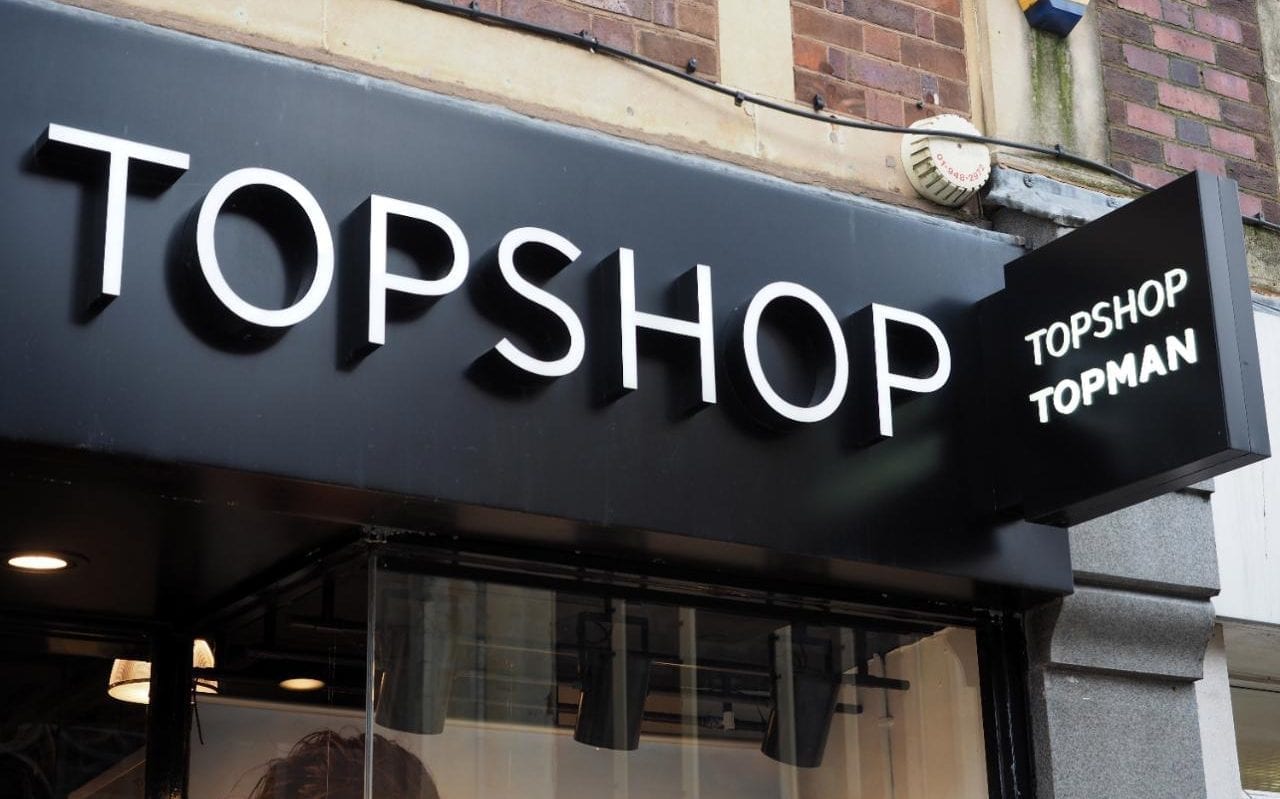
    British retailer Topshop is about to make its Mainland China debut – opening its largest store in the world in Shanghai.

    To date, the fashion chain has opened just three stores in greater China – all of them in Hong Kong, where it made its debut in 2012. While the company has recently been closing stores in Australia, Spain and other markets, the company sees huge potential in China, despite its late arrival there. (Brands like H&M and Zara have had a China presence for a decade).

    A three-story flagship Topshop China store will open on Middle Huaihai Road offering more than 3400sqm of selling space. Huaihai Road is Shanghai’s most prominent retail high street strip featuring giant flagships from Uniqlo and Victoria’s Secret along with smaller maisons for luxury brands.

    While Topshop China has lacked a brick-and-mortar presence on the mainland until now, Topshop has maintained an online presence, forming an exclusive partnership with luxury-oriented e-commerce venture ShangPin.com in 2014.

  • Bullish investors can bring Vietnam’s stock market to record high in 2018

    Bullish investors can bring Vietnam’s stock market to record high in 2018

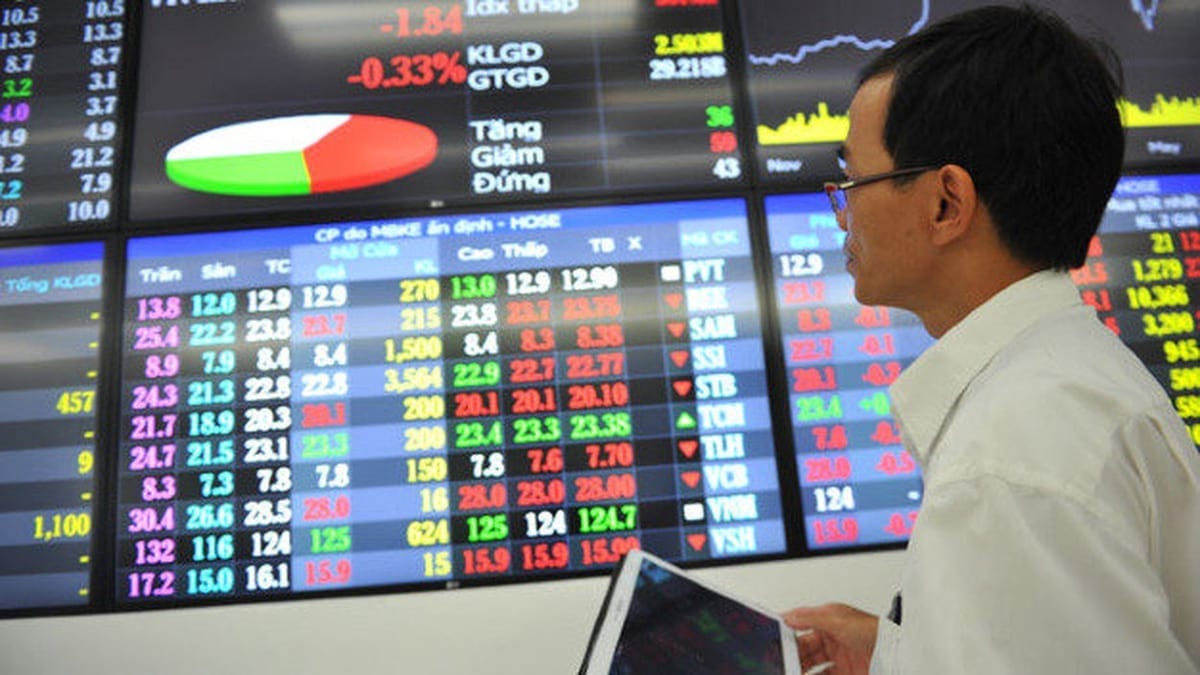
    Vietnam’s stock market is expected to keep its upbeat sentiment of 2017 and drive the benchmark VN-Index to an all-time high at year end, analysts said.

    The Vietnam Stock Index (VN-Index), a capitalization-weighted index of all the companies listed on the Ho Chi Minh City Stock Exchange, already reached 1,000 points on Wednesday, the highest since the global financial crisis in 2007.

    It closed at 984.24 on the last working day of 2017, wrapping a bullish week and setting a 10-year high.

    Analysts believe the momentum will continue and bring the index to surpass the record 1,178 points in 2007.

    The market is seeing very low risks, and high confidence for growth, they said.

    RongViet Securities Corporation in Saigon said in a report that VN-Index will increase at least 17 percent this year or even 67 percent in its best scenario, meaning it could end the year somewhere between 1,170 and 1,640.

    Nguyen The Minh, a senior analyst at Saigon Securities Incorporation, was more specific.

    “VN-Index can reach 1,050 points in the short term and 1,300 at year end,” he said.

    Minh said stocks that have not received much attention last year should create big potentials now.

    The market in 2017 was driven by consumer goods stocks, but banking and energy will take the lead this year, he said.

    Minh said the market will be boosted by interest from the foreign sector. Foreign investors made more than $1 billion of net purchase last year, the biggest in five years, and they will continue to stick around for more privatization at public giants.

    Bloomberg called Vietnam a “frontier market” in Asia last year, as it was the biggest gainer in percentage terms: a 47 percent gain in the VN-Index. The market capitalization increased almost double to nearly $150 billion, fueled by state-owned company sales and listings, it said.

    Vietnam’s economy grew 6.8 percent in 2017, breaking its own 6.7 percent target which both government officials and economists had considered ambitious.

    The country remains one of the fastest growing economies in the world and has set the goal to expand another 6.7 percent this year.

  • Macy’s sales performance gets better

    Macy’s sales performance gets better

    US department store retailer Macy’s has reported positive sales for the festive trading season, after improved sales on and offline.

    Macy’s comparable sales on an owned basis increased 1.0 percent in the months of November and December 2017 combined, compared to the same period last year. On an owned plus licensed basis, comparable sales increased 1.1 percent in the combined November/December period.

    “Macy’s had a solid holiday shopping season, and we are pleased that our November/December performance resulted in positive comp sales for the period, setting us up for a positive fourth quarter,” said Jeff Gennette, Macy’s CEO.

    “Consumers were ready to spend this season, and we delivered with solid execution, fresher inventory, a curated gift assortment and a focus on customer experience.

    “We saw improved sales trends in our stores and continued to see double-digit growth on our digital platforms. We intend to close the fourth quarter in a good position and head into 2018 with momentum.”

    Macy’s has completed 81 of its approximately 100 planned store closures announced in August 2016. The company intends to close approximately 19 additional stores as leases or operating covenants expire or sale transactions are completed.

    “These closures are part of a multi-year effort by the company to ensure the optimal mix of brick & mortar stores and digital footprint,” the retailer stated.

    Neil Saunders, managing director of data and analytics firm GlobalData Retail said the holiday sales growth at Macy’s is a welcome change from the red numbers it usually posts and sends a positive signal that other retailers are on course for a solid holiday season.

    “That said, in our view, Macy’s success comes with a few caveats,” he said.

    “The first is that growth remains relatively weak and comes off the back of soft prior year comparatives when comparable sales fell by 2.1 per cent. The second is that while Macy’s grew, it did so by far less than the overall sector; as such it is still losing market share both in total and within a number of key categories. The third is that the growth is more a function of a robust market where consumers were willing to spend than a consequence of the various actions Macy’s has taken to-date.”

    “Indeed, the company’s announcements of further store closures and more cost-streaming underscore the need for more surgery to restore the business to health.

    “In our view, Macy’s still has an enormous amount of work to do here. In short, these results are a step in the right direction, but Macy’s has a very long journey ahead of it before it can declare itself to be on the path to prosperity.”in

  • Spotify hit with $1.6 billion copyright lawsuit

    Spotify hit with $1.6 billion copyright lawsuit

    Music streaming company Spotify was sued by Wixen Music Publishing Inc last week for allegedly using thousands of songs, including those of Tom Petty, Neil Young and the Doors, without a license and compensation to the music publisher.

    Wixen, an exclusive licensee of songs such as “Free Fallin” by Tom Petty, “Light My Fire” by the Doors, (Girl We Got a) Good Thing by Weezer and works of singers such as Stevie Nicks, is seeking damages worth at least $1.6 billion along with injunctive relief.

    Spotify failed to get a direct or a compulsory license from Wixen that would allow it to reproduce and distribute the songs, Wixen said in the lawsuit, filed in a California federal court.

    Wixen also alleged that Spotify outsourced its work to a third party, licensing and royalty services provider the Harry Fox Agency, which was “ill-equipped to obtain all the necessary mechanical licenses”.

    Spotify declined to comment.

    In May, the Stockholm, Sweden-based company agreed to pay more than $43 million to settle a proposed class action alleging it failed to pay royalties for some of the songs it makes available to users.

    Spotify, which is planning a stock market listing this year, has grown around 20 percent in value to at least $19 billion in the past few months.

  • Calvin Klein unveils new campaign featuring Gerber siblings

    Calvin Klein unveils new campaign featuring Gerber siblings

    Calvin Klein has unveiled a global advertising campaign featuring sibling models Kaia and Presley Gerber.

    The multimedia Calvin Klein campaign will have a heavy social media component in what the fashion label describes as “the latest iteration of the evolution in the brand’s globally recognised call to action: Our Family”.

    Shot by photographer Willy Vanderperre, the campaign features the Gerbers wearing core styles of Calvin Klein Jeans available in stores and online already.

    “The Our Family. #MYCALVINS campaign embraces a digital first, socially powered mindset in communicating the evolution of the globally successful #MYCALVINS campaign originally launched in 2014,” the company says in a statement

    “The #MYCALVINS campaign leverages influencers’ and existing consumer behavior to express themselves, and maximises the cultural ‘selfie’ and viral image-sharing phenomenon. With dedicated digital support in 12 countries and high impact outdoor in several key markets, the Our Family. #MYCALVINS initiative will be communicated to a global audience.”

    At the core of the concept is family – “a display of unity between strong individuals, further emphasised by the symbolism of the traditional American quilt”.

    “This campaign captures these bonds and brings to life different ways we can inspire families – both born and made – to connect with one another, and celebrate the things that unite us.”

    The new campaign follows on from one launched in November featuring an array of musicians.

  • CapitaLand sharpens China focus by selling 20 malls to Vanke

    CapitaLand sharpens China focus by selling 20 malls to Vanke

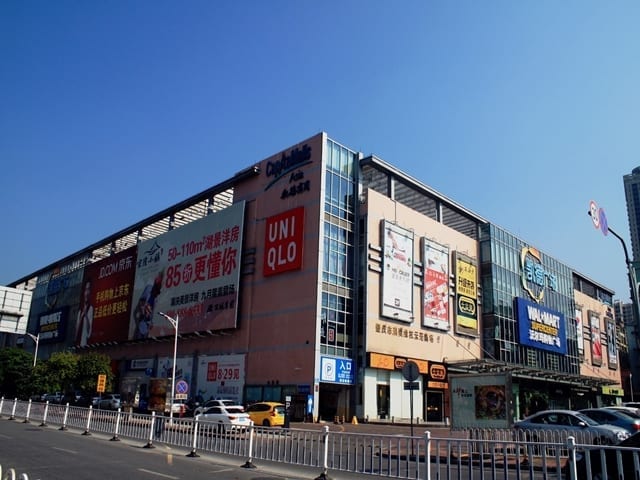
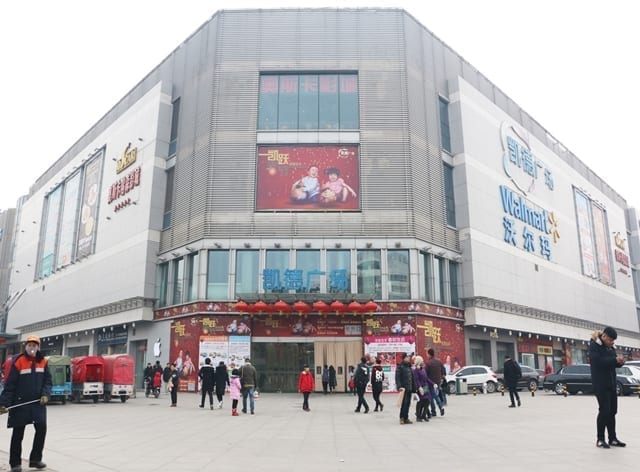
    CapitaLand China is about to sell 20 malls across China, following a year of record openings for the Singapore group.

    Through its wholly owned subsidiary CapitaLand Mall Asia, CapitaLand has signed agreements with unrelated parties to divest its share of interest in a group of companies that hold 20 retail assets with an agreed value of RMB8.3 billion (S$1.7 billion/US$1.2 billion).


    Each mall has an average gross floor area (GFA), excluding car park, of about 40,000sqm. They are spread across 19 cities, of which 14 are non-core cities in which CapitaLand has a single mall.

    Set for completion in the second quarter of this year, the transaction is expected to generate net proceeds of about S$660 million and a net gain of about $75 million for CapitaLand. The resultant loss of recurring income will be limited as the 20 malls account for about 4 and 7 per cent of CapitaLand’s respective total and China shopping mall portfolio valuation.

    The move follows CapitaLand’s divestment of CapitaMall Kunshan last month, and the formation of a JV between CapitaLand and CapitaLand Retail China Trust in November to acquire Rock Square, a 84,000sqm mall in Guangzhou.

    ‘Cusp of change’

    “China is sitting on the cusp of transformative changes to its retail industry, characterised by a burgeoning middle class and the rising popularity of omni-channel retailing,” says CapitaLand president/group CEO Lim Ming Yan. “CapitaLand is seizing this window of opportunity to reconstitute its mall portfolio with a sharper geographical focus.”

    He says that unlocking the value of mature assets for reinvestment into new growth opportunities is a hallmark of CapitaLand’s capital recycling strategy. “We will continue to invest in dominant assets in core Chinese city clusters, where we already enjoy a competitive advantage.”

    Lim sees China as an important core market for CapitaLand, with its competitive advantage in integrated developments acting as a key differentiator.

    CapitaLand last year opened a record 1 million square metres of retail space across eight developments in Singapore, China and Malaysia – its largest retail space offering in a single year. Of these, six are retail components of large-scale integrated developments in China, averaging about 130,000sqm. They are in fast-growing Chinese cities such as Hangzhou, Shanghai, Shenzhen, Suzhou and Wuhan.

    Post-divestment, CapitaLand’s mall network in China will be concentrated in 22 cities, compared to 36 before. It will comprise 491 malls, 45 of them in first- and second-tier cities. More than half are the retail component of integrated developments.

    CapitaLand’s largest retail presence is in Beijing and Shanghai, where it owns/manages eight malls each, followed by Chengdu with six and Wuhan with four. Following the acquisition of Rock Square, CapitaLand will have two malls in Guangzhou.

    The five core city clusters under CapitaLand’s China strategy are Beijing/Tianjin, Shanghai/Hangzhou/Ningbo/Suzhou, Guangzhou/Shenzhen, Chengdu/Chongqing/Xi’an, and Wuhan.

  • Japan’s proposed departure tax draws mixed views

    Japan’s proposed departure tax draws mixed views

    Japan’s planned introduction of a “departure tax” on international travelers has received a mixed response, with many questions yet to be answered about how the revenues will be spent.

    Hopes are high that the recent tourism boom will continue beyond the 2020 Tokyo Olympics and Paralympics, when the government aims to attract 40 million visitors to the country that year.

    But the surge in visitors is also making it imperative for debt-ridden Japan to secure enough funding to improve infrastructure and services for foreign tourists in a country that prides itself on its “omotenashi” hospitality.

    Some visiting tourists appear supportive of the move to require each passenger to pay 1,000 yen (S$11.85) every time they depart Japan by air or sea. But other travelers, including Japanese going abroad, are unconvinced how they are going to benefit from it.

    “Paying a tax does not sound good,” said Ms Wang Pei Hsien, a 47-year-old tourist concluding a six-day visit from Taiwan.

    “But if I can get better services here, I think it is OK,” she said before flying out of Tokyo’s Haneda airport.

    The ruling coalition of the Liberal Democratic Party and Komeito party included the introduction of the new tax for international travelers in their reform package approved earlier this week.

    To spur spending by foreign tourists like Ms Wang, who bought clothes, children’s toys and medicine in Japan, the ruling bloc decided to simplify the existing tax-free system.

    Currently, at least 5,000 yen needs to be spent on general goods such as home appliances or on disposable items such as cosmetics and medicine to qualify for the tax exemption.

    But the plan is to enable foreign shoppers to combine them to reach the 5,000 yen threshold.

    Japan has seen a surge in foreign visitors in recent years, with the number already hitting a new record in 2017, exceeding the previous high of over 24 million last year.

    In 2016, the number of departures from Japan stood at around 40 million, meaning that had the departure tax already been in place it would have generated revenues of some 40 billion yen.

    “It all comes down to how the money collected is going to be spent,” said Ms Yumi Hori, a 27-year-old Japanese who was at Haneda waiting for her flight to Canada. “I wish wi-fi connections were better here.”

    Her view was echoed not only by other travelers but also officials and tourism industry professionals.

    The government is seen as hurrying to seize the opportunity to step up preparations for hosting the Olympics and Paralympics, even though experts say it should also look beyond the event to boost tourism.

    Since the idea of the departure tax emerged earlier this year, a panel of experts drew up a report on how to secure funding to make Japan a “tourism-oriented” country.

    In the report to the Japan Tourism Agency, the panel said a tax of 1,000 yen or lower should be “viable,” after studying examples from other countries and weighing the potential impact on foreign travel demand.

    Australia, for instance, charges AUS$60, or about 5,200 yen, when a person leaves the country, while South Korea requires each air passenger to pay 10,000 won, or about 1,000 yen, and 1,000 won when departing by sea.

    As recent brisk travel demand from Asian countries has been supported by low-cost carriers, economists say the introduction of the departure tax may have some impact, a concern raised by the travel industry.

    Mr Takayuki Miyajima, senior economist at the Mizuho Research Institute, said it could test Japan’s seriousness about boosting inbound tourism, a must for its longer-term economic growth.

    “The tax revenue should be used to build infrastructure and enhance connectivity to regional areas for foreign tourists, which will help revitalize these areas,” Mr Miyajima said.

    “But Japan also needs to tackle its increasingly severe labor shortage, especially in the services sector, and spending money to do something about it could be an option.”

  • Vietnam confirms plan to fly non-stop to California in 2018

    Vietnam confirms plan to fly non-stop to California in 2018

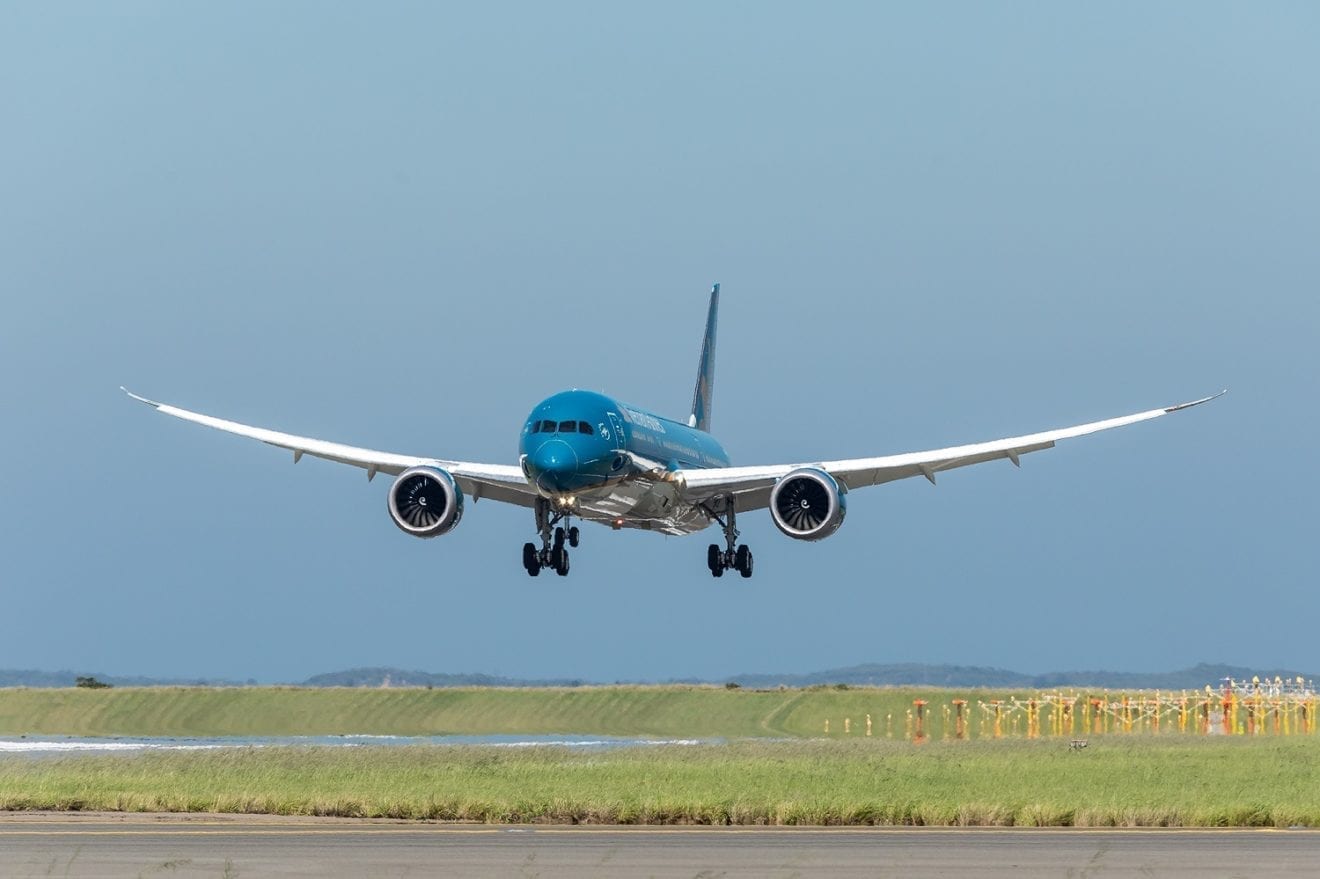
    Vietnam’s government has approved plans to expand its air network to major markets including Australia, China, Europe and the United States starting from this year.

    According to the plan, Vietnam Airlines will go through with its proposal to open non-stop services to the U.S., starting with direct flights to the west coast in 2018. The national carrier is considering between San Francisco and Los Angeles.

    The U.S. proposal was revealed a couple of years ago and received much excitement, given busy travel between the countries. The U.S. is the fourth largest source of foreign visitors to Vietnam, with more than 614,000 people coming in 2017, up 11 percent from the previous year, according to the General Statistics Office.

    Aircraft manufacturer Airbus said in September 2016 that it had signed an MoU with Vietnam Airlines to deliver 10 A350-900 aircraft, which will be used for non-stop flights to the U.S.

    But the giant economy across the Pacific is just part Vietnam’s sky plan.

    For its neighbor China, Vietnam is set to open dozens of new flights by 2020.

    The new routes will connect Can Tho, Da Lat, Da Nang, Hai Phong, Hue, Nha Trang and Phu Quoc Island of Vietnam with at least 17 Chinese destinations: Changchun, Chongqing, Dalian, Fuzhou, Guilin, Guiyang, Haikou, Hainan, Harbin, Lanzhou, Ningbo, Shenyang, Wuhan, Xi’an, Xiamen, Xishuangbanna and Zhengzhou.

    Current flights to Beijing, Chengdu, Guangzhou and Shanghai will increase passenger load by adding to their frequency and using bigger aircraft, according to the development plan which has been approved by Prime Minister Nguyen Xuan Phuc.

    Chinese passengers to Vietnam surged nearly 50 percent to more than 4 million in 2017, accounting for nearly a third of foreign arrivals to the country.

    Vietnam’s aviation development plan also involves new flights to Australia, France, India, Japan, Malaysia, Russia, South Korea, Thailand, and the U.K., all of which now benefit from Vietnam’s e-visa and visa waiver programs.

    The country welcomed nearly 13 million foreign visitors and raked in nearly VND515 trillion ($22.7 billion) from tourism in 2017. It hopes the new air routes will bring the number of visitors up to 17-20 million in the next two years, when tourism money will contribute 10-12 percent to the economy, compared to the current 7 percent.

  • WeChat and Guangzhou government to introduce WeChat ID

    WeChat and Guangzhou government to introduce WeChat ID

    WeChat may soon become an indispensable part of the Chinese citizens after a report emerged claiming that the Tencent-owned messaging app will be used to officially ID people.

    The Guangzhou government has reportedly initiated a pilot program which creates a virtual ID card through WeChat account of registered users. This Virtual ID card has the same purpose as that of a normal state-issued ID card.

    The South China Morning Post claims that according to Xinhua, the service will soon be introduced in the rest of the country as well.

    WeChat is currently the largest social media platform in China and also has additional features such as payments and money transfers. The program, called the WeChat ID, was co-developed by the Ministry of Public Security and the WeChat team said the report.

    The WeChat ID can be used as an official ID to register in hotels or applying for government jobs without bringing in the state issued ID.

    A similar kind of electronic ID system was earlier implemented in the city of Wuhan, where the branch of the Public Security Bureau partnered up with Alipay to launch an electronic ID card service as reported.

  • Hong Kong Recovery Boosts Jewelry Sales

    Hong Kong Recovery Boosts Jewelry Sales

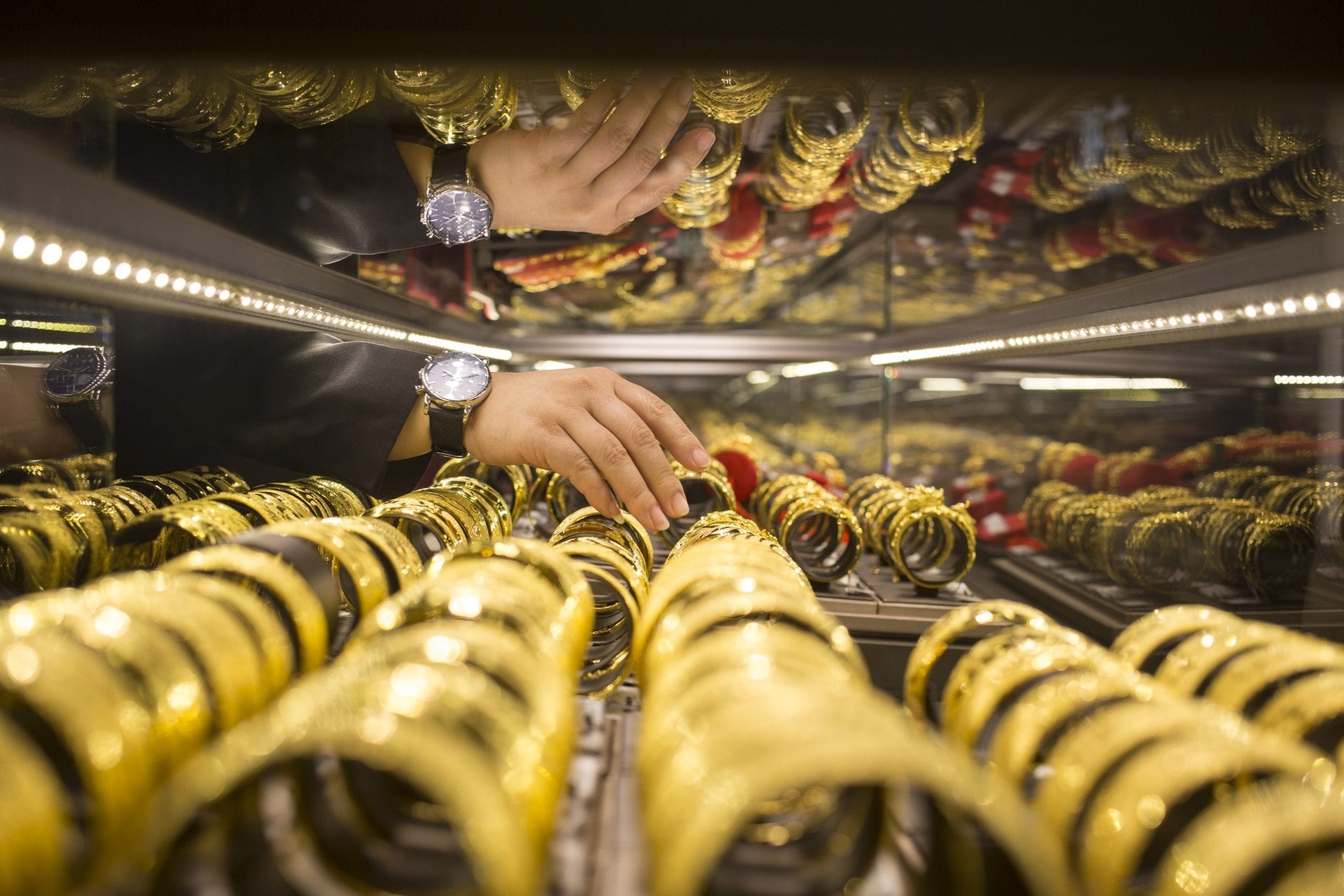
    Sales of jewelry, watches and other luxury items in Hong Kong rose in the first 11 months of 2017 as tourists returned and local consumer sentiment recovered, the city’s official data authority said.

    Retail sales for the category grew 5% year on year to $8.49 billion (HKD 66.35 billion) for the January-to-November period, Hong Kong’s Census and Statistics Department said in a statement Wednesday. November proceeds jumped 8% to $783.1 million (HKD 6.12 billion), it added.

    Sales across all retail products rose 1.8% for the first 11 months, and climbed 7.5% in November, reflecting the “visible growth in visitor arrivals and the [optimistic] consumer sentiment during the period,” a spokesperson for the Hong Kong government said.

    Hong Kong’s luxury retail sector is largely reliant on purchases by tourists from mainland China. A slump in visitors from that location hit Hong Kong’s retail industry over the last two to three years, with sales of jewelry and other luxury items sliding 17% in 2016. However, the tourist sector recovered this year: Visitors from mainland China rose 3.6% from January to November, to a total of 40.2 million, according to the Hong Kong Tourism Board.

    Meanwhile, the total number of tourists arriving in Hong Kong from all locations jumped 7% to 5 million in November compared with the same month last year. During the first 11 months of 2017, the figure climbed 3.1% to 52.9 million.

    As a result, Hong Kong jewelry retailers saw significant improvements in their 2017 performances. Chow Tai Fook’s same-store sales jumped 9.5% in Hong Kong and Macau in the six months ending September 30, while Luk Fook recorded 13% growth in retail sales for the same region.

    “The near-term outlook for retail sales remains positive, as consumer sentiment is buttressed by the favorable employment and income situation, and as inbound tourism continues to recover,” the government spokesperson noted.

    The upturn in 2017 also affected the diamond trade, with imports of polished stones into Hong Kong growing 7% to $14.07 billion in the first nine months.


  • 50,000 malaysians expected to be laid off in 2018, says report

    50,000 malaysians expected to be laid off in 2018, says report

    MORE than 50,000 employees are expected to be laid off this year as reported.

    The English daily quoted Malaysian Employers Federation executive director Shamsuddin Bardan as saying manufacturing would be the main sector affected, followed by the services (insurance, banking and retail) and construction sectors.

    He said among the challenges facing the job market were the levy imposed on employers for the hiring of foreign workers and the Employee Insurance Scheme.

    “The increase in maternity leave days, from 60 days to 90 days, as well as the possibility of paternity leave, will also be factors.”

    The report said automation would continue to be another factor for job losses as more companies turned to robotics and information technology.

    “Multinational corporations involved in labour-intensive industries are also leaving due to higher wage costs in Malaysia,” said Shamsuddin.

    “They are moving to more attractive and lower-labour-cost nations, where there are no high social costs.”

    He said Cambodia and Laos were among the countries where wages were below US$100 (RM402.59) per month, whereas in Malaysia, they were about US$250.

    Malaysian Trades Union Congress president Abdul Halim Mansor was quoted as saying that based on information from the Labour Department, between 30,000 and 50,000 people could be retrenched this year, involving those from the finance, construction and manufacturing sectors.