Tag: asia

  • GTT deploys new low latency routes

    GTT deploys new low latency routes

    Yesterday, GTT Communications announced a series of new low latency routes around the globe, and simultaneously launched a new time  synchronization service.

    The new low latency routes include Hong Kong to Tokyo, Hong Kong to Singapore, Mumbai to Singapore, New York City-Mexico City and Johannesburg to London. They bring the company’s total low-latency portfolio to more than 60 routes connecting over 130 financial exchanges.

    Meanwhile GTT’s time synchronization service aims to give financial customers a single source of time across their global trading footprints.

    This answers the question of what one gets when one combine’s Hibernia Networks’ financial business and transatlantic cable with the international network relationships that GTT acquired with the earlier deal for the Inteliquent/Tinet backbone.

    GTT’s more recent M&A moves have been in the US with the acquisition of Global Capacity and pending purchase of Transbeam. However, I wonder whether the next targets might come from overseas.

  • AirAsia announces flights from Manila to Bali, Jakarta

    AirAsia announces flights from Manila to Bali, Jakarta

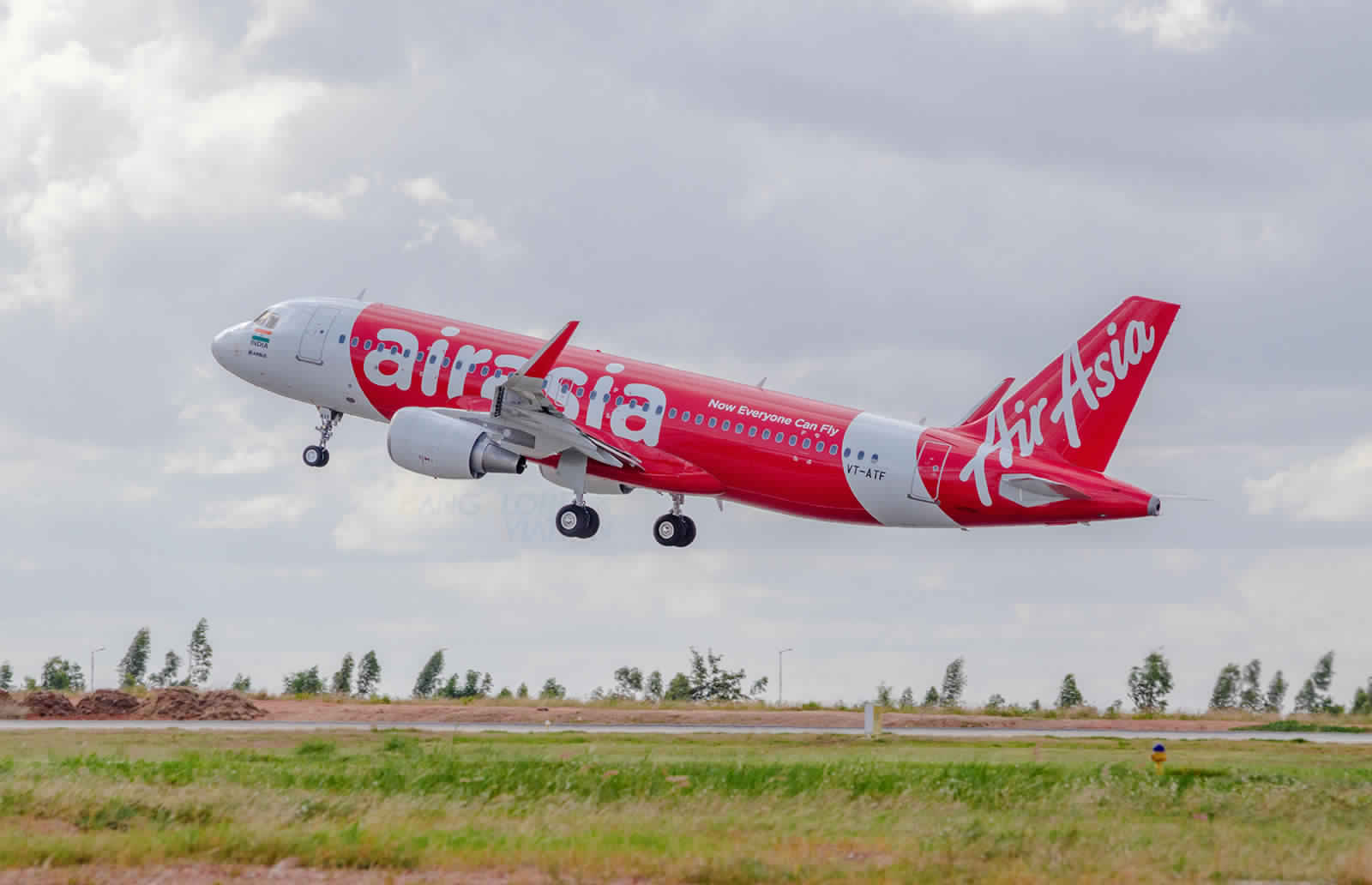
    Budget carrier AirAsia on Thursday announced it will start servicing flights from Manila to Bali and Jakarta in Indonesia starting January 2018.

    In a statement, AirAsia Philippines said it will start flying from Manila to Jakarta, Indonesia starting January 9, and to Bali, Indonesia starting January 19.

    Daily flights from Manila to Bali will have a departure time of 6:40 p.m., and an arrival time of 10:25 p.m. Flights back to the Philippines leave Bali at 11:20 p.m.

    Meanwhile, flights from Manila to Jakarta will have a departure time of 8:00 a.m, and an arrival time of 11:00 a.m. Flights back to the Philippines leave Jakarta at 11:30 a.m.

    In the same statement, AirAsia said it will also start flying to Ho Chi Minh in Vietnam starting November 17.

    Flights from Manila to Ho Chi Minh will have a departure time of 10:25 p.m. every Tuesday, Friday, and Sunday. Flights back to Manila leave Ho Chi Minh at 1:35 a.m. every Monday, Wednesday, and Saturday.

    With the new routes, AirAsia also on Thursday announced all-in promo fares available from P2,950 available until October 22, with a travel period from November 17, 2017 to April 30, 2018.

  • Tesla moves closer to deal to build cars in China

    Tesla moves closer to deal to build cars in China

    Electric car maker Tesla Inc said on Sunday it is talking with the Shanghai municipal government to set up a factory in the region and expects to agree on a plan by the end of the year.

    China levies a 25 percent duty on sales of imported vehicles and has not allowed foreign automakers to establish wholly owned factories in the country, the world’s largest automaker. Those are problems for Tesla, which wants to expand its presence in China’s growing electric vehicle market without compromising its independence or intellectual property.

    China’s government has considered allowing foreign automakers to set up wholly owned factories in free trade zones in part to encourage more production of electric and hybrid vehicles – which the government calls “new energy vehicles” – to meet ambitious sales quotas.

    Tesla would still have to pay a 25 percent duty on cars built in a free trade zone, but it could lower its production costs.

    “Tesla is working with the Shanghai Municipal Government to explore the possibility of establishing a manufacturing facility in the region to serve the Chinese market. As we’ve said before, we expect to more clearly define our plans for production in China by the end of the year,” a Tesla spokesperson said in a statement emailed to Reuters.

    Tesla said in June it was beginning talks with Shanghai.

    The Wall Street Journal reported that Tesla and the Shanghai government have already reached a deal in that city’s free trade zone. Shanghai is China’s de facto automotive capital and a significant market for luxury vehicles of all kinds.

    Chinese internet company Tencent Holdings Ltd has a five percent stake in Tesla and is seen as a potential ally for Tesla’s efforts to enter the Chinese market.

    It was unclear if the Chinese government will conclude a deal with Tesla to coincide with U.S. President Donald Trump’s visit next month.

    Tesla Chief Executive Elon Musk has said the company eventually will need vehicle and battery manufacturing centers in Europe and Asia.

    Tesla is wrestling with production problems at its sole factory, in Fremont, California. It is trying to accelerate output of its new Model 3 sedan, but conceded earlier this month that production bottlenecks had held third-quarter production to just 260 vehicles, well short of the 1,500 previously planned.

  • Singapore malls are primed for Amazon’s click de grace

    Singapore malls are primed for Amazon’s click de grace

    Singapore’s malls are one click away from irrelevance, though the investment trusts that own them are carrying on as if nothing has changed. The first hint of trouble showed up in January when department store John Little shut down after a 174-year run. Then, in July, Amazon.com Inc. introduced its two-hour Prime  Now delivery service, choosing the city-state of 5.6 million people as the testing ground to fine-tune its Southeast Asia ambitions.

    The landlords don’t appear all that perturbed; at least not yet. CapitaLand Mall Trust, the island’s biggest retail real-estate investment trust, announced 2.78 Singapore cents (2 cents) in dividends last week, unchanged from a year earlier. That’s an annual yield of almost 5.5 per cent at a time when the 10-year Singapore government bond offers only 2.2 per cent. The tantalising premium is keeping investors hooked.

    Even the analyst community is discounting the threat from online shopping: There are 13 buy recommendations on the CapitaLand Mall REIT, and not a single sell, according to data compiled by Bloomberg. But look under the hood, and there are signs that not everything is hunky dory.

    While all its malls are almost fully occupied, agreements at some of the bigger properties are being struck at increasingly lower rents. Forget a suburban property like Westgate in Jurong East, which has seen 17 per cent of leases signed at rents 10.5 per cent cheaper than three years ago; even marquee names like Raffles City, a prime Singapore landmark, are settling for less:

    Singapore’s economy grew 4.6 per cent in the third quarter from a year earlier, with the government estimating full-year expansion of between 2 per cent and 3 per cent. Yet CapitaLand Malls’ tenants — from food and fashion to supermarkets and services — reported negative or mediocre sales growth in the first nine months of 2017. You can expect entertainment and electronics, the categories where tenants are still doing well, to start feeling the Amazon effect when the online service is able to iron out its early wrinkles.

    Then there’s fintech. By some estimates, the Singapore banking industry’s space requirement could shrink by 30 per cent, or 6 million square feet, over the next decade. To the extent suburban malls like to house a bank branch or two to catch footfalls, they’ll be affected. Indeed, the sharp drop in the rental reversion rate at CapitaLand’s Tampines Mall — from growth of 0.6 per cent in the first six months to a decline of 4.3 per cent in the first nine — was because of a change in tenant mix from banking to food and beverages, according to OCBC Investment Research.

    Ahead of further increases in US borrowing costs, CapitaLand Mall Trust has reduced its balance-sheet risk by selling the serviced-residence part of Funan, a 1980s-vintage mall that used to specialise in electronics and is currently undergoing a costly redevelopment. By the time Funan reopens in 2019, there may not be anybody left on the planet who still goes to a store to buy a computer or a phone. So the new address will play host to everything from a homegrown theatre company’s auditorium to a test zone for drone photography.

  • Philippines bans companies from forcing female workers to wear high heels

    Philippines bans companies from forcing female workers to wear high heels

    The Philippines has banned companies from forcing women to wear high heels – a move that’s been hailed as a landmark victory against sexism by labour unions.

    The new government order, which came into effect on Sunday, dictates that employers should implement the use of “practical and comfortable footwear” and that workers must not wear heels that are higher than an inch, unless they choose to do so.

    The move will likely be especially welcomed by retail clerks, receptionists, security guards, flight attendants and other professionals who spend a large portion of their day on their feet.

    The government’s labour department said that wearing high heels while standing for prolonged periods of time may cause sore feet and aching muscles but also “hazardous” pressure on joints.

    “It’s a form of torture. It’s a form of oppression and slavery. Imagine having to endure that pain for eight to 10 hours a day,” Alan Tanjusay, spokesman for the Associated Labor Unions told.

    “It’s also a form of sexism because culturally employers say women wearing high heels look taller and sexier and are then more attractive, more effective in selling products. They don’t know the women are suffering,” Mr Tanjusay added.

    The government also said that companies must give workers who spend a long time on their feet rest periods or seats to reduce the time they spend standing or walking.

    In July, researchers at the University of Aberdeen published a study in which they argued that more needed to be done to address the problem of women being forced to wear high heels in certain jobs.

    The academics said that certain footwear increases the chances of developing certain damaging musculoskeletal conditions.

    Earlier in the year the UK Government rejected calls for a blanket ban on enforced high heel wearing.

  • Myanmar internet-led models yet to scale but heading towards transactional phase

    Myanmar internet-led models yet to scale but heading towards transactional phase

    New internet-enabled businesses are making an appearance in frontier Myanmar, which is witnessing a telecom boom period with operators putting their might on expanding network infrastructure to meet the growing demand for data services.

    While e-commerce and consumer internet startups are yet to scale, they are slowly heading towards the “transactional” phase and launching new models borrowing from successful regional ideas but adapting them to the local market.

    Consider these developments: In the new office in Mingalar Taung Nyunt township of local content creator Myanmar Online Creations (MOC), an employee at  Onlyinburma.com, targeted to be a destination point for locals, and Langyaung.com, a local business directory, is busy uploading content for the sites.

    The company has got five apps running since its launch late last year and it is already looking to roll out a few more to touch 10 apps by the end of 2017. MOC, led by Win Ohn, also the CEO and president of Canada-based MediaNation, aims to bring new dotcom technology in Myanmar language.

    Meanwhile, in mid-August, an online wedding gift service platform named MingalarLetPhwet.com was launched to address the issue of unwanted and repetitive wedding gifts. The site has brought together suppliers of over 5,000 wedding gift related products while it is free to use for customers.

    In July, Swiss media group Ringier and Myanmar-based Information Matrix Co Ltd joined hands for their ventures, marry.com.mm (based on popular Vietnamese model marry.vn) and parenting platform kalay.com.mm. Revenue model for these engines are built around wedding fairs and workshops.

    The market also saw the launch of Flair Eyes, which allows local photographers to upload photos and video clips for use through a subscription or per piece basis.

    Ecosystem enablers

    The development of such business oriented platforms indicate the improved contribution from different stakeholders in the ecosystem in Myanmar since the military ceded power in 2011.

    The expansion of the telecom market, since the approval of foreign telecom operators, Telenor and Ooredoo, has by May 2016 reached a coverage of 43.72 million compared to the country’s total population of 54 million. Also compare the current SIM card cost K1500 ($1.3) to the previaling rates of  a staggering K4000,000 ($3,412) in 2006.

    Apart from the favourable macro indicators, the region is also beginning to see action surrounding funding of startups. Ride hailing platforms like Uber and Grab’s announcement of $100 million investment in Myanmar has captured the attention of investors.

    Recent startup funding developments include freelancing platform Chate Sat and comic application White Merak raising a six-digit investment each. JobNet.com.mm, a job website under the umbrella of MMOne Online Co Ltd, also raised a seven digit investment this year. Prior to that, their sister company, ShweProperty.com raised a six digit sum from some institutional investors.

    Other significant updates from the startup world include MyPlay’s acquisition by ASX-listed iSentric and Malaysian movie streaming company iflix establishing presence in Myanmar.

    Sumit Jasoria, MD, shop.com.mm feels, “the mindset has changed after global players came in. Local investors are also looking at the right team.”

    Ohn says, what is currently hurting e-commerce adoption and growth is lack of universal gateway. However, online retailers and users have seemingly found a way around it by relying on cash on delivery option. “It is a ‘a very creative way and a grassroot step as we evolve into e-commerce shopping and buying. I forsee a lot of solutions addressing the universal online banking credit card payment solution,” said Ohn.

    Meanwhile, a lot of payment solutions are appearing to address the issue of online payments such as Wave Money, a financial service provider of Telenor and Yoma Bank; Ooredoo’s mobile wallet M-Pitesan and 1-Stop, a partnership between Singapore-based payment service 2C2P and Myanma Awba.

    Popular retail platforms like Rocket Internet’s shop.com.mm is experimenting with offering more discounts on usage of card payments. “The idea is to create an ecosystem which helps consumers to also try cards,” said Sumit Jasoria, managing director of shop.com.mm, which has been in Myanmar for three years.

    He argues that 70 per cent of businesses in neighboring Asian countries are still using cash on delivery while the number for Myanmar is just higher, making about 90 per cent. “I think it is catching up, soon it will change for sure,” said Jasoria.

    Internet models, local twist

    Jes Kaliebe Petersen, CEO of Phandeeyar a leading Innovation Lab in Myanmar, says, the next wave of startups will be targeting a much broader audience, people present outside the city, and the new generation of smart phone users. The majority of those residing outside large cities in Myanmar use data only for Facebook and Viber.

    “The business that will emerge as the leaders in the area (online business platforms) are those who manage to handle the logistics and payments issues in a reliable manner and get people not just to buy on Facebook but also from their own apps,” said Petersen.

    A recent survey by MyanZen – the winner of Telenor Myanmar’s first accelerate program that allows social sellers to effectively sell on social network – shows that there are over 3,500 Facebook stalls involved in online shopping business in Myanmar.

    While the emergence of new business ideas are keeping up, Ohn says, it is encouraging to see a lot of companies like them starting to build the platforms and grow the awareness of the general public.

    Business ideas, that are successful in neighbouring countries, find favour in Myanmar.

    “We will always encourage the people in our accelerator to look at what’s going on elsewhere and use that as an inspiration for what can be done in Myanmar,” said Petersen.

    Shop.com.mm is also starting to replicate models of Daraz’ work in other countries and introducing fashion related products from Korea and Thailand on their platform after evaluating the consumer preference in Myanmar.

  • Malls in Philippines unlikely to follow US stores to extinction

    Malls in Philippines unlikely to follow US stores to extinction

    Malls in the Philippines are unlikely to be replaced by online channels soon, as millennials seeking to spend on experiences drive demand for restaurant space, a property consultant said Monday.

    Food and beverage now account for 40 percent of mall space, compared to 60 percent for retail. The sector used to account for just 20 percent, according to data from Leechiu Property Consultants.

    “These malls in Asia have one thing in common, they are utilitarian malls,” said the consulting firm’s CEO, David Leechiu.

    Malls in the Philippines, unlike in the US, are very accessible to consumers, located in “high-density” areas with office and residential buildings.

    Citing a Credit Suisse study, Leechiu said 20 to 25 percent of malls in the US may close in the next 5 years as online shopping grows.

  • New Look founder backs emerging sportswear brand

    New Look founder backs emerging sportswear brand

    New Look founder Tom Singh is among a group of private investors backing emerging men’s sportswear brand Castore.

    Singh remains a non-executive director of the high street chain he founded in 1969 and is also a member of the advisory board of Bridges Fund Management. He is one of a team of five investors to back Castore to the tune of £1.2m.

    Castore was founded by former professional athletes Tom and Phil Beahon, who are both in their 20s, and offers performance sportswear for “the most discerning athletes who value the attention to detail and precision performance features that underpin all garments”.

    The brand is currently sold on its website but there are plans for stores in London’s Canary Wharf, Bank and Chelsea and it also has international retail ambitions with stores in Hong Kong, Shanghai and New York in its sights. Prices range from £85 for a vest to £245 for a jacket.

    “The premium sportswear market continues to expand rapidly and although currently dominated by a small group of multinational companies, there is undoubtedly appetite for a premium brand committed to superior product quality like Castore,” Singh told.

    High end British cycling brand Rapha was recently acquired by RZC Investments, a private equity firm run by Steuart and Tom Walton, heirs to the Walmart fortune, for £200m.

  • Global sourcing has stuffed fashion – globally

    Global sourcing has stuffed fashion – globally

    Like all good things, global sourcing was a seductive morsel that led to a kind of economic gluttony that has had huge ramifications. Most of them for the worse.

    While the idea of sourcing at a lower cost than a business could make themselves on paper looks like an obvious endeavour to exploit, taken to the level that has now occurred, the only sustainable benefits have been achieved by the owners of the factories and supply chain providers to which production and distribution has been outsourced.

    Global fashion for the mass market has denigrated to the lowest common denominator. “Disposable fashion” is no longer an option but pretty much all you can buy at mass market and has led to the destruction of quality, embellishment, differentiation and true innovation.

    The fashion industry – globally – is caught in a deflationary cycle of its own making, producing an endlessly recycled ‘play-book’ of looks from mass-produced fabrics, made to standard blocks and production techniques in order to hit buy-sell prices and margins that are creating nothing but increasing volumes and decreasing profits.

    On top of that, the customers are bored.

    Even Zara – arguably the master of ‘cheap chic’ disposable fashion – has dulled its armoury. Once upon a time, Zara made its goods in Spain – when Spain was a country that had a low labour cost. Thanks to European equalisation laws, Spain’s minimum wage compliance destroyed that advantage. Zara now produces most of its products outside the European Union in cheap labour zones like China and Vietnam. As a result, both quality and an important part of the DNA of the product have evaporated leaving scale and stock turn as its primary weapons. But Zara is lucky that it still sustains those two weapons.

    For those without the armoury of global reach and massive scale, the allure of global sourcing has left them exposed as peddlers of the ‘emperor’s new clothes’. Forced to choose the same fabrics, the same trends, the same blocks and the same factories, the outcome is (you guessed it)…sameness.

    Fashion is about design and look. Without new ideas, individual personality and real choice every season it becomes functional at best. Functional fashion is not what excites customers to spend up. Instead they shop down. And ‘bagging bargains’ favours the few who have and can maintain scale advantage. Everybody else needs to seduce customers to buy with something they can’t get everywhere else. The current cycle of formulaic trend to factory source will not survive the next decade without massive casualties.

    And don’t blame the customer. That is a cop-out. Time for the fashion industry – outside the scale monsters – to rediscover how to design again. How to create original looks. How to invest in monetising quality. How to find a manufacturing advantage outside pure cost. How to create real differentiation and real integrity.

    That – and only that – will save the fashion industry from the massive failure that global sourcing is going to deliver.

  • Juice Hong Kong in sneaker collaboration

    Juice Hong Kong in sneaker collaboration

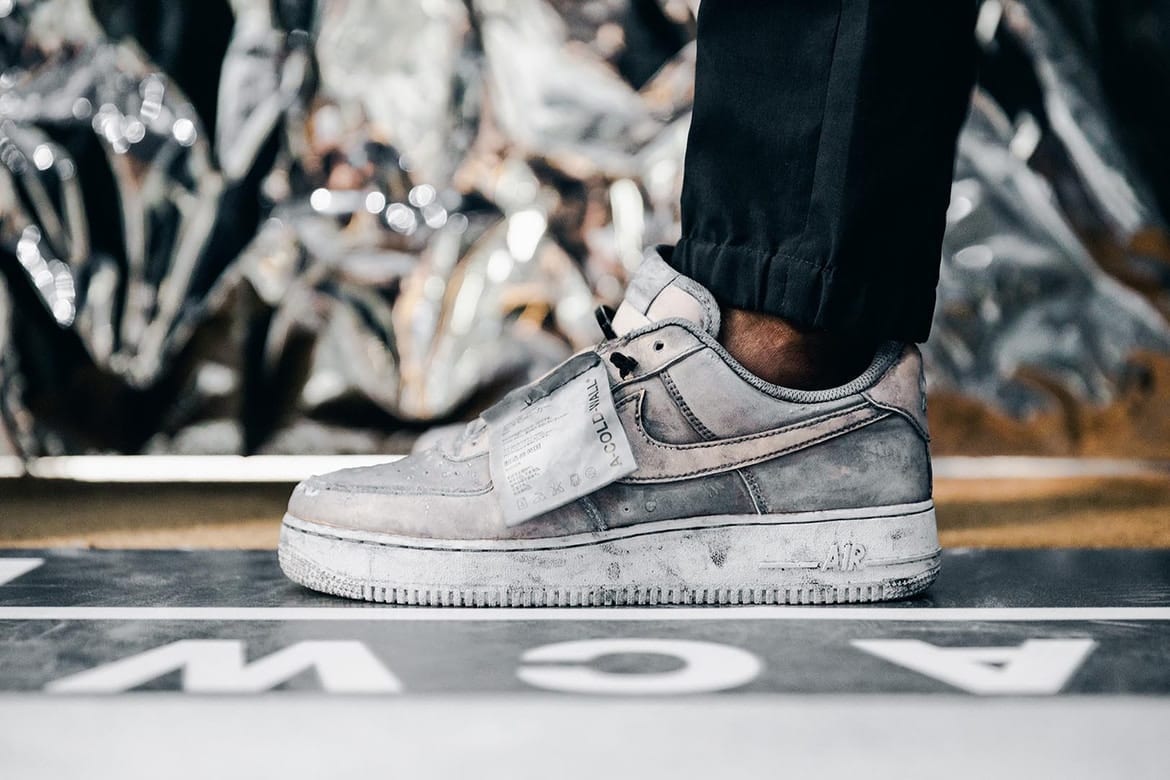
    Hong Kong clothing shop Juice and London’s Footpatrol sneaker shop have collaborated on a collection for the Adidas Consortium Exchange.

    The exchange is a project that pairs two retailers to co-design limited-edition sneakers, with the latest match featuring two Adidas cult classics, the Handball Top and Matchcourt Mid. Juice and Footpatrol have drawn inspiration from tourism and street-vendor souvenirs for their collaboration.

    The Handball Top is dressed in a royal-blue suede with embroidered details on the tongue, inner lining and heel, plus gold shop logos on each tongue tab, gold Adidas branding on the lateral heel, snakeskin branding on the medial side and pony-hair stripes on the lateral side. The shoe is finished off with a leather insole and off-white midsole.

    The Matchcourt Mid has a black canvas upper covered in embroidery representing each shop’s city. Other details include a rubber toecap, gold eyelets, zippers on each heel, gold shop logos on each tongue, leather insoles and an off-white vulcanised outsole.

    The Juice x Foot Patrol Adidas Consortium Exchange collaboration will be released tomorrow week exclusively at the two stores and their websites, with a select global release scheduled for November 4.

  • The BonBonist debuts with truly tasteful design

    The BonBonist debuts with truly tasteful design

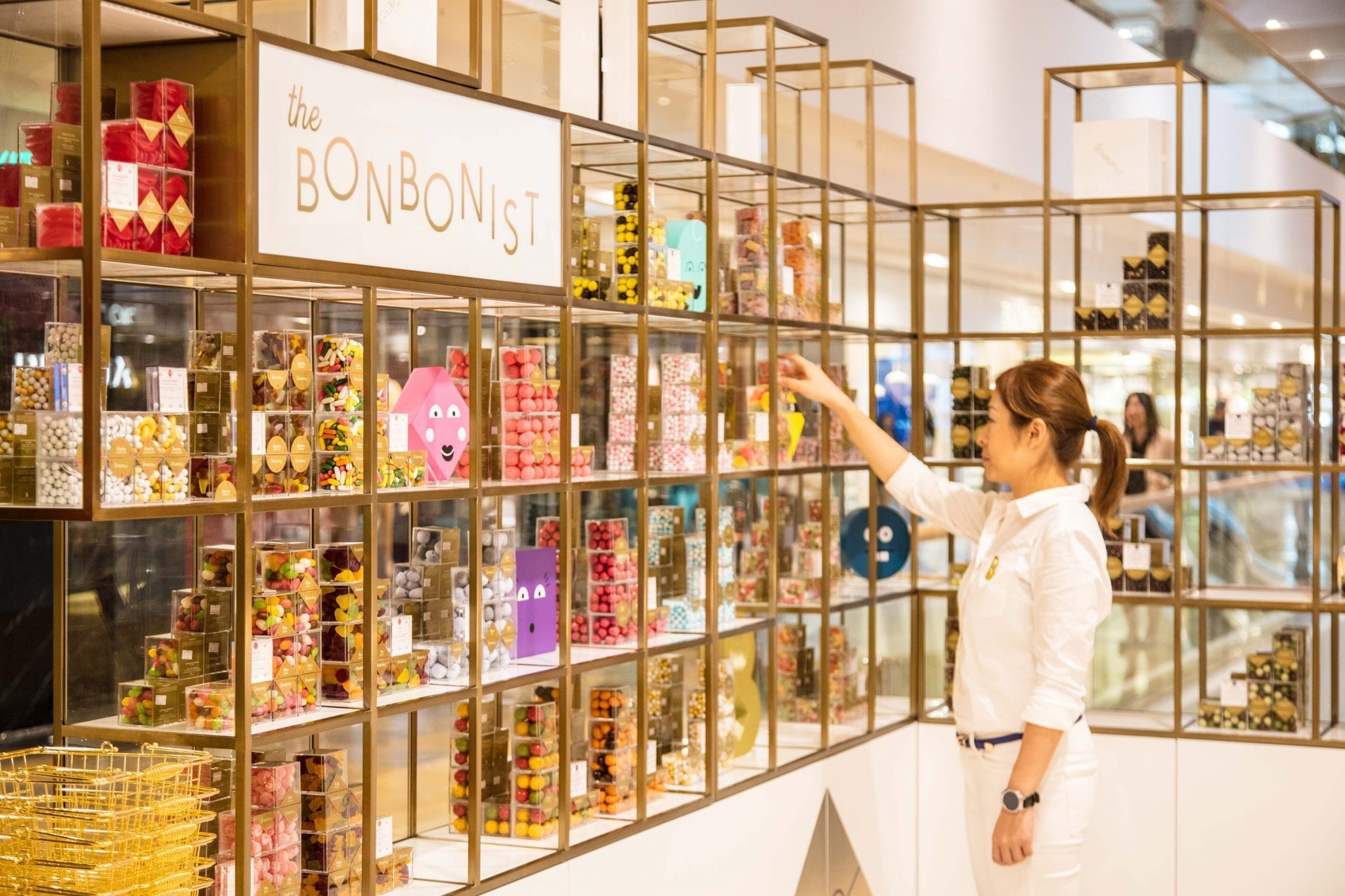
    In time for the festive season, The BonBonist confectionery shop has launched at Pacific Place.

    Bright white with gold touches, the shop plays on geometry with glass display cubes stacked around two sides of the open-plan store.

    A white circular table used as a wrapping station is the only furnishing apart from the counter along the right-hand side of the shop, behind a tall, stylised “B” at the front.

    Inside the display cases, the sweets themselves add colour accents to the overall neutral decor.

    Customers can mix and match bonbons from three or eight crystal cubes into a sweet box to take with them. They can personalise their candy boxes with ribbons and stickers at the gift-wrapping station.

    “The BonBonist’s idea is to create a special confectionery experience that enlivens all our senses – to reveal the inner child in each and every one of us,” says the shop’s founder and curator Olivia Niddam, who has had more than 10 years of international experience in confectionery.

    More than 70 sweets and chocolates from Europe make up the range at the shop, which also features 10 confectionary characters. Flavours include cola, cinnamon, corn, chili, coconut and ginger, and there are vegan as well as lactose- and gelatin-free offerings.

  • Jetpack Aviation appoints B&H worldwide as global logistics partner

    Jetpack Aviation appoints B&H worldwide as global logistics partner

    B&H Worldwide has been appointed as the Global Logistics Partner for JetPack Aviation, creator of the turbine powered, backpack style JetPack . JetPack Aviation (JPA), a leader in micro VTOL (Vertical Take Off and Landing) design, made aviation history in late 2015 when CEO David Mayman flew around the Statue of Liberty to demonstrate the company’s design and engineering capabilities. Nelson Tyler, JetPack Aviation’s principal designer built the civilian RocketBelt which was flown at the opening ceremony of the Los Angeles Olympics in 1984.

    The current JetPack model JB-10 is small enough to fit in the back of a standard SUV, and light enough to be carried by the pilot for easy transport and deployment. The aircraft can be powered by common kerosene or diesel car fuel, achieve flight speed upwards of 100mph and an altitude in excess of 10,000 feet. Proprietary on-board computer systems designed in-house by JPA engineers control the engines, manage fuel flow and transfer real-time system data to the pilot for safe and reliable flights. JetPacks are available for military, first responder, industrial and entertainment applications.

    B&H CEO, Stuart Allen, said, “We have always prided ourselves on being at the cutting edge of aviation logistics and this exciting announcement opens up a whole new world of specialist logistics. We are delighted to have been chosen by the JetPack Aviation team to manage and deliver logistics services for these unique vehicles.”

    JetPack’s David Mayman, added, “Whether we are enabling the extraction of Special Forces soldiers, moving emergency medics from hospital to disaster site, or commuters from home to office – JPA is focused on a wide range of vertical takeoff and landing transportation solutions. We are excited to have the B&H team help us achieve these goals.”

  • Veritas stung over Nosh disclosure

    Veritas stung over Nosh disclosure

    Veritas Investments has been publicly censured and fined $55,000 plus costs by the NZ Markets Disciplinary Tribunal for failing to immediately disclose to the market that it had agreed to sell or close its Nosh business as a condition of continued support from its bank.

    The censure relates to an announcement in September 2016 by Veritas that ANZ Bank New Zealand had agreed to renew its banking facilities, rescheduling its debt obligations and reducing its debt repayments.

    Veritas failed to disclose that to retain ANZ’s support it had agreed either to find an unconditional buyer for Nosh or to have closed the high-end supermarket.

    Veritas eventually disclosed the undertakings “following engagement by NZX Regulation”.

    In the event, it agreed to sell Nosh to Gosh Holding for $3.98 million but ended up in dispute with Gosh over breaches of the sale agreement.

    It had taken on a $5 million funding line from ANZ to buy Nosh in 2014 but struggled to turn it into a profitable business.

    NZX said Veritas has accepted its view that it breached disclosure rules by failing to immediately disclose material information to the market. The regulator said it took into account that Veritas had taken legal advice and considered its obligations under the continuous disclosure rules before electing to withhold the undertakings.

    Veritas is still under pressure from the bank to restore its finances. In August, ANZ said it wouldn’t renew $28.5m in banking facilities which came due in October and November this year. But earlier this month, Veritas said the bank had agreed to push out the deadline for all of the debt until November 30, giving the company more time to look at asset sales or refinancing.

    The company says it is in talks with external parties “on a number of scenarios including asset sales, mergers and refinancing”.

    Veritas shares last traded at 8 cents and have dropped 92 per cent in the past five years.

  • Louis Vuitton Masters continues Jeff Koons collection

    Louis Vuitton Masters continues Jeff Koons collection

    More famous painters are referenced in the second Louis Vuitton Masters collection in collaboration with US artist Jeff Koons.

    While the first wave of the collection celebrated Da Vinci, Fragonard, Rubens, Titian and Van Gogh. Koons chose Edouard Manet’s 1863 work Luncheon on the Grass as his main inspiration, to be featured on LV staple handbags like the Keepall, Neverfull and Speedy as well as accessories and small leather goods.

    “Manet has always been one of the most important artists to me,” says Koons. “To work with the image of The Luncheon on the Grass gave me the opportunity to emphasise the importance of artists giving it up to each other.”

    JMW Turner’s Ancient Rome, Francois Boucher’s Reclining Girl, Paul Gauguin’s Delightful Land and Claude Monet’s Water Lilies, round up the series. Exclusive for Maison Louis Vuitton Vendome will be The Triumph of Pan by Nicolas Poussin.

    French actress Lea Sedoux will feature in the campaign for the collection, which will be released next week.

    As with the previous collection, the bags feature the LV monogram motif, the painter’s name and Koons’ initials along with the LV logo.

  • Singapore m-commerce set for 33 per cent growth

    Singapore m-commerce set for 33 per cent growth

    Singapore m-commerce is set for 33 per cent growth in the next five years, according to a new report.

    However, while it leads Southeast Asia in smartphone and mobile broadband use, Singapore is nearing saturation point for its e-commerce market, says Worldpay’s Global Payments Report.

    Despite its modest population numbers, the city/state is the region’s third-largest e-commerce market with 73 per cent of internet users already shopping online. But this growth is set to slow with a modest 9 per cent expansion to reach US$6.5 billion by 2021 predicts Worldpay, which analysed e-commerce spending patterns across 36 markets on five continents.

    In comparison, China’s e-commerce market is expected to grow by 11 per cent, South Korea should see 19 per cent growth and India is set for 24 per cent expansion.

    Despite Singapore’s decelerating growth, there will be plentiful opportunities for capturing a new wave of mobile shoppers in Singapore, says the report.

    Cross-border shopping is also increasingly popular, with more than half of Singapore’s online consumers buying from international merchants.

    ‘New set of demands’

    “Retailers looking for a foothold to the future must prepare to deliver on a new set of demands in Singapore,” says Worldpay Asia Pacific GM Phil Pomford. “Online shoppers are moving beyond the desktop, and beyond country borders. Savvy and well-connected across multiple devices, they increasingly prefer to shop via mobile and want more opportunities to buy from merchants around Asia and the globe.

    “To deliver on the demands of Singaporean shoppers who expect a convenient, seamless experience no matter how they shop, merchants need to create mobile-friendly payments.”

    Pomford says merchants will be able to capture more cross-border trade by accepting a variety of currencies and payment options.

    Worldpay also found that shoppers in Singapore still overwhelming prefer to pay with credit cards (66 per cent), but alternative payment methods are gaining a foothold. Bank transfers and e-wallets are both set to nearly double in share by 2021, increasing from 11 to 21 per cent and 13 to 21 per cent respectively.

    “Our report also uncovered that 70 per cent of Singaporean internet users would shop online more if offered loyalty benefits – a great tip for e-commerce businesses looking to gain a competitive edge,” says Pomford.

    Worldpay offers three main guidelines for merchants seeking to capitalise on the e-commerce and m-commerce opportunity in Singapore and the wider Asia-Pacific region:

    1. One-click ordering: Consumers are more likely to shop more often with companies that save their payment details for one-click ordering. This makes online checkout as seamless as possible, especially via mobile apps.

    2. Payment options: Merchants should look at the most popular payments methods in each territory, and prioritise those that complement their business model. There is no one size fits all in the Asia-Pacific region, so they need to understand their best options.

    3. Cross-border trade: Merchants should ensure they have local acquiring capabilities wherever they have a legal entity. They should also offer a range of currencies at checkout, and consider local-language customer support.
    Worldpay offers technology-led payment products and services to about 400,000 clients across 146 countries and 126 currencies.