Tag: asia

  • Aland introduces K-pop style to Bangkok

    Aland introduces K-pop style to Bangkok

    Korean fashion retailer Aland, known by millennials in its homeland for its styles influenced by K-pop, has opened a store in Bangkok.

    It has a network of shops across Seoul and also in Hong Kong. Like these, its new Siam Center outpost offers young and emerging Korean fashion and lifestyle brands.

    Run as a franchise by Thai retail and development company Siam Piwat, which owns Siam Center as well as other malls in the capital. The store’s interior design palette is dominated by stainless steel, creating a minimalist environment geared toward millennial shoppers.

    The store carries 80 Korean brands in different categories including fashion, beauty, accessories and lifestyle. It will also partner regularly with artists to launch collaborative collections, such as the 3.3 Field Trip x MMMG co-designed eco bags and pouches by Soo-yeol Bae.

  • SK Telecom launches in-car virtual assistant

    SK Telecom launches in-car virtual assistant

    SK Telecom has announced the launch of a new in-car virtual assistant combining its T Map mobile navigation app with its NUGU artificial intelligence platform.

    The T Map x NUGU AI-based navigation service enables drivers to use their voice to activate existing navigation and new AI-based services.

    The platform is designed to allow drivers to easily set and change destinations without taking their eyes off the road of their hands off the year. Users can also ask the voice assistant to complete tasks such as finding the closest or cheapest gas station or the nearest parking lot.

    Users will also be able to request real-time traffic information and to end the service or close the app using voice commands. The virtual assistant then listens for one of two wake words.

    By November, SK Telecom also plans to add more functionality including using voice commands to take a call or send a busy message.

    T Map is the main mobile navigation service in Korea with an estimated 10.1 million active users – a 68% market share. It is available to SK Telecom mobile customers free of charge.

    Separately, Ericsson has entered a partnership with Zenuity, an automotive software development joint venture between Autoliv and Volvo Car Corporation, to develop an end-to-end platform for self-driving cars.

    The platform will cover connected safety, advanced driver assistance support and autonomous driving software and functions, Ericsson said.

    During the first phase of the collaboration, the companies plan to jointly develop the Zenuity Connected Cloud using the Ericsson IoT Accelerator.

    This offering will consist of in-vehicle software integrated with vehicle functions, onboard sensors and cloud support functions that will provide external data from other vehicles and cloud infrastructure.

    “Zenuity was formed to develop the software and solutions the industry requires to create a truly global connected automotive ecosystem,” Zenuity CEO Dennis Nobelius said.

    “With a strong focus on increasing safety through ADAS and AS software and functions, our unique expertise in ADAS and autonomous technologies combined with Ericsson’s technology leadership in complex connectivity solutions is a win-win for the entire automotive industry.”

  • Thailand’s Jim Thompson plans global expansion

    Thailand’s Jim Thompson plans global expansion

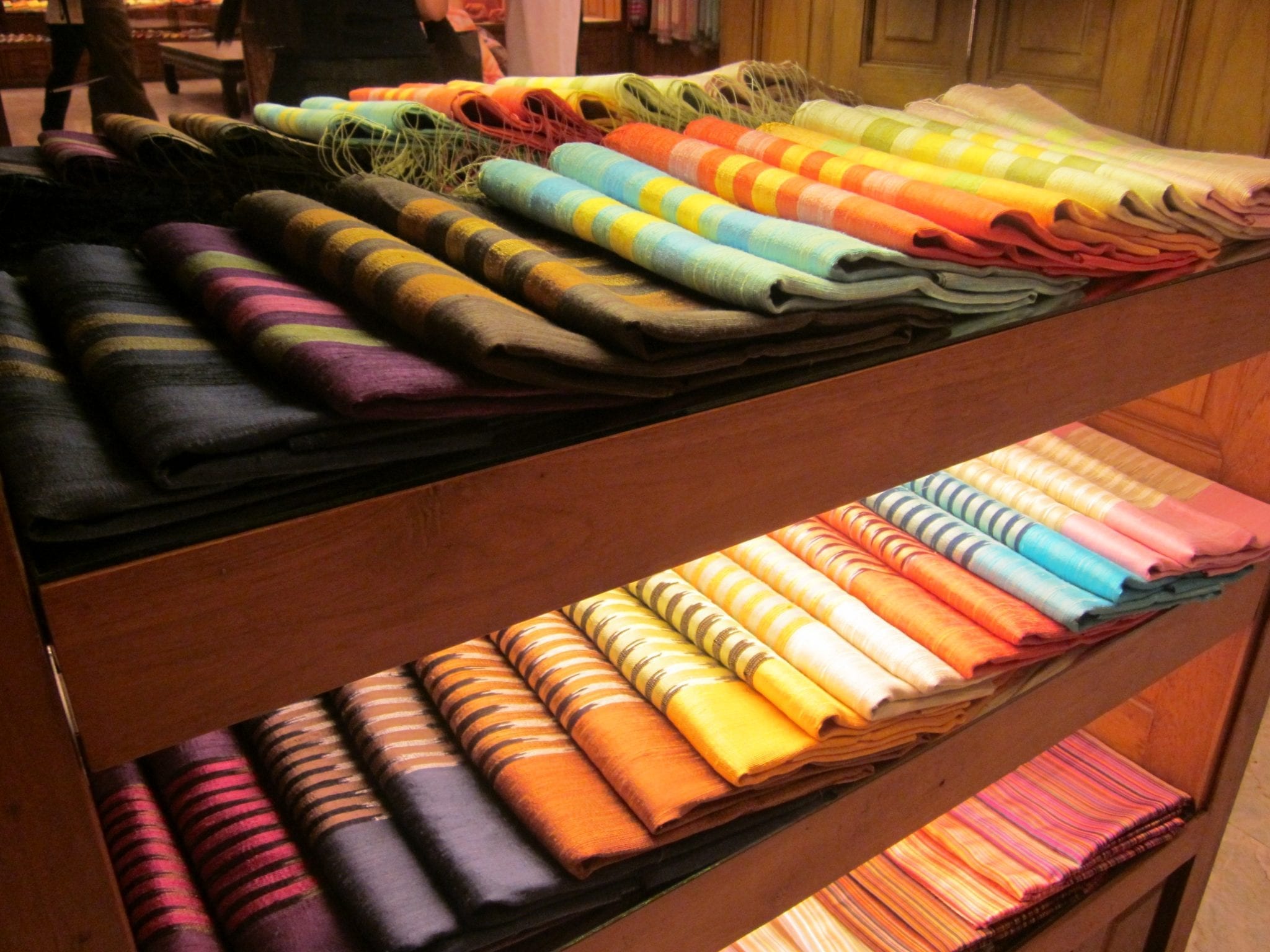
    A Jim Thompson flagship store will open in Bangkok’s Siam Paragon tomorrow as a preliminary step in a five-year global expansion plan.

    Similar flagship stores have been announced for Hong Kong and Singapore, and other major international retail destinations.

    The luxury brand’s first flagship, it is next to Bombyx, one of Jim Thompson’s five restaurants, and integrates touchscreens to give customers access to the catalogue as well as animated representations of its designs.

    These adaptations reflect the brand’s commitment to going digital (just two years ago it did not have a website or sell products online). It plans to launch it first online store soon in Thailand, to be followed by online stores abroad following the establishment of physical retail locations.

    Jim Thompson’s expansion plans have been presented to the board of the owner, The Thai Silk Co, by its first chief executive Gerald Mazzalovo, who has been seeking new locations and partners taking charge two years ago. He was formerly chief executive of fashion labels Bally, Clergerie and Loewe, and group president of Salvatore Ferragamo.

    The Thai Silk Co already exhibits its Jim Thompson, No.9, Fox Linton and Studio B home-furnishing products in five countries but for now offers its clothing and personal goods only in Bangkok, Malaysia and Singapore.

    Mazzalovo says Bangkok is an obvious choice for the first flagship store, given that the brand’s history and identity are so closely connected to the Thai capital. Within the next five years the company will set up similar flagship locations in London, Paris, New York, Singapore, Hong Kong and Shanghai – in that order, says Mazzalovo.

    His idea is that expansion to Europe first will help it build its reputation as a global brand before
    moving into the Chinese market.

    He says China is one of the most profitable opportunities for the brand, but the market there is much more likely to welcome the brand when it has established a name in Europe, rather than only in Southeast Asia.

    Global ambition

    Mazzalovo believes the company has all the makings of an international fashion house.
    “We have the ambition of going global because we have a lot of the prerequisites needed, including more than 70 years of heritage, know-how and historical anecdotes,” he says.

    The company’s values of authenticity and mystery are still anchored in its founder Jim Thompson, a Princeton and University of Pennsylvania graduate who arrived in Thailand in 1946 after working in Southeast Asia for a US wartime intelligence agency. He disappeared mysteriously in Malaysia in 1967.

    Meanwhile, the company opened a fabric showroom this year in Bangkok and will open a high-end contemporary restaurant in the next few months.

    Mazzalovo says the firm is highly profitable despite competing against brands like Chanel, Ferragamo, Gucci, Louis Vuitton and Prada. He considers the company to be closest to Hermes in terms of product and brand management.

    In this first year with the company he recruited 15 designers and assistants from Korea, Italy, France, Finland and Thailand. The company employs 3000 people and has nearly 40 boutiques around Thailand.


  • Hublot Japan launches Kyoto townhouse outlet

    Hublot Japan launches Kyoto townhouse outlet

    Hublot Japan has opened a shop in Kyoto’s Gion district, its third directly run outlet.

    The Swiss luxury watchmaker has a store in Tokyo’s Ginza district and another in Osaka. The latest location is in Kyoto’s second Daimaru department store, which has just opened in a traditional Kyoto-style townhouse.

    Hublot Boutique Kyoto is on the ground floor of the two-storey townhouse store in Gion’s main street. A Japanese tearoom on the upper floor can be used for hosting events.

    Founded in Switzerland in 1980, Hublot mainly targets men in their late 30s and early 40s. The Kyoto shop will primarily carry timepieces priced at around ¥1 million (US$9080) to ¥2 million. The shop is a mixture of traditional Japan and 1970s US. A noren (traditional Japanese curtain) printed with the shop’s logo hangs at the entrance; inside, the walls are decorated with American pop art. The sofa is made from Nishijin-ori (a traditional Kyoto textile) while take-zaiku (bamboo crafts) and washi (Japanese paper) are also used in the shop.

    The shop carries some limited-edition items such as the Spirit of Big Bang All Black model.

  • Korean online mall sales lose traction

    Korean online mall sales lose traction

    South Korean online mall sales growth has decelerated as competition grows more fierce, government data shows.

    There was a 3.6 per cent increase in the combined revenue of 26 offline and online retailers to 10.22 trillion won (US$9 billion) in July, according to the Ministry of Trade, Industry and Energy. This gain marks a deceleration from 7.2, 6.3 and 7.2 per cent growth posted in April, May and June respectively.

    The slowdown is attributed largely to fewer sales on online open markets such as eBay and 11st.

    Sales at 13 major online shopping malls rose 4.4 per cent last month, following double-digit growth for five straight months since February. Meanwhile, the sales of the 13 offline retailers, including department stores, discount chains and convenience stores, rose 3.2 per cent on-year on the back of strong performance by convenience stores.

    Convenience stores saw their sales rise 11.1 per cent last month, with hypermarket chains posting 1.7 per cent growth and department stores having a 1.3 per cent revenue slide.

  • Hong Kong Post issuing shopping-street stamps

    Hong Kong Post issuing shopping-street stamps

    Hongkong Post is issuing a set of special stamps with Hong Kong’s shopping streets as their theme, together with associated philatelic products.

    The six stamps introduce shopping streets with a special local history and culture – in Mong Kok, shops in the Goldfish Market and others in the Flower Market; Chinese Medicine Street in Sheung Wan, which is more than a century old; Yau Ma Tei’s Jade Market; the wholesalers in Kitchenware Street; and the Yau Ma Tei Wholesale Fruit Market.

    The official first-day covers are available now at all post offices, while the stamps and associated products will be displayed at the General Post Office, Tsim Sha Tsui Post Office, Tsuen Wan Post Office, Sha Tin Central Post Office and Tuen Mun Central Post Office.

  • Old Navy Vietnam opens second store

    Old Navy Vietnam opens second store

    Old Navy Vietnam has opened its first store in Hanoi, three months after its debut in the country.

    The 655sqm store is located in Vincom Nguyen Chi Thanh and offers collections for men, women, kids and babies.

    Melissa Fehlman, GM of Old Navy Vietnam, said the brand aims to open more stores throughout Vietnam in coming years, with Ho Chi Minh City’s second shop scheduled this month.

    Acknowledging that Vietnamese customers are trendy, Old Navy commits to refreshing 70-80 per cent of its products every three months, alongside core, long-term lines such as denim wear.

    Old Navy came to Vietnam under a franchise agreement between Gap Inc and Vietnam IPP’s subsidiaries ACFC and CMFC, which also hold the Gap and Banana Republic franchises in Vietnam.

    The nation’s fashion market is booming, buoyed by the recent arrival of international brands, including Pull&Bear and Stradivarius on September 1.

    H&M opens its first store in Ho Chi Minh City on September 9 and Zara will open its first Hanoi store next month.

  • Nike India still feeling pinch

    Nike India still feeling pinch

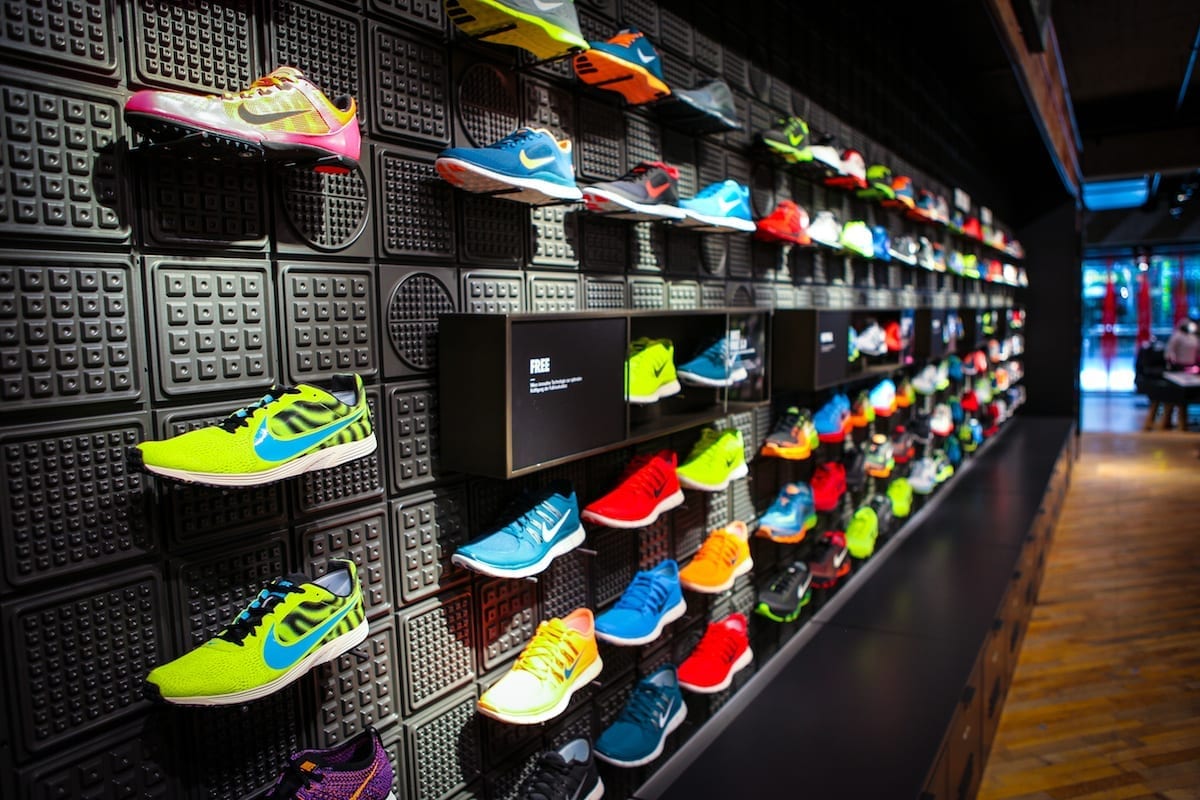
    Nike India is planning to further trim back its business activities to stem losses.

    A year ago the US sportswear major had already closed about 35 per cent of its stores, leaving it with about 200 outlets.

    While the sportswear market is expected to touch US$8 billion in sales by 2020, according to Euromonitor, global firms like Adidas and Nike are finding it hard to make profits in the otherwise lucrative Indian market, reports Fashion Network. Even the German sportswear maker Puma had losses in India this financial year, after three years of profits.

    Fashion Network says that while India is a booming market for sportswear, it is price sensitive and dominated by domestic brands like HRX, YWC and Zeven.

    Nike was an early entrant in the Indian market in 2005, but has had losses there for the past few years. It sales plummeted to Rs764 crore (about $119.2 million) last year from Rs803 crore, and its losses widened from Rs101 crore to Rs170 crore.

    In damage-control mode, the company is trying to minimise losses by trimming costs and cutting down on sponsorship deals. It has also let go of 20 per cent of its employees in India.

    It has its headquarters in Bangalore and offices in Delhi and Mumbai.

  • Toys R Us calls in restructuring advisors

    Toys R Us calls in restructuring advisors

    Toys R Us has appointed restructuring advisors as it struggles under a debt burden, suggesting it may be about to trim its store network.

    Neil Saunders says while the decision is not necessarily a sign of imminent bankruptcy, it is an indication the company is in “a very uncomfortable financial position”.

    “For a robust retailer, debt payments can be challenging. For a retailer struggling to generate sales growth while, at the same time, trying to invest to remain relevant – it can be the difference between success and failure.”

    Saunders says Toys R Us faces a pincer movement.

    “Firstly, it suffers competition from online and physical generalists who happily discount toys to drive customer traffic and sales for stores and websites. Toys R Us has little choice but to price match on some items but has no other categories with which it can balance out eroded margins. Where it fails to price match, it loses sales.

    “Secondly, Toys R Us has lost out in the digital space. Although recent digital investments have been made, the website and general e-commerce proposition are still below par. By our calculations, Toys R Us continues to lose online market share in toys.”

    A further complication for the toy giant is that it operates large and expensive stores.

    “These are increasingly unsuited to what consumers want and expect, and they are steadily becoming less productive and efficient,” says Saunders.

    “Against this backdrop, Toys R Us has to contend with the debt it accumulated as part of the leveraged buyout. In our view, this is an example of private equity damaging retailers by not running them as commercial trading entities but as ATMs.”

    Toys R Us in Asia is operated as a joint venture between the US parent and Fung Retailing. In April, it consolidated its operations in the region by merging the 160-strong Toys R Us Japan chain into the JV, which is 85 per cent owned by Toys R Us.

  • Apple China sets pertinent date for store opening

    Apple China sets pertinent date for store opening

    Apple China has set an opening date of September 16 for its Tianyi Square location in Ningbo – just in time for the iPhone 8 release.

    It will be the US technology brand’s 41st store in China, and appears to be geared toward Apple’s new retail vision with a large central gathering space with conventional retail on its periphery.

  • Thyssenkrupp sees boost for steel from shift to electric cars

    Thyssenkrupp sees boost for steel from shift to electric cars

    South Korea’s Hyundai Motor (005380.KS) said it had suspended production at one of its China factories on Tuesday after a supplier refused to provide parts due to delays in payment – its second such incident in as many weeks.

    Frayed relations with suppliers to its venture with BAIC Motor Corp Ltd (1958.HK) are adding to headaches for Hyundai in China, where it has seen sales slump due to diplomatic tensions between the two nations and fierce competition from local brands.

    Supplier sources familiar with the matter say that BAIC is in charge of payments and has been responsible for the delays.

    The partners are fighting over their supplier strategy with BAIC favoring shifting to cheaper Chinese firms in the face of intense competition, while Hyundai wants to protect its South Korean supply chain, people familiar with the dispute said.

    Hyundai declined to comment on the reason for the failure to pay suppliers. A representative for BAIC could not be immediately reached for comment.

    Their joint venture had only just resumed production at four China plants on Aug. 30 after a suspension of about a week because one French supplier refused to provide fuel tanks due to non-payment.

    This time, a German firm has refused to provide parts for air intake systems, a representative for Hyundai said, declining to identify the supplier. The joint venture’s three other Chinese factories remain operational.

    Any loss of production from this one factory is unlikely to have a major sales impact as Hyundai probably has sufficient inventory at the plant because its cars have not been selling well, said Ko Tae-bong, an analyst at Hi Investment & Securities.

    “That is manageable. But if Hyundai’s Chinese partner is refusing to make payments, that’s a different story,” he said, adding that the issue could occur time and time again.

    Scrambling to tackle problems in China, Hyundai said this week it had appointed a new head for its China operations. Tao Hung Than, who is of Chinese descent, took the helm effective Friday replacing Chang Won-shin, who lasted less than a year in the job.

    The new China CEO, however, has a huge task in front of him if he is going to get Hyundai back on track in the world’s biggest auto market – one that accounted for nearly a quarter of Hyundai’s revenue in the last financial year.

    A weakening brand image and a product line-up without attractive SUVs are only adding to pain from diplomatic tensions. Hyundai’s sales from its Chinese factories plummeted 64 percent in April-June first quarter, when the automaker posted its smallest quarterly net profit in five years.

    South Korean firms have been hit by a Chinese backlash over Seoul’s decision to deploy a U.S. missile defense system to counter threats from nuclear-armed North Korea. China says the system poses a threat to its national security.

    Hyundai and BAIC were also due to start operations at a fifth China car factory late last month but the timetable has been pushed back. Hyundai has declined to comment on the postponement.

    Hyundai Motor shared fell 1.4 percent to their lowest level since April 19 on Tuesday and have declined 4.2 percent since the first reports of the supply disruptions emerged a week ago.

  • Competition causes Yeli China to lose footing

    Competition causes Yeli China to lose footing

    While revenue rose 47.6 per cent for the quarter ended June 30 for China Sports International, its footwear subsidiary Yeli China is facing difficulties.

    The Singapore-listed company has changed its financial year end from December 31 to June 30, meaning its current period covers 18 months.

    For the latest quarter, revenue amounted to about RMB22.71 million (US$3.4 million). For the 18 months ended the same date, revenue grew by 4.8 per cent to about RMB358.8 million. The slender increase was mainly attributable to persistent and increasing competition in the sportswear industry.

    “Our distributors continued to be wary of the intensified competition and became even more prudent in placing their orders for footwear and apparel products,” says the company.

    However, an increase in OEM orders in first half enhanced revenue performance.

    Footwear sales for the 18 months grew only 2.6 per cent to about RMB345.4 million. The company says the poor economic outlook and lack of product improvement resulted in fewer orders from Yeli footwear distributors.

    Because of the persistent weakening retail sportswear market and intensified price competition, more than half the distributor sales outlets have been closed.

    During the 18 months, Yeli footwear sales were about RMB114.5 million, representing 33.1 per cent of the company’s footwear range, down from 53 per cent.

    For the sixth quarter, Yeli footwear revenue fell 25 per cent to about RMB15.8 million.

    Apparel sales were RMB13.4 million for the 18 months, up from RMB5.83 million, and for the sixth quarter were RMB1.9 million, down from RMB2.9 million.

    Overall gross profit was up 21.5 per cent to about RMB13.9 million for the 18 months, mainly because of the high sales volume from the OEM footwear segment.

    Overall gross profit margin edged up 3 per cent for the 18 months.

  • Dematic expands solution set to include AutoStore

    Dematic expands solution set to include AutoStore

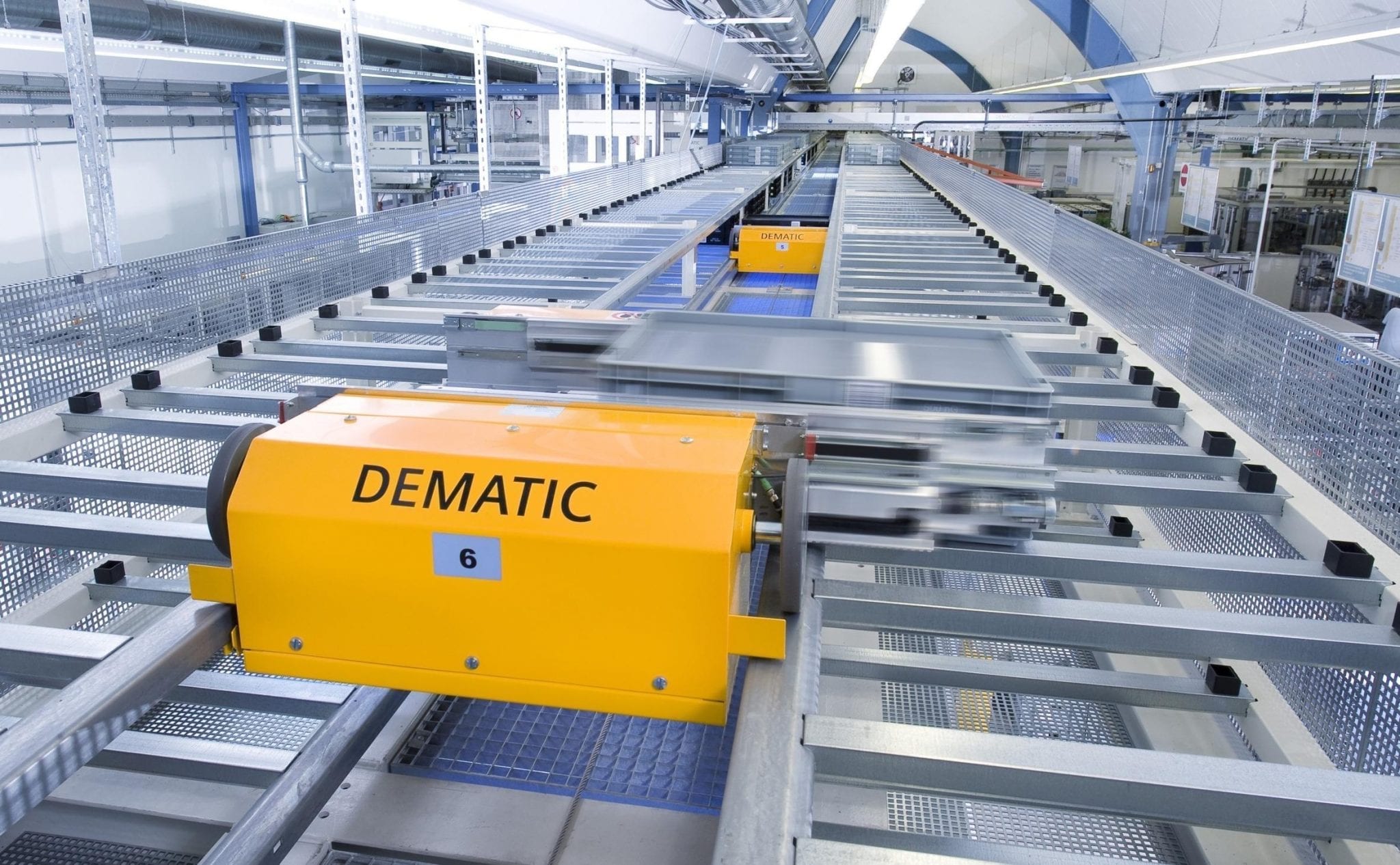
    Dematic has signed a global agreement with AutoStore. The agreement will enable Dematic to expand its omni-channel integrated solution offering with an ultra-high density storage and goods to person piece picking system to optimise order fulfilment and kitting. As a qualified system integrator, Dematic will design, configure, engineer, install and support AutoStore as a sub-system within an overall Dematic solution or as a standalone piece picking system throughout the globe.

    Dematic helps customers achieve operational excellence by offering the most appropriate solution for each application. Including the AutoStore system into the Dematic portfolio of solutions creates more choices for customers to optimise order fulfilment. For example, if storage density is the most important consideration, the AutoStore system may be the most effective option.

    With the AutoStore partnership, Dematic has the ability to provide scalable solutions that work across all elements of the dynamic order profiles and SKU velocities associated with e-commerce and omni-channel solutions. In addition, the Dematic iQ Warehouse Execution System (WES) will manage all functional areas of the operation including piece picking and the AutoStore system. This Dematic one source, solution provider capability, insures production and distribution operations employ a holistic integrated solution that harmonises information and material flow from receiving to shipping.

    “The Dematic suite of solutions is comprehensive; adding AutoStore to the mix enables users to obtain the ideal storage, buffering and piece picking solution” according to Jeff Moss, CEO, Dematic International. “The ability to design and implement a wide variety of system configurations is critical to effectively accommodate the growing demands of omni-channel distribution in this age of acceleration,” Moss continued. “The Dematic expanded solution will be a sure way for our customers to serve their customers better and faster.”

  • BluJay Solutions partners with NMB Solutions

    BluJay Solutions partners with NMB Solutions

    BluJay Solutions announced a strategic partnership with NMB Solutions, a Microsoft partner specialising in third-party parcel and LTL shipping integration with Dynamics AX/365 for Operations.

    NMB Solutions has been providing Dynamics AX integration for BluJay’s Parcel (formerly Kewill Flagship) and other third-party parcel solutions for nearly ten years, starting with Dynamics AX 4.0. NMB’s flagship product, the Packing Workbench, provides AX users with powerful tools that integrate BluJay’s Parcel directly into AX’s sales order, pick/pack, and finance functions.

    The partnership brings together BluJay’s global transportation management strength and experience with NMB’s robust Dynamics AX integration and in-depth knowledge of AX/365 for Operations, to create even more powerful solutions for the Microsoft Dynamics 365 community.

    “This is a really exciting time for us – the partnership allows us to focus our development on the integration of the incredible tools BluJay has to offer, not only for parcel shipping, but for TMS as well,” said Chris Morgan, Managing Director at NMB. “The ability to integrate features like AES filing, denied third-party screening, and hazardous material labeling will make our Packing Workbench even more efficient, and allows clients to realize their ROI faster.”

    BluJay is the only vendor that offers these supply chain solutions in a single platform, with connectivity to the world’s largest Global Trade Network.

    “Working with the BluJay team has been fantastic,” Morgan added. “As we move toward releasing our 365 for Operations version, we will have the capability to integrate into BluJay’s Parcel cloud offering. This enables us to offer a complete parcel shipping solution on the Microsoft Dynamics Marketplace.”

    In the next phase, NMB will provide similar integration to BluJay’s global Transportation Management platform, combining the full suite of BluJay’s shipping tools with the power, ease-of-use, and global reach of Microsoft Dynamics 365.

  • World debut for GrabPay retail payment in Singapore

    World debut for GrabPay retail payment in Singapore

    Grab plans to work with more than 1000 retailers in Singapore as it expands its business base from its ride-hailing app into e-payments, via GrabPay.

    The company has already expanded its payment services from allowing passengers to use GrabPay instead of cash when riding in Grab cars and taxis to letting friends and family members transfer cash to each other.

    Now it wants customers to buy goods, book cinema tickets and order food using the app.

    GrabPay chief Jason Thompson told the Straits Times that its primary target is hawker stalls and small retailers who do not currently accept cashless payments.

    “Rolling out peer-to-peer transfer first makes it easier for consumers. First, I am able to pay someone I trust, and the next step is paying a merchant with the same steps,” he said.

    “Our wallets already exist in Singapore and are already being used everyday here. We’re just allowing them to use it more,” he said.

    Singapore will be the first country in which GrabPay will operate outside its own ecosystem.  Payments will be facilitated by customers scanning QR codes on their mobile devices.