Tag: asia

  • Premium outdoor brand ‘Gregory’ to open its first flagship store

    Premium outdoor brand ‘Gregory’ to open its first flagship store

    Under the unique brand philosophy of ‘Backpacks should be as easy to wear’, Gregory has opened the first flagship store in Sangsu dong, Seoul.

    Based on its ergonomic design and state-of-the-art technology, Gregory has been becoming a brand with a new category of ‘Outdoor Lifestyle Backpack’.

    Since Gregory offers a total of three product lines including functionality, lifestyle, and business line, the brand is widely loved by a wide range of customers from college students in twenties who pursue athletic lifestyle to office workers in thirties who place on functionality and quality.

    Gregory’s “Fit Jig” service is the best example of this brand identity. When choosing a backpack, it is important to consider a variety of factors such as gender, body size, amount of baggage, and purpose, and choose a product that provides a comfortable fit without feeling uncomfortable to the body.

    The Gregory Sangsu flagship store offers a service that recommends an optimal model based on your body size and usage, using a body meter.

    In addition, as it is the only flagship store in Korea, customers can try out the most various products. The Gregory flagship store also offers ‘Old Logo’ products, which are available only here.

    It sells a variety of products that can look at the history and identity of the brand from the vintage items with the old logo to the limited edition. Also from the August 25th, Gregory will show apparel products with its sensitivity.

    The Gregory Flagship Store also attracted visitors with a variety of cultural experience events.  In particular, it celebrated its opening in March last year, and its stores were decorated like galleries.

    Gregory’s early products, founded in 1977 in San Diego, USA, have provided a variety of information related to the brand’s history for 40 years. A Gregory official said, “The Gregory Flagship Store is a place where you can meet all of Gregory’s products that symbolize outdoor and lifestyle.”


  • Wearable tech moves closer with graphene ‘solving’ the battery problem

    Wearable tech moves closer with graphene ‘solving’ the battery problem

    Wearable technology becomes more useable with a new development using graphene for printed electronic devices. The University of Manchester has demonstrated flexible battery-like devices printed directly on to textiles using a simple screen-printing technique answering the major problem of wearable tech being limited due to the problem of powering devices without cumbersome battery packs.

    Devices known as supercapacitors are one way to achieve this. A supercapacitor acts similarly to a battery but allows for rapid charging which can fully charge devices in seconds.

    Now a solid-state flexible supercapacitor device has been demonstrated by using conductive graphene-oxide ink to print onto cotton fabric.

    As reported in the journal 2-D Materials, the printed electrodes exhibited excellent mechanical stability due to the strong interaction between the ink and textile substrate.

    Further development of graphene-oxide printed supercapacitors could turn the vast potential of wearable tech into the norm.

    High-performance sportswear that monitors performance, embedded health-monitoring devices, lightweight military gear, new classes of mobile communication devices and even wearable computers are just some of the applications that could become available following further research and development.

    To power these new wearable devices, the energy storage system must have reasonable mechanical flexibility in addition to high energy and power density, good operational safety, long cycling life and be low cost.

    Dr Nazmul Karim, knowledge exchange fellow at the National Graphene Institute and co-author of the paper said: “The development of graphene-based flexible textile supercapacitor using a simple and scalable printing technique is a significant step towards realising multifunctional next generation wearable e-textiles.

    It will open up possibilities of making an environmental friendly and cost-effective smart e-textile that can store energy and monitor human activity and physiological condition at the same time.”

    Graphene-oxide is a form of graphene which can be produced relatively cheaply in an ink-like solution. This solution can be applied to textiles to create supercapacitors which become part of the fabric itself.

  • APAC robotics market set to reach $66b in 2017

    APAC robotics market set to reach $66b in 2017

    Asia-Pacific’s robotics – including drones – and related services market is estimated to reach $66 billion this year, according to IDC.

    IDC expects spending to accelerate over the five-year forecast period of 2017-2021, reaching $162 billion in 2021 with a CAGR of 25.2%. This represents more than a projected 70% of the world’s total robotics market.

    “The convergence of robotics and artificial intelligence technologies are accelerating the development of the next generation of intelligent robots for industrial, commercial, and consumer applications,” said Jing Bing Zhang, research director of robotics at IDC Manufacturing Insights.

    “Intelligent robots with innovative capabilities such as cognitive interaction, self-diagnosis, and learning are emerging and driving wider adoption of robotics in many industries including manufacturing, resources, healthcare, retail, and so on.”

    China dominates the Asia-Pacific robotics market, with spending on robotics and related services expected to reach $74 billion in 2021. This represents 45.7% of Asia Pacific’s total spending in the next five years.

    From a technology perspective, Asia-Pacific spending on robotic systems is expected to grow to $92 billion in 2021.This includes industrial, service and consumer robots and after-market robotic hardware.

    Meanwhile, services-related spending, which encompasses application management, education and training, hardware deployment, system integration, and consulting, will grow to over $44 billion in 2021.

    In the telecoms sector, operators in multiple markets are trialing using drone technology to improve network maintenance and fault detection capabilities. Vendors such as Nokia are meanwhile testing applications for drones including the instant establishment of LTE public safety networks.

  • Swisslog Healthcare acquires Talyst

    Swisslog Healthcare acquires Talyst

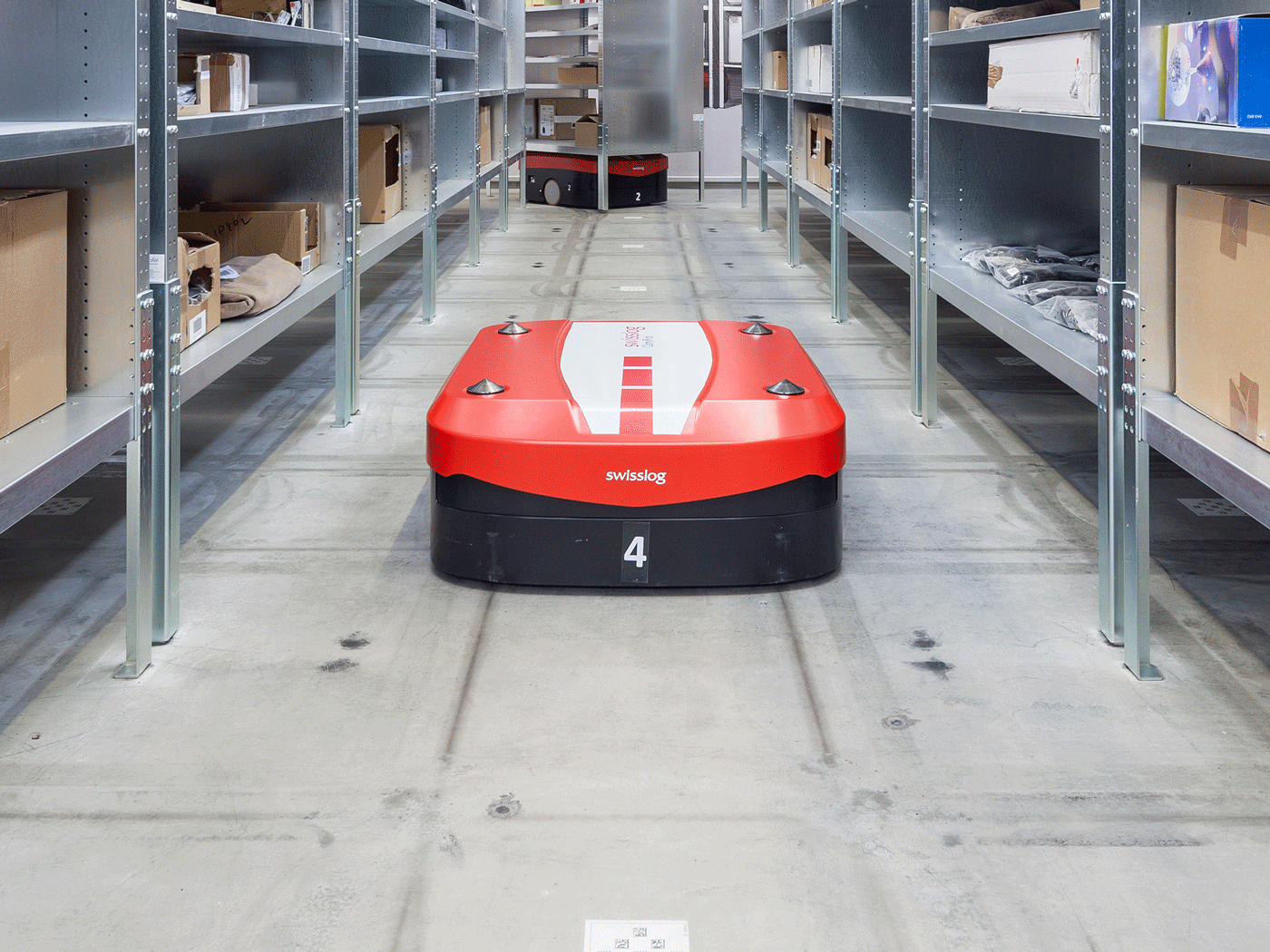
    Swisslog Healthcare, a supplier of medication supply chain solutions and services, has acquired Talyst Systems, a market leader in pharmacy automation solutions for hospitals and long-term care facilities. Healthcare providers around the world share similar challenges with delivering medications safely and efficiently. The acquisition creates an unmatched portfolio of inpatient and outpatient pharmacy solutions that transform health systems’ performance. Talyst’s AutoCarousel, AutoPack and AutoSecure Storage Solutions represent the best-of-breed in current generation pharmacy automation technologies.

    “Swisslog Healthcare and Talyst are well known for developing innovative automation and software solutions,” said Stephan Sonderegger, CEO – Swisslog Healthcare. “The two companies share a similar mission and vision and the Talyst portfolio of enterprise software and pharmacy automation products completes Swisslog Healthcare’s pharmacy automation offering in North America. This acquisition adds critical components to our solutions strategy of providing customers with end-to-end integration for the medication supply chain across the continuum of care.”

    Founded in 2002, Talyst was recognized by KLAS Research’s most recent (2016) Pharmacy Report as a leader in Enterprise Medication Management Software that minimizes medication spending. “Talyst develops customer-centric technologies that enable providers to deliver better patient care. Our culture of innovation and accountability aligns well with Swisslog Healthcare,” notes Carla Corkern, Talyst CEO. “With Swisslog we can now scale our solutions globally, taking advantage of their sales reach, manufacturing, and R&D facilities across North America, EMEA and Asia. We’re excited to be part of a strong and dedicated organization building towards an important differentiated vision for health systems and hospital pharmacies.”

    “Swisslog Healthcare and Talyst customers will benefit from a total inpatient pharmacy automation offering fully integrated with the Swisslog transport automation portfolio of pneumatic tube systems installed in 2,300 hospitals in North America. The acquisition expands our product offerings which, combined with our manufacturing expertise and extensive field service network, gives health systems unprecedented access to a complete solution including data analytics, pharmacy automation and transport automation,” notes Sonderegger. “Our respective customers will benefit from a compelling technology and services road map that leverages the extensive resources and capabilities of the combined companies.”

    With the acquisition, the Talyst executive team along with the rest of the company will join the Swisslog Healthcare organization. Talyst CEO and Chairman of the Board, Carla Corkern, has elected to pursue other opportunities. The Talyst Seattle-area headquarters will become an important technology, product and business development hub for Swisslog Healthcare North America. Swisslog Healthcare is building a new state-of-the-art North America manufacturing facility and US headquarters in the Denver-Boulder area, which is planned for occupation in early 2018.

  • Marriott forms joint venture with Alibaba

    Marriott forms joint venture with Alibaba

    Marriott has inked a joint venture with Alibaba Group aiming to “redefine the travel experience for the hundreds of millions of Chinese consumers” who travel each year.

    Marriott, which has a bevy of brand and deep hospitality experience, is facing intense challenges from online booking sites, price aggregators and new economy giants like Airbnb. However, consumerism in China is evolving. With earning powers rising, Chinese consumers want more. Marriott feels it can give them that.

    The hospitality giant aims to use Alibaba as a gateway for all its international brand. It also gives the firm the ability to reach Alibaba’s 50 million mobile monthly active users.

    “We are proud to join forces with Marriott International – combining our large-scale consumer base, leading-edge technology and consumer insights with their unparalleled hospitality expertise,” Daniel Zhang, Chief Executive Officer of Alibaba Group said in a press release.

    “Together, we are elevating and redefining the travel experience for Chinese consumers to be more seamless and personalized as they embark on adventures to discover the world,” he added.

    The joint venture will use the resources of both companies to manage Marriott’s storefront on Fliggy, Alibaba’s travel service platform. Besides reaching directly to Alibaba’s customer base, the venture will see a link between Marriott’s popular loyalty programs and Alibaba’s loyalty program, and support Marriott hotels globally with content, programs and promotions targeting the Chinese traveler.

    “By forming this partnership, we are pairing our hospitality expertise with Alibaba’s digital travel platform, retail expertise and digital payment platform, Alipay, and driving membership to our loyalty programs. With the growing number of Chinese consumers exploring new destinations, this venture will introduce our hotels worldwide to this new and growing traveling class,” Marriott International CEO Arne Sorenson said.

  • Cebu Pacific announces new routes, promo fares

    Cebu Pacific announces new routes, promo fares

    Budget carrier Cebu Pacific on Wednesday announced new domestic and international routes, in efforts to increase connectivity within the country and the region starting October.

    In an emailed statement, Cebu Pacific said it will start flying to and from Kalibo in Aklan and Clark in Pampanga.

    The thrice-a-week Kalibo-Clark flight will begin on October 30, 2017 with flights on Mondays, Wednesdays, and Fridays. Meanwhile, the return Clark-Kalibo flight will start on October 31, 2017 on Tuesdays, Thursdays, and Saturdays.

    Cebu Pacific subsidiary CebGo will start Cagayan de Oro-Caticlan and Cagayan de Oro-Dumaguete routes on October 20, 2017.

    CebGo will also operate its first international route out of Zamboanga with flights going to Sandakan, Malaysia starting October 29, 2017.

    Flights will be available on Tuesdays, Thursdays, Saturdays, and Sundays.

    “Sandakan has had centuries of trade and cultural linkage with the southern Philippines, and we are especially proud to put in place infrastructure to further enhance these ties,” CebGo president and CEO Alexander Lao said.

    “Now, the previous 14-hour travel by sea is cut down to just a 40-minute airplane ride,” he added.

    In line with the new routes, Cebu Pacific said it will offer an introductory all-in seat sale of P599 for all domestic trips until August 18, 2017, with a travel period starting October 20, 2017 to March 15, 2018.

    Flights from Zamboanga to Sandakan will also be on sale at P1,299 until August 21, 2017. The travel period will be from October 29, 2017 to December 31, 2017. 

  • SingX expands remittances to Malaysia and HK

    SingX expands remittances to Malaysia and HK

    Singapore FinTech startup now supports cross-border digital remittance to the markets. Singapore-based FinTech startup SingX has expanded its online remittance services to Malaysia and Hong Kong.

    SingX founder and CEO Atul Garg said the company SingX has introduced remittances to two new markets, from Singapore to Malaysia and from Singapore to Hong Kong, as these markets have a considerable amount of cross-border payments taking place because of their long ties with Singapore.

    Licensed by the Monetary Authority of Singapore, SingX targets individuals and SMEs. The expansion of its service to new geographies is expected to appeal to Malaysians in Singapore who transfer money back home to pay for expenses and Singapore residents who invest in stocks, property and trade in Hong Kong and China.

    The company launched its first product, cross-border fund transfer from Singapore to India, in January this year. Based on its current monthly run rate, after six months of operations, SingX’s online remittance platform would have achieved an annualized run rate of $100 million.

    SingX’s online platform claims to be cheaper, faster and more convenient as it charges consumers a fraction of what they typically pay for overseas money transfers. It does this by cutting out cable charges and bank commissions and offering transparent and live forex exchange rates. It also claims to be more convenient as it eliminates the need to fill out complex forms and for personal visits to a branch. The only fee payable is a small handling fee which is made known to the customer upfront.

    Compared to bank transfers, users of SingX are expected to save up to 90% in remittance charges when transferring funds to India, Malaysia and Hong Kong.

    SingX has implemented two-factor authentication and secure data transmission methods. As a regulated payment services provider, it has also ensured the customer’s money is kept in a segregated client account.

    SingX has further plans to roll out new services to a number of new countries around the globe soon.

  • Wirecard teams with Singtel for virtual Visa card

    Wirecard teams with Singtel for virtual Visa card

    Wirecard has teamed up with Singtel to support the recent deployment of Singapore’s first Visa virtual card for Singtel’s mobile wallet Dash.

    Singtel Dash is an all-in-one digital wallet that allows customers to shop, pay transport fares and remit money.

    Since the launch of the Visa virtual account last month, Singtel Dash’s 500,000 customers have been using their mobile phones to make payments in over 50,000 PayWave-enabled merchants across Singapore and use the payment platform to shop at Singapore-based e-commerce stores.

    “We are very proud to be a partner for Singapore’s leading digital wallet,” Wirecard EVP of global financial services Grigoriy Kuznetsov said.

    “Singtel can now process mobile virtual Visa payments with Wirecard as a Bank Identification Number (BIN) sponsor. This further reinforces our position as a leading global prepaid issuer and BIN sponsor. It also demonstrates our state-of-the-art card processing capabilities.”

    “Singtel Dash has gained more traction as a payment option of choice. With the adoption of Wirecard’s card processing solution, our customers can now make hassle-free mobile virtual Visa payments,” Singtel head of mCommerce consumer Singapore Gilbert Chuah said.

  • Australia Post launches services hub

    Australia Post launches services hub

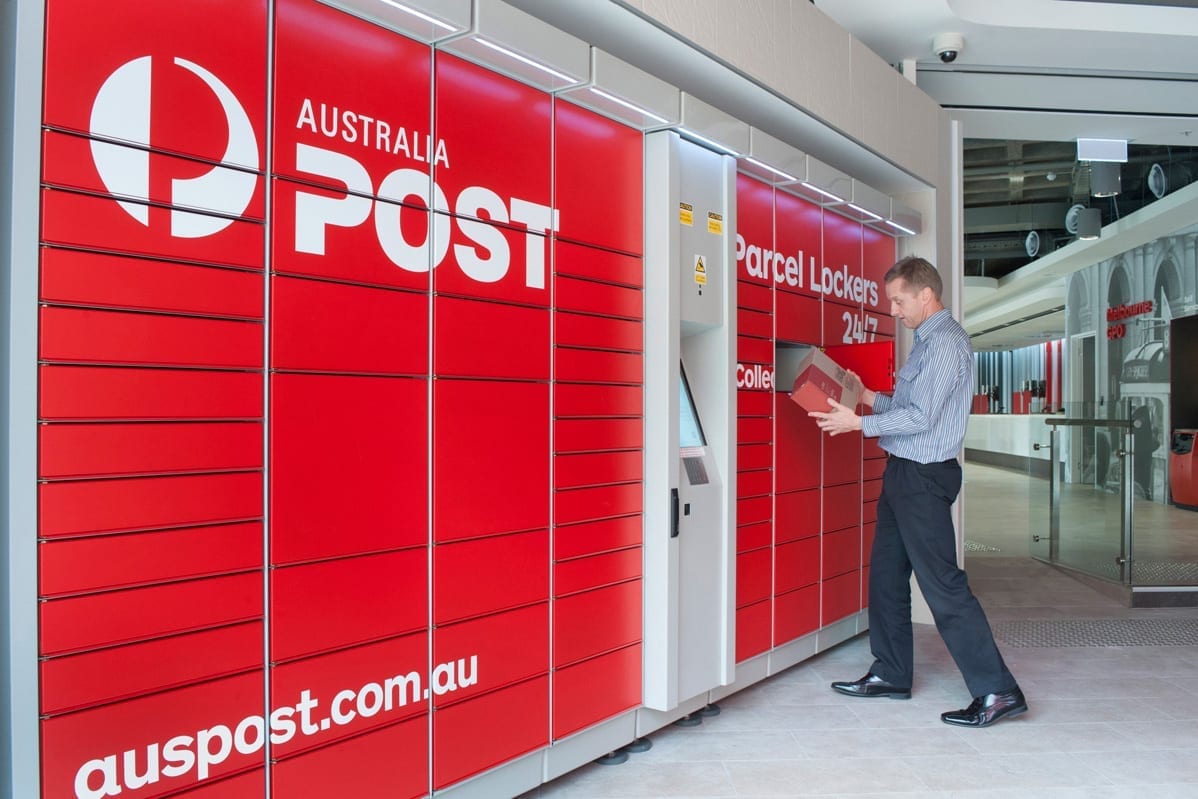
    Australia Post is looking to draw a line under concerns that retailers are finding it increasingly hard to compete with the scale of global competitors, announcing a partnership with fintech company AlphaPaymentsCloud that promises to bring traders an integrated service platform.

    Incorporating everything from payments and identification to logistics, loyalty and fraud protection, Australia Post is touting its new service, called the AlphaCommerceHub, as an API solution to the myriad of different vendor contracts many retailers currently have to negotiate.

    Australia Post will instead bring on vendor partners into the system, allowing retailers to “switch” services off-and-on depending on their individual needs, while remaining PCI compliant.

    Chief digital officer at Australia Post, Andrew Walduck, told that the publicly-owned postie was looking to up its capabilities in identity verification, to drive the next wave of growth in the payments space.

    “We’re building capabilities in identity and payments as we see it as one of the critical things that will enable our economy to be able to thrive in the next wave of growth, driven by great customer experiences getting people things in the way they want,” he said.

    The platform has been designed to incorporate innovation in services, and will include both traditional payment options in conjunction with banking partners as well as mobile payment products like Apple Pay.

    Walduck said smaller retailers have been in a less advantageous position than larger players when it comes to sifting through an ever-growing number of retail services to maintain a leading customer proposition.

    “The platform provides the ability for retailers to integrate into a single place, reducing overall costs…they can move to provide a one click purchase process in a way that makes it really easy for a customer to be identified, and then control how that product is delivered.

    “It’s an absolute game changer in Australia’s fintech evolution so we’re incredibly excited about the potential this joint venture brings to both our banking partners and our customers,” Walduck said.

    Australia Post began trailing its recently launched verification of identity application earlier this month with initial discussions taking place with credit unions, mortgage brokers and government departments.

    Initial partners include Airtasker, Credit Union Australia, Travelex and the Queensland Police Service.

    Its internal research has previously estimated that the existing state of identity verification processes costs the Australian economy as much as $11 billion per year.

  • Record quarterly profit for WeChat parent Tencent Holdings

    Record quarterly profit for WeChat parent Tencent Holdings

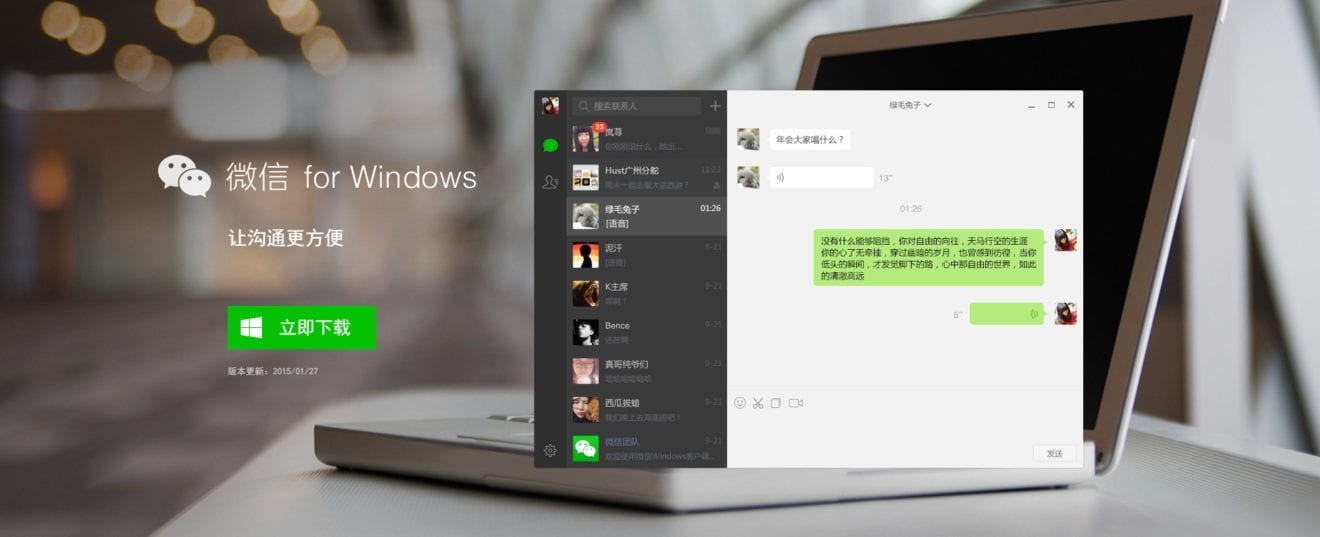
    Marrying social media with mobile gaming has helped Chinese internet giant Tencent Holdings post its fastest revenue growth in seven years for a record profit.

    It tapped the spending power of about 200 million players, including a solid female representation, of Honour of Kings and other games, boosting mobile-game revenue past that of desktops for the first time.

    Its flagship game, Honour of Kings allows WeChat users to discuss strategy as well as co-opt friends to join their team. Tencent is reportedly taking the game to new markets.

    Games distributed to more than a billion users on QQ and WeChat combined fueled a 54 per cent surge in mobile gaming revenue in Tencent’s latest quarter. It had a 70 per cent leap in net income to a record RMB18.2 billion (US$2.7 billion) for the three months to the end of June. Sales soared 59 per cent to RMB56.6 billion yuan.

    Tencent’s payments and cloud businesses both grew by triple digits in the quarter, says president Martin Lau.

    Revenue from value-added services, including games and messaging, rose 43 per cent to RMB36.8 billion. Online advertising sales increased 55 per cent to RMB10.1 billion yuan.

  • Unicom to get $11.65b funding injection

    Unicom to get $11.65b funding injection

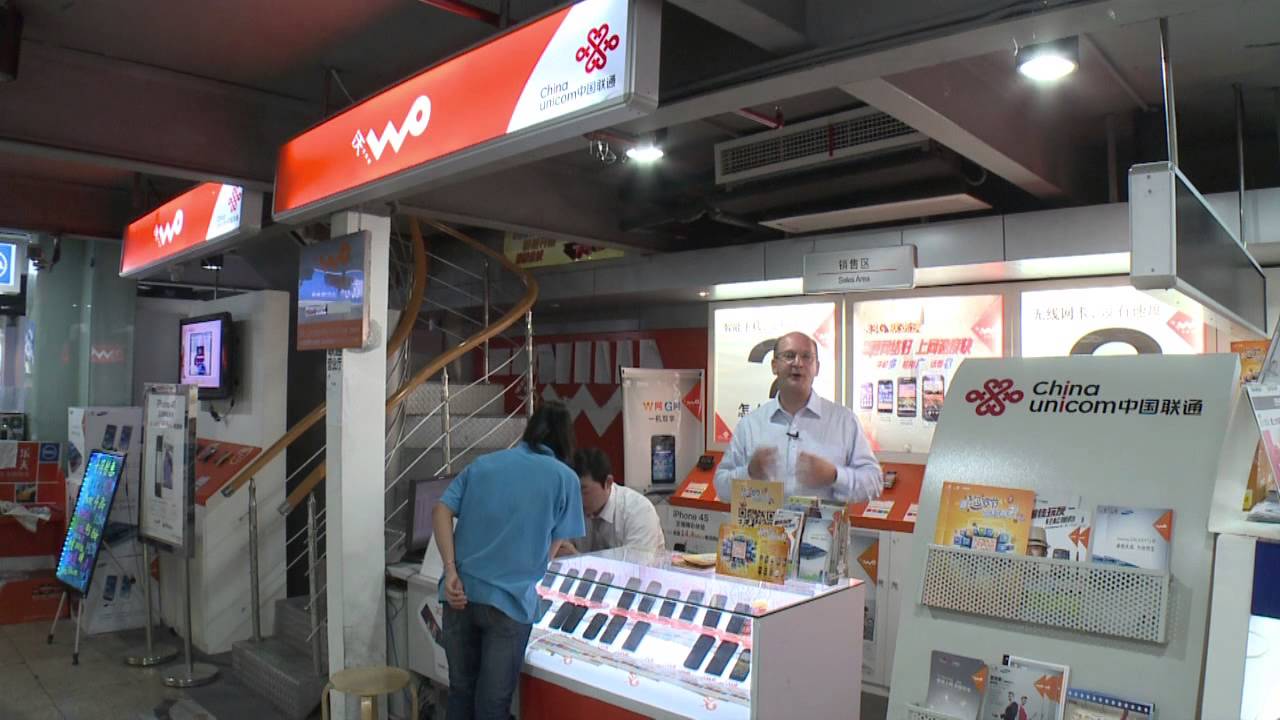
    Chinese state-owned operator China Unicom will raise around 78 billion yuan ($11.65 billion) through investments from private companies including Baidu, Alibaba and Tencent.

    The operator announced it has secured approval from the National Development and Reform Commission (NDRC) for its plan to open up to private investment under the government’s mixed ownership reform pilot program.

    The company will bring in 14 new strategic investors including large internet companies, industrial groups and industry vertical companies and financial enterprises.

    Unicom has already signed framework agreements with internet and e-commerce giants Baidu, Alibaba, Tencent and Jingdong (owner of the JD.com brand).

    Other investors include retailer Suning Holdings, technology conglomerate Kuang-Chi Group, Didi Chuxing (China’s Uber) and data center services provider Wangsu Science and Technology.

    As part of the ownership reform, Unicom also intends to issue around 850 million shares to employees as incentive bonuses, representing around 2.7% of the company.

    Under the new structure, Unicom Group’s stake in the operator would be reduced to 36.7% from the current 62.7%. The new investors will pick up a combined 35.2% stake. Public shareholders in Unicom’s Hong Kong listed investment vehicle would meanwhile see their ownership reduced to 25.4% from the current 37.3%.

    Unicom plans to use the funds raised from the investment to enhance its 4G capacity and coverage, conduct 5G trials and build pre-commercial trial networks and invest in innovative new businesses.

    The development came as China Unicom reported a strong 68.9% growth in net profit for the first half of 2017 as the operator made progress with its turnaround efforts.

    Net profit reached 2.41 billion yuan, despite a 1.5% decrease in operating revenue to 138.16 billion yuan. But service revenue improved 3.2% to 124.11 billion yuan.

  • Dufry Cruise services onboard the Norwegian Joy in China

    Dufry Cruise services onboard the Norwegian Joy in China

    Dufry today announced an ambitious expansion of its cruise line retail activities with the creation of Dufry Cruise Services and a related Center of Excellence, based in Miami, USA.

    The world’s largest travel retailer underlined its ambitions for the channel by also revealing that it has just started operations onboard Norwegian Joy. The Norwegian Cruise Lines vessel was especially built for and customised to the Chinese cruise market.

    Norwegian Joy is Norwegian Cruise Line’s first ship to have been built specifically for Chinese travelers.

    Dufry CEO of Division 4 Rene Riedi  commented: “The new operational offices will complement the current operations and logistics-purchasing platform, in order to have our resources close to the main cruise ship itineraries. It allows a global footprint with specialised local knowledge and regional expertise.

    Dufry’s cruise ship operations cover routes from the USA to the Caribbean, Alaska, Europe and Asia. The company operates total retail space of close to 9,000sqm, ranging from 140sqm to near 2,000s m per store on vessels owned by Norwegian Cruise Lines, Carnival and Pullmantur.

    Dufry is currently present on 17 cruise ships and offers a full range of traditional duty free products as well as brand boutiques similar to airports and specialist shops, such as the Colombian Emeralds jewellery shops.

    Dufry debuts on Norwegian Joy with nine shops covering 1,950sq m of retail space. The ship is the first Norwegian cruise liner which has been built specifically for Chinese travelers.

    The new Breakaway-Plus Class Ship caters for the 3,850 guests it can accommodate with luxurious suites in an exclusive ‘ship-within-a-ship’ complex. “For Dufry this is an important strategic step to open the Asian cruise market and further expand this growing channel,” the company said.

    According to the Cruise Lines International Association (CLIA), ocean cruise passengers reached 24.7 million in 2016. For 2017, CLIA projects another year of growth with a passenger forecast of 25.8 million.

    Part of that rise can be attributed to the development of the Asian market, whose ocean capacity was up by +9.2% in 2016, representing a +38% increase compared to 2015, Dufry said.

  • MobiFone to be privatized next year

    MobiFone to be privatized next year

    Vietnamese state-owned operator MobiFone has been instructed to complete a privatization and restructuring process known as equitization in 2018, while former parent VNPT has been instructed to equitize in 2019.

    The Ministry of Information and Communications plans to assess and approve the restructuring plans of MobiFone as well as Vietnam Television Corporation and VNPost by the end of the month.

    VNPT will meanwhile submit its own restructuring plan during the same period in advance of an equitization in 2019.

    The government has revealed plans to concentrate on improving the strength of the companies rather than maximizing revenue from the privatization processes, and will decide whether to sell stakes to a few strategic investors or to many individual shareholders on a case-by-case basis.

    MobiFone was separated from VNPT is 2014 as part of the latter’s restructuring plan, which also involved dividing VNPT’s operations into three subsidiaries concentrating on infrastructure, services and sales respectively.

    After its separation, MobiFone commenced its equitization plan and appointed appraisers for an IPO. The company has drawn interest from a number of potential international investors, including Singtel, Telenor, Australia’s Telstra and Sweden’s Comvik.

    To complete the process MobiFone will need to be reappraised – its last valuation in 2015 has expired. Previous valuations have suggested that the company could be worth over $4 billion.

  • Google adds voice search for 8 Indian languages

    Google adds voice search for 8 Indian languages

    Google has added voice search functionality for eight additional Indian languages including Bengali, Malayalam and Tamil.

    At the moment, the voice search feature is available in English and Hindi in India. The other languages being added are Gujarati, Kannada, Marathi, Telugu and Urdu.

    “Speakers of these languages will be able to use their voice to dictate queries — both in Gboard on Android as well as in Search through the Google App,” Google Technical Program Manager Daan van Esch explained through a video conference.

    Esch explained that in order to perform a voice-based search, users will need to set their language in the voice settings menu in the Google app.

    “Globally, we now support voice search for 119 languages. We are introducing support for 30 new languages today, of which eight are Indian languages,” he said.

    The update will require the user to just tap the microphone icon (usually on the home screen of Android smartphones) to start voice search.

    Google has been increasing support for Indian languages across its various products like Maps and Search as a large number of the new users coming online are Indic language users.

    Esch explained that Google has worked with native speakers to collect speech samples. Machine learning models were trained to understand the various sounds and words, thus translating words from sound to text in the process.

    “Voice input for each of these languages is expected to get better over time, as more and more native speakers use the product,” he added.

    According to an earlier report by Google-KPMG, an estimated 536 million Indians are expected to use regional languages while online by 2021 as compared to about 199 million users who are expected to access the web in English. This growth is driven by increasing affordability of devices and data charges as well as availability of more local content, the report had said.

    The report had also pointed out that apart from Hindi, Marathi and Bengali users are expected to drive volume growth, while Tamil, Kannada and Telugu users are expected to be among the most digitally engaged through 2016 to 2021.

    Voice search in these new languages will be available in Google Search on iOS as well. These will soon be extended to other Google apps and products, including the Translate app.

  • Megaworld Corporation income jumps 11 per cent

    Megaworld Corporation income jumps 11 per cent

    Property giant Megaworld Corporation, which specialises in developing integrated urban townships, achieved first-half net income of PHP6.69 billion (US$130.4 million), an 11 per cent improvement on the same period last year.

    Rental income drove its earnings for the period.

    Megaworld’s rental business, which includes malls and commercial centers, saw its income soar 20 per cent to PHP5.83 billion.