Tag: asia

  • Card spending up, delinquency down – Monetary Authority of Macao

    Card spending up, delinquency down – Monetary Authority of Macao

    While credit-card spending has increased in Macau, the delinquency rate (amounts overdue for more than three months) has eased, Monetary Authority of Macao data shows.

    Total credit-card turnover reached MOP4.9 billion (US$608 million) in the second quarter, up 2.1 per cent quarter to quarter and 8.9 per cent year on year.

    Local cash advance turnover reached MOP225.2 million, nearly 4.6 per cent of total card turnover.

    Credit card repayments, including interest and fees, totalled about MOP4.8 billion – down 6.6 per cent from the first quarter but up 8.1 per cent from the same period last year. The ratio of overdue amounts remained low, dropping to 1.37 per cent at the end of June, down from 1.46 per cent at the end of the previous quarter.

    With more dual- and triple-currency cards, the total number of personal credit cards in circulation was 1,134,044 at the end of June. This was an increase of 3.7 per cent over the previous quarter earlier or 12.3 per cent year on year.

    Pataca (MOP) cards rose by 11.4 per cent to 796,992, Hong Kong dollar (HKD) cards increased by 10.2 per cent to 94,725 while renminbi (RMB) cards grew by 16.2 per cent to 242,327.

    Banks had granted about MOP27.3 billion in card limits by the end of the quarter, up 3.6 per cent since the end of March and a 15.5 per cent increase from a year earlier.

    Credit-card receivables amounted to MOP2.5 billion, of which rollover reached MOP751.7 million, nearly 30.5 per cent of receivables.

  • Domino’s Pizza misses profit guidance

    Domino’s Pizza misses profit guidance

    Fast food retailer, Domino’s Pizza, has missed full-year profit expectations due to weak sales in Japan and France. The pizza giant, however, posted a lift in full year net profit by 24.8 per cent to $102.9 million, helped by double-digit sales growth in Australia, New Zealand and Europe.

    CEO, Don Meij, said the forecast miss was mostly caused by underperformance in France.

    “I acknowledge our results, while strong, did not reach the guidance we set. This was largely due to the delay in rectifying some issues with our online platform in France, and the initial response in H2 to our value range offering in France,” Meij said.

    “Both have now been addressed.”

    Domino’s, which lifted its full-year earnings forecast in February after a strong first-half performance, had anticipated net profit and underlying earnings would rise 32.5 per cent.

    The company said underlying net profit for the 12 months to July 2 grew 28.8 per cent to $118.5 million, while earnings before interest, tax, depreciation and amortisation rose 28.3 per cent on the prior year to $230.9 million.

    Revenue for the year to July 2 has risen 15.4 per cent to $1.07 billion.

    Domino’s said FY18 had started well, but indicated that same stores sales in the Australian and New Zealand market would likely be lower in the first half.

    The group plans to open between 180 and 200 new stores and expects net profit to increase by around 20 per cent in FY18.

    It also has announced a share buyback of up to $300 million, which will be funded through new and existing debt facilities.

    The company will pay a partially-franked final dividend of 44.9 cents per share, taking the full-year payout to 93.3 cents per share, up from the 73.5 cents for the 2016 financial year.

  • Irvins Salted Egg snacks make Manila debut

    Irvins Salted Egg snacks make Manila debut

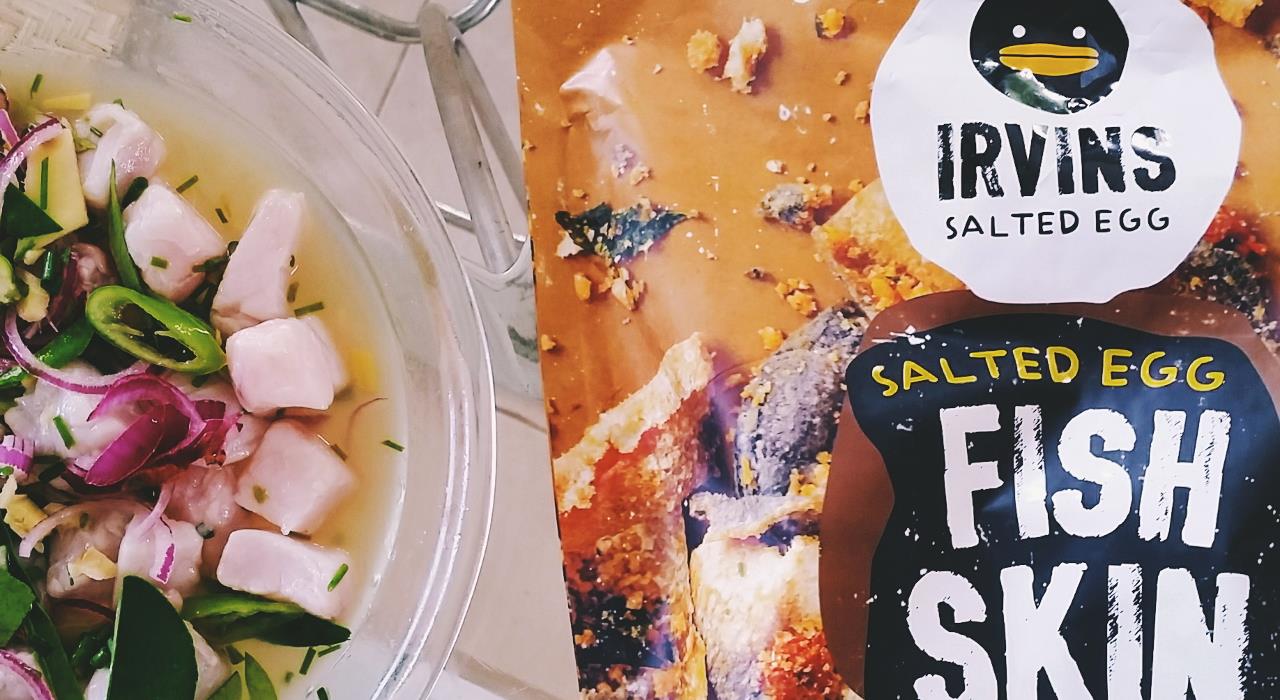
    Irvins Salted Egg snack store from Singapore has opened its first Philippines outlet, in Metro Manila.

    On the ground floor of SM Mega Fashion Hall, the shop sells the brand’s signature snacks: salted egg fish skins and salted egg potato chips.

    Owner Irvin Gunawan says he decided to open a store in the Philippines after seeing the great response to the snacks from Filipinos in Singapore. His hunch was right, as on its first day the Manila store had a queue throughout the morning.

    Gunawan says other branches will come, the first before year’s end.

  • McDonald’s China partners with property developer

    McDonald’s China partners with property developer

    McDonald’s China has formed a partnership with property developer Evergrande Group with the aim of speeding up expansion throughout the mainland.

    This has been announced just a fortnight after the US fast-food giant sold a controlling stake in its Chinese and Hong Kong divisions to China’s state-owned Citic Group. The newly formed McDonald’s China unveiled a plan to add 2000 more restaurants to its 2500 outlets on the mainland China over the next five years.

    Citic chairman Chang Zhenming says the strategic co-operation with Evergrande will help McDonald’s restaurants quickly expand its footprint, especially in third- and fourth-tier cities.

    Evergrande will give McDonald’s “priority” in site selection for its residential property developments nationwide, Citic says.

    The restaurant chain is now aiming to have 45 per cent of its China stores in third- and fourth-tier cities, with more than 75 per cent of them offering delivery.

    Evergrande Group has about 700 property projects in 240 mainly lower-tier mainland cities.

  • AirAsia celebrates Asean’s golden jubilee with low fares

    AirAsia celebrates Asean’s golden jubilee with low fares

    AirAsia is celebrating Asean’s 50th anniversary with low fares to all destinations across its regional network.

    The promotion from only RM50 is in conjunction with Asean Day tomorrow, commemorating the founding of the Association of Southeast Asian Nations (Asean) on 8 August 1967.

    To seize this great offer, simply book on airasia.com or the AirAsia mobile app from Aug 7 to 13 for travel between Aug 7 2017 and Feb 8 2018 to any destination in Malaysia, Thailand, Indonesia, the Philippines, Singapore, Brunei, Cambodia, Myanmar, Laos or Vietnam.

    AirAsia Group CEO Tan Sri Tony Fernandes said, “For 50 years, Asean has inspired us with its message of unity. As Aseanists, we want to return the favour and we hope these low fares will inspire the people of Asean to discover more about the region we call home”, said AirAsia Group Chief Executive Officer Tan Sri Tony Fernandes.

    AirAsia is proud to be an Asean airline, with operations in Malaysia, Thailand, Indonesia and the Philippines, and is the only airline that flies direct to all 10 Asean countries.

    AirAsia also offers AirAsia Asean Pass which allows guests to enjoy flights within the region at fixed rates with travel validity up to 60 days.

  • Yusen Logistics participates in KIX Pharma Community

    Yusen Logistics participates in KIX Pharma Community

    Yusen Logistics will join the KIX Pharma Community, a group being formed by Kansai Airlines and other partners to acquire joint CEIV Pharma certification at Kansai International Airport in Japan. The Community expects to be certified by the summer of 2018.By participating in the community, Yusen Logsitics strengthens and expands its air freight services for its pharmaceutical and medical customers.

    CEIV Pharma (the Center of Excellence for Independent Validators in Pharmaceutical Logistics) certification is a quality assurance program for the temperature-controlled transportation of pharmaceutical products, developed by the International Air Transport Association (IATA). The program comprehensively covers Good Distribution Practices (GDP), and establishes guidelines that help supply chain partners develop and maintain safe air transportation practices for pharmaceutical products.

    As part of its strategy to turn Kansai International Airport into an international cargo hub, Kansai Airports is in the process of improving the quality of how it handles pharmaceutical products. The establishment of the KIX Pharma Community, combined with joint CEIV Pharma certification, will enable it to provide even safer, high-quality pharmaceutical transportation.

    In terms of exports, this will cover the entire supply chain from collection to aircraft loading; and for imports, from airport arrival to delivery. Acquisition of the certification is scheduled to be completed between spring and summer of 2018.

    Yusen Logistics is strengthening its logistics services for medical and pharmaceuticals products around the world. Last December, the company utilized Pharma Gateway Amsterdam—a community centered on Amsterdam Airport Schiphol—to become the first Japanese logistics company to acquire CEIV Pharma certification. This past May, the company acquired GDP certification at Frankfurt Airport. As a result, Yusen Logistics is now able to provide air import and export services that adhere to certification standards at two of Europe’s leading airports.

    In Asia, last July PT. Yusen Logistics Indonesia became the first Indonesian logistics company to acquire GDP certification for customs and delivery business processes related to air cargo arriving at and leaving from Jakarta International Airport.. In this way, Yusen Logistics is also expanding its global medical and pharmaceutical logistics network in Asia.

    Yusen Logistics is working to acquire CEIV Pharma certification at Kansai International Airport, with the aim of establishing a high-quality pharmaceutical logistics service, and globally expanding its supply chain and logistics services that cater to customer needs.

  • CLSA Capital sells Zing! mall for $2 billion

    CLSA Capital sells Zing! mall for $2 billion

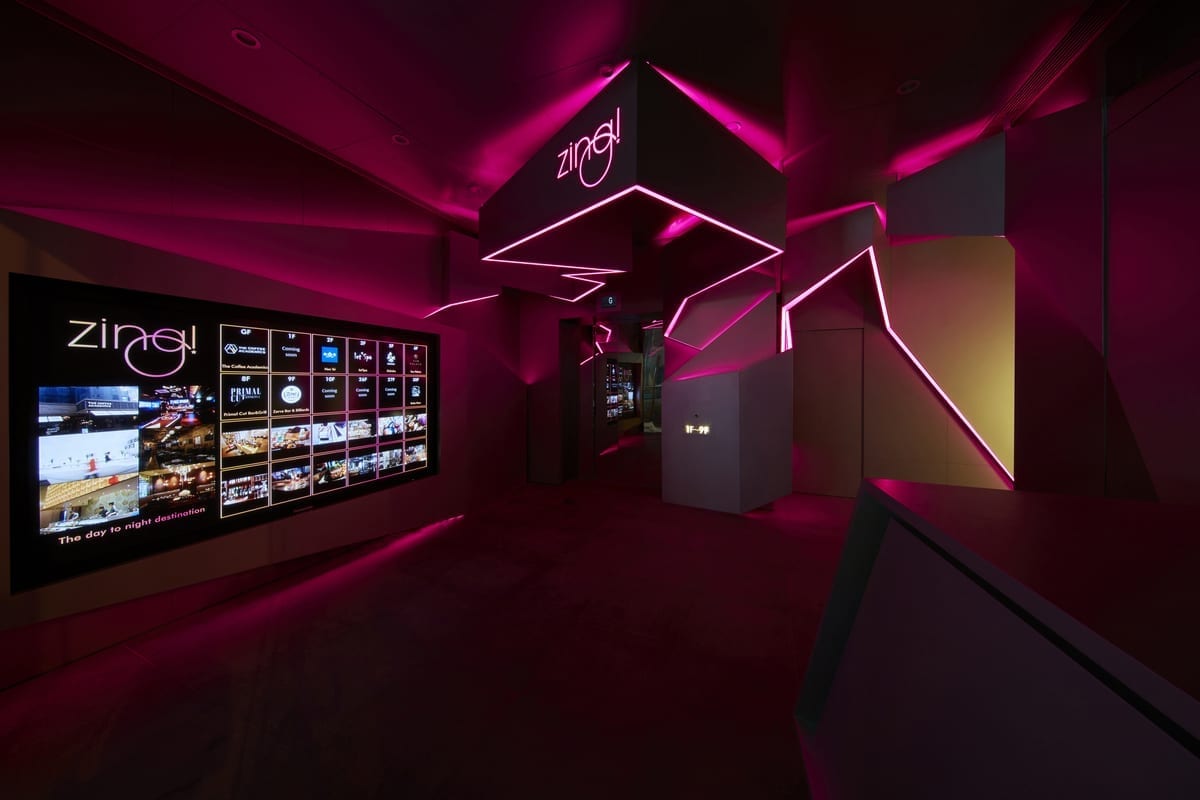
    CLSA Capital Partners has sold the 27-storey Zing! mall building in Causeway Bay for HK$2.1 billion (US $268.6 million).

    An unknown buyer completed the deal by paying $1.1 billion after selling The L. Plaza in Sheung Wan to CLSA for $1 billion

    Zing!’s 79,051 sqft (7344 sqm) of space is believed to be fully leased out to retail tenants including F&B, beauty salons, gyms, clubs and karaoke venues. It is next to Times Square Hong Kong.

    CLSA Capital Partners bought the building, formerly known as Bigfoot Centre, in 2014 for $1.4 billion.

    After being refurbished, it was relaunched as Zing! in March 2015. The private equity arm of CLSA put Zing! on sale via public tender in May.

  • CRC Sports launches Liverpool footie franchise in Thailand

    CRC Sports launches Liverpool footie franchise in Thailand

    Thai fans no longer need to travel to England to buy Liverpool Football Club merchandise, with the club’s first official shop for Thailand, CRC Sports, launching in Pattaya.

    On the second floor of Central Festival shopping mall, the shop is being run by former Pattaya City Council member Rattanachai Suthidechanai, who has invested THB3 million (US$90,000) in the venture.

    He says expects to sell between THB800,000 and THB1 million worth of merchandise a month as the latest English Premier League season starts this weekend.

  • Vietjet Listing honored as “The IPO Deal of the Year 2017”

    Vietjet Listing honored as “The IPO Deal of the Year 2017”

    Vietjet’s public listing in the Ho Chi Minh City Stock Exchange in February has been honored as “The IPO Deal of the Year 2017” and “The Company with Best M&A Information Disclosure” at the M&A Awards 2016-2017. As a highlight of the Vietnam M&A Forum 2017, the awards were adjudicated by a panel of independent and renowned M&A experts through nominations by consultation organizations and researchers.

    Leading “a series of successful deals” in 2016-2017, Vietjet was highly rated by the panel which named the Vietjet listing as “The IPO Deal of the Year 2017” and “The Company with Best M&A Information Disclosure”. Vietjet’s IPO was professionally conducted following consultations with world-renowned law firms and financial institutions in around 800 days (due on the listing date) in accordance with international IPO standards of Regulation S.

    The adjudication panel also lauded the airline for its information disclosure. Vietjet has performed well in building investor relations, attracting intentions of investment funds and the public as well as bringing transparent, detailed and internationally-standardized information to investors and the public.

    Vietnam M&A Forum, an annual event for companies and investors from Vietnam and other countries was held in Ho Chi Minh City on August 10, 2017 under the auspices of the Ministry of Planning and Investment. With the theme “Seeking a Big Push”, the Vietnam M&A Forum 2017 was held as a platform to exchange suggestions and introduce opportunities as well as experience sharing for breakthroughs in the market.

    Earlier, Vietjet’s 2016 annual report was also honored with a Platinum Award, ranked the 4th among the Asia Pacific region’s awardees and 11th out of 100 worldwide at the Vision Awards 2016 presented by the League of American Communications Professionals (LACP). Themed as “the flight to the future”, the 150-page annual report was graded with almost top scores under the criteria of First Impression, Letter to Shareholders, Report Financials and sustainable development programs.

    Headquartered in the US, LACP was set up to create a forum within the public relations industry that facilitates discussion of best-in-class practices within the profession while also recognizing those who demonstrate exemplary communications capabilities. The Vision Awards honors outstanding and informative annual reports globally following international standards.

  • Revenue rise puts Yue Yuen on good footing

    Revenue rise puts Yue Yuen on good footing

    Revenue growth of 3.9 per cent saw first-half revenue hit US$4.4 billion for Yue Yuen Industrial (Holdings).

    Profit attributable to the owners of the group grew by 4 per cent year on year to $258.5 million for the six months to the end of June.

    Ye Yuen’s main business categories are making and selling footwear products plus the retail and distribution of sportswear and apparel products, including leasing large-scale commercial spaces to retailers and distributors. It is the largest manufacturer of athletic and casual/outdoor footwear for international brand companies, and runs one of the largest footwear and apparel retail networks. It also provides sport services across Greater China, which continues to be a key growth market for major international sporting and lifestyle brands.

    Its footwear manufacturing revenue recorded a mild decline of 0.7 per cent to $2.9 billion during the first half, with sales volumes dropping 1.6 per cent. However, the group’s manufacturing gross profit grew from $607.9 million to $622.9 million with a gross profit margin of 20.8 per cent.

    Vietnam, Indonesia and China continued to be the group’s main production locations by volume, representing 46, 35 and 17 per cent of total shoe production respectively.

    Athletic shoes accounted for 46.6 per cent of revenue, followed by casual/outdoor shoes at 12.8 per cent. Athletic shoes were also the main manufacturing category, accounting for 77.1 per cent of revenue, followed by casual/outdoor shoes at 21.2 per cent.

    The group’s retail business grew by 15 per cent to $1.4 billion. The group’s main retail subsidiary, Pou Sheng, derives sales primarily from retail omni-channels and a sport services platform covering major cities in Greater China.

    At June 30, the group had 5464 directly run counters/stores and 3036 stores run by sub-distributors in Greater China. It had about about 360,000 employees globally.

  • Miniso Philippines opens two more outlets

    Miniso Philippines opens two more outlets

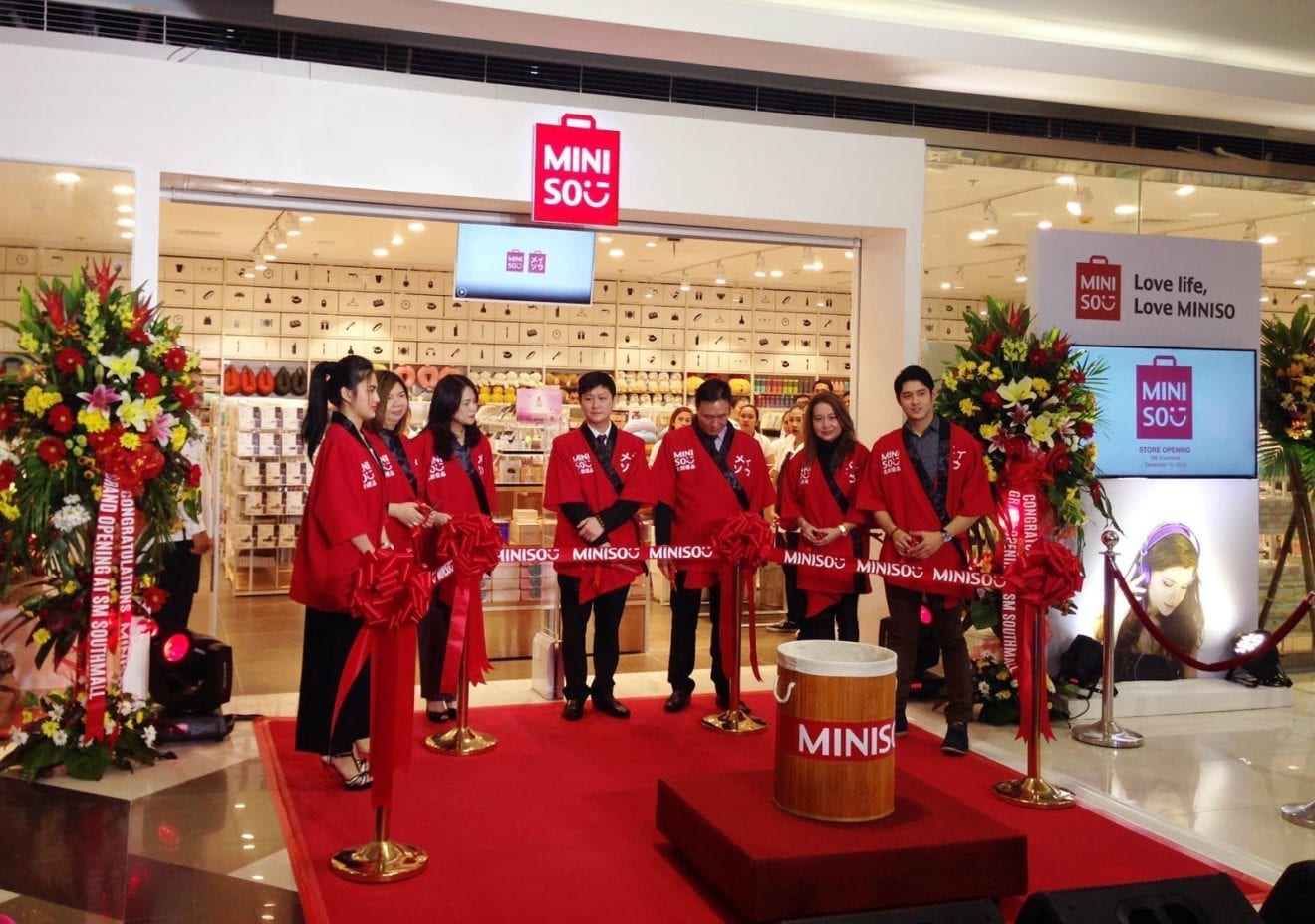
    Japanese lifestyle brand Miniso Philippines has opened two more outlets in Manila, with four to follow soon.

    Its first store in the Philippines, at Robinsons Place Manila, opened in June, with the latest stores in SM City San Lazaro and SM City Manila.

    Miniso has more than 1400 retail stores in more than 40 countries and regions. The grand opening of its SM City Manila outlet featured Filipino teen actor Ruru Madrid and actress Gabbi Garcia, both from GMA Network, along with City of Manila vice-mayor Honey Lacuña, Miniso partners and mall executives

    Miniso was jointly founded by designer Miyake Jyunya and Chinese entrepreneur Ye Guofu with a brand proposition of “simplicity and going back to the essence”.

    More 80 per cent of the brand’s products designs originate from China, Japan, Korea, Malaysia and Singapore. Products include home necessities, jewellery, seasonal items, digital accessories, office supplies, beauty products, stationery gifts, and food and drinks. Miniso stores can be found in Australia, China, Hong Kong, Japan, Korea, Laos, Myanmar, Nepal, Singapore, Thailand and Vietnam.

  • Giordano International recovers from early fall

    Giordano International recovers from early fall

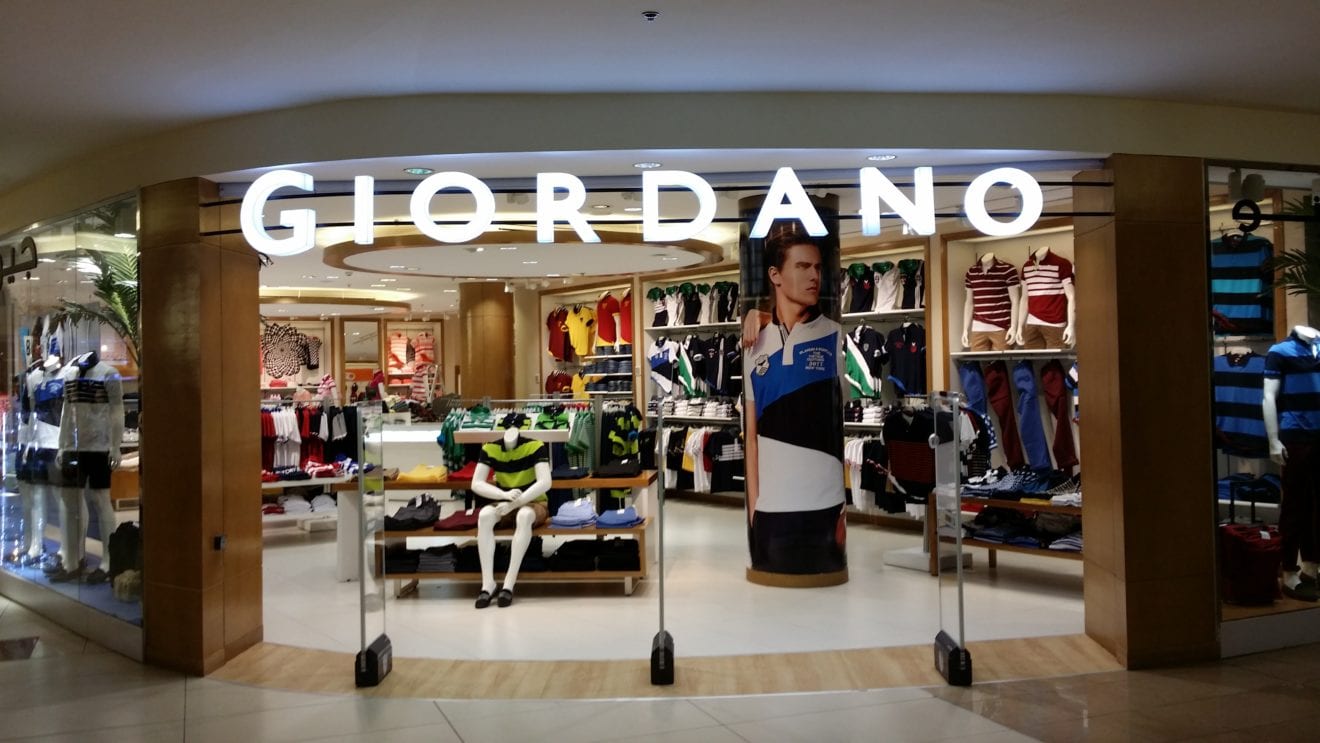
    In a turnaround from a 1.6 per cent drop in the first quarter, apparel retailer Giordano International recorded a 3.4 per cent rise in half-year group sales to HK$2.6 billion (US$334.8 million).

    Gross profit increased by 3.8 per cent and gross margin improved by 0.2 points.

    Comparable store gross profit (CSGP) rose by 6.6 per cent though comparable store sales (CSS) reached only 4.6 per cent growth. The company says the increase was primarily because of a better pricing/merchandising mix, but the figures were dampened by the early lunar new year shortening sales of winter merchandise.

    Group gross profit edged up 3.8 per cent to $1.566 billion, primarily because of non-performing stores being closed in the past few years. Group gross margin was up by 0.2 points to 59.8 per cent, mainly because of depreciation of the renminbi as most products were sourced from China. Giordano says sourcing from Bangladesh and Vietnam will help maintain or improve future gross margin.

    While China’s total sales fell, operating profit grew by 5 per cent, mainly because of improved profit from e-commerce, gross margin improvement and control of running expenses.

    E-commerce sales surged 26.6 per cent, contributing to 16.2 per cent of China brand sales (12.7 per cent for the same period last year). The company attributes the increase to improved merchandise mix and logistics.

    Strong growth

    Regional operating profit recorded strong double-digit growth, particularly for Indonesia, Malaysia and Singapore. This was generally attributable to improved gross margin and expense
    control.

    Early Ramadan and improved merchandise assortment benefited both Indonesia and Malaysia. The operating profit of Malaysia grew by 47.2 per cent and that of Indonesia by 37.1 per cent.

    In Singapore, operating profit was up 35.1 per cent, mainly because of gross margin increasing by 2.1 points to 62.6 per cent despite a stagnant economy and low tourist traffic.

    In Thailand, operating profit was virtually the same.

    South Korea (a 48.5 per cent JV with an independent management team) reported a net profit increase of 28.8 per cent through better cost control, the closure of non-performing stores and enhancement in gross margin.

    Worldwide, there were 16 fewer Giordano stores at the end of June, mainly because of 33 non-performing stores being closed in India, where the group is restructuring the business. This trimmed the network to 2371 stores in more than 30 countries, including 1243 standalone stores. Most are in China (where stores expanded from 896 to 913, all in the franchise network), South Korea, Southeast Asia and the Middle East.

  • Singapore logistics startup Yojee raised another S$3mn

    Singapore logistics startup Yojee raised another S$3mn

    Yojee is a Singapore publicly listed technology company which introduced the new ways of communication and collaboration across the entire supply chain. Raised over 10 million up to date with the last funding round of 3 million came in on the 8th of August via share placement. The company will use the proceedings to further funding long term technology, sales and marketing plan leveraging existing customers and expanding further.

    The company offers everyone an opportunity to join the ‘world’s first’ collaborative cross border logistics network which connects shippers, carriers and freight forwarders in seconds, with already tens of thousands of kilograms of freight moving through the network. For shippers and carriers, the route optimisation algorithms with machine learning capabilities suggest the best asset for each delivery job using both current and historical data, based on more than 30 criteria.

    SmartAssign
    Revolutionary Yojee SmartAssign allows companies to make smart job assignment decisions without touching a button. Fully powered by Yojee Ai (Artificial Intelligence) this mode dynamically determines and passes the job to the most suitable driver for each job based on many different criteria including proximity, available vehicle capacity, driver capacity, road conditions, and many others.

    Yojee aims for a 70% reduction in the headcount required in operations and customer service to manage a logistics business, creating substantial operational savings alongside freight efficiencies by introducing more features promoting autonomous operations.

    In addition to Yojee SmartAssign, Yojee Broadcasts (uberfied mode) can be chosen, this adds a third option for companies’ operational modes, Yojee AI pushes jobs to a number of most suitable drivers and allows them to accept or reject the job, broadcast options are fully configurable including number of drivers per broadcast, time interval before re-broadcasting, which will give additional opportunities to optimise the operations.

    Big data analytics dashboard
    Big data and predictive analytics gives logistics companies the extra edge they need to optimise and manage their operations giving managers the aggregated bird’s eye view to the top data points. Analytics dashboard with customisable display allows real time visualisations of key operational and financial metrics which in addition to seamless dispatch work helps automated systems to function through intelligently routing many different data sets and data streams.

    Control tower enhancement
    Enhancement of Control Tower – users of the Yojee platform software now able to move jobs across companies. fully connected, seamless transfer, networked ecosystem

  • VW Group, Tata end talks on emerging markets tie-up

    VW Group, Tata end talks on emerging markets tie-up

    Cooperation talks between Germany’s Volkswagen Group and India’s Tata Motors about joint development of a car for emerging markets have ended amicably, the two companies said on Thursday.

    The collapse of the talks is a further blow to Volkswagen’s (VW) efforts to develop a cheap vehicle platform for Asian markets, after an earlier alliance with Japan’s Suzuki Motor Corp (7269.T) also fell apart.

    In March Tata Motors and VW announced a Memorandum of Understanding (MoU) for a long-term partnership to explore joint development of products for customers in India and other markets.

    The German group’s Czech arm Skoda, commissioned by VW to lead the talks with Tata, was exploring a possible entry-level car platform together with the Indian manufacturer, using Tata’s AMP vehicle platform as a basis, a VW group source said.

    Skoda dropped the idea of developing the AMP platform on fears that it would need significant further investment to meet future crash-test and engine emissions requirements and would instead explore parent VW’s MQB platform for possible further savings, said the source, who declined to be named.

    “The two companies have come to the conclusion that at the present point of time the technical and economic synergies cannot be realized in the desired way,” Skoda said on Thursday, confirming a Reuters story.

    “We have evaluated the technical feasibility and degree of synergies for the envisioned partnership. We have concluded that the strategic benefits for both parties are below the threshold levels,” said Tata Motors Chief Executive Guenter Butschek, the German automotive and aerospace industry veteran who joined the Indian company last year.

    But the two automakers, which also studied joint development of components, did not rule out the possibility of collaboration in the future after holding what Skoda called “constructive talks” over the past five months.

    VW shares closed 0.7 percent lower at 127.15 euros. Tata Motors shares plunged 9 percent to 380.20 rupees, after the company reported lower than expected first-quarter results.

    Foreign carmakers like VW, General Motors (GM.N) and Fiat Chrysler (FCHA.MI) have struggled in India where more nimble rivals such as Maruti Suzuki (MRTI.NS) and Hyundai Motor (005380.KS) have cornered two thirds of the market.

    Tata, which is also struggling to boost sales, has been trying to turn round its loss-making domestic business by modernising its products, improving efficiency and streamlining its organization.

    In May, General Motors said it would stop selling cars in India from the end of this year, drawing a line under two decades of battling in one of the world’s most competitive markets where small cars make up the bulk of sales.

    India is expected to become the world’s third-largest car market by 2020 but passenger vehicle sales have slowed in recent months due to policy changes and a new nationwide sales tax.

    In 2009 VW attempted to break into the low-cost car market in India by forging a tie-up with Suzuki Motor Corp but the deal failed due to cultural and business differences and was ended in 2015 following a fierce legal dispute.

    The German group is looking for new overseas markets as it struggles to draw a line under its emissions scandal. In China VW has been working with joint venture partner FAW on an economy car and is planning to build affordable electric vehicles with JAC Motor (600418.SS) from next year.

    “We haven’t been able yet to claim a share of the booming business with cheap small cars and Tata means another setback in that respect,” a senior VW brand manager told Reuters. “But VW has changed a lot structurally since the Suzuki debacle, so we’ll keep trying.”

    The breakdown of talks with Tata was mainly for economic reasons rather than differences over control, as the AMP architecture turned out to be too expensive, the VW source said.

    A push by VW group headquarters to decentralize power after the dieselgate scandal and assign greater responsibilities to the individual brands and business regions for vehicles and technology will help VW find the right partner, the manager said, without being more specific.


  • DHL to be title sponsor of DR1 Drone Racing Series

    DHL to be title sponsor of DR1 Drone Racing Series

    DHL has signed on as the new title sponsor for a new racing series – DR1 presents the DHL Champions Series, Fueled by Mountain Dew. This new racing championship is organized by DR1 Racing, the premiere drone racing organization that is bringing together top pilots and racing teams to compete at exhilarating locations throughout the world, including the Post Tower in Bonn, Germany, the headquarters of Deutsche Post DHL Group. This October and November the races will be broadcast and streamed online globally by Eurosport, Fox Sports Asia and Twitch.TV, potentially reaching more than 300 million homes.

    This new racing series gives DHL the opportunity to continue to extend its leadership position in the development of drone technology, which has a vital part in the future of logistics, as well as elevate the DHL brand to a broader audience of businesses and consumers through a thrilling new sport. Locations for the first season of the DHL Champions Series are expected to include the United States, Germany and Ireland. DR1 events are already broadcast in more than 100 countries.

    “This new racing series is an exciting opportunity for DHL to showcase our passion for drone racing and illustrate our extensive history in developing innovative and sustainable approaches towards future logistics solutions,” said Ken Allen, CEO, DHL Express. “Similar to Formula E, drone racing represents an exciting new e-racing series, which is why DHL took the opportunity to engage as the logistics partner and title sponsor for DR1’s premier league racing series.”

    DHL has been developing and testing its Parcelcopter for more than four years for deliveries in geographically ambitious areas. It has successfully deployed the Parcelcopter for fully automated deliveries in severe, high-altitude and weather conditions in the Bavarian Alps as well as to remote locations on German North Sea islands, and as such integrated into the overall logistical processes of the DHL Parcel unit. For its engagement in this area of research the Group also received the “German Mobility Award 2016” (Deutscher Mobilitätspreis 2016).

    DHL Supply Chain has deployed drone in Mexico and Brazil for security surveillance, monitoring sites and assets for theft and damage. Drones can also be used as aid deliveries as part of disaster relief missions after natural disasters.