Tag: asia

  • JD.com expansion of offline experience shops

    JD.com expansion of offline experience shops

    The company, which rose quickly to become China’s largest retailer, online or offline, through its e-commerce business, is looking to leverage the advantages of an offline experience to further expand its lead.

    It is rolling out offline “JD Retail Experience Shops”, where customers can touch and feel products ranging from digital and home appliance products, to books, JD’s DingDong smart speaker and baby and maternal products, all of which are sourced from JD.com.

    The selection is focused on products that consumers often like to feel and test in person before buying, and tailored on a store-by-store basis using the big data that we have from each neighborhood’s shopping habits.

    Using a franchise model with centralized oversight and quality control, the shops will be powered by JD’s cutting-edge retail technology for demand planning, inventory management and targeted marketing, making the storefronts more efficient and adaptable to market changes than any traditional retail business.

    The shops provide a glimpse into the way e-commerce will change the future of retail. JD is working together with service partners to adapt their supply chains to increasing demand from customers for better and faster service.

    One of the biggest pain points for retail in today’s fast-moving consumer culture is inventory management.

    Unlike e-commerce companies, brick-and-mortar retailers have to keep many physical storefronts stocked with products, leading to inventory bloat when they overestimate demand, and lost business when they underestimate it.

    JD’s technology, powered by predictive analytics using big data, will keep offline stores stocked with recommended categories and suggested amounts of products, while localizing the selection depending on consumer buying preferences in each location.

    So far, there are 92 JD Retail Experience Shops with nearly 15,000 SKUs that are stocked and replenished using JD’s smart supply chain management systems. The number will increase to 300 by end of this year.

    JD Retail Experience Shops, some of which feature children’s play areas and massage areas for the elderly, are built as 200 square-meter spaces within stores operated by JD’s service partners. In Changping, a Beijing suburb, one JD Retail Experience Shop generated 1,096 orders worth RMB 1.23 million on its opening day.
  • Singtel deploying Massive MIMO

    Singtel deploying Massive MIMO

    Singtel is deploying Massive MIMO (multiple-input multiple-output) technology commercially on its LTE-Advanced mobile network to improve the mobile data experience during special events.

    A precursor to 5G technology, Massive MIMO is an advanced solution used to boost network capacity in highly dense environments. The company plans to use the technology to improve mobile data speeds by up to 200% during busy periods.

    Singtel teamed up with Ericsson, Huawei and ZTE for the deployment of Massive MIMO technology at the Marina Bay area. Singtel rolled out the network boost at yesterday’s National Day celebrations, with other deployments planned for the Singapore F1 Night Race and the New Year countdown event.

    “On the joyous occasion of our National Day celebrations, Singtel is pleased to be pairing our newly-acquired 2.5-GHz spectrum with Massive MIMO technology to expand our network capacity and offer our customers an enhanced mobile experience at this and other special events,” Singtel group CTO Mark Chong said.

    Globally, large crowds gathered at events, such as concerts and festivals, use high volumes of data to share their experiences via real-time videos on social media.

    This extraordinary behaviour generates a dramatic spike in network traffic, presenting a challenge for operators to provide fast and consistent data speeds.

    Singtel has identified Massive MIMO as one of the solutions to the problem. Singtel will use Massive MIMO base stations featuring a large array of 64 antennas that improve spectral efficiency and cell capacity using innovations in radio technologies.

    The innovative antenna system channels signals to users’ specific locations instead of broadcasting across a geographical area. This multiplies the number of data paths from the cellular base stations, thus increasing network capacity and improving user experience.

  • AirAsia now flies direct to Sihanoukville

    AirAsia now flies direct to Sihanoukville

    Malaysia-based  low cost carrier AirAsia officially launched its first direct flight from Kuala Lumpur to Sihanoukville International Airport yesterday to cater to the increasing number of tourists keen to visit Cambodia’s coastal areas and enjoy its beaches.

    The inaugural AirAsia flight, with 180 passengers onboard, landed at 1:00 PM and returned back to Kuala Lumpur 40 minutes later, according to a Cambodia Airports press release.

    AirAsia’s four times weekly flights from Kuala Lumpur to Sihanoukville is its third route into Cambodia, with the airline flying daily to Phnom Penh and Siem Reap.

    Spencer Lee, commercial head at AirAsia, said that with the expansion of the airline’s services to Cambodia, AirAsia has become one of the key players in the kingdom’s tourism sector.

    “We are thrilled that our first flight to Sihanoukville marked a milestone with a successful full flight for our 50th unique route. As a truly Asean airline, it is our commitment to drive tourism efforts to all countries that we operate in – especially within the region,” said Mr Lee. 

    “This coastal city in Cambodia presents great potential and dynamic opportunities in terms of tourism, trade and economy. We are happy to be a part of this journey to develop Sihanoukville further,” he added.

    “Our footprint in Cambodia to date would not be possible without the help from local parties and we would like to thank the Cambodian airport authorities for their tremendous support.

    “With Sihanoukville added into our extensive network map of over 120 destinations, we hope to enable this city to be a popular tourist destination that enables travellers from the region to experience a hidden side of Asean that has yet to be discovered.”

    Mr Lee said AirAsia aims to develop Sihanoukville to become a tourist hotspot like how it has introduced unique destinations such as Luang Prabang in Laos, Indonesia’s Banda Aceh and Bhubaneswar in India.

    “Travellers looking to bask in the sun and enjoy the waters can look to the unspoiled tropical island of Koh Rong Samloem for beautiful sandy beaches, jungle mountains, mangrove and marine life. While the most popular beach in Sihanoukville, Ochheuteal Beach, boasts a late night scene with restaurants and bars.”

    Eric Delobel, CEO of Cambodia Airports, said that AirAsia’s direct flights to Sihanoukville would better facilitate Cambodia’s connectivity to all parts of the world.

    “Our successful partnership with AirAsia is moving up another step and it is a key driver in connecting Cambodia to the world,” he added.

    Mr Delobel said Cambodia Airports was keen to attract more airlines to Sihanoukville and for that reason it would inaugurate in early 2018 a new airport terminal and at the same time renovate the airport runway to cater to bigger aircraft.

    Taing Sochet Krisna, director of Sihanoukville provincial tourism department, said that AirAsia will help to promote the image of the country’s coastal area and attract more tourists, investment and trade.

    “Now tourists will be able to fly directly to my province,” he said.

  • Brazilian Flip Flops Brand Enters Suzhou Jiuguang

    Brazilian Flip Flops Brand Enters Suzhou Jiuguang

    Brazil’s well-known flip flops brand Ipanema opened a new store in Jiuguang Department Store, Suzhou, which is reportedly Ipanema’s seventh store in the city.

    Established in 2001, Ipanema provides four major series of products, including women’s products, men’s products, children’s products, and brand-partnered products; and its product lines cover flip flops, sandals, and slippers.

    The company started expanding into international markets in 2003 and over the following ten years, Ipanema became a popular high-end sandals brand in over 90 countries with its unique designs and comfortable products.

    Ipanema’s sandals are mainly made from PVC materials and processed with a special soft rubber compound technology.

    At the same time, 99% of its materials are claimed to be recyclable, which meets the environmental standard of developed countries. The brand will launch new products each season and about 400 new products are available annually.

    Ipanema’s manufacturer is the large sandals maker Grendene. Grendene was founded in Farroupilha in 1971 and it currently has 13 large factories and over 30,000 employees.

    The company is a large group enterprise which integrates material production, abrasives development, design, and brand management.

    At present, Ipanema products are well received in countries like United States, France, Italy, Spain, the Netherlands, Portugal, India, Germany, Ireland, Switzerland, the United Kingdom, Paraguay, and Mexico.

  • Giorgio Armani brings made-to-measure service to Hong Kong

    Giorgio Armani brings made-to-measure service to Hong Kong

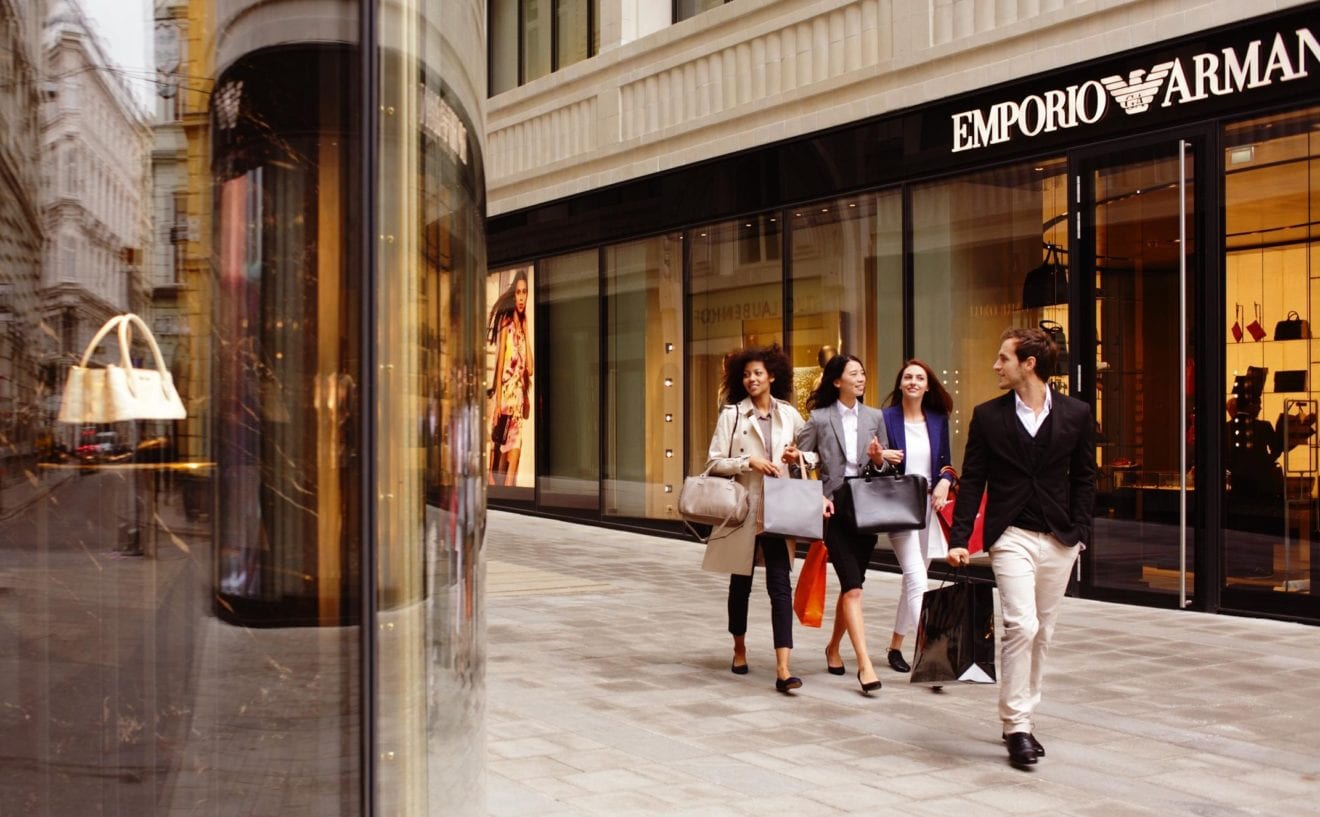
    Since its launch, Giorgio Armani’s made-to-measure service has captivated a lot of customers.

    It also has a celebrity following, including Leonardo DiCaprio, Paolo Sorrentino, Christian Bale, Tom Cruise, Will Smith and George Clooney.

    Made-to-measure suits combine the spirit of Armani with the premium quality of craftsmanship.

    “To qualify as a true bespoke, or hand-made garment, there are certain elements you need to deliver,” Giorgio Armani says.

    The customer is able to select from a number silhouettes, and choose the material, the lining, the lapel the style of buttons and pocket combinations.

    Specialised tailors from Italy will provide the exclusive made-to-measure service in Hong Kong at Giorgio Armani’s Central store from September 22 to 23 and at Giorgio Armani’s Canton Road store on September 24. Appointments are necessary.

  • Belize’s Smart goes live with FTS’ convergent billing

    Belize’s Smart goes live with FTS’ convergent billing

    Smart based in Belize has implemented FTS’ real-time billing and charging solution to support its expansion into 4G LTE as it offers innovative services to its customers.

    Supporting Smart’s LTE, 3G and 2G networks on a single platform, FTS’ Leap Billing solution includes convergent charging, billing, invoicing, customer management and partner management. In addition, FTS has provided Smart with a mobile solution, including prepaid IN gateway, voicemail and IVR systems.

    “Throughout the project FTS demonstrated its experience in implementing complex, multi-network solutions,” said Ernesto Torres, Smart’s CEO. “FTS’ billing solution enables us to provide new services while achieving an enhanced customer experience.

    As our growth continues, we look forward to FTS’ continued support.”

    Using FTS’ billing system, Smart can now configure and deploy real-time promotions, new pricing plans and loyalty programs. This enables the rapid delivery of innovative services such as shared data plans, social media packages and more.

    “This project demonstrates FTS’ ability to deploy complex, end-to-end, BSS and VAS systems,” said Avi Kachlon, FTS’ CEO.

    “This successful project marks another important milestone for FTS as we further expand our presence in the Caribbean and Latin American markets,” said Kachlon. “We are working closely with our customers to support their operations, and are looking forward to a long-term partnership with Smart.”

  • Vietnam launches derivatives market to boost liquidity

    Vietnam launches derivatives market to boost liquidity

    Vietnam’s derivatives market is officially launched today, with stock futures contracts the first to begin trading.

    Derivatives trading was planned several years ago to help draw more investment to Vietnam’s capital markets and broaden the country’s finance industry.

    The futures market would initially launch stock index contracts, and when fully operational, more instruments would be introduced.

    “(The launch) will help attract more foreign investors, institutional investors in particular, and boost market liquidity,” the stock exchange said in a statement.

    The VN30-Index, which is reviewed periodically, captures the performance of the 30 largest companies by market capitalization on the Ho Chi Minh city stock exchange. The futures contracts are allowed to move by a maximum of 7 percent in each session.

    The benchmark VN Index has jumped 19.1 percent so far this year and hit its highest level of 796.62 points since 2008 on Tuesday.

  • VPBank gets all clear to offer 1.3bln shares on Saigon market debut

    VPBank gets all clear to offer 1.3bln shares on Saigon market debut

    The bank’s market capitalization is expected to reach $2.5 billion following the offering.

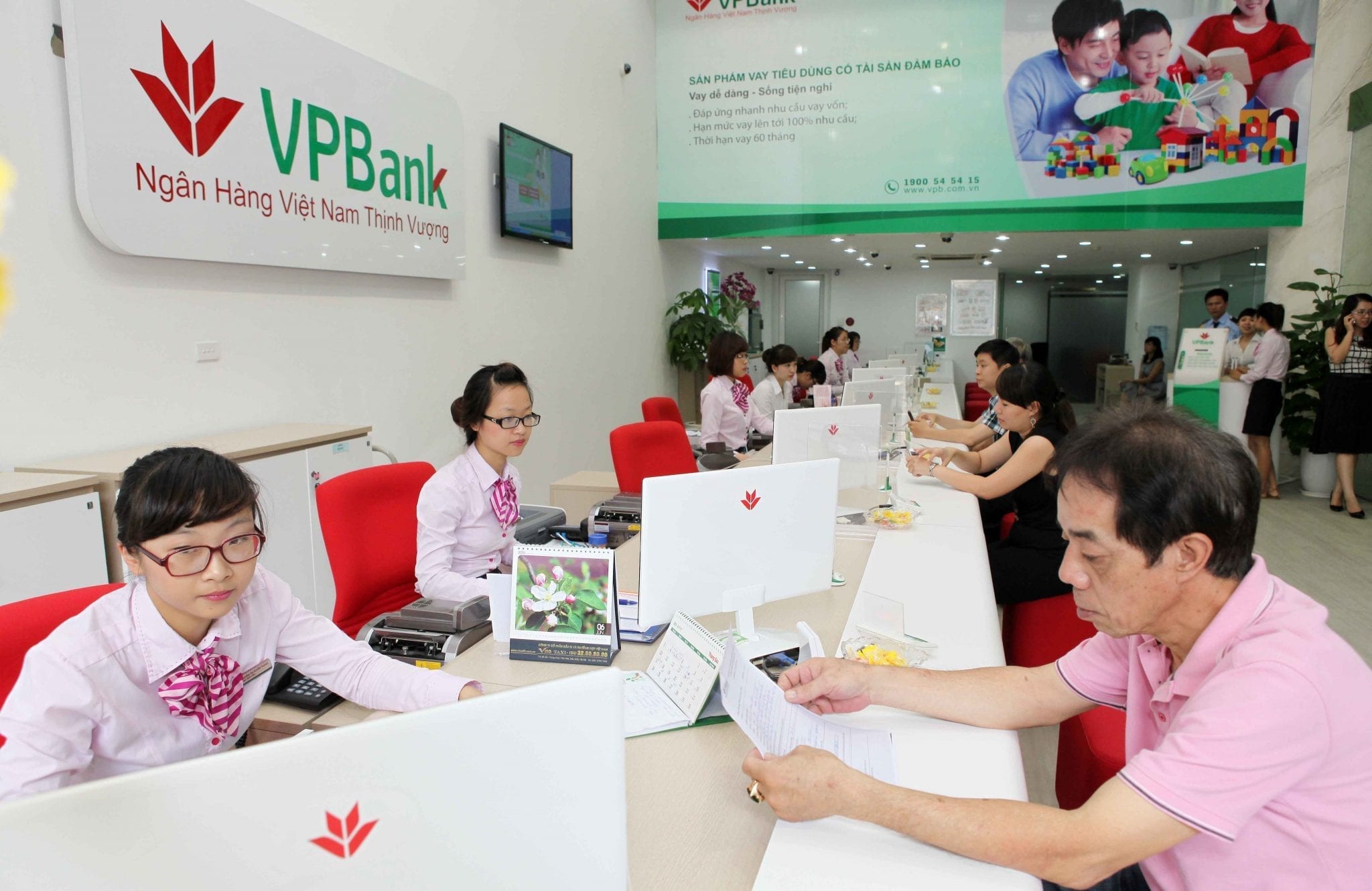
    The Vietnam Prosperity Joint Stock Commercial Bank (VPBank) was given approval on August 8 to list on the Ho Chi Minh Stock Exchange (HoSE).

    The bank plans to make its IPO on August 17 under the code VPB with a reference price of VND39,000 ($1.72).

    The bank’s market capitalization is expected to reach $2.5 billion following the offering, which would make it the largest private bank listed on the HoSE.

    The bank said it plans to pay its shareholders a 15 percent dividend in 2018.

    VPBank has set a consolidated net profit target of $374 million for 2018, a 50 percent increase compared to the target set for 2017.

    In the first half of this year, the bank made $141 million in pre-tax profit, equivalent to 40 percent of its annual target.

  • Air cargo experiences strongest first half year growth since 2010

    Air cargo experiences strongest first half year growth since 2010

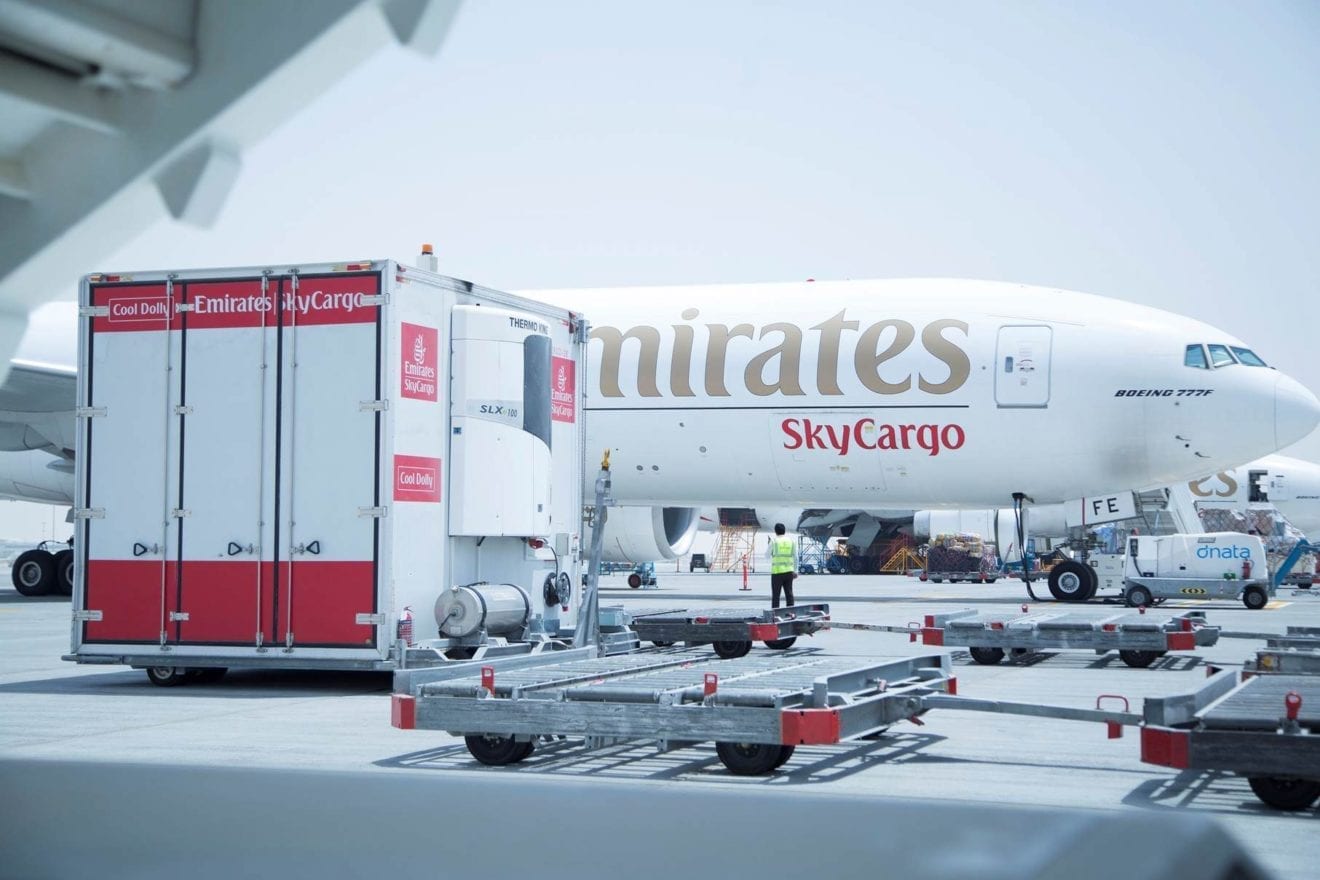
    The International Air Transport Association (IATA) released data for global air freight markets showing that demand, measured in freight tonne kilometers (FTKs), grew by 10.4% in the first-half of 2017 compared to the first-half of 2016. This was the strongest first half-year performance since air cargo’s rebound from the Global Financial Crisis in 2010 and nearly triple the industry’s average growth rate of 3.9% over the last five years.

    Freight capacity, measured in available freight tonne kilometers (AFTKs), grew by 3.6% in the first half of 2017 compared to the same period in 2016. Demand growth continues to significantly outstrip capacity growth, which is positive for yields.

    Air cargo’s strong performance in the first half of 2017 was confirmed by June’s results. Year-on-year demand growth in June increased 11% compared to the same year-earlier period. Freight capacity grew by 5.2% year-on-year in June.

    The sustained growth of air freight demand is consistent with an improvement in global trade, with new global export orders remaining close to a six-year high. However, there are some signs that the cyclical growth period may have peaked. The global inventory-to-sales ratio has stopped falling. This indicates that the period when companies look to restock inventories quickly, which often gives air cargo a boost, may be nearing an end. Regardless of these developments, the outlook for air freight is optimistic with demand expected to grow at a robust rate of 8% during the third quarter of this year.

    “Air cargo is flying high on the back of a stronger global economy. Demand is growing at a faster pace than at any time since the Global Financial Crisis. That’s great news after many years of stagnation. And, even more importantly, the industry is taking advantage of this momentum to accelerate much-needed process modernization and improve the value it provides to its many customers,” said Alexandre de Juniac, IATA’s Director General and CEO.

  • American bistro TR Fire Grill debuts in Malaysia

    American bistro TR Fire Grill debuts in Malaysia

    In its first overseas venture, American restaurant chain TR Fire Grill has launched in Pavilion Kuala Lumpur.

    Owned by Romacorp restaurant group, the award-winning concept first opened in Florida in November 2015. Its Malaysian business is owned and run by Pier Seafood, a wholly owned subsidiary of Revenue Valley, which already has a Romacorp brand, Tony Roma’s, run through its Grand Companions subsidiary.

    “Our chef-driven aesthetic uses local ingredients and flavours,” says Romacorp president/CEO Bradley Scher. The company also has a TR Fire Grill bistro in Hawaii.

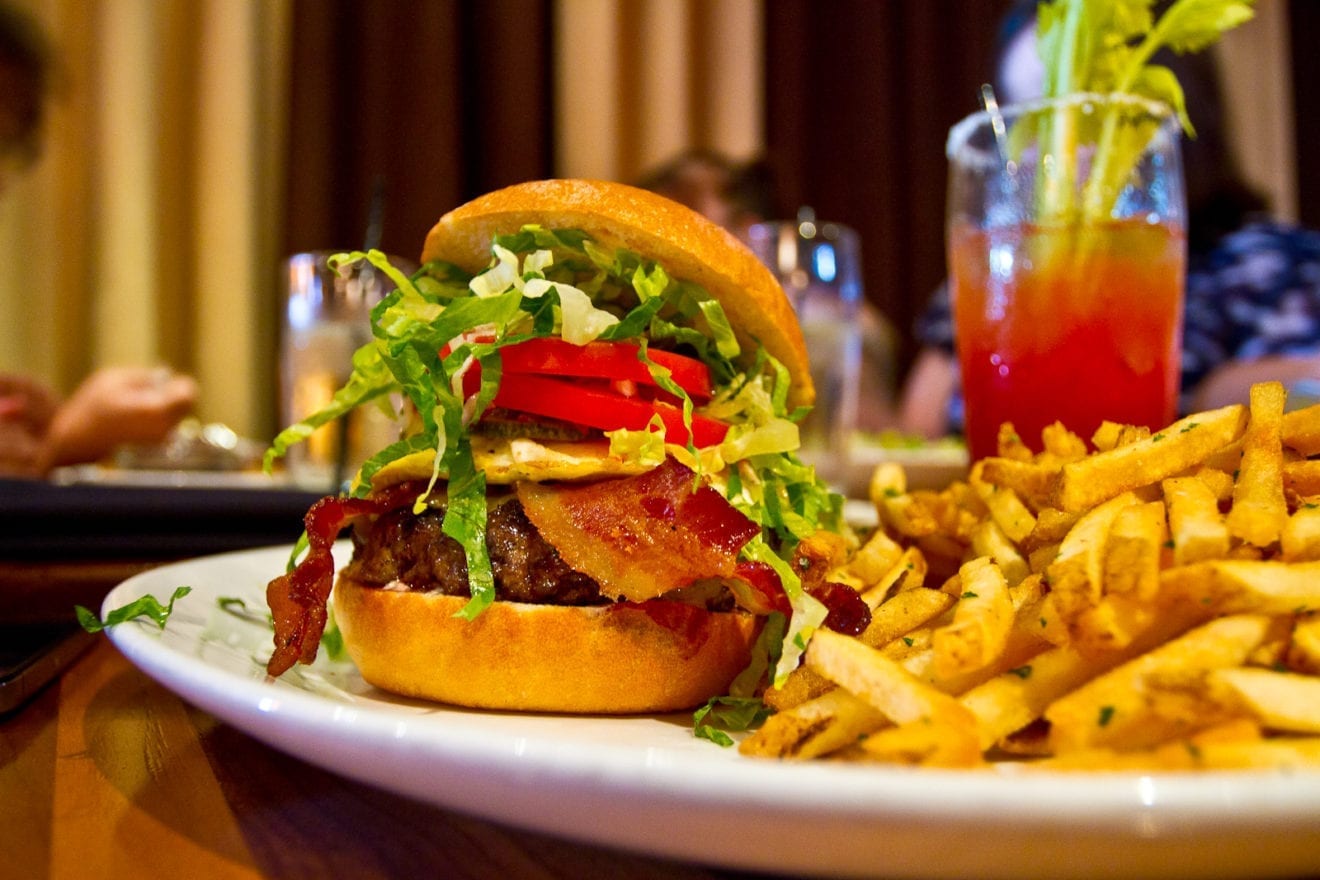
    Meats and vegetables are smoked in-house daily using hickory wood. Its steaks are free of antibiotics, hormones or genetically modified organisms. Sauces and specialty condiments are made in-house, and craft cocktails are made with liquors aged in small oak barrels or infused with fresh fruit and spices.

    Seating more than 180 guests, the restaurant has a cigar room and a full bar.

  • Just Group director steps down

    Just Group director steps down

    Premier Investments has announced retail veteran and Just Group core brand director, Colette Garnsey, will permanently step down from her role due to a serious medical condition.

    In a statement, the retail group said Garnsey would be unable to work full time and undertake the required travel as part of the role.

    Garnsey was previously group general manager at Pacific Brands.

    She has had over 30 years’ experience in retail and was formerly in senior management at David Jones Limited for over 20 years, most recently holding the position of group GM. She is a board member of Australian Wool Innovation Limited (since 2011), the L’Oréal Melbourne Fashion Festival (since 2006), a committee member of the TCF Innovation Council (since 2010) and a judge of the Veuve Clicquot Business Woman of the Year.

    In its first half results, Premier Investments lifted its underlying first-half profits 9.7 per cent to reach 100.6 million.

    The owner of several retail brands including Smiggle, Peter Alexander, and Just Jeans reported record underlying EBIT of $93.0 million, up 10.6 per cent on the comparable 26 week period last year ($84.1 million). Underlying net profit before tax increased 10.8 per cent to $90.9 million.

    At the time, Premier also announced the appointment of Nicole Naccarella as the new group GM of Jacqui E, reporting to Garnsey. Naccarella joined from Harris Scarfe where she was GM of apparel, and was previously the group GM of womenswear, intimates and accessories at Myer.

    The company also appointed Vicky Kordatou, a former business manager of Myer Miss Shop to the role of merchandise manager for woven tops, dresses and coats. Joanne Simmonds was appointed merchandise manager responsible for knits, separates and accessories and is a former Portmans merchandise manager .

  • Mazda announces breakthrough in long-coveted engine technology

    Mazda announces breakthrough in long-coveted engine technology

    Mazda said it would become the world’s first automaker to commercialize a much more efficient petrol engine using technology that deep-pocketed rivals have been trying to engineer for decades, a twist in an industry increasingly going electric.

    The new compression ignition engine is 20 percent to 30 percent more fuel efficient than the Japanese automaker’s current engines and uses a technology that has eluded the likes of Daimler AG and General Motors Co.

    Mazda, with a research and development (R&D) budget a fraction of those of major peers, said it plans to sell cars with the new engine from 2019.

    “It’s a major breakthrough,” said Ryoji Miyashita, chairman of automotive engineering company AEMSS Inc.

    The announcement places traditional engines at the center of Mazda’s strategy and comes just days after Mazda said it will work with Toyota Motor Corp to develop electric vehicles and build a $1.6 billion U.S. assembly plant.

    “We think it is an imperative and fundamental job for us to pursue the ideal internal combustion engine,” Mazda R&D head Kiyoshi Fujiwara told reporters. “Electrification is necessary but… the internal combustion engine should come first.”

    A homogeneous charge compression ignition (HCCI) engine ignites petrol through compression, eliminating spark plugs. Its fuel economy potentially matches that of a diesel engine without high emissions of nitrogen oxides or sooty particulates.

    Mazda’s engine employs spark plugs under certain conditions, such as at low temperatures, to overcome technical hurdles that have hampered commercialization of the technology.

    Executive Vice President Akira Marumoto called Mazda’s engine technology the automaker’s “heart”.

    The engine is called SKYACTIV-X and Mazda had no plans to supply the engine to other carmakers, Marumoto said.

    AEMSS’ Miyashita said a key issue would be how smooth and responsive the engine is.

    “Is it jerky? If so, that would pose a big question when it comes to commercializing this technology.” he said. “Hopefully Mazda has an answer to that question.”

    Mazda also said it would introduce electric vehicles and electric technology in its cars from 2019, focusing on markets that restrict the sale of certain vehicles to limit air pollution or that provide clean sources of electricity.

    In addition, it said it aimed to make autonomous-driving technology standard in all of its models by 2025.

    Mazda’s announced its petrol-engine technology breakthrough on the same day that shares in Japan’s GS Yuasa Corp surged after a newspaper reported that it would start producing a lithium battery that would double the range of electric cars as early as 2020.

    Mazda’s share price closed down 1.3 percent. That compared with a 0.3 percent fall in the benchmark Nikkei 225 index.

  • Khun Thai Tea heading for Singapore

    Khun Thai Tea heading for Singapore

    Singapore’s Khun Thai Tea, the franchisor for the Thai iced black-tea brand that originated from a pushcart in Bangkok, is about to launch its first outlet in the city.

    This follows its establishment in the Philippines last year as its first step toward expansion in Asia.
    Elis Chai, who co-founded Khun Thai Tea along with fellow Bronze Media Singapore owner Jeremy Lee, says their company has retained global rights for the brand, based on a recipe created in 1955 by Auntie Marlee, the sole proprietor of a pushcart in Sukhumvit.

    “Her recipe for ‘cha-yen’ was restricted to her family members,” says Chai. “Her pushcart soon came to be Sukhumvit Soi 11’s best-held secret. Its popularity rose in tandem with the street’s fame, which was earning a well-deserved reputation as a dining and nightlife destination.”

    More recently, Auntie Marlee began searching for successors to continue and expand on her pushcart’s legacy, finally tying up with Filipino Nancy Padilla. This led to SM Mall of Asia in Manila becoming the first outlet outside of Bangkok to feature Auntie Marlee’s tea in June last year. Padilla owns and runs the Khun Thai Tea Shop (Philippines), including “khun” (Thai for “respect”) in the franchise name as tribute to Auntie Marlee.

    Two more Khun Thai Tea outlets followed: one at Star City Amusement Park in Manila, and another at MegaMall Manila in the Ortigas business district. Lee says more branches are set to open in Manila before the end of this year.
    With Khun Thai Tea established in Singapore as global franchisor, Lee says rapid expansion across Asia is planned. “We will strive to bring a Khun Thai Tea branch to every Asian shopping mall.”

    As well as the tea, the shops offer other Asian-influenced drinks as well as snacks. The drinks include the coffee and tea mix yuan yang, first brewed in Hong Kong, and ice bandung, inspired by a Malaysian recipe that combines rose syrup with milk. Taiwanese-style boba (small tapioca balls) are an optional extra.

    Snacks include Thai-influenced items such as crispy kangkong and tea toast.

  • Thai Beverage signs to buy KFC restaurants

    Thai Beverage signs to buy KFC restaurants

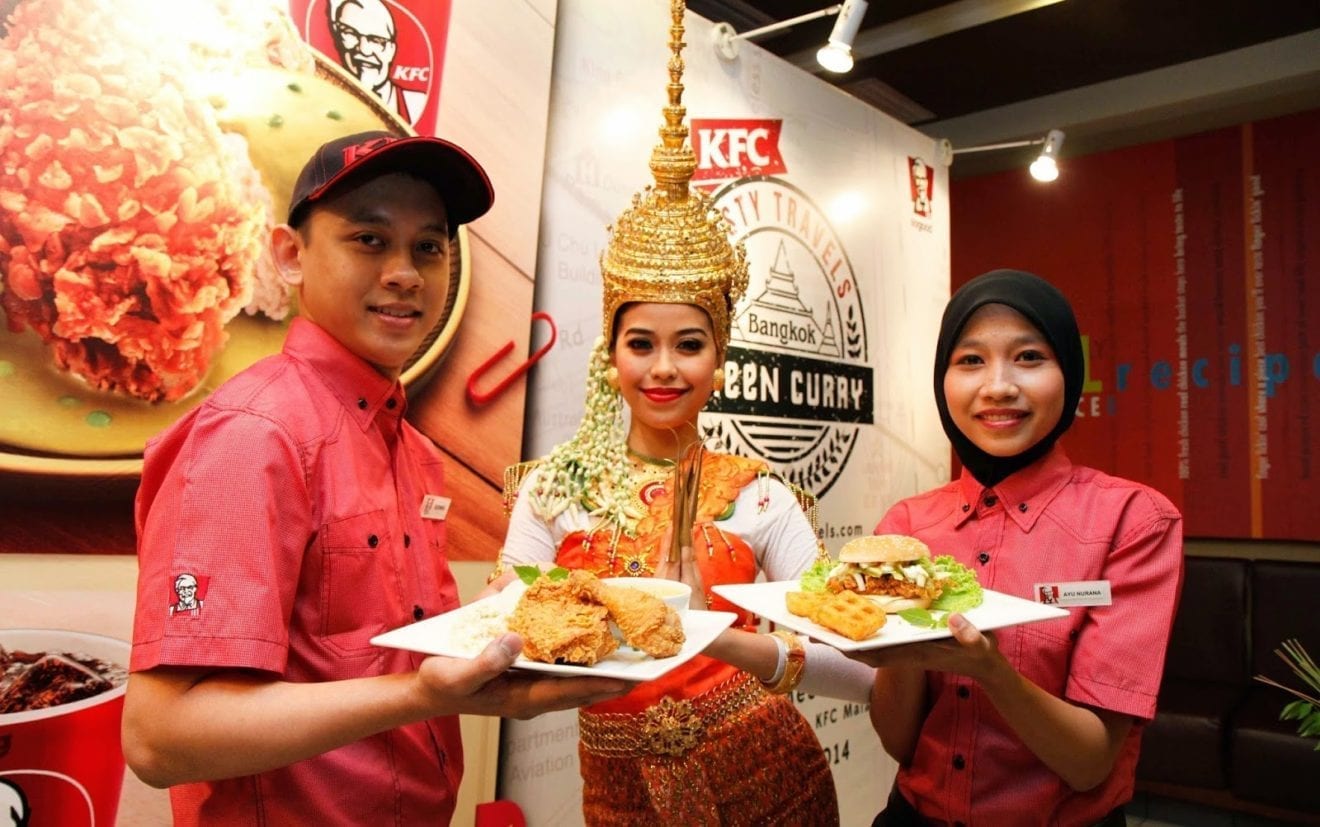
    Thai Beverage  (ThaiBev), the maker of Chang beer and SangSom rum, is expanding into the fast-food business with a deal to buy Thailand’s KFC restaurants.

    ThaiBev’s agreement, covering more than 240 restaurants, is costing it about THB11.3 billion (US$340 million). It also covers stores under development, with the cost of those locations to be determined when the transaction closes.

    KFC is owned by US corporation Yum! Brands, which also runs the Pizza Hut and Taco Bell chains.

    ThaiBev chairman/founder Charoen Sirivadhanabhakdi has been seeking to diversify the company with a goal of generating more revenue from non-alcoholic beverages by 2020.

    Thailand accounted for 2 per cent of KFC’s sales in emerging markets last quarter, and was the only region in that division to have sales drop year-over-year, posting a 2 per cent decline.

    Sirivadhanabhakdi previously expanded his property business amid government measures to curb alcohol consumption in Thailand. He was ultimately forced to list the company unit in Singapore in 2006 after activists and Buddhist monks held protests to block a local share sale. The company’s long-term strategy involves generating half of its revenue from markets outside Thailand and non-alcoholic beverage. Sales outside Thailand amounted to less than 4 per cent in the last fiscal year.

  • DaTang restaurant goes “Italian”

    DaTang restaurant goes “Italian”

    DaTang restaurant has opened its second branch at the Italian-inspired Venice Grand Canal Mall in Bonifacio Global City in Taguig City.

    Presenting Chinese fusion, the restaurant combines traditional and modern cooking techniques and ingredients. Its name combines the words “Da”, which means great, and “Tang” to signify the Tang dynasty, considered one of the most prosperous Chinese eras, especially in literature and food.

    DaTang’s modern interior in black, brown and gray, with traditional touches such as red lamps, classic paintings and jars of spices and herbs. The dinnerware is marble.

    Its Taiwanese chefs draw on styles and flavours from the eight great Chinese cuisine traditions – Anhui, Cantonese, Fujian, Hunan, Jiangsu, Shandong, Sichuan and Zhejiang – fusing them with modern techniques.

    “Our brand is trying to do something different from traditional Chinese food,” says DaTang F&B director Tani Lu. “We combine a lot of elements, like Chinese, Japanese and Western styles and mix them together to create new Chinese fusion food.”

    While there are no stir-fried noodles, beef with broccoli, or sweet-and-sour fish, there are such standards as steamed fish. The signature chicken dish is fried chicken wings coated with a sweet garlic sauce glaze.

    There are borders and private spaces in the restaurant, as well as a bar for wine and cocktails.

    DaTang first outlet is nearby in Forbes Town Center, Metro Manila.