Tag: asia

  • AirAsia now flies from Kuching to Langkawi, four times a week

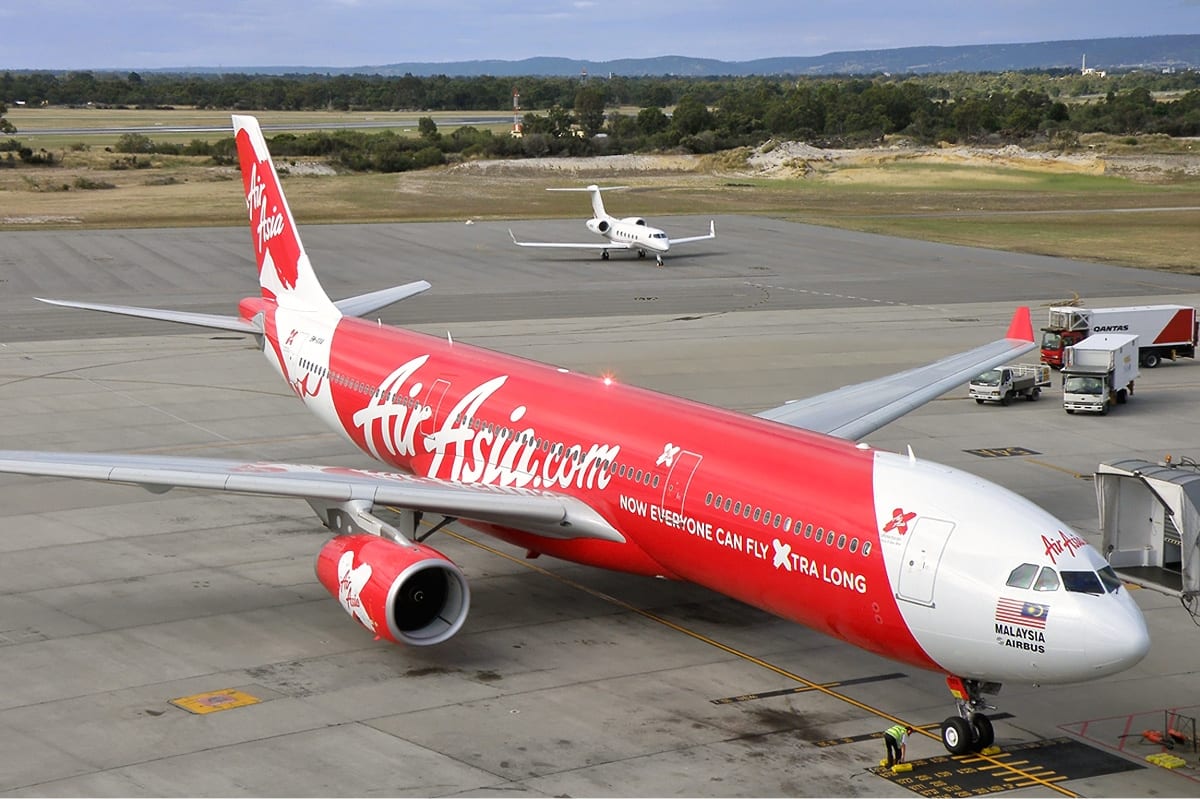
    AirAsia today launched its inaugural flight from Kuching to Langkawi, operating four weekly flights on Monday, Wednesday, Friday and Sunday.

    AirAsia Commercial Head Spencer Lee said the airline is committed to continue growing the hub as Sarawak has a lot to offer beyond being a tourism destination.

    “Increasing connectivity into the state is important for us as it is also one of the top preferred investment destinations in the country, with the Sarawak Corridor of Renewable Energy (SCORE) attracting investors to set up manufacturing plants on ICT, agriculture, industrial and many more,” he said.

    “We have flown about 3.2 million guests in and out of the Kuching hub last year. We believe the introduction of the two new routes; to and from Kuching, namely Pontianak recently and Langkawi today, echoes our commitment in Sarawak,” he said.

    Speaking to the media at the airport’s VIP lounge here, Lee said AirAsia is expected to launch another new international route from Kuching by the end of this year.

    “We will be introducing one more new route, flying to an international destination from Kuching within these few months. We hope to create more routes next year,” he added.

    Meanwhile, state Tourism, Arts, Culture, Youth and Sports Minister Datuk Abdul Karim Rahman Hamzah said AirAsia has done plenty to bring in more routes and it is time for the private sector to play their role.

    “This is a good opportunity for us to attract those from Langkawi as AirAsia is the only airline that connect Sarawak to Langkawi now. We cannot expect the airline to introduce a new route and then assist us in promotion and marketing.

    “Hence, I hope the private sector, especially tour operators as well as the Sarawak Tourism Board, will take the initiative to promote and market Sarawak to the world,” he said.

    “We need more qualified and trained tour guides, commercial complexes as well as more private hospitals to be set up to boost our medical tourism,” he added.

    Karim also touched on negotiations to construct a Low Cost Carrier Terminal (LCCT) in Kuching with AirAsia, and said he hopes it will materialise soon.

    “We are still discussing and negotiating with AirAsia on the LCCT project. I will reveal more when things have being finalised,” he said.

    AirAsia now flies to 11 destinations from Kuching, with more than 220 weekly flights. Besides Langkawi, other destinations are Miri, Sibu, Bintulu, Kota Kinabalu, Johor Bahru, Kota Bharu, Penang, Kuala Lumpur, Singapore and Pontianak.

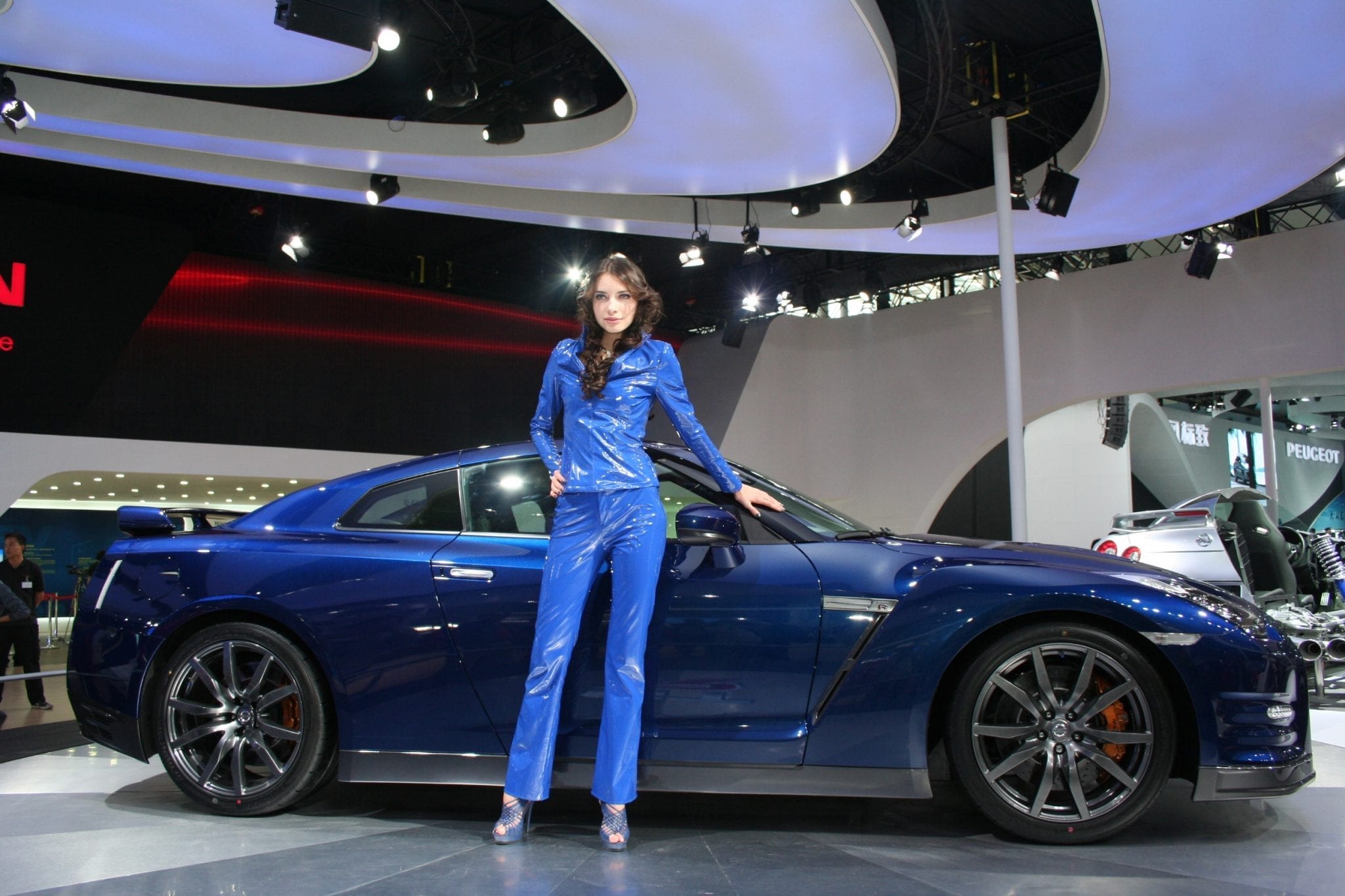
  • Nissan to sell its electric battery business to GSR Capital

    Nissan to sell its electric battery business to GSR Capital

    Nissan Motor Co said on Tuesday it has agreed to sell its electric battery business to Chinese investment firm GSR Capital for an undisclosed sum.

    The business to be sold to GSR includes battery plants in Tennessee, England and Japan, the Japanese automaker said in a statement.

    Nissan will first take full control of the business – Automotive Energy Supply Corp – by buying the combined 49 percent minority stake held by NEC Corp and its subsidiary NEC Energy Devices. NEC Corp said it has approved the sale of its stake.

  • Nokia expands development, deployment of 5G First

    Nokia expands development, deployment of 5G First

    Nokia has announced plans to implement early 5G specifications, enhancing its ‘5G First’ portfolio with the 3GPP 5G Phase I protocol, to meet growing interest for 5G mobility applications emerging from operators, notably in markets like US, China, Japan and South Korea.

    In a statement, Nokia said the vendor will push for accelerated 3GPP industry standardization while building on early customer experiences with its Nokia 5G First end-to-end solution, launched last February.

    This 5G NR (New Radio) air interface standard, which is due in early 2018, is designed to support a wide variety of 5G devices and services.

    Nokia said it is building on extensive field experience already gained with Nokia 5G First, which has generated valuable insights into areas such as the use of radio propagation in higher frequencies, massive MIMO and beamforming, integration with existing networks versus standalone implementations, the use of small cells in 5G deployments, and the importance of cloud native core and cloud RAN technologies.

    ”Through 5G First, Nokia is evolving its 5G strategy to drive the industry rapidly towards the adoption of standards-based commercial applications as early as 2019,” said Marc Rouanne, president of mobile networks at Nokia.

    “Doing so will require broad cross-industry support, and we call upon regulators and governments to free up and enable the use of spectrum at low-, mid- and high-frequency bands for trials,” said Rouanne.

  • XPO Logistics announces Q2 2017 results

    XPO Logistics announces Q2 2017 results

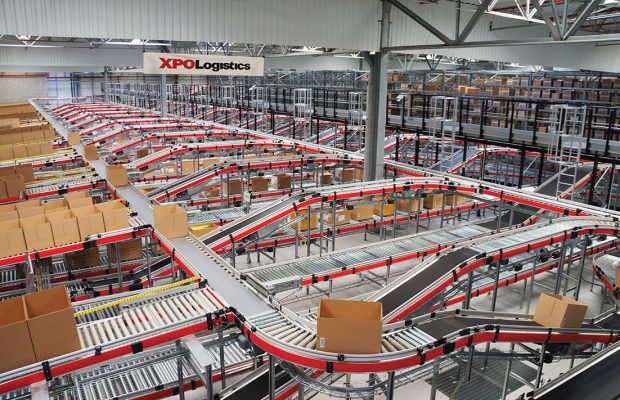
    XPO Logistics announced financial results for the second quarter 2017. Revenue was US$3.76 billion for the quarter, compared with $3.68 billion for the same period in 2016. Revenue increased year-over-year by $210.4 million, excluding the second quarter 2016 revenue from the North American truckload unit divested in October 2016. Net income attributable to common shareholders was $47.6 million for the quarter, or earnings of $0.38 per diluted share, compared with net income attributable to common shareholders of $42.6 million, or earnings of $0.35 per diluted share, for the same period in 2016.

    Adjusted net income attributable to common shareholders, a non-GAAP financial measure, was $75.0 million, or adjusted earnings of $0.60 per diluted share for the second quarter of 2017. This compares with adjusted net income attributable to common shareholders of $50.4 million, or adjusted earnings of $0.42 per diluted share, for the same period in 2016. The adjusted net income attributable to common shareholders for the second quarter 2017 excludes: $19.9 million, or $12.8 million after-tax, of integration and rebranding costs; $27.2 million, or $17.6 million after-tax, from non-cash unrealized losses on foreign currency contracts; and a loss on the conversion of convertible notes of $0.4 million, or $0.3 million net of tax. Reconciliations of non-GAAP financial measures used in this release are provided in the attached financial tables.

    Adjusted earnings before interest, taxes, depreciation and amortization (“adjusted EBITDA”), a non-GAAP financial measure, improved to $370.8 million for the quarter, excluding $19.9 million of integration and rebranding costs. This compares with $354.9 million of adjusted EBITDA for the same period in 2016, which included the North American truckload unit.

    XPO Logistics generated $216.0 million of cash flow from operations and $98.1 million of free cash flow in the quarter.

    Raises financial guidance
    The company raised its full year targets for adjusted EBITDA to at least $1.365 billion in 2017 and at least $1.6 billion in 2018.

    XPO Logistics reaffirmed its 2017-2018 cumulative free cash flow target of approximately $900 million, including at least $350 million of free cash flow generated in 2017.

    CEO comments
    Bradley Jacobs, chairman and chief executive officer of XPO Logistics, said, “Our strong start to the year accelerated in the second quarter, with record results for revenue, net income and adjusted EBITDA. The most notable growth came in last mile and contract logistics – two fast-growing parts of the supply chain where we hold leading positions in e-commerce. Importantly, we’re continuing to grow adjusted EBITDA faster than revenue in both transportation and logistics. In North American less-than-truckload, we increased volume while improving the adjusted operating ratio to 84.6%. This is the best quarterly adjusted operating ratio for our LTL business in at least two decades.”

    Jacobs continued, “The investments we’re making in sales and technology have already yielded a record $1.43 billion of new business through June, which is 62% higher than last year. Our global pipeline stands at over $3.3 billion, our cost initiatives have substantial runway, and the operating environment is favorable. Given these strong fundamentals, we raised our two-year guidance. Our new targets are for adjusted EBITDA of at least $1.365 billion in 2017 and $1.6 billion in 2018.”

    Second quarter 2017 results by segment
    Transportation: XPO Logistics’ transportation segment generated revenue of $2.41 billion in the quarter. This compares with $2.42 billion for the same period in 2016, which included $133.4 million of revenue from the North American truckload unit divested on October 27, 2016. Segment revenue was led by increases in truck brokerage and last mile, partially offset by a decrease in global forwarding revenue and unfavorable foreign exchange rates.
    Operating income for the transportation segment increased to $160.0 million in the quarter, compared with $153.2 million a year ago. Adjusted EBITDA for the segment was $282.7 million. This compares with $275.7 million a year ago, which included the truckload unit. The increases in operating income and adjusted EBITDA were primarily due to an improvement in adjusted operating ratio in the North American less-than-truckload unit, to 84.6%, partially offset by higher purchased transportation costs in truck brokerage and intermodal.

    Logistics: The company’s logistics segment generated revenue of $1.40 billion for the quarter, compared with $1.33 billion for the same period in 2016. The year-over-year increase in revenue was primarily due to strong demand for contract logistics in both Europe and North America, partially offset by a decline in managed transportation revenue and unfavorable foreign exchange rates. In Europe, contract logistics growth was led by e-commerce and cold chain contracts in the UK and the Netherlands. In North America, the largest gains came from the e-commerce and industrial sectors.
    Operating income for the logistics segment increased to $64.3 million, compared with $51.1 million a year ago. Adjusted EBITDA for the segment improved to $123.0 million, compared with $106.9 million a year ago. The increases in operating income and adjusted EBITDA were primarily due to revenue growth, productivity improvements and SG&A cost reduction.

    Corporate: Corporate SG&A expense was $39.3 million for the quarter, compared with $34.0 million for the same period in 2016. The increase in corporate expense primarily reflects an increase in share-based compensation expense tied to the increase in the share price of XPO stock.
    Six Months 2017 Financial Results
  • Thailand to invest in infrastructure development

    Thailand to invest in infrastructure development

    Thailand’s strategically important geographic location gives it ample advantage to become a primary regional economic hub, not only in trade, investment and tourism, but also in communication and transportation networks that connect to other regions around the world. And the government has in recent years made investment in domestic infrastructure its top priority.

    The Thailand infrastructure action plan for 2017 is worth US$25.2 billion and includes 36 projects, covering rail, roads, air transport and ports around the country. The government plans to begin selling Thailand Future Fund investment units in October as an infrastructure investment alternative. It’s a way of raising liquidity from the public for the construction of massive state infrastructure projects. The unit sales are expected to reap $1.1 billion.

    The Industry Ministry recently revealed that Thailand’s emerging Eastern Economic Corridor (EEC) is expected to see investment in infrastructure projects reach $43 billion in the next five years — for airport expansion, new railways and cities, port development and spurring modern industry.

    Helping ensure the success of its infrastructure development, the government will provide full support, including eliminating barriers, rules and regulations in order to generate real, high-value investments, as well as a one-stop service to facilitate investment in the EEC. The Board of Investment of Thailand (BOI) in turn offers enticing and competitive privileges, including a corporate tax holiday for up to 15 years, exemption from import duties on machinery and raw materials, 17% personal income tax credits for executives, experts and researchers working in designated zones, grants to support investments in R&D, innovation and human resource development, permission to own land for promoted activities, and one-stop service to facilitate business operations.

    An integrated local and cross-border transportation network

    Fast-paced development of a comprehensive network of interconnecting transport routes across the country will accommodate rapidly surging demand for both domestic and cross-border transportation. Government agencies are expediting efforts to call for bids on several new mass-transit routes and an expressway system throughout Greater Bangkok, and motorway, double-track rail and high-speed train projects across the nation.

    Prime Minister Prayut Chan-o-cha has made a personal appeal for public support for the Thai-Chinese high-speed railway planned to link Bangkok to the northeastern province of Nakhon Ratchasima. The same railway is envisioned as connecting with Chinese high-speed trains in Laos traveling to China, as part of a joint Chinese-Thai effort which forms part of Beijing’s vast infrastructure drive known as the “One Belt, One Road” initiative.

    Another high-speed train project, the 193.5-kilometre Bangkok-Rayong route, which will link the Eastern Economic Corridor to Suvarnabhumi, Don Mueang and U-tapao international airports, is in now undergoing a feasibility study and preparations for a public private partnership (PPP).

    Elsewhere in Thailand, a Bangkok-Hua Hin high-speed railway and a mass-transit rapid monorail system for Phuket are currently being assessed for feasibility.

  • Geodis to manage BMW’s distribution centre in Korea

    Geodis to manage BMW’s distribution centre in Korea

    In April 2017, BMW Korea opened a new regional parts distribution centre for BMW, MINI and motorcycle spare parts in Anseong, Gyeonggi Province, 70 kilometres south of Seoul. GEODIS is entrusted with the logistics of this over 50,000 sqm site, one of BMW’s biggest Regional Distribution Center in the world.

    On this new site, GEODIS annually manages over one million order lines and handles up auto parts deliveries across South Korea. The Group deals with thousands automotive parts stored, more than twice the volume compared to the previous facility.

  • Globe’s GCash debuts QR code payments

    Globe’s GCash debuts QR code payments

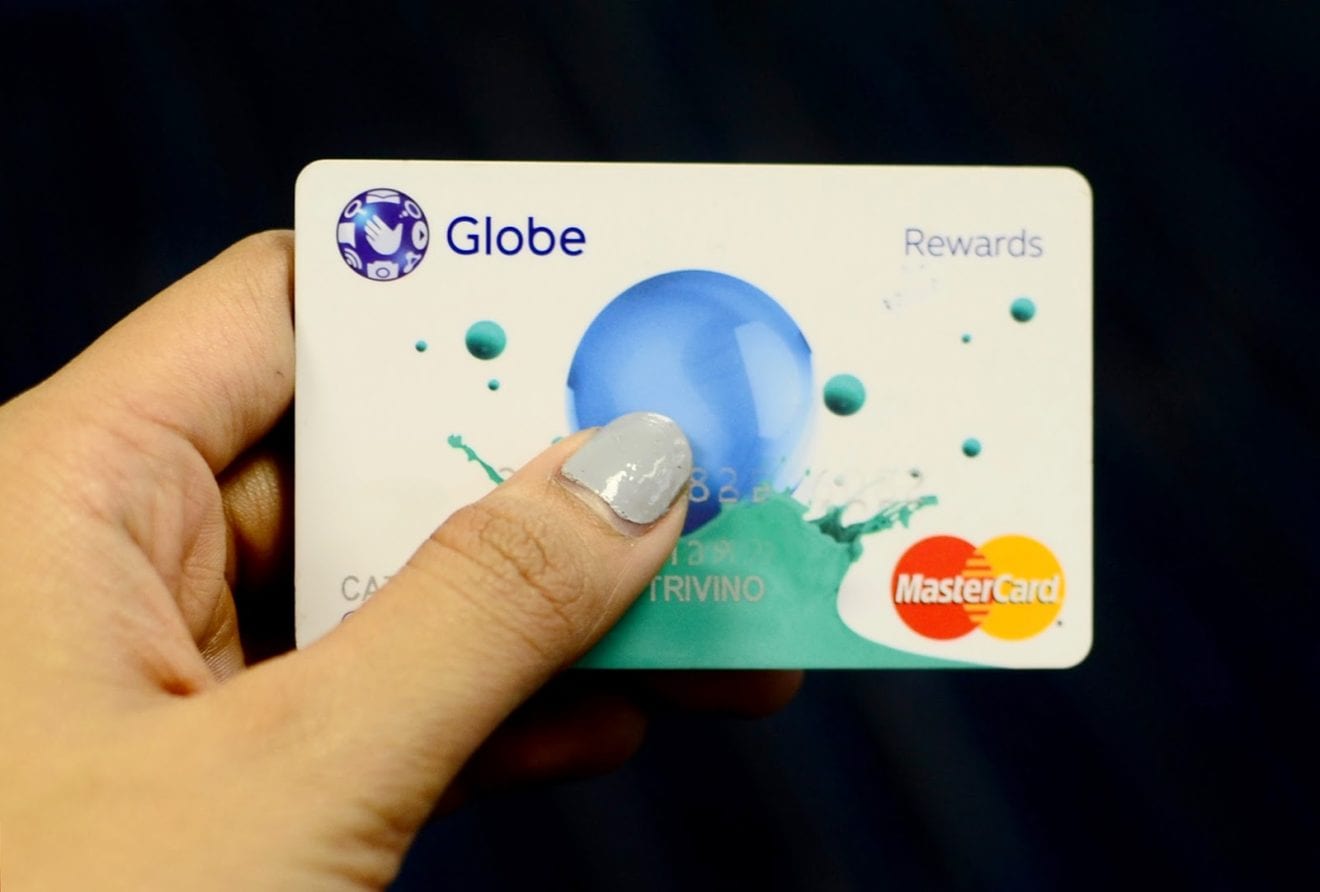
    Globe Telecom’s GCash has launched the Philippines’ first QR code payment service, which it has named GoPay.

    The GoPay feature within the GCash mobile money app will allow customers to use their GCash account to pay for goods and services using their smartphones by scanning QR codes displayed by merchants.

    The service will enable merchants to accept mobile payments using their own GCash wallets, eliminating the need for eftpos machines. GCash said this will make mobile payment acceptance available even to roaming vendors and small neighborhood stores.

    Alibaba’s Ant Financial, which popularized QR code payments in China via its Alipay subsidiary, invested in GCash’s immediate parent company Mynt in February to help develop the Philippines’ digital money market.

    “Our goal has always been to make finance more inclusive by building a cashless ecosystem. GoPay QR payments solution will close the loop and drive merchants accepting GCash payments,” Mynt CEO and President John Rubio said.

    “We plan to extend this service from all types of retailers nationwide down to our favorite fishball vendor.”

    GCash is available for both Android and iOS, and users can deposit funds into their GCash wallet at over 12,000 partner outlets across the Philippines.

  • Paypal launches innovation labs in India

    Paypal launches innovation labs in India

    Online payments company PayPal has set up two new innovation labs at its Chennai and Bangalore tech centers in India.

    These are the first of such facilities in India set up by the company and third globally after the US and Singapore.

    These labs will support projects in machine learning, artificial intelligence, data science, IoT, software-defined radio, virtual and artificial reality and basic robotics, among other fields, according to a release shared by the company.

    They will also be integrated with some of the company’s ongoing initiatives, such as the PayPal Incubator, to develop and nurture fintech startups, the statement added. Launched in 2013, PayPal’s startup incubator offers office space, mentoring and technical training, and networking opportunities to companies incubated.

    “The focus will be on fuelling new-age technology and giving rise to unconventional ideas with the potential to transform the ecosystem we operate in,” said Mike Todasco, director of Innovation, PayPal.

    Paypal is one of the companies that have made a play for India’s fintech space after the government’s recent demonetisation move.

    To strengthen its position in the market, PayPal has reportedly sought a wallet (prepaid payment instrument) licence from the Reserve Bank of India.

  • 3 HK upgrading 4G capacity on MTR

    3 HK upgrading 4G capacity on MTR

    3 Hong Kong has completed the first phase of a project to enhance its 4G network capacity at 18-high traffic MTR stations.

    The company has upgraded its equipment at the concourses of the Tsim Sha Tsui, Prince Edward, North Point, Quarry Bay, Yau Tong, Jordan, Mong Kok and Yau Ma Tei stations.

    The whole project is expected to be complete by July 2019, and will involve upgrades throughout stations and tunnels to increase its 4G network capacity at the 18 MTR stations manyfold.

    “Using mobile service at MTR stations has become an integral part of our daily lives. 3 Hong Kong is therefore working on 4G enhancement at 18 high-traffic MTR stations to boost capacity manyfold and strengthen the network,” 3 Hong Kong CTO of Mobile Daniel Chung said.

    “The project is gradually being extended to other stations. We are constantly monitoring 3 Hong Kong’s network performance to ensure that customers enjoy an advanced mobile network featuring comprehensive coverage, high capacity, high speed and high reliability, outside and inside of MTR stations.”

  • Cartier launches Pavilion KL store

    Cartier launches Pavilion KL store

    Fine jewellery retailer Cartier has unveiled its newest store in Kuala Lumpur.

    Located at the Pavilion KL, the French maison’s two-storey duplex boutique is set on Level 2 and Level 3.

    Designed to emulate the Cartier flagship, the Bukit Bintang entrance features a 3-storey LED display that lights like liquid gold.

    Inside, the High Jewellery Salon serves as exclusive addition to the store, a jewellery-first for the high-end brand with the KL store being the first in South East Asia to offer this luxurious shopping experience.

    Meanwhile, a carpeted marble staircase leads connects the top to the lower floor, which houses the latest collections and the Accessories Salon, as well as the debut Cartier Client Service Counter in Malaysia.

    The boutique also offers big spenders to opt for a VIP salon to shop in privacy.

    Cartier is slowly becoming more active in Asia’s retail landscape. In January, Cartier unveiled its first pop-up boutique at the Macau Four Seasons T Galleria by DFS.

    In December last year, the Paris-based brand announced the opening of its flagship in Ginza in Japan. The 10,764-square-foot retail location first opened in 2003 and was refurbished in 2007.

  • Bally opens first-ever India store

    Bally opens first-ever India store

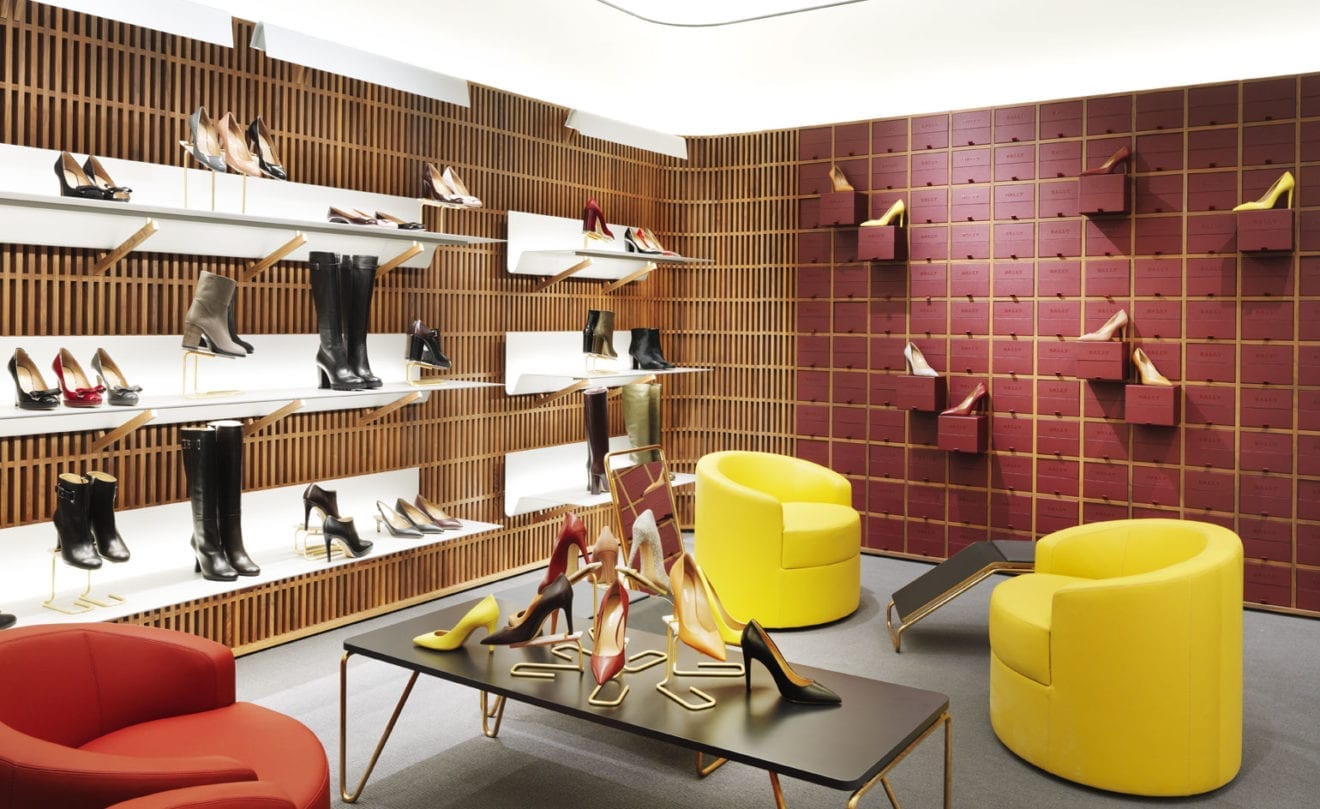
    Bally has brought its luxury offerings to India, opening its debut location in New Delhi in partnership with local licensee Reliance Brands.

    Situated in Delhi’s DLF Emporio, the flagship store is lavishly designed with a focus on the high-end products consisting of bags, belts, shoes, jackets, and accessories.

    Opening its doors inside the high-end mall August 2, the Swiss luxury brand joins fellow international brands such as Louis Vuitton, Burberry, Dior, and Giorgio Armani.

    The launch of Bally’s brick and mortar store comes after twelve months worth of talks with Reliance Brands, part of Reliance Retail and the Reliance Group.

    Founded in 1851 in Switzerland, Bally rose to fame in 1890 for inventing the Zurich pump, before launching its ready-to-wear and accessories lines in 1976.

    After launching internationally in 1990, Bally has launched in many Asian countries and with India the latest market entry.

    It is also due to open up an outlet store in Australia this month, with the reopening of Sydney discount centre, Birkenhead Mall.

  • M1 launches nationwide NB-IoT network

    M1 launches nationwide NB-IoT network

    Singapore’s M1 has announced the launch of Southeast Asia’s first commercial nationwide narrowband IoT network.

    M1 and its partners are using the network to make available IoT solutions in fields including smart energy management for buildings, environmental monitoring, asset tracking and fleet management.

    The operator is today hosting industry partners and businesse to showcase the possibilities of IoT technology, including smart metering, smart NB-IoT GPS trackers, smart GPS locks, smart waste management through bins with alters to cleaners when they are full and even smart toilets that can detect when they need cleaning.

    “The launch of Southeast Asia’s first commercial nationwide NB-IoT network will accelerate our journey into a digital society,” M1 CEO Karen Kooi said.

    “The Internet of Things will open up an incredible array of fresh opportunities and innovation. We look forward to working closely with government agencies, technology partners, and customers to enable smart solutions for everything and everyone.”

    Rival Singtel has meanwhile announced plans to roll out a nationwide cellular IoT network supporting both CAT-1 and NB-IoT by end September.

    Singtel will use its cybersecurity operations to support businesses in deploying secure IoT solutions, and plans to invite business and technology partners to develop and test IoT solutions at its joint IoT Innovation Lab operated with Ericsson.

    “The launch of our network provides an ideal platform for the proliferation of IoT devices and applications,” Singtel CEO Bill Chang said.

    “With more businesses embracing the digital future, it paves the way for IoT adoption as Singapore advances towards becoming a Smart Nation. We welcome businesses to be part of the growing IoT ecosystem by leveraging on our robust infrastructure and network.”

  • Actress Raline Shah appointed as AirAsia Indonesia director

    Actress Raline Shah appointed as AirAsia Indonesia director

    AirAsia Group’s CEO and co-founder Tan Sri Tony Fernandes has announced that the company had appointed noted actress Raline Shah as a new director of PT Indonesia AirAsia.

    Fernandes announced Raline’s appointment through his private Instagram account on Monday, to which he also uploaded a photograph of Raline and himself.

    Fernandes, however, did not mention the exact position Raline would fill. AirAsia Indonesia spokesman Baskoro Adiwiyono also did not respond to questions about her appointment.

    Raline was born in Jakarta on March 4, 1984, and lived in the North Sumatran capital of Medan. She is an actress and a model. She emerged in the public eye when she took part in the 2008 Putri Indonesia Pageant,  in which she was noted as a favorite contestant.

    She has starred several movies, including 5 cm, 99 Cahaya di Langit Eropa (99 Lights in the European Sky), Supernova, and Surga yang Tak Dirindukan (a heaven unmissed).

    Raline graduated from the National University of Singapore with a bachelor of arts in political science.

    The Malaysian aviation company planned to integrate its South-East Asian business, kompas.com reported, but its plans were not in accordance with Indonesian regulations.

    AirAsia has regional branches in Indonesia, the Philippines and Thailand, while its hub is based in Kuala Lumpur.

  • Decathlon opens first store In Hong Kong

    Decathlon opens first store In Hong Kong

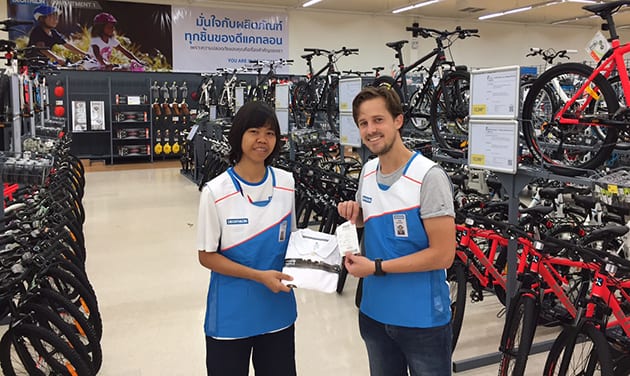
    French sports supplies retailer Decathlon has opened its first physical store in Hong Kong.

    Located in Grand Plaza, Mong Kok, the new Decathlon store will provide over 10,000 kinds of products for over 70 sports, including climbing, fitness, running, golf, diving, and skiing.

    Prior to this, Decathlon already operated businesses in Hong Kong as a manufacturer., but not as retailer, to the chagrin of Hong Kong shoppers.

    Google Maps often displayed Decathlon’s office in Kowloon as a retail outlet, and this caused confusion for shoppers who hoped to visit a Decathlon retail outlet.

    The best method for Hong Kong shoppers to purchase Decathlon goods was to either visit the nearby Chinese city of Shenzhen or order goods online via Decathlon’s Taobao.com e-commerce shop.

    In 2015, Chinese media reports that the French company officially launched its e-commerce store in Hong Kong by establishing a dedicated website and online sales platform, but the company appeared to provide poor communication to consumers about this store because many were unaware of its existence and had to instead purchase from Taobao.com.

    With the opening of this new physical store, Decathlon expects to offer its complete sports ideas and unique shopping experience to residents in Hong Kong.

    According to Decathlon’s report published in February 2017, the company realized global operating revenue of over EUR10 billion in 2016, representing a year-on-year increase of 4.4%. By the end of 2016, Decathlon had 1,176 physical stores in 28 countries and regions around the world.

    In the Asia Pacific region, Decathlon values the Chinese market the most. The company has a full industrial chain layout in China, covering product design, research and development, production, logistics, brand, and retail.

    Based on its experience in China, Decathlon also opened physical stores in Thailand, Malaysia, and the Philippines. The company plans to enter Australia in October 2017.

  • About 20,000 people get their caffeine fix at the Singapore Coffee Festival

    About 20,000 people get their caffeine fix at the Singapore Coffee Festival

    About 20,000 coffee fiends got their fix and more at the second edition of the Singapore Coffee Festival, which ended yesterday.

    The four-day event featured more than 90 exhibitors including coffee purveyors, equipment distributors and cafes, as well as workshops, talks and live entertainment at the Marina Bay Cruise Centre.

    Exhibitors and visitors who attended last year’s festival praised this year’s edition for its more spacious layout with 11,500 sqm spread over two floors, and greater variety of products on offer. Last year’s event was held at the F1 Pit Building.

    Many vendors reported brisk business at the weekend, with festival favourites such as The Coffee Academics’ Coffee In A Cone, cream muffins by bun-maker Hattendo and coffee-roasted pork chop buns by patisserie-restaurant chain Antoinette drawing long queues.

    Hattendo was left with just 100 cream muffins after yesterday’s brunch session, and had made about $3,000 in sales a day, said Hattendo Singapore chief executive Daisuke Ishioka.

    “We prepared more than 1,000 every day, and every day it has sold out. We are selling more than we expected to,” he said.

    Splitting each day into two sessions – brunch and sundown – helped with crowd control and gave vendors time to replenish stocks.

    Antoinette’s pork chop buns, created specially for the festival, proved so popular that they will be added as a weekend menu item at its restaurants soon, said its sales and marketing manager, Ms Wong.

    A repeat participant at the coffee festival, Antoinette has seen a doubling in sales this year, with up to 2,000 buns sold over the four days.

    A Barter Market, live music and fireworks displays at Sunrise Wharf on Friday and Saturday were among other highlights of the festival, which also hosted the 2017 Singapore AeroPress Championship by Common Man Coffee Roasters on Friday.